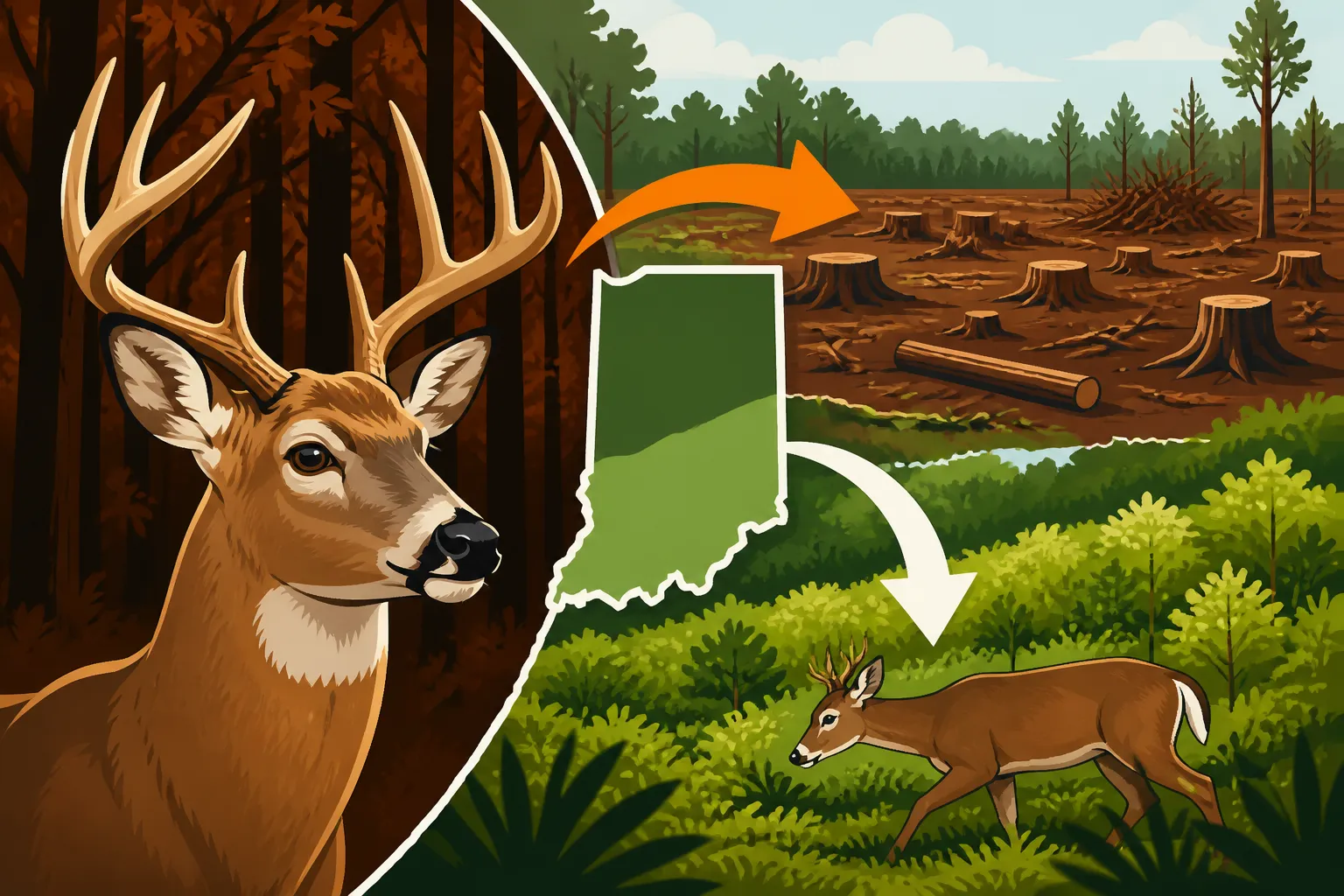
Timber Cuts and Where Deer Move After
It can be incredibly frustrating to spend countless hours scouting a promising piece of woods, only to return a few weeks later and find a logging crew has come through, leaving behind a scarred landscape where you once expected to find deer. That feeling of "now what?" is totally valid. This guide is here to help you understand precisely what happens after timber cuts in Indiana, how deer react to these significant changes, and most importantly, how you can adapt your hunting strategies to continue finding success in these altered environments.
Understanding Different Types of Timber Cuts in Indiana
Before we dive into how deer react, it's crucial to understand that not all timber cuts are created equal. Different logging practices have vastly different impacts on the landscape, and consequently, on deer movement and habitat use. Knowing what type of cut you're looking at can help you predict deer behavior much more accurately.
Clear-Cutting: Total Reset for the Ecosystem
A clear-cut is perhaps the most dramatic form of timber harvesting you'll encounter. This is when almost all trees in a designated area are cut down, leaving behind a relatively barren landscape of stumps, downed tops, and disturbed soil. While it might look devastating initially, a clear-cut is actually a fantastic habitat regenerator in the long run. In Indiana, you might see this in larger tracts of state forest land or even on private holdings where landowners are managing for specific timber production or creating early successional habitat.
In the immediate aftermath, a clear-cut looks like a disaster zone. The mature trees that once provided shade, hard mast, and thermal cover are gone. This forces deer to abandon the area immediately. However, the open canopy allows sunlight to flood the forest floor, stimulating a massive explosion of new growth – grasses, forbs, briars, and young saplings. These are all highly palatable to deer, and over a few years, a clear-cut transforms from a barren wasteland into an incredibly dense, browse-rich, and secure bedding area. It's a prime example of nature's resilience, often creating some of the best bedding and early-season food sources once the regeneration gets going.
Selective Harvesting: Targeted Changes and Openings
Selective harvesting is a more nuanced approach, focusing on removing only certain trees based on species, size, or health. Imagine a logger going through a stand and picking out the mature oaks, or perhaps diseased ash trees, leaving the younger, healthier timber intact. This practice creates small openings in the canopy, allowing more sunlight to reach the forest floor in specific areas without completely stripping the cover.
The impact here is less abrupt than a clear-cut. Deer might not entirely abandon a selectively harvested area, especially if pockets of good cover remain. The primary change for them is usually an increase in immediate browse availability from downed tops and new growth in the sunlit patches. Over time, these small openings can foster the growth of diverse understory plants, creating varied food and cover conditions throughout the stand. This type of cutting often aims for sustainable forestry, maintaining a multi-aged forest structure that can benefit deer by providing both mature mast producers and regenerating browse. You'll often see this in mature hardwood stands across southern Indiana.
Thinning and Improvement Cuts: Subtle Shifts in Structure
Thinning and improvement cuts are even more subtle interventions. Thinning involves removing some trees to reduce competition, encouraging the remaining trees to grow faster and healthier. Improvement cuts focus on removing undesirable species or unhealthy trees to improve the overall quality of the stand. These methods usually involve removing smaller percentages of trees and are often less visually disruptive than selective cuts, let alone clear-cuts.
For deer, these types of cuts lead to more gradual changes. The primary benefits come from increased sunlight reaching the forest floor, promoting understory growth, and the creation of more browse from the felled trees. The existing canopy still provides significant cover and food sources, but the increased light can thicken the understory, creating better bedding and security. Deer might hardly notice the initial activity, or they might shift their bedding slightly away from the immediate sound of chainsaws, but they generally return quickly to capitalize on the new browse and improved cover. It's a way of enhancing existing habitat rather than creating entirely new habitat.
Immediate Deer Response: The Initial Shock and Scatter
When the chainsaws start humming and the heavy machinery rolls in, deer don't stick around to watch the show. Their primary instinct is self-preservation, and a logging operation is a massive disturbance. Understanding this initial reaction is key to anticipating their movements in the short term.
Displacement and Seeking Sanctuary
The moment logging begins, deer in the immediate area are displaced. They might bolt from the sounds and vibrations, seeking the nearest thick, quiet sanctuary. This could be an adjacent unlogged woodlot, a dense stand of pines, or a swampy area nearby. Their home range is suddenly disrupted, and they need to find new, safe haven quickly. If the cut is extensive, this displacement can push deer into areas where hunting pressure is already high, or into entirely new territories they haven't frequented. This is where scouting the areas around the cut becomes paramount. Finding Ground Others Walk Past might reveal where these displaced deer have settled.
I've seen it countless times, especially on smaller, private tracts. A landowner clears a section, and suddenly, the neighboring property, which was previously less active, becomes a hotbed of deer movement. These deer aren't necessarily gone for good; they've just moved to the path of least resistance, looking for security. They'll often try to stay as close as possible to their original home range, minimizing the energy expenditure and risk of moving into completely unfamiliar territory.
Temporary Food Source Disruption
Logging operations, especially clear-cuts, completely obliterate immediate food sources like acorns, fallen nuts, and established browse within the cut area. Even if there were abundant white oak acorns, they're gone or buried under debris. This forces deer to seek alternative food sources elsewhere. They'll shift their focus to adjacent areas that weren't impacted, looking for unharvested mast crops, green fields, or available browse.
This temporary disruption means that for a few weeks or even a month or two after an active cut, the logged area itself will likely be devoid of deer, save for perhaps a few curious youngsters. The deer are focused on survival, which means finding consistent, undisturbed food. This temporary void means you should focus your hunting efforts on the fringes of the cut, or in entirely different, undisturbed feeding zones, until the new growth in the timber cut starts to really flourish.
Adjusting to New Cover
Deer rely heavily on cover for security, thermal regulation, and bedding. When a timber cut removes significant portions of this cover, deer are vulnerable. They will instinctively seek new bedding and security areas that offer similar advantages. For instance, if a clear-cut removes a dense cedar thicket, deer might move to the nearest dense honeysuckle patch, a stand of young pines, or even a deep, brushy creek bottom. Where Hoosier National Forest Bucks Bed often highlights the importance of dense cover in those deep woods.
This adjustment period is critical. Deer are creatures of habit, but they are also highly adaptable. They will quickly learn the new safe zones and travel routes. Observing these changes, perhaps by looking for fresh sign on the edges of the cut or utilizing a mapping app like onX Hunt to identify potential new cover nearby, can give you a significant advantage. The deer are trying to re-establish their routines, and understanding where they're trying to do that will be your biggest clue.
Long-Term Habitat Changes and Deer Relocation
While the immediate aftermath of a timber cut might seem like a setback, the long-term effects are often incredibly beneficial for deer. These cuts are essentially a reset button for the forest, creating new, dynamic habitat that deer will readily exploit once it matures a bit.
Explosion of Browse and Forage
After sunlight hits the forest floor, it's like an explosion of new life. Dormant seeds sprout, existing plants flourish, and a diverse array of palatable browse begins to emerge. In a few years, a clear-cut or even a heavily thinned area can become a dense, buffet-style feeding ground for deer. You'll see briar patches, young saplings like maple and oak, honeysuckle, and various herbaceous plants—all deer favorites. This provides a rich, nutrient-dense food source that mature timber simply can't offer.
This rich forage attracts deer from surrounding areas, drawing them into the regenerating cut. It’s not uncommon to see deer populations increase in areas surrounding timber cuts once the new growth hits a few feet tall. This makes these areas incredibly productive for bowhunters during the early season, as deer seek out these succulent greens. It's a natural form of food plot, albeit one that changes over time.
Developing Thermal and Security Cover
As the new growth in a timber cut matures, it doesn't just provide food; it also creates incredibly dense thermal and security cover. Imagine a clear-cut five to ten years post-harvest: it's a tangled mess of briars, small trees, and brush that's almost impenetrable to humans. For a deer, however, this provides ideal bedding. It offers protection from predators, shelter from harsh winds and cold, and a place to simply disappear. Hunting a Clear-Cut Regrowth Edge details just how effective these areas can be.
These dense thickets become prime bedding areas, especially during the colder months when thermal cover is crucial. Deer will often bed on the downwind side of these cuts, or slightly up on a ridge that overlooks them, giving them an advantage against approaching predators. The edges of these cuts also become important travel corridors, as deer move from the dense bedding cover to more open feeding areas.
Travel Corridors and Edge Creation
Timber cuts inherently create new edges—the transition zone between the disturbed area and the untouched forest. Deer are creatures of the edge. They feel secure traveling along these transitional areas, moving between dense cover and feeding opportunities. These edges become natural travel corridors, funnels, and pinch points that hunters can exploit.
Furthermore, within the cut itself, if some larger trees or islands of timber were left, deer will use these as cover to navigate the newly open space. These "islands" become micro-bedding areas or staging points. Think of how Hunting a Funnel Between Two Woodlots can be productive; a timber cut creates new, temporary funnels as deer adjust their movements. Learning to read these new edges and internal features is key to patterning deer after a cut. This is where a robust mapping tool like GoHunt can really shine, allowing you to visualize these new edges and predict likely travel routes.
Here's a quick overview of how different cuts influence deer habitat:
| Timber Cut Type | Immediate Impact on Deer | Long-Term Impact on Deer Habitat (1-5 Years) | Primary Deer Benefit | Hunting Strategy Considerations |
|---|---|---|---|---|
| Clear-Cutting | Severe displacement | Dense browse/bedding thickets | Food & Security Cover | Hunt fringes initially; then thick new growth after 2-3 years. |
| Selective Harvest | Minor displacement | Increased browse, patchy cover | Varied Forage | Hunt near remaining cover/mast; watch for new browse patches. |
| Thinning/Improvement | Minimal displacement | Enhanced understory, healthier mast trees | Enhanced Existing Habitat | Focus on subtle travel routes & new browse; hunt as usual. |
Hunting Strategies in and Around Timber Cuts
Adapting your hunting strategy to timber cuts isn't just about finding where deer were; it's about understanding where they will be and how they'll move through these changing landscapes.
Scouting the Periphery and Transition Zones
In the immediate aftermath of a timber cut, deer will be pushed out, often to the closest available sanctuary. This makes the unlogged timber surrounding the cut, especially the edges and transition zones, prime areas for scouting and hunting. Look for fresh rubs, scrapes, and heavy trails entering and exiting the undisturbed woods near the cut boundary. Scouting Indiana Public Land Before Season becomes even more critical when timber operations are underway.
Deer will often stage in these adjacent mature timber areas before cautiously entering the cut to feed, especially as the new growth starts to become palatable. Set up stands or ground blinds overlooking these transition lines, focusing on areas where thick cover meets the new opening. Pay close attention to wind direction and thermals, as deer will often use these to their advantage when approaching and leaving these edges. Wind and Thermals on a Southern Indiana Ridge are just as important here as anywhere else.
Hunting the New Growth
Once the new growth in a clear-cut or heavily thinned area starts to get established—think knee-high to chest-high briars and saplings—it transforms into an incredible attractant. This dense cover provides both food and security, creating prime bedding and feeding areas. This is when you want to start hunting inside or very close to these regenerated cuts.
During the early archery season, deer will often browse heavily in these thickets. As the season progresses, and especially during the rut, these dense spots become fantastic bedding for bucks, and places where does will seek refuge. Hunting the downwind edges of these thickets, or even carefully still-hunting very slowly through them if they're not too impenetrable, can be extremely effective. Remember, patience is key here; deer feel very secure in such dense cover. Bowhunting Indiana's Long Archery Season can certainly benefit from targeting these specific zones.
Using Technology to Understand the Landscape
Modern hunting technology has revolutionized how we approach scouting, especially in dynamic environments like timber cuts. Satellite imagery on apps like onX Hunt or GoHunt allows you to identify areas that have been recently logged or show signs of regeneration. You can often see the distinct patterns of clear-cuts, or lighter patches indicating selective harvesting, even before you step foot in the woods.
Use these tools to:
- Identify New Edges: Pinpoint where the cut meets undisturbed timber, marking potential travel corridors.
- Locate Adjacent Cover: Find dense pine thickets, swamps, or unlogged sections that deer might flee to.
- Map Out Access Routes: Plan your entry and exit routes to avoid disturbing deer, especially in these sensitive new areas.
- Analyze Topography: Understand how terrain features interact with the timber cut to create funnels or hideaways. Reading Aerial Photos for Southern Indiana Deer offers more tips on using these digital tools effectively.
By using these mapping tools, you can save valuable time and significantly narrow down your scouting efforts, allowing you to focus on the most promising areas around and within timber cuts. It's like having an aerial view of the deer's new playground, helping you decode their adjusted movements.
Disclaimer
This article is for general informational purposes only and does not constitute professional advice. Laws, prices and regulations vary by location and change over time. Consult a qualified professional for guidance on your specific situation.