Shotgun Slug Guns for Indiana Deer
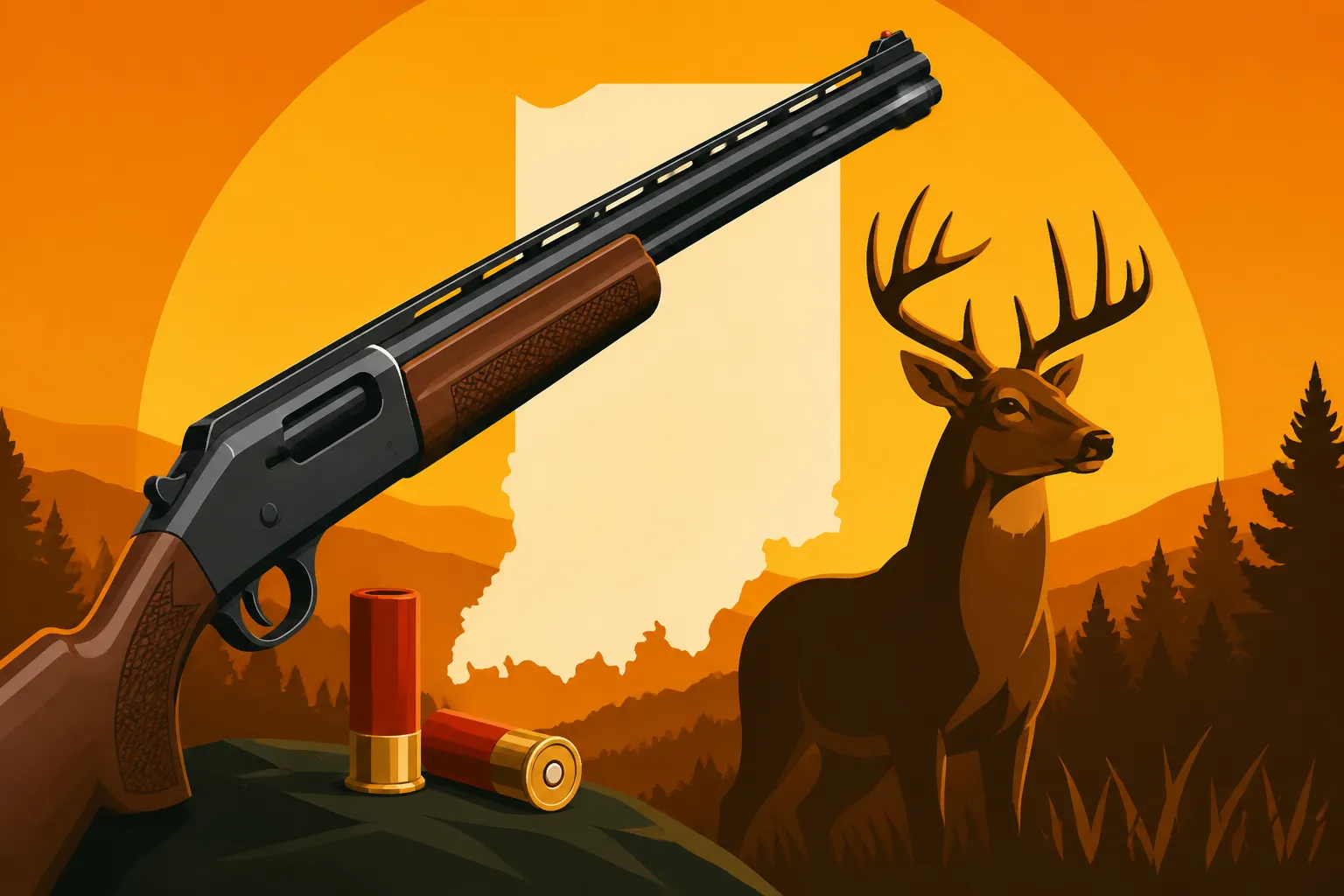
For generations, Indiana deer hunters faced unique restrictions that often made the shotgun slug gun the primary choice for filling their tags. While recent changes have opened the door to more rifle options across the state, many hunters still swear by their trusted slug guns. This comprehensive guide is dedicated to exploring everything you need to know about selecting, setting up, and mastering a shotgun slug gun for deer hunting in the diverse Indiana landscape, ensuring you're confident and effective in the field.
The Enduring Legacy of the Slug Gun in Indiana
For decades, if you hunted deer in Indiana, chances are you were intimately familiar with a shotgun loaded with slugs. This wasn't just a preference; it was often the law. The terrain, from the rolling southern hills to the flat northern farmlands, often meant shots were relatively close-range, making the slug gun a perfectly capable tool. Even with modern changes, that rich history and the effectiveness of these firearms mean they hold a special place for many Hoosier hunters.
Why Shotguns Remained Popular (Even with new rifle rules)
I know, I know. Indiana's New Statewide Rifle Rules changed the game for a lot of folks, and suddenly, those long-range centerfire rifles are legal in places they never were before. It's a huge shift, and it opens up a lot of new possibilities. But let's be real: not everyone wants to go out and buy a new rifle and optics setup. Many of us already have a perfectly good slug gun in the safe, and we’re comfortable with it. There's a real comfort in using what you know, what you've patterned for years, and what has put venison in the freezer season after season.
Beyond familiarity, the truth is that many hunting scenarios in Indiana still lend themselves beautifully to a slug gun. Think about hunting a thick CRP field on a northern Indiana farm, or working a dense river bottom along the Wabash, or even those tight timber pockets in the Hoosier National Forest. In these environments, your shots are rarely going to be past 100 or 125 yards. The ballistic performance of a well-setup slug gun within these ranges is absolutely devastating on deer, offering plenty of knockdown power without being overkill. You're not trying to reach across a wide-open prairie; you're often making a precise shot in cover.
Furthermore, the legal landscape, even with the expanded rifle options, still permits shotguns. This means if you prefer the feel, the traditional aspect, or simply don't want to invest in a new rifle system, your slug gun is still a completely legitimate and highly effective deer hunting tool. For youth hunters too, starting with a pump-action shotgun can be a great way to learn marksmanship and responsible firearm handling before moving to a rifle, especially when considering Indiana Youth Deer Season Rules.
The Modern Slug Gun: A Far Cry from Grandad's Smoothbore
If your only experience with a slug gun is the old smoothbore handed down from your grandpa, shooting rifled slugs and kicking like a mule, then you're in for a surprise. Modern slug guns, especially those designed specifically for sabot slugs, are precision instruments. These aren't just field guns repurposed for deer; they are purpose-built machines capable of incredible accuracy. We're talking about sub-2-inch groups at 100 yards, which rivals many hunting rifles.
The key difference lies primarily in the barrel and the ammunition. Gone are the days of hoping your smoothbore scattered enough lead in the general direction of a deer. Today's dedicated slug guns often feature fully rifled barrels, heavy receivers, and sometimes even detachable box magazines. They are designed to shoot incredibly accurate, aerodynamic sabot slugs that hold their energy and fly true. It's a testament to how far firearm technology has come, transforming what was once considered a short-range, "brush gun" into a legitimate medium-range deer slayer.
This evolution means that hunters who invest in a modern slug gun aren't compromising on accuracy or ethical killing power within appropriate ranges. They are choosing a specialized tool that performs exceptionally well in specific environments, often excelling in the varied cover Indiana offers. Don't let the term "shotgun" fool you; a modern slug gun is a serious deer hunting platform.
Understanding Shotgun Slug Types and Performance
Choosing the right ammunition is perhaps the most critical decision for a slug gun hunter. The type of slug you choose directly dictates the performance of your firearm, especially concerning accuracy and effective range. It's not a "one size fits all" situation; what works best depends entirely on your shotgun's barrel.
Rifled Slugs for Smoothbore Barrels
Rifled slugs, often called "Foster" slugs, are the classic choice for shotguns with smoothbore barrels. These slugs have fins or "rifling" on their exterior, which doesn't actually impart spin in flight like a rifle bullet. Instead, these fins are designed to allow the slug to compress as it passes through various choke constrictions, and they help reduce friction. The stability of a rifled slug in flight comes primarily from its weight-forward design, much like a badminton shuttlecock. They are essentially flying blunt objects.
Because they don't spin, rifled slugs are less aerodynamic and tend to lose energy and accuracy much faster than their sabot counterparts. Their effective range for ethical deer hunting is typically limited to around 75 yards, sometimes pushing to 100 yards with a very well-matched gun and careful practice. Beyond that, their trajectory becomes a severe arc, and energy retention drops off significantly. They are incredibly powerful at close range, delivering a massive blow, but they demand a clear understanding of their limitations. When hunting dense areas, like a thick stand of evergreens or a small woodlot near a Working a Cedar Thicket for Late-Season Deer, a smoothbore shooting rifled slugs can be perfectly adequate.
When patterning a smoothbore with rifled slugs, it's crucial to try several different brands and weights. Each smoothbore barrel is unique, and what shoots well in one gun might be wildly inaccurate in another. Many hunters find a "sweet spot" with a particular brand and slug weight. Also, smoothbore barrels are often choked, and while rifled slugs are designed to pass through various chokes, a modified or improved cylinder choke usually yields the best accuracy. A full choke can sometimes deform the slug too much, impacting accuracy, and should generally be avoided with slugs unless specifically recommended by the manufacturer.
Sabot Slugs for Rifled Barrels
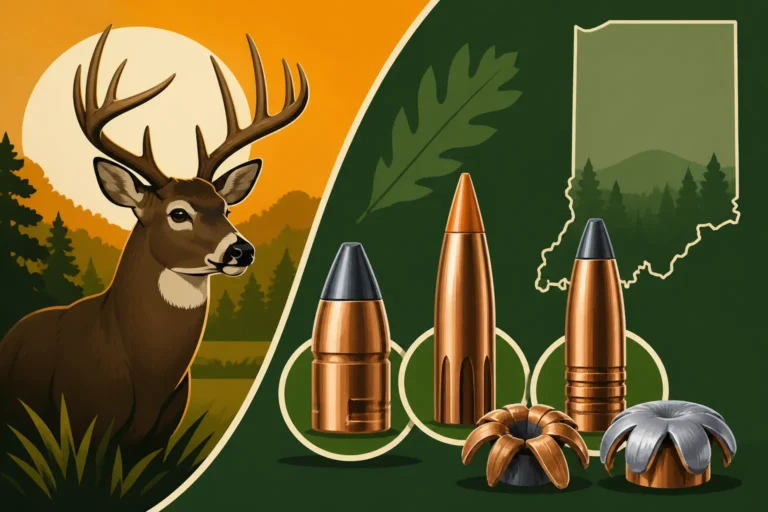
Sabot slugs are a completely different animal, designed exclusively for shotguns with fully rifled barrels. "Sabot" (pronounced sah-BOW) refers to the plastic sleeve or cup that surrounds the actual projectile. This sabot engages the rifling in the barrel, causing the bullet-shaped projectile inside to spin at incredibly high velocities, much like a rifle bullet. Once the slug exits the barrel, the sabot separates, and the aerodynamically stable projectile continues its flight with spin, maintaining accuracy and energy over much longer distances.
The performance of sabot slugs from a rifled barrel is truly impressive, extending the ethical range of a shotgun significantly. With the right combination of gun and ammunition, hunters can expect accurate shots out to 150 yards, and some setups can even push closer to 200 yards with expert marksmanship and careful ballistics calculations. This dramatically increases the versatility of a slug gun, making it a viable option for situations that might previously have required a rifle, even in open areas of northern Indiana farmland where longer shots might present themselves.
However, just like rifled slugs in a smoothbore, sabot slugs are particular about what barrel they perform best in. You absolutely must match the slug to your barrel's twist rate and bore dimensions. Trying various brands, bullet weights, and designs (e.g., copper solids, expanding lead core) is essential to find what your specific gun "likes." This patterning process can be a little frustrating (and expensive!), but it's the only way to unlock the true accuracy potential of a rifled slug gun. It's also worth noting that you should never shoot rifled slugs through a fully rifled barrel, as the soft lead can foul the rifling, and accuracy will be abysmal.
Choosing the Right Gauge and Load
The most common gauges for deer hunting with slug guns are 12-gauge and 20-gauge. Both are highly effective, but they offer slightly different characteristics. The 12-gauge slug is often heavier, typically ranging from about 1 ounce (437 grains) for a rifled slug to around 300-400 grains for a sabot slug, and it delivers a powerful punch. Historically, it was the go-to for many hunters due to its perceived knockdown power.
However, the 20-gauge has seen a significant surge in popularity, especially with modern sabot slug technology. A 20-gauge sabot slug, often in the 250-grain range, can achieve higher velocities than its 12-gauge counterpart, translating to flatter trajectories and less recoil. For many hunters, especially those who are recoil-sensitive or younger hunters, the reduced recoil of a 20-gauge makes it much easier to shoot accurately, leading to better confidence and performance in the field. When considering how recoil affects follow-up shots or sustained practice, the 20-gauge often wins out.
Beyond the gauge, you also have choices in the load itself. Standard velocity slugs are common, but high-velocity or magnum loads are also available. While higher velocity can flatten trajectory slightly, it often comes at the cost of increased recoil, which can negatively impact accuracy if you're flinching. For most Indiana hunting situations, a standard velocity, high-quality sabot slug in a 20-gauge or 12-gauge will provide more than enough terminal performance and accuracy within its effective range. Focus on finding the load that groups best from your specific firearm, rather than chasing the fastest muzzle velocity.
| Slug Type | Barrel Type | Typical Effective Range (yards) | Key Advantage | Key Disadvantage | Common Uses |
|---|---|---|---|---|---|
| Rifled Slug | Smoothbore (with choke) | 50-75 (up to 100 max) | Economical, good for dense cover | Poor aerodynamics, limited range | Dense woods, short-range encounters |
| Sabot Slug | Fully Rifled | 100-150 (up to 200 max) | Excellent accuracy, extended range | More expensive, requires rifled barrel | Open fields, longer shots, varied terrain |
Essential Features of a Dedicated Slug Gun
While many shotguns can technically shoot slugs, a dedicated slug gun is specifically designed to maximize accuracy and performance for deer hunting. These aren't your typical duck guns or trap shooters. Understanding what makes a slug gun optimized for deer is key to making an informed choice.
Rifled Barrels vs. Smoothbore: A Critical Choice
This is perhaps the single most important distinction when it comes to slug gun performance. As we discussed, a smoothbore barrel is exactly what it sounds like: smooth on the inside. These barrels are designed to shoot shot shells effectively, and while they can shoot rifled slugs, their accuracy is inherently limited. They perform best at ranges under 100 yards. If you primarily hunt extremely thick cover, or if you want a versatile shotgun that can also be used for Waterfowl Hunting the Kankakee Marshes or Squirrel and Small Game Hunting in Indiana with a quick barrel swap, a smoothbore might be a practical choice. Just know you'll be limited to rifled slugs and shorter ranges.
A fully rifled barrel, on the other hand, has spiral grooves cut into the interior, just like a rifle. These grooves impart spin on a sabot slug, stabilizing it in flight and leading to dramatically improved accuracy and extended range. If your primary goal is deer hunting with a shotgun, and you want to maximize its effective distance and precision, a fully rifled barrel is absolutely the way to go. Many shotguns, particularly pump-action and semi-automatic models, can be fitted with interchangeable barrels, allowing you to swap between a smoothbore for birds and a rifled barrel for deer. This gives you the best of both worlds without needing two entirely separate firearms.
The investment in a good rifled barrel can be significant, but it pays dividends in accuracy and confidence. When considering a shotgun for deer, always prioritize a fully rifled barrel if you plan on using sabot slugs and want to push your effective range beyond the 75-yard mark. It's the foundation upon which all other accuracy-enhancing features are built.
Action Types: Pump, Semi-Auto, and Break-Action
The action of your slug gun influences everything from recoil management to follow-up shot speed. Each type has its pros and cons, and what's "best" often comes down to personal preference and budget.
Pump-action shotguns are arguably the most popular choice for slug guns, and for good reason. They are renowned for their reliability, durability, and relatively affordable price point. Classics like the Remington 870 or Mossberg 500/590 series have been putting venison on tables for decades. With a pump-action, you manually cycle the fore-end to eject a spent shell and chamber a new one. This action is very reliable, less prone to stoppages in adverse weather or with varied ammunition, and gives the shooter a sense of control. The downside? The manual action is slower for follow-up shots compared to a semi-auto, and you absorb the full force of the slug's recoil directly. However, for a single, well-placed shot on an Indiana whitetail, a pump-action is hard to beat.
Semi-automatic shotguns offer faster follow-up shots and significantly reduced felt recoil, as some of the recoil energy is used to cycle the action. This can make them much more comfortable to shoot, especially during practice sessions, and can increase your accuracy because you're less likely to flinch. Brands like Benelli, Browning, and Winchester make excellent semi-auto slug guns. The trade-off is often a higher price tag and potentially more sensitivity to ammunition types and cleanliness – a dirty semi-auto can sometimes jam. If you anticipate needing quick follow-up shots or prefer a softer shooting experience, a semi-auto is a fantastic option.
Break-action shotguns, including single-shots, over-unders, and side-by-sides, are less common for dedicated slug hunting, but they have their place. A single-shot is the simplest and often most affordable option, forcing you to make that first shot count. Over-unders can be surprisingly accurate with two barrels, but the cost quickly escalates. Their main drawback is the slow reload speed, making follow-up shots challenging, especially for a running deer. However, for a minimalist hunter or someone teaching a youth, a single-shot slug gun can be an excellent tool for learning precision and patience.
Ergonomics and Fit for Accuracy
Just like a rifle, a shotgun slug gun needs to fit you properly for consistent accuracy. Ergonomics, which is how comfortably and effectively you can interact with the firearm, plays a huge role. Things like length of pull, comb height, and the grip angle all influence how well you shoulder the gun, align your eye with the sights or scope, and manage recoil. If the gun doesn't fit, you'll be fighting it with every shot, leading to inconsistent groups and discomfort.
Length of pull (LOP) is the distance from the trigger to the middle of the buttstock. If it's too long, you'll be stretching and uncomfortable. Too short, and your head will be too far forward. Many modern slug guns, or even basic pump actions, offer adjustable stocks or aftermarket options to customize LOP. Comb height is equally critical; it's where your cheek rests. For optics, you often need a higher comb to achieve a proper cheek weld and eye alignment. Without it, you'll be "necking" the stock, which is unstable and inaccurate. Some stocks come with adjustable combs, or you can add a padded comb riser.
The overall balance and weight of the slug gun also factor into its feel. A heavier gun will generally absorb more recoil, making it more pleasant to shoot. However, if you're Hunting the Hoosier Forest's Deer-Heavy Coves and hiking deep into the woods, a lighter gun will be much appreciated. It's a balance. Before committing to a slug gun, always try to shoulder it, mount it a few times, and see how it feels. If you can, shoot it. The best slug gun in the world won't do you any good if you can't comfortably and consistently shoot it well. Resources like GoHunt can provide reviews on various models and their ergonomic considerations, helping you narrow down your choices before heading to the store.
Optics for Pinpoint Accuracy
Once you have a dedicated slug gun with a rifled barrel, the next crucial step to unlocking its full accuracy potential is selecting the right optics. Open sights are okay for very close range, but for anything beyond 50 yards, a scope or red dot sight becomes almost mandatory for consistent, ethical shots.
Scopes Tailored for Slug Gun Ranges
Unlike rifles that might be shooting hundreds of yards, slug guns operate in a more defined, often shorter, range envelope. This means rifle scopes designed for long-range precision aren't always the best fit. What you need is a scope specifically designed for the unique ballistics and recoil of a slug gun. These are often referred to as "shotgun scopes." They typically feature lower magnification ranges (e.g., 1-4x, 2-7x, or fixed 4x), a generous eye relief to prevent "scope bite" from heavy recoil, and often specialized reticles with bullet drop compensation (BDC) markings calibrated for slug trajectories.
The low magnification is key. At the typical effective ranges of a slug gun (up to 150-175 yards), high magnification isn't necessary and can actually hinder quick target acquisition in thick cover. A 2-7x scope, for example, allows you to dial down to 2x for wide field of view and fast acquisition in dense woods, and crank it up to 7x for a more precise shot across a small field edge. A good rule of thumb for Rifle Scope Magnification for Indiana Deer hunting generally applies here too – you don't need a lot of power in timber. Look for scopes with durable, fog-proof, and waterproof construction, as Indiana weather can be notoriously unpredictable during deer season.
Many scope manufacturers offer lines specifically designed for shotguns, with robust internal components built to withstand the unique, sharp recoil impulse of a slug gun. Brands like Leupold, Nikon, and Bushnell have excellent options that won't break the bank. When researching options, GoHunt can be a helpful platform to compare different models and read user experiences, helping you choose a scope that aligns with your specific hunting style and budget.
Mounting Solutions for Heavy Recoil
A high-quality scope is only as good as its mounting system. This is an area where you absolutely cannot skimp, especially with a slug gun. The heavy, sharp recoil impulse of a slug can be brutal on scope mounts, causing them to loosen or even break if they're not robust enough. You're not just dealing with the recoil itself, but also the vibration and shock that transmits through the firearm.
Look for strong, steel or high-grade aluminum rings and a solid base. Many slug guns come drilled and tapped for scope bases, and often a cantilever mount might be necessary if your barrel is interchangeable and you need to mount the scope directly to the barrel to maintain zero when swapping. A cantilever mount extends forward over the receiver, allowing the scope to be mounted entirely on the barrel. This is an excellent solution for preserving accuracy.
Two-piece bases and rings are common, but a single-piece base can offer even greater rigidity and reduce the chance of misalignment. Use a thread-locking compound (like blue Loctite) on all screws, but don't over-tighten them to the point of stripping. Follow the manufacturer's torque specifications precisely. After mounting, always check the screws periodically, especially after a few shooting sessions, to ensure everything remains tight and secure. A loose scope mount is one of the most common reasons for unexplained accuracy issues in the field, and it's easily avoidable with proper installation and maintenance.
Red Dot Sights for Close-Quarters Hunting
For hunters who operate primarily in very dense cover where shots are almost always under 75 yards, a red dot sight can be an excellent alternative to a traditional scope. Red dots offer incredibly fast target acquisition, a wide field of view (especially when shooting with both eyes open), and are generally very forgiving of head position. They are simple to use: place the dot on the target and squeeze the trigger.
These sights are especially effective in scenarios like Deer Drives With Three or Four Hunters in thick brush, or still-hunting through heavy woods where opportunities are fleeting and shots are up close. They excel in low-light conditions, as the illuminated reticle is easy to see against a dark background. Red dot sights are also typically very durable, compact, and lightweight, making them ideal for a gun that might get bumped and scraped in the woods.
While they don't offer magnification, which limits their effective range compared to a scoped slug gun, their speed and simplicity make them a formidable choice for specific hunting styles. Aimpoint, Vortex, and Holosun are popular brands known for their rugged red dot sights. Make sure to choose one that's designed to withstand the recoil of a shotgun; not all red dots are created equal in this regard. As with any optic, a solid mount is critical to maintaining zero.
Sighting In and Practice Makes Perfect
Having the best slug gun and optics means absolutely nothing if they aren't properly sighted in and you haven't put in the practice. This isn't just about hitting the target; it's about confidently making ethical shots in the field.
The Importance of a Solid Bench Rest
Sighting in a slug gun, especially with its heavier recoil, requires a rock-solid foundation. A wobbly shooting rest or poor form will lead to inconsistent groups, making it impossible to determine if you're seeing actual ballistic performance or just shooter error. Invest in a good, heavy-duty bench rest or sandbags that will firmly hold your firearm. A lead sled or similar recoil-reducing device can be invaluable here, not only for accuracy but for saving your shoulder during extended patterning sessions.
When you're ready to shoot, establish a consistent shooting position. Ensure your body is relaxed, you're not tensing up, and your cheek weld is firm and repeatable. Consistency is the name of the game. Begin shooting at closer ranges, like 25 yards, to get on paper. Once you're hitting consistently at 25, move to 50 yards, and then finally to your intended zero distance, typically 100 yards for a rifled barrel with sabot slugs, or 50-75 yards for a smoothbore with rifled slugs. Adjust your scope or sights slowly and methodically, making small, deliberate clicks, and allowing the barrel to cool between shots to prevent accuracy shifts from heat.
Remember that each change in slug brand or type will likely require a complete re-zeroing. Do not assume that because your gun shot Federal Premium slugs well last year, it will shoot Winchester or Remington slugs identically this year. Every gun and ammunition combination is unique, and it’s a process you'll need to repeat anytime you change your load. This is a common frustration, but it's part of slug gun hunting.
Mastering Trajectory and Drop
Slug gun ballistics are very different from centerfire rifles. Slugs, particularly rifled slugs, have a much more pronounced arc in their trajectory. This means understanding and accounting for bullet drop at various distances is absolutely critical for ethical shots beyond your zero range. You can't just "aim dead on" at every distance like you might with a flatter-shooting rifle.
For a slug gun zeroed at 100 yards, a sabot slug might be a few inches high at 50 yards, dead on at 100, and then drop significantly at 125, 150, or 175 yards. You need to know these numbers for your specific load and firearm. The best way to do this is to actually shoot your gun at multiple distances (e.g., 25, 50, 75, 100, 125, 150 yards) after you've established your primary zero. This gives you real-world data, not just theoretical numbers from a ballistic chart. Make notes or create a small card with holdover information for quick reference in the field.
Many modern slug gun scopes have BDC reticles that can help with this, offering additional aiming points below the main crosshair for longer distances. However, these BDC reticles are often calibrated for specific slug weights and velocities, so test them to confirm they match your load. Knowing your trajectory intimately allows you to make informed decisions in the field, whether you need to hold slightly high or slightly low, ensuring you place your shot precisely where it needs to be. For a truly accurate range estimation in the field, carrying a quality rangefinder is almost a necessity for a slug gun hunter.
Field Practice and Shooting Positions
Range time is great for zeroing and patterning, but field practice is where you build confidence for real-world hunting scenarios. Most deer aren't going to stand perfectly still at a known distance, offering you a bench rest shot. You'll often be shooting from awkward positions, quickly, and at unknown ranges.
Practice shooting from standing, kneeling, and sitting positions. Simulate real hunting scenarios: quick mounts, shooting off-hand, using a tree or fence post as a rest, and shooting from a ground blind or treestand. Pay attention to how your slug gun feels and shoots in these various positions. Does the stock snag on your clothing? Can you quickly find the sight picture? Does the recoil knock you off target excessively? All of these are important questions that only practice can answer.
Consider joining a local informal shooting competition or even just practicing with friends, simulating game movements. Using shooting sticks or a bipod can also dramatically improve accuracy in field conditions, especially when Shooting Sticks From a Farmland Field Edge where a longer shot might be required. The more you practice, the more intuitive shooting your slug gun becomes, allowing you to focus on the deer and the moment, rather than fighting your equipment. This dedicated practice will give you the confidence needed when that Indiana buck steps out during Hunting the Rut in Early November.
Advanced Tactics and Considerations for Slug Gun Hunters
While the technical aspects of gear and accuracy are paramount, understanding how to apply that knowledge in the field, along with proper gun care, truly sets successful slug gun hunters apart.
Understanding Effective Range Limitations
Even with a modern, rifled slug gun and sabot slugs, there is an absolute effective range limitation. For most setups and hunters, this is going to be in the 150-175 yard ballpark, with some pushing to 200 under ideal conditions. This is considerably shorter than many centerfire rifles that can reach out to 300+ yards. It's crucial to understand your personal and your gun's ethical maximum range and stick to it. Pushing beyond that limit significantly increases the risk of a wounded animal and a lost deer, which is something no ethical hunter wants.
Factors like wind, elevation, and dense brush can further reduce your effective range. A strong crosswind, for instance, will push a slug more than it would a sleek rifle bullet. If you're hunting in heavy timber, like sections of the Hoosier National Forest, your shot opportunities might naturally be much shorter, making long-range capabilities irrelevant. Conversely, hunting along a powerline cut or a wide-open field edge might present longer shots. You must be able to accurately judge distance, which means carrying and using a rangefinder is highly recommended for any slug gun hunter who anticipates shots beyond 50 yards.
The key is to practice at these maximum distances, even if it's just a few shots, so you know exactly what your bullet drop is and what kind of groups you can realistically achieve. If you can't consistently put your shots into a pie plate (roughly 6-8 inches) at your chosen maximum range, then that range is too far. Honesty with yourself about your capabilities and your gun's limitations is the most ethical approach to hunting with a slug gun.
Navigating Thick Cover and Shot Angles
Many prime Indiana deer hunting spots, whether it's the sprawling Hunting the Wabash River Bottoms or a dense cedar thicket, involve thick cover. This is where the slug gun, with its heavy, slower-moving projectile, can sometimes be both an advantage and a disadvantage. While a slug is less likely to deflect off small twigs than a fragile, high-velocity rifle bullet, it's certainly not impervious to brush. You should never deliberately try to shoot through dense brush. Always aim for a clear lane to the animal's vitals.
When hunting in thick cover, understanding shot angles and deer anatomy becomes even more critical. You're often dealing with deer that are partially obscured, or moving quickly. Being patient, waiting for a clear shot, and being intimately familiar with deer vitals will serve you well. A slug, especially a sabot slug with its impressive energy, will create a devastating wound channel, but only if placed correctly. A quick, close-range shot from a slug gun often delivers an immense amount of kinetic energy to the target.
Walking through thickets, remember to carry your slug gun in a safe but ready position. Many hunters find that a sturdy sling helps, allowing you to carry the gun comfortably while keeping it accessible for a quick shot. When scouting public land, pay attention to these thick cover areas, as deer often use them for bedding, and learn how to move quietly through them to maximize your chances of a close-range encounter. Using a resource like GoHunt can help you scout aerial photos to identify these dense pockets.
Maintenance and Care for Longevity
Slug guns, like any firearm, require regular maintenance to ensure reliability and accuracy. The heavy recoil and the nature of firing slugs can lead to accelerated wear and tear if neglected. This is especially true for the barrel.
For rifled barrels, copper fouling from sabot slugs can build up over time and degrade accuracy. Regular cleaning with a good copper solvent and a bore brush is essential. Follow the directions for your cleaning products, allowing solvents adequate time to work. Don't forget to clean the action as well; spent powder residue and dirt can accumulate, potentially leading to malfunctions, especially in semi-automatic models. Pay close attention to the chamber and bolt face, where fouling is often most concentrated.
Beyond cleaning, routinely check all screws on your scope mounts, rings, and stock for tightness. Recoil can slowly loosen these connections, leading to accuracy issues. A drop of blue Loctite on mount screws is a small investment that can prevent big headaches. If your slug gun has an interchangeable barrel, make sure the barrel attachment mechanism is clean and securely fastened when assembled. Store your slug gun in a dry, safe place, and apply a thin layer of gun oil to exposed metal parts to prevent rust, particularly important after a wet day in the field during Opening Weekend Tactics for Firearms Season. Proper care not only preserves the life of your firearm but ensures it's always ready to perform when that deer steps into your shooting lane.
Comparing Slug Guns to Rifles in the Indiana Woods
With the new laws allowing for statewide rifle use in Indiana, many hunters are weighing their options. It's a fair question: should I stick with my slug gun, or make the switch to a rifle? There's no single "right" answer, as both have distinct advantages and disadvantages depending on your hunting style and the terrain you frequent.
Pros and Cons of Each System
Let's lay out the general strengths and weaknesses of each system when it comes to deer hunting in Indiana.
Shotgun Slug Guns:
- Pros:
- Devastating Terminal Performance at Range: Within their effective range (up to 150-175 yards), sabot slugs deliver a huge amount of energy, often creating wide wound channels.
- Brush Penetration (relative): While you shouldn't shoot through brush, slugs tend to deflect less on minor obstructions than light, high-velocity rifle bullets.
- Versatility (with barrel swaps): Many shotguns can switch between a rifled barrel for slugs and a smoothbore for birds or small game.
- Legal in all areas: Shotguns are legal for deer in every deer hunting zone in Indiana.
- Familiarity: Many Indiana hunters have grown up with them.
- Cost: Often more affordable upfront than a dedicated hunting rifle setup.
- Cons:
- Limited Range: Significantly shorter effective range than most rifles.
- Pronounced Trajectory: Requires precise holdover calculations beyond 100 yards.
- Recoil: Generally heavier felt recoil than many common deer rifle calibers.
- Ammunition Cost: High-quality sabot slugs can be quite expensive.
Hunting Rifles (centerfire, now statewide legal):
- Pros:
- Extended Range: Easily effective out to 200-300+ yards, depending on caliber and shooter skill.
- Flatter Trajectory: Much less bullet drop, simplifying aiming at varied distances.
- Precision: Generally capable of greater inherent accuracy, especially at longer ranges.
- Recoil: Many popular deer calibers have manageable recoil, especially compared to 12-gauge slugs.
- Ammunition Cost: Rifle ammunition can be more affordable per round than premium sabot slugs.
- Cons:
- Over-penetration/Overkill (in thick cover): High-velocity rifle bullets can sometimes over-penetrate or be less effective on close-range shots with insufficient expansion.
- Brush Deflection: Lighter, faster rifle bullets are more prone to deflection off small twigs.
- New Investment: Requires purchasing a new firearm, optics, and ammunition for many long-time Indiana hunters.
- Noise: Centerfire rifles are generally louder than shotguns.
Ultimately, the choice comes down to personal preference, budget, and the specific environments you hunt.
When a Slug Gun Still Shines in Indiana
Despite the expanded rifle legality, there are still many situations and personal preferences where a slug gun remains an outstanding choice for Indiana deer hunting. If your hunting property or public land access (like some of the Indiana Fish and Wildlife Areas) is predominantly dense timber, thick brush, or heavy river bottoms, your shots are likely to be well within 100-125 yards. In these close-quarters scenarios, the immense knockdown power and relatively large diameter of a slug are exceptionally effective. You're not gaining much by having a 300-yard rifle if your longest shot will realistically be 70 yards.
Consider situations where deer drives are common. A slug gun, particularly a fast-cycling pump-action or semi-auto, can be ideal for quick shots on moving deer in tight windows. When Deer Drives With Three or Four Hunters are pushing deer through a block of woods, the ability to get a powerful, accurate shot off quickly at close range is invaluable. Similarly, when using a ground blind on a field edge, and deer are expected to filter out of the woods and offer a 50-75 yard shot, a slug gun is more than capable.
Finally, for hunters who already own a slug gun they love, that they've patterned, and that they shoot confidently, there's little compelling reason to switch if their hunting situations don't demand the extended range of a rifle. Confidence in your equipment is paramount, and familiarity with your firearm can often be a greater advantage than marginal ballistic differences. For youth hunters or those sensitive to recoil, a 20-gauge slug gun offers an excellent blend of effectiveness and shootability.
What the New Laws Changed (and didn't change) for Shotgun Hunters
The most significant change with Indiana's New Statewide Rifle Rules is the removal of the specific "straight-wall cartridge" restriction for rifles. Before, rifle hunters were limited to cartridges like the .45-70 Gov't, .350 Legend, or .450 Bushmaster, primarily due to concerns about projectile range and public safety in a densely populated state. Now, hunters can use most common centerfire rifle cartridges, like the .308 Win, .270 Win, 6.5 Creedmoor, and others. This means longer effective ranges and flatter trajectories for rifle hunters.
However, what the new laws didn't change is the legality and effectiveness of shotguns for deer hunting. Slug guns remain perfectly legal across the entire state for deer season. This is a crucial point for many long-time hunters who might feel pressured to upgrade. You are absolutely still within your rights and capabilities to hunt deer effectively with your slug gun. The only real "change" for slug gun hunters is the presence of other hunters now using a wider variety of rifle calibers.
This means the choice is now truly yours. You can choose to stick with the proven reliability and close-range power of your slug gun, or you can opt for a rifle if you desire extended range or different ballistic characteristics. The flexibility is a good thing for Indiana hunters, but it doesn't diminish the role or effectiveness of the humble, yet powerful, shotgun slug gun in the Hoosier woods. Ultimately, it’s about choosing the tool that best fits your hunting style and ethical considerations.
Disclaimer
This article is for general informational purposes only and does not constitute professional advice. Laws, prices and regulations vary by location and change over time. Consult a qualified professional for guidance on your specific situation.