Climbing Sticks for Indiana Hardwoods
Indiana's hardwood forests, particularly the sprawling tracts of public land, offer incredible deer and turkey hunting opportunities, but they also present a unique challenge: getting your treestand securely and quietly into position. Forget the days of heavy, cumbersome ladder stands or struggling with screw-in steps that damage trees; climbing sticks are the modern hunter's answer to mobile, efficient access in these tough environments, and this guide will walk you through everything you need to know to master them.
Why Climbing Sticks Are Essential for Indiana Hardwoods
Hunting in Indiana's diverse habitats, from the rolling hills of the south to the flat farmlands up north, demands adaptability. Traditional methods of getting into a tree often fall short when faced with the realities of public land or the need for quick, stealthy setups. Climbing sticks bridge that gap, offering unparalleled flexibility.
The Challenge of Public Land Access
Public land in Indiana, especially places like the Hoosier National Forest or various State Forests, means no permanent stands and often long walks from the truck. You're constantly adapting to changing conditions, pressure, and deer movement. This isn't your backyard woodlot where you can leave a stand up all season. You need gear that allows you to be nimble and responsive to what the woods are telling you.
Imagine scouting a beautiful ridge line in Brown County, finding fresh buck sign, and realizing the perfect tree is 1.5 miles from the nearest road. Carrying a heavy stand and screw-in steps, or even a bulky ladder stand, becomes an absolute nightmare. Climbing sticks break down into manageable sections, making those longer treks not just possible, but comfortable. They're designed for the hunter who wants to be where the deer are, not where it's easiest to set up, making them perfect for Scouting Indiana Public Land Before Season.
Furthermore, public land rules often dictate that stands must be removed daily, or at least seasonally. This isn't just about adhering to regulations; it's about security. Leaving a stand out invites theft or damage. Sticks, coupled with a lightweight stand or saddle, allow you to pack in, hunt, and pack out with minimal fuss, protecting your investment and ensuring you're always legal. It’s the ultimate expression of "leave no trace" while still getting high enough for a good shot.
Mobility vs. Permanent Stands
The hunting landscape, especially in Indiana, is dynamic. A hot food source one week might be abandoned the next. Deer patterns shift with pressure, weather, and the rut. Relying on a single, permanent stand location can severely limit your success, forcing you to hunt less-than-ideal spots simply because that's where your gear is. True hunting success often comes from adapting, something that a fixed setup simply can't offer.
Climbing sticks empower you to embrace that mobility. Instead of committing to one spot, you can scout a new area, find fresh sign—perhaps a new scrape line along a logging road or a fresh rub near a transition line—and have a stand up within minutes, rather than hours. This quick adaptability is a game-changer when you're trying to Hunting the Rut in Early November or trying to intercept a specific deer. You can literally respond to fresh deer movement the same day you find it.
This isn't just about deer either. Think about setting up for a wary gobbler in the spring. Being able to quickly get into an elevated position, especially if you're trying to Roost Hunting Indiana Gobblers, can make the difference between a successful hunt and a bust. The ability to climb quietly and efficiently is invaluable for all kinds of hunting in Indiana's diverse habitats, allowing you to put yourself in the best possible position with minimal impact.
Types of Climbing Sticks and Their Advantages
Not all climbing sticks are created equal, and understanding the differences can help you choose the best system for your hunting style in Indiana's unique environment. The choice often comes down to balancing portability with stability and personal preference.
Single-Piece Sticks vs. Sectional Sticks
When you start looking at climbing sticks, you'll quickly notice two main design philosophies: single-piece sticks and sectional sticks. Single-piece sticks, like some older models or budget-friendly options, are typically long, rigid units that don't break down further. Their primary advantage is often their simplicity and robust feel. They might be slightly quicker to attach if you're only putting up one or two, as there's no assembly required.
However, their major drawback, especially for the Indiana hardwood hunter, is their bulk. Carrying a single-piece stick that's 4 or 5 feet long through thick briars, across creek bottoms, or up steep ravines is a cumbersome chore. They snag on branches, slap against your legs, and generally make a lot of noise. They are really only practical if your stand is very close to a road or you're hunting open, clear woods where long carries aren't an issue.
Sectional sticks, on the other hand, are designed to break down into smaller, interlocking segments. This is where brands like Lone Wolf, Hawk, and Treehopper really shine. These segments can be stacked, nestled together, or even folded, creating a compact package that straps easily to your pack. This vastly improves packability and stealth when moving through thick cover, such as might be found when Reading Indiana Mud for Fresh Deer Movement. You can carry enough sections to get 15-20 feet high without feeling like you're hauling a telephone pole. The modularity also means you can carry only as many sections as you need for a given hunt.
Sticks with Platforms vs. Stand-Alone Sticks
Another key distinction is whether the climbing stick includes a built-in platform or if it's purely for ascent, requiring a separate treestand for your perch. Sticks with platforms, sometimes called "stand-alone sticks" by manufacturers, offer a small standing area at the top of the stick. This can be convenient for a quick hunt or for bowhunters who prefer a minimalistic setup, often pairing them with a saddle.
The benefit here is often a lighter overall setup if you're going ultra-minimalist. You climb up, attach your tether to the tree, and stand on the top step/platform of your last stick. This can be great for quick morning hunts or afternoon sits when you're just trying to get a vantage point in a hot area. However, the platform is usually small and not as comfortable for extended sits as a dedicated treestand, and might feel a bit cramped if you need to shift your weight or turn significantly for a shot.
Most hunters, especially those using a traditional hang-on treestand, will opt for stand-alone climbing sticks that are purely for climbing. These sticks simply provide the steps to get you up the tree, and then you attach your hang-on stand at your desired height. This combination offers the best of both worlds: highly portable sticks for ascent and the comfort and room of a full stand for the hunt. It's the most common setup you'll see in the Indiana deer woods, providing a stable platform for shots without adding unnecessary bulk to each climbing section.
Key Features to Look For in Indiana Hardwoods
Choosing the right climbing sticks isn't just about type; it's about the details. Specific features can make a huge difference in your hunting experience, especially when navigating Indiana's demanding environments.
Weight and Packability
In Indiana's rugged terrain, where long hikes are common, the weight of your gear is paramount. Every ounce feels like a pound after a mile of climbing hills. Look for sticks made from lightweight but durable materials like aluminum. Manufacturers constantly innovate to shave off weight, and these advancements can significantly reduce hunter fatigue, allowing you to go deeper and stay longer in areas that might see less pressure.
Beyond just the raw weight, how well the sticks pack is equally important. Do they nest together tightly? Do they have integrated strap management to prevent dangling straps that can snag or make noise? A well-designed stick will feel like an extension of your pack, not an awkward appendage. For example, some systems allow you to attach them vertically to a frame pack, distributing the weight evenly and keeping them out of the way of low-hanging branches when you're Hunting a Funnel Between Two Woodlots.
Consider how many sections you typically need. A set of four 30-inch sticks will get you 10-12 feet high, while five or six sections might get you 15-18 feet, which is a great height for shooting over undergrowth or getting above a deer's line of sight. Balance the number of sticks with the overall weight you're willing to carry, remembering that the lighter and more compact your system, the more likely you are to use it frequently and effectively.
Attachment Methods and Stability
The method by which climbing sticks attach to the tree is critical for both safety and quiet operation. Most modern sticks use a cam-buckle strap system, which is generally quick, secure, and silent. Some higher-end sticks incorporate rope or bungee systems that offer even quieter attachment and allow for slight adjustments after the initial cinch. Avoid any system that relies on chains or excessive metal-on-metal contact, as these are inherently noisy and could alert game.
Stability is non-negotiable. Once attached, a stick should feel rock-solid against the tree, with no wobble or flex. Poor stability not only makes climbing unsafe but also creates noise as you ascend. Look for designs that feature a "tree-hugging" profile, meaning the stick curves or has stand-offs that press firmly into the tree bark, minimizing lateral movement. A good test is to try and push the stick side-to-side once it's attached; there should be very little give, ensuring a secure platform for your climb.
Another factor for stability, especially on public land with varied tree species like oak, maple, and beech, is the adaptability of the attachment system to different tree diameters. A stick that works well on a skinny sapling should also cinch securely around a wide, mature oak. Some designs have adjustable stand-offs or longer straps to accommodate this range. This adaptability is key when trying to decide between Hanging a Stand on a Southern Indiana Ridge or setting up in a northern woodlot, as tree types and sizes can vary dramatically.
Step Design and Grip
The steps themselves might seem like a minor detail, but they significantly impact comfort, safety, and silence. Steps should be wide enough to provide stable footing, even with bulky winter boots, and offer excellent grip. Textured surfaces, serrated edges, or even rubber coatings can prevent slips, especially in wet or icy conditions that are common during Hunting the Late-Season January Lull in Indiana.
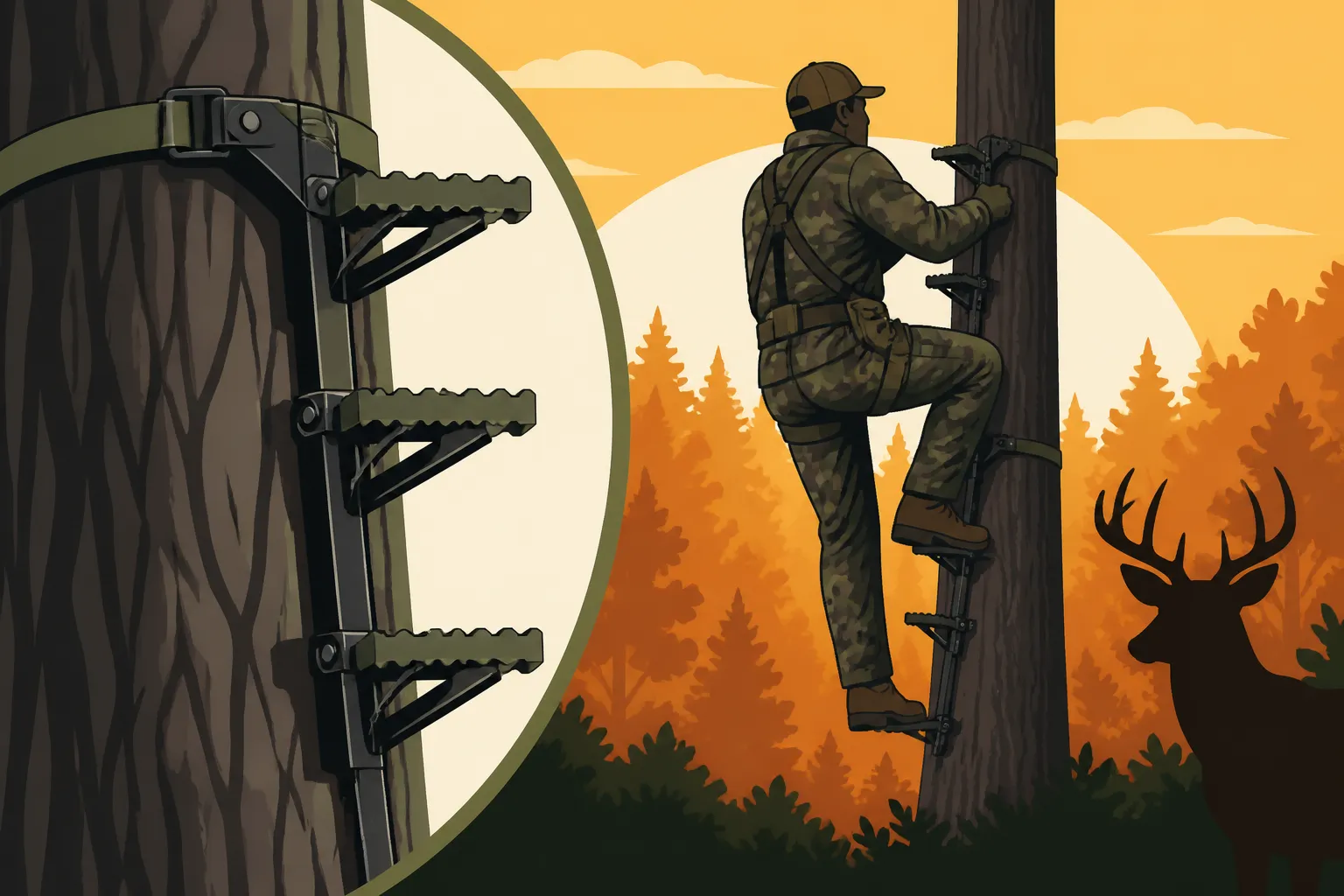
Consider how the steps are positioned. Are they offset from the main stick shaft? This offset can give your feet more room and help prevent your boots from bumping the tree or the stick itself, reducing noise. Some sticks have steps on alternating sides, which can make for a more natural climbing motion, while others have steps on both sides, allowing you to face the tree directly. Experiment to find what feels most comfortable and secure for you, as personal climbing style plays a big role here.
Finally, think about how the steps fold or deploy. Many sticks feature steps that fold flat against the main shaft for transport, then pivot out for climbing. This design is crucial for packability and preventing snags. Ensure the folding mechanism is robust and operates silently. You don't want a loud clunk every time you deploy a step on your way to a stand, especially when trying to be stealthy for a sensitive species like wild turkeys. Silence is golden in the woods, and every little detail contributes to it.
Setting Up Your Climbing Sticks Safely and Efficiently
Mastering the setup process for climbing sticks is crucial for both your personal safety and hunting success. A well-executed setup is fast, quiet, and secure, allowing you to get into position without alerting game.
Choosing the Right Tree
Selecting the right tree is the foundation of a safe and effective stand setup. In Indiana hardwoods, you'll encounter a variety of species, and not all are created equal for climbing sticks. Look for a tree that is healthy, alive, and free of dead limbs that could break off. Oaks, maples, and hickories are generally strong choices due to their sturdy nature and rough bark which provides good grip. Avoid slick-barked trees like some beeches, especially if wet, or very soft woods that might not hold the sticks securely.
Consider the diameter and straightness of the trunk. While sticks can adapt to some variation, a relatively straight trunk from the ground up to your desired stand height will make attachment much easier and more stable. Too much taper or too many gnarly knots will make getting a secure purchase difficult. Also, think about natural cover; limbs and foliage higher up can help break up your silhouette, making you less detectable. This is where tools like GoHunt's mapping features can help you identify canopy gaps and likely deer travel corridors beforehand.
Beyond the tree itself, assess your approach and wind direction. Your chosen tree should allow for a quiet entry and exit route without blowing your scent into known deer bedding or feeding areas. Always face your stand into the prevailing wind whenever possible. If you are hunting on public land, checking the Hunting Pressure on Indiana Public Land can also inform your tree selection to find less disturbed areas, or areas with less obvious access points.
Attachment Techniques
Proper attachment of your climbing sticks is paramount for safety. Start at the base of the tree. Attach your first stick as high as you can comfortably reach, ensuring it's level and tightly cinched. Most cam-buckle straps require pulling them taut, then buckling the cam down. Give it a good tug and shake to ensure it's solid. Each stick needs to be secure enough to hold your weight without slipping or moving, which is crucial for ascending safely.
As you climb, always maintain three points of contact (two hands and one foot, or one hand and two feet). Once you reach the top of a stick, you'll need to reach up and attach the next one. This is often the trickiest part, especially when dealing with cold fingers or stiff gear. Some hunters use a "daisy chain" of short rope or a specific attachment method to temporarily hang the next stick before fully securing it. Always ensure you are tethered to the tree via a climbing belt or a lineman's rope as you go higher; this frees your hands for attaching the next stick or your treestand.
It's a good practice to slightly stagger your sticks, placing them on alternating sides of the tree as you ascend. This can create a more natural climbing path and make it easier to reach the next stick for attachment. Pay close attention to the gap between steps; too far apart and it's a stretch, too close and you'll find yourself cramped. Practice this in your yard first, becoming proficient with your specific set of sticks before trying it in the dark pre-dawn hours of an Indiana deer hunt. Your practice will lead to a quieter, more efficient setup in the field.
Ascending and Descending Safely
Safety harness use is non-negotiable from the moment your feet leave the ground until they return. As you ascend your climbing sticks, your lifeline or tree strap should be attached above you at all times. Many hunters use a climbing belt (lineman's belt) which allows them to attach to the tree and have both hands free to attach the next stick or their stand. This system makes the climb much safer and more efficient, reducing the risk of a fall while working at height.
Always climb deliberately and cautiously. Check each step and attachment point as you go. Before putting your full weight on a step, ensure it feels solid. When moving from the top stick to your hang-on stand, or from your stand to begin descending, use extreme caution. Ensure your tether from your safety harness is properly attached to the tree above your stand before you ever unclip your climbing belt. This redundancy is critical for preventing accidents.
Descending requires the same vigilance. Go slow, always maintaining three points of contact. If you attached your sticks high, you might need to lean out slightly to unstrap them as you come down. Some hunters use a retrieval rope to lower their sticks once they are safely on the ground, preventing them from having to climb down and remove each one manually. This is a great tip for minimizing noise and saving energy at the end of a long day in the woods, especially if you're trying to Tracking a Deer in Fresh Indiana Snow.
Maintenance and Transporting Your Sticks
Climbing sticks are an investment in your hunting success and safety. Proper maintenance and smart transport practices will ensure they last for many seasons and perform flawlessly when you need them most.
Post-Hunt Care
Just like any other piece of hunting gear, your climbing sticks will perform best and last longest with proper care. After each hunt, especially if they've been exposed to rain, snow, or mud, take the time to clean them. A simple wipe-down with a damp cloth can remove dirt, grime, and debris. Pay particular attention to the attachment straps; mud and grit can wear down the webbing over time, compromising their strength.
Inspect your sticks regularly for any signs of wear or damage. Look for bent sections, frayed straps, cracked welds, or loose hardware. Metal fatigue can happen, especially if you're using older, heavily-used sticks. If you notice any significant damage, it's safer to replace the component or the entire stick rather than risk a fall. This proactive maintenance can prevent catastrophic failures when you're 20 feet up a tree, saving you from a potentially dangerous situation.
Store your sticks in a dry, cool place away from direct sunlight. UV rays can degrade strap materials over time, weakening them. If your sticks have moving parts or hinges, a light application of a silicone-based lubricant can keep them operating smoothly and silently. This simple routine will extend the lifespan of your investment and ensure they are ready for the next adventure, whether you're chasing deer in Hunting Brown County Ridgelines or scouting for next year's turkey season.
Transporting in the Field
One of the greatest advantages of climbing sticks is their portability, but maximizing this benefit requires smart transport. Most sectional sticks come with a dedicated carrying strap or can be easily secured to the outside of a hunting pack. The goal is to make them as compact and quiet as possible, minimizing any noise or snagging potential. Use bungee cords, compression straps, or even specialized stick carriers to cinch them down tight.
Avoid letting straps or loose sections dangle, as these will inevitably snag on branches or slap against your pack, creating noise that can alert game. If your sticks have built-in attachment points for a treestand, use them to create a single, consolidated unit for carrying. Many modern hang-on stands are designed to nest tightly with specific climbing stick brands, making for an incredibly efficient carry system that reduces bulk and noise.
When navigating dense cover or making long treks to remote spots like in the Hoosier National Forest Hunting, consider your stick orientation. Carrying them vertically on your pack, especially if you have a taller frame pack, can keep them from swinging and catching on underbrush. For shorter, flatter walks, horizontal attachment might be fine. Always do a "shakedown" walk with your loaded pack to identify any potential noise sources or discomfort before hitting the woods for real. This pre-hunt check will save you frustration and spooked game.
Advanced Tactics and Considerations
Once you've mastered the basics of climbing sticks, there are advanced tactics and considerations that can further enhance your hunting success, making you even more versatile and effective in Indiana's varied terrain.
Pairing Sticks with Saddles or Stands
Climbing sticks are incredibly versatile and can be paired with a variety of elevated hunting methods. The most common is with a traditional hang-on treestand. Here, the sticks get you to your desired height, and then you hang your stand. The combination offers stability, comfort for longer sits, and the ability to choose from a wide range of stands to suit your preferences and body type.
Another increasingly popular pairing, especially for the ultra-mobile hunter, is using climbing sticks with a tree saddle. A saddle hunting setup is incredibly lightweight and allows for 360-degree shooting angles around the tree, making it incredibly adaptable to deer movement. You climb with your sticks, then deploy a small platform (often an integral part of some sticks, or a separate compact platform) to stand on, while your saddle provides the tether and support. This system is exceptionally stealthy and allows for lightning-fast setups and takedowns.
Whether you choose a hang-on or a saddle, the key is integration. Ensure your sticks are compatible with your chosen stand or saddle system in terms of height, attachment points, and overall flow. Practice climbing with your full setup well before opening day to ensure fluid, silent movements. This synergy of gear is critical for effective Bowhunting Indiana's Long Archery Season where silence and agility are often the difference makers between success and simply watching deer walk by.
Dealing with Difficult Trees
Indiana's hardwoods aren't always perfect, straight specimens. You'll encounter trees with significant lean, irregular bark, or large limbs that make a direct climb challenging. This is where experience and some advanced stick techniques come into play. For leaning trees, you might need to adjust your stick placement to compensate, perhaps favoring one side of the lean to keep your body centered as you ascend, maintaining balance.
Trees with heavy bark or deep ridges can make standard cam-buckle straps less secure. In these situations, some hunters prefer rope-based attachment systems or sticks with aggressive "teeth" on their stand-offs to bite into the bark. Sometimes, you might even have to select a slightly smaller diameter tree or one with a smoother section to start your climb before transitioning to a larger tree if possible (though this is less common with public land rules). This often requires creative problem-solving on the spot.
Large limbs or forks in the tree can also be navigated. You might need to place a stick below or above a limb, or even use an extra stick horizontally as a temporary bridge to get around an obstacle, then remove it once past. These are advanced maneuvers that require careful planning and absolute adherence to safety protocols, always ensuring you're clipped in. Knowing your gear's limits and practicing these scenarios can make you a much more confident and versatile hunter in challenging environments, allowing you to access spots others might overlook.
GoHunt Integration for Optimal Placement
Maximizing the effectiveness of your climbing sticks goes beyond just knowing how to use them; it's about knowing where to use them. This is where modern scouting tools like the GoHunt app become invaluable. Before you even set foot in the woods, you can use satellite imagery and topographic maps to identify potential stand locations, greatly reducing the amount of time you spend blindly walking around.
With GoHunt, you can pinpoint pinch points, funnels, bedding areas, and food sources, marking specific trees that look promising from an aerial view. You can even use the app to measure distances from roads, plot quiet entry and exit routes, and analyze wind direction for specific setups. This pre-scouting minimizes wasted time and energy in the field, allowing you to quickly get to the best trees that offer the highest probability of success.
Once you're on the ground, the GPS features of GoHunt help you navigate directly to your marked spots, confirm tree suitability, and quickly get your sticks and stand into position. This combination of powerful digital scouting and efficient climbing gear allows you to hunt smarter, faster, and more effectively, adapting to the ever-changing dynamics of hunting in Indiana.
Climbing Stick Features Comparison
To help you decide which climbing sticks might be right for your Indiana hunting adventures, here's a quick comparison of common types and their key features.
| Feature | Lightweight Sectional Sticks (e.g., Lone Wolf, Hawk) | Robust Single-Piece Sticks (e.g., Budget brands) | Rope-Based Sticks (e.g., Treehopper) |
|---|---|---|---|
| Material | Aluminum alloys | Steel, heavy aluminum | Aluminum with rope attachment |
| Packability | Excellent (breaks down, nests compactly) | Poor (long, bulky, difficult to carry) | Very Good (compact segments, flexible) |
| Weight | Light to Ultra-light (1.5-2 lbs/section) | Moderate to Heavy (3-5 lbs/section) | Light (1.5-2 lbs/section) |
| Attachment | Cam-buckle straps (some silent options available) | Cam-buckle straps (can be noisy, less adaptable) | Rope system (very quiet, highly adjustable) |
| Stability | Very Good to Excellent (when attached correctly) | Good (solid once up, but harder to secure) | Excellent (conforms well to tree shape) |
| Step Design | Often wide, offset, textured for grip | Varies, can be small or less ergonomic | Wide, textured, ergonomic, good foot purchase |
| Noise | Low (with practice and careful use) | Moderate to High (metal-on-metal often present) | Very Low (rope attachment eliminates metal sounds) |
| Ideal Use | Mobile hunting, deep woods access, public land | Close to vehicle access, semi-permanent setups | Stealthy, deep woods, varied tree conditions |
Disclaimer
This article is for general informational purposes only and does not constitute professional advice. Laws, prices and regulations vary by location and change over time. Consult a qualified professional for guidance on your specific situation.