Handgun Hunting Rules in Indiana
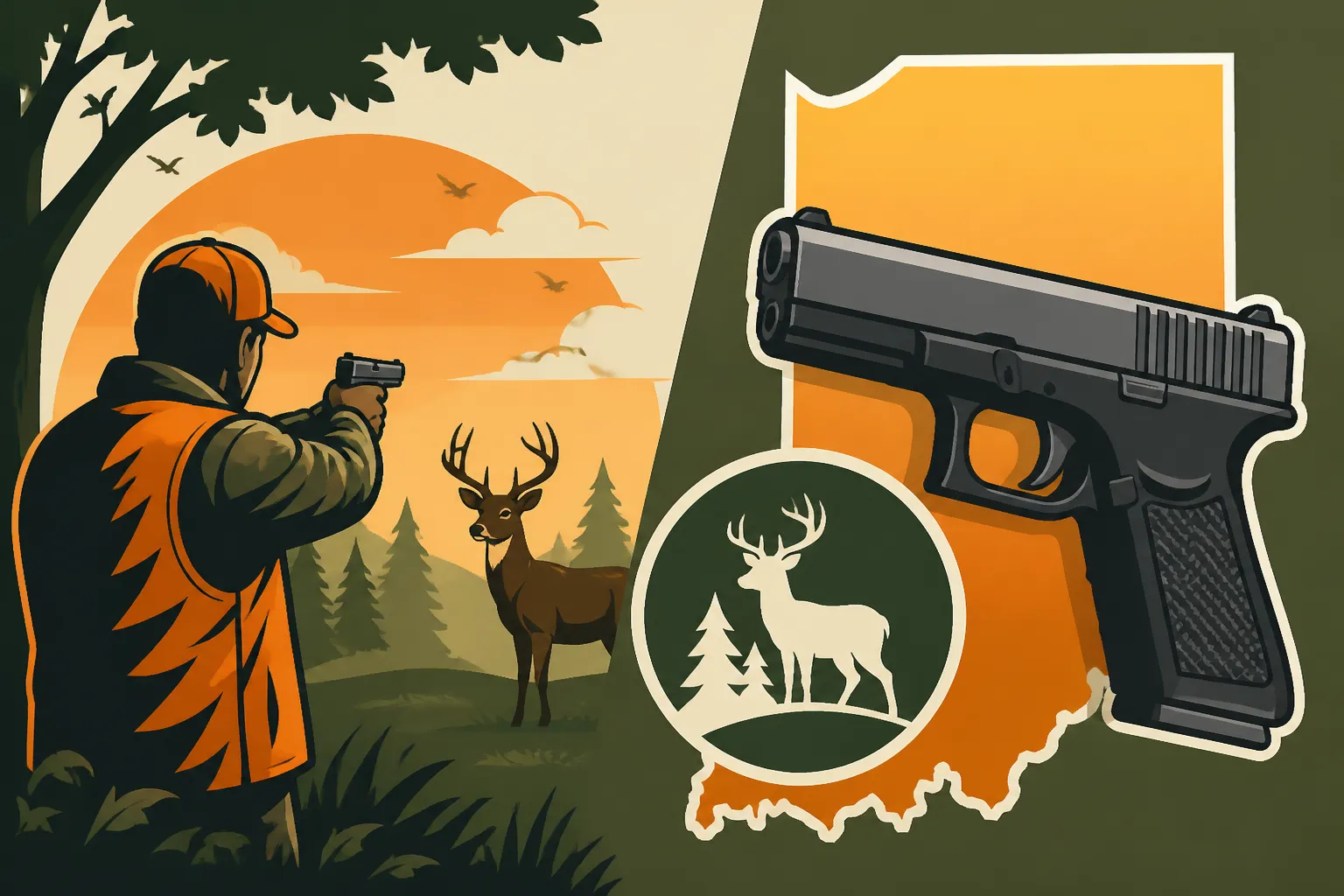
It can feel a bit confusing trying to sort through all the regulations when you're thinking about taking a handgun afield for deer season here in Indiana. Maybe you love the challenge, or perhaps you've got a trusty revolver that's been passed down, and you want to use it ethically. Whatever your reason, navigating the specific rules for handgun hunting isn't always straightforward. This comprehensive guide is going to walk you through exactly what's permitted, what calibers you need, and some practical considerations to make sure your handgun hunt is both legal and successful.
General Handgun Hunting Regulations in Indiana
For many Hoosier hunters, the thought of taking a deer with a handgun represents a unique challenge and a deep connection to a different style of hunting. However, before you even think about stepping into the timber with your pistol, it's absolutely crucial to understand the foundational rules that govern handgun hunting in Indiana. These regulations are designed to ensure hunter safety, ethical harvesting, and the proper management of our deer herd. Skipping over these details can quickly turn a hopeful hunt into a costly mistake.
One of the first things to wrap your head around is that handguns are generally legal for deer hunting during specific seasons, primarily during the firearms season and, in some cases, the muzzleloader season as well. This isn't like archery season where specific weapon types are defined more by mechanism than by ammunition. Instead, handguns fall under the broader "firearms" category, but with their own distinct set of requirements regarding caliber and barrel length that set them apart from rifles or shotguns. It's not enough to just know that handguns are allowed; you need to know which handguns are allowed.
Another common point of confusion revolves around the idea of "straight-wall cartridges." For a long time, Indiana hunting laws were very particular about certain firearm types and ammunition choices, especially for rifles. While some of those limitations have been eased or removed, the spirit of ensuring humane kills at common hunting distances for that weapon type still influences handgun regulations. This means that while you might own a powerful handgun, it still needs to meet specific criteria to be legal for deer. Always double-check the current regulations, often found on the Go Outdoors Indiana website or in the latest hunting guide, because these details can shift, and you don't want to be caught off guard.
Barrel Length Requirements
When it comes to handguns for deer hunting, Indiana has specific guidelines for barrel length that you absolutely cannot overlook. This isn't just a suggestion; it's a hard and fast rule designed to promote accuracy and ensure a humane harvest. The intent behind these regulations is to encourage the use of handguns that are capable of delivering enough energy and precision for deer at typical hunting ranges, rather than small, easily concealed pistols not designed for such a task.
The law typically requires that a handgun used for deer hunting must have a barrel length of at least 4 inches. This measurement is taken from the muzzle to the breach, excluding any permanent attachments like muzzle brakes that don't add to the effective barrel length of the firearm's chamber. Why 4 inches? Generally speaking, longer barrels tend to contribute to greater muzzle velocity and improved sight radius, which in turn can lead to better accuracy for the hunter. This becomes especially important in the woods or fields where shot opportunities might be fleeting and precise shot placement is paramount.
Imagine you're hunting a prime timber patch in southern Indiana, perhaps deep within the Hoosier National Forest, and a nice buck steps out at 30 yards. With a handgun that meets the barrel length requirement, you have a better chance of making an ethical shot because your firearm is inherently more stable and capable of delivering the projectile accurately. Trying to make that same shot with a sub-4-inch barrel, while perhaps technically possible, significantly increases the margin for error, which is precisely what the DNR wants to avoid for the welfare of the animal.
Ammunition and Cartridge Rules
Beyond barrel length, the type of ammunition you load into your hunting handgun is equally critical under Indiana law. You can't just use any cartridge; there are specific parameters regarding bullet diameter and case length that must be adhered to. These rules are in place to ensure that the projectile has sufficient energy and ballistic performance to reliably take down a deer, again, emphasizing ethical hunting practices.
For deer hunting, legal handgun cartridges typically must fire a bullet with a minimum diameter of .357 inches. This means popular calibers like .38 Special, 9mm, or even .40 S&W generally do not meet the minimum diameter requirement for deer. You're looking at calibers like .357 Magnum, .41 Magnum, .44 Magnum, .45 Colt, or similar. The larger diameter ensures a wider wound channel and better energy transfer, increasing the likelihood of a quick and humane harvest. It's a common mistake for new handgun hunters to assume their everyday carry pistol in 9mm or .40 S&W is sufficient, but for deer, you really need to step up in power and size.
Furthermore, Indiana regulations also specify a minimum case length for handgun cartridges used on deer, which is generally 1.16 inches. This detail is often overlooked but is incredibly important. This minimum case length, combined with the diameter requirement, effectively restricts hunters to more powerful, full-sized handgun cartridges that are genuinely designed for hunting medium to large game, rather than smaller, less potent self-defense rounds. So, while a .38 Special shares the .357-inch bullet diameter with a .357 Magnum, its shorter case length means it wouldn't be legal for deer, whereas the .357 Magnum with its longer case certainly would be. This distinction is crucial for staying on the right side of the law.
Selecting a Legal Handgun for Deer
Once you understand the basic regulations, the next step is actually choosing or verifying that your handgun is legal for Indiana deer season. This isn't just about reading the rules; it's about applying them to the specific firearm you intend to carry. There's a wide array of handguns available, but only a subset of them will meet the strict Indiana criteria for deer hunting. Making the right choice ensures both compliance and effectiveness in the field.
The most popular and readily available calibers that meet Indiana's handgun hunting requirements include the .357 Magnum, .41 Magnum, .44 Magnum, and .45 Colt (often referred to as .45 Long Colt). These calibers have proven themselves over decades as capable deer rounds, offering a good balance of power, accuracy, and manageable recoil in a hunting-appropriate handgun. For example, a Ruger Blackhawk in .44 Magnum with a 6-inch barrel is a classic choice that fits all the legal criteria and has ample power for Indiana whitetails. Indiana Legal Firearms for Deer Hunting covers a broader range of options, but for handguns, these are your mainstays.
When you're considering a new handgun or checking an existing one, always measure the barrel carefully. Remember, it's the actual barrel length, not including the cylinder or any part of the frame. Also, verify the exact caliber and case length of the ammunition you plan to use. Don't just go by the name on the box; some manufacturers might offer variations. For instance, while a .44 Special can technically be fired from a .44 Magnum revolver, the .44 Special cartridge itself would not meet the minimum case length requirement for deer hunting in Indiana. Always ensure your chosen rounds conform to both the diameter and case length minimums.
Popular Calibers That Meet Requirements
There are a few handgun calibers that consistently rise to the top as legal and highly effective choices for deer hunting in Indiana. These aren't just legal; they've earned their reputation by putting venison in the freezer for countless hunters. Understanding why these particular calibers are favored can help you make an informed decision about your hunting setup.
The .357 Magnum is a fantastic entry point into handgun hunting for deer. It meets both the minimum .357-inch bullet diameter and the 1.16-inch case length requirement. Many hunters appreciate the .357 Magnum because its recoil, while stout, is often more manageable than its larger counterparts, making it easier to practice with and achieve proficiency. When paired with a quality hunting bullet, it's more than capable of taking an Indiana whitetail at reasonable handgun ranges, typically within 50-75 yards. It's a versatile round, and many handgun models are available in this caliber, often with barrel lengths ranging from 4 to 8 inches, giving you plenty of options that satisfy the legal minimum.
Stepping up in power, the .44 Magnum is arguably the most popular and celebrated handgun caliber for deer hunting across North America, and certainly a top choice here in Indiana. It easily clears the minimum diameter and case length requirements. The .44 Magnum delivers significantly more energy than the .357, providing a greater margin of error for less-than-perfect shots and extending ethical range slightly. While recoil is substantially higher, many hunters find it manageable with practice and proper technique. Revolvers chambered in .44 Magnum, particularly those with 6-inch or longer barrels, are excellent hunting tools that provide formidable performance for a range of Indiana hunting scenarios, from thick brush to more open field edges.
Don't overlook the .45 Colt (Long Colt), especially for those who appreciate classic firearms or heavier, slower projectiles. This venerable cartridge, when loaded to modern hunting pressures (not to be confused with cowboy action loads), is a very capable deer getter. It boasts a larger diameter bullet than the .44 Magnum and can deliver significant knockdown power. While factory loads for the .45 Colt might vary in power, handloaders can truly unlock its potential. Many single-action revolvers are chambered in .45 Colt, offering a beautiful blend of tradition and effectiveness that fits perfectly within Indiana's handgun regulations. These calibers offer a strong foundation for any hunter looking to embark on a handgun deer hunt.
The Role of Barrel Length on Performance
While the 4-inch minimum barrel length is a legal mandate, the actual length of your handgun's barrel significantly impacts its performance in the field, going far beyond just meeting the letter of the law. It’s a trade-off between portability, velocity, and accuracy, and understanding these dynamics can help you select the ideal handgun for your specific hunting style and local terrain.
A longer barrel, say 6 inches or more, generally provides several advantages for a hunting handgun. Firstly, it allows for a more complete burn of gunpowder, resulting in higher muzzle velocities and, consequently, greater energy delivery downrange. This translates to better ballistic performance and a flatter trajectory, which can be crucial for extending your ethical hunting range. Secondly, a longer barrel increases the sight radius (the distance between your front and rear sights), which inherently makes the handgun easier to aim precisely. For hunters relying on open sights, this can dramatically improve accuracy, especially when trying to place a shot precisely behind the shoulder of a deer moving through brush.
However, longer barrels aren't without their drawbacks. They add weight and length to the firearm, making it less compact and potentially more cumbersome to carry, especially when navigating dense undergrowth in places like Indiana's state forests. Drawing from a holster or maneuvering in a treestand can also be more challenging with a long-barreled handgun. Conversely, a handgun with a 4-inch barrel, while meeting the legal minimum, will be lighter and more portable. It might be quicker to draw and easier to handle in tight quarters, but you'll likely sacrifice some muzzle velocity and sight radius. For close-range encounters, particularly in thick cover where shots are typically 25 yards or less, a 4-inch barrel can be very effective, but you must be acutely aware of its limitations for longer shots.
Practical Considerations for Handgun Hunting
Beyond simply meeting the legal requirements, successfully hunting deer with a handgun in Indiana demands a commitment to practical considerations. It's a different game than hunting with a rifle or even a shotgun, and approaching it with the right mindset and preparation will greatly increase your chances of success and ensure a humane harvest. Handgun hunting is a close-range pursuit, emphasizing stealth, shot placement, and a thorough understanding of your weapon's capabilities.
One of the biggest hurdles for many new handgun hunters is proficiency. Accurately shooting a handgun, especially under hunting pressure, takes a significant amount of practice. Recoil management, proper grip, sight alignment, and trigger control are all magnified when dealing with powerful hunting calibers. You simply can't expect to pick up a .44 Magnum a week before opening day and be consistently accurate. Regular range time, focusing on consistent groups from various positions (standing, kneeling, resting), is non-negotiable. This is where a resource like Indiana Hunter Education Requirements can lay a solid foundation, emphasizing safe and ethical shooting practices that apply directly to handguns.
Another critical aspect is understanding your ethical range. Just because your handgun can send a bullet 100 yards doesn't mean you should try to take a deer at that distance. For most handgun hunters, ethical shots on deer are typically limited to 50-75 yards, and often much closer, especially if using open sights. This demands different hunting tactics, favoring still-hunting, stalking, or hunting from a ground blind in dense cover where you can get close. Still-Hunting Southern Indiana Ridges offers great insights into moving stealthily through the woods, a tactic perfectly suited for handgun hunting. Don't be afraid to pass up a shot if you're not absolutely confident in your ability to make a clean kill within your comfortable range.
| Caliber | Min. Bullet Diameter (in) | Min. Case Length (in) | Typical Ethical Range (yards) | Common Barrel Lengths (in) | Notes |
|---|---|---|---|---|---|
| 357 Magnum | .357 | 1.29 | 50-75 | 4-8 | Good entry choice, manageable recoil, effective with good bullet placement. |
| 41 Magnum | .410 | 1.29 | 75-100 | 6-8 | Powerful, less common than .44, excellent ballistics. |
| 44 Magnum | .429 | 1.28 | 75-100 | 6-10 | Popular, powerful, higher recoil. |
| 45 Colt | .451-.454 | 1.28 | 50-75 (modern loads) | 4-7.5 | Classic round, potent with modern hunting loads. |
Note: All listed calibers meet Indiana's minimum 4-inch barrel length requirement when purchased with appropriate barrel configurations.
Range and Accuracy Limitations
When you choose to hunt with a handgun, you're embracing a specific set of limitations, particularly concerning effective range and inherent accuracy compared to a scoped rifle. Acknowledging these limitations isn't about being pessimistic; it's about being realistic and ethical, ensuring you only take shots that offer the highest probability of a clean, humane kill. This mindset is what truly defines a responsible handgun hunter in Indiana.
The most significant limitation is effective range. While a modern hunting handgun with good ammunition can be accurate out to 100 yards or more from a bench rest, real-world hunting scenarios are far different. Factors like your stance, adrenaline, uneven terrain, and lack of a solid rest drastically reduce that practical range. For most hunters using open sights, 50 to 75 yards is a much more realistic maximum. Beyond that, the chances of a clean kill diminish rapidly, and you risk wounding an animal rather than harvesting it. This means that scouting for close encounters and meticulously planning your approach become even more vital. Using tools like GoHunt or similar mapping apps can help you identify natural funnels and dense cover where you can anticipate deer movement within these closer ranges.
Furthermore, handguns, by their very nature, are harder to shoot accurately than rifles. Their lighter weight, shorter sight radius (especially with open sights), and often heavier triggers contribute to a steeper learning curve. Unlike a rifle where a small wobble might translate to a few inches at 100 yards, that same wobble with a handgun might be a foot or more at the same distance. This demands more rigorous practice and an honest assessment of your own capabilities. It also means that choosing the right optics, if allowed and desired, can make a huge difference. While some purists prefer open sights, a quality handgun scope or red dot can extend your practical accuracy and confidence, especially in lower light conditions typical of dawn and dusk hunts.
Carrying and Holstering Safely
Safe carry and proper holstering are paramount when hunting with a handgun, not just for compliance with Indiana law but for your personal safety and the safety of others in the woods. Unlike a slung rifle, a handgun is typically carried close to the body, making secure retention and easy, safe access critical. Mishandling a loaded handgun in the field can have immediate and severe consequences.
First and foremost, invest in a quality holster specifically designed for your hunting handgun. This isn't the time to skimp. A good hunting holster will securely retain the firearm, protect it from the elements and brush, and allow for a smooth, consistent draw. Many hunters prefer a chest holster or a strong-side belt holster that keeps the handgun out of the way of backpack straps or climbing gear, especially if they are also carrying a pack for a long day of still-hunting. Ensure the holster completely covers the trigger guard to prevent accidental discharge from snags or bumps. The material should be durable, whether it's leather, Kydex, or a heavy-duty synthetic, to withstand the rigors of being out in the Indiana elements.
When moving through dense cover or climbing into a tree stand, extra vigilance is required. Many hunters choose to unload their handgun or carry it with an empty chamber when negotiating particularly challenging terrain or climbing into an elevated position, reloading only once safely situated. Always be aware of your muzzle direction, even when holstered. If you're hunting public land, like some of the larger State Forests, you might encounter other hunters, so maintaining muzzle awareness and responsible handling is key to a safe and enjoyable experience for everyone. Remember, your handgun should always be pointed in a safe direction, whether it's in your hand or in its holster, as you traverse the hunting grounds.
Hunting Locations and Seasons for Handguns
Understanding where and when you can legally hunt with a handgun in Indiana is just as important as knowing what kind of handgun is legal. Indiana's deer seasons are structured with specific weapon allowances, and while handguns are permitted during general firearms seasons, there might be nuances based on public versus private land, or even specific local ordinances that could affect your hunt. Planning your hunting location and timing around these rules is essential for a compliant and successful experience.
Generally speaking, handguns that meet the state's legal requirements for deer hunting can be used during the regular Indiana firearms deer season. This season typically spans a couple of weeks in November, often coinciding with the peak of the rut, providing excellent opportunities. Additionally, they are often permitted during the late muzzleloader season, which extends into December. This gives handgun hunters a significant window of opportunity. However, it's always critical to consult the official Indiana hunting regulations each year, as dates and specific weapon allowances can sometimes shift. Indiana Deer Season Structure Explained provides a comprehensive breakdown of these season dates.
When it comes to location, your handgun is legal for deer hunting on both private and public lands where deer hunting is permitted, provided you have the appropriate licenses and, for private land, landowner permission. This includes places like Hoosier National Forest, many of Indiana's State Forests, and Fish & Wildlife Areas. However, on public lands, always check specific property rules, as some might have additional restrictions or sign-in requirements. For private land, make sure you have explicit permission from the landowner, ideally in writing. Getting Private Land Permission in Indiana can help you navigate that process smoothly, ensuring you're not trespassing and that the landowner is comfortable with your choice of firearm.
Handguns During Firearms Season
The firearms season is prime time for handgun hunters in Indiana, offering the most widespread opportunity to pursue deer with your chosen sidearm. This season typically occurs in mid-November, a period that many hunters eagerly anticipate due to increased deer activity, especially mature bucks, driven by the breeding cycle.
During the general firearms season, hunters are allowed to use a broad range of firearms, including shotguns, rifles (under the updated statewide rules), and of course, handguns, provided they meet the specific legal criteria we've discussed. This means you can legally carry your .44 Magnum revolver or .357 Magnum with a 6-inch barrel during this bustling two-week period. The cooler temperatures of November are also advantageous for handgun hunting, as deer are often moving more freely during daylight hours, and dense cover begins to thin out, potentially offering better shot opportunities at the closer ranges handguns demand.
Many hunters choose to carry a handgun as a primary weapon during this season, embracing the challenge. Others might carry one as a secondary weapon to a rifle or shotgun, which is also generally permissible. However, if you plan to carry both, ensure you are fully aware of all regulations regarding loaded firearms and specific property rules. The sheer number of hunters in the woods during firearms season means increased pressure, so finding quieter spots or employing tactics like still-hunting, as detailed in Still-Hunting Southern Indiana Ridges, can be particularly effective for getting close enough for a handgun shot. Being prepared for increased activity and potentially shorter shooting windows is key to success during this busy time.
Handguns During Muzzleloader Season
Beyond the general firearms season, handguns also find a legal place during Indiana's muzzleloader season. This late-season hunt, typically in early December, offers a quieter, often colder hunting experience, with different challenges and opportunities for the handgun hunter. It's a fantastic chance to extend your deer season and potentially fill a tag after the initial rush of firearms season has passed.
The primary requirement here is that the handgun must still meet all the legal specifications for barrel length, bullet diameter, and case length, just as it would during the general firearms season. The "muzzleloader" aspect of the season primarily refers to the primary weapon type allowed, but legal handguns are usually included as an alternative firearm. This means your trusty .44 Magnum is still good to go. The advantage of the muzzleloader season is often reduced hunter pressure compared to the general firearms opener, allowing for more solitary hunts and potentially less disturbed deer. The colder weather can also concentrate deer around specific late-season food sources like standing corn or forgotten food plots, making scouting for these areas invaluable. Late-Season Food Sources for Indiana Whitetails can provide insights into where deer might be feeding during this time.
Hunting during muzzleloader season often involves dealing with colder temperatures and potentially snow. This impacts your gear choices, from clothing layers (think wool and synthetics for warmth and quietness) to how you carry your handgun. Keeping your hands warm and ready for a shot, while also maintaining dexterity, is a real challenge. You might find a chest holster more comfortable over heavy winter layers than a belt holster. The quiet nature of hunting during this time, with falling leaves already gone and crunchy snow underfoot, means extra attention to silent movement and careful tracking of deer sign. Handgun hunting in this scenario is all about precise execution in potentially challenging conditions.
Conclusion
Navigating the specifics of handgun hunting rules in Indiana can seem like a dense thicket of regulations at first glance, but with a clear understanding of the barrel length, caliber, and ammunition requirements, it becomes much more manageable. Whether you're drawn to the unique challenge, the personal connection to a specific firearm, or simply expanding your hunting options, carrying a legal handgun for deer in the Hoosier State is a rewarding pursuit. Remember, beyond the letter of the law, ethical hunting practices, extensive practice, and a deep respect for the animal and the environment are what truly make a successful handgun hunter. So, get out to the range, hone your skills, and enjoy the distinct satisfaction that comes with harvesting an Indiana whitetail with a handgun.
Disclaimer
This article is for general informational purposes only and does not constitute professional advice. Laws, prices and regulations vary by location and change over time. Consult a qualified professional for guidance on your specific situation.