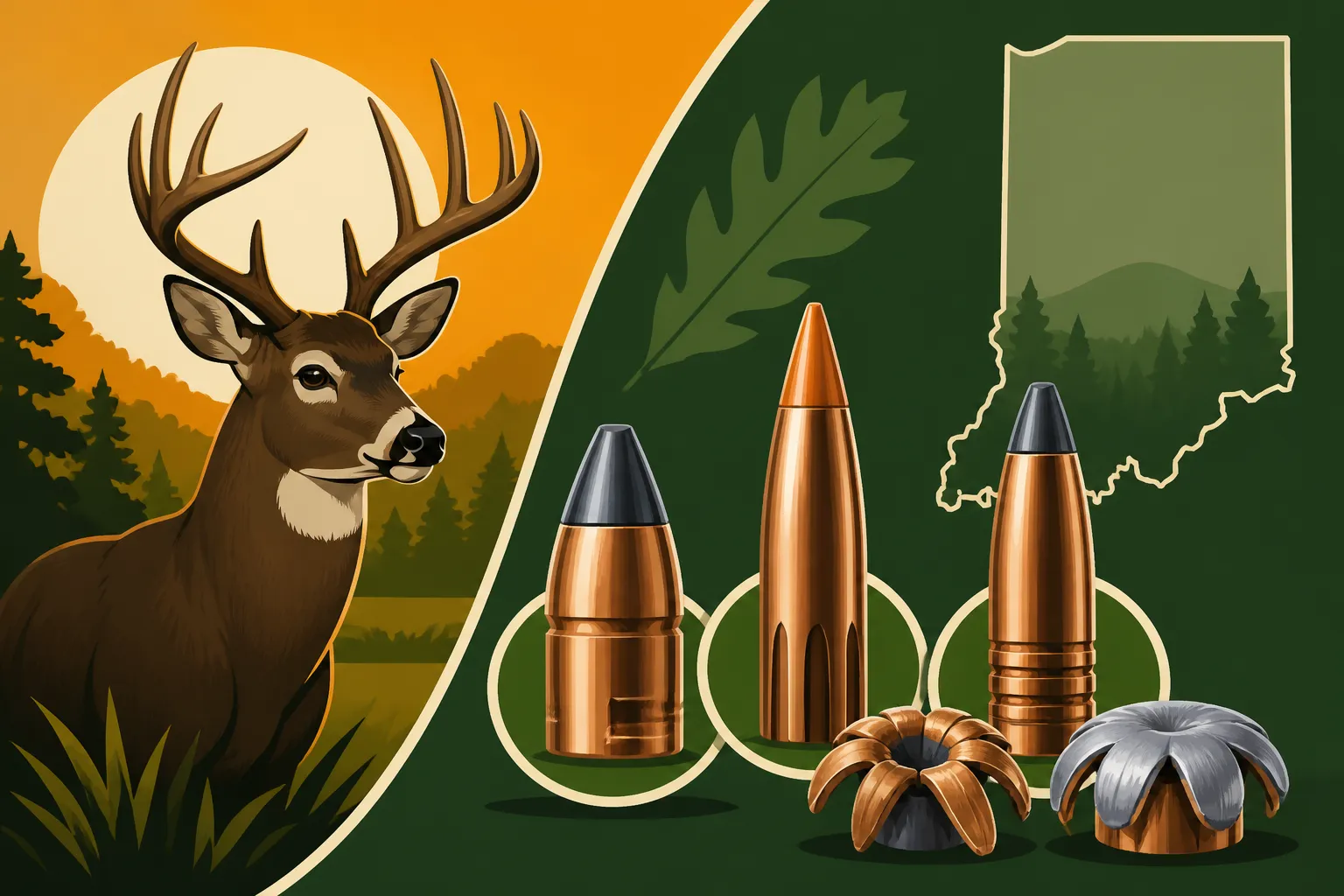
Lead-Free Ammunition Choices for Deer
For many Indiana hunters, there's a quiet but persistent concern bubbling up about the ammunition we use, especially when it comes to deer. We love our venison, and we cherish the wild places we hunt, but the traditional lead-core bullets have started to raise questions – questions about what they leave behind in the environment and even in the meat that ends up on our family's dinner table. This guide is here to walk you through the world of lead-free ammunition, exploring why hunters are making the switch, what options are out there, and how they perform in the field for our Hoosier whitetails.
Why Consider Lead-Free Ammunition for Deer?
It's easy to stick with what you know, and traditional lead-core bullets have been the standard for generations. But as we learn more about the world around us and strive to be better stewards of our natural resources, many hunters are pausing to consider the impact of their choices. The reasons for exploring lead-free ammunition are often rooted in both environmental responsibility and personal health.
Environmental Concerns and Wildlife Impact
When a traditional lead-core bullet strikes a deer, especially at higher velocities, it often fragments. Think of it like a tiny, explosive shower of lead particles spreading throughout the animal's tissue, far beyond the immediate wound channel. While the bullet does its job, these microscopic lead fragments can be left behind in the gut pile or in any meat that's trimmed away during processing.
Now, imagine that gut pile left in the woods, as is common practice. Scavengers like coyotes, raccoons, opossums, and even birds of prey such as eagles and hawks, come to feed. They don't differentiate between lead and protein. They simply eat what's available. Studies, though not specific to Indiana, have shown that these scavengers can ingest lead fragments, leading to lead poisoning. This isn't just a concern for the scavengers themselves; it can ripple through the ecosystem, affecting populations and overall wildlife health. For a hunter who spends countless hours Scouting Indiana Public Land Before Season and values healthy wildlife, this potential impact weighs heavily. It's about ensuring the land we hunt today remains vibrant for future generations and that all creatures, not just our target game, can thrive.
Health Implications for Hunters and Families
Beyond the broader environmental picture, there's a very personal reason many hunters consider lead-free options: the safety of the venison they consume. Just as lead fragments can spread in the gut pile, they can also disperse into the meat you take home. Even with careful processing, small, invisible lead particles can remain in ground venison or areas around the wound.
While the exact risk to human health from consuming lead-shot game meat is a topic of ongoing discussion and depends on factors like frequency of consumption and individual sensitivity, many hunters simply prefer to eliminate that variable. We spend good money on Indiana Hunting Licenses and What They Cost and invest countless hours in the woods to put healthy, organic protein on the table. The last thing we want to worry about is unknowingly introducing something harmful. For families with children, who are more susceptible to lead exposure, the peace of mind that comes with knowing your venison is entirely lead-free is a significant factor. It’s about being confident in the quality of the food you’ve harvested, a confidence that many find invaluable after a successful day in the woods.
Understanding Lead-Free Bullet Materials and Types
Stepping away from traditional lead can feel a bit like uncharted territory for some hunters. You've heard of copper bullets, but what exactly are they, and are there other options? The good news is that ammunition manufacturers have invested heavily in developing alternatives that perform exceptionally well, often exceeding traditional lead in certain aspects.
Copper and Copper Alloy Bullets
When most hunters think "lead-free," they're thinking copper. Solid copper bullets, or those made from copper alloys (like copper-zinc), are by far the most prevalent and proven non-lead option for deer hunting. Unlike lead-core bullets which often have a copper jacket over a lead core, these bullets are typically solid metal throughout.
The design of copper bullets is quite different. Instead of fragmenting, they are engineered for controlled expansion and extremely high weight retention. When a copper bullet hits tissue, its nose peels back into sharp petals, creating a devastating wound channel. However, the rest of the bullet stays intact, mushrooming beautifully without shedding significant mass. This means deeper penetration, often passing through the entire animal, and a much cleaner wound track with minimal to no fragmentation. This high weight retention translates to excellent energy transfer and reliable performance even through heavy bone, which can be a real advantage when you’re dealing with a tough Indiana buck. Brands like Barnes' TTSX or Hornady's GMX are popular examples, offering consistent expansion and deep penetration that hunters trust.
Other Non-Lead Alternatives
While copper and copper alloys dominate the lead-free rifle bullet market for deer, other materials have been explored, primarily for shotgun slugs or in niche applications. Bismuth is one such material, though it's more commonly found in shotgun shells for waterfowl hunting as a substitute for steel shot, offering better density than steel. For rifle bullets, it's less common for deer hunting due to manufacturing complexities and ballistic characteristics that don't always match copper for deep penetration and controlled expansion.
Tungsten is another dense metal sometimes used in high-performance projectiles, but it's typically found in extremely specialized or military applications rather than widespread hunting ammunition due to its cost and hardness. Steel, while cheap and readily available, is generally too light and hard for effective, humane deer hunting with a rifle bullet. It lacks the density for good ballistic coefficients in common deer calibers and doesn't deform or expand reliably enough for clean kills. For Indiana deer hunters, copper and copper alloy bullets remain the gold standard when seeking a reliable, high-performing lead-free option.
Performance and Ballistics of Lead-Free Deer Rounds
Making the switch to lead-free ammunition isn't just about ethics or health; it's also about ensuring you're still using a round that performs effectively and humanely in the field. There can be some differences in how these bullets fly and react compared to their lead-core counterparts, and understanding these nuances is crucial for success.
Terminal Performance on Whitetails
One of the most striking differences you'll notice with lead-free, particularly copper, bullets is their terminal performance. As discussed, these bullets are designed for minimal fragmentation and high weight retention. What this means in practice is a generally narrower, but deeper, wound channel. Where a traditional cup-and-core bullet might create a wider, more destructive wound due to shedding fragments, a solid copper bullet typically drives deeper, often resulting in complete pass-throughs on even large Indiana whitetails.
This deep penetration is especially advantageous when hunting in areas where an exit wound is desirable for blood trailing, such as the dense timber of Hoosier National Forest Hunting or along creek bottoms. The controlled expansion ensures the bullet uses its energy efficiently, creating a clean, consistent path through vitals. Some hunters initially worry that less fragmentation means less "knockdown power," but the high weight retention and deep penetration often lead to rapid incapacitation due to significant internal damage. Many find that deer shot with lead-free copper bullets travel similar distances, or even shorter, than those hit with traditional lead, as long as shot placement is precise. It truly highlights the importance of hitting that vital zone every time.
Accuracy and Point of Impact
Another critical aspect when considering a switch to lead-free ammunition is how it will affect your rifle's accuracy and point of impact. It’s a common misconception that all bullets of the same caliber will shoot to the same point of aim. In reality, differences in bullet construction, weight, velocity, and even the internal ballistics as the bullet travels down the barrel can significantly alter where the round impacts.
When moving from a lead-core bullet to a lead-free option, even if it's the same weight, you must re-zero your rifle. Don't just assume it will be "close enough." The different length and density of a solid copper bullet, for instance, can change barrel harmonics and muzzle velocity. What might have been a dead-on shot with your old ammunition could now be a high or low miss with the new. Take the time to head to the range and diligently sight in your rifle, verifying your zero at various distances you expect to shoot in Indiana's varied terrain. This means checking point of impact at 50, 100, and potentially 200 yards, especially if you hunt open fields or powerline cuts. Many hunters find that once zeroed, quality lead-free ammunition offers excellent, consistent accuracy, sometimes even tighter groups than their previous lead loads. It's a small investment in time that pays off immensely in ethical hunting.
Finding and Choosing Lead-Free Ammunition for Indiana Hunting
Alright, you're convinced that lead-free might be the way to go for your next Indiana deer hunt. Now comes the practical step: finding the right ammunition and making sure it's available. It’s not always as simple as grabbing any box off the shelf, but with a bit of research and planning, it’s completely manageable.
Availability and Specific Brands
The good news is that most major ammunition manufacturers now offer lead-free options in popular deer hunting calibers. You're not looking for some obscure, boutique product; these are mainstream offerings from trusted names. Brands like Barnes (with their TSX and TTSX lines), Hornady (GMX, CX), Federal (Trophy Copper), Winchester (Copper Impact), and Remington (Hog Hammer, which uses Barnes bullets) all produce high-quality lead-free rifle ammunition suitable for deer.
Availability can vary, especially with fluctuating supply chains, but most well-stocked sporting goods stores, both local and large chains, will carry at least a few lead-free choices. Online retailers are often your best bet for finding a wider selection and specific calibers. When you're trying to find specific brands or types of lead-free ammo, online retailers and resources like GoHunt can be invaluable for checking stock and comparing options across different vendors. Just be sure to factor in shipping times if you're ordering online before your hunt, especially if it's close to Indiana Firearms Season Opening Day. Don't wait until the last minute! Consider reaching out to your local gun shop in Indiana, as they can often order specific loads for you even if they don't regularly stock them.
Matching Ammunition to Your Caliber and Hunting Style
Choosing the right lead-free ammunition isn't just about finding what's available; it's about matching it to your rifle's caliber and your preferred hunting style in Indiana. Just like with traditional ammunition, bullet weight plays a role. While lighter-for-caliber copper bullets often perform exceptionally well due to their high sectional density and weight retention, you still want to ensure it stabilizes well in your rifle's twist rate. For instance, a common caliber like the .308 Winchester or .270 Winchester will have several lead-free options, and you'll want to pick one that gives you consistent accuracy from your specific rifle. If you're pondering Best Rifle Caliber for Indiana Deer, remember that many standard deer calibers perform excellently with lead-free loads.
Think about your typical shot distances. If you're primarily hunting in thick woods with shots under 100 yards, a bullet designed for rapid expansion at closer ranges might be ideal. If you hunt more open farmland edges or powerline cuts where a 200-yard shot isn't out of the question, a bullet with a higher ballistic coefficient will help maintain accuracy and energy downrange. Sighting In a Centerfire Rifle for Indiana Woods means knowing your typical range. While lead-free bullets are designed for deep penetration, heavier bullet weights within a given caliber can further enhance this, which can be useful if you're hunting particularly large-bodied deer or if you anticipate difficult quartering shots. Ultimately, testing different brands and bullet weights in your rifle is the best way to find the perfect lead-free match for your Indiana deer season.
| Bullet Material | Expansion Type | Weight Retention | Penetration | Fragmentation | Common Calibers (Rifle) |
|---|---|---|---|---|---|
| Solid Copper | Controlled, Petaling | Very High | Excellent | Minimal | .270, .30-06, .308, 6.5C |
| Copper Alloy | Controlled, Petaling | Very High | Excellent | Minimal | .270, .30-06, .308, 6.5C |
| Bismuth (Rifle) | Limited | Moderate | Moderate | Low | Less common |
| Steel (Rifle) | Minimal | High | Variable | None | Very rare |
Disclaimer
This article is for general informational purposes only and does not constitute professional advice. Laws, prices and regulations vary by location and change over time. Consult a qualified professional for guidance on your specific situation.