Arrow Weight for Short Shots
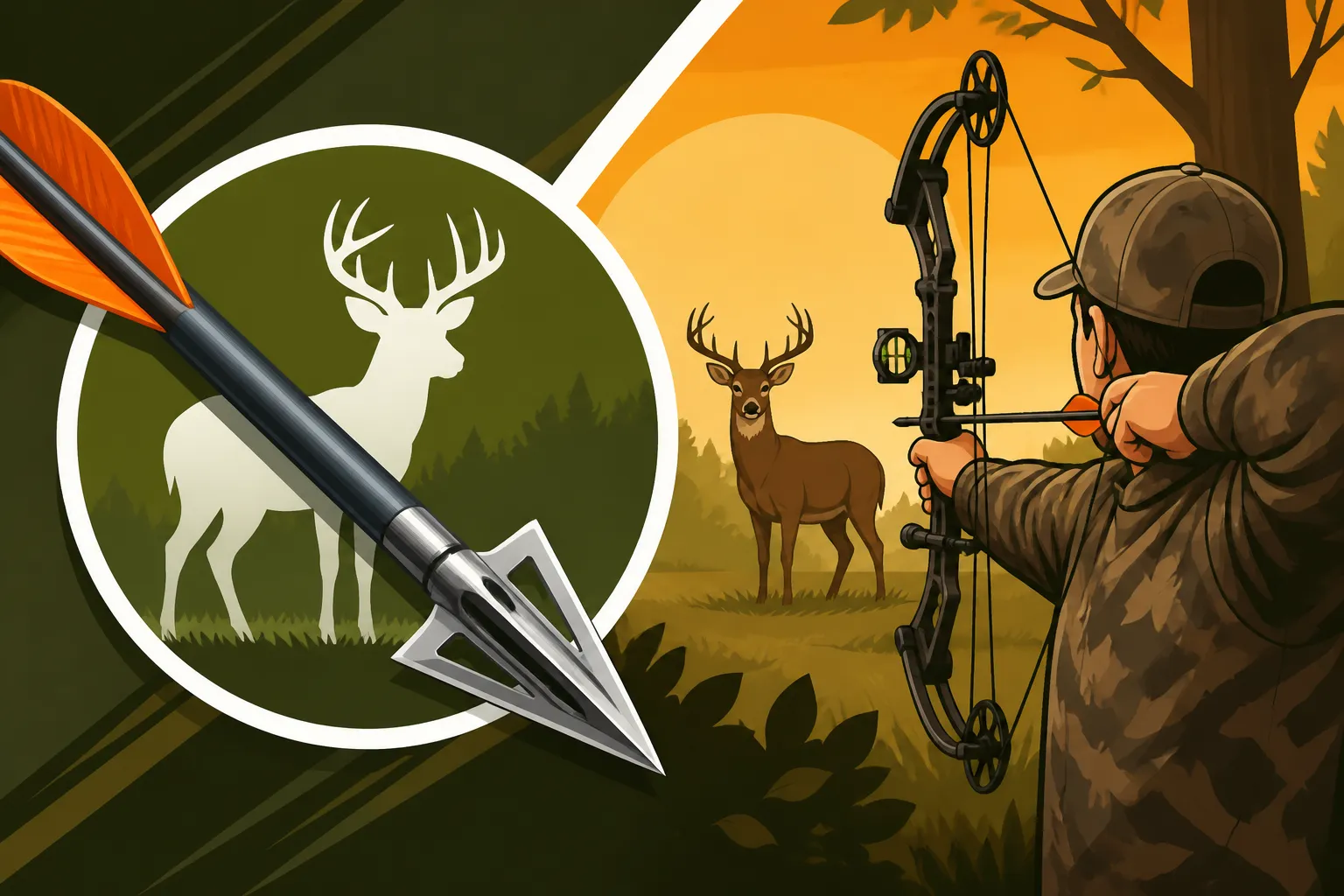
We all dream of that perfect, long-range shot at a big Indiana buck, but let's be honest, how many of our hunting encounters actually happen like that? More often than not, it's a deer slipping in close, under 20 yards, through thick cover, or perhaps you're nestled tight in a Treestand Setups in Hoosier National Forest. When these close-quarters opportunities arise, you might mistakenly think that arrow weight doesn't matter as much as it does for those longer distances. The truth is, selecting the right arrow weight for short shots is absolutely critical for maximizing penetration, achieving clean kills, and navigating the often dense, unforgiving Indiana timber. This guide will walk you through the nuances of arrow weight, its impact on performance at close range, and how to find the ideal setup for your Indiana bowhunting adventures.
The Unseen Challenges of the Close-Range Shot
It's a common misconception that because an animal is close, the shot is inherently easier and the arrow's performance less critical. In reality, close-range bowhunting in places like Indiana, with its varied terrain from dense river bottoms to rolling hills, presents its own unique set of challenges that can make a proper arrow setup even more important. Often, these close encounters happen quickly, leaving little time for perfect form or intricate aiming.
Think about it: you've been sitting patiently, perhaps calling in a buck using Grunt Calls in Mature Indiana Timber, and suddenly he's there, broadside at 15 yards. The adrenaline surge is intense, your heart is pounding, and you might be taking a shot through a small window in the brush. In these moments, you need your arrow to do exactly what it's designed to do: fly true and punch through bone and hide without hesitation. A marginal arrow setup, one that's too light or poorly matched to your bow, can turn a seemingly "easy" close shot into a gut-wrenching tracking job. We're not just talking about broadside shots either; quartering-away shots at close range require that arrow to dig deep and reach vitals.
Understanding Arrow Dynamics: Speed, Momentum, and Kinetic Energy
Before we dive into why certain arrow weights are better for short shots, it's important to grasp the fundamental physics at play. Arrow performance isn't just about speed; it's a complex interplay of kinetic energy, momentum, and even something called FOC (Front of Center).
Kinetic Energy Versus Momentum
When archers talk about arrow power, these two terms often come up. Kinetic energy (KE) is often what gets highlighted in bow specifications – a measure of the energy an arrow possesses due to its motion. Faster, lighter arrows tend to have higher kinetic energy. Momentum (P), on the other hand, is a measure of an object's mass in motion. Heavier arrows, even if they're not lightning-fast, will carry more momentum.
Here's the key for bowhunting, especially at short range: while high kinetic energy is good for maintaining flatter trajectories over longer distances, momentum is what drives penetration. Think of it this way: a speeding bullet has incredible kinetic energy but might not penetrate deeply into tough hide and bone if it fragments. A slow, heavy wrecking ball, however, has immense momentum and will smash through almost anything. For a deer at 10 or 20 yards, a flat trajectory isn't the primary concern; getting maximum penetration is. A heavier arrow retains its momentum better on impact, pushing through tissue, muscle, and even bone to ensure a clean pass-through, which is what we're always striving for.
The Role of Front of Center FOC
Front of Center (FOC) refers to how much of an arrow's total weight is located in the front half of the arrow. An arrow with a higher FOC (meaning more weight up front, typically 12-19%) tends to be more stable in flight and can improve penetration. Why? Because it acts like a dart, driving the broadhead forward with greater authority, even if it encounters resistance like a rib or shoulder blade. At close range, where accuracy over distance is less of a factor, the enhanced stability and penetration benefits of a higher FOC become even more pronounced. This can be achieved by using heavier broadheads or adding weight inserts to the front of your arrow shafts. Many archers use tools found on enthusiast sites or specialized hunting platforms like GoHunt to calculate and optimize their FOC.
Why a Heavier Arrow Excels at Close Quarters
When you're dealing with a deer at spitting distance, the advantages of a heavier arrow really shine. Forget the need for blistering speeds to compensate for yardage estimation errors; at 20 yards and in, that's not your main concern. Your focus shifts entirely to delivering maximum impact and penetration.
Maximizing Penetration on Impact
The primary reason to favor a heavier arrow for short shots is superior penetration. When your arrow, topped with a good Fixed Versus Mechanical Broadheads, slams into a deer, that momentum we just discussed becomes paramount. A heavier arrow simply carries more inertia into the target. This translates to a higher likelihood of a pass-through shot, even if you hit a less-than-ideal spot, like the off-side shoulder blade. A pass-through is incredibly important for several reasons: it creates two holes for a better blood trail, and it means the arrow isn't remaining in the animal, potentially creating more internal damage as the deer runs. In thick Indiana cover, a strong blood trail is your best friend when tracking.
Imagine a scenario in the Hoosier National Forest: a buck comes in hard, you draw, and take the shot. You hear the thud, but you also hear him crash into some thick brush before vanishing. If your arrow was too light, it might have stuck in the shoulder, creating only one entry wound and a much poorer blood trail. With a heavier arrow, even if you clipped that shoulder bone, the increased momentum would likely drive the broadhead through, ensuring a pass-through and a much easier recovery. This can mean the difference between a successful hunt and a lost animal.
Reduced Noise and Hand Shock
Heavier arrows also tend to absorb more of the bow's stored energy upon release, resulting in a quieter shot and less hand shock. While modern bows are incredibly quiet, every little bit helps, especially at close range. A deer at 10 yards is far more likely to "jump the string" if your bow emits a noticeable twang or thud. That split-second flinch can cause the deer to drop or spin, turning a perfect shot into a gut shot or a miss entirely. A quieter bow, facilitated by a heavier arrow, gives the deer less time to react, increasing your chances of the arrow striking precisely where you intended.
The reduced hand shock is a secondary benefit, contributing to a more comfortable shooting experience and potentially better accuracy through muscle memory. When you're consistently shooting a setup that feels good, you're more likely to execute a perfect shot under pressure.
Stability in Adverse Conditions
Believe it or not, a heavier arrow can also be more stable in less-than-ideal shooting conditions, which are common when bowhunting in Indiana. If you're shooting from an awkward position, maybe leaning around a tree in a Hanging a Stand on a Southern Indiana Ridge, or if there's a slight crosswind, that extra mass can help the arrow maintain its course. It's less susceptible to minor inconsistencies in your release or small gusts of wind, making it more forgiving. While we all strive for perfect form, the reality of hunting often dictates that we take the shot when it's offered, not when conditions are pristine. A heavier arrow gives you a little more margin for error when that perfect shot window opens up.
Finding Your Perfect Balance for Indiana Timber
So, how do you determine the "right" heavy arrow for your bow and your hunting style? It's not a one-size-fits-all answer, but there are some excellent guidelines to follow.
Total Arrow Weight and Grain Per Pound
Most bowhunters will aim for a total arrow weight that results in 5-7 grains per pound of draw weight. For example, if you pull 60 pounds, you're looking for an arrow between 300 and 420 grains. For short-range penetration, many experienced hunters will lean towards the higher end of that spectrum, or even go a bit above it. An arrow in the 450-550 grain range, for instance, might sound heavy to some, but it can be a devastatingly effective setup at 30 yards and under.
Here's a quick comparison of general arrow weight categories and their common characteristics:
| Arrow Weight Category | Total Grain Weight (approx.) | Typical Grains/Pound (60lb Draw) | Primary Advantage | Primary Disadvantage | Best for Indiana Hunting Scenario |
|---|---|---|---|---|---|
| Light | 300-350 | 5-5.8 | High Speed, Flat Trajectory | Lower Penetration, Less Stable | Very long shots (not typical Indiana bowhunting), target shooting |
| Medium | 350-425 | 5.8-7 | Good Balance of Speed & Penetration | Compromise on both ends | Versatile, general bowhunting |
| Heavy | 425-550+ | 7-9+ | Maximum Penetration, Quiet | Slower Speed, More Trajectory Drop | Close-range, thick cover, large game, unfavorable shot angles |
Keep in mind these are general guidelines. The "sweet spot" will vary depending on your specific bow, draw length, and personal preferences. Many archers rely on online resources like GoHunt, or consult with pro shop technicians, to meticulously weigh their arrows and calculate their FOC.
Experimenting and Tuning
The best way to find your ideal heavy arrow setup is through experimentation and diligent tuning. Start with a heavier arrow that still tunes well with your bow. You can add weight by selecting heavier shafts, using heavier inserts, or choosing heavier broadheads. A heavy Fixed Versus Mechanical Broadheads (like 125-150 grains) can significantly boost your FOC and overall arrow weight.
Spend time on the practice range, shooting at various close distances (5, 10, 20, 30 yards). Pay attention to:
- Arrow Flight: Does it fly straight and true, without porpoising or fishtailing?
- Accuracy: Are your groups consistently tight?
- Feel: How does the shot feel? Is there excessive vibration or noise?
It's also crucial to remember that a heavier arrow will have more trajectory drop than a lighter one. While this isn't a huge concern at 20 yards, it becomes more noticeable at 30 or 40. You might need to adjust your Bow Sights for Timber Shots accordingly, perhaps shifting your pins slightly. This is where a little extra practice at various ranges pays off. Don't just set your 20-yard pin and call it good; practice shooting from 10 to 30 yards to really understand how your heavier arrow behaves.
Broadhead Selection and Arrow Integrity
Your arrow is only as good as its weakest link. A heavy arrow demands a tough broadhead. For deep penetration on tough Indiana bucks, especially when a close shot might mean punching through a shoulder blade, a well-constructed fixed blade broadhead often excels. Ensure your broadhead is sharp and perfectly aligned with your arrow shaft. This synergy between arrow weight and broadhead design is what ultimately delivers devastating terminal performance. Consider that even a perfect shot with a heavy arrow can be compromised by a poor quality or dull broadhead.
Real-World Scenarios and Practical Advice
Let's put this into perspective with some common Indiana hunting situations.
Hunting Tight Cover and River Bottoms
When you're still-hunting the dense creek bottoms or patiently waiting in a ground blind near Hunting the Wabash River Bottoms, shots are almost guaranteed to be close. In these environments, deer often appear like ghosts, giving you mere seconds to react. A heavier arrow here means you have a higher chance of penetrating through any unforeseen twig deflections or hitting a deer that's slightly quartered to you, getting that much-needed pass-through. The added momentum will simply power through more. Hunting River Bottom Funnels often puts you in these tight-quarters scenarios.
Early Season Bowhunting and Unfavorable Angles
Early Bowhunting Indiana's Long Archery Season can sometimes present challenges, as deer are often less patternable and might present awkward shot angles in thicker summer foliage. A heavier arrow gives you an edge. If a buck steps out at 18 yards, slightly quartering towards you, and your only clean shot is to angle through the chest, that heavier arrow significantly increases your odds of reaching the vitals and exiting for a blood trail. While we always aim for perfect broadside, reality dictates that sometimes we have to take what's offered within ethical limits.
When Every Ounce Matters
For hunters who trek deep into public land, perhaps to find spots others walk past, carrying a Packs Built for a Hoosier Forest Day Hunt and minimalist gear is key. Even if your entire setup is geared for mobility, don't sacrifice arrow weight for speed. A slightly slower, heavier arrow will always be more reliable for terminal performance than a lightning-fast, feather-light one, especially when you're 2 miles back in and want to ensure a short tracking job. Knowing your gear performs reliably is paramount.
The emphasis on arrow weight for short shots isn't about ignoring speed or accuracy, but rather prioritizing the specific needs of close-range bowhunting: maximum penetration, reliability, and quiet performance. By understanding these dynamics and thoughtfully building your arrow setup, you'll be far better prepared for those adrenaline-fueled, close-quarter encounters that often define bowhunting in Indiana.
Disclaimer
This article is for general informational purposes only and does not constitute professional advice. Laws, prices and regulations vary by location and change over time. Consult a qualified professional for guidance on your specific situation.