Saddle Hunting in Indiana Hardwoods
Many Indiana deer hunters find themselves lugging heavy, cumbersome treestands deep into the hardwoods, struggling to find the perfect tree, and often feeling limited by their setup once they're finally aloft. The sheer effort can be exhausting, and the noise and bulk of traditional stands can blow your hunt before it even begins. This guide is all about embracing saddle hunting, a lightweight, versatile, and incredibly stealthy approach that can revolutionize your pursuit of Indiana whitetails, especially in those challenging, big-timber environments.
Why Saddle Hunting is a Game Changer for Indiana Hardwoods
Unmatched Mobility in Dense Timber
One of the biggest headaches in hunting Indiana's vast public lands or even larger private timber tracts is the effort involved in getting deep enough to escape pressure. Traditional treestands, especially heavier ladder stands or bulky hang-ons, often mean you're limited to trees near trails or areas you can easily access. Saddle hunting flips that script entirely. Your entire setup – saddle, lines, platform, and climbing sticks – can often weigh less than a single, feature-rich hang-on stand. This lightweight nature means you can pack in further, faster, and more quietly. Imagine traversing a mile or two into the Hoosier National Forest, dodging briar patches and steep ravines, with a fraction of the weight on your back. It opens up those previously inaccessible pockets where mature bucks often take refuge. This enhanced mobility also lets you adapt quickly to changing conditions, whether it's a sudden wind shift or fresh sign you discovered mid-morning. You're no longer committed to a single, pre-set location but can become a fluid, responsive predator.
The freedom to move makes scouting even more effective. You can quickly assess a timbered ridge or a creek bottom funnel, decide a tree isn't quite right, and be down and moving to the next promising spot in minutes. This agility is particularly valuable during the rut, when deer movement patterns can be highly unpredictable. Instead of sitting stubbornly in a dead spot, you can transition to a Hunting a Ridge-Top Saddle for Rutting Bucks or adjust your position around an active scrape line. This nimbleness is a huge advantage when you're hunting against the clock and trying to make the most of those precious daylight hours. Mapping apps, like GoHunt, are invaluable for quickly locating these remote areas and navigating effectively once you're on the ground.
Superior Concealment and Shot Opportunity
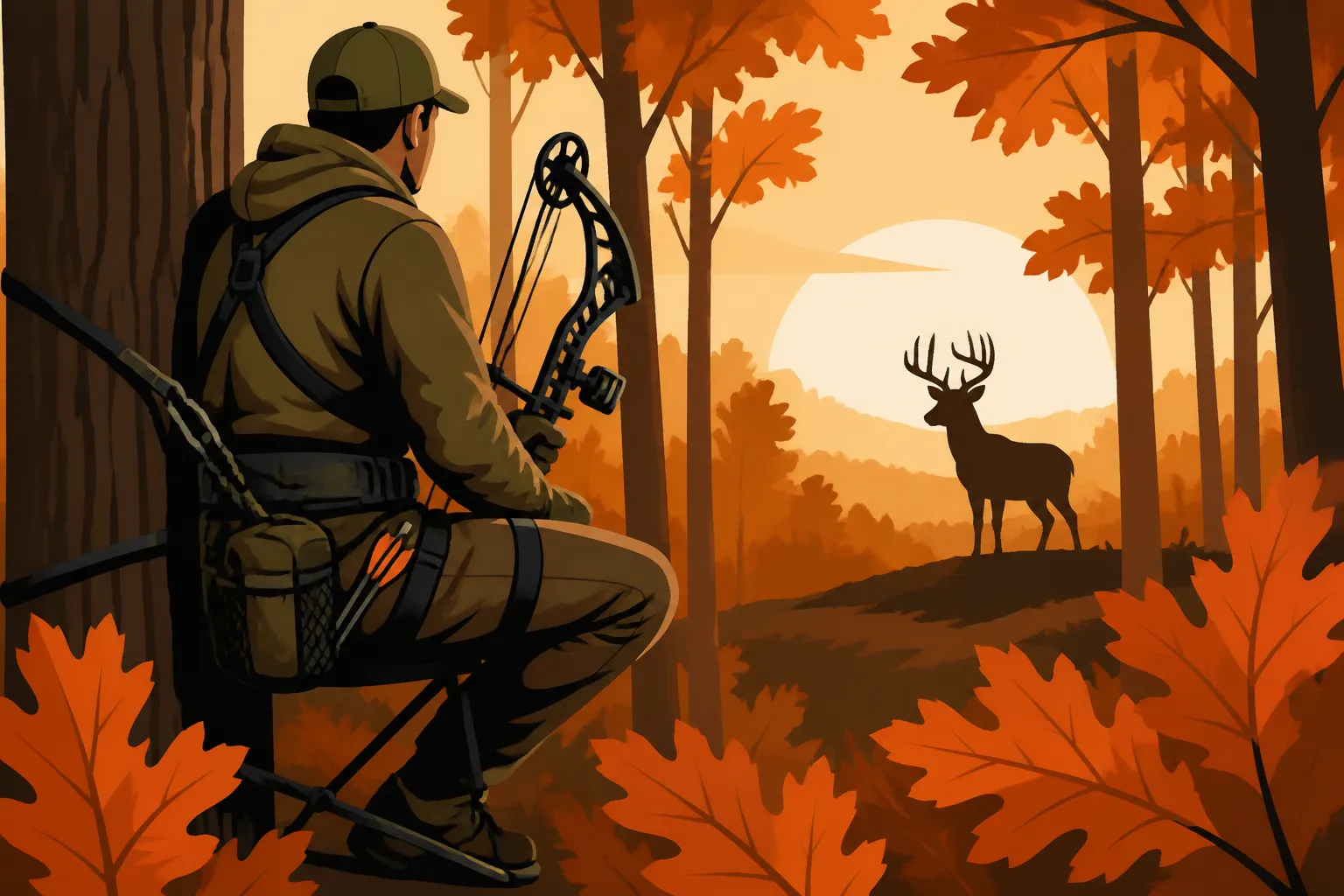
Traditional treestands, by their very design, often create a silhouette that can stand out against the backdrop of the woods, especially once the leaves fall. With a saddle, you're not sitting in a stand but rather on a tether, allowing you to fluidly pivot around the tree. This means the tree itself becomes your primary cover. You become part of the tree, blending in with its trunk and branches. This natural camouflage is incredibly effective against the keen eyes of an Indiana whitetail. You can constantly keep the tree between you and an approaching deer, even if they circle downwind. This allows you to draw your bow or shoulder your rifle with significantly less movement detected.
Furthermore, the ability to rotate 360 degrees around the tree gives you unparalleled shot opportunities. If a buck suddenly appears behind you, you don't have to contort your body or make large, obvious adjustments. You simply shift your weight, rotate gently, and draw. This is a game-changer when you're targeting wary deer that often approach from unexpected angles. It means you can take advantage of situations where a deer might hold up briefly in thick cover, waiting for you to make a mistake, while you're already positioned for the shot. This kind of flexibility can turn a marginal opportunity into a successful harvest, a key benefit when hunting those intelligent, mature animals. The natural breaks in the timber provided by Reading a Ridge for Hoosier Forest Deer become even more advantageous with this level of concealment.
Enhanced Comfort for Longer Sits
Okay, "comfort" might seem like a strong word for hanging in a harness, but many saddle hunters swear it's more comfortable than a traditional treestand for long sits. The secret lies in the dynamic nature of a saddle. Instead of being locked into a rigid seat, you can subtly shift your weight, stand up, lean back, or even perform small stretches without making significant noise or movement. This constant micro-adjustment helps prevent fatigue and keeps your blood flowing, which is especially important during those Cold-Weather Sitting Strategy in Indiana late-season hunts. A good saddle distributes your weight differently than a stand, reducing pressure points that can become excruciating after a few hours.
Think about it: in a traditional stand, you might be forced to sit in one position, leading to numb legs or a sore back. With a saddle, you can adjust your position frequently, shifting from a slightly reclined posture to standing upright on your platform, then leaning into the tree on your tether. This dynamic support keeps you fresh and focused, allowing you to stay on stand longer without succumbing to discomfort. Plus, the ability to stretch your legs and move slightly helps you stay alert and combat the mental fatigue that can set in during those long, quiet periods in the timber. Being comfortable enough to endure those quiet stretches is often the difference between success and packing up early.
Essential Gear for Indiana Saddle Hunting Success
The Saddle Itself: Your Core System
The saddle is the heart of your entire setup. It’s essentially a minimalist harness designed for comfort and mobility while suspended. When choosing one for Indiana hardwoods, you'll want something durable, quiet, and comfortable enough for extended sits. Look for models with ample padding in the waist and leg straps, as this is where your weight will be primarily supported. Material choice is crucial; quiet fabrics that don't rustle against bark or clothing are a must. Many modern saddles are highly adjustable, allowing for a custom fit that's essential for both comfort and safety. You'll find options ranging from minimalist, lightweight designs perfect for quick, run-and-gun hunts to more robust models with integrated storage and extra padding for all-day sits. Don't cheap out here; a quality saddle is an investment in your safety and enjoyment.
When considering a saddle, also think about its "bridge" – the strap that connects to your tether. Some are fixed, some are adjustable. An adjustable bridge allows you to fine-tune your lean and comfort, which is a huge benefit when you're hanging for hours. It’s also wise to ensure your saddle has ample attachment points for accessories like dump pouches, calls, or even your bow hanger, keeping essential gear within easy reach without having to reach into your pack. Before ever stepping into the woods, spend time getting familiar with your saddle at home, hanging from a low branch or even a sturdy doorway pull-up bar, to understand how it feels and how to make adjustments.
Lineman's Belt, Tree Tether, and Ropes
These are your lifelines, literally. The lineman's belt secures you to the tree while you are climbing, allowing you to use both hands to set climbing sticks or steps. It's a critical safety component. The tree tether is what you attach to once you're at hunting height, connecting your saddle's bridge to the tree. Both should be made of strong, durable material, often a high-strength rope or webbing, and include Prusik knots or other adjustable friction hitches for easy height and tension adjustment. The length of your tether will dictate how far you can lean out from the tree and your range of motion. For Indiana's often thick timber, a slightly longer tether can be beneficial to give you more room to maneuver around larger tree trunks or branches.
Beyond these primary ropes, you might also consider an accessory rope or "haul line." This is used to pull up your bow, backpack, and any other gear after you've reached your hunting height. Having a dedicated, strong, and quiet haul line prevents you from having to climb with unnecessary weight or risk damaging your bow during the ascent. Ensure all ropes are properly rated for climbing and follow manufacturer guidelines for knots and attachment points. Regular inspection for wear and tear is non-negotiable for these critical pieces of gear. Every time you head out, check your ropes for frays, cuts, or any signs of wear, especially after a particularly wet or abrasive hunt.
Choosing Your Climbing Method
There are several popular methods for getting up the tree with a saddle, and your choice will largely depend on personal preference, budget, and the specific terrain you'll be hunting in Indiana.
| Climbing Method | Pros | Cons | Ideal for Indiana Hardwoods |
|---|---|---|---|
| Climbing Sticks | Lightweight, compact, easy to pack, quiet, versatile on varied trees. | Can be slower to deploy than other methods, might require more steps to reach desired height. | Deep public land, varied tree sizes, frequent stand relocation in areas like Treestand Setups in Hoosier National Forest. |
| Aider Steps | Ultra-light, extremely packable, fast when practiced, minimalist. | Requires significant practice and skill, can feel less stable for beginners, potentially noisy if not secured. | Minimalist hunters, long walks into remote areas, highly mobile strategies, paired with single stick or ropes. |
| Tree Spurs/Gaffs | Very fast ascent, allows for hands-free climbing. | Damages trees, generally not allowed on public land in Indiana or by many landowners. (Private land only with permission and caution). | Limited to specific private land scenarios where tree damage is permitted. |
| Single Stick Method | Minimal gear to carry, very packable. | Requires a significant learning curve and advanced technique, slower than multiple sticks. | Advanced saddle hunters seeking ultimate minimalism, specialized scenarios. |
For most Indiana hunters, climbing sticks are the most common and versatile choice. They are efficient and relatively stable once deployed. You typically carry 3-4 short sticks, placing them as you climb using your lineman's belt for safety. Companies like Eastern Woods Outdoors (EWO) or Lone Wolf Custom Gear make excellent lightweight options. Aiders (small loops of webbing attached to climbing sticks or directly to the tree) can extend your reach and reduce the number of sticks needed, further cutting down on pack weight. Whichever method you choose, practice extensively at low heights before taking it into the field. This builds muscle memory and ensures you can climb safely and efficiently in the dark.
Platforms, Steps, and Additional Accessories
Once you're at hunting height, you'll need something to stand on. This is where a small platform or individual steps come in. A platform provides a solid, stable base for your feet, allowing you to stand, shift, and maneuver comfortably. Many saddle hunters prefer a compact platform that can be easily attached to the tree and is wide enough to give you a secure footing. Brands like Out on a Limb or custom fabricators offer various platform designs, some folding for easy transport. The goal is a platform that's sturdy, quiet, and doesn't add excessive bulk or weight to your pack.
Beyond the platform, consider a few key accessories. Dump pouches attach to your saddle and provide quick access to small items like rangefinders, grunt calls, or a small snack. A bow hanger that screws into the tree or attaches to your saddle's MOLLE webbing keeps your bow within easy reach. A small carabiner can be used to clip your haul line out of the way. A good Headlamps for Walking Out After Dark is essential for setting up in the pre-dawn hours. And, of course, your safety harness should always be worn from the moment your feet leave the ground until they return. While technically separate from the saddle, it's intrinsically linked to safe treestand practices, and often, the saddle itself serves as your primary safety harness. Remember to always check manufacturer instructions and ensure all your gear is compatible and rated for hunting use. A crucial tool for planning your hunt, especially on unfamiliar public ground, can be an app like GoHunt, which often includes topo maps and public/private land overlays, helping you identify potential saddle hunting locations.
Mastering Saddle Hunting Tactics for Indiana Whitetails
Scouting for the Perfect Saddle Spot
Effective scouting is paramount for any type of deer hunting, but it takes on a slightly different nuance with saddle hunting. Because you're so mobile, you're not necessarily looking for "the" perfect tree for an entire season, but rather an area with several good trees that you can adapt to on the fly. Focus on high-traffic areas like Hunting Indiana River Bottom Funnels, ridge-top saddles, pinch points between clear-cuts, or areas with fresh deer sign. Once you've identified a promising area, start looking for trees that offer good cover, clean shooting lanes, and enough height to get above a deer's line of sight, typically 20-25 feet. A key advantage of saddle hunting is its versatility: you can use a wider range of trees that might not accommodate a traditional stand, including leaning trees or those with awkward branches.
Don't just look for one tree; identify several potential trees within a productive zone. This gives you options based on wind direction, time of day, or unexpected deer movement. Use tools like the GoHunt app or other mapping software to analyze terrain features, potential bedding areas, and travel corridors before you even step foot in the woods. When you're boots-on-the-ground, confirm these spots, look for fresh rubs and scrapes, and evaluate approach and exit routes that minimize disturbance. Remember, with a saddle, your goal is to be able to set up quietly and efficiently, so choose trees that allow for a smooth, silent ascent. This dynamic scouting is a significant advantage over committing to a single fixed stand location for months.
Silent Ascent and Strategic Setup
One of the core tenets of saddle hunting is stealth, and that begins with your ascent. Every step, every movement, must be as quiet as possible. Before you even start climbing, clear any leaves or twigs from around the base of your chosen tree to prevent making noise during your initial steps. Attach your lineman's belt low, take your first climbing stick, and work your way up methodically. Use your body weight against the tree to minimize stick noise as you place them. Avoid banging sticks together or against the tree trunk. This takes practice in the backyard long before opening day.
Once at hunting height, deploy your tree tether and adjust it for comfort and your preferred lean. Your platform or steps should be positioned to give you a stable footing and allow you to pivot smoothly around the tree. Think about your shot angles and where deer are most likely to approach. If you anticipate a shot to your right, position your platform slightly offset to that side, giving you the ability to swing around the tree while keeping it as cover. Practice drawing your bow or raising your rifle from various positions around the tree to identify any potential hang-ups. The beauty of the saddle is that it allows you to refine your position even after you're set up, making micro-adjustments as conditions or deer movement dictate. Being able to adapt quickly and quietly is crucial for success, especially when Hunting the Rut in Early November.
Maximizing Shot Angles and Situational Awareness
The 360-degree range of motion a saddle provides is a huge advantage, but it also requires a different kind of situational awareness. You're not just looking in front of you; you're constantly scanning all directions, ready to pivot. This means keeping your head on a swivel, slowly and deliberately scanning the woods for movement or subtle signs of deer. When a deer approaches, the ability to rotate around the tree allows you to keep the trunk between you and the animal, masking your draw or gun movement. This is invaluable when a mature buck is circling downwind or approaching from an unexpected direction.
Practice shooting from various body positions and angles while in your saddle. Lean out, lean back, shoot left-handed if you're right-handed (and vice versa) – get comfortable with all possibilities. Know your comfortable shooting zones around the tree. The goal is to maximize your chances regardless of how a deer presents itself. A rangefinder, easily accessible in a dump pouch, is critical for quickly gauging distances, especially when you might be pivoting to a new shooting lane. Rangefinders Under 100 Yards are particularly useful in the dense timber of Indiana. Always be aware of your tether and bridge; ensure they won't interfere with your draw or gun swing. This dynamic engagement with the tree and your surroundings is what makes saddle hunting so effective for close-range encounters in the challenging Indiana hardwoods.
Overcoming Challenges and Prioritizing Safety in the Field
Battling Cold Weather and Staying Comfortable
Indiana winters can be brutal, and staying warm and comfortable in a saddle during Hunting Deer After a January Cold Front is a common concern for new users. The key here is effective layering, just as with any cold-weather hunting. Because you're exposed on all sides and often have less bulky material around you compared to a traditional stand, you might feel the cold more acutely. Start with good base layers, add insulating mid-layers, and top it off with a windproof and water-resistant outer shell. Wool or high-quality synthetics are your friends here; avoid cotton. A good pair of insulated boots is non-negotiable for keeping your feet warm.
Beyond clothing, consider accessories like a hand muff with chemical warmers, heated vests, or even a small insulated seat pad that attaches to your platform. Since you're often standing or leaning, investing in a high-quality, comfortable pair of insulated pants is crucial. Many saddle hunters find that the ability to subtly shift positions helps with circulation, which can actually aid in staying warmer than being rigidly still in a stand. Don't forget a warm hat and neck gaiter; a significant amount of body heat is lost through your head and neck. Preparing for the cold means you can focus on the hunt, not on shivering. The ability to move and stretch subtly helps immensely when you're dealing with the biting winds and damp cold of an Indiana winter day.
Navigating Public Land Pressure
Indiana's public lands, especially during firearms season or the peak rut, can see significant hunting pressure. Saddle hunting offers a distinct advantage in these crowded conditions due to its mobility and ability to access out-of-the-way spots. While others are setting up near established trails or easily accessible clearings, your lightweight setup allows you to hike further and deeper into less-pressured areas. This is where Finding Ground Others Walk Past becomes a realistic strategy. Study topo maps, identify steep ravines, thick briar patches, or dense cedar thickets that others might shy away from. These are often overlooked pockets where deer will seek refuge from hunting pressure.
When you do encounter other hunters, remember that safety is paramount. Wear your blaze orange according to Indiana regulations, even if you're deep in the timber. While saddle hunting offers superior concealment from deer, you still need to be visible to other human hunters. Your ability to get in and out quietly, often before daylight and after dark, also minimizes your impact on other hunters and their areas. Being a respectful user of public land ensures everyone has a better experience. Consider using mapping tools like GoHunt to see general hunting boundaries and avoid conflicts. Knowing how to use Scouting With the Indiana DNR App to identify less-pressured areas can be a major advantage.
Practice, Practice, Practice for Safety and Efficiency
Just like learning to shoot a new bow or sight in a rifle, saddle hunting requires practice. Your backyard, a local park (where allowed and safe), or even a low branch in your own woods is the ideal place to begin. Start by hanging just a few feet off the ground. Get comfortable with putting on your saddle, attaching your lineman's belt, ascending with your climbing method, and securing your tree tether. Practice making those small, quiet adjustments around the tree. Work on drawing your bow or shouldering your rifle from different angles. This builds muscle memory and confidence.
The more you practice, the faster and more efficient your setup will become, and the quieter you'll be in the field. This efficiency directly translates to better hunting success, as you'll minimize disturbance and be ready to hunt quicker. Practice in low light conditions, simulating those pre-dawn setups. Understanding how your gear interacts with your body and the tree before you're under pressure in the field is critical for both safety and success. Never compromise on safety; always use your lineman's belt during ascent and descent, and always remain connected to the tree via your tether or belt. Who Needs Indiana Hunter Education includes learning these critical safety skills, which extend directly to saddle hunting. Don't rush the process; master each step before moving on, and you'll be a safer, more effective saddle hunter.
Disclaimer
This article is for general informational purposes only and does not constitute professional advice. Laws, prices and regulations vary by location and change over time. Consult a qualified professional for guidance on your specific situation.