Box Calls Versus Mouth Calls
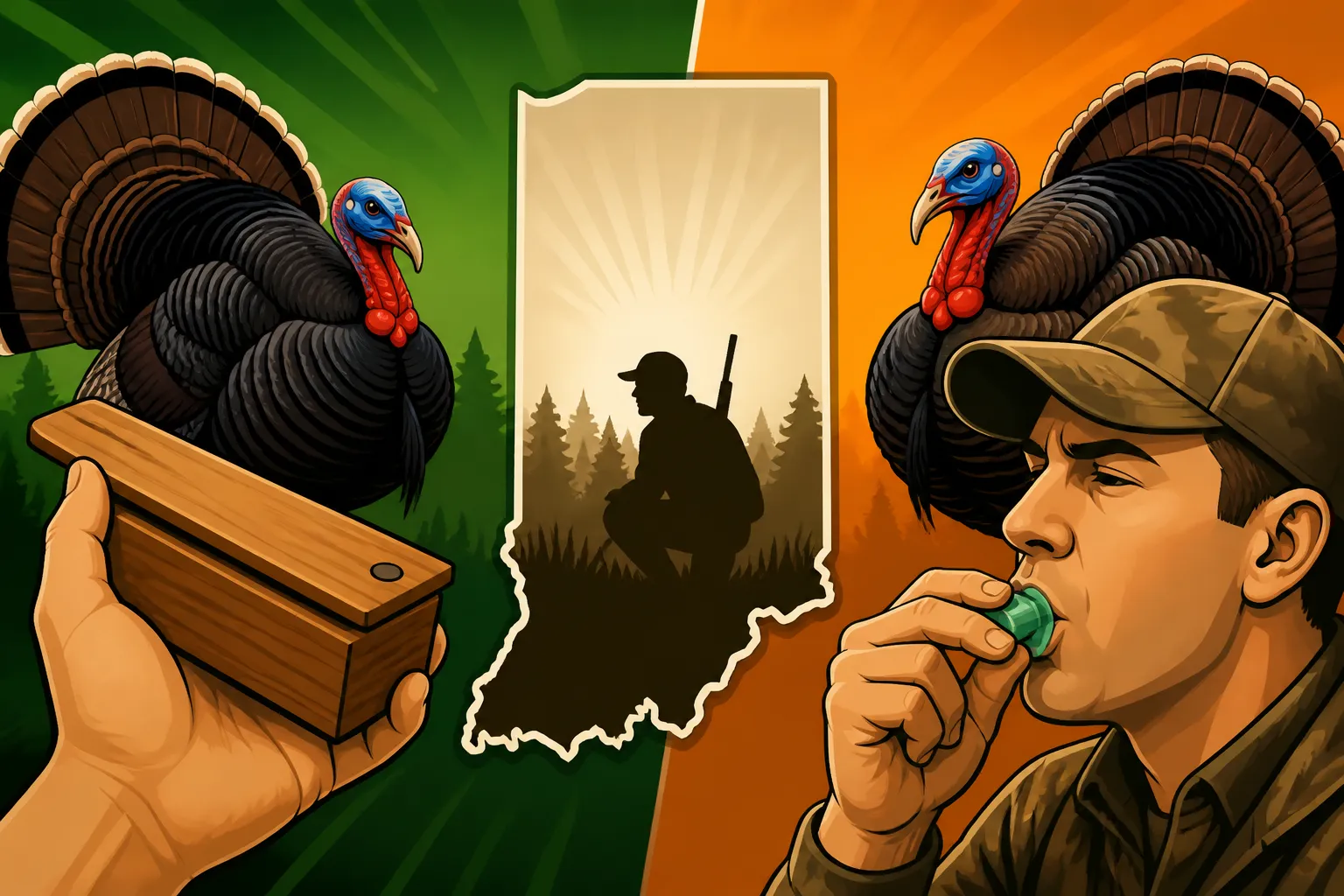
Walking into a sporting goods store, or even just browsing online, can feel overwhelming when you're trying to pick out your first, or even your fifth, turkey call. Should it be a trusty box call or a versatile mouth call? For us Indiana hunters, knowing which one to lean on, and when, can make all the difference when those wily gobblers are just out of reach, or worse, when they're staring you down at 20 yards. This guide will walk you through the distinct advantages and disadvantages of both box calls and mouth calls, helping you decide which one best suits your hunting style and the varied conditions we face across the Hoosier State.
The Tried and True: Box Calls for Indiana Turkeys
There's something wonderfully traditional and undeniably effective about a good box call. Many of us started with one, or inherited one from a family member, and they've put plenty of Indiana gobblers on the ground over the years. They're often considered the workhorse of the turkey call family, capable of producing loud, realistic sounds that can carry across open fields or through thick timber, trying to get a response from a distant bird.
Understanding Box Call Mechanics and Sound
A box call operates on a simple friction principle: a lid is scraped across the lips of a wooden box. The magic comes from the craftsmanship of the wood and the tension of the lid, allowing a skilled user to produce a remarkable range of turkey vocalizations. You can often make loud yelps, clucks, cutts, and even purrs with a good box call, manipulating the pressure and speed of your stroke. This consistency of sound is one of their biggest draws, especially for hunters still mastering the intricacies of turkey talk.
Think about those crisp spring mornings when the fog hangs heavy in the river bottoms or up on a southern Indiana ridge. A box call can cut through that damp air and reach out to a gobbler that's still on the roost or just hitting the ground. Its volume makes it perfect for those initial locator calls, helping you pinpoint a bird that hasn't given away its position yet. Many experienced hunters will start their day with a box call, especially when they're in areas known for Roost Hunting Indiana Gobblers, trying to get a shock gobble from a bird high in the trees.
Advantages of Hunting with a Box Call
The benefits of carrying a box call in your vest are pretty clear, especially for hunters new to the game or those who prefer a less demanding learning curve. Their intuitive nature means you can often pick one up and start making decent turkey sounds almost immediately, building confidence quickly.
First and foremost, ease of use is a huge factor. Unlike mouth calls, which require precise tongue and breath control, a box call is relatively straightforward. You simply hold the box and draw the lid across the soundboards. Within a few minutes of practice, most hunters can generate convincing yelps and clucks. This low barrier to entry makes them an excellent choice for beginners, or for anyone who wants a reliable, no-fuss call they can grab and use effectively.
Secondly, their volume and range are unparalleled by most other call types. When you need to reach out across a large field or through a dense woodlot in the Hoosier National Forest, a box call can send those yelps booming. This is especially useful in windy conditions or when you're hunting expansive public lands where birds might be spread out. A loud, sharp series of cutts from a box call can often elicit a shock gobble from a bird that's playing hard to get, letting you know his general location so you can begin to strategize your approach.
Lastly, box calls produce incredibly realistic and consistent sounds. Because the mechanics are physical rather than internal, the sound isn't as dependent on your personal breath control or mouth shape. A well-tuned box call will sound the same every time, which is crucial for convincing a wary gobbler. This consistency allows you to focus more on the hunt itself—listening for responses, watching for movement, and planning your next move—rather than worrying if your call sounds like a sick chicken. When you're trying to replicate the nuanced language of a hen, that consistent, authentic sound can be a real game-changer.
Disadvantages and Situational Drawbacks
While box calls are fantastic, they aren't without their downsides, and understanding these can help you avoid sticky situations in the woods. These drawbacks are precisely why many seasoned Indiana turkey hunters carry a variety of calls.
The most significant disadvantage is their bulk and need for movement. Box calls are not hands-free. You need both hands to operate them effectively, which can be a real problem when a gobbler unexpectedly pops into view at close range. Imagine a strutting tom cresting a hill at 30 yards while your hands are busy yelping. You have to stop calling, set the call down (quietly!), and then raise your shotgun or bow, all without alarming the bird. This sudden movement can often be enough to send a sharp-eyed gobbler running. For tactics like Run-and-Gun Turkey Tactics on Public Land, where stealth and quick reactions are paramount, a box call can sometimes hinder more than help.
Another issue is their susceptibility to moisture. Box calls are made of wood, and wood warps. If your call gets wet—whether from rain, heavy dew, or simply being dropped in a puddle—its sound quality can be severely diminished. It might stick, squeak, or lose its crispness, turning convincing yelps into something far less appealing to a discerning tom. While you can dry them out, it's not ideal for a spontaneous hunt in damp weather. This is where other friction calls, like slate or glass, might have an edge, especially if you're out during a misty morning. For more on how weather affects calls, you might check out Slate and Glass Calls in Wet Weather.
Finally, the lack of subtle calling ability compared to other calls is a factor. While a box call can purr and cluck, it's generally harder to produce the soft, quiet, seductive sounds a hen makes when a gobbler is really close and trying to pinpoint her exact location. When a tom is at 50 yards and closing, those delicate, soft clucks and purrs are often what seal the deal. A loud box call, even when played softly, can sometimes sound too aggressive or unnatural at such close quarters, potentially spooking a bird that's already in range.
The Versatile Option: Mouth Calls (Diaphragm Calls)
Mouth calls, also known as diaphragm calls, are arguably the most popular and versatile turkey calls among experienced hunters. They are small, hands-free, and capable of producing an incredible array of realistic turkey sounds. While they do have a steeper learning curve, the payoff in terms of tactical advantage in the field is immense.
The Art of the Mouth Call
A mouth call consists of one to three (or even four) thin latex reeds stretched over a frame, which is then held in the roof of your mouth. By forcing air between your tongue and the reeds, you create vibrations that produce turkey vocalizations. The specific sound depends on the cut of the reeds, the tension, and, most importantly, the shape of your mouth and the air pressure you apply. This allows for a tremendous amount of control over pitch, tone, and volume, all without moving your hands.
Mastering a mouth call is a journey, not a sprint. It takes practice—lots of it. You'll spend hours in your truck, driving around Indiana, making strange noises, much to the amusement of your family, just trying to get that perfect yelp. But once it clicks, it opens up a world of possibilities. You can seamlessly transition from loud cuts to soft purrs, gobbling, and even clucks, all while keeping your hands ready on your firearm or bow.
Advantages of Mouth Calling in the Field
The tactical benefits of mouth calls are where they truly shine, giving hunters an edge in crucial moments, especially in unpredictable Indiana turkey woods.
The absolute greatest advantage of a mouth call is its hands-free operation. This is critical. Imagine a big gobbler strutting into your setup, and he's only 30 yards away. Your shotgun is already shouldered, your cheek is on the stock. With a mouth call, you can let out those soft clucks and purrs that keep him engaged, drawing him even closer, without making any visible movement that might spook him. This hands-free capability is what seals the deal on countless close-range encounters. For hunters using a bow, it's even more vital, as any extra motion can be disastrous. Being able to call while actively aiming is a massive advantage.
Secondly, mouth calls offer unmatched versatility and nuance in sound. A skilled mouth caller can replicate virtually every sound a turkey makes, from aggressive gobbler yelps to the softest hen purrs and tree yelps. This allows you to adapt your calling to the mood of the bird you're working. If he's hot, you can hit him with excited cutting. If he's hung up at 80 yards, those subtle, seductive purrs and soft yelps might be just what he needs to commit. This level of adaptability is essential when you're hunting pressured birds on public land, which is common during Hunting the Indiana Spring Turkey Opener.
Finally, their compact size and durability make them ideal for any hunting situation. Mouth calls are tiny, easily fitting into a small pocket of your vest. They're also not affected by moisture in the same way wooden box calls are, meaning a sudden rain shower won't ruin your ability to call. You can carry several different cuts to produce various tones and pitches, giving you an entire symphony of turkey sounds in a package no bigger than a stick of gum. This makes them perfect for the mobile hunter who values a lightweight setup and wants to carry Turkey Calls Worth Carrying in Indiana without adding bulk.
The Learning Curve and Other Challenges
As with any advanced skill, mouth calling comes with its own set of challenges, particularly for those just starting out. It's not a call you just pick up and master overnight.
The most significant hurdle is the steep learning curve. Producing realistic turkey sounds with a mouth call requires precise control of your tongue, diaphragm, and breath. Many beginners struggle just to make a sound, let alone a convincing yelp. It takes dedication and consistent practice. You'll likely go through a period where your calls sound more like a dying duck or a strangled cat than a hen, which can be frustrating. Don't be discouraged; every accomplished mouth caller started in the same place. Persistence is key, and there are many online tutorials and resources from reputable sources like GoHunt that can guide you through the initial learning phase.
Another potential issue is the initial discomfort or gag reflex some people experience. Having a latex reed assembly in the roof of your mouth can feel strange at first, and some hunters find it triggers their gag reflex. This usually subsides with practice as your mouth adjusts, but it can be a barrier for some. Experimenting with different frame sizes and reed cuts can sometimes help alleviate this discomfort. Just remember to clean your calls regularly to keep them hygienic and sounding their best.
Lastly, volume limitations can sometimes be a factor. While a skilled mouth caller can produce decent volume, it's generally harder to match the sheer ear-splitting reach of a well-played box call. In very windy conditions or when trying to reach extremely distant birds across open farmland, a mouth call might not carry as far. This is why many hunters will start with a louder call, like a box or slate, to locate a bird, and then switch to a mouth call as they get closer and need hands-free subtlety.
Deciding Which Call is Right for You, and Why Both Might Be Better
So, should you go with the traditional box call or the versatile mouth call? The truth is, there's no single "best" answer, and for many serious turkey hunters in Indiana, the answer is both. Each call type excels in different situations, and understanding when to deploy each can dramatically increase your success rate.
Matching Calls to Hunting Scenarios
Your choice of call should often depend on the specific hunting scenario you find yourself in. Are you locked down in a ground blind, waiting for a bird to come to you? Or are you on the move, covering ground in a Deer Drives With Three or Four Hunters style, but for turkeys, trying to locate a hot gobbler?
Box calls truly shine in situations where you are relatively stationary and need to project sound. Think about sitting in a ground blind on a field edge, waiting for birds to pitch down from the roost. You have plenty of cover for movement, and the box call's volume can carry across the field to get the attention of distant gobblers. They're also fantastic for those initial "wake-up" calls from a fixed position, especially if you're set up against a large oak or similar structure in a state forest, trying to locate a bird before you move.
Mouth calls, on the other hand, are the undisputed champions of close-quarters work and mobile hunting. If you're Run-and-Gun Turkey Tactics on Public Land, sneaking through the woods, or working a bird that's just out of sight but getting closer, a mouth call allows you to call without breaking your camo pattern or drawing attention with movement. When that tom is within shotgun range, those soft, hands-free clucks and purrs are what seal the deal, keeping his attention while you make that final adjustment for the shot. Many hunters find them indispensable for Calling an Indiana Gobbler Off the Roost as they come off the limb, when precise, subtle sounds can be key.
Learning to Use Both Calls
Many of the most successful Indiana turkey hunters carry a variety of calls, and they know when to use each one. Learning both box and mouth calls, along with slate or pot calls, gives you a full toolkit to adapt to any situation a wily gobbler throws at you.
Start with the call that feels most natural. For many, that's the box call due to its ease of use. Master its basic yelps, clucks, and purrs first. Get comfortable with its volume control and how to manipulate its tone. Once you're confident with your box call, then begin to tackle the mouth call. Practice regularly, perhaps for 10-15 minutes each day. Listen to real turkey sounds online and try to replicate them. Don't be afraid to experiment with different brands and cuts of mouth calls; what works for one hunter might not work for another. Resources on platforms like GoHunt can often provide insights into popular calls and techniques that other hunters are having success with, giving you a starting point.
The beauty of having both is that they complement each other perfectly. You can use your loud box call to strike a bird from a distance, then switch to a more subtle, hands-free mouth call as the gobbler closes the distance. This dynamic approach mimics the natural movement and vocalizations of turkeys, making your setup more convincing and increasing your odds of calling in that trophy tom. Always remember to practice your calls, not just at home, but also quietly in the woods during the off-season, learning how the sound carries and how different terrain affects it.
Comparison Table: Box Calls vs. Mouth Calls
Here's a quick comparison to help you visualize the key differences:
| Feature | Box Calls | Mouth Calls (Diaphragm) |
|---|---|---|
| Ease of Use | Easy for beginners to learn basic sounds | Steep learning curve, requires significant practice |
| Volume/Range | Excellent, can project loud sounds far | Good, but generally less maximum volume than box calls |
| Hands-Free | No, requires two hands to operate | Yes, allows hands to remain on weapon |
| Versatility | Good, capable of basic yelps, clucks, cutts | Excellent, capable of wide range of nuanced turkey sounds |
| Durability | Susceptible to moisture, wood can warp/stick | Highly durable, unaffected by moisture |
| Size/Portability | Moderate to bulky, requires pocket or pouch | Very compact, fits in a small pocket |
| Stealth | Movement required for operation, can spook close birds | No movement required, highly stealthy at close range |
| Common Use Cases | Locating distant birds, open country, ground blind setups | Close-in calling, run-and-gun tactics, final decoy setup |
Ultimately, the best approach for any Indiana turkey hunter is to become proficient with both box and mouth calls. They are not mutually exclusive; rather, they are powerful tools that, when used strategically together, can make you a more versatile and successful turkey hunter, no matter if you're pursuing spring gobblers or even trying Hunting the Fall Archery Turkey Window with different tactics.
Disclaimer
This article is for general informational purposes only and does not constitute professional advice. Laws, prices and regulations vary by location and change over time. Consult a qualified professional for guidance on your specific situation.