Run-and-Gun Turkey Tactics on Public Land
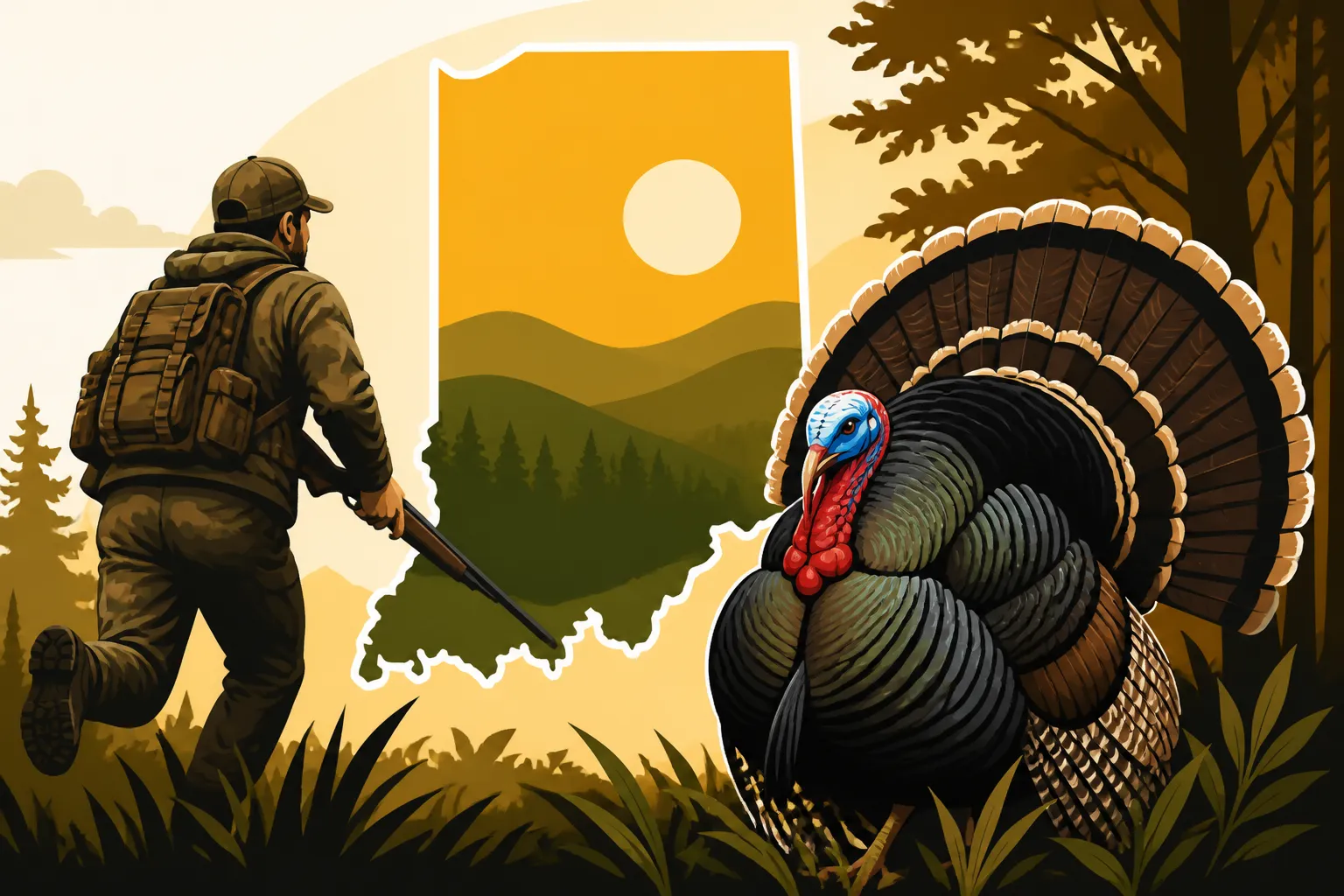
There's nothing quite like the thrill of a gobbler hammering back at your call, especially when you've walked for miles, found that bird, and are setting up on its turf. But let's be honest, trying to sit still and wait for a bird to come to you on crowded Indiana public land can be incredibly frustrating. Those pressured gobblers have heard every call in the book, seen every static setup, and they often just hang up, gobbling their heads off just out of range. That's where the run-and-gun approach becomes not just a tactic, but a necessity for many Hoosier turkey hunters looking for consistent success. This guide will walk you through the ins and outs of mobile turkey hunting, giving you the edge you need to find and harvest those elusive public land longbeards.
Why Embrace the Run-and-Gun Mentality for Indiana Turkeys
Sticking to one spot, whether it's a pop-up blind or a carefully brushed-in natural setup, often feels like the "right" way to hunt turkeys. You've scouted, you've set up, and now you wait. But on heavily hunted public ground in Indiana, that patience can easily turn into pure futility. The sheer amount of hunting pressure means birds are constantly on the move, responding differently to calls, and often getting bumped by other hunters. Being mobile allows you to adapt to these fluid situations, cover more ground, and actively seek out birds rather than hoping they stumble into your ambush.
The Frustration of Static Hunting
Picture this: you're tucked into a prime spot on a crisp April morning, the sun just starting to peek over the eastern horizon. You've heard a bird gobble on the roost, and you've painstakingly set up in what feels like the perfect ambush, maybe even with a couple of decoys out. You make your soft tree yelps, and the bird hammers. You make your excited cutting, and he gobbles again, a little closer this time. Your heart is pounding. Then, silence. You call again, no response. You wait. You wait some more. Eventually, you might hear him gobble once or twice, much farther away, or perhaps nothing at all. You pack up, dejected, wondering what went wrong. More often than not, it's not you; it's the bird's wariness, the pressure from other hunters, or simply the fact that he had other hens on his mind and your setup wasn't compelling enough to pull him away.
This scenario plays out daily across Indiana's public lands, from Yellowwood State Forest to Jackson-Washington State Forest. Birds are educated; they know what an easy setup looks like, and they've learned to be extremely cautious. A static setup, while sometimes effective for less pressured birds or during the initial flush of Hunting the Indiana Spring Turkey Opener, often gives a gobbler too much time to assess the situation. He can stand at 70 yards, observe your decoys, listen to your calls, and decide it's not worth the risk. By the time he makes that decision, you're out of the game, and you've wasted valuable hunting time on a bird that was never going to commit.
Adapting to Pressure and Changing Conditions
The beauty of the run-and-gun approach is its inherent flexibility. You're not tied to a single location. If a bird gobbles once and shuts up, you don't sit there for an hour hoping he changes his mind. You get up, move, and find another bird, or re-engage the same bird from a different angle. This constant movement allows you to cover vast amounts of ground in areas like the Hoosier National Forest, which is crucial for locating birds that might be widely dispersed.
Moreover, the conditions change constantly during spring turkey season. A hot, sunny morning might turn into a rainy, blustery afternoon, affecting how and where birds move and gobble. Other hunters moving through the woods can push birds into new areas. With a run-and-gun strategy, you can quickly relocate to fresh ground, follow the birds as they move throughout the day, or even circle around other hunters to get ahead of birds they might be pushing. This dynamic approach means you're always trying to put yourself in the most advantageous position, rather than being a passive participant. It's an active hunt, a chess match where you're constantly evaluating the board and making your next move. It works hand-in-hand with thorough Scouting Indiana Public Land Before Season because you'll have a mental map of where birds might be and alternative routes to take.
Essential Gear for the Mobile Turkey Hunter
When you're covering miles of diverse terrain, every ounce counts. You can't afford to be weighed down by unnecessary gadgets or gear. The run-and-gun philosophy extends to your equipment: bring only what you need, ensure it's functional, and keep it light. This isn't just about comfort; it's about efficiency and stealth. A heavy pack creates noise, slows you down, and zaps your energy, making it harder to maintain the rapid pace required for this tactic.
Lightweight Essentials: Less is More
The core of a run-and-gun setup is a minimalist approach to your vest or pack. You need quick access to calls, a shotgun, and basic safety/survival items, but everything else should be left at home. Think about what you truly need for an hour-long engagement with a bird, not a full day sit.
Here’s a breakdown of what to consider:
- Calls: A good diaphragm call (or two), a reliable slate or glass call with conditioning pad, and a quality box call. These three allow for a wide range of vocalizations and can be quickly deployed. Consider durable, lightweight versions. A robust locator call, such as an owl hooter or crow call, is also essential for piercing the woods and getting shock gobbles. Check out Turkey Calls Worth Carrying in Indiana for specific recommendations.
- Decoys: While some run-and-gunners skip decoys entirely, a single, lightweight collapsible hen decoy can be a game-changer for finishing a wary gobbler. Look for models that fold up small and can be deployed in seconds. Avian-X and Montana Decoy offer excellent options that fit this bill, designed for realism and portability. If you're going to use one, ensure it's easy to pack and quick to set up, as any fumbling can spook a bird.
- Seating/Camo: A simple padded seat cushion or a lightweight vest with a built-in kickstand seat is far more practical than a bulky stool or chair. You need to be able to sit down quickly and comfortably against a tree or log, ensuring your back is covered. Good quality camouflage, including a face mask and gloves, is non-negotiable. You'll often be setting up quickly, sometimes in less-than-ideal cover, so your personal concealment is paramount.
- Navigation: A reliable GPS app on your phone (like onX Hunt or even the GoHunt platform's mapping features) is crucial for navigating public land and marking potential hot spots or escape routes. Always carry a portable power bank, as cell service can be spotty in some of Indiana's more remote public areas, and GPS drains batteries quickly. A compass and paper map are also good backups, especially if you plan to venture deep into expansive tracts like the Hoosier National Forest where cell reception is non-existent.
Optics and Navigation for Fast Movement
While run-and-gun is about moving quickly, it’s not about blundering through the woods. Knowing where you’re going and what’s around you is vital. Good optics and reliable navigation tools are your best friends.
- Binoculars: A lightweight pair of 8x or 10x binoculars is invaluable for spotting distant birds, identifying subtle movements in heavy cover, or picking apart potential setup locations. You won't be glassing for long periods like a deer hunter, but quick scans of field edges or open timber can save you miles of walking.
- Rangefinder: A compact rangefinder is highly recommended. When a gobbler is closing fast, knowing the exact distance to your decoy or to a key landmark can prevent a miss and help you make a clean shot. You'll often be taking shots at varying distances in unpredictable terrain, so having that precise measurement gives you confidence.
- Mapping Apps: As mentioned, a robust mapping application on your smartphone is essential. Before you even leave the house, use apps like onX or GoHunt to study aerial photos, identify ridges, drainages, potential roosting sites, and travel corridors. This allows you to plan your attack routes and quickly relocate if a bird moves. During the hunt, these apps allow you to mark gobbling locations, track your progress, and ensure you're not trespassing. Be sure to download offline maps if you anticipate areas with poor cell service, which is common in many of Indiana's larger public land units.
Shotgun and Choke Selection
Your shotgun is your primary tool, and selecting the right one can significantly impact your success and comfort during a run-and-gun hunt. This isn't the time for a heavy, long-barreled magnum designed for a static blind.
- Lightweight and Maneuverable: Opt for a lighter shotgun, perhaps a 20-gauge, or a compact 12-gauge with a shorter barrel (24-26 inches). A lighter gun is easier to carry for miles and quicker to shoulder and swing when a gobbler bursts into view. Brands like Benelli, Franchi, and Mossberg offer excellent lightweight turkey-specific models.
- Choke and Ammunition: A tight choke is critical for dense patterns at turkey-killing distances. A "Turkey" or "Extra Full" choke is standard. Modern tungsten super shot (TSS) ammunition has revolutionized turkey hunting, offering incredible density and range, even in smaller gauges like the 20-gauge. This allows you to carry a lighter gun without sacrificing effective range. Pattern your chosen gun and choke combination extensively before the season to understand its maximum ethical range. You need to know exactly what your gun will do at 30, 40, and even 50 yards with your preferred load. This intimate knowledge prevents those frustrating "flipper" shots and ensures clean kills. For more detailed information, consider reading Turkey Shotguns and Chokes.
| Gear Item | Why It's Essential for Run-and-Gun | Key Considerations |
|---|---|---|
| Diaphragm Calls | Hands-free, versatile | Multiple tones, easy to carry, quick access |
| Slate/Box Calls | Realistic hen sounds, loud locator | Durable, weather-resistant, consistent sound |
| Locator Calls | Elicits shock gobbles | Loud, distinct, easy to use while walking |
| Lightweight Decoy | Finishes wary birds | Collapsible, realistic, quick deploy/pack |
| Mapping App | Navigation, scouting, marking | Offline capabilities, battery life, user-friendly |
| Rangefinder | Accurate shot placement | Compact, fast readings, reliable |
| Lightweight Shotgun | Easy to carry, quick to shoulder | 20-gauge or short 12-gauge, balanced |
| Turkey Choke | Tight patterns for clean kills | Extra full, matched to ammunition type |
| TSS Ammunition | Increased range and density | Patterned with your gun, ethical killing power |
| Camo & Face Mask | Essential concealment | Blends with varied terrain, breathable |
| Seat Cushion | Quick, comfortable setups | Lightweight, sufficient padding, non-slip |
Mastering the Approach and Setup
The "run" part of run-and-gun is about covering ground and locating birds. The "gun" part is about the quick, effective setup and execution that follows. This transition from moving to ready-to-shoot needs to be seamless, quiet, and decisive. Fumbling during a setup, making too much noise, or choosing a poor shooting lane can spell disaster when a gobbler is closing fast.
Silent Movement and Stealth
Moving through the woods like a ghost is paramount for run-and-gun success. Turkeys have exceptional eyesight and hearing. They'll pick you off from a distance or bust at the slightest unnatural sound.
- Footwear: Choose comfortable, quiet boots that offer good ankle support for uneven terrain. Avoid stiff, heavy boots that might scuff loudly on leaves or twigs. Rubber boots are great for wet conditions, but some can be noisy.
- Clothing: Layering is key, but ensure outer layers are quiet. Wool or fleece are excellent choices for reducing noise compared to some synthetic materials that can swish loudly. The Clothing for an Indiana Late Season article offers insights into optimal layering for variable weather.
- Pacing: Your pace should vary. When you're simply covering ground between known areas, you can move at a moderate walk. But as soon as you get a response, or enter an area you suspect holds birds, slow down. Take a few steps, stop, listen, and scan. This "stop-and-go" approach mimics natural animal movement and gives you a chance to hear soft calls or distant gobbles you might otherwise miss.
- Terrain Awareness: Use the terrain to your advantage. Walk along ridges, through drainages, or just inside the edge of thick cover to mask your movement. Always try to keep a visual barrier between yourself and where you expect a bird to be. Even a slight rise or a line of trees can hide your approach.
Quick Setups and Decoy Deployment
Once you get a gobbler to respond, the clock is ticking. You need to get into a shooting position, often against a tree, and maybe deploy a decoy, all within seconds.
- Choosing Your Tree: Look for a tree that is wider than your shoulders and offers good cover from the direction you expect the gobbler to approach. Prioritize safety: ensure you have a clear shooting lane, but also that you're well-camouflaged. Often, a large oak or hickory provides excellent cover. Consider linking to Setting Up Against a Big Oak for more detailed tree selection advice. Always face the direction you expect the turkey to come from, with your shotgun already mounted and ready.
- Decoy Strategy: If using a decoy, position it so the gobbler will approach it from your side, ideally slightly quartering away. This allows you to raise your gun with minimal movement as he focuses on the decoy. Place the decoy where it's visible but also offers a clear shot. Remember, on pressured public land, sometimes no decoy is better than a poorly placed one, or one that makes the bird hang up. A single hen decoy is usually sufficient; elaborate setups are too cumbersome for run-and-gun.
- Pre-visualization: Before the gobbler appears, visualize the shot. Pick out a few landmarks at various distances within your shooting lane (e.g., "If he steps past that sapling, I'll shoot"). This mental preparation helps you remain calm and execute the shot smoothly when the moment of truth arrives. You'll be making quick decisions, so having a plan in your head is critical.
Shot Placement and Follow-Up
Executing a clean kill is the ultimate goal. When a gobbler commits, things happen fast.
- Aim for the Head/Neck: This is the universal rule for turkey hunting. The vitals are small and heavily protected by feathers. A shot to the head and neck region is almost always lethal and minimizes damage to the meat.
- Patience is Key: Even though you're moving fast, at the moment of the shot, slow down. Let the gobbler present a clean shot. Don't rush. He may be strutting, in and out of view. Wait until he stretches his neck or lifts his head for a clear, unobstructed shot.
- Follow-Up Shot: Turkeys are tough birds. If the bird is still moving after the first shot, chamber another round (if using a pump or semi-auto) and shoot again. Never assume a bird is dead. Keep your gun shouldered and be ready for a second shot until the bird is completely still. This often happens on public land, where gobblers are wary and don't always drop dead in their tracks. It's better to be prepared for a follow-up than to let a wounded bird escape.
Effective Calling Strategies on the Move
Calling is the heart of turkey hunting, and with run-and-gun tactics, it becomes even more dynamic. You're not just calling to a bird you know is there; you're calling to locate, to provoke, and to pull. Varying your calls, understanding gobbler responses, and knowing when to be aggressive versus subtle are all crucial components of this mobile strategy.
Aggressive Locator Calls
The "run" portion of run-and-gun often starts with locator calls. These aren't meant to sound like a hen; they're designed to make a gobbler shock-gobble, giving away his position.
- Crow Calls: Perhaps the most common and effective locator call. Crows are everywhere in Indiana, and gobblers often can't resist responding to their raucous calls. Use a series of sharp, loud caws to cut through the woods. Don't be afraid to be loud; you're trying to get a reaction, not lure a bird.
- Owl Hoots: Especially effective in the early morning or late afternoon, owl hoots are fantastic for striking a gobble. A sharp series of "Who cooks for you, who cooks for you all?" can often get an immediate response, particularly when Calling an Indiana Gobbler Off the Roost.
- Hawk and Coyote Howls: These can also be effective, especially if birds are call-shy to more common locators. A piercing hawk shriek or a drawn-out coyote howl can sometimes elicit a gobble when nothing else will. Experiment with different calls; what works one day or in one area might not work in another.
- Patience, Then Movement: After making a locator call, wait. Give the gobbler 30-60 seconds to respond. If nothing, make another series. If still no response, move 100-200 yards in a different direction and try again. Don't hammer the same spot with the same call repeatedly. Your goal is to cover ground and get a response, then transition to your hen calls.
Soft Talk and Close-Range Decoys
Once you've located a gobbler and are moving in for the setup, your calling strategy shifts dramatically. You transition from loud, locating calls to more seductive hen sounds.
- Soft Yelp Series: As you get closer, typically within 150-200 yards, switch to softer hen yelps. Start with a series of 3-5 yelps, then listen intently. If the gobbler responds, gauge his enthusiasm. Is he gobbling strongly? Is he cutting you off? This indicates he's interested.
- Cutting and Clucks: Mixing in some sharp cutting and soft clucks can simulate an excited hen. Don't overdo it. A few cuts followed by a series of yelps can be very enticing. The key is to sound realistic and like a hen that wants to be bred.
- Reading Body Language: As the gobbler gets closer and focuses on your (optional) decoy, reduce your calling volume and frequency. Let the decoy do its job. Sometimes, a few soft clucks or purrs are all it takes to get him to close the last few yards. If he's already in view and strutting, putting on a show, he's committed. Too much calling at this point can make him suspicious. Many times, the softest, most infrequent calls are the most deadly for pressured birds.
Reading Gobbler Responses
Understanding what a gobbler's call means is critical for knowing your next move. It's not just about getting a gobble; it's about interpreting it.
- Strong, Close Gobble: He's interested and likely close. Prepare for a setup. This is your cue to get into position quickly and quietly.
- Distant Gobble: He's heard you, but he's far. You'll need to move closer, using terrain to mask your approach, before trying to set up.
- "Hung Up" Gobble: This is the classic public land frustration. He's gobbling, but staying in the same spot, just out of range. He might be waiting for the "hen" to come to him, or he might be with real hens. This is where you might try to circle him, or retreat and try him from a different angle later. Don't keep calling at him from the same spot if he's hung up. This scenario is particularly common when Hunting the Rut in Early November for fall turkeys, or any time birds are heavily pressured.
- Fading Gobble: He's moving away. Don't chase blindly; try to get ahead of him using a wide arc, or let him go and find another bird.
- No Gobble: He might have seen you, heard another hunter, or simply has real hens. Give it a few minutes, then try a different type of call or move on. Don't spend too much time on a quiet bird; the beauty of run-and-gun is finding active birds.
Reading the Public Land for Opportunity
Success with run-and-gun tactics starts long before you ever step foot in the woods. It begins with intelligent scouting and a deep understanding of how turkeys utilize the landscape, especially on publicly accessible lands that may see heavy recreational use. Indiana offers a variety of public hunting areas, from the vast woodlands of the Hoosier National Forest to smaller state fish and wildlife areas. Each has its own nuances, and knowing how to read the terrain is paramount.
Scouting Ahead: Topographical Maps and Aerials
Your most powerful scouting tool, often used from the comfort of your home, is detailed mapping software. Platforms like onX Hunt, the Indiana DNR's online maps, and GoHunt are indispensable for run-and-gunners.
- Identify Roosting Areas: Look for the tallest trees, often along ridges, near water, or in mature timber stands. These are prime roosting locations. Mark them as potential starting points for your morning hunts. Remember, turkeys tend to fly down to accessible, relatively open areas.
- Pinpoint Travel Corridors: Turkeys use predictable routes. Look for saddles between ridges, creek bottoms, old logging roads, and field edges. These are natural funnels where birds are likely to travel between roosting, feeding, and strutting areas.
- Locate Food Sources and Strutting Zones: Identify open fields, especially those planted with agriculture (if adjacent to public land), oak flats for acorns, or areas with abundant insects. Turkeys also prefer open areas for strutting, such as old logging decks, clearings, or sparse timber.
- Identify Public vs. Private Boundaries: This is absolutely critical on public land. Use the property line features on your mapping app to clearly distinguish public from private ground. You don't want to inadvertently trespass, and knowing where private land begins can help you anticipate where pressured birds might seek refuge. Sometimes, private land serves as a sanctuary, and birds will only venture onto public ground for short periods. Knowing these boundaries helps you set up strategically on the public side of a fence.
Identifying Key Habitat Features
Beyond general areas, look for specific micro-habitat features that turkeys are drawn to. These can be small but significant.
- Water Sources: Turkeys need water, so ponds, creeks, and even small seeps can be magnets, especially during dry spells.
- Thickets and Dense Cover: While turkeys prefer open areas for strutting, they also need thick cover for escape, roosting security, and nesting. Pockets of briars, young pines, or dense brush can hold birds, especially if they've been pressured.
- Logging Roads and Trails: Old logging roads or game trails provide easy travel routes for turkeys and hunters alike. They are excellent places to stop and call, or to quickly move between locations. However, be aware that these are also high-traffic areas for other hunters.
- Ridges and Drainages: In the hilly southern Indiana terrain, turkeys will often travel along contour lines, moving up and down ridges or through drainages. Learning how to navigate these topographical features, and how to use them to your advantage for stealthy approaches, is key. Check out Reading a Ridge for Hoosier Forest Deer for concepts that also apply to turkeys.
Understanding Roosting Habits
Knowing where turkeys roost and how they typically fly down is a huge advantage for the run-and-gun hunter. This helps you determine where to start your morning hunt and anticipate their initial movements.
- Evening Scouting: The best way to locate roosts is to listen at dusk. Turkeys will often gobble a few times before pitching up to roost, and again right after they fly up. If you can locate a roost, you'll know exactly where birds are starting their day. However, be extremely careful not to disturb them.
- Morning Fly-Down: Birds will usually fly down from their roost trees at first light. They typically land in an open area nearby, then begin to gather and feed. Knowing this fly-down area allows you to set up within calling distance before they hit the ground, or position yourself to intercept them as they move off the roost. The ideal scenario for a run-and-gun is to get a gobbler to respond on the roost, then make a stealthy move to set up near his anticipated fly-down location. This requires an understanding of Roost Hunting Indiana Gobblers.
- Post-Fly-Down Movement: Once on the ground, turkeys will often congregate, with hens and gobblers mingling. If you can't get a bird to commit immediately after fly-down, observe their direction of travel. They might be heading to a known feeding area or strutting zone. This information can guide your next "run" to get ahead of them.
Dealing with Hunting Pressure on Indiana Public Land
Let's face it: hunting public land in Indiana for turkeys means dealing with other hunters. It's a reality we all face, and it can be incredibly frustrating. A gobbler that was working perfectly can suddenly go silent because another hunter blundered in, or a perfectly good setup is ruined by someone walking too close. However, a run-and-gun approach is uniquely suited to mitigate some of these challenges by keeping you mobile and proactive. For broader context on this topic, refer to Hunting Pressure on Indiana Public Land.
Finding Overlooked Pockets
The vast majority of hunters on public land will stick to easily accessible areas: within a quarter-mile of parking lots, along main trails, or in areas with obvious sign. This creates opportunities for the run-and-gun hunter willing to put in the effort.
- Go Deeper: Walk further than most people are willing to go. While the initial mile might be covered by several hunters, the second or third mile often sees significantly less pressure. These deeper pockets of timber, often in the back corners of state forests or fish and wildlife areas, can hold unpressured birds that are more willing to respond.
- Embrace the Difficult Terrain: Don't shy away from thick cover, steep ravines, or swampy bottoms. These areas are often overlooked precisely because they are challenging to navigate. Turkeys, especially wary gobblers, will often seek refuge in such places. These "nasty" spots can hold the most callable birds, simply because fewer hunters are willing to penetrate them. A look at Finding Ground Others Walk Past can give you ideas on how to identify these spots.
- Small, Isolated Woodlots: Don't discount small, isolated patches of public timber surrounded by private farmland. These micro-habitats can sometimes hold birds that are less pressured if they are hard to access or overlooked by bigger game hunters. Use your mapping apps to find these small parcels.
Adjusting Tactics for Wary Birds
Public land gobblers are smart. They've heard it all, and they've likely been shot at. Your calling and approach need to reflect this education.
- Subtle Calling: Sometimes, less is more. Instead of hammering out loud yelps and cuts, try soft tree yelps and purrs, especially when you're close to a bird. An overly aggressive hen might sound unnatural to a bird that's used to hearing hunters trying too hard.
- Patience (But Mobile): While run-and-gun emphasizes movement, there are times to be patient. If a bird is gobbling but not moving, don't keep calling. Let him wonder where you went. Give him 15-20 minutes, then try a different call, or circle to a new setup location. The key is to be patient in action, not just in waiting.
- Silent Approaches: When you get a faint gobble from a wary bird, make your approach as silent as humanly possible. Don't make a single call until you are set up and ready to shoot. Let him wonder and make him think he's heard the last of that hen. His curiosity might be his undoing.
- Mid-Day Hunting: Many hunters pack up by mid-morning, especially if success hasn't come quickly. This opens up opportunities for the dedicated run-and-gunner. Turkeys often become more active and vocal again in the late morning and early afternoon, especially if they've separated from hens. When Indiana Gobblers Go Quiet in May highlights why birds might become less vocal, and how to adapt your strategy accordingly. This is a prime time to find birds that have been pressured off the roost or are looking for company.
Safety First: Hunter Awareness
Being mobile on public land means you're more likely to encounter other hunters. Safety should always be your top priority.
- Assume Other Hunters Are Present: Always hunt as if there's another hunter just over the ridge or around the bend. This means wearing a patch of blaze orange when walking (and removing it when you set up), being extra cautious with your calling, and being absolutely sure of your target and what's beyond it before you ever pull the trigger.
- Avoid "Reaping" or Fanning: While tempting for aggressive tactics, reaping or fanning is incredibly dangerous on public land. The sight of a fanned turkey might draw fire from another hunter who mistakes you for a real bird. It's simply not worth the risk. Stick to traditional setups.
- Communicate (If Necessary): If you see another hunter approaching your area, or you hear very close calling, don't hesitate to make your presence known verbally. A simple "Hey, hunter here!" can prevent a dangerous situation. It's better to scare a turkey than to risk a hunting accident.
- Scout for Human Sign: When you're scouting, pay attention to boot tracks, discarded calls, or other signs of human activity. This can give you an indication of where other hunters are focusing their efforts, allowing you to go in a different direction and seek out less disturbed areas.
Run-and-gun turkey hunting on Indiana public land is a demanding but incredibly rewarding pursuit. It requires physical stamina, keen observation, precise calling, and a deep understanding of turkey behavior and habitat. By embracing a mobile strategy and focusing on stealth, efficiency, and adaptability, you'll greatly increase your chances of connecting with one of Indiana's elusive longbeards.
Disclaimer
Hunting is an inherently dangerous activity. Always prioritize safety, understand and follow all Indiana hunting regulations, and consider taking a hunter education course. This guide is for informational purposes only and does not substitute for proper training or adherence to local laws. Always be aware of your surroundings, identify your target positively, and be sure of what lies beyond.