Posting a Drive Around a Woodlot
There are few things more frustrating than seeing deer constantly slip through your hunting area, seemingly vanishing into thin air, especially when you know they're holed up in a nearby woodlot. This comprehensive guide will walk you through the precise tactics for effectively posting a deer drive around a woodlot in Indiana, helping you understand how to plan, position hunters, and execute a safe and successful drive to push those elusive whitetails into range.
Understanding the Woodlot and Deer Movement
Before you even think about setting foot in the woods, a successful deer drive starts with intimate knowledge of the woodlot itself and how deer use it. It's not enough to just know "deer are in there." You need to understand why they are there and, more importantly, how they will try to leave when pressured.
Scouting the Terrain and Cover
Every woodlot, whether it's a small five-acre island in a sea of corn or a finger of timber extending from a larger forest, has its own unique characteristics. You need to identify the thickest cover where deer will naturally feel secure, such as brushy draws, dense cedar thickets, or areas with heavy multiflora rose. These are often the bedding areas, especially during daylight hours. Pay close attention to subtle terrain features like small ridges, ditches, or changes in elevation. Deer will often use these to stay out of sight while moving.
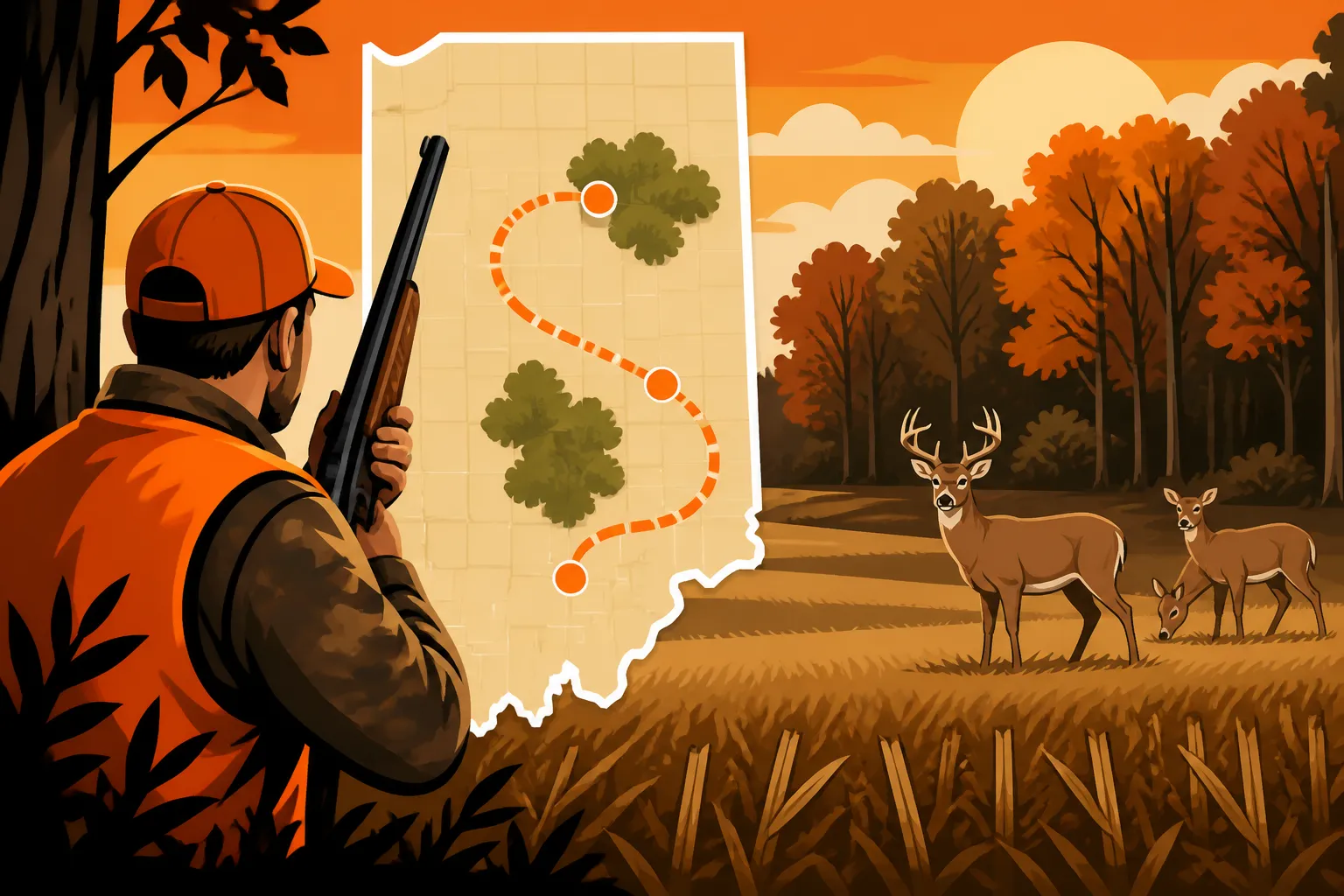
A critical part of this pre-drive scouting is using tools like the Indiana DNR app or a mapping platform like GoHunt to analyze aerial photos. Looking at the overhead view can reveal hidden trails, natural funnels between two woodlots, and subtle openings that might not be obvious from the ground. Knowing these details helps you anticipate escape routes before the drive even begins. You should also be looking for any signs of recent deer activity – fresh tracks, rubs, scrapes, and droppings – to confirm that the woodlot is actively being used. Without this groundwork, you're essentially stumbling into the woods hoping for the best, and that rarely works out with wary Indiana whitetails.
Identifying Natural Escape Routes
Deer are creatures of habit and instinct. When pressured, they will almost always try to use the path of least resistance or the most secure route to escape. These escape routes are often natural funnels, creek bottoms, fencerows, or thick travel corridors leading to a larger patch of timber or another bedding area. Sometimes, it's just the edge of a standing corn field that offers quick concealment.
Your job during scouting is to pinpoint these preferred escape routes. Are there low spots in a fence? A narrow pinch point between a field and a swampy area? A deep ditch that offers cover for a fleeing deer? These are the prime locations where you'll want to place your standers. Deer might try to sneak out the back, circle around the drivers, or burst out the sides. Understanding these probabilities is crucial. For instance, if the wind is blowing towards a specific field edge, deer are more likely to head that direction as they can smell danger but are not yet fully alerted to its exact location, giving them a false sense of security in their initial movements. Consider how Wind and Thermals on a Southern Indiana Ridge might influence deer movement even in a smaller woodlot setting.
Assigning Roles and Positioning Hunters
A well-executed drive relies on clear communication, disciplined roles, and strategic placement of every hunter. This isn't a chaotic rush; it's a calculated maneuver designed to move deer efficiently and safely.
The Critical Role of Standers
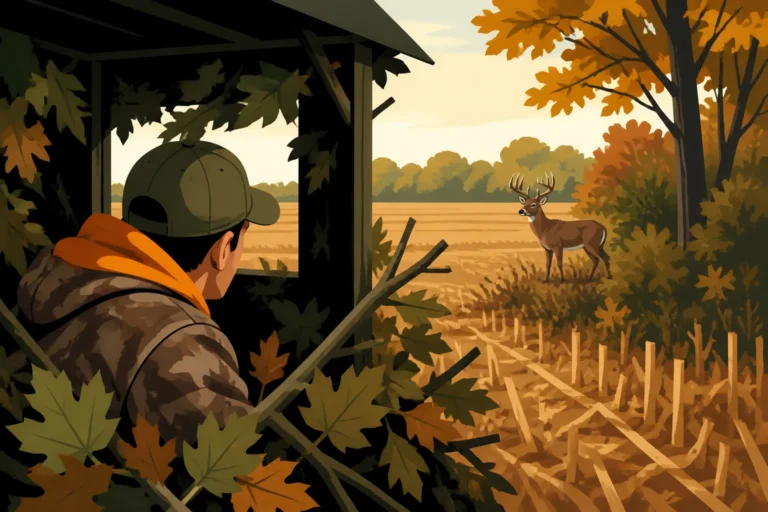
The standers are your shooters. Their primary job is to be still, quiet, and ready to take a safe, ethical shot when deer are pushed their way. Ideally, standers should be positioned along the most likely escape routes that you identified during your scouting. This might mean the downwind side of the woodlot, at a natural funnel, or along a known travel corridor. Each stander needs a clear shooting lane, but they should also be concealed. This could be in a treestand overlooking a pinch point, or tucked into a ground blind brushed into a field edge.
Standers must understand their assigned zones of fire to prevent any dangerous cross-shooting incidents. Communication beforehand is paramount. Use a mapping app like GoHunt to mark specific stand locations and discuss potential shooting lanes with each person. Remind them that patience is key. Deer often trickle out or pause before committing to an escape route, especially when they encounter Hunting Pressure on Indiana Public Land. A twitchy stander can ruin the entire drive by alerting deer too soon or taking a risky shot.
Effective Placement of Drivers
The drivers are the ones who will systematically push through the woodlot, guiding the deer towards the standers. The number of drivers depends on the size and density of the woodlot. For a small woodlot drive, Deer Drives With Three or Four Hunters can be incredibly effective. Drivers typically space themselves out in a line, often 50-75 yards apart, depending on visibility and cover. Their goal isn't to run or shout constantly, but to create a consistent, low-level disturbance that encourages deer to move. This can be achieved by walking slowly, rattling sticks, or making soft vocalizations.
Drivers need to maintain their line and direction. Straying off course can lead to deer breaking through the sides or circling back. Using a compass or GPS on your GoHunt app is essential to stay aligned. The pace should be slow and deliberate, allowing deer to move naturally rather than bursting out in a panic, which can make them harder targets for the standers. The drivers should work from one end of the woodlot towards the standers, creating a wall of pressure that gradually closes in.
Here's a quick reference for roles:
| Role | Primary Goal | Key Actions | Positioning | Essential Traits |
|---|---|---|---|---|
| Standers | Harvest deer, ensure safety. | Remain still, quiet, identify safe shots, observe. | Along known escape routes, downwind, concealed. | Patience, discipline, accuracy, situational awareness. |
| Drivers | Push deer towards standers, maintain line. | Walk slowly, create consistent disturbance, maintain spacing. | Through the woodlot, in a line, moving towards standers. | Discipline, endurance, navigation, communication. |
Executing the Drive Effectively
Once roles are assigned and positions are set, the execution of the drive needs to be seamless and focused on safety and success.
Initiating the Push and Maintaining the Line
The drive leader, often one of the drivers, should initiate the push, ensuring all hunters are in position and ready. This can be done via radio communication, hand signals, or a pre-arranged start time. Drivers then begin their slow, steady march through the woodlot. The goal is not to scare deer into a frantic sprint but to steadily push them. Deer often try to sneak, walk, or trot ahead of drivers, looking for a way to circle back or slip out undetected. This is where a consistent line and pace are crucial.
Drivers should be aware of any thick pockets of cover where deer might hold tight. A quick, brief pause, or a slightly wider sweep through these areas, can often persuade a reluctant deer to move. It's about applying just enough pressure without causing a full-blown stampede, which can send deer flying in unpredictable directions. If drivers notice deer attempting to peel off the sides, they should subtly adjust their angle to funnel them back towards the general direction of the standers, without breaking the integrity of the line.
Maximizing Shot Opportunities and Safety
For standers, once the drive begins, every sense must be heightened. Listen for movement, watch for flicking ears or tails, and scan constantly. Deer might appear suddenly or slip quietly through the timber. When a deer approaches, the stander must first identify it clearly and ensure it's a legal animal for the current season, then assess the background for a safe shot. This is especially important when Sighting In a Centerfire Rifle for Indiana Woods, as typical ranges in a woodlot are often shorter and require quick target acquisition.
Safety is non-negotiable. Every hunter must wear sufficient blaze orange, as per Indiana Blaze Orange Requirements. Standers should position themselves where they have a clear field of fire away from other hunters. Never shoot at sound or movement. Always identify your target positively and be certain of what lies beyond. If a deer is moving quickly, it's often better to let it pass and wait for a stationary or broadside shot if the opportunity arises. A quick, clean kill is always the ethical priority. Remember, even with the best planning, deer can do the unexpected, so adaptability and sound judgment are critical.
Safety and Ethical Considerations
Deer drives, while effective, carry inherent risks that must be mitigated through strict adherence to safety protocols and ethical hunting practices.
Essential Blaze Orange and Visibility
In Indiana, it's mandatory for all deer hunters (except during the archery-only season) to wear outer garments of solid hunter orange, or the equally visible blaze pink. This means at least one article of clothing, like a vest or jacket, worn above the waist, and a hat. This isn't just a rule; it's a life-saving measure. When conducting a drive, visibility is absolutely critical. Imagine a driver moving through thick brush, or a stander scanning for a deer. That flash of orange or pink helps ensure everyone knows where others are, preventing accidental shootings.
Before starting the drive, confirm that every member of your hunting party is properly dressed. It's a simple step that goes a long way in ensuring everyone makes it home safely. Don't rely on patches or small amounts of orange; the full requirement is there for a reason.
Defining Safe Shooting Lanes and Zones of Fire
This is arguably the most critical safety discussion you'll have with your hunting party. Before anyone takes their position, standers and drivers need to explicitly understand their zones of fire. Standers should only shoot in the direction of the drive, away from other hunters. Never, ever swing your firearm towards another hunter or in a direction where you haven't positively identified your background. This means no shooting down the line of drivers or at deer running parallel to the line of standers if it means aiming towards another hunter's position.
For drivers, while their primary role isn't shooting, they still need to be aware of the standers' positions and avoid anything that might draw fire in their direction. Clear communication about these zones of fire, perhaps marked on a GoHunt map beforehand, prevents confusion and potential accidents. Even on private land, where rules might seem less strict, maintaining these safety guidelines is paramount. Every time you're Posting a Drive Around a Woodlot, remember that the most important target is not a deer, but the safety of your fellow hunters.
Respecting Property Boundaries and Landowner Relations
In Indiana, much of the prime deer habitat is found on private land. If you're hunting private property, it is absolutely essential to have explicit permission from the landowner, preferably in writing. Before a drive, confirm the exact property boundaries. Use mapping apps to identify these lines clearly. Deer drives can sometimes push game quickly, and it's easy for a deer, or even a hunter, to inadvertently cross a property line.
Make sure your drivers and standers understand where the boundaries are. Retrieving a deer that has crossed onto an adjacent property requires permission from that landowner as well. Showing respect for boundaries and always getting permission not only keeps you legal but also maintains good relationships with landowners, which is vital for securing future hunting opportunities. There’s nothing worse than having a successful hunt marred by a trespass accusation or damaging relationships that took years to build. Being a responsible hunter means respecting the land and its owners, regardless of whether you’re scouting with the Indiana DNR App or organizing a drive.
Post-Drive Procedures and Follow-Up
The work isn't over when the shooting stops. Just as much effort and planning should go into the aftermath of a drive as the drive itself.
Tracking and Recovery
Even a well-placed shot can result in a deer running a short distance. After the drive concludes, it's the responsibility of the hunter who shot the deer, along with assistance from the rest of the party, to track and recover the animal. Give the deer some time if the shot wasn't immediately fatal – 30 minutes to an hour for a lung hit, and longer for gut shots. This allows the animal to lay down and expire.
Begin tracking by carefully examining the hit site for blood, hair, or bone fragments. Mark the last spot of blood found and slowly follow the trail. If the blood trail is sparse or disappears, expand your search in circles around the last known sign. Having multiple sets of eyes, particularly those trained in Blood Trailing After Dark in Indiana or Tracking a Deer in Fresh Indiana Snow, can be invaluable. Don't give up too quickly. A lost deer is a wasted deer, and ethical hunters do everything in their power to recover what they shoot.
Field Dressing and Processing
Once recovered, the deer needs to be field dressed promptly to cool the meat and prevent spoilage. This is especially crucial during warmer early season hunts. Remove the entrails carefully, making sure to avoid puncturing the stomach or intestines. You can learn detailed techniques from guides like Field Dressing a Deer in Cold Weather. If you're deep in the woods, consider quartering the animal to make extraction easier, especially if you don't have a deer cart or sled.
Transport the deer responsibly, making sure it's secured and visible if traveling by vehicle. Upon returning home or to camp, you'll need to report your harvest to the Indiana DNR through their online system or app. This is a mandatory step that helps the DNR manage deer populations effectively. After reporting, you can begin the butchering process, whether you do it yourself or take it to a professional processor. Proper handling ensures you get the best possible venison from your successful hunt.
Disclaimer
Please remember that hunting regulations and best practices can change. Always consult the most current Indiana Department of Natural Resources (DNR) regulations before heading afield. This guide provides general information and recommendations, but it is the hunter's responsibility to know and follow all applicable laws and safety guidelines.