Indiana Nonresident Base License Cost
It can feel like you need a secret decoder ring just to figure out what licenses and tags you need, let alone how much they’re going to set you back, especially if you’re coming from out of state. Trying to navigate different states' DNR websites can be a real headache, leaving you wondering if you've missed a crucial detail or if you're about to overpay. This guide is here to untangle the specifics of the Indiana nonresident base hunting license cost, making sure you know exactly what to expect and how to plan your Hoosier State hunting adventure without any unpleasant surprises.
Understanding the Base License Concept for Nonresidents
When you're an out-of-state hunter looking to chase game in Indiana, the first thing you need to wrap your head around is the "base" license. Think of it as your foundational entry ticket. Without it, you can't really do much hunting at all in the state, regardless of what specific game animal you're after. It's the starting point from which all other specialized tags and stamps are built. For many, this base license can seem like a formality, but understanding its purpose and limitations is crucial for a smooth hunting trip.
What the Base License Covers
The Indiana nonresident annual hunting license, often referred to as the base license, isn't a golden ticket to hunt everything under the Hoosier sun. Instead, it primarily grants you the privilege to hunt certain species, mostly smaller game and furbearers, provided you meet all other regulatory requirements. This includes chasing rabbits through thickets, pursuing squirrels in oak and hickory bottoms, or setting out after coyotes in the evenings. It’s what you need to be legally afield for these general hunting activities.
However, and this is a big "however" many nonresidents overlook, this base license does not cover big game like deer or wild turkey. Nor does it cover migratory birds like ducks, geese, or doves, which require additional federal and state stamps. So, if your heart is set on tagging an Indiana whitetail or calling in a spring gobbler, you’ll need to budget for those specific add-on tags on top of your base license. It’s a common misconception that a single hunting license covers everything, but for most states, and certainly Indiana, it’s a tiered system. For a full breakdown of what game you can pursue, be sure to check out the official Indiana Small Game Season Rules.
Why Nonresidents Pay More
It's a reality across almost every state: nonresidents pay significantly more for hunting licenses than residents do. While it might sting a bit, there are solid, often conservation-focused reasons behind this pricing structure. State wildlife agencies, like the Indiana Department of Natural Resources (DNR), rely heavily on license sales to fund critical conservation efforts. This includes habitat restoration, wildlife population surveys, law enforcement, and public land management. Residents contribute to these efforts through state taxes in various ways, and their ability to hunt is seen as a direct benefit of their ongoing residency and support.
Nonresidents, on the other hand, don't have the same long-term tax contributions to the state's conservation budget. Therefore, their higher license fees help to balance this out, ensuring that everyone who benefits from Indiana's wildlife resources contributes a fair share to their upkeep. It’s an investment in the future of hunting and the health of the game populations you've traveled to pursue. While it's an added cost, it's also a direct contribution to preserving the very resource that draws you here. Understanding Indiana Resident License Options might offer some perspective on the difference.
The Current Cost of an Indiana Nonresident Base License
Let's get down to the brass tacks of what you can expect to pay for your ticket to hunt in the Hoosier State. The cost of a nonresident license can change, so it's always smart to double-check the current fees before you plan your trip. But as a general rule, Indiana aims to keep its nonresident offerings competitive while ensuring adequate funding for its robust wildlife management programs.
Breaking Down the Price Tag
As of the current licensing year, the Indiana Non-Resident Annual Hunting License, which is your base license, rings in at $97.00. This fee allows you to participate in small game, furbearer, and coyote hunting opportunities throughout the state for the entire license year, which typically runs from April 1st to March 31st. Remember, this is just for the base. If you're planning a trip focused on deer, turkey, or waterfowl, you'll need to account for those additional permits.
For example, a nonresident looking to hunt deer during archery season would also need to purchase an Indiana Non-Resident Deer Archery tag, which is an additional cost on top of the base license. The same goes for firearms or muzzleloader seasons. Planning is key to avoid sticker shock at the virtual checkout. Many hunters use tools like GoHunt to scout and plan their trips, and part of that planning always involves understanding the full financial commitment, not just the base price.
Comparing Indiana to Neighboring States
It’s natural to wonder how Indiana's nonresident fees stack up against its neighbors. Every state has its own pricing structure, often influenced by population density, available public land, and the specific conservation needs of its wildlife. Compared to some surrounding states, Indiana's base nonresident hunting license cost often falls somewhere in the middle. For instance, a quick look might show:
- Ohio: Often has comparable or slightly higher nonresident base hunting license fees.
- Illinois: Can have higher nonresident fees, particularly for deer permits which often include the base hunting license in the bundle.
- Kentucky: May have similar or slightly lower base fees, depending on the specific license.
- Michigan: Often has slightly higher fees for its nonresident base hunting licenses.
These comparisons are important for hunters who might be deciding which state offers the best value or specific hunting opportunities for their budget. While Indiana's $97.00 base fee is a significant investment, it opens the door to a diverse array of hunting experiences, from the rolling hills of Southern Indiana to the expansive farmlands of the north. For those considering hunting for more than just small game, checking Indiana Nonresident License Options will give you a comprehensive overview of the different choices available.
Additional Permits and Considerations for Nonresident Hunters
Getting that base hunting license is just the first step in a nonresident's journey to hunt Indiana. While it covers small game, most hunters coming from out of state are probably looking for bigger game, and that means additional costs and specific requirements. Ignoring these can quickly turn a planned hunting trip into a frustrating lesson in state regulations.
The Importance of Add-On Stamps and Tags
Once you have your nonresident base hunting license, you’ll need to layer on any specific tags or stamps for the game you intend to pursue. This is where your total cost for an Indiana hunting trip can really add up. For example:
- Deer: If you’re coming to Indiana to hunt our fantastic whitetail deer, you’ll need an additional deer license. There are separate tags for archery, firearms, and muzzleloader seasons, and you’ll need to decide which season you’re targeting. The cost for these can be substantial for nonresidents, often around $150 per tag.
- Turkey: Spring turkey season is hugely popular, but a nonresident spring turkey license is also an additional fee, typically around $175.
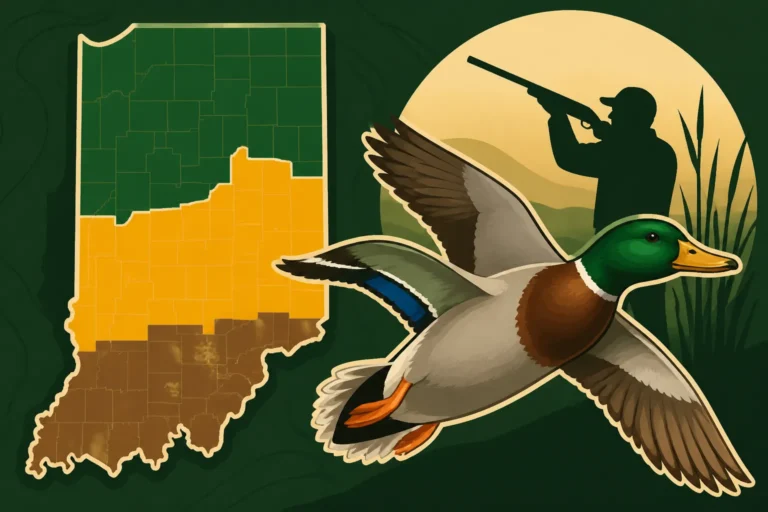
- Waterfowl: If you dream of hunting ducks or geese on the Kankakee Marshes, you’ll need a Federal Duck Stamp, an Indiana Migratory Waterfowl Stamp, and your Harvest Information Program (HIP) certification. These are all federal and state requirements on top of your base license. You can find more details on what's required for migratory bird hunting in Indiana Migratory Bird Stamp Cost.
These add-ons are not optional if you want to legally hunt these species. Always budget for them from the outset to avoid any surprises. The good news is that Indiana offers incredible hunting for all these species, making the investment well worth it for many.
How to Purchase Your Indiana License
The process for purchasing your Indiana hunting licenses and tags is fairly straightforward, even for nonresidents. The most convenient method for many is through the Indiana DNR's online portal, "Go Outdoors Indiana." This user-friendly platform allows you to purchase all necessary licenses and stamps from the comfort of your home, print them out, or save them digitally on your smartphone. Many hunters rely on digital copies, making sure their phone is charged or they have a backup printout, especially in areas with spotty cell service.
You can also purchase licenses in person at various authorized license vendors throughout the state, which often include sporting goods stores, bait shops, and some county clerk offices. This can be a great option if you prefer a physical license or want to ask specific questions to a local vendor. Remember to always carry proof of your license while hunting, whether it's a paper copy or a digital version on your phone. For those looking for detailed instructions, the guide on Buying a License on Go Outdoors Indiana will walk you through the steps. It's also wise to check Indiana Hunter Education Requirements as these are often mandatory before you can purchase any hunting license.
Strategizing Your Indiana Nonresident Hunt
As a nonresident, planning your Indiana hunt isn't just about picking a date on the calendar; it's about making smart choices that align with your budget and your hunting goals. You're making an investment to hunt in a new state, so maximizing that investment requires careful consideration of what you want to hunt and how you acquire your permits.
Planning for Specific Game Species
Your hunting strategy should directly influence which licenses and tags you purchase. If your primary goal is to harvest a deer, for instance, you'll want to focus your budget on the base license plus the appropriate deer tags, whether that's for archery, firearms, or muzzleloader season. The Indiana Deer Season Structure Explained outlines the various opportunities. If small game is your focus, the base license, possibly with a small game or furbearer stamp if needed for specific species, will suffice.
However, if you're hoping for a multi-species hunt – maybe a morning in a treestand followed by an afternoon chasing squirrels – then you need to account for all those individual costs. Carefully consider the specific game you are targeting, the seasons in which you plan to hunt, and then tally up the associated fees. Don't forget that if you're planning to hunt in areas like the Hoosier National Forest, scouting with mapping apps like GoHunt can be invaluable for finding good ground and understanding property boundaries, saving you precious hunting time. This kind of detailed planning is especially crucial when considering a trip for Hunting Southern Indiana Hill Country or Hunting Northern Indiana Farmland Deer.
Exploring License Bundles and Options
Indiana, like many states, understands that hunters often pursue more than one species. While there isn't a single "everything" bundle, they do offer options that can be more economical than buying each license and tag separately. For nonresidents, these often come in the form of deer bundles. For example, a "Non-Resident Deer Bundle" might include both an archery and a firearms tag, or an antlered and an antlerless tag, at a slightly reduced combined price compared to purchasing them individually. Always check the Go Outdoors Indiana website for the most current bundle offerings, as these can change year to year.
Sometimes, combining certain licenses or opting for a specific type of tag can be more cost-effective. For instance, if you are strictly an archery hunter, purchasing an archery-only deer tag might be cheaper than a more general firearms tag that you won't use. It pays to spend a little time comparing the individual costs to any available bundles or multi-season options. Moreover, keep in mind other essential regulations like Indiana Blaze Orange Requirements which might impact your gear budget. Planning ahead and looking at all the possible combinations will ensure you get the most out of your hunting dollar in Indiana. Don't hesitate to use tools like GoHunt to scope out potential hunting spots during your planning phase to ensure you're making the most of your license purchase by knowing where you'll go!
Indiana Nonresident Hunting License Cost Overview
To help you visualize the common costs, here's a table outlining the current pricing for the nonresident base hunting license and some of the most frequently purchased add-on tags. Keep in mind that prices are subject to change, so always verify on the official Go Outdoors Indiana website.
| License/Permit Type | Current Nonresident Cost (Approx.) | What it Covers Primarily |
|---|---|---|
| Annual Hunting License (Base) | $97.00 | Small game (rabbit, squirrel), furbearers (coyote, fox), unprotected species. Required for all other state tags. |
| Deer Archery License | $150.00 | One antlered or antlerless deer during archery season. |
| Deer Firearms License | $150.00 | One antlered or antlerless deer during firearms season. |
| Deer Muzzleloader License | $150.00 | One antlered or antlerless deer during muzzleloader season. |
| Spring Turkey License | $175.00 | One bearded wild turkey during spring season. |
| Migratory Waterfowl Stamp | $11.00 | Required for hunting ducks, geese, mergansers, coots. (Federal Duck Stamp also required). |
| Total for Base + 1 Deer Tag (e.g., Archery) | $247.00 | Covers small game, furbearers, and one deer during archery season. |
| Total for Base + Spring Turkey | $272.00 | Covers small game, furbearers, and one bearded turkey during spring season. |
Note: Prices listed are approximate and subject to change by the Indiana DNR. Always check the official Go Outdoors Indiana website for the most up-to-date fees before purchasing.
Disclaimer
The information provided in this guide is for general informational purposes only and is not intended as legal advice. Hunting regulations, license costs, and season dates can change. Always consult the most current Indiana Department of Natural Resources (DNR) regulations and official publications before planning your hunt.