Why Black Bears Rarely Reach Indiana
It's a question many curious Hoosiers and even visiting hunters ponder: why do black bears, majestic and increasingly common in neighboring states, seem to give Indiana such a wide berth? While you might occasionally hear a whisper or catch a fleeting news report about a lone wanderer passing through, the reality is that Indiana is not, and hasn't been for a very long time, a black bear haven. This guide is dedicated to unraveling the fascinating reasons behind this rarity, exploring the historical context, habitat requirements, geographic challenges, and the dedicated efforts to monitor the few bears that do make their way into our state.
The Historical Presence (and Absence) of Bears in Indiana
To truly understand why black bears are so uncommon in Indiana today, we have to rewind the clock quite a bit. It’s easy to assume they were never here, but that’s far from the truth.
When Bears Roamed the Hoosier State
Long before European settlers began carving out farms and towns from the vast wilderness, black bears were indeed an integral part of Indiana’s ecosystem. Imagine a landscape dominated by dense, unbroken forests—towering oaks, hickories, and beeches covering what felt like endless miles, especially in the southern hills and the northern swamps. These were ideal conditions for black bears. They found abundant mast crops like acorns and beechnuts, thickets for denning, and plenty of seclusion. Historical accounts from early explorers and settlers often mention encounters with bears, painting a picture of a state where these animals were a common sight, much like deer are today. They were a significant part of the wildlife tapestry, crucial to the health of the forests, spreading seeds and keeping other animal populations in check. It was a wild, untamed Indiana, rich with biodiversity that included these powerful omnivores.
The Impact of European Settlement
The arrival of European settlers dramatically altered this landscape, setting in motion the changes that would ultimately lead to the extirpation of black bears from Indiana. As pioneers moved in, their primary goal was to tame the land, which meant clearing forests for agriculture and settlement. Trees were felled by the millions, turning dense woodlands into open fields for crops and pasture. This rapid habitat destruction was the first major blow. Bears, being animals that require large, contiguous tracts of forest for their survival, simply had nowhere to go.
Furthermore, bears were often seen as a threat. They could prey on livestock, raid crops, and were sometimes perceived as dangerous to humans. This led to widespread hunting, not just for sustenance or sport, but often as a means of predator control to protect burgeoning settlements and farms. This combination of massive habitat loss and intense, unregulated hunting pressure quickly pushed the black bear population to the brink. By the mid-19th century, black bears were effectively gone from Indiana, vanishing from our records and our woods. It was a stark reminder of how quickly human activity can reshape an entire ecosystem, leading to the local extinction of species that once thrived.
Understanding Black Bear Biology and Habitat Needs
Black bears aren't just furry creatures wandering aimlessly; they have very specific needs when it comes to their environment. These requirements are key to understanding why Indiana, in its current state, struggles to accommodate them.
What Bears Look For in a Home Range
A black bear's ideal home range is far from what most of Indiana currently offers. They need vast, uninterrupted tracts of forest – we're talking thousands upon thousands of acres of dense woods. These areas provide the crucial cover for them to feel secure, raise their cubs, and find refuge from human activity. Think of the deep, dark woods you might imagine in the Smokies or the northern reaches of Michigan; that's prime bear country. These forests aren't just for hiding; they're also a natural pantry. They need a diverse mix of tree species that produce reliable mast crops, like acorns, hickory nuts, and beechnuts, which are high in fat and essential for bears to pack on weight before winter hibernation.
Beyond food and cover, a bear's home range must also offer plenty of denning sites. These can be hollow logs, rock crevices, thick brush piles, or even excavated dens under tree roots. Safe, secluded denning sites are critical for sows to give birth and for all bears to safely endure the cold winter months. Water sources, of course, are also a necessity, providing both drinking water and a place to cool off during warmer seasons. Without these core elements—extensive forest cover, abundant natural food sources, secure denning opportunities, and reliable water—a black bear simply cannot establish a viable, long-term presence. This is why even a small, isolated patch of woods, no matter how appealing it might seem to a deer hunter, just doesn't cut it for a bear.
Food Sources and Seasonal Demands
Black bears are omnivores, meaning their diet is incredibly varied, but it's largely dictated by what's seasonally available. This adaptability is one of their strengths, but it also means they need a lot of diverse food sources to sustain themselves year-round, especially to build up fat reserves for hibernation.
In spring, as they emerge from their dens, bears primarily seek out tender new shoots, grasses, forbs, and any carrion they might stumble upon. They're also keen on insects like ants and beetle larvae. As summer progresses, their diet shifts to an abundance of berries—blackberries, raspberries, blueberries, serviceberries—and other soft fruits. This is a critical time for them to gain weight. Then comes fall, the most crucial period for hyperphagia, where bears consume massive amounts of food to prepare for winter. This is when mast crops, such as acorns, hickory nuts, and beechnuts, become paramount. These fatty, calorie-dense foods are vital for building the necessary fat layers to survive hibernation. Without a consistent and abundant supply of these mast crops year after year, bears struggle to thrive, and their reproductive success can be severely impacted.
Indiana's landscape, while it does have woodlands and some of these food sources, often lacks the sheer scale and consistency of these diverse, high-calorie food options across vast, connected areas that a healthy bear population demands. Small, fragmented woodlots simply don't offer the sustained buffet necessary for a bear to call it home for the long haul. A bear needs not just a meal, but an entire grocery store of natural provisions, continually replenished by healthy forest ecosystems.
Geographic Factors Limiting Indiana's Bear Population
When we look at a map, Indiana might seem close enough to other bear-rich states that you'd think they'd just wander over. But geography, human development, and even ancient geological formations play a huge role in why they don't.
The Appalachian Barrier and Migration Routes
One of the most significant, yet often overlooked, factors limiting black bear dispersal into Indiana is the very geology of our region. If you look southeast, you'll see the Appalachian Mountains—a true stronghold for black bears, stretching from Georgia all the way up into Maine. These mountains provide the continuous, rugged, heavily forested habitat that bears thrive in. However, between the western edge of the Appalachians and Indiana, there's a considerable stretch of territory, much of it heavily populated and developed, acting as a natural buffer.
While bears are excellent travelers, these geographic and human-made barriers create a funnel effect. Bears dispersing westward from the Appalachian strongholds are more likely to find continuous habitat trending north through Ohio or south through Kentucky into more rugged, forested areas. Indiana sits somewhat outside this natural dispersal corridor. Our landscape simply doesn't offer the inviting, unbroken forest connections that would guide a young, dispersing bear looking for new territory. It's not a direct, easy walk for a bear from, say, West Virginia or Kentucky to the deep woods of Southern Indiana. They face significant hurdles of highways, towns, and large agricultural tracts, making the journey incredibly risky and often insurmountable for most wanderers.
Habitat Fragmentation and Development Pressure
Even without the Appalachian barrier, Indiana faces a massive challenge with habitat fragmentation. While we have beautiful state forests and fish and wildlife areas, they are often islands of green in a sea of agriculture, suburbs, and industrial development. For a wide-ranging animal like a black bear, these "islands" are simply not big enough, nor are they connected enough to support a sustainable population.
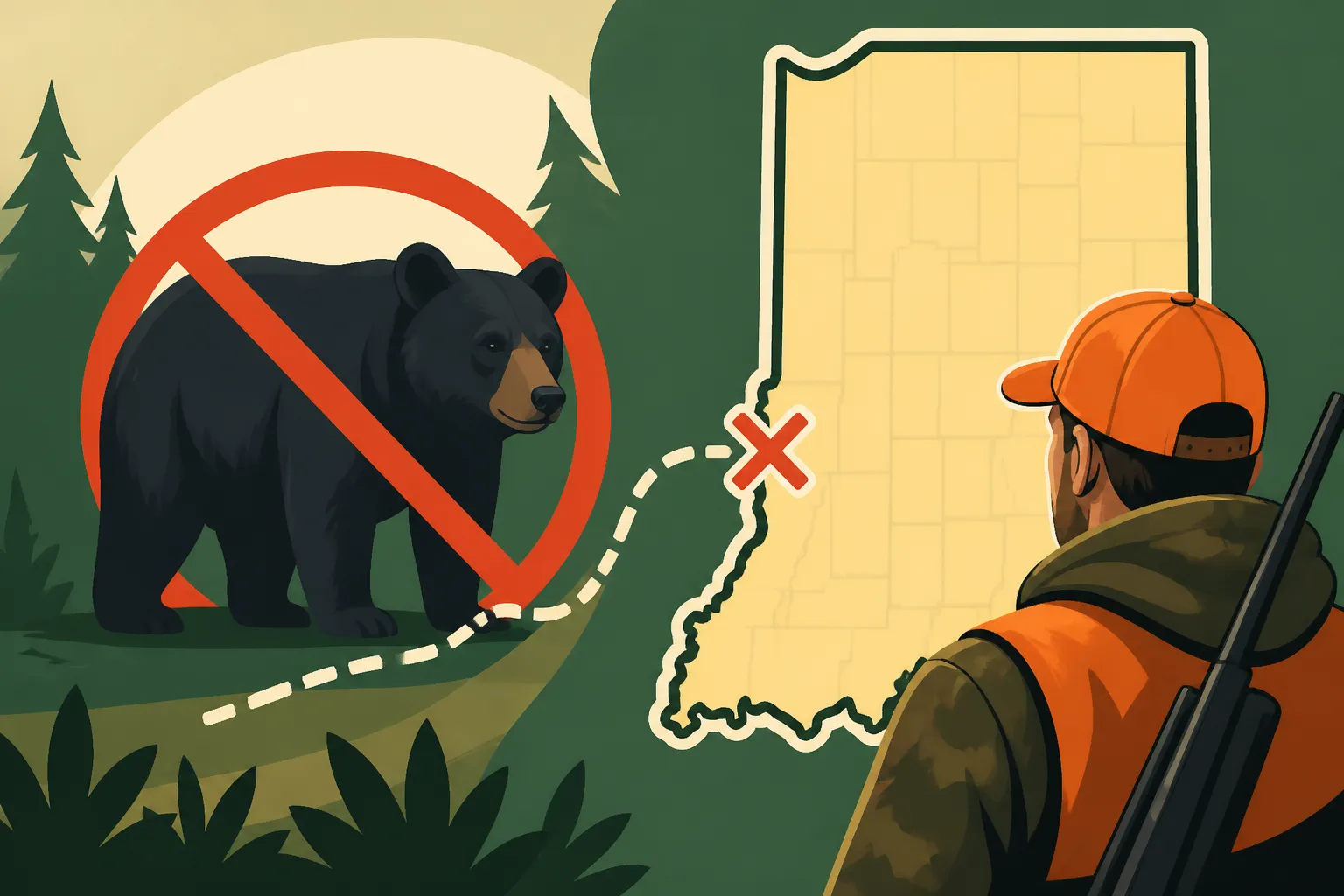
Imagine a young bear setting out from a healthy population in Michigan, looking for new territory. It would have to navigate through vast stretches of northern Indiana farmland, crossing numerous busy roads, before it even got close to the more suitable habitat in the southern part of the state. This gauntlet of human activity, busy roads, and lack of continuous cover makes it incredibly difficult and dangerous. Each road crossing is a risk, each field edge offers no cover, and each residential area brings potential conflict with humans. The sheer amount of developed and agricultural land means that even if a bear makes it into a relatively secluded woodlot, it's likely to quickly hit another human barrier. This constant pressure and lack of uninterrupted space prevent bears from establishing territories and, critically, from breeding successfully. A lone wanderer is one thing, a thriving, reproducing population is another entirely, and that requires large-scale, connected habitat that Indiana currently lacks. For hunters using mapping tools like those offered by GoHunt, you can really see just how broken up the habitat is, even in areas that appear green on a broad map.
Neighboring States and Their Bear Populations
It's fascinating to look at our neighbors and see thriving black bear populations, sometimes just a stone's throw from the Indiana border. This stark contrast further highlights why Indiana's situation is so unique.
Healthy Bear Populations in Surrounding States
Let's glance at the states surrounding Indiana, and you'll quickly notice a trend: black bears are doing quite well.
- Michigan: Our neighbor to the north boasts a very healthy black bear population, particularly in the Upper Peninsula and the northern Lower Peninsula. These areas are characterized by vast, dense forests, often coniferous, interspersed with swamps and wetlands—perfect bear habitat. Michigan actively manages its bear population through hunting seasons and robust conservation efforts, indicating a stable and thriving presence.
- Wisconsin: To the northwest, Wisconsin also has a significant black bear population, concentrated in its northern forests. Similar to Michigan, these regions offer extensive, relatively undisturbed wilderness areas.
- Kentucky: Just south of us, Kentucky has seen a remarkable comeback of its black bear population, particularly in the eastern Appalachian region. Bears are now regularly observed and even hunted in several counties. While not as widespread as in Michigan, Kentucky's bear population is steadily expanding.
- Ohio: East of Indiana, Ohio has a small but growing population of black bears, mainly concentrated in its eastern Appalachian foothills. These are often bears dispersing from Pennsylvania and West Virginia. While not as numerous as Michigan or Kentucky, their presence is notable and growing, indicating habitat suitability in certain areas.
These neighboring states demonstrate that black bears are not an endangered species, but rather a robust and adaptable one that thrives where suitable habitat and minimal human conflict allow. The differences in landscape and human population density play a huge role.
| State | Primary Bear Habitat | Population Trend | Hunting Season |
|---|---|---|---|
| Michigan | Dense northern forests, swamps | Stable/Increasing | Yes |
| Wisconsin | Northern forests, wetlands | Stable/Increasing | Yes |
| Kentucky | Eastern Appalachian foothills | Increasing | Yes |
| Ohio | Eastern Appalachian foothills | Small but growing | No (most years) |
| Indiana | Very rare, transient | Extremely low | No |
Why Indiana Isn't a Magnet for Dispersing Bears
Given the healthy populations surrounding us, you might wonder why Indiana isn't constantly inundated with dispersing bears. It largely comes down to the quality and connectivity of our habitat, coupled with the gauntlet a bear would have to run to get here.
Young male black bears, in particular, are known for undertaking long dispersal movements to find new territories. They are the most likely candidates to wander into Indiana. However, when a young bear leaves its home range in Michigan, for example, it enters a landscape that quickly becomes less hospitable. The northern part of Indiana is predominantly agricultural. Miles and miles of corn and soybean fields offer little in the way of cover, denning sites, or consistent natural food sources. While a bear might find refuge in a small woodlot or feast on a farmer's corn crop, these aren't long-term solutions, and they quickly put the bear in conflict with humans.
The further south a bear might venture into Indiana, the more continuous forest it might find, especially in the Hoosier National Forest or some of the larger state forests. However, even these areas, while substantial for Indiana standards, are often smaller and more fragmented than what bears would find in parts of Kentucky or Michigan. The sheer distance, the number of major highways, and the lack of continuous, quality habitat act as a powerful filter. Most dispersing bears will either turn back, find more suitable habitat in Ohio or Kentucky, or sadly, become roadkill or encounter other human-induced mortality before they can establish a foothold in Indiana. For more information on why there's no hunting season here, you can read more about Why Indiana Has No Bear Season.
What Happens When a Bear Does Show Up?
Despite the odds, every now and then, a black bear makes a surprise appearance in the Hoosier state. When this happens, it's often big news, and it usually sparks a lot of curiosity (and sometimes a little panic!).
Reporting a Black Bear Sighting in Indiana
If you're lucky (or unlucky, depending on your perspective!) enough to spot a black bear in Indiana, the most important thing you can do is report it immediately to the Indiana Department of Natural Resources (DNR). This isn't just for curiosity's sake; it's vital for wildlife management. The DNR monitors these sightings closely to understand dispersal patterns, assess potential habitat, and ensure public safety. You can usually find contact information for your local DNR district office or the central wildlife division on their official website.
When you report a sighting, be prepared to provide as much detail as possible:
- Date and Time: When did you see the bear?
- Location: Be as precise as possible. Street address, nearest cross street, or GPS coordinates are extremely helpful. If you're using a mapping app like GoHunt, you can easily pinpoint the exact spot.
- Description: What did the bear look like? Size, color (though most are black, some can be cinnamon or even blond), any distinguishing marks.
- Behavior: What was the bear doing? Was it foraging, running, just passing through, or showing any signs of aggression (which is very rare with black bears)?
- Evidence: Did you see tracks, scat, or any other signs? Taking a photo or video from a safe distance can be incredibly valuable for confirmation.
It's crucial to report, but equally crucial to remember safety first. Do not approach the bear, do not try to feed it, and do not try to corner it. Give it plenty of space and observe from a distance. The DNR needs accurate information, not a selfie with a wild animal that could turn dangerous if provoked. Remember, these are wild animals, and while fascinating, they deserve respect and space. If you ever come across a sick or injured animal, whether it's a bear or any other wildlife, knowing how to approach the situation is key. You can learn more by checking out Reporting a Sick Animal in Indiana.
DNR's Approach to Wandering Bears
The Indiana DNR has a pretty clear, and generally hands-off, approach to these rare black bear visitors. Their primary goals are public safety, monitoring the animal's movements, and avoiding unnecessary intervention.
When a bear is reported, the DNR typically initiates a monitoring effort. This might involve tracking the bear's movements from a distance, setting up trail cameras, or simply gathering additional public reports. Their default strategy is to allow the bear to move through the area naturally, hoping it will eventually disperse to more suitable habitat outside of Indiana or return to where it came from. Bears are often simply passing through, especially young males looking for new territory, and will continue moving if left undisturbed.
Intervention, such as tranquilization and relocation, is usually a last resort and only considered if the bear becomes a significant public safety threat, repeatedly enters residential areas, or shows signs of injury or illness. Relocation is a complex and stressful process for the animal and isn't always successful. Furthermore, given Indiana's fragmented habitat, relocating a bear within the state often just moves the problem rather than solving it, as there are few truly remote, expansive areas to release them into where they won't eventually encounter humans again. The DNR is much more focused on educating the public about bear safety – how to secure attractants like trash and pet food, and what to do if you encounter a bear – to minimize conflict. Their ultimate hope is that the bear will move on, illustrating the transient nature of these rare Indiana visitors. This management style is a reflection of the fact that we don't have a resident population to manage, but rather occasional, temporary visitors. For an overview of how wildlife is generally monitored in the state, you might find Indiana Wildlife Disease Monitoring interesting, as these protocols could apply to any significant wildlife sighting.
The Future of Black Bears in Indiana (and Management)
The question of whether black bears will ever truly return to Indiana is complex, touching on ecology, human population, and land use. It's a topic that sparks much debate among wildlife enthusiasts and managers alike.
Natural Recolonization vs. Reintroduction
There are two main pathways for a species like the black bear to return to an area from which it was extirpated: natural recolonization or active reintroduction.
Natural Recolonization: This is the slower, more organic process where animals from neighboring, healthy populations gradually expand their range into new, suitable territories. For Indiana, this means bears slowly migrating from Michigan, Kentucky, or Ohio. This is largely what we've been seeing with the occasional wandering bear—they are explorers from established populations. For natural recolonization to lead to a sustainable population, however, a few critical things would need to happen:
- Increased Habitat Connectivity: The fragmented landscape of Indiana would need to see significant improvements in terms of connected forested corridors. This is a monumental task given the state's agricultural and urban footprint.
- Increased Tolerance: Human tolerance for bears would need to grow, reducing conflicts that often lead to bears being removed or killed.
- Breeding Pairs: You'd need not just a lone male, but sows (female bears) to successfully establish territories and reproduce, which is even rarer than seeing a male wander through.
Active Reintroduction: This involves wildlife agencies deliberately trapping bears from healthy populations elsewhere and releasing them into carefully chosen, suitable habitats within the state. This is a much more direct approach, but also highly controversial and resource-intensive. For an active reintroduction program, the state would need:
- Public Support: There would need to be widespread public support for having bears back in Indiana, including landowners and outdoor recreationists.
- Extensive Suitable Habitat: The DNR would need to identify large, contiguous blocks of public or private land that could truly support a breeding population without constant human-bear conflict. Given the limited extent of such areas in Indiana compared to states with reintroduction programs, this is a significant hurdle.
- Funding and Management: Reintroduction programs are incredibly expensive and require long-term management strategies, including monitoring, education, and potentially managing conflicts.
Currently, the Indiana DNR's stance is that they are not pursuing an active reintroduction program. They are observing and monitoring natural recolonization, but the prevailing view is that Indiana's current landscape doesn't provide enough high-quality, continuous habitat to support a robust, self-sustaining black bear population without significant human-bear conflict. The focus remains on educating the public and allowing nature to take its course, while being prepared for any rare visitors. This contrasts with how other large mammal populations like deer are managed, which you can read about in Indiana Deer Population Estimate.
Coexisting with Wildlife in a Changing Landscape
Even if active reintroduction isn't on the table, and natural recolonization remains a slow and challenging process, the presence of even occasional wandering bears highlights a larger theme: coexisting with wildlife in an increasingly human-dominated landscape. As our state continues to develop, and as wildlife populations (including deer, turkeys, and even coyotes) expand and adapt, learning to live alongside these creatures becomes paramount.
For Indiana, this means:
- Education: Continuing to educate the public about wildlife, their behaviors, and how to minimize conflicts. This includes basic bear-aware principles, even if bears are rare. For instance, knowing how to secure food and trash, not leaving pet food outside, and being aware of your surroundings when hiking or hunting.
- Habitat Conservation: Protecting and enhancing existing forested areas and working towards greater habitat connectivity, even if the primary goal isn't bear reintroduction. Healthy, connected forests benefit all wildlife, from songbirds to deer. Programs like those that encourage landowners to manage timber or establish pollinator habitats indirectly contribute to a healthier ecosystem overall.
- Monitoring and Research: Continued monitoring of all wildlife populations, including reporting systems for rare species, provides invaluable data for making informed management decisions. Tools available, such as those that GoHunt provides, can assist in understanding current habitat conditions and potential wildlife corridors. This helps us understand not just what's here, but what could be here, and what our landscape can reasonably support.
While black bears might remain a rare sight in Indiana for the foreseeable future, their occasional presence serves as a powerful reminder of our connection to the wild world. It prompts us to consider how we manage our land, interact with wildlife, and ultimately shape the future of biodiversity in our state. For those interested in becoming more informed about hunting and wildlife management, checking out resources on Indiana Hunter Education Requirements can be a great first step.
Disclaimer
This article is for general informational purposes only and does not constitute professional advice. Laws, prices and regulations vary by location and change over time. Consult a qualified professional for guidance on your specific situation.