Indiana Bobwhite Quail Decline
It’s heartbreaking, isn't it? That once-familiar, cheerful "bob-white!" whistle that used to echo across Indiana's fields and fencerows now feels like a ghost, a whisper from a bygone era. For many of us, the memory of flushing coveys of bobwhite quail, the thrill of a pointing dog locking up, is becoming just that—a memory. This guide isn't here to sugarcoat things; it's here to dig into the tough reality of the Indiana bobwhite quail decline, exploring the complex reasons behind their vanishing act and, crucially, what we, as hunters and conservationists, can do to help bring that iconic sound back to our beloved Hoosier landscape.
The Ghost of the Whistle: Understanding Indiana's Bobwhite Quail Decline
For generations of Hoosiers, the bobwhite quail wasn't just another game bird; it was an integral part of our rural identity, a symbol of autumn, and the ultimate test of a good bird dog. But today, the silence is deafening in many places where they once thrived. It's a profound loss that impacts not just hunters, but anyone who cherishes Indiana's natural heritage. We've seen a staggering reduction in quail numbers, and understanding the scope of this problem is the first step toward finding solutions.
Echoes of the Past: When Quail Roamed Freely
It's hard for younger hunters to imagine, but there was a time, not so long ago, when bobwhite quail populations in Indiana were robust, even booming. My grandad used to talk about finding multiple coveys in a single afternoon hunt, practically walking them up in old pastures and brushy draws. Back then, the landscape was a mosaic of small farms, woodlots, fallow fields, and extensive hedgerows and fencerows – perfect habitat for these ground-nesting birds. There was always an edge, always some cover, always something to eat. The land use patterns were less intensive, allowing for those crucial strips of "messy" habitat that quail absolutely need to survive and reproduce. Hunters would spend an entire season chasing birds, and harvest numbers reflected that abundance.
The Hard Reality: What the Numbers Tell Us Today
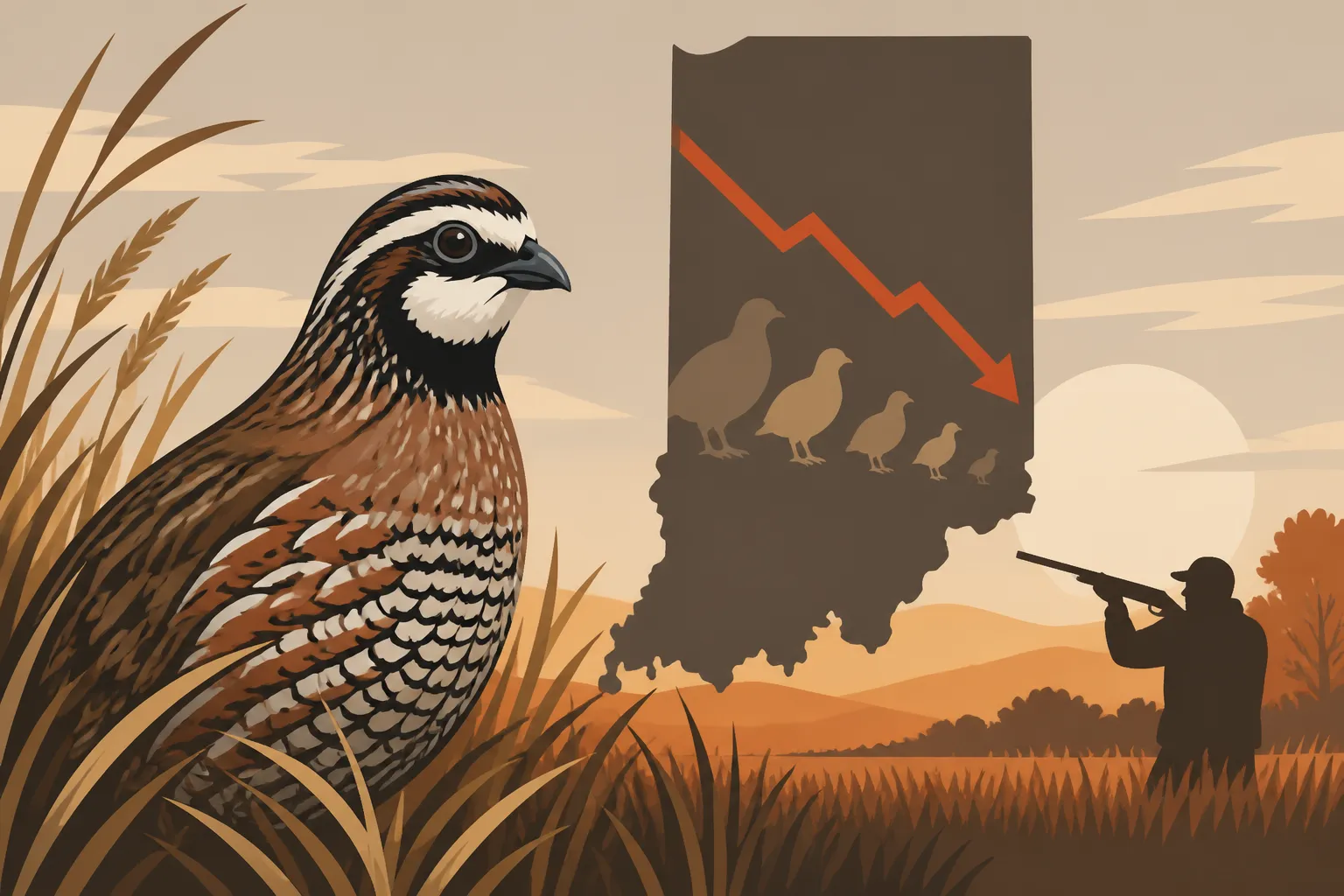
While anecdotal evidence from hunters confirms the decline, the cold, hard data from wildlife agencies paints an even starker picture. Indiana's bobwhite quail populations have plummeted drastically over the past several decades. While specific numbers fluctuate year to year based on weather and breeding success, the long-term trend is undeniably downward. We're talking about a significant percentage drop from their peak. It’s not just a small dip; it's a consistent slide that has left many historical quail strongholds nearly devoid of birds. The Indiana Department of Natural Resources (DNR) conducts various surveys, like roadside call counts and wing surveys, and these metrics consistently confirm a low and often declining trend.
The decrease isn't uniform across the state; some isolated pockets might hold on better than others, often in areas with specific, dedicated habitat management. However, for the majority of Indiana, the days of abundant quail are, sadly, a distant memory. This widespread decline suggests systemic issues rather than isolated incidents, pointing to larger ecological shifts that have made our landscape increasingly inhospitable for bobwhites. It's a challenge that requires a big-picture approach, moving beyond just hunting regulations to address the fundamental needs of these birds.
The Unmistakable Silence: Why Hunters Feel the Loss So Deeply
For those of us who grew up with the anticipation of autumn quail hunts, the current scarcity isn't just a biological statistic; it's an emotional void. There's a certain magic to a covey rise – the explosive flush, the whirring wings, the scattering birds, and the disciplined work of a good bird dog. It’s an experience that connects us to the land and to generations of hunters before us. Losing that connection, that tangible experience, is truly disheartening. Hunters are often the first to notice these declines because they spend so much time in the field, intimately observing wildlife populations year after year.
The frustration is palpable among the upland hunting community. Many remember the "good old days" and wonder if we'll ever hear the full, vibrant chorus of bobwhites again. This deep connection makes hunters passionate advocates for conservation, as they have a vested interest in restoring the very populations they cherish. The goal isn't just more hunting opportunities, but rather the return of a vital piece of Indiana's wild soundtrack.
The Vanishing Home: Habitat Destruction as the Root Cause
If you talk to any wildlife biologist about the bobwhite quail decline, habitat loss will be the first thing mentioned, almost without hesitation. Quail are creatures of specific cover, needing a diverse mix of nesting areas, brooding cover, escape cover, and winter food sources. Unfortunately, much of Indiana's landscape has been transformed in ways that simply don't accommodate these needs anymore. It’s a complex issue, with changes driven by economics, urban growth, and agricultural practices.
Agricultural Intensive Practices: Fields Without Fencerows
The biggest culprit, by far, has been the shift towards large-scale, intensive agriculture. In the past, Indiana's farms were smaller, more diversified, and inherently messier. Farmers planted smaller fields, leaving room for wide fencerows, brushy hedgerows, and odd corners of uncultivated land. These areas, often considered "waste ground" by modern standards, were lifeblood for quail. They provided dense cover for nesting, escape routes from predators, and a buffer against harsh winter winds and snow. They also harbored insects, critical protein for growing quail chicks, and native plant seeds for adult birds.
Today, the drive for efficiency means larger equipment, fence-row-to-fence-row cultivation, and the removal of nearly every impediment to planting and harvesting. Fields are vast monocultures of corn and soybeans, meticulously sprayed with herbicides and pesticides. While this might be good for crop yields, it’s devastating for quail. These massive, clean fields offer no food, no cover, and no protection. A quail covey has no chance to survive a winter in such an exposed environment, let alone raise a brood safely in the spring. Even small woodlots that remain are often isolated, lacking connectivity to other cover, making them essentially islands in a sea of agricultural desert.
The March of Development: Paving Over Prime Cover
Beyond agriculture, the relentless expansion of urban and suburban areas has consumed vast tracts of formerly wild or semi-wild land. As towns and cities grow, developers convert old farms, woodlots, and brushy areas into housing developments, strip malls, and roads. While necessary for a growing population, this expansion comes at a direct cost to wildlife habitat. Quail, which need continuous patches of suitable cover, are simply displaced. Even if a small wooded area remains within a development, it often becomes too fragmented and disturbed to support a covey.
The impact isn't just the direct loss of land; it's also the increased human presence, domestic animals, and altered drainage patterns that further degrade any remaining fringe habitats. These changes create invisible barriers, making it impossible for quail to move between dwindling pockets of cover, leading to genetic isolation and further population fragmentation. It’s a slow, steady encroachment that chips away at the vital spaces these birds need to thrive.
Forest Changes: From Diverse Edges to Dense Canopy
It might seem counterintuitive, but changes in Indiana's forests have also contributed to the quail decline. Bobwhite quail aren't deep-woods birds; they prefer early successional habitats, meaning areas with young trees, dense brush, and plenty of sunlight reaching the forest floor. Historically, natural disturbances like wildfires or human practices like selective logging or clearing for pasture created these ideal conditions, leading to a patchwork of diverse age classes within forested landscapes.
However, many of Indiana's forests have matured, with fire suppression policies and changing logging practices leading to denser, older stands of timber. These mature forests create a closed canopy, shading out the undergrowth and brushy cover that quail rely on. The forest floor becomes open and park-like, offering little protection from predators or the elements. Without active management to create those crucial early successional edges and open areas, these forests, while beautiful, become unsuitable for bobwhite quail. This is particularly true in areas like the Hoosier National Forest, where large tracts of mature timber lack the diverse habitat mosaic that quail need.
Beyond Habitat: Other Factors Stacking the Odds Against Quail
While habitat loss is the undeniable heavyweight champion of quail decline, it's rarely the only factor. Several other environmental and biological pressures have compounded the problem, making it incredibly difficult for bobwhite populations to rebound, even when some habitat improvements are made. It's a multi-faceted challenge, almost like a perfect storm working against these resilient little birds.
Predator Pressures: A Changing Ecological Balance
Nature is a delicate balance, and when one component shifts, others are affected. The loss of extensive, dense cover has made quail much more vulnerable to predation. They simply have fewer places to hide, nest, and escape. At the same time, populations of certain predators, often called "mesopredators," have increased in some areas. Critters like raccoons, opossums, skunks, and even domestic cats and dogs, thrive in fragmented landscapes and often have higher numbers in areas adjacent to human habitation. These opportunistic predators are masters at finding quail nests and chicks, and their increased numbers, combined with reduced cover, create a deadly combination.
While predators have always been a part of the quail's life cycle, the current imbalance tips the scales heavily against the birds. It’s not necessarily that individual predators are "better" at hunting quail, but rather that quail are more exposed, and there are more predators active in smaller, less secure habitat patches. This constant pressure, especially on vulnerable nests and young chicks, can severely impact annual recruitment, making it harder for populations to grow.
The Cruelty of Weather: Cold Snaps and Droughts
Quail are surprisingly tough, but they are still susceptible to the whims of Mother Nature, especially when their habitat is already compromised. Severe weather events can be devastating, and with declining populations, a single bad year can wipe out a local covey entirely. Bitterly cold winters with deep, persistent snow or prolonged ice cover can make it impossible for quail to access food and can lead to direct mortality from exposure or starvation. Without dense, overhead cover and a reliable food source, quail are simply not equipped to handle extreme conditions.
Conversely, excessively wet springs can drown nests or chill chicks to death, while severe droughts can reduce insect populations (critical for chick survival) and hinder plant growth, leading to poor nesting cover and food scarcity. When quail populations are strong and habitat is abundant, they can weather these storms and bounce back. But with fragmented, inadequate habitat and already low numbers, a single harsh season can be a catastrophic blow, pushing local populations closer to extirpation.
Disease and Competition: Subtle Threats
Beyond the obvious, more subtle factors like disease and competition can also play a role. While widespread disease outbreaks haven't been identified as a primary driver of the broad quail decline in Indiana, local instances can certainly impact a covey. Parasites and bacterial infections can weaken birds, making them more susceptible to predators or harsh weather, especially when they are already stressed by poor habitat or nutrition.
Competition with other species can also be a minor, contributing factor. While less significant than habitat loss, an increase in certain songbird or rodent populations might compete for some food resources, though this is generally overshadowed by larger issues. The overall health and resilience of a quail population are tied to its habitat; robust habitat provides better food resources, which in turn leads to stronger, healthier birds more capable of resisting disease and surviving environmental stressors.
Fighting for Survival: Conservation Efforts and What We Can Do
The challenges facing Indiana's bobwhite quail are immense, and it’s easy to feel overwhelmed by the scale of the decline. But giving up isn't an option. There are dedicated people and programs working tirelessly to bring back the whistle, and understanding these efforts is key. More importantly, we, as hunters and conservationists, have a crucial role to play, both through supporting broader initiatives and making a difference on a local level.
DNR's Battle Plan: Programs Aimed at Revival
The Indiana Department of Natural Resources (DNR) recognizes the critical state of bobwhite quail and has implemented various programs aimed at habitat restoration and population recovery. These efforts often focus on creating or enhancing early successional habitats, which are vital for quail. Programs might include prescribed burns, selective timber harvests, planting native grasses and wildflowers, and establishing brushy thickets and food plots. For those interested in understanding these efforts or even participating, checking out resources like the Indiana Small Game Season Rules can provide insights into how regulations align with conservation goals.
Many of these initiatives target public lands, such as Indiana Fish and Wildlife Areas and State Forests, demonstrating a commitment to species recovery. You can often see the results of this habitat work when scouting or hunting. For example, Habitat Work on Indiana Wildlife Areas often includes specific measures to benefit quail, pheasants, and other small game species. These areas serve as living laboratories and demonstration sites, showing how targeted habitat management can create the conditions quail need to thrive. The DNR also often collaborates with private landowners, offering technical assistance and resources to encourage habitat improvements on individual properties.
The Power of Private Landowners: Small Changes, Big Impact
While public lands are important, the vast majority of Indiana's landscape is privately owned. This means that private landowners hold immense power in the future of the bobwhite quail. Even small changes on individual properties can collectively create a significant impact across the state. Farmers who leave field corners unmowed, establish filter strips along waterways, or plant native warm-season grasses can create crucial nesting and brooding cover. Those with woodlots can consider selective thinning or creating small clearings to encourage brushy undergrowth.
Programs like the federal Conservation Reserve Program (CRP) or state-specific initiatives often provide financial incentives and technical guidance for landowners to convert marginal cropland into wildlife habitat. This is where tools like GoHunt can be invaluable for landowners researching best practices or for hunters looking to understand habitat features. Even simple acts, like delaying mowing of hayfields until after nesting season or allowing fencerows to grow thick with native vegetation, can provide critical cover. The cumulative effect of hundreds or thousands of landowners making these relatively small adjustments could be the key to turning the tide for quail. It's about recognizing the value of "messy" spaces that might not have an immediate economic return but provide invaluable ecological benefits.
Your Role as a Hunter: Supporting Quail Beyond the Shotgun
As hunters, we are often the staunchest advocates for wildlife conservation, and our passion for the outdoors translates into real support for quail. Every hunting license and stamp purchased contributes directly to wildlife management and habitat restoration efforts. When you buy your Indiana Resident License Options or migratory bird stamps, a portion of that revenue goes straight into the coffers that fund these vital programs. Beyond financial contributions, active participation is crucial. This can mean volunteering for habitat work days on public lands, advocating for conservation-friendly policies, or educating others about the importance of quail habitat.
Learning to identify good quail habitat, even if you’re not actively hunting quail, helps you appreciate the intricacies of the ecosystem. Tools like GoHunt can help you scout and understand land features, even identifying potential habitat that could be improved. You can also be an advocate for responsible land use practices in your community. Simply spreading awareness about the plight of the bobwhite and the importance of habitat can make a difference. The more people who understand and care, the greater the collective will to implement the necessary changes. Our dedication can help bring back the thrilling sound of a covey rise, ensuring that future generations can experience the magic of Indiana's bobwhite quail.
The Future of the Bobwhite Whistle in Indiana
The road to recovery for Indiana's bobwhite quail is long and steep, but it's not impossible. While the golden age of widespread, booming populations might be behind us, there is real hope that through sustained, collaborative efforts, we can bring these iconic birds back to a more stable and sustainable level. It requires patience, dedication, and a commitment from all stakeholders, from state agencies to individual citizens.
Finding Remaining Pockets: Where to Still Listen
Despite the general decline, there are still pockets of bobwhite quail to be found in Indiana. These areas typically share common characteristics: they possess high-quality, dense, and diverse early successional habitat, often created through active management. You might find them on certain public Fish and Wildlife Areas that prioritize brushy cover and native grasses, or on private lands where landowners are actively engaged in habitat restoration. Areas with a mix of small agricultural fields, unmanaged field edges, and brushy draws are often the best bets.
When you're out scouting, pay close attention to areas that look "rough"—places with tall grasses, multiflora rose, plum thickets, and dense fencerows. These are the kinds of places where a covey might still be hanging on. Using mapping tools to identify such features can be a good starting point, though nothing beats boots on the ground. Sometimes, these birds might be holding on in unexpected places, especially where hunting pressure for other species is lower, allowing them a bit more breathing room.
Long-Term Outlook: A Slow, Uphill Climb
Realistically, the recovery of bobwhite quail in Indiana will be a slow and arduous process. There are no quick fixes, and simply stocking birds without addressing the underlying habitat issues is largely ineffective. The emphasis must remain on creating and maintaining suitable habitat on a large scale. This means continued investment in DNR programs, increased participation from private landowners, and a societal shift towards valuing diverse landscapes over pristine monocultures. The challenge is immense, given the continued pressures of development and intensive agriculture, but it’s not insurmountable.
Success will be measured not just in increased harvest numbers, but in the consistent presence of calling males, successful nesting seasons, and expanding covey ranges. It will take many years, perhaps even decades, of dedicated effort to see a significant turnaround. But every small victory, every restored fencerow, every managed forest edge, contributes to this long-term goal.
Hope on the Horizon: Small Victories and Dedicated Efforts
Despite the daunting nature of the challenge, there are reasons for optimism. Conservation groups, dedicated landowners, and wildlife agencies continue to refine their strategies, learning more about what works best for bobwhite quail. New technologies and more efficient methods for habitat creation are constantly being developed. The passion of hunters, who continue to support conservation through their licenses and volunteer efforts, remains a powerful force.
The return of the bobwhite whistle won't be accidental; it will be the direct result of intentional, sustained effort. When you consider the successful restoration of other species, like wild turkeys (see How Turkeys Were Restored to Indiana), it’s clear that with enough dedication and science-based management, even seemingly impossible goals can be achieved. We have the knowledge; now it's about marshaling the resources and the will to apply it across our beloved Hoosier state. Every single step we take to improve habitat, no matter how small, adds to the collective effort to bring back that iconic sound, that quintessential piece of Indiana's wild heart.
Key Factors in Indiana's Bobwhite Quail Decline
Understanding the intertwined causes of the quail's struggle helps us focus our conservation efforts. Here's a breakdown of the primary factors:
| Factor | Description | Impact on Quail |
|---|---|---|
| Intensive Agriculture | Large monoculture fields, removal of fencerows, hedgerows, and idle land. | Eliminates nesting, brooding, and winter cover; reduces insect food sources for chicks. |
| Urban/Suburban Development | Conversion of rural and semi-rural land into housing, commercial areas, and infrastructure. | Direct loss of habitat; increased fragmentation; higher disturbance. |
| Forest Maturation | Succession of open woods and early successional areas into dense, mature timber. | Reduces sunlight reaching the forest floor; eliminates dense, brushy undergrowth quail need. |
| Increased Predation | Higher populations of mesopredators (raccoons, opossums, skunks, coyotes) due to habitat changes. | Increased pressure on nests, eggs, and adult quail; harder for quail to escape. |
| Weather Extremes | Severe winters (ice/deep snow), prolonged droughts, or excessive wet springs. | Direct mortality from exposure/starvation; reduced nesting success; chick mortality. |
| Pesticide/Herbicide Use | Application on agricultural and residential lands. | Reduces insect populations (critical food for chicks); direct exposure risks. |
Disclaimer
This article is for general informational purposes only and does not constitute professional advice. Laws, prices and regulations vary by location and change over time. Consult a qualified professional for guidance on your specific situation.