Where Indiana Turkeys Are Densest
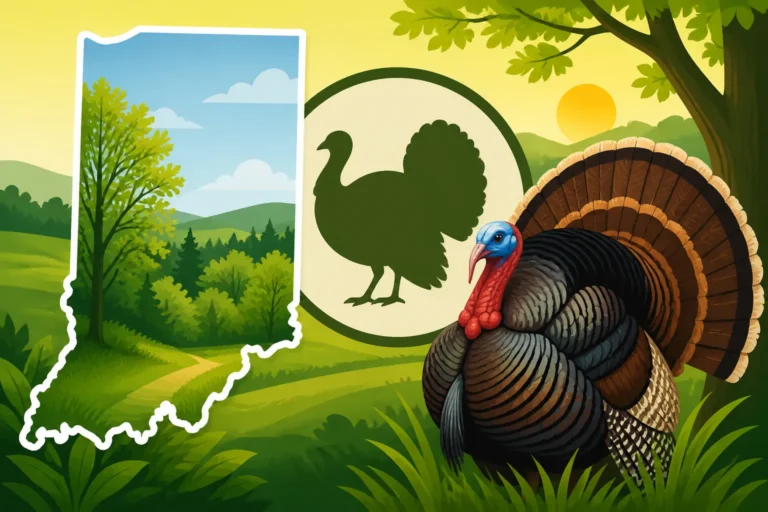
Finding that sweet spot where wild turkeys are practically tripping over each other can feel like a lifelong quest for us Hoosier hunters. You spend hours scouting, driving backroads, and pouring over maps, only to find sparse birds or, worse, birds that just aren't talking. It's frustrating when you've done everything right but the birds just aren't there. This guide will help demystify where Indiana's turkey populations truly thrive, breaking down the habitats and regions where you're most likely to hear those thunderous gobblers.
Understanding Indiana's Turkey Habitat Sweet Spots
Wild turkeys aren't just randomly distributed; they have very specific needs when it comes to habitat. Think of it like this: if you were a turkey, what would you need to survive, breed, and raise your poults without too much stress? They need food, water, cover for nesting and protection from predators, and most importantly, good roosting trees. Indiana offers a surprising diversity of landscapes, and each one plays a different role in supporting our turkey populations. Knowing these habitat preferences is the first step to pinpointing where Indiana turkeys are densest.
The Role of Mature Hardwood Forests
Indiana's wild turkeys are creatures of the forest, particularly mature hardwood stands. These aren't just pretty trees; they're essential for a turkey's life cycle. The vast, older forests, especially those with a healthy understory, provide a banquet of acorns, beechnuts, and other mast crops that turkeys rely on for food, particularly during the leaner winter months. Without this consistent food source, turkey populations simply can't sustain themselves.
Furthermore, these mature hardwoods provide crucial roosting habitat. Turkeys prefer to fly up into large, sturdy trees with strong horizontal limbs to spend the night, safe from ground predators like coyotes and foxes. You'll often find them favoring the tallest oaks or sycamores along creek bottoms or on high ridges. If you're wondering Where Indiana Gobblers Roost, focusing on these areas is a smart move. Without these towering sentinels, turkeys are much more vulnerable, and their numbers tend to reflect that.
Importance of Diverse Undergrowth and Edge Habitat
While big timber is vital, turkeys also thrive where there's a mix of different habitat types. Think about those areas where dense undergrowth meets open woods, or where a timber stand transitions into an agricultural field. These "edge habitats" are like prime real estate for turkeys. The thick underbrush provides excellent nesting cover for hens, hiding their nests from hungry predators. It also offers protection and concealment for poults (young turkeys) as they grow, giving them a place to dart into when a hawk or coyote shows up.
These edges are also fantastic for foraging. Turkeys will spend hours scratching through leaf litter in the woods for insects, seeds, and nuts, then move to the field edge to pick at waste grains, fresh shoots, and bugs. A mosaic of timber, thickets, and fields provides everything a turkey needs within a relatively small home range. Scouting these transition zones, especially when you're Scouting Indiana Public Land Before Season, can really pay off.
Southern Indiana: The Undisputed Turkey Capital
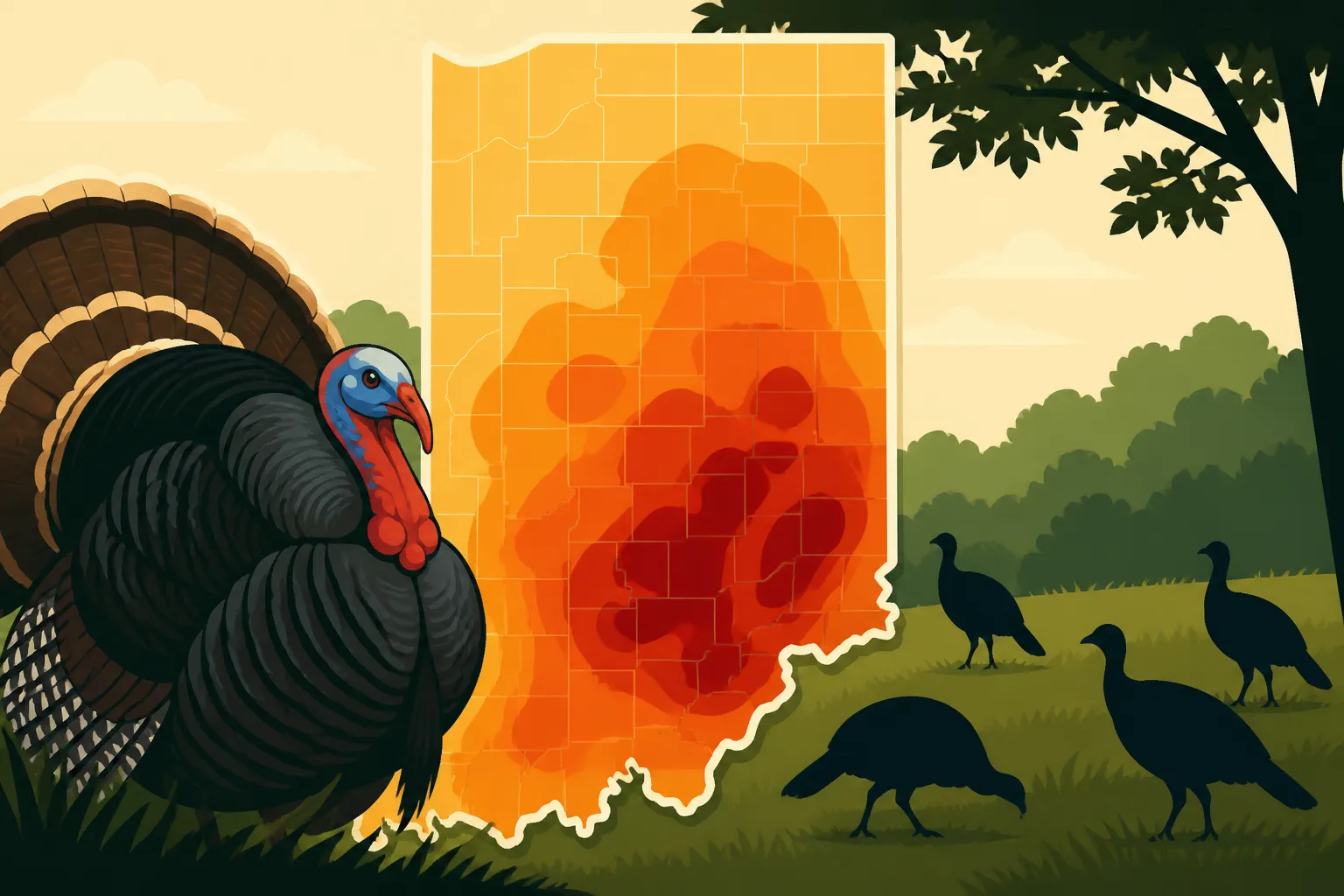
When you talk about where Indiana turkeys are densest, all roads pretty much lead south. The topography and land use patterns in Southern Indiana create a near-perfect environment for wild turkeys to flourish. If you've ever driven through the rolling hills and dense forests south of Indianapolis, you can almost feel the turkey potential.
The Hoosier National Forest and Surrounding Hill Country
The vast tracts of the Hoosier National Forest are, without a doubt, the epicenter of Indiana's wild turkey populations. This expansive public land, along with numerous state forests like Yellowwood, Morgan-Monroe, and Brown County, provides precisely the kind of unbroken hardwood timber that turkeys love. The steep ridges and hollows offer diverse terrain, creating natural funnels and secluded pockets where turkeys can thrive away from constant human pressure. It’s no wonder that these are often the go-to areas for Spring Turkey Hunting in Indiana.
The consistent mast crops from oak and hickory trees, coupled with countless streams and creeks providing water, make these areas highly productive. While you might have to work harder to access these turkeys due to the challenging terrain, the rewards are often worth it. Before heading out, taking the time to Reading Aerial Photos for Southern Indiana Deer can give you a leg up, as many of the same principles apply to scouting for turkeys.
Managed State Forests and Fish & Wildlife Areas
Beyond the national forest, many of Indiana's state forests and Fish & Wildlife Areas (FWAs) in the southern half of the state also boast excellent turkey densities. Places like Glendale FWA, Sugar Ridge FWA, and Jackson-Washington State Forest are managed with wildlife in mind, often maintaining a healthy mix of mature timber, regenerating clear-cuts (which offer dense cover), and small food plots. These areas often have higher accessibility than some of the deeper national forest tracts, making them popular choices for hunters.
These managed properties can be fantastic, but they can also see more hunting pressure. If you’re planning to hunt one of these popular spots, it pays to do your homework and find less-pressured corners. Using a mapping application like GoHunt can help you identify remote sections or areas with ideal habitat that might be overlooked by other hunters. It’s all about finding that balance between good habitat and manageable pressure.
Northern Indiana: Pockets of Opportunity Amid Farmland
While Southern Indiana might claim the crown for overall turkey density, that doesn't mean Northern Indiana is a wasteland. Far from it! The northern half of the state offers unique challenges and distinct habitat types that, in the right places, can hold fantastic numbers of birds. It often requires a different approach, but the rewards can be just as sweet, sometimes even less pressured.
River Bottoms and Creek Corridors
In Northern Indiana, where agriculture dominates the landscape, turkeys often gravitate towards the ribbon-like habitat of river bottoms and creek corridors. These areas are vital because they typically contain the largest, oldest timber stands – those critical roosting trees – that might be scarce elsewhere. The White River, Wabash River, and their tributaries create linear oases of forest that turkeys utilize for food, cover, and travel.
These river systems also offer a consistent water source and often have diverse undergrowth along their banks. Turkeys will use these wooded corridors as highways, moving between roosting sites and feeding areas in adjacent fields. If you're looking for turkeys in this region, spending time exploring these river and creek systems, perhaps focusing on Hunting the Wabash River Bottoms, is an excellent strategy. They might not be as widespread as in the south, but where you find good riverine habitat, you'll often find turkeys.
Woodlots and Farm-Edge Habitat
Scattered throughout the vast agricultural fields of Northern Indiana are numerous smaller woodlots. These can be goldmines for turkeys, especially if they are connected by fencerows, drainages, or strips of uncultivated land. While individual woodlots might not hold huge numbers of birds, they can concentrate turkeys, especially during certain times of the year. Hens will often nest in the thicker edges of these woodlots, and gobblers will cruise them looking for receptive hens.
The key to hunting these areas is understanding the patterns of turkeys moving between these woodlots and the surrounding fields. Often, the turkeys will roost in the biggest trees within or near these woodlots and then fly down to feed in cut corn or soybean fields. This is where Turkey Tactics for Farmland Field Edges really come into play. Being able to access these private land parcels can be a challenge, but if you secure permission, you can find incredible hunting. When using a tool like GoHunt, you can easily identify these smaller parcels of timber and track landowner information for permission requests.
Factors Influencing Local Density Beyond Geography
It’s easy to point to a map and say "southern Indiana" or "river bottoms," but successful turkey hunting also means understanding the micro-level factors that influence local turkey density. Even within the best regions, some areas will simply be better than others, and a keen hunter knows how to read the landscape for these subtle clues.
Mast Crop Abundance and Consistency
One of the biggest factors year-to-year is the abundance of mast crops, particularly acorns. Turkeys depend heavily on acorns for energy, especially leading into winter. A strong mast year means turkeys can stay healthier, produce more eggs, and generally fare better, leading to higher local densities. Conversely, a poor mast year can cause turkeys to range more widely in search of food, making them harder to pattern, and potentially impacting overwinter survival. This directly impacts Indiana Turkey Population Trends.
When scouting, pay attention to the oak and hickory trees. Are there signs of heavy feeding? Lots of scratched-up leaves and broken acorn caps? If you find an area with a consistent mast crop year after year, it's a good bet that turkeys will be regular visitors. Even if the immediate area isn't thick with birds, understanding their food sources will help you predict where they might be.
Hunting Pressure and Public Land Dynamics
It’s an unfortunate truth: high hunting pressure can significantly impact local turkey density and behavior. Areas that get hammered year after year, especially public lands that are easily accessible, will often have fewer turkeys, or at least turkeys that are far more wary and tight-lipped. These birds learn quickly to avoid roads, trails, and popular hunting spots.
This doesn't mean you should avoid public land, but it does mean you might need to adjust your strategy. Look for areas that are harder to access, requiring a longer walk or a trek through tougher terrain. Sometimes, simply walking an extra half-mile beyond where most hunters stop can put you into an area with less pressured birds. Using a mapping app like GoHunt can help you visualize topographical features and plan those longer, harder-to-reach routes, giving you a distinct advantage. Remember, sometimes finding ground others walk past is the secret to success.
Turkey Density by Indiana Region Overview
To give you a clearer picture, here's a general overview of turkey density across different regions of Indiana, keeping in mind that local conditions can always vary.
| Region | Primary Habitat Type | General Turkey Density (Relative) | Hunting Pressure (Relative) | Key Considerations |
|---|---|---|---|---|
| Southern Hills | Mature Hardwood Forests, Steep Ridges, River Bottoms | High | Moderate to High | Best overall habitat, but prepare for rugged terrain and competition. |
| Central Farmland | Woodlots, Creek Corridors, Agricultural Fields | Medium | Moderate | Pockets of excellent habitat; private land access is often key. |
| Northern Farmland | River Bottoms, Smaller Woodlots, Marshes | Medium to Low | Low to Moderate | Concentrated in specific corridors; less widespread but good potential. |
| Kankakee Marshes | Wetlands, Timbered Islands, Dense Cover | Low to Medium | Low | Very specific habitat, challenging access, but can hold isolated flocks. |
| Urban/Suburban Edges | Green spaces, Parks, Wooded Neighborhoods | Highly Variable (often high local) | Very Low (limited access) | Turkeys can be surprisingly dense, but hunting opportunities are rare. |
This table provides a snapshot, but remember, the best way to truly know an area is to get out and scout it yourself! Using your GoHunt subscription to overlay habitat features with public land boundaries will be your best friend in this endeavor.
The Payoff: Finding Your Roosting Gobbler
Ultimately, understanding where Indiana turkeys are densest comes down to a combination of knowing the broad geographic trends and then drilling down into the specific habitat features that make a given spot attractive to birds. Whether you’re braving the steep slopes of the Hoosier National Forest or meticulously studying a river bottom in Northern Indiana, the principles remain the same. Look for mature timber, diverse undergrowth, reliable food sources, and access that might deter the casual hunter.
Don't be afraid to put in the legwork. The harder you work, the luckier you get in finding those prime turkey havens. And when that spring morning breaks and a gobbler sounds off from a distant ridge, you'll know exactly why you chose that spot.
Disclaimer
This article is for general informational purposes only and does not constitute professional advice. Laws, prices and regulations vary by location and change over time. Consult a qualified professional for guidance on your specific situation.