Indiana Whitetail Color Phase Rarities
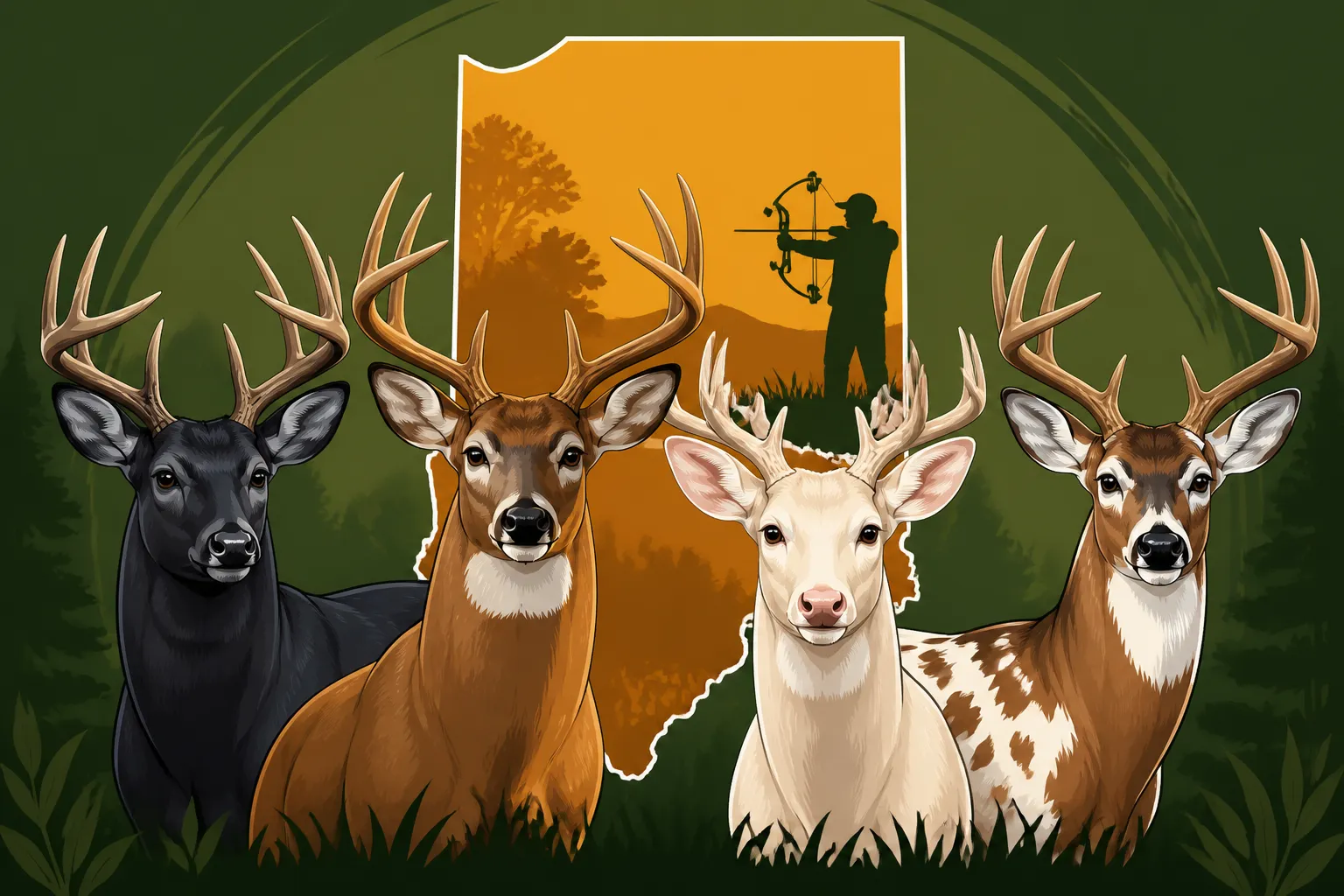
There’s nothing quite like the feeling of watching deer move through the Indiana woods, but sometimes, a truly unusual sight stops you dead in your tracks. You might spot a deer that's mostly white, or oddly dark, or has strange splotches, and it leaves you scratching your head, wondering what on earth you just saw. These rare color variations are absolutely fascinating, and this guide is here to shed some light on the genetics behind these unique whitetails and what it means for us Hoosier hunters.
Understanding Normal Whitetail Coloration
Before we dive into the truly extraordinary, let’s quickly refresh our memory on what a "normal" Indiana whitetail looks like. It’s our baseline, after all, and understanding the standard helps us appreciate the exceptions even more.
The Standard Indiana Whitetail Palette
Our Indiana whitetails are masters of camouflage, and their coat color plays a huge role in that. In the warmer months, typically from spring through early fall, deer sport a reddish-brown coat. It’s sleek, fine, and perfectly blends them into the vibrant greens and emerging browns of the summer forest. Think of that rich, almost reddish hue you see on a doe leading her fawns through an August bean field. That’s their summer best.
As the days shorten and the temperatures drop, something magical happens: they shed that summer coat and grow a much thicker, grayer winter coat. This winter fur is denser, providing crucial insulation against the biting Indiana cold. The color shift to a more grayish-brown allows them to melt into the muted tones of late fall and winter hardwoods, where the leaves are gone and shadows are long. If you’ve ever sat in a stand in November, you know how incredibly well a mature buck’s winter coat helps him disappear against a backdrop of bare timber.
And then there are the fawns! Those adorable little bundles of energy are born with a distinctive reddish-brown coat liberally sprinkled with white spots. These spots are nature's genius at work, mimicking dappled sunlight filtering through the canopy, providing incredible camouflage against predators during their most vulnerable stage. Typically, these spots start to fade by late summer and are mostly gone by the time they grow their winter coat. So, when you see a deer with anything other than these typical patterns, it really stands out.
True Albinism and Leucism: The Striking White Deer
When you hear "white deer," most people instantly think of albinos. But did you know there are actually two distinct genetic conditions that can result in a white coat? Both are rare, but one is even rarer and more striking than the other.
Albinism: The Full Package
True albinism in deer is a complete lack of melanin, the pigment responsible for color in skin, hair, and eyes. This isn’t just about having a white coat; it’s a systemic condition. When you spot a true albino, you'll notice several key features:
- Pure White Fur: Their entire coat will be an unblemished, stark white.
- Pink Eyes: This is the most telltale sign. Without melanin, the blood vessels in their eyes become visible, giving them a distinct pink or reddish hue. This also means they often have impaired vision, making them more vulnerable.
- Pink Nose and Hooves: Their nose and hooves will also lack pigmentation, appearing pale pink.
Albinism is caused by a recessive gene, meaning a deer needs to inherit two copies of that specific gene (one from each parent) to display the trait. This is what makes it so incredibly rare. Imagine two deer, both carrying this hidden gene but appearing completely normal, having a fawn that then pops out pure white. It's truly a genetic lottery.
From a survival standpoint, true albinos face significant challenges. Their stark white coat makes them incredibly conspicuous against most natural backdrops, except perhaps in deep snow, making them easy targets for predators. Their poor eyesight can also hinder their ability to forage effectively or detect danger. As a hunter, encountering a true albino is a once-in-a-lifetime event. While generally not protected under Indiana regulations, many hunters choose not to harvest them due to their extreme rarity and the ethical consideration of taking such a unique animal. Some view them as almost mythical creatures.
Leucism: The More Common "White" Deer
Leucism is often mistaken for albinism, but there are crucial differences. While leucistic deer also have white fur, the condition is a partial loss of pigmentation, not a complete absence of melanin-producing cells. Here’s what sets them apart:
- White Fur, But…: The fur is white, but sometimes you'll see patches of normal brown or even a mottled appearance.
- Normal Eye Color: This is the biggest differentiator from albinos. Leucistic deer will have normal eye color – typically brown, but sometimes blue. Their eyes function normally.
- Normal or Partially Pigmented Nose and Hooves: Their nose might be black or dark, and their hooves often retain their natural dark color.
Leucism is also a genetic trait, but it manifests differently. Piebald deer, which we'll discuss next, are a common form of leucism. While still rare, you're more likely to encounter a leucistic deer than a true albino in Indiana. They generally don't suffer the same vision impairments as albinos and their survival rates might be slightly better, depending on the extent of their white coloration. If you're scouting new ground using mapping tools, you might even use features on platforms like GoHunt to mark areas where unique sightings have occurred. Documenting these observations, whether you're using a camera or just noting it on your Scouting Indiana Public Land Before Season map, can be incredibly valuable to your understanding of local deer populations.
Melanism: The Mysterious Black Deer
If a white deer stops you in your tracks, imagine seeing a solid black one! Melanism is the absolute rarest of all whitetail color phases, almost mythical in its scarcity.
The Rarest of the Rare: Melanistic Whitetails
Melanism is essentially the opposite of albinism: it’s an overabundance of melanin, leading to excessive dark pigmentation. These deer appear almost entirely black, often with only subtle hints of brown visible in certain light or on their belly.
- Solid Black Coat: Their fur is a deep, rich black, making them look like shadows moving through the timber.
- Normal Eye Color: Like leucistic deer, their eyes are typically normal brown, as the condition primarily affects the fur and skin, not the retina.
- Dark Nose and Hooves: Naturally, their nose and hooves will be dark, often even darker than a typical whitetail.
The genetic cause of melanism is complex and not fully understood in whitetails, but it's believed to be a dominant genetic trait or polygenic (influenced by multiple genes). Reports of melanistic whitetails are incredibly few and far between across the entire whitetail range, with only a handful ever being reliably documented. Indiana is no exception; spotting a melanistic deer here would be an extraordinary event.
From a survival perspective, a black coat might offer better camouflage in certain dark, dense cover, particularly in shadows or at night. However, it would make them extremely visible in snowy conditions or open fields. For a hunter, seeing a melanistic deer is truly a "unicorn" encounter. It’s so rare that it’s usually reported to wildlife agencies out of pure amazement. While there are no specific protections for melanistic deer in Indiana, the sheer uniqueness of such an animal would likely give most hunters pause.
Other Intriguing Variations and Hunter Considerations
Beyond the striking white and black, there are a few other rare color variations that Hoosier hunters might encounter, each with its own story.
Piebald Deer: The Spotted Ones
Piebaldism is a more common form of leucism that results in distinct patches of white and normal brown fur. Unlike the overall white appearance of some leucistic deer, piebalds look like they've been splashed with white paint.
- Patchy White and Brown: You’ll see large, irregular white patches mixed with areas of normal brown coloration. The pattern is unique to each individual.
- Normal Eye Color: Their eyes are typically brown.
- Varying Pigmentation: Their nose and hooves might be dark in some areas and pinkish in others, depending on the underlying pigmentation of the skin.
Piebaldism is also caused by a recessive gene and, unfortunately, often comes with associated physical deformities. These can include:
- Shortened Legs: Giving them a stocky, almost "pony-like" appearance.
- Roman Nose: A pronounced arch in the bridge of their nose.
- Bowed Spine: A curvature of the spine, sometimes quite noticeable.
- Internal Organ Issues: Less visible but potentially impacting their health.
Because of these potential deformities, piebald deer often have a harder time surviving than their normally colored counterparts. Their irregular white patches also make them stand out in the woods, increasing their vulnerability to predators. While more common than true albinos or melanistic deer, piebalds are still a rare sight. Many hunters, upon seeing a piebald, especially one with significant deformities, might choose to pass on taking the animal, perhaps feeling it deserves to live out its unique life. You might even find them to be particularly cautious, often seen lingering near dense cover. Tools like GoHunt can help you understand Reading Indiana Mud for Fresh Deer Movement to anticipate where such deer might be trying to stay hidden.
Erythrism: The Red Deer
This is a subtle but noticeable variation that might make you do a double-take. Erythrism, sometimes called "red phase," refers to an overabundance of reddish pigment.
- Unusually Red/Orange Coat: These deer appear much redder or more orange than a typical whitetail, even outside of the summer coat period.
- Normal Eyes, Nose, and Hooves: There are usually no other noticeable differences in eye, nose, or hoof color.
Erythrism is less visually dramatic than albinism or melanism, and it's less commonly discussed. It might be mistaken for a deer that’s simply retained its summer coat longer or one with a particularly vibrant brown coat. The causes are believed to be genetic but can also be influenced by diet or environment in some species. In Indiana, you might encounter a deer that just seems "exceptionally red," and that could be an erythristic whitetail. It’s another example of the incredible genetic diversity within our deer herd.
Genetic Health and Herd Management
It’s natural to wonder if these rare color phases indicate something about the overall health of the Indiana deer herd, like inbreeding or genetic weakness. Generally speaking, these individual genetic expressions are not indicators of a struggling or unhealthy population. They are simply rare genetic anomalies that pop up from time to time. The genes for albinism, leucism, and melanism exist in almost all wild populations, but their recessive nature or extreme rarity means they seldom manifest.
For wildlife managers, these individuals typically don't require special management strategies. The focus remains on maintaining a healthy, balanced herd overall, which includes monitoring for widespread issues like Chronic Wasting Disease in Indiana Deer or EHD Die-Offs in Indiana Deer. A rare white or black deer doesn't impact herd numbers or health in any significant way.
For hunters, the decision to harvest a deer with a rare color phase is a personal one. Legally, in Indiana, these deer are generally treated the same as any other whitetail; they are not specially protected. However, many hunters choose to pass, appreciating the uniqueness of the animal. Others might choose to harvest one, viewing it as a truly unique trophy, but perhaps opting to donate the venison or get a full body mount to commemorate the rarity. Whether you decide to harvest or not, encountering one of these unique deer is undoubtedly a memorable experience in the Indiana woods. Keeping an eye on what you see, and maybe even using resources from GoHunt to help you identify and record wildlife, adds another layer to your hunting experience.
Here’s a quick overview of these fascinating color phases:
| Color Phase | Primary Color | Eye Color | Hoof/Nose Color | Rarity (Indiana) | Key Characteristics | Associated Issues |
|---|---|---|---|---|---|---|
| Normal | Reddish/Gray | Brown | Dark | Common | Blends with natural habitat, seasonal coat changes. | None |
| Albinism | Pure White | Pink/Red | Pink | Extremely Rare | Complete lack of pigment, poor camouflage, sensitive to light. | Impaired vision, increased predator vulnerability. |
| Leucism | White | Brown/Blue | Dark | Very Rare | Partial pigment loss, some normal patches possible, normal vision. | Increased predator vulnerability due to poor camouflage. |
| Piebald | White & Brown | Brown | Mixed | Rare | Patchy white and brown, a form of leucism, unique patterns. | Often associated with physical deformities (bowed legs, Roman nose, spinal issues). |
| Melanism | Solid Black | Brown | Dark | Phenomenally Rare | Excessive dark pigment, very dark coat, excellent camouflage in some dark environments. | None typically, extreme rarity is main feature. |
| Erythrism | Unusually Red | Brown | Dark | Very Rare | Overabundance of reddish pigment, appears much redder than typical deer. | None typically, a subtle color variation. |
Regardless of their color, all these deer are still White-Tailed Deer Across Indiana, navigating the same challenges and living in the same beautiful, wild places we love to hunt. These rare sightings just add another layer of wonder to our time afield.
Disclaimer
This article is for general informational purposes only and does not constitute professional advice. Laws, prices and regulations vary by location and change over time. Consult a qualified professional for guidance on your specific situation.