Which Indiana Counties Have the Most Hogs
For hunters in Indiana, the frustrating truth is that feral hogs aren't evenly distributed across the landscape. Unlike our beloved deer or widespread turkey populations, finding consistent hog activity can feel like searching for a needle in a very large haystack. This guide aims to pull back the curtain on where these destructive animals are most concentrated in the Hoosier State, giving you a clearer picture of the battlegrounds where your efforts are most likely to pay off.
Understanding Feral Hog Dynamics in Indiana
Feral hogs are a serious issue in Indiana, causing millions of dollars in agricultural damage annually and posing a threat to native wildlife and ecosystems. For hunters, they offer a unique and challenging pursuit, but one that requires a deep understanding of their behaviors and distribution.
The Elusive Nature of Feral Swine
It's truly frustrating to commit to a hunt, only to find no trace of your quarry. When it comes to feral hogs, this feeling can be amplified. Unlike deer or turkey, whose signs might be scattered across wide swaths of suitable habitat, hogs are often hyper-localized. You can scout miles of seemingly perfect cover and come up empty, only to find a whole sounder tearing up a small patch of woods just a few hundred yards away. These animals are incredibly intelligent, wary, and often primarily nocturnal, making them difficult to pattern. Their rapid reproduction rates also mean that a small group can quickly explode into a significant problem, compounding the challenge of control. Many farmers can attest to the sheer devastation these animals can wreak overnight, turning a pristine field into a moonscape of overturned soil. Their impact isn't just on crops; they also compete with native wildlife for food, destroy sensitive habitats, and can spread diseases to livestock and even humans. It's a critical fight, and every hunter who takes one out is contributing to the health of our state. Even though they are considered an unprotected species, meaning there's no closed season or bag limit, knowing where to find them is half the battle, as outlined in our discussions on Indiana Feral Hog Regulations.
How Hogs Spread Across the Hoosier State
The story of how wild hogs have come to be in Indiana is a complex one, often involving both natural spread and unfortunate human intervention. Many of the initial populations were established through illegal releases, either for hunting purposes or simply out of misguided intentions. Once established, these animals are expert navigators and colonizers. They don't recognize property lines or county boundaries, often using natural corridors like river bottoms, creek drainages, and dense wooded tracts as superhighways for expansion. A sounder can travel many miles in a single night if pressured or seeking new food sources.
River systems, in particular, play a crucial role in their dispersal. Major waterways such as the Wabash River, White River, and various smaller tributaries provide not only travel routes but also crucial access to water, dense riparian cover, and rich agricultural lands along their banks. These natural funnels allow hogs to move efficiently, making it incredibly difficult to contain outbreaks to a single area. We've seen firsthand how these animals can pop up in unexpected places, often far from established populations, highlighting the effectiveness of these natural pathways. Sometimes, the issue is exacerbated by continued illegal releases, which unfortunately re-seed areas that have been cleared or introduce new genetic strains. Understanding How Wild Hogs Spread Across Indiana is essential for predicting future problem areas and implementing effective control.
Pinpointing Indiana's Feral Hog Hotbeds
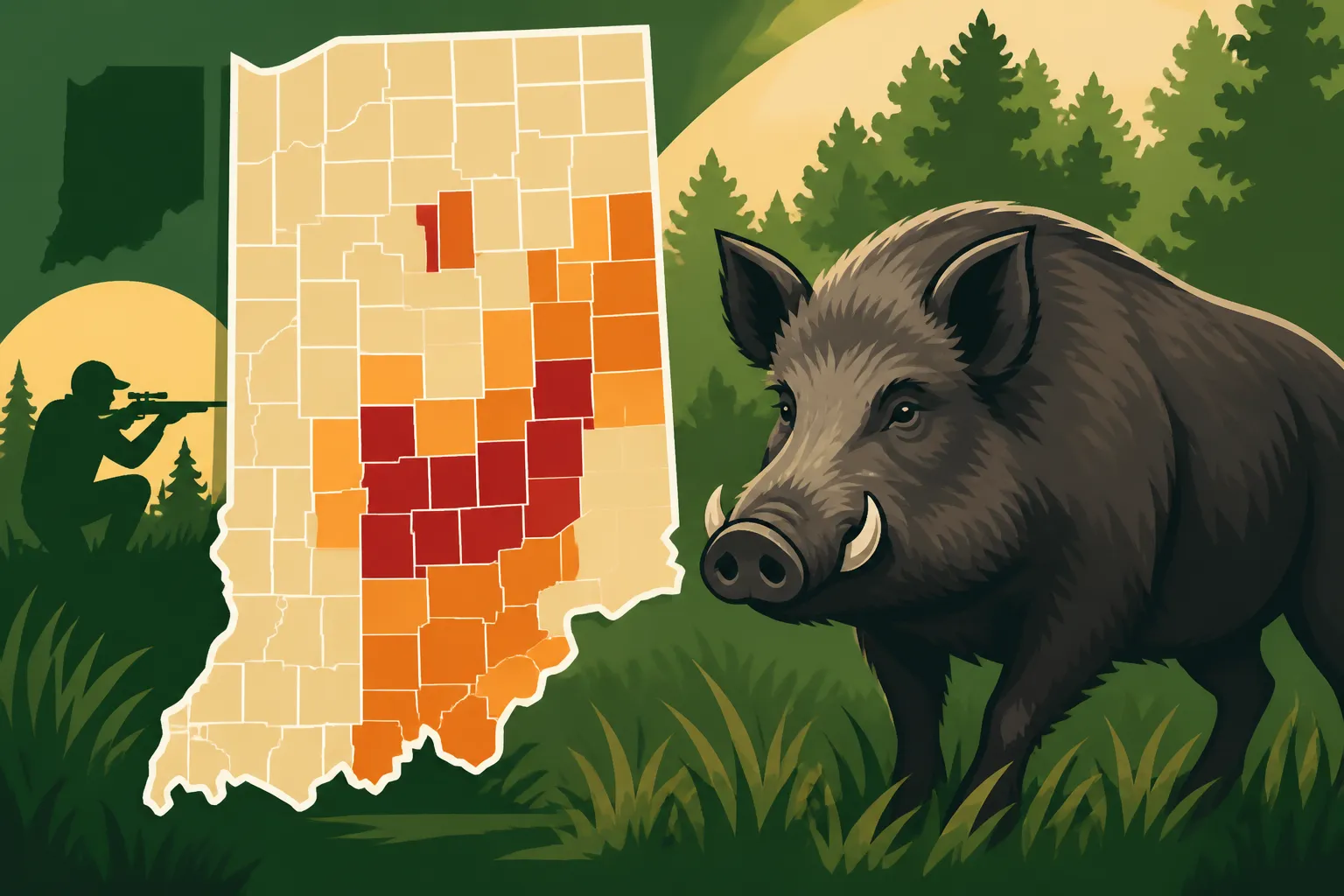
While sporadic sightings can occur almost anywhere in Indiana, certain regions and, more specifically, certain counties consistently show higher concentrations of feral hog activity. This isn't random; it's a direct result of habitat, land use, and historical presence.
The Southern Indiana Strongholds
When you talk about feral hogs in Indiana, your mind should immediately turn south. This is where the battle has been longest fought and where populations are generally more established and resilient. The rugged, heavily timbered terrain of southern Indiana provides ideal cover and habitat for these animals. Think deep hollows, steep ridges, dense creek bottoms, and expansive tracts of unbroken timber—perfect places for a sounder to hide, breed, and thrive without much human disturbance. This landscape offers a stark contrast to the agricultural dominance of the north.
Counties that frequently report significant hog activity and often show up on any DNR mapping data include those nestled along the Ohio River or deeper into the hill country. We're talking about places like Perry, Crawford, Spencer, Dubois, Harrison, and parts of Orange and Martin counties. These areas share common characteristics: a mix of dense private timberland, often inaccessible and sparsely populated, interspersed with large public land holdings such as portions of the Hoosier National Forest and various State Forests. The combination of remote refuge areas, abundant mast crops like acorns and persimmons, and often milder winters creates an environment where feral hogs can truly dig in and proliferate. For anyone looking to specifically target hogs, these southern Indiana counties should be at the top of your list.
Emerging and Sporadic Northern Populations
While the lion's share of Indiana's feral hog problem remains rooted in the southern counties, it would be a mistake to assume they are exclusively a southern phenomenon. We do see emerging and sporadic populations pop up in northern parts of the state. These occurrences are often more isolated and typically involve smaller sounders, but they can be incredibly frustrating to deal with because they might appear in areas where no one expects them. These northern groups are less about established, widespread populations and more about transient individuals or small family groups that have moved through river corridors or been illegally released.
The impact of even a small group of hogs in northern Indiana can be devastating, particularly in agricultural landscapes. Imagine a sounder of ten animals rooting up an entire field of newly planted corn or soybeans overnight – that's a very real scenario that can cost a farmer thousands of dollars. The damage these animals cause, often referred to as Crop Damage Hogs Cause in Indiana, is not just economic; it's a profound blow to the hard work and livelihood of local farmers. Specific areas to keep an eye on might be near major river systems like the Kankakee or Wabash, or in wetland-rich regions that offer dense cover, even if surrounded by open farmland. These northern populations often represent "surprise" encounters, requiring swift action to prevent them from establishing a permanent foothold. Hunters in these areas play an increasingly vital role in early detection and removal.
Factors Influencing Hog Concentration
The presence and density of feral hogs in any given Indiana county are not arbitrary. They are a direct result of a complex interplay between the available habitat, consistent food sources, and the effectiveness of local management efforts. Understanding these factors is key to predicting where you might find them and why certain areas become hotbeds.
Habitat and Food Sources
For feral hogs, survival boils down to two primary needs: security and sustenance. Cover is king for these wary animals. They seek out the densest, most impenetrable thickets they can find – think briar patches so thick you can barely crawl through them, overgrown creek bottoms choked with multiflora rose, and large tracts of mature timber with heavy undergrowth. These areas provide not just concealment from predators and hunters but also protection from the elements. Without adequate cover, hogs are far more exposed and vulnerable, making it difficult for them to establish a lasting presence.
Beyond cover, access to water is non-negotiable. Hogs need a consistent water source for drinking, especially during the warmer months, and they love to wallow in muddy areas to cool off and rid themselves of parasites. Proximity to perennial streams, small ponds, or even muddy seepages in low-lying areas is a strong indicator of potential hog activity. Look for these water sources when you're scouting, as they are natural magnets.
Finally, food sources dictate where hogs will spend their time and how large their populations can grow. While hogs are opportunistic omnivores and will eat almost anything, certain foods are irresistible. Natural mast crops like acorns, persimmons, and wild grapes are huge draws, especially in the fall. However, nothing pulls them in like an agricultural field. Standing corn, freshly planted soybeans, or even harvested fields where they can root for leftover grains provide an endless buffet. The transition zone where dense cover meets these abundant food sources, particularly in river bottom funnels or along logging roads, is often where you'll find the most intense rooting and freshest sign.
Population Management and Hunting Pressure
The battle against feral hogs is an ongoing one, and their incredible reproductive capacity makes eradication a monumental challenge. A sow can have multiple litters in a single year, with many piglets in each litter, meaning that populations can rebound incredibly quickly even after significant removal efforts. This is why strict guidelines regarding Indiana Feral Hog Regulations emphasize continuous control.
While hunting is an important tool, trapping efforts are often the most effective method for truly impacting hog populations, especially when trying to remove an entire sounder. Traps are strategically placed and monitored, allowing for the capture of multiple animals at once. Many landowners, with assistance from local wildlife agencies, deploy large corral traps to address widespread rooting damage. These focused efforts can make a big difference locally, leading to what we discuss as Indiana Hog Trapping Success Rates.
The interplay between hunter access and local initiatives also plays a significant role in where hog populations are controlled. Counties with a high density of landowners willing to grant access to hunters, or those with active cooperative efforts between farmers and wildlife biologists, tend to see better results. Utilizing tools like GoHunt can be incredibly beneficial here, as it allows hunters to identify land ownership and potential access points, helping them target problem areas more effectively. When you know where to look and how to get Getting Private Land Permission in Indiana, you empower yourself to be part of the solution. Counties with less organized control efforts, or where access is heavily restricted, can unfortunately become de facto sanctuaries for these destructive animals.
Practical Tips for Locating Hogs in Indiana
Finding feral hogs isn't always easy, even in counties with known populations. They're smart, wily, and masters of concealment. Success often comes down to diligent scouting, understanding their patterns, and leveraging modern tools.
Scouting and Sign Recognition
You can't just walk into the woods and expect to stumble upon a sounder of hogs. Scouting is paramount to success. This means getting out there long before you plan to hunt, especially if you're trying to locate a new population. You'll need to learn to read the landscape and interpret the subtle (and sometimes not-so-subtle) signs that hogs leave behind.
The most obvious sign is rooting. Hogs use their powerful snouts to dig up soil, searching for roots, tubers, grubs, and other food sources. This often looks like a rototiller has gone through the woods or field. The size and freshness of the rooting can tell you a lot about how recently hogs were there. Beyond rooting, look for rubs on trees, often at various heights, where hogs have scratched themselves. Tracks are also critical; hog tracks are typically wider and rounder than deer tracks, and you might see dewclaws more often. Wallows, muddy depressions where hogs have rolled, are another strong indicator, especially near water sources. Pay attention to the edges of dense cover, where it meets food plots, agricultural fields, or water. Creek bends and logging roads are often transition zones that hogs will utilize. When you're conducting your initial Scouting Indiana Public Land Before Season, using aerial imagery and topographical maps can help you pinpoint these potential hotspots even before you put boots on the ground.
Leveraging Technology and Local Knowledge
In today's hunting world, mapping apps are no longer a luxury—they're essential. Tools like GoHunt or others, which often integrate with services such as onX, provide incredibly detailed aerial imagery, property boundaries, and topographical information. This allows you to "scout from your couch," identifying dense cover, water sources, potential travel corridors, and even public versus private land ownership before you ever step foot in the woods. Learning how to effectively utilize Using the Indiana OnX and DNR Map Tools can save you countless hours of unproductive walking. You can mark potential bedding areas, feeding zones, and access routes, building a solid plan before your hunt.
Beyond technology, don't underestimate the power of local knowledge. Farmers, landowners, and other hunters in areas with known hog populations are often the best source of real-time information. They live with the problem daily and can tell you about recent sightings, areas of damage, or consistent travel routes. A friendly conversation can yield invaluable insights that no app can provide. Of course, always be respectful and understand that these animals are often a nuisance to landowners. Finally, persistence is absolutely key. Feral hog hunting is not a one-and-done affair. These animals are incredibly adaptable, and they learn quickly. They will alter their patterns, become more nocturnal, and shift their locations based on pressure. Successful hog hunting often requires multiple scouting trips, adjusting your strategy, and remaining patient and adaptable. Every successful hog hunt in Indiana is a testament to dedication and strategic effort.
Here's a quick look at some key indicators of feral hog presence:
| Sign | Description | Typical Location | Best Time to Spot |
|---|---|---|---|
| Rooting | Uprooted soil, trenches, or disturbed ground from their snouts. | Field edges, food plots, moist timber, creek bottoms. | Anytime, freshest after rain or new activity. |
| Tracks | Rounded, wider hoof prints, often with visible dewclaws in mud. | Muddy trails, creek banks, damp soil near water. | Early morning, after rain. |
| Wallows | Muddy depressions where hogs have rolled, often near water sources. | Low-lying wet areas, near streams, ponds, or springs. | Anytime, especially in warmer months. |
| Rubs | Mud or hair rubbed off on trees, fence posts, or rocks, usually low to ground. | Along common travel routes, near bedding areas. | Anytime. |
| Scat | Irregular, dark droppings, often with plant matter or insects. | Along trails, near feeding or bedding areas. | Anytime. |
| Trails | Well-worn paths through thick brush, often leading to food or water. | Between bedding and feeding areas, along creek banks. | Anytime. |
| Bedding Areas | Depressions in dense cover, often with flattened vegetation. | Thick briars, tall grasses, dense timber. | During scouting, less obvious. |
Disclaimer
This article is for general informational purposes only and does not constitute professional advice. Laws, prices and regulations vary by location and change over time. Consult a qualified professional for guidance on your specific situation.