Gray Versus Fox Squirrels in Indiana
Many Indiana small game hunters often find themselves pausing, rifle at the ready, trying to discern the exact species of squirrel that just scampered up a tree. While both gray squirrels and fox squirrels are abundant across the Hoosier State, understanding their unique characteristics, preferred habitats, and behaviors is key to becoming a more effective and knowledgeable hunter. This comprehensive guide will help you confidently identify the differences between these two common bushytails, explore where each is most likely to be found, and discuss how these distinctions can shape your hunting strategies for a more successful day in the Indiana woods.
Telling Them Apart: Key Distinctions Between Gray and Fox Squirrels
It’s easy to look at any bushy-tailed rodent and simply label it a "squirrel," but for dedicated small game enthusiasts in Indiana, recognizing the specific species can instantly inform your next move. These aren’t just subtle variations; they represent different lifestyles, different preferred environments, and often, different hunting opportunities. Knowing which squirrel you're targeting can make all the difference in your approach.
Physical Characteristics
When you’re trying to identify squirrels in the wild, especially through binoculars or a scope, the most straightforward differences usually come down to their physical appearance, particularly their size, fur color, and tail markings. These visual cues are your first line of identification.
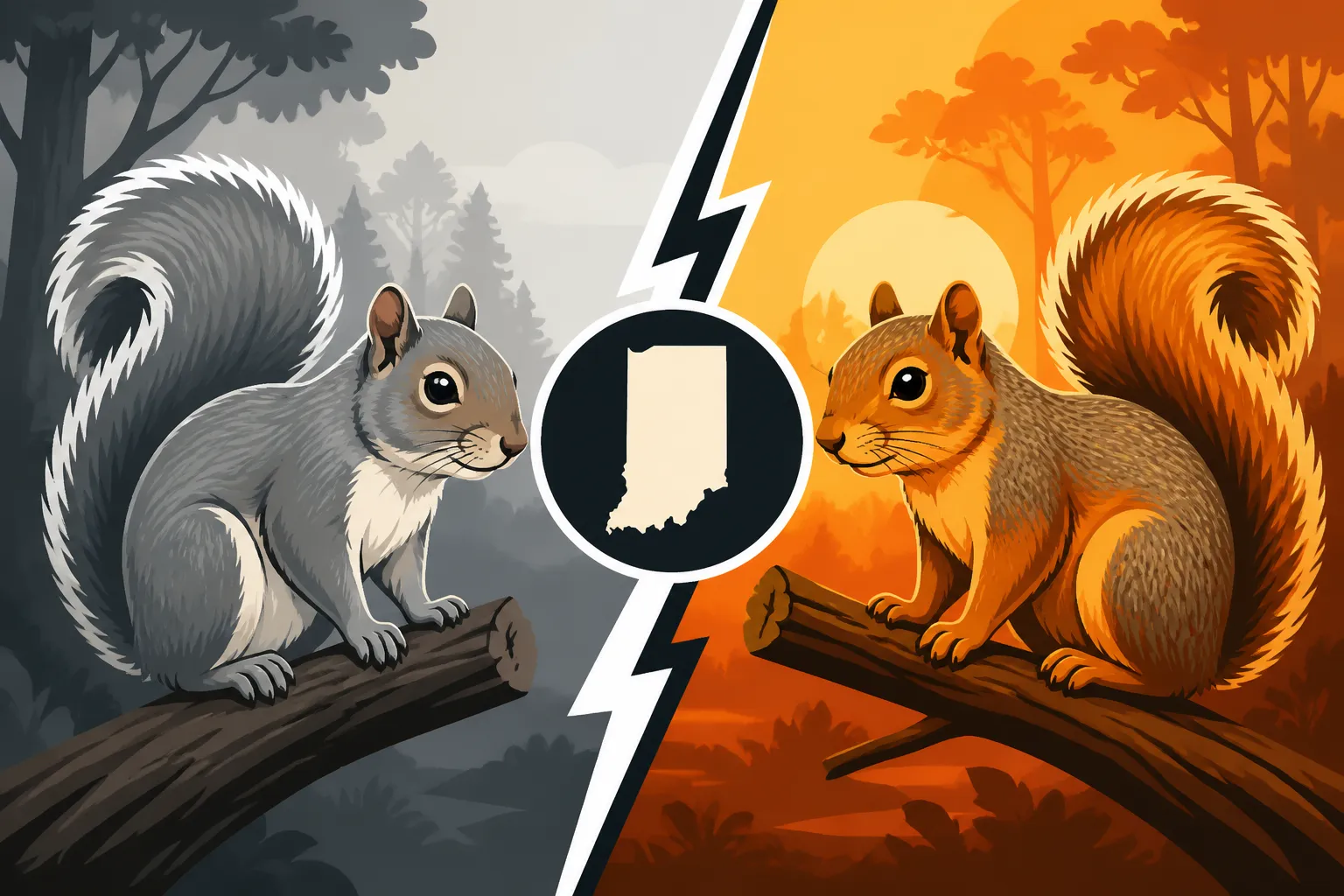
Gray squirrels, true to their name, are predominantly gray in color, often with a subtle brownish wash on their backs and a distinct white or light gray belly. They are the more diminutive of the two species, typically weighing less than a pound and measuring around 18 to 20 inches from the tip of their nose to the end of their tail. Their tails, while impressively bushy, tend to be a more uniform gray with a noticeable border of white hairs along the edges. Picture a quick, almost delicate creature, built for agility and speed within a dense forest canopy. Their slender build and shorter limbs allow them to navigate tight branches with incredible ease. When you spot what looks like a streak of gray lightning moving through the upper canopy of a mature oak, you're likely looking at a gray squirrel.
Fox squirrels, by contrast, are the heavyweights of Indiana's squirrel world. They are larger and noticeably more robust, often tipping the scales at one to two pounds or even more, with a total length that can span 20 to 26 inches. Their coloration is far more variable and can be quite striking, ranging from a grizzled gray-brown to a vibrant reddish-orange, especially on their undersides, limbs, and around their ears. This reddish hue is where they get the "fox" part of their name. Their tails are also bushy but typically feature a mixed blend of these colors, lacking the crisp white fringe that defines the gray squirrel's tail. A fox squirrel often presents a stockier, almost beefy appearance, with a broader head and a more powerful, deliberate stride when moving on the ground. If you observe a larger, more reddish-toned squirrel leisurely sitting on a sun-drenched limb in a more open woodlot, it's almost certainly a fox squirrel. They tend to carry themselves with a certain confidence, a testament to their adaptability in a wider range of habitats.
Behavioral Cues
Beyond their physical traits, the way these two squirrel species behave can be a dead giveaway to their identity. Their distinct ecological roles and preferred habitats have shaped their actions, providing hunters with valuable clues when in the field. Watching their movements, listening to their calls, and understanding their typical reactions to disturbance are all critical identification tools.
Gray squirrels are the undisputed acrobats of the forest. They are profoundly arboreal, meaning they spend the vast majority of their lives in the trees. Their agility is truly remarkable; they can leap effortlessly between branches, scamper up the tallest trunks, and disappear into the densest canopy in the blink of an eye. When startled, a gray squirrel's primary defense mechanism is to ascend further into a tree, often spiraling around the trunk to keep the tree bole between itself and the perceived threat. They are masters of using the natural architecture of the forest for cover. Their vocalizations are typically a series of sharp, rapid barks or chirps, often delivered with an agitated tail flick. These calls can escalate into a scolding chatter, especially if you're too close to their nest or young. They are also notably social animals, and it’s not uncommon to see several gray squirrels foraging or playing in close proximity, sometimes even sharing den trees. This social nature can be an advantage for hunters, as one squirrel's alarm call might alert you to the presence of others in the vicinity.
Fox squirrels, while certainly capable climbers, exhibit a much greater affinity for the ground. You’ll frequently spot them foraging for nuts, seeds, and fungi on the forest floor, or boldly crossing open fields to move between isolated patches of timber. Their movements on the ground are less frenetic than a gray squirrel's, often a series of bounds followed by pauses to scan their surroundings. When spooked, a fox squirrel might run up a tree, but it’s just as likely to dart into a dense brush pile, disappear into a hollow log, or simply freeze in place, relying on its mottled camouflage to blend into the dappled light of the forest floor. Their vocalizations tend to be deeper, more drawn-out barks compared to the sharp staccato of grays, often accompanied by emphatic tail-twitching. They are generally less social than gray squirrels, often encountered alone or in smaller family groups. If you're using a planning app to scout potential squirrel haunts, like GoHunt, and you're noting abundant ground sign – disturbed leaves, small excavations, or tracks in soft earth – that's a strong indicator you're in fox squirrel territory.
Habitat Preferences and Ecological Niches
Knowing where each squirrel species prefers to live is just as vital as being able to visually distinguish them. Their chosen environments dictate their behaviors, their primary food sources, and ultimately, the best places for you, as a hunter, to find them. Indiana's diverse landscape offers a range of habitats, and both species have adapted to specific niches within it.
Preferred Environments
The type of forest or woodland you’re hunting in will largely determine which squirrel species you're most likely to encounter. Their survival strategies are deeply intertwined with the structure of their homes.
Gray squirrels are the quintessential inhabitants of mature, dense hardwood forests. Think sprawling, contiguous blocks of timber with a high, well-developed canopy that allows them to travel extensively through the treetops without needing to descend to the ground. They thrive in areas rich with mast-producing trees like oaks, hickories, and beeches, which not only provide their primary food source but also abundant nesting cavities in older trees. These deep woods offer maximum protection from aerial predators like hawks and provide a vast network of escape routes. In Indiana, you'll find them in highest densities in places like the Hoosier National Forest, Morgan-Monroe State Forest, or the expansive bottomland hardwood forests along major rivers. If you're looking to hunt Squirrel Hunting Indiana Bottomland Hardwoods, you'll undoubtedly be pursuing grays. These environments offer a complex, multi-layered ecosystem where gray squirrels can flourish, living their lives largely above the forest floor.
Fox squirrels, on the other hand, show a remarkable adaptability to more open, fragmented woodlands, smaller woodlots, fencerows, and even semi-urban areas with mature trees. They are well-suited to the patchwork of forests and agricultural fields that characterize much of central and northern Indiana. While they still require trees for shelter and food, they are more comfortable venturing out into open spaces to forage. Their preferred habitat often includes scattered oak trees, pecan groves, and areas with a mix of hardwoods and pines, often bordering agricultural lands. They frequently utilize the linear cover of fencerows and hedgerows to move between isolated stands of trees, making them a common sight along field edges. This comfort with edge habitat and open spaces allows them to thrive in landscapes altered by human development, as long as sufficient tree cover and food sources remain. If you're studying public land maps or using a hunting app like GoHunt to scout areas near farmland, looking for those smaller woodlots, creek bottoms, or connecting fencerows, you're likely zeroing in on prime fox squirrel territory.
Dietary Habits and Foraging
While both species are opportunistic omnivores and share a love for nuts, their primary food sources and how they access them differ subtly, reflecting their preferred habitats and behavioral patterns. These dietary habits are crucial for hunters to understand, as they dictate where squirrels will be feeding at different times of the season.
Gray squirrels are heavily reliant on the mast crops produced by mature hardwood trees, particularly acorns, hickory nuts, and beechnuts. They are incredibly efficient at gathering these nuts, often clipping them directly from branches before they fall. They are renowned for their "scatter hoarding" behavior, burying individual nuts in countless locations across the forest floor for later retrieval. This method helps regenerate the forest, as many of these buried nuts are never recovered. Beyond nuts, they will also consume tree buds, fungi, berries, and even insects, especially during periods when mast is scarce. In the early part of the season, when leaves are still thick on the trees, How Early Season Squirrels Give Themselves Away by the telltale sounds of gnawing and the showers of nut fragments and leaf bits raining down from above. Their foraging activity is primarily concentrated within the tree canopy or directly at the base of the most productive nut-bearing trees.
Fox squirrels exhibit a more diverse and opportunistic diet, a reflection of their willingness to forage both in trees and on the ground in more varied environments. While they certainly relish acorns and hickory nuts, they also readily incorporate a broader range of foods, including corn, soybeans, and other agricultural crops when these are available in adjacent fields. They are more prone to digging up buried nuts and tubers, consuming mushrooms, bird eggs, and even small invertebrates. Unlike gray squirrels' scatter hoarding, fox squirrels tend to gather food in larger, more centralized caches, a behavior known as "larder hoarding," often stashing their bounty in hollow logs or tree cavities. Their extensive ground-foraging means you might see them scuttling across a recently harvested cornfield or diligently working along a fencerow, searching for dropped grains long after the combine has passed. This broader dietary flexibility is a key factor in their success across Indiana's mixed agricultural and forested landscapes, allowing them to exploit a wider array of food resources throughout the year.
Hunting Strategies and Considerations
Knowing the nuanced differences between gray and fox squirrels isn't merely an academic exercise; it's a practical foundation for designing effective hunting strategies. Adapting your approach based on the species you anticipate encountering can significantly improve your chances of success and make your time afield more productive.
Locating Each Species
Effective squirrel hunting begins with smart scouting and knowing where to focus your efforts for each species. Your preparation off the field can be just as important as your actions in the woods.
For gray squirrels, your scouting efforts should naturally lead you into the heart of mature, extensive hardwood forests. Prioritize large, unbroken stands of oak, hickory, and beech, particularly those on public lands like the Hoosier National Forest or any of Indiana's larger state forests. Pay close attention to current mast production; areas with an abundant crop of acorns or hickory nuts will be undeniable magnets for gray squirrels. During your scouting trips, especially in the early morning or late afternoon when squirrels are most active, utilize a good pair of binoculars to meticulously scan the tree canopy for any flick of a tail or the subtle quiver of leaves. Listening for the distinctive "cutting" sounds of squirrels opening nuts is also a crucial auditory cue. When reviewing maps, whether physical or digital, zoom in on the largest, most contiguous blocks of timber, especially those areas with varying topography that often indicate older-growth timber and diverse forest structure. Scouting Indiana Public Land Before Season offers fantastic insights into identifying these prime areas, and using layers on a hunting app can further pinpoint ideal habitat.
For fox squirrels, you'll want to broaden your scouting to include smaller woodlots, brushy fencerows, and the crucial edges of agricultural fields. Areas where corn or soybeans have recently been harvested can be incredibly productive, as fox squirrels will readily move into these fields to scavenge dropped grains. Look for obvious signs of ground foraging – disturbed leaf litter, small excavations where nuts or crops have been dug up, or even tracks in soft soil or mud, especially near water sources. You might spot them perched conspicuously on a fence post, a lone tree at the field's edge, or a stump, surveying their surroundings before venturing into the open. These squirrels excel in edge habitats. Your strategy here might involve focusing on the perimeters of woodlots rather than trying to penetrate deep into their centers, or walking connecting strips of cover between larger timber blocks. If you are using a tool like GoHunt to visualize land features, pay close attention to the interfaces between forest and field, as these are often hot zones for fox squirrel activity.
Tactical Approaches
Once you've located a promising area, your hunting technique should be finely tuned to the squirrel species you expect to encounter. Adapting your movement, patience, and shot readiness can dramatically improve your harvest rate.
Hunting gray squirrels often demands a more stealthy, patient approach, typically involving still-hunting or sitting in a stand within the dense forest interior. Still-hunting means moving at an incredibly slow, deliberate pace, pausing frequently for several minutes to scan the trees from the ground up and listen intently for any rustle, bark, or nut-cutting sound. Look for subtle movements high in the canopy – a flicking tail, a branch swaying, or a squirrel peering around a trunk. When you spot one, use the larger tree trunks and dense undergrowth as natural cover to get into a shooting position without being detected. If a gray squirrel attempts to evade you by spiraling a tree, patience is your best friend; they will often peek around the trunk after a minute or two, offering a shot. Another highly effective tactic is to simply set up quietly near a heavily producing mast tree (like a giant oak or hickory) and wait. Their social nature often means that if you bag one, others might soon appear, drawn by the same food source or simply by curiosity after the initial disturbance.
Fox squirrels, due to their greater comfort on the ground and preference for fragmented habitats, often respond better to a more mobile, edge-focused hunting style. Walking fencerows, patrolling woodlot edges, and slowly still-hunting connecting strips of cover between fields can be highly productive. Since they spend more time on the ground, you might encounter them scampering across open areas or slipping into brush piles. They are also less likely to endlessly spiral a tree and might instead just freeze, dash into dense cover at ground level, or bolt for the nearest tree and stop quickly. This requires you to be ready for quicker, perhaps more fleeting shots, and good marksmanship on a moving target is often crucial. A .22 rifle is a classic choice for both species, but for fox squirrels in more open settings, a small-gauge shotgun might offer a wider pattern for those fast, unexpected flushes.
Season and Bag Limits
Understanding Indiana's small game regulations is non-negotiable for any hunter. While gray and fox squirrels are typically grouped together under the same rules, always double-check the most current Indiana DNR hunting guide before your season begins.
Indiana's squirrel season traditionally opens in the late summer or early fall, offering a fantastic opportunity to shake off the off-season rust and get into the woods before the deer hunting frenzy begins. This early start, often when the tree canopy is still thick with leaves, presents unique challenges in spotting squirrels but also provides ample cover for the hunter. As the season progresses into late fall and winter, the leaves drop, making squirrels easier to spot but simultaneously increasing their awareness of your presence. The daily bag limits for squirrels in Indiana are generally quite generous, allowing hunters to take multiple squirrels per day, and these limits usually apply to the combined total of both gray and fox squirrels. It's important to remember that regulations can shift, so always verify the exact Indiana Squirrel Season Dates and bag limits each year. Additionally, be aware of any specific equipment restrictions or legal shooting hours for small game. A thorough review of the Indiana Small Game Season Rules will ensure you're fully compliant, and always make sure you have your valid Indiana Hunting Licenses and What They Cost in your possession, either physically or digitally through the official Indiana hunting app.
Ecological Role and Conservation in Indiana
Beyond their appeal as a challenging and delicious game animal, both gray and fox squirrels play integral roles in Indiana’s diverse ecosystems. Understanding their population dynamics and how they are managed helps ensure healthy and sustainable populations for future generations of hunters and wildlife enthusiasts. These small creatures are significant players in forest health and regeneration.
Population Dynamics in Indiana
Both gray and fox squirrels are considered widespread and generally abundant across Indiana, but their precise densities and distribution are directly tied to the availability of their preferred habitats. Their populations can fluctuate, often in response to environmental factors.
Gray squirrel populations tend to reach their highest densities in the southern, more heavily forested portions of Indiana. Areas like the Hoosier National Forest, Brown County State Park (where hunting is allowed in specific zones), and the extensive state forests offer the mature, contiguous hardwood habitats where grays thrive. These populations are generally stable from year to year, but can experience noticeable fluctuations in direct correlation with the annual mast crop. A bountiful acorn or hickory nut crop in one year often leads to a surge in squirrel numbers the following year, as more young squirrels survive due to abundant food. Conversely, a poor mast year can result in lower squirrel productivity, increased dispersal as they search for food, and potentially higher overwinter mortality. While much attention is given to Indiana Deer Herd Size, the health and numbers of squirrel populations are equally important indicators of the overall vitality of Indiana's forest ecosystems.
Fox squirrel populations are robust and widely distributed across much of the state, particularly prevalent in the central and northern agricultural regions where fragmented woodlands, fencerows, and small woodlots are characteristic. Their remarkable adaptability allows them to flourish even in areas with significant human development and agricultural activity, provided there is adequate tree cover for nesting and sufficient food resources. They are often the more visible of the two species in rural and even semi-urban settings due to their willingness to cross open ground. Fox squirrel populations are also generally stable, but can be impacted by large-scale changes in land use, such as extensive clearing of woodlots or the removal of fencerows, which directly reduces their preferred edge habitat. To track these long-term trends and broader wildlife data, resources like the Indiana DNR's annual reports or even detailed mapping and scouting tools can offer valuable insights.
Management and Monitoring Efforts
The Indiana Department of Natural Resources (DNR) actively manages all small game species, including squirrels, through a combination of regulated hunting seasons, bag limits, and ongoing habitat conservation initiatives. These efforts are designed to ensure ecological balance and sustainable populations.
Regulated hunting is one of the primary and most effective tools in wildlife management, helping to maintain healthy squirrel populations by balancing harvest numbers with reproductive capacity. The open seasons and daily bag limits are not arbitrary; they are carefully set based on a range of data, including population surveys, annual mast crop forecasts, and historical harvest data collected over many years. This scientific approach ensures that hunters can continue to enjoy productive seasons without negatively impacting the long-term health or viability of the squirrel population. Hunters themselves play a crucial role in this process by reporting their harvests, which provides the DNR with valuable data to inform future management decisions and assess population trends. Understanding the positive impact of various land management practices, such as timber stand improvement, the planting of mast-producing trees, and protecting riparian corridors, is fundamental for sustaining both species.
Habitat conservation forms another critical cornerstone of squirrel management. Efforts to protect and enhance existing hardwood forests, promote a diversity of tree species, and maintain vital fencerows and small woodlots are all beneficial to squirrel populations. Government and private land programs aimed at reforesting marginal agricultural land or improving the quality of timber stands can indirectly but significantly benefit squirrel populations by expanding and improving their habitat. For example, projects that encourage diverse mast-producing tree species not only support squirrel populations but also provide essential food sources for a wide array of other wildlife, including deer and turkeys. While specific, highly detailed management plans for squirrels might not be as widely publicized as those for larger game like deer or wild turkeys, they are nonetheless an integral component of the broader ecosystem health initiatives undertaken by the Indiana DNR. Public data on Indiana Squirrel Harvest Numbers is readily available through DNR reports, offering a transparent look at the results of these management strategies.
Comparison Table: Gray Squirrel vs. Fox Squirrel in Indiana
| Feature | Gray Squirrel (Sciurus carolinensis) | Fox Squirrel (Sciurus niger) |
|---|---|---|
| Size & Build | Smaller, more slender (18-20 inches total length, typically <1 lb) | Larger, stockier (20-26 inches total length, often 1-2+ lbs) |
| Primary Color | Mostly gray with a white or lighter gray belly | Highly variable: grizzled gray-brown to reddish-orange, often with reddish belly/limbs |
| Tail | Bushy, typically gray with a distinct white fringe along edges | Bushy, varied colors (brown, orange, black), less distinct white fringe |
| Preferred Habitat | Mature, dense, contiguous hardwood forests (oaks, hickories, beeches) | Open woodlands, fragmented woodlots, fencerows, agricultural field edges, suburban areas |
| Arboreality | Highly arboreal; spends most time in trees, very agile climber | Spends significant time on ground; also climbs trees but less exclusively |
| Reaction to Threat | Primarily runs up trees, spirals around trunk, barks | May run up tree, often seeks ground-level cover (brush, hollow logs), freezes, delivers deeper barks |
| Social Behavior | More social; often seen in groups or close proximity | Less social; often solitary or in small family units |
| Foraging | Primarily in trees, clips nuts, scatter hoarder (buries individual nuts) | Primarily on ground, wider diet (crops, fungi), larder hoarder (stores in central caches) |
| Vocalizations | Sharp, rapid barks and chirps, agitated chatter | Deeper, more drawn-out barks and chattering, often with loud tail flicking |
Disclaimer
This article is for general informational purposes only and does not constitute professional advice. Laws, prices and regulations vary by location and change over time. Consult a qualified professional for guidance on your specific situation.