Indiana Spring Turkey Opening Day
The anticipation leading up to Indiana's spring turkey opener is a unique kind of excitement, mixed with a healthy dose of anxiety. You've been dreaming of gobbling woods since last season, but suddenly it's here, and the pressure to make those first few mornings count can feel immense. This guide is all about equipping you with the knowledge and strategies to confidently tackle Indiana's Spring Turkey Opening Day, ensuring you're prepared for the birds and the challenges that come with the season's kick-off.
Understanding the Significance of Indiana Spring Turkey Opening Day
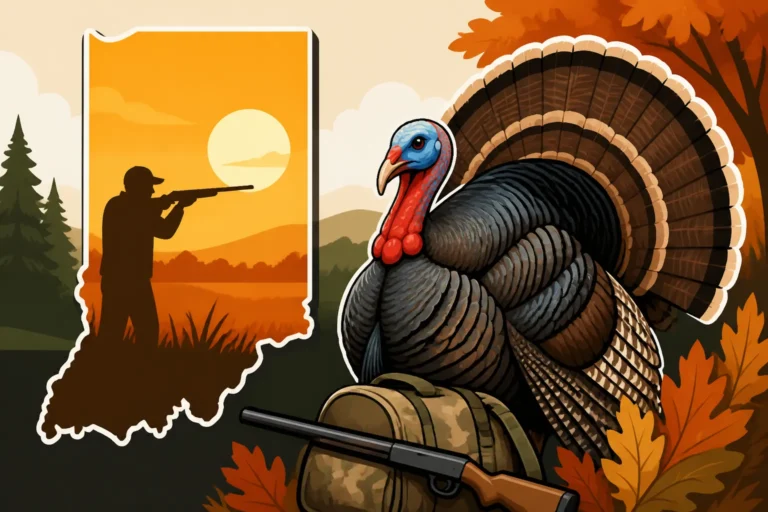
There's nothing quite like the crack of dawn on opening day of spring turkey season in Indiana. For many, it's the culmination of months of scouting, dreaming, and tinkering with gear. It's the moment when the woods truly come alive with the sound of gobbling, and the chance to finally match wits with a mature tom is within reach. But this unique excitement also brings its own set of considerations and challenges.
The Official Dates and Why They Matter
Indiana's spring turkey season typically kicks off in mid-April and runs through early May, though the exact dates can shift slightly year to year. It's always crucial to check the current Indiana DNR regulations for the precise start and end dates before you head afield. The opening day is particularly significant because it's often when gobblers are at their most vocal and responsive. They've been through the pre-breeding phase, and now, with hens starting to nest, they are actively seeking out any receptive female. This window offers a prime opportunity for hunters to capitalize on a gobbler's strong urge to breed, making your calling efforts potentially more effective than later in the season.
However, this early period doesn't last forever. As the season progresses, hens become more committed to nesting, and gobblers might become "henned up," meaning they spend most of their time with a group of hens, making them notoriously difficult to call away. That initial burst of activity on opening day, therefore, sets the tone and provides a valuable chance to connect with an eager bird before they get wise or distracted. Understanding Indiana Spring Turkey Season Rules is the first step to ensuring you're ready for the opener.
The Thrill and Challenges of the First Morning
The thrill of opening morning is undeniable. You've got that nervous energy as you slip into the woods in the pre-dawn dark, hoping your chosen spot holds a roosted bird. When that first gobble breaks the silence, it's an electric feeling that makes all the early mornings and late nights of preparation worth it. The challenge, however, often lies in the sheer number of other hunters out there sharing that same excitement. Public lands, especially, can feel a bit crowded, and you might hear other hunters calling, walking, or even setting up too close for comfort.
This increased pressure can sometimes make birds behave unpredictably. A gobbler that was strutting and gobbling his head off in a field during your scouting trips might go silent or veer off course at the sound of multiple calls or human activity. It's a frustrating reality that many Indiana hunters face. You might put in all the work, do everything right, and still have a bird hang up just out of range or simply lose interest. It's important to be prepared for these scenarios, understand that silent birds don't necessarily mean no birds, and adapt your approach as needed. Patience, and sometimes a willingness to move, becomes a critical virtue on opening day.
Navigating Indiana's Spring Turkey Season Rules and Regulations
Before you even think about setting up a decoy or sounding a call, you absolutely must be squared away on Indiana's hunting regulations. The Indiana Department of Natural Resources (DNR) sets these rules to ensure sustainable turkey populations and safe hunting for everyone. Getting caught off guard by a forgotten license or an illegal piece of gear is a surefire way to ruin your opening day, and potentially your entire season.
Essential Licenses and Permits for Hoosier Hunters
To legally hunt wild turkey in Indiana, you’ll need a few key documents. First and foremost, you'll need a valid Indiana hunting license. For residents, this can be purchased individually or as part of a more comprehensive bundle. Non-residents have various options, including an annual license or a shorter-duration permit. On top of your general hunting license, every turkey hunter must also purchase an Indiana Wild Turkey Stamp. Think of it as a specific tag for your turkey. These stamps directly fund turkey management and conservation efforts in the state.
It's a good idea to purchase your licenses well in advance of opening day. You can do this online through the Go Outdoors Indiana portal, by phone, or at authorized license vendors throughout the state. While digital copies on your phone are generally accepted, having a physical copy or at least a screenshot can be a lifesaver if you lose cell service in a remote area. Many hunters also find it helpful to use an app like GoHunt for quickly referencing regulations and license requirements while in the field. If you're new to hunting, remember that Indiana Hunter Education Requirements must be met before you can purchase your license.
Bag Limits and Mandatory Reporting
Indiana's spring turkey season has a strict bag limit: one (1) bearded turkey per hunter for the entire spring season. This means that once you harvest a bird with a beard, your spring turkey season is officially over. Beards are the key identifier, as even some hens can grow small beards, though it's rare. You can't harvest an antlerless (non-bearded) bird during the spring season.
Perhaps one of the most critical rules, and one often overlooked by new hunters, is the mandatory reporting requirement. All harvested turkeys must be reported within 48 hours of harvest. This can be done online, through the Indiana DNR’s mobile app, or by calling a designated phone number. You'll need information like the county of harvest, the date, and the type of equipment used. This data is incredibly important for the DNR to track harvest numbers, assess population health, and make informed management decisions for future seasons. Failing to report your harvest is a violation and can result in penalties. Always double-check Indiana Spring Turkey Bag Limit Rules to be fully compliant.
Legal Equipment and Safety Considerations
Indiana has specific rules about what equipment you can use to harvest a spring turkey. Shotguns are a popular choice, and they must be 10, 12, 16, or 20 gauge, using shot sizes 4, 5, 6, 7, or 7.5. Many hunters opt for "turkey loads" designed for dense patterns at extended ranges. Archery equipment, including traditional bows, compound bows (with a minimum 35 lb. draw weight), and crossbows (minimum 80 lb. peak draw weight), are also legal. However, certain equipment is strictly prohibited, such as rifles, handguns, dogs, live decoys, and electronic calls. Make sure your gear is legal and ready to go.
Safety is paramount, especially on opening day when more hunters are in the woods. Always identify your target clearly and be certain of what lies beyond it before taking a shot. Wear blaze orange or pink when walking in or out of your hunting area, though it is not required once you are set up to hunt. Never assume you are the only hunter in the area, and always communicate clearly if hunting with a group. Using an app like GoHunt can help you identify public land boundaries and avoid trespassing onto private property, keeping you safe and legal.
Here’s a quick overview of key regulations for Indiana spring turkey season:
| Category | Detail |
|---|---|
| Season Dates | Mid-April to Early May (exact dates vary annually, always check current DNR regulations) |
| Bag Limit | One (1) bearded turkey per hunter for the entire spring season |
| Legal Hunting Hours | 30 minutes before sunrise until sunset |
| Required Licenses | Indiana Hunting License (Base) + Indiana Wild Turkey Stamp |
| Mandatory Reporting | All harvested turkeys must be reported within 48 hours via phone, online, or authorized check station. |
| Legal Shotguns | 10, 12, 16, or 20 gauge, using shot sizes 4, 5, 6, 7, or 7.5. |
| Legal Archery | Longbow, recurve, compound bow (minimum 35 lb. draw), or crossbow (minimum 80 lb. peak draw) |
| Prohibited Equipment | Rifles, handguns, dogs, live decoys, electronic calls. |
Opening Day Tactics for Roosted Gobblers and Field Edges
Opening day often presents the best chance to intercept a vocal gobbler, whether he's still on the roost or strutting in a field. The key is to have a solid plan, but also be flexible enough to adapt to the birds' behavior and any unexpected hunting pressure. Understanding how to approach these scenarios can make or break your first morning.
Effective Roost Hunting Strategies
The ultimate opening day scenario involves locating a gobbler on the roost the evening before. This allows you to position yourself strategically in the pre-dawn darkness, giving you the upper hand when the bird flies down. The goal is to set up well within gun range of where you expect him to land, but also far enough away not to spook him when you approach. Silence is critical during your approach; every twig snap sounds like a thunderclap to a roosted bird.
Once you’re set, usually against a wide tree or in a ground blind offering good concealment, begin your calling subtly. A few soft tree yelps or clucks might be all it takes to get him to gobble on the limb. As fly-down approaches, intensify your calling slightly, mimicking an eager hen. If he flies down your way, be ready. Sometimes, a gobbler will land and immediately start strutting and looking for the "hen" he heard. Other times, he might land silently and move away. It's a game of chess, and knowing how to call a bird off the limb is crucial. For an in-depth look at this, check out Roost Hunting Indiana Gobblers and Calling an Indiana Gobbler Off the Roost.
Decoy Setups for Pressured Opening Day Birds
Decoys can be a powerful tool, especially on opening day when gobblers are looking for hens. However, they also require careful consideration, particularly with increased hunting pressure. A realistic hen decoy, or a hen and jake combination, can often provide that visual confirmation a gobbler needs to commit. Positioning your decoy to be visible from where you expect the bird to approach, and ensuring it's in a safe shooting lane, is essential. Set your decoy up so that any approaching gobbler is drawn into an ethical shooting range for your weapon.
On pressured public land, be mindful of where you place your decoys, as other hunters might mistake them for live birds. Always position them in front of you, never off to the side or behind, and only deploy them in areas with good visibility to avoid accidents. For more specific advice on placement and types, consider reading about Decoy Placement for Pressured Indiana Birds. While a single hen can be effective, a jake decoy can sometimes trigger a dominant gobbler to come in aggressively, thinking he needs to defend his territory.
Aggressive Calling Versus Patience
Opening day can be a mixed bag when it comes to calling. Some gobblers are incredibly vocal and responsive, especially early in the morning. For these birds, a more aggressive calling sequence – cutting, yelping, and clucking – can be effective at getting their attention and pulling them in. You might even find success with a "run-and-gun" approach, covering ground and calling frequently until you locate a responsive bird. For those planning to hunt the first day, our guide to Hunting the Indiana Spring Turkey Opener covers additional strategies.
However, other birds, especially those that have been "henned up" or have heard a lot of calling from other hunters, might be more cautious. For these birds, patience and subtle calling are often more effective. Soft clucks, purrs, and quiet yelps can sometimes coax a wary gobbler that wouldn't respond to aggressive tactics. Knowing when to be quiet and let the woods work for you, versus when to lean on your calls, comes with experience. Trust your gut and the bird's responses. Sometimes, finding a good setup, like Setting Up Against a Big Oak, and waiting them out is the best move. For a comprehensive look at various calls, explore Turkey Calls Worth Carrying in Indiana. It can be incredibly frustrating when a gobbler just hangs up 100 yards out, gobbling his head off but refusing to commit. In these moments, reassessing your setup, or even trying a different call, might be the solution.
Pre-Season Scouting and Gear Checks for Success
You wouldn't show up to a big test without studying, and you shouldn't show up to opening day without having done your homework and checked your equipment. The groundwork laid in the weeks leading up to the season can dramatically increase your chances of success and ensure that when the moment comes, you're ready.
The Importance of Early and Late Scouting
Scouting for spring turkeys isn't just something you do the week before opening day; it's an ongoing process. Early season scouting, even in late winter, can reveal important clues. Look for old roosting areas, tracks in creek beds, and strut marks on logging roads. These tell-tale signs indicate consistent turkey activity. As spring approaches and green-up begins, focus on listening for gobblers at dawn and dusk. This is when they're most vocal and can help you pinpoint specific roost trees and strutting zones.
Utilizing aerial maps, often found in apps like GoHunt, is invaluable. You can identify potential roosting areas (tall timber near water or open fields), travel corridors (ridges, creek bottoms), and strutting fields. Marking these spots on your map allows you to formulate a game plan before you even step foot in the woods. Pay attention to property lines, too, especially if you're hunting near private ground, which GoHunt maps can also help delineate. The more information you gather, the more confident you'll be in your opening day setup.
Patterning Your Shotgun and Preparing Archery Gear
This step is non-negotiable for shotgun hunters: you must pattern your turkey gun. This means shooting your chosen ammunition and choke combination at different distances (typically 20, 30, and 40 yards) on a turkey head target. You need to know exactly how your gun, choke, and load perform together. What looks good at 20 yards might be a sparse pattern at 40, leading to a missed bird or, worse, a wounded one. Knowing your effective range is crucial for an ethical kill. Modern turkey chokes, often marked "Extra Full" or "Turkey Specific," are designed to throw tight, dense patterns. For more information on this critical step, refer to our article on Turkey Shotguns and Chokes.
For archery hunters, the preparation is similar. Ensure your bow is sighted in perfectly with your broadheads. Practice shooting from various positions you might encounter in the woods, such as kneeling or from a seated ground blind. Check your arrows, fletchings, and ensure your broadheads are razor sharp. A dull broadhead will not penetrate effectively. Don't leave these checks until the last minute; give yourself plenty of time to make adjustments.
Essential Gear Beyond the Weapon
Beyond your primary weapon, a host of other gear can make your opening day more comfortable and successful. Comfortable, quiet camouflage clothing, preferably with good layering options for fluctuating Indiana spring weather, is essential. Don't forget bug spray, as ticks and mosquitoes can be out in force. A comfortable seat cushion or small stool can make long waits much more bearable.
Carrying a variety of calls – slate, mouth, and box calls – allows you to adapt to different scenarios and bird moods. A reliable GPS unit or a fully charged phone with a mapping app (like GoHunt, for example) is vital for navigation, especially on public land. Water, snacks, a headlamp for pre-dawn walks, and a small first-aid kit should round out your pack. A good turkey vest, designed to carry all these essentials efficiently, can be a game-changer, keeping everything organized and accessible when that gobbler finally commits.
Disclaimer
Please remember that hunting regulations, season dates, and license requirements can change. Always consult the most current Indiana DNR rules and regulations before heading afield. The information provided in this guide is for general informational purposes only and should not be considered legal advice. Stay safe, hunt ethically, and enjoy your time in the Indiana woods.