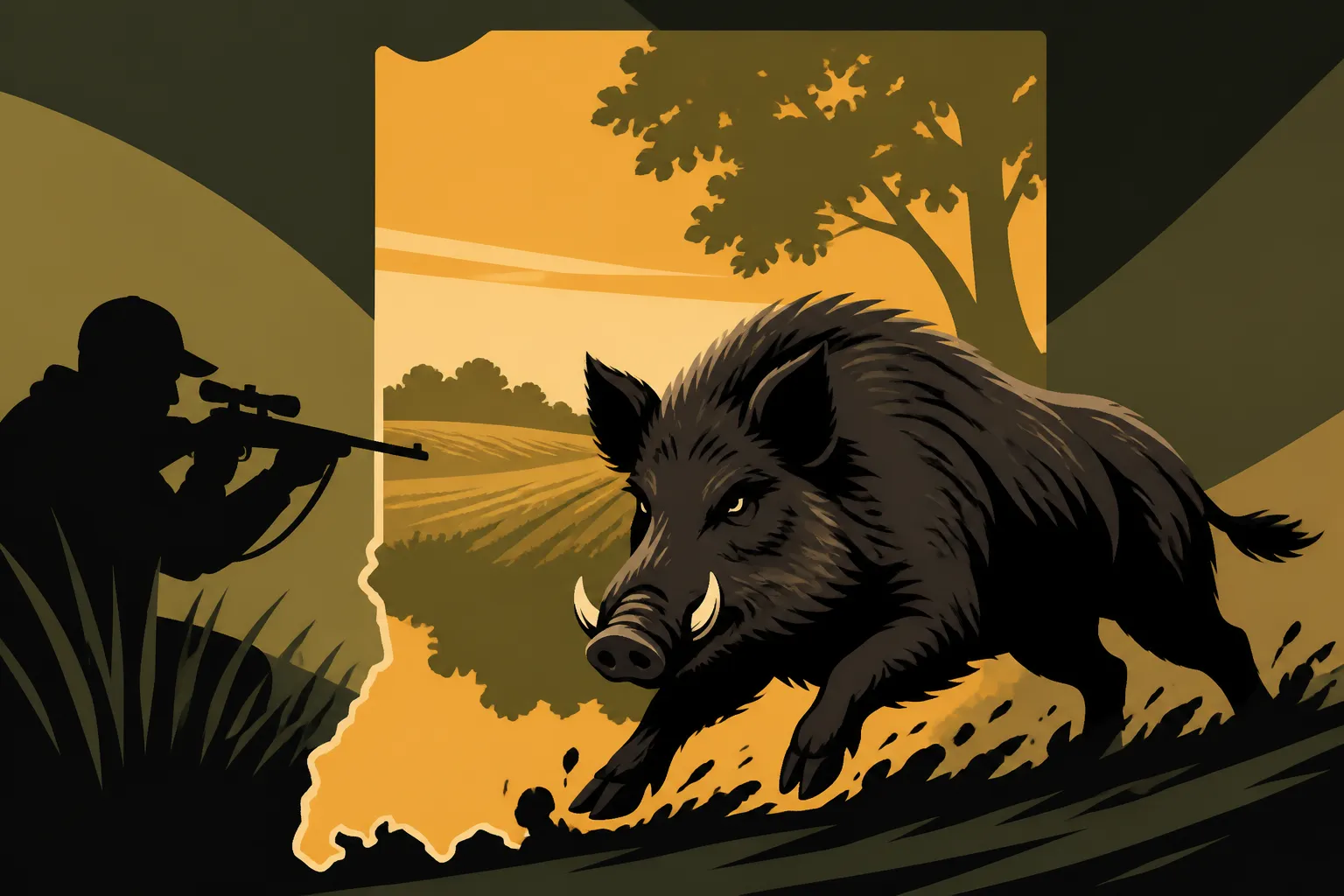
Hunting Indiana’s Year-Round Feral Hogs
Feral hogs are a growing headache for landowners and wildlife managers alike across Indiana, causing widespread damage to crops, timber, and native habitats, making them a significant challenge to manage. If you're looking to help control these destructive animals and put some wild game on the table, this comprehensive guide will walk you through everything you need to know about hunting Indiana's year-round feral hogs, from understanding their behavior to effective hunting strategies and important regulations.
The Destructive Presence of Feral Hogs in Indiana
The sight of feral hogs might conjure images of the Deep South, but these adaptable, destructive animals have unfortunately found their way into the Hoosier State. Their presence isn't just a curiosity; it's a serious threat to Indiana's agriculture and natural ecosystems. Landowners, farmers especially, are often at their wit's end trying to mitigate the damage these animals inflict.
Why Feral Hogs Are a Problem in Indiana
Feral hogs, often a mix of escaped domestic pigs and wild boar ancestors, are an invasive species, plain and simple. They reproduce at an astonishing rate, sometimes having two litters of 6-12 piglets a year, allowing their populations to explode quickly if left unchecked. In Indiana, they wreak havoc on multiple fronts. For farmers, their incessant rooting destroys fields, compromising crop yields and damaging expensive farm equipment. Imagine walking through a freshly planted soybean field only to find it torn up as if a bulldozer went through it – that's the kind of devastation feral hogs can leave behind. This isn't just a minor nuisance; it can represent thousands of dollars in losses for a single farming operation. Beyond crops, they also prey on young livestock, fowl, and even ground-nesting birds, further disrupting agricultural operations.
Their Behavior and Impact on the Ecosystem
Beyond the direct financial losses to farmers, feral hogs are ecological bulldozers. Their rooting habits disturb soil layers, destroying native plant communities and encouraging the spread of invasive weeds. They compete directly with native wildlife like white-tailed deer, wild turkeys, and small game for food sources such as acorns, nuts, and tubers. This competition can put significant pressure on local game populations, especially in years with poor mast crops.
Furthermore, they are significant carriers of diseases, including brucellosis, pseudorabies, and E. coli, which can spread to domestic livestock and even humans. While Indiana's Chronic Wasting Disease (CWD) is a major concern for deer hunters, the array of diseases carried by feral hogs presents its own unique set of risks to both animal and human health. The very real potential for these diseases to jump from wild populations to domestic swine herds is a constant worry for Indiana hog farmers. Their nocturnal habits often mean they operate unseen, further complicating efforts to track and manage their spread, making it a constant battle for those trying to protect the natural balance. You might only discover their presence by the sheer devastation they leave behind in the morning.
Where They Are Most Prevalent in Indiana
While exact numbers can be elusive due to their transient nature and the difficulty in surveying them, the Indiana Department of Natural Resources (DNR) has tracked feral hog populations, and they tend to be concentrated in specific areas. Primarily, you'll find higher concentrations in the southern portions of the state, particularly in counties bordering Kentucky, like Posey, Vanderburgh, and Spencer counties. This region offers suitable habitat with a mix of woodlands, agricultural fields, and river bottoms, providing ample food and cover.
However, isolated populations can pop up anywhere, often due to illegal releases or escapes. The key is that once they establish a foothold, they are incredibly difficult to eradicate. For instance, Feral Swine Sightings in Southern Indiana are more common, where the terrain provides plenty of dense cover and diverse food sources. The DNR actively monitors sightings and reports, and their data helps paint a picture of where the problem is most acute. Knowing these hotspots can help direct your efforts if you're looking to hunt them.
Indiana Regulations for Feral Hog Hunting
Dealing with an invasive species like feral hogs often means different rules apply compared to traditional game animals. In Indiana, the regulations are specifically designed to encourage their removal, recognizing the severe threat they pose to natural resources and agriculture. It’s crucial to understand these rules to hunt them legally and effectively.
Year-Round Season and No Bag Limits
This is perhaps the most defining characteristic of feral hog hunting in Indiana: there is no closed season and no bag limit. That's right, you can hunt feral hogs 365 days a year, day or night, and take as many as you can. The reason for this aggressive stance is simple: the state wants them gone. The DNR considers them a nuisance animal, not a game species, and as such, there are no protective measures. This is in stark contrast to regulated species like deer or turkey, where seasons are tightly controlled and bag limits strictly enforced. This "take at will" approach empowers hunters to contribute directly to their eradication. As per Why Indiana Treats Hogs as Unprotected, their status as an invasive pest means their numbers need to be reduced at every opportunity.
Specific Rules for Private Versus Public Land
While the year-round, unlimited take rule applies statewide, access dictates how and where you can hunt. On private land, the rules are very straightforward: if you have permission from the landowner, you can hunt feral hogs. This includes using bait, lights, and any legal firearm. Many landowners are desperate for help and will readily grant permission, especially if you can demonstrate a responsible approach. Always make sure you have explicit, preferably written, permission from the landowner before stepping foot on their property.
Public land, however, is a different beast entirely. In Indiana, hunting feral hogs on DNR-managed public lands, such as Fish and Wildlife Areas or State Forests, is generally only permitted during open deer and turkey seasons. This restriction is in place to prevent conflicts with other public land users and to avoid a free-for-all that could impact established game populations. You cannot just show up to a state forest with a spotlight and a rifle outside of regular hunting seasons to target hogs. Even during open seasons, specific local rules may apply, so always check with the individual property manager or the DNR website for the specific location you plan to hunt. For instance, you might be able to find areas where Hunting Southern Indiana Hill Country might present opportunities for hogs during deer season.
Night Hunting and Equipment Considerations
The ability to hunt at night is a huge advantage when targeting feral hogs, as they are largely nocturnal animals, especially in areas with human disturbance. On private land, Indiana law permits night hunting for feral hogs with artificial lights. This is where advanced gear comes into play. Thermal optics and night vision devices, once prohibitively expensive, have become much more accessible, making night hunting incredibly effective. Imagine spotting a sounder of hogs feeding in a cut cornfield under the cover of darkness with a thermal scope – it completely flips the script on how you approach them. This capability allows you to target them during their most active periods, increasing your chances of success.
For public land, as mentioned, night hunting for hogs is generally not permitted, even during daylight game seasons. This is another critical distinction between private and public land hunting opportunities for feral hogs. Always double-check current regulations, as state laws can change, but the general principle is to prioritize public safety and the regulated hunting of game species. However, on private land, the use of suppressors is also legal in Indiana, which can be a game-changer for night hunting, making follow-up shots quieter and less disruptive to neighboring properties, while also protecting your hearing.
Scouting and Locating Feral Hogs
Hunting feral hogs successfully isn't just about knowing the regulations; it's about becoming a detective. These animals are incredibly intelligent, wary, and possess an uncanny ability to disappear. Effective scouting is paramount to putting yourself in a position to harvest them. You can’t just blindly wander into the woods and expect to find them; you need to understand their habits and interpret the signs they leave behind.
Reading Sign: Rooting, Wallows, and Rubs
Feral hogs are messy creatures, and they leave a lot of evidence of their presence. The most obvious sign is rooting. Hogs use their powerful snouts to dig up soil, searching for roots, tubers, grubs, and fungi. This creates extensive, disturbed patches of ground that look like a rototiller has gone through them. These rooted areas can range from small, scattered spots to entire acres of churned-up earth. The freshness of the rooting can tell you how recently hogs were in the area; wet, freshly turned soil is a good indicator, while dry, crusted earth means they moved on a while ago.
Wallows are another tell-tale sign. Hogs love to roll in mud, especially on hot days or to rid themselves of parasites. These wallows often look like muddy depressions, sometimes with saplings or fence posts rubbed smooth around the edges from hogs scratching themselves after a good mud bath. These spots are prime locations for ambush hunting, particularly near water sources or dense cover. Look for hair left on rub trees or posts around these areas, which can give you an idea of the size and number of hogs.
Finally, rubs are less common than rooting or wallows, but still valuable. Hogs will rub against trees, fence posts, or rocks to scratch themselves or mark territory. Look for mud and hair low to the ground, often on pine trees or other rough-barked trees, where they might have tried to relieve an itch or simply dry off after a wallow. Finding these signs helps paint a picture of their travel routes and preferred hangouts.
Using Trail Cameras and Other Tech
Modern technology is a game-changer for hog scouting. Trail cameras are indispensable for confirming hog presence, identifying travel corridors, and understanding their activity patterns, especially their preferred times of movement. Place cameras on active rooting areas, near wallows, along trails leading to food or water, or at pinch points between cover and agricultural fields. Cell-enabled trail cameras are fantastic because they can alert you in real-time when hogs are present, allowing you to react quickly. This immediate feedback is invaluable for targeting a specific sounder.
GPS devices or mapping apps like GoHunt are also crucial. They allow you to mark all the hog sign you find – rooting areas, wallows, tracks, and travel routes. Over time, you can build a comprehensive map of hog activity on a property. This data helps you identify patterns and predict where hogs are most likely to be at certain times, turning scouting into a highly systematic and data-driven process. For example, if you consistently see hogs coming out of a specific Hunting a Clear-Cut Regrowth Edge in the evening, you know exactly where to set up.
Understanding Hog Movement Patterns
Hogs are creatures of habit, but they are also incredibly adaptable and will adjust their patterns based on food availability, water sources, cover, and hunting pressure. They typically move between bedding areas, feeding areas, and water. Bedding areas are often in thick, impenetrable cover – cedar thickets, dense brush, deep ravines, or standing crops. Feeding areas can be agricultural fields (corn, soybeans, wheat), oak flats loaded with acorns, or even food plots planted for deer. Water sources are critical, especially in warmer months, making creek bottoms, ponds, and wet wallows hot spots.
Their movement patterns can be daily or longer-term. A "sounder" (a group of hogs, usually a sow and her offspring) might utilize a relatively small home range for a while, but if food sources dry up or pressure increases, they can travel many miles in a single night. Understanding these factors is key. For example, after an acorn crop is depleted, hogs will quickly shift to agricultural fields. Increased hunting pressure during deer season might push them into more nocturnal patterns or deeper, thicker cover. By understanding these tendencies, you can anticipate their movements and adjust your hunting strategy accordingly. The more you know about their habits, the more successful you'll be at finding them.
Effective Hunting Methods for Feral Hogs
Once you've done your scouting homework, it's time to put boots on the ground with a plan. Feral hogs are tough, cunning, and often come in groups, so you need a multifaceted approach to hunt them effectively. What works in one situation might not work in another, requiring flexibility and quick thinking.
Still-Hunting and Stalking
Still-hunting and stalking can be incredibly effective, especially in areas with moderate to dense cover where visibility is limited, or in situations where you’ve identified a specific bedding area or travel corridor. This method involves moving slowly and deliberately through the woods, pausing frequently to scan and listen. You're essentially moving through their habitat, trying to spot them before they spot you. Pay close attention to wind direction, as hogs have an incredible sense of smell. Move into the wind whenever possible.
When stalking, use available cover to your advantage. Walk softly, taking care to avoid snapping twigs or rustling leaves. This is particularly challenging in dry fall woods, but it's essential for getting close enough for a shot. Look for movement, subtle shapes, or even the flick of an ear. Feral hogs, especially in a sounder, can be surprisingly noisy when feeding or moving through brush, which can give away their position. This method requires patience and stealth, but the reward of a successful stalk on a wary hog is immense. It's a true test of a hunter's skill.
Ambush Hunting Over Food or Water Sources
This is often the most productive method, especially when hogs are actively using a specific location. Ambush hunting involves setting up in a concealed position, like a treestand or ground blind, overlooking a known hog hotspot. Prime spots include active rooting areas in agricultural fields, well-used wallows, waterholes, or trails leading to these locations. Setting up a ground blind along a field edge where hogs are regularly feeding can be particularly effective. You might even consider using GoHunt to identify property lines and determine the best ambush locations along borders.
Baiting is also legal and highly effective on private land for feral hogs in Indiana. Corn, fermented grains, or commercial hog attractants can draw them in and concentrate their activity in a specific area, making them predictable targets. If you're using bait, place it strategically within your effective shooting range and away from thick cover that might allow them to approach undetected. The key to successful ambush hunting is patience and timing. Hogs can show up at any time, but often they become most active in the low light of dawn and dusk, or completely after dark, necessitating the use of night vision or thermal optics.
Trapping as a Management Tool
While not strictly "hunting" in the traditional sense with a firearm, trapping is an indispensable method for controlling feral hog populations, especially for landowners dealing with persistent issues. The DNR often recommends trapping as the most effective control method because it allows for the removal of entire sounders at once, which is critical for population reduction. A single hog harvested with a rifle is great, but a trap can account for a dozen or more.
There are various types of traps, from simple snare traps (legal for hogs in Indiana) to large, elaborate corral traps with remote triggers. Corral traps, often large enclosures with a gate, are particularly effective. They are typically baited heavily with corn for several days or weeks, allowing hogs to become accustomed to feeding inside the trap before the gate is deployed. This strategy, known as "pre-baiting," increases the chances of catching an entire sounder. Trapping Indiana Feral Hogs is a highly specialized skill that requires dedication and understanding of hog behavior, but it yields significant results. Working with landowners to implement a trapping program can be a highly impactful way to reduce hog numbers over time.
Gear and Equipment for Feral Hog Hunting
Hunting feral hogs demands reliable gear that can stand up to tough conditions and the resilience of these animals. From the right firearm to specialized optics, having the correct equipment will not only increase your success rate but also ensure your safety and the ethical harvest of these robust creatures.
Firearms and Ammunition Choices
Feral hogs are incredibly tough animals, built like tanks with thick hides and often a protective layer of "shield" (cartilage) over their shoulders. This means you need a powerful and accurate firearm. For rifles, many calibers commonly used for deer hunting in Indiana will work well. The .30-06, .308 Winchester, 6.5 Creedmoor, and .270 Winchester are all excellent choices, delivering ample energy to humanely take down a hog. With Indiana's recent change allowing centerfire rifles for deer statewide, hunters now have more versatility, and these calibers are perfect for hogs too. A well-placed shot with a good expanding bullet is critical. For instance, you’d want a setup similar to what you’d use for Sighting In a Centerfire Rifle for Indiana Woods, ensuring precision at various ranges.
Shotguns loaded with slugs are also effective at closer ranges, especially in dense cover where shots are likely to be quick and close. A 12-gauge or 20-gauge slug offers significant knockdown power. Handguns in powerful calibers like .44 Magnum or .45 Colt are viable options for up-close encounters or as a backup. Regardless of your choice, practice is key to ensure you can make an accurate shot under pressure. When hunting with a rifle, remember that even in areas of dense cover, having an ethical shot means understanding your target and what’s beyond it, making shot placement paramount.
Optics and Thermal/Night Vision
Since feral hogs are often nocturnal, particularly in areas with hunting pressure, optics that enhance low-light or no-light visibility are invaluable. A good quality rifle scope with excellent light-gathering capabilities is essential for hunting at dawn and dusk. Look for scopes with larger objective lenses and good glass.
However, for true night hunting on private land, thermal imaging or night vision devices are game-changers. Thermal scopes and monoculars detect heat signatures, allowing you to spot hogs even in complete darkness or thick vegetation where traditional optics would be useless. Night vision devices amplify ambient light, allowing you to see in near-dark conditions. Using a thermal scanner to locate a sounder and then transitioning to a night vision scope on your rifle for the shot is a common and highly effective tactic for Night Hunting Hogs With Lights on Private Land. These tools offer an unparalleled advantage, transforming challenging nocturnal hunts into highly successful endeavors. While these technologies represent a significant investment, they pay dividends in terms of success and ethical harvesting opportunities.
Protective Gear and Meat Handling
Feral hogs can be aggressive, especially a cornered sow with piglets. While rare, charges can happen. Always be aware of your surroundings, especially when approaching a downed animal. Basic protective gear, such as sturdy boots and durable clothing, is always a good idea. Gloves are also essential for field dressing.
When it comes to meat handling, feral hogs can carry diseases like brucellosis and pseudorabies. While these can be transmitted to humans, proper handling and cooking significantly reduce the risk. Always wear gloves when field dressing and avoid contact with the animal's blood and bodily fluids, particularly if you have open cuts. Immediately cool the carcass after the kill, especially during warmer months, to prevent bacterial growth. Having a good game bag and a cooler full of ice is crucial, similar to how you would approach Field Dressing a Deer in Cold Weather. Thoroughly cook all feral hog meat to an internal temperature of at least 160°F (71°C). Many hunters enjoy feral hog meat, which can be delicious if handled properly, offering a leaner, wilder flavor than domestic pork.
Public Versus Private Land: Access and Tactics
The reality of hunting feral hogs in Indiana often boils down to where you can actually hunt them. The rules and opportunities vary significantly between private and public lands, shaping your tactics and overall strategy. It's a key distinction that every aspiring hog hunter in Indiana needs to understand.
Navigating Private Land Permission
For most hunters, private land offers the best and most consistent opportunities for feral hogs. The reason is simple: landowners who are experiencing hog damage are often eager for hunters to help mitigate the problem. This means securing permission can be more straightforward than for deer or turkey hunting. However, it still requires effort and a respectful approach. Start by Asking an Indiana Farmer for Permission, explaining that you're interested in helping them control feral hogs, emphasizing the damage they cause, and that you understand the year-round open season.
Networking is key. Talk to local farmers, introduce yourself, and offer your assistance. Building trust is paramount. Demonstrate that you are a responsible hunter who respects their property, livestock, and land. Offer to share meat, if that's something the landowner might appreciate, or simply offer your help in reducing their problem. The advantage of private land is the ability to use more aggressive tactics, like baiting and night hunting with thermal optics, which are crucial for effective hog control. With proper permission, you can employ a range of methods tailored to the specific property and hog activity, significantly increasing your chances of success.
Limited Public Land Opportunities
While Indiana DNR properties are fantastic for regulated game, the opportunities for hunting feral hogs on public land are much more restrictive. As we discussed, hunting hogs on public land is generally only allowed during established deer and turkey seasons. This means your window of opportunity is limited, and you'll be competing with other hunters targeting game species. Furthermore, specific methods like baiting and night hunting are typically prohibited on public lands.
If you plan to hunt public land, focus on areas known to have occasional hog activity during the deer or turkey seasons. This often means scouting for hog sign while you're out looking for deer or turkeys. Look for areas with dense cover, access to water, and proximity to agricultural fields on adjacent private land, as hogs will often move between these areas. You’ll need to adapt your strategy to still-hunting or ambush hunting along travel corridors, much like you would for deer. Utilizing mapping tools like GoHunt can help you identify public land boundaries and potential hog habitat, allowing you to scout and plan your approach during the limited windows. Expect more pressure and less predictability than on private land, but it's still a possibility for dedicated hunters.
Tactics for Different Land Types
The type of land you're hunting will heavily influence your tactics.
On Farmland:
If you're hunting private farmland, especially fields bordering timber or heavy brush, your primary strategy will likely revolve around ambush hunting. Hogs love to hit agricultural fields, especially corn, soybeans, or wheat, at night or in low light. Set up a ground blind or treestand along the field edge, paying close attention to wind direction. Baiting with corn can be highly effective in drawing them out consistently. You’ll be looking for well-worn trails leading from thick cover into the fields. Using thermal or night vision is incredibly effective here, allowing you to spot them long before they reach the field, giving you time to set up for a shot.
In Timber and River Bottoms:
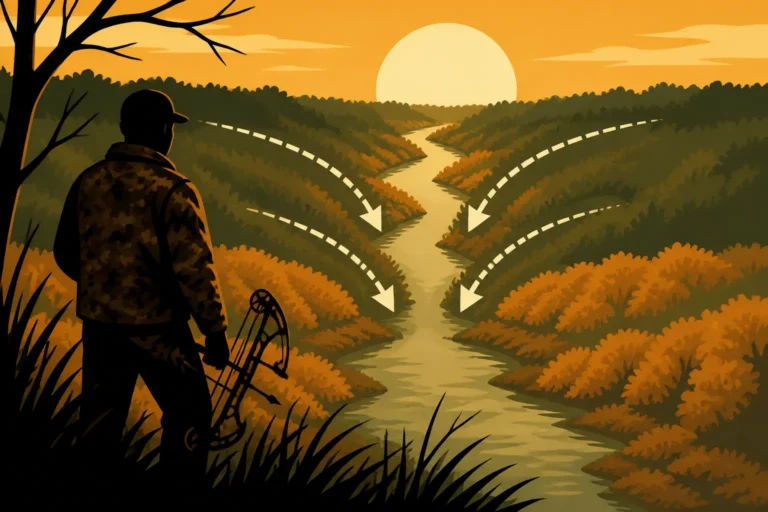
Southern Indiana's timbered hills and numerous river bottoms provide excellent hog habitat. In these areas, still-hunting and stalking become more viable. Hogs will use dense creek bottoms for bedding and travel, and they'll root heavily in oak flats during mast season. Focus on areas with thick undergrowth, water sources, and natural funnels. Look for fresh rooting, wallows, and tracks. In these environments, stealth is paramount. Move slowly, listen for sounds of hogs grunting, feeding, or crashing through brush. Because the terrain can be rugged, consider carrying a pack that supports a long day of hunting, perhaps with the features needed for Packs for a Hoosier Forest Day Hunt. Also, be prepared for tough retrieves; dragging a large hog out of a river bottom is no easy feat!
Post-Harvest: Processing and Safety
Successfully harvesting a feral hog is just the beginning. The next steps, from field dressing to understanding potential disease risks and proper disposal, are critical for ensuring food safety and responsible management.
Field Dressing and Meat Care
Once you've downed a feral hog, the immediate priority is to field dress it to begin cooling the carcass. This is especially important in Indiana's often humid and warm conditions, which can quickly spoil meat. As mentioned earlier, always wear gloves during this process to protect yourself from potential diseases. Make your initial incision from the sternum to the pelvis, carefully opening the body cavity. Remove all internal organs, taking care not to rupture the stomach or intestines.
After removing the guts, wipe the cavity clean with paper towels or a cloth, avoiding water if possible, as it can encourage bacterial growth. If you are far from your vehicle, quartering the animal in the field can make extraction much easier. Place the meat in breathable game bags to protect it from dirt and insects, then get it on ice in a cooler as quickly as possible. Rapid cooling is the single most important factor for good meat quality. If you've been successful at Hunting Indiana's Year-Round Feral Hogs it might be a significant amount of meat to process, so having a plan beforehand is always wise.
Disease Considerations
Feral hogs are known carriers of several diseases that can be transmitted to humans (zoonotic diseases) or domestic livestock. The primary concerns are Brucellosis and Pseudorabies (also known as Aujeszky's disease).
- Brucellosis: This bacterial disease can cause flu-like symptoms, fever, and joint pain in humans. It can also cause abortions in livestock. It's primarily transmitted through contact with infected blood, fluids, or tissues.
- Pseudorabies: This viral disease is deadly to many domestic animals (pigs, dogs, cats, cattle) but typically causes only mild, flu-like symptoms in humans, if any. It's often called "Mad Itch" in animals due to neurological symptoms.
The key to minimizing risk is always wearing gloves when field dressing or handling raw meat, avoiding direct contact with blood and organs, and thoroughly cooking all meat to an internal temperature of at least 160°F (71°C). Freezing the meat does not kill these pathogens. If you notice any unusual lesions, abscesses, or abnormalities in the organs or meat, it's best to discard that animal or consult with a local veterinarian or the DNR. When you get home, thoroughly clean and sanitize all knives, cutting boards, and surfaces that came into contact with the raw meat.
Reporting and Disposal
In Indiana, it is crucial to report any feral hog harvest to the Indiana DNR. This isn't just a suggestion; it's a critical part of the state's management strategy. The DNR uses this data to track populations, understand movement, and assess the effectiveness of control efforts. You can usually report your harvest through the Indiana DNR website or by contacting your local district biologist. This data is vital for understanding How Many Feral Hogs Indiana Has and where new populations might be emerging.
For carcass disposal, especially for animals you choose not to consume (e.g., due to disease concerns or simply excess numbers), proper methods are important. Do not simply leave carcasses exposed where scavengers might spread potential diseases or where they might be a public nuisance. Burying the carcass deep enough to prevent disturbance by scavengers is often recommended. Check with your local solid waste management district for any specific regulations regarding animal carcass disposal. Your cooperation in reporting and proper disposal helps the state in its ongoing battle against this invasive species.
Working with Landowners and the DNR
Effective feral hog control in Indiana is a collaborative effort. It’s not just about individual hunters, but about building partnerships with the people who own the land and the agency tasked with managing wildlife. Being a responsible and engaged hunter means understanding these relationships.
Building Relationships for Access
As highlighted earlier, gaining private land access is often the golden ticket to consistent hog hunting opportunities. Building strong, respectful relationships with landowners is the foundation of this. Don't just show up a week before the season asking to hunt; try to establish contact well in advance. Offer to help with chores around the farm, like mending fences or moving hay. This demonstrates your commitment and trustworthiness.
When you do hunt, always follow their rules, even if they're stricter than state regulations. Close all gates, avoid driving in wet fields, and share your harvest if they're interested. Be transparent about your hunting methods, especially if you plan to use lights or bait. Good communication, consistent updates, and showing genuine respect for their property will go a long way in securing long-term access. Remember, a good relationship with a landowner is far more valuable than a one-time hunt. Tools like GoHunt can help you identify landowners by parcel, giving you a starting point for outreach.
Reporting Hog Sightings to the DNR
Every feral hog sighting in Indiana is important. Whether you're actively hunting them or just happen to see one while out deer scouting, reporting it to the Indiana DNR is a critical step in the state's management efforts. These animals are highly mobile, and a single sighting in a new area can trigger surveillance and control measures by wildlife biologists.
The DNR has dedicated channels for reporting feral hog sightings, often through their online reporting tools or by contacting a district wildlife biologist directly. When reporting, be as specific as possible: provide the date, time, location (GPS coordinates are best), number of hogs seen, and any observed behavior (e.g., rooting, crossing a road). Photos or videos, if safely obtained, are also incredibly helpful. This collective data is essential for the DNR to understand the distribution of Which Indiana Counties Have the Most Hogs and respond effectively to contain outbreaks before they become entrenched. Your report, even of a single hog, contributes directly to the larger conservation effort.
Participating in Control Efforts
Beyond individual hunting efforts and reporting, there are sometimes opportunities to participate in broader control efforts. The Indiana DNR occasionally coordinates special management activities or provides resources to landowners struggling with persistent hog problems. These might involve group trapping efforts or managed hunts in specific problem areas. Staying informed through the DNR's website, newsletters, or local wildlife offices can open doors to these larger initiatives.
By actively engaging in feral hog hunting and control, you're doing more than just putting meat in the freezer; you're playing a vital role in protecting Indiana's agricultural industry, native wildlife, and delicate ecosystems from an extremely damaging invasive species. Every hog removed is a win for Indiana. It’s a rewarding pursuit that combines hunting skill with a genuine sense of ecological responsibility, making you an active participant in preserving the state's natural heritage.
Disclaimer
Hunting is a serious activity that carries inherent risks. Always prioritize safety, follow all local and state laws and regulations, and obtain proper licenses and permits before engaging in any hunting activities. This guide is for informational purposes only and does not supersede official regulations from the Indiana Department of Natural Resources or other governing bodies. Always verify current rules and seasons before heading afield.