Practical Range in Indiana Timber
One of the most common frustrations for deer hunters in Indiana, especially those venturing into our dense timber, is trying to figure out just how far that buck really is. The woods have a way of playing tricks on your eyes, making a 40-yard shot look like 20, or an 80-yard shot feel like it's impossible. This guide is all about helping you understand the practical shooting ranges you'll encounter in Indiana's varied timber, ensuring you can make confident, ethical shots every time, regardless of your chosen weapon.
Understanding Indiana's Timber and Topography
Indiana's deer woods aren't just one type of environment. From the steep, thick ridges of the Hoosier National Forest down south to the fragmented woodlots bordering vast corn and soybean fields up north, the landscape dictates a lot about how far you can reasonably expect to shoot. It’s not just about the trees themselves, but what’s growing between them, and how the ground lays.
The Visual Obstacles: Thick Undergrowth and Dense Canopy
If you've ever tried to spot a deer moving through a southern Indiana hollow in October, you know exactly what I'm talking about. The undergrowth can be incredibly thick. Multiflora rose, honeysuckle, greenbrier, and young saplings create a nearly impenetrable wall of vegetation that can shrink your effective shooting lanes down to mere yards. Even mature timber, like oak and hickory stands, can have dense canopies that cut down on light penetration, making it harder to pick out a deer's vitals, especially at dawn or dusk.
When leaves are on the trees, what might be a clear shot in January becomes a tangled mess in September. You might have a line of sight for 100 yards in one direction, but turn 90 degrees and your visibility drops to 30. This variability is what makes pre-season scouting so crucial. You need to identify those natural lanes, those slight openings that deer use, and position yourself accordingly. Remember, a clear shot isn't just about seeing the deer; it's about having a clear path for your projectile, whether it's an arrow or a bullet, to reach its target without deflection.
Terrain Challenges: Hills, Hollers, and Creek Bottoms
Southern Indiana is famous for its "hills and hollers," and this topography presents its own set of range estimation challenges. A deer standing across a creek bottom might look closer or farther than it actually is, depending on your elevation. Shooting downhill or uphill introduces new angles that affect how your bullet or arrow flies, and also how it impacts the animal. What looks like a straight 30-yard shot across a ravine might actually be a 45-degree angle downward, requiring you to hold differently than if it were a flat shot.
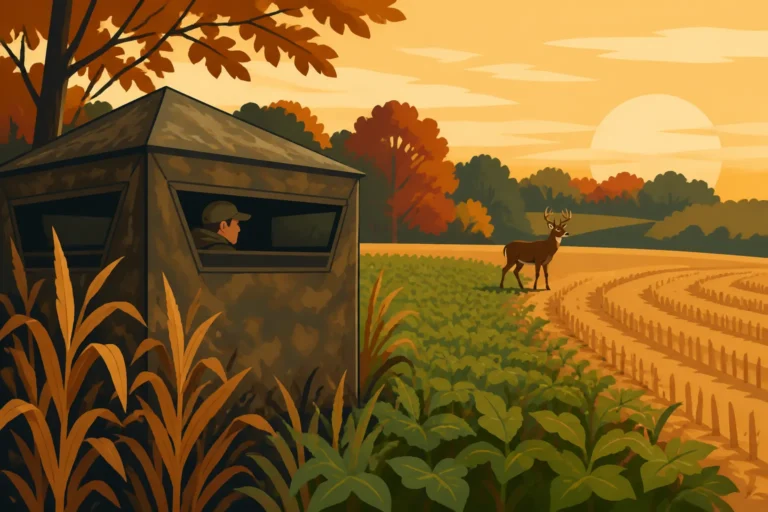
Navigating these terrain features also means dealing with natural funnels and pinch points. Deer use creek beds, ridge lines, and saddles to travel, and these are often the best places to intercept them. However, these same features can make range estimation tricky. A good tool like a Rangefinders in Thick Southern Indiana Cover can be invaluable here. Before the season, take the time to range various landmarks from your stand or ground blind. Note the distance to that big oak, the downed log, or the bend in the creek. This familiarity will pay off when a deer suddenly appears.
Impact of Seasonal Changes on Visibility
The hunting season in Indiana stretches from late September all the way into January, encompassing a huge range of seasonal changes. Early archery season (September/October) is often characterized by lush, thick foliage. This is when your practical range will be at its shortest. You'll be looking for tight shooting lanes, and shots beyond 30-40 yards with a bow can feel like a gamble. As autumn progresses into late October and November, the leaves begin to drop, gradually opening up the woods. This is when those 60-80 yard rifle shots start to become more feasible in areas that were previously too dense.
By late December and January, especially after a few good wind or snow storms, the woods can be remarkably open. You might be able to see deer moving at 100-150 yards in timber that was impenetrable just a few months prior. This is why tactics for Hunting the Late-Season January Lull often involve glassing more and covering ground to find remaining food sources. However, even in the dead of winter, thickets of evergreens, multiflora rose, or standing corn nearby can still create very close-quarters shooting opportunities. Always adapt your expectations and your setup to the current conditions of the woods.
Defining "Practical" Range for Different Weapon Types
What's a "practical" range isn't just about what your weapon can do, but what you can do with it, consistently and ethically, in the chaotic environment of real hunting. It's about putting that projectile exactly where it needs to go, every single time.
Bowhunting in the Clutter: Archery and Crossbow Limits
For most bowhunters in Indiana's timber, whether with a compound, recurve, or crossbow, the practical range often falls between 20 and 40 yards. While many modern bows can shoot accurately much farther on a static range, the reality of a live animal, varied terrain, and potential deflections from brush shrinks that envelope dramatically. When you're Bowhunting Indiana's Long Archery Season, especially in September and October, you'll find shots over 30 yards can be particularly challenging due to dense foliage.
Crossbows, with their rifle-like feel and higher velocity, might extend that comfortable range a bit further, perhaps to 50 yards for a very proficient shooter. However, the same principles apply: a clear shooting lane is paramount. A single twig or leaf can deflect an arrow enough to result in a wounded animal, a hunter's worst nightmare. Many seasoned bowhunters will tell you they'd rather pass on a questionable 40-yard shot than risk it. The goal is a clean, quick kill, and that usually means waiting for the deer to get closer and in a clear shooting lane. Using a mapping tool like GoHunt to mark potential stand sites and then ranging key distances from those spots during scouting can make a huge difference in anticipating shot opportunities.
Muzzleloader and Shotgun Slug Realities
Historically, Indiana's deer hunters relied heavily on shotgun slugs and muzzleloaders for Indiana's Firearms Deer Season, especially during the firearms portion. These weapons, while powerful, have a more limited effective range than modern centerfire rifles, particularly in dense timber. For a typical shotgun slug gun, whether rifled or smoothbore, most hunters consider 75 to 100 yards to be their maximum ethical range in the woods. Beyond that, accuracy drops off significantly, and the energy of the slug decreases.
Muzzleloaders, especially traditional percussion or flintlock models, can have similar range limitations. However, modern inline muzzleloaders, often equipped with scopes, can extend that ethical range out to 125-150 yards for a skilled shooter, sometimes even a bit more on a calm day with a solid rest. But again, in the timber, visual obstacles are your primary constraint. Muzzleloader Deer Hunting in Indiana in December can sometimes offer slightly more open woods, but the range is still often determined by what you can see a slug or bullet reliably pass through. Always zero your muzzleloader carefully and practice at various distances to understand its capabilities.
Rifles in the Woods: New Freedoms, Same Constraints
With Indiana's recent changes allowing centerfire rifles for deer hunting statewide, hunters now have weapons capable of much longer ranges than ever before. Indiana's New Statewide Rifle Rules really opened up options. While a modern rifle can easily be accurate out to 200, 300, or even 400+ yards on a clear shooting range, the vast majority of deer shot in Indiana's timber will still be taken at far shorter distances. In dense woods, a 50- to 100-yard shot is still the most common scenario.
The advantage of a rifle isn't necessarily the ability to take extremely long shots in timber, but rather the increased margin for error in bullet trajectory and energy at common woods ranges. It also provides confidence for those occasional longer shots across clearings, power lines, or vast field edges. For example, if you're hunting a funnel between two woodlots, a rifle gives you peace of mind if that deer steps out at 120 yards instead of 60. When Sighting In a Centerfire Rifle for Indiana Woods, I usually recommend zeroing at 100 or 150 yards, which provides a good holdover/holdunder balance for most timber hunting scenarios. Just remember, a clear line of sight, free of obstructions, remains the golden rule, no matter how powerful your rifle.
Here's a quick look at typical practical ranges you might expect in Indiana's timber:
| Weapon Type | Early Season (Thick Cover) | Mid-Season (Leaves Dropping) | Late Season (Open Woods) | Max Ethical Range (Open Fields) |
|---|---|---|---|---|
| Compound Bow | 15-30 yards | 20-40 yards | 20-40 yards | 60-80 yards (target) |
| Crossbow | 20-40 yards | 30-50 yards | 30-50 yards | 80-100 yards (target) |
| Shotgun Slug | 25-75 yards | 50-100 yards | 50-100 yards | 125-150 yards |
| Muzzleloader (Inline) | 30-100 yards | 75-125 yards | 100-150 yards | 175-200 yards |
| Centerfire Rifle | 40-120 yards | 75-175 yards | 100-200 yards | 300-400+ yards |
Note: These are general guidelines. Individual skill, specific equipment, and actual conditions will heavily influence your personal practical range.
Strategies for Range Estimation and Ethical Shot Placement
Knowing your practical range is one thing; accurately determining it in the heat of the moment is another. Luckily, there are tools and techniques to help you make those critical decisions quickly and correctly.
Pre-Season Scouting with a Rangefinder
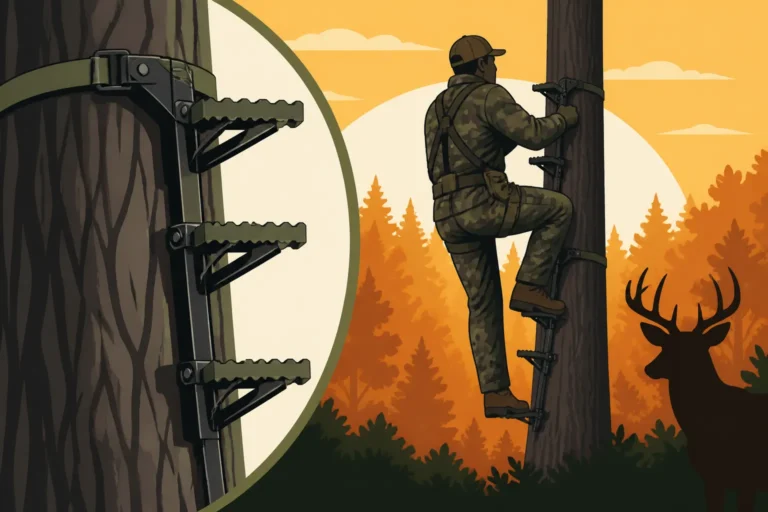
I cannot stress this enough: scout with a rangefinder. Don't just visually estimate distances from your Portable Treestands Worth Packing In or ground blind. Take your rangefinder out and zap every tree, rock, or clump of bushes that you think a deer might walk past. Make mental notes, or even better, jot them down. "That big double oak is 35 yards, the fallen log is 50, the edge of the thicket is 70."
This pre-season preparation removes all doubt when a deer finally steps out. You'll already know the exact distance to key landmarks. Many hunters use GPS apps like GoHunt or other mapping tools to pinpoint their stand locations and then add waypoints for specific distances during scouting. This allows you to visualize your shooting lanes and ranges on a map, giving you a huge advantage when you're back in the stand, especially if you move to a new area. Being able to confirm distances quickly when Hunting Southern Indiana Ridges or even just a small woodlot near a farm field is crucial.
On-the-Fly Estimation Techniques
Even with thorough scouting, deer don't always cooperate and step out exactly where you expect them to. That's when on-the-fly estimation techniques come into play. One common method is to "quarter" the distance. If you know a landmark is 100 yards away, and the deer is halfway between you and that landmark, it's 50 yards. If it's half that, it's 25. This takes practice, but it's effective.
Another technique is to learn to size up deer in relation to known objects. A mature whitetail stands about 3 feet tall at the shoulder. If you've spent enough time in the woods, you start to get a feel for how big a deer looks at various distances. This isn't as precise as a rangefinder, but it's a good backup. Ultimately, if there's any doubt about the range or a clear shot, don't take it. Patience is a hunter's greatest virtue, and waiting for a better opportunity is always the most ethical choice.
Considering Shot Angle and Backstop
Range is only one part of the equation for an ethical shot. You also need to consider the shot angle and what's behind the deer. A quartering-away shot might be ideal at 30 yards, but a quartering-to shot can be very risky, regardless of range. Understanding deer anatomy and how different angles affect vital organ placement is paramount.
Just as important is what lies beyond your target. In many areas of Indiana's public land, especially heavily timbered sections, there are often hills, ravines, or thick brush that can act as natural backstops. But in flatter, more open woodlots, particularly when Hunting Northern Indiana Farmland Deer, your projectile could travel a long way after passing through a deer, or missing it entirely. Always be aware of your surroundings, beyond your immediate target, to ensure maximum safety. This includes knowing where other hunters might be, especially during popular seasons, and being mindful of homes or roads that could be in your bullet's path.
Training and Preparation for Timber Shots
The best gear in the world won't make you a better shot if you don't practice. Training for timber shots requires a slightly different approach than simply shooting at paper targets on a flat range.
Practicing at Realistic Distances
When you're at the shooting range, don't just shoot at 100 yards. Practice at those shorter, more common timber ranges: 20, 40, 60, and 80 yards. For rifle hunters, set up targets in scenarios that mimic tree branches or small openings. For bowhunters, practice shooting from an elevated position if you hunt from a tree stand, or from a kneeling or sitting position if you use a ground blind. Practice shooting quickly and quietly, as a deer often gives you only a small window of opportunity.
Consider setting up a small archery or rifle range at home (safely, of course, with a proper backstop) where you can shoot at varying distances, practicing acquiring your target and ranging it quickly. This repetitive practice builds muscle memory and confidence. The more comfortable you are at those awkward, short-to-mid ranges, the more confident you'll be when that trophy buck steps out. Even better, use your GoHunt app to find a local range that offers varied shooting stations or allows you to practice from different heights.
Gear Choices to Aid Range Estimation
Beyond the rangefinder itself, certain gear choices can also indirectly help with range estimation and shot placement in the timber. Good quality optics, like a clear Rifle Scopes for Low-Light Timber or binoculars, can help you pick out details on a deer and ensure a clear shot, even in dim conditions. An illuminated reticle on your scope can be a game-changer during those first and last minutes of legal shooting light.
For bowhunters, a multi-pin sight with accurately sighted pins for 20, 30, and 40 yards makes those quick adjustments easier. Some sights even integrate a small rangefinder directly into the unit. While not strictly "gear for range estimation," choosing appropriate ammunition or broadheads for timber hunting – meaning those that perform well at closer ranges and through potential minor brush – can also contribute to overall effectiveness and ethical hunting.
Mental Preparation and Patience
Finally, don't underestimate the power of mental preparation. Hunting in Indiana's timber often requires patience and the discipline to pass on marginal shots. Visualize successful scenarios: a deer slowly approaching, you raising your weapon smoothly, finding your target, and making a clean shot. Anticipate the challenges – a twig in the way, a deer that stops just out of range, or one that's constantly moving.
The woods are full of variables, and sometimes the best shot is the one you don't take. If you're hunting public land, remember that Hunting Pressure on Indiana Public Land can often push deer into thicker cover, making those ethical shot opportunities even rarer. Trust your instincts, trust your practice, and when in doubt, wait for another day or another deer. The goal is a clean kill and a respectful hunt, not just a tag filled.
Disclaimer
This article is for general informational purposes only and does not constitute professional advice. Laws, prices and regulations vary by location and change over time. Consult a qualified professional for guidance on your specific situation.