Predator Calling Southern Indiana Ridgelines
Predator hunting on Southern Indiana’s sprawling ridgelines and hardwood bottoms can be incredibly rewarding, but it’s also uniquely challenging. The dense timber, steep terrain, and often subtle wind currents make it far from a simple sit-and-call operation. Many hunters get frustrated when their carefully planned setups yield nothing but silence, leaving them wondering if the coyotes or foxes even heard them, or if they just weren't interested. This guide aims to pull back the curtain on effective predator calling strategies specifically tailored for the Hoosier National Forest and similar southern Indiana landscapes, helping you understand the nuances that lead to success.
Understanding Southern Indiana Predator Behavior
Before you even think about setting up a call, you need to understand the critters you’re after. Coyotes and foxes in Southern Indiana aren't just roaming aimlessly; their movements are dictated by food sources, cover, and the ever-present desire to stay out of sight. The hilly, timbered country they call home shapes their daily routines in significant ways that differ from their open-country cousins.
Coyote Habits in Hill Country
Coyotes in Southern Indiana’s hill country are opportunistic hunters, constantly on the prowl for deer fawns, rabbits, squirrels, and even smaller rodents that populate the diverse forest ecosystem. Unlike their counterparts in wide-open farmlands, these coyotes tend to be more elusive, utilizing the thick cover and undulating terrain to their advantage. They often travel along ridge lines, using them as natural highways to survey for prey and avoid detection, or drop into deep hollows where thick brush offers sanctuary. Their routes will often hug the sides of ridges, especially those with dense undergrowth or downed timber, providing them a natural screen as they move. Understanding this allows you to anticipate their approach and set up accordingly.
During the colder months, when natural food sources might be scarcer, coyotes become even more responsive to distress calls. You'll find them concentrating their efforts around known deer bedding areas or timber cuts where small game is abundant. When you're scouting, look for tracks along old logging roads, scat on prominent rocks, or even den sites if you're out in the late winter or early spring. This intel is invaluable for selecting a promising calling location.
Fox Behavior on Ridgelines
While coyotes are the primary target for many predator callers, don't overlook the red and gray foxes that also patrol these same ridgelines. Foxes, especially gray foxes, are incredibly agile climbers and will often use trees to escape danger or gain a vantage point, which is a key difference from coyotes. They are generally smaller and more cautious than coyotes, making them a trickier target. Foxes prefer denser cover, often sticking to the edges of clearings, thick briar patches, or rock outcroppings. On a Southern Indiana ridge, this means they're likely to skirt the very top, preferring the brushy transition zones a bit lower on the slope rather than the open timber on the crest.
Their diet is also similar to coyotes, but with a greater emphasis on smaller prey like mice, voles, and insects, especially during times when rabbits and squirrels are less active. When calling for foxes, a higher-pitched, more frantic distress call might be more effective than the deeper, more guttural sounds that attract coyotes. Keep in mind that foxes are also highly territorial, so a challenge call, mimicking a fox intruding on another's territory, can sometimes bring them in cautiously. Patience is even more critical when targeting foxes, as they tend to approach with extreme stealth.
Essential Gear for Ridgeline Calling
Getting set up properly for predator calling on Southern Indiana ridgelines involves more than just a call and a gun. The terrain and cover demand specific choices in calls, optics, and firearms to maximize your chances of success. Cutting corners on gear often leads to missed opportunities or, worse, spooked animals.
Calls: Electronic Versus Mouth
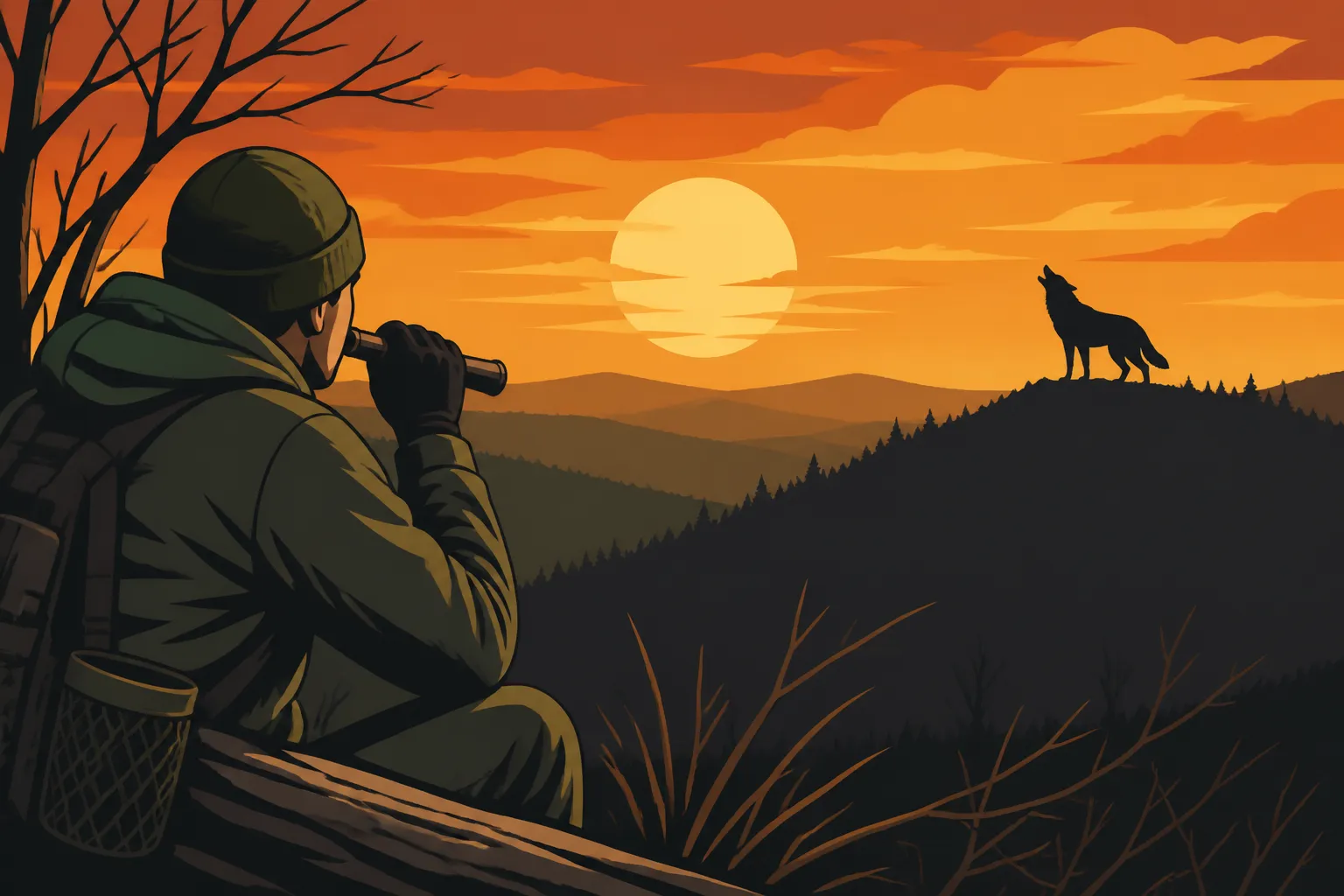
The debate between electronic calls and mouth calls is perennial, but for Southern Indiana ridgelines, both have their place. Electronic calls, like those from FOXPRO or Lucky Duck, offer a vast library of realistic sounds, from rabbit distress to coyote howls and even bird calls. The remote control allows you to place the speaker away from your position, drawing attention away from you and giving you more flexibility to adjust volume and switch sounds without movement. This can be a huge advantage when calling wary predators who are looking for any sign of danger. An electronic call is often the primary tool for longer-range calling, particularly when you suspect coyotes are a good distance away or across a hollow.
However, mouth calls should never be underestimated. A good hand call, like a standard open-reed or closed-reed rabbit distress call, offers an unparalleled level of realism and immediate responsiveness. You can subtly change pitch, volume, and cadence on the fly, creating a more dynamic and convincing sequence. Mouth calls are also lightweight, fail-safe (no batteries to die!), and perfect for quieter, closer-range setups, or as a backup if your electronic call acts up. They are especially effective for bringing in a cautious fox or a coyote that's hung up at 100 yards. Many experienced callers will carry both, using the e-caller to initiate and then switching to a mouth call to finish a wary predator the last few yards.
Optics and Spotting
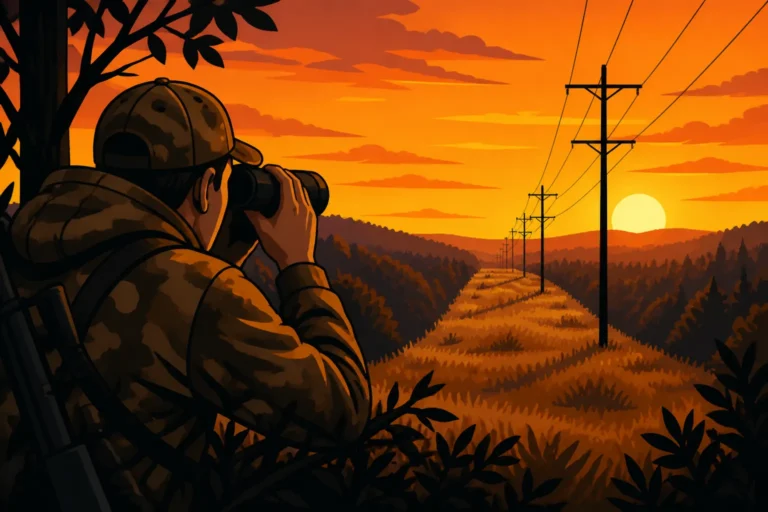
Effective predator calling in Southern Indiana’s dense woods heavily relies on quality optics. It’s not just about seeing the animal, it’s about spotting them moving through the brush before they spot you. A good pair of binoculars, ideally 8×42 or 10×42, is indispensable. They allow you to scan the thick timber, check ridgeline edges, and scrutinize every shadow for the tell-tale flick of an ear or a patch of fur. Given the short sightlines often encountered, a wide field of view is a definite plus. For more on this, you might find our guide on Optics for Southern Indiana Ridges helpful.
Rangefinders are also crucial. When a coyote finally materializes out of the shadows, you won't have time to guess the distance. Knowing the exact range allows for a quick, confident shot, especially in varied terrain where distances can be deceiving. The topography of Southern Indiana with its dips and rises can play tricks on your eyes, so a rangefinder eliminates the guesswork. Remember, good glass isn't just for deer hunting; it's absolutely vital for predator calling where animals are often moving quickly and stealthily.
Weapon Choice for Ridgelines
Choosing the right firearm for predator calling on Southern Indiana ridgelines is a personal decision, but it should prioritize quick handling, adequate power, and ethical shot placement. For many, a fast-handling rifle chambered in something like .223 Remington or .22-250 Remington is ideal. These calibers offer flat trajectories and enough punch for coyotes out to reasonable distances in the timber, typically within 200 yards. The newer .204 Ruger is also gaining popularity for its blistering speed and minimal recoil. For situations where shots might be closer, especially if targeting foxes in very dense cover, a shotgun loaded with buckshot can be incredibly effective, offering a wider pattern for fast-moving targets.
Regardless of your chosen firearm, practice is key. Know your weapon, understand its limitations, and be proficient at shooting from various field positions. Since many shots will be taken quickly, often offhand or from kneeling, familiarizing yourself with these scenarios at the range is paramount. Always prioritize a clean, ethical kill, and make sure your firearm is sighted in properly for the distances you anticipate shooting on these winding ridges.
Strategic Setup and Calling Sequences
Setting up correctly is arguably the most critical factor in successful predator calling, especially on tricky Southern Indiana ridgelines. It’s a chess match against an animal with incredible senses, and one wrong move or an ill-conceived calling sequence can blow your entire hunt. You need to think like a predator, considering wind, visibility, and potential approach vectors.
Optimal Stand Placement on Ridges
When selecting your stand location on a Southern Indiana ridge, the wind is your absolute top priority. Predators have an incredible sense of smell, and if they catch your scent, the game is over. Always set up with the wind in your face or quartering away from where you expect the animal to approach. Consider the prevailing winds and how thermals will affect scent drift. In hill country, thermals often draw air up the slopes in the morning and down in the evening, so understanding these subtle shifts is crucial. Our guide on Wind and Thermals on a Southern Indiana Ridge dives deeper into this specific challenge.
Beyond the wind, consider your visibility and cover. You want a spot that offers a clear view of potential approach lanes, but also provides enough concealment for you. A slight rise, the base of a large tree, or a cluster of thick pines can provide excellent cover. Look for natural funnels, like saddles or narrow points on a ridge, where animals are likely to travel. Setting up slightly off the very top of a ridge, perhaps 20-30 yards down the leeward side, can often provide a better ambush point, as predators frequently skirt the crest. Also, be mindful of your backdrop to break up your silhouette, and always have a shooting lane or two cleared in your mind for where you expect the shot opportunity to arise.
Effective Call Rotations and Volume
Your calling sequence needs to be dynamic and responsive to the environment. Start with a series of attention-grabbing sounds, often a high-pitched rabbit distress or a series of coyote howls, depending on what you're targeting. The initial volume should be loud enough to carry through the timber but not so deafening that it sounds unnatural. Allow for periods of silence, usually 30 seconds to a minute, to listen for responses or to spot an approaching animal. Coyotes and foxes will often respond with soft barks or growls, or simply appear without a sound.
As your calling sequence progresses, vary your sounds. If you start with a rabbit distress, you might switch to a bird distress or even a fawn bleat if no predator shows interest after 10-15 minutes. The idea is to create a sense of urgency and vulnerability. If you get a response, or if you spot an animal, reduce your volume and become more sporadic with your calling, mimicking a struggling animal that is tiring. Sometimes, a few soft whimpers are all it takes to bring a cautious predator the final few yards. A typical sequence might last 20-30 minutes per stand. Here’s a basic table of a calling rotation:
| Phase | Duration (Minutes) | Call Type | Volume | Notes |
|---|---|---|---|---|
| Initial Draw | 2-3 | High-pitched distress (rabbit, fawn) | Loud | Grab attention from a distance. Repeat 2-3 times. |
| Silent Listen | 1-2 | — | Silent | Scan for movement, listen for responses. |
| Vary Distress | 2-3 | Different distress (bird, rodent) | Medium | If no response, change the "prey" to maintain interest. Repeat. |
| Silent Listen | 1-2 | — | Silent | More scanning. |
| Coyote Howls (Optional) | 1-2 | Lone Howl, Challenge Howl | Loud/Medium | Can provoke a response or bring in territorial coyotes. Only use if targeting coyotes. |
| Silent Listen | 1-2 | — | Silent | Listen carefully for a response to the howls. |
| Subtle Enticement | 2-3 | Soft whimpers, pup distress | Soft | If a predator hangs up, try to coax them closer with less aggressive sounds. |
| Final Scan | 2-3 | Occasional soft distress | Very Soft | Maximum patience, scan all angles, especially downwind. |
When using electronic calls, utilize the pause feature. The silence often makes predators think the struggling prey has stopped moving, and they will use this opportunity to close the distance. This also helps you to focus on Scouting Indiana Public Land Before Season to pinpoint those prime locations.
Reading the Terrain and Wind
Successfully calling predators in Southern Indiana is as much about reading the land as it is about making sounds. The topography dictates how sound travels, where predators move, and crucially, how your scent will drift. Ignoring these environmental factors is a surefire way to educate more coyotes than you call in.
Utilizing Thermals and Wind Direction
Thermals are the unseen currents of air that rise and fall with temperature changes, and they are incredibly influential in hill country. In the morning, as the sun warms the earth, air begins to rise, carrying your scent up the slopes. Conversely, in the late afternoon and evening, as the air cools, it settles and flows down the slopes into the hollows. Understanding this daily cycle is paramount for setting up correctly. If you set up on a ridgeline in the morning with the wind at your back, but thermals are pulling air uphill, your scent could be carried over the crest and down to where predators are likely traveling.
Always aim to have the wind, and the thermals, working in your favor. This might mean hunting one side of a ridge in the morning and switching to the other side in the evening. A good rule of thumb is to hunt uphill in the morning and downhill in the evening, ensuring your scent cone is blowing away from your anticipated approach lanes. Tools like the wind layer on mapping apps, such as GoHunt, can be incredibly helpful for visualizing how wind and terrain interact, allowing you to plan your routes and stand locations before you even step foot in the woods. Pay attention to swirling winds in saddles and draws; these can create unpredictable scent currents that make calling very difficult. Sometimes, moving just a few yards can make all the difference.
Identifying Key Funnels and Travel Corridors
Southern Indiana’s ridgelines are not uniform; they are pocked with saddles, draws, benches, and thickets, all of which influence predator movement. Identifying these natural funnels and travel corridors is critical for placing your call and yourself effectively. A saddle, for instance, is a low point between two higher points on a ridge, often serving as a natural crossing point for animals moving from one side of the ridge to the other. Setting up overlooking a saddle can give you a prime ambush location. Similarly, a bench, which is a relatively flat area on the side of a steep hill, often serves as a travel lane for coyotes and foxes looking for easier movement than the steep slopes below or the exposed ridgeline above. You can learn a lot about this by studying guides like Reading a Ridge for Hoosier Forest Deer.
Also, look for subtle changes in vegetation. A transition from open timber to a thick briar patch or a dense stand of young pines often creates an edge that predators will patrol. Old logging roads or game trails that follow the contour of a ridge are also excellent travel corridors. Before you start calling, take a few minutes to visually scout the area from your chosen setup spot. Mentally map out where you think an animal might approach from, and identify any obstacles or blind spots. The more you can anticipate their movement, the better your chances of making a clean shot when they finally commit.
Common Challenges and Troubleshooting
Predator calling is rarely a textbook affair, especially in the challenging environment of Southern Indiana’s ridgelines. You'll encounter educated animals, tricky weather, and unexpected scenarios. Learning to adapt and troubleshoot on the fly is a hallmark of a successful predator hunter.
Dealing with Educated Predators
The biggest challenge in heavily hunted areas like parts of Southern Indiana is dealing with "educated" predators. These are coyotes and foxes that have likely heard calls before, perhaps even been shot at, and are now extremely wary. They might hang up just out of sight, circle downwind to check for scent, or simply refuse to commit. When this happens, pure volume or frantic distress calls often won’t cut it; you need to be more nuanced.
One common tactic for educated animals is to use quieter, more subtle calls. Sometimes, a series of soft, plaintive whimpers or a low-volume mouse squeak can pique their curiosity enough to bring them in, especially if they are close but hesitant. Another strategy is to extend your calling sequence significantly. Instead of a typical 20-minute stand, try 45 minutes to an hour. Educated predators often take longer to commit, circling widely and approaching with extreme caution. Utilizing different types of calls, perhaps a pair of fighting coyotes followed by a lone howl, can sometimes trick them into thinking it’s a new scenario. And remember, sometimes the best call is no call at all – a long period of silence might be just what’s needed to draw in a super wary animal.
Adjusting to Weather Conditions
Southern Indiana weather can be unpredictable, and various conditions significantly impact predator behavior and calling effectiveness. High winds, for example, can make it difficult for your call sounds to carry, and it can also make predators more skittish as they struggle to hear and pinpoint sounds. On very windy days, you might need to increase your call volume, focus on calling in sheltered draws or the lee side of ridges, and select stands with shorter sightlines. GoHunt's weather forecasts can be helpful in planning, but nothing beats real-time observation.
Rain and snow can also present challenges. Light rain can actually be a good time to call, as it dampens sound, making predators feel more secure and less likely to pick up human scent. However, heavy rain will wash out sound and make it difficult for you and the animals to see. Snow, especially fresh snow, is excellent for tracking and can make predators more active as they seek food. But severe cold snaps might make animals hunker down, reducing their willingness to move. Adjusting your calling frequency, volume, and even your chosen sounds to match the weather – perhaps using more aggressive challenges on a cold, still day, or soft whimpers in a light drizzle – can increase your success rate.
Post-Call Strategies and Safety
Successfully calling in a predator is only half the battle. What you do after the shot, and how you ensure safety throughout the process, are equally important. These considerations are often overlooked but are vital for a complete and responsible hunting experience.
Approaching the Stand and Retrieval
After you've finished a calling sequence, whether successful or not, don't just stand up and walk out. Give it another 5-10 minutes of complete silence, scanning the area carefully. A wary coyote or fox might have been hung up and could finally be making its move after the calling stops. When you do decide to move, do so slowly and deliberately. If you’ve made a shot, mark the last spot you saw the animal and scan the surrounding area for any signs of the animal on the ground.
If you’ve made a clean kill, approach cautiously, always assuming the animal might not be dead. Once you confirm it’s down, take a moment to admire your quarry. If you need to retrieve it, assess the terrain. Dragging a coyote up a steep Southern Indiana ridgeline can be a workout, so plan your exit route carefully. If you’re hunting solo, a game cart or deer sled can be a lifesaver, though these can be cumbersome in thick timber. For longer hauls, consider using a frame pack and quartering the animal for easier transport. Remember that predators, particularly coyotes, are often carriers of various diseases, so always handle them with gloves and practice good hygiene.
Safety Considerations for Predator Hunting
Safety should always be your number one priority when predator hunting. Southern Indiana sees a lot of deer hunters during the fall, and while predator seasons are often open year-round, you might still encounter other sportsmen. Always wear blaze orange, even if not legally required for predator hunting, especially during overlapping deer seasons. This is particularly important if you’re utilizing a ground blind, which can make you less visible. Consult the Indiana Blaze Orange Requirements to be sure.
Beyond visibility, be acutely aware of your surroundings. Before you even shoulder your rifle, be 100% certain of your target and what lies beyond it. The hilly, timbered terrain means that shots might be taken on slopes, and you need to know where your bullet will end up if it passes through or misses. Never shoot towards roads, houses, or other hunters. If you're hunting with a partner, always communicate your positions and anticipated shot zones. If you’re considering Night Hunting Hogs With Lights on Private Land or other nocturnal predator methods, be sure you understand Indiana's specific regulations regarding artificial lights and night vision devices. A solid understanding of firearm safety rules and good situational awareness will ensure a safe and enjoyable hunt on Southern Indiana's ridgelines.
Disclaimer
Please remember that hunting regulations and wildlife management practices can change. Always consult the latest Indiana Department of Natural Resources (IDNR) regulations and seasons before planning any hunting trip. This guide is for informational purposes only and does not constitute legal advice.