Hunting a Funnel Between Two Woodlots
The frustration of watching deer skirt the edges of your property or disappear into thick cover is something every Indiana hunter knows. It feels like they're playing a perpetual game of hide-and-seek. This guide is all about turning that frustration into opportunity by focusing on one of the most reliable strategies in the deer woods: effectively hunting a funnel between two woodlots, ensuring those elusive whitetails walk right into your path.
The Allure of Natural Funnels: Why Deer Use Them
When you're out in the Indiana woods, whether it's the rolling hills of Brown County or the flat farmlands up north, it can often feel like deer could be anywhere. But the truth is, deer are creatures of efficiency and security. They'll almost always take the path of least resistance that still offers them cover and safety. That's where natural funnels come into play, and once you learn to identify and exploit them, your success rate can dramatically improve.
What Defines a Deer Funnel in Indiana?
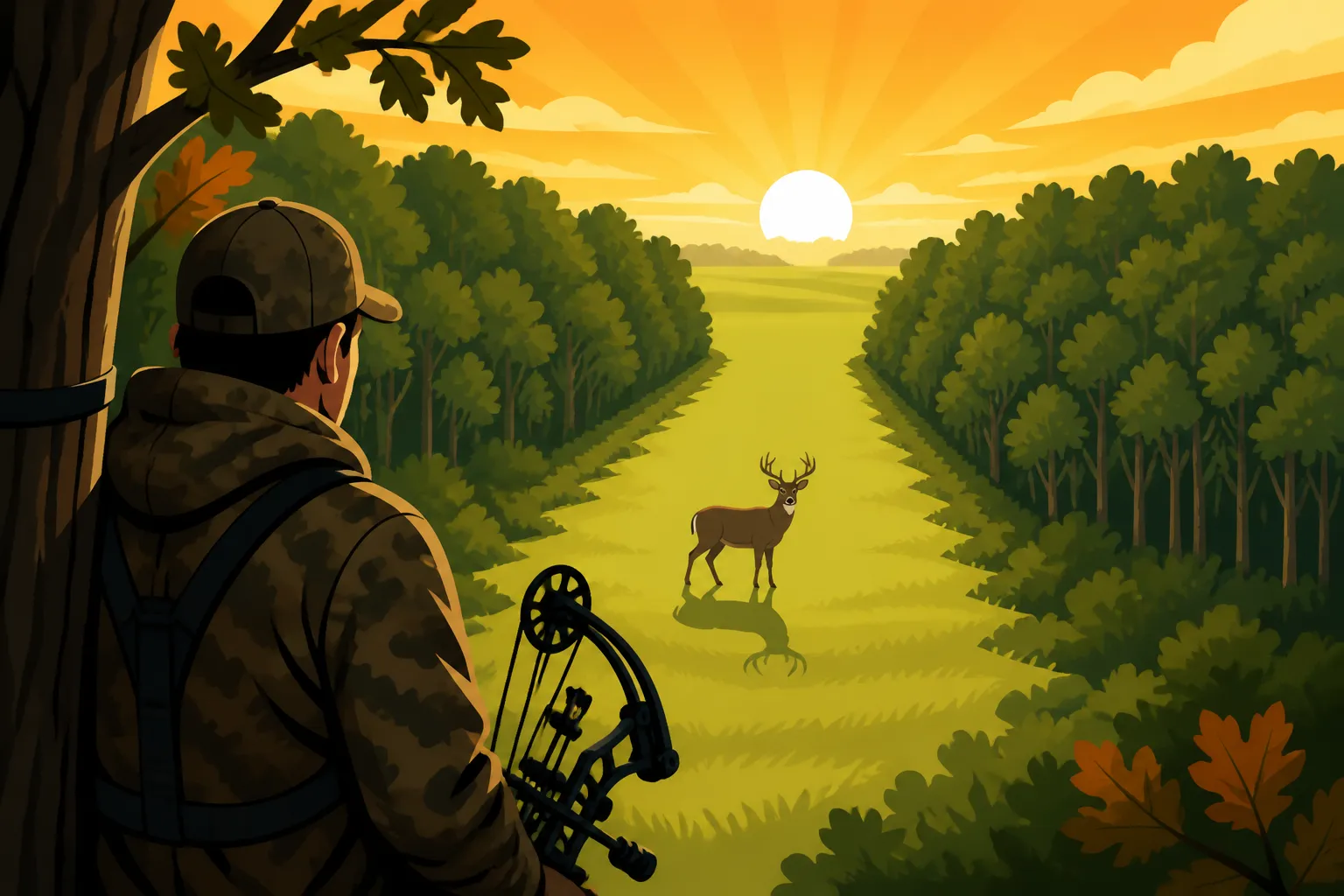
A deer funnel is essentially a pinch-point in the landscape, a constricted travel corridor that naturally concentrates deer movement. Think of it like a bottleneck on a highway – all the traffic has to merge into fewer lanes. For deer, these aren't just random narrow spots; they're areas where terrain features, vegetation changes, or even man-made structures force them into a predictable line of travel.
In Indiana, these can manifest in various ways. You might find a narrow strip of timber connecting two larger blocks of woods, offering a safe passage between bedding and feeding areas. Creek bottoms, especially those with steep banks or dense cover on either side, often act as funnels, forcing deer to use specific crossing points or walk along the creek's edge. Even a subtle saddle on a ridge in the Hoosier National Forest can be a funnel, as deer will often choose to go over the lowest point rather than expend extra energy climbing a steeper section. Similarly, a thick fencerow or a line of dense brush separating two agricultural fields can be a superhighway for deer moving from one food source to another, or from a bedding area to evening chow. Deer feel safe in these constricted areas because they provide cover on both sides, minimizing their exposure to open areas where they might feel vulnerable.
The Strategic Advantage of Hunting Funnels
The beauty of hunting a funnel isn't just that it concentrates deer; it makes their movement far more predictable. Instead of watching a vast expanse of timber and hoping a deer walks by, you know they have to pass through a specific, narrower zone. This predictability is a game-changer. It means you can set up with confidence, knowing that if deer are moving, they're likely to come within range.
During the rut, funnels become even more critical. Bucks are constantly cruising, often checking these pinch points for does that might be moving between different areas. A funnel acts as a natural intercept point for these roaming bucks. If you understand how "Hunting the Rut in Early November" works in Indiana, you know that bucks are traveling extensively, and these narrow corridors become prime cruising lanes. You'll often find more rubs and scrapes in and around funnels during this time, clear evidence that bucks are using them frequently as scent-checking stations. When deer movement is constricted, it also means your shooting lanes are naturally defined, reducing the chances of a missed shot due to an unexpected angle or an obscured view.
Unearthing Hidden Pathways: Scouting for Prime Funnel Locations
Finding the perfect funnel isn't always obvious just by driving past a piece of property. It takes a combination of digital reconnaissance and diligent boots-on-the-ground scouting to truly pinpoint the most active deer highways. Skipping this crucial step is like throwing darts blindfolded – you might hit something, but your odds are dramatically against you.
Digital Reconnaissance: Mapping Out Potential Hotspots
Before you even step foot in the woods, the best place to start is with good mapping software. Tools like GoHunt or the Indiana DNR app offer invaluable aerial photography that can reveal potential funnels from the comfort of your home. Start by zooming out and identifying large blocks of timber or thick cover that likely serve as bedding areas. Then, look for agricultural fields, clear-cuts, or mast-producing oak ridges that might be primary food sources.
The key is to then find the narrowest, most covered pathways connecting these two points. Look for creek bottoms winding through open areas, thin lines of trees crossing a field, or even subtle changes in elevation that create a natural "saddle" between two higher points. In the hilly terrain of southern Indiana, "Reading Aerial Photos for Southern Indiana Deer" involves looking for these ridge saddles and draws that connect different slopes. Up north, between vast corn and soybean fields, look for those dense fencerows or small woodlots acting as bridges. Using a tool like GoHunt's property line overlay can also help you identify funnels that bridge public and private land, or connect different parcels you might have permission to hunt. Mark these potential funnel points on your map; they're your starting points for physical scouting.
Boots-on-the-Ground: Confirming Movement and Sign
Once you have your digital hotspots, it's time to hit the woods. This is where you confirm whether deer are actually using those funnels. While early season scouting can be done with less intrusion, for a funnel that you plan to hunt aggressively, you'll want to scout heavily in the off-season. This allows you to really get in there, examine the terrain, and find historical sign without worrying about bumping deer from their core areas during hunting season.
Walk the entire length of the suspected funnel. Look for heavily used deer trails that run through it. These aren't just faint lines in the leaves; active trails will show wear, clear hoof prints, and often have broken twigs or leaves kicked aside. Pay close attention to areas where multiple trails converge into one, as these are the ultimate pinch points. Scan for fresh rubs on trees, especially on the edges of the funnel, where bucks might be marking their territory. Scrapes are another critical indicator, particularly during the pre-rut and rut. Finding "Scrape Lines Along a Logging Road" or within the funnel itself confirms consistent buck movement. Don't forget the subtler signs: fresh droppings, shiny tracks in soft earth, and even hair caught on low-hanging branches. As you scout, assess the terrain for wind behavior and thermal drafts, which are critical for stand placement later. Understanding these nuances, especially with "Wind and Thermals on a Southern Indiana Ridge", will dictate your approach.
Mastering the Setup: Optimizing Your Funnel Hunt
You've found the funnel, you've confirmed deer movement, and now comes the moment of truth: setting up your ambush. This isn't just about picking a tree; it's a strategic chess match involving stand placement, entry/exit, scent control, and even knowing when to use your calls. A poorly executed setup can blow a perfect funnel hunt faster than you can say "whitetail."
Strategic Stand Placement and Entry/Exit Routes
The golden rule for stand placement in a funnel is to position yourself downwind or crosswind of the primary deer travel corridor. This sounds simple, but it requires careful consideration of prevailing winds and how the terrain might swirl them. If the funnel runs north-south, and the prevailing wind is from the west, you'd want to be on the east side of the funnel. Always have multiple stand locations or setup options for different wind directions, because hunting a funnel with a quartering wind or worse, a direct wind into the travel lane, is a recipe for disaster.
Consider whether a treestand or a ground blind is more appropriate. Treestands like those used for "Treestand Setups in Hoosier National Forest" offer a height advantage, helping to disperse your scent and giving you a better view of the funnel. However, a well-brushed-in ground blind, especially in areas with thick undergrowth, can offer excellent concealment and warmth, which is a plus during the late season. If you're considering "Using a Ground Blind on Indiana Public Land", ensure it's strategically placed where deer aren't likely to look up or notice a new structure.
The importance of quiet entry and exit cannot be overstated. Deer using a funnel are often wary; they know it's a defined travel route and might be on high alert. Plan your route to your stand carefully, using existing ditches, creek beds, or thick cover to mask your approach. Always try to approach with the wind in your face or crosswind, and ensure your exit doesn't spook deer that might be moving in or around the funnel during your hunt. Bumping deer from a funnel, especially a consistent one, can quickly turn a hotspot into a cold spot.
Here’s a quick comparison to help you decide:
| Feature | Treestand Hunting in a Funnel | Ground Blind Hunting in a Funnel |
|---|---|---|
| Visibility | Excellent, elevated view of entire funnel. | Good, but limited to eye-level lanes. |
| Scent Control | Better dispersion due to height, but still critical. | More challenging due to ground-level scent distribution. |
| Concealment | Requires good camo and staying still. | Excellent, especially when well-brushed-in. |
| Mobility | Highly mobile if using climbing sticks/saddles. | Fixed position, can be bulky to move. |
| Comfort | Can be less comfortable for long sits, exposed to elements. | Generally more comfortable, better protection from elements. |
| Target Area | Wide range of shot angles, typically longer shots. | More restricted shot angles, often closer shots. |
| Pros | Great visibility, scent dispersal, flexible angles. | Superior concealment, warmth, can hunt with movement. |
| Cons | Exposure to elements, harder to hide movement, less forgiving. | Limited visibility, scent close to ground, less mobile once set. |
Leveraging Wind, Thermals, and Cover for Concealment
Even the best-placed stand is useless if your scent or movement spooks deer. Understanding how wind and thermals behave in your specific funnel is paramount. In the rolling terrain of southern Indiana, thermals often draw scent uphill in the morning and push it downhill in the evening. A funnel in a creek bottom, for instance, might have entirely different air currents than one on a ridge top. Always use a wind checker to constantly monitor wind direction. Even subtle shifts can carry your scent right into the travel lane.
Beyond wind, exploit natural cover to your advantage. A big oak or a cluster of evergreens can help break up your silhouette, making you less visible against the backdrop. "Brushing In a Blind on a Field Edge" is vital if you're using a ground blind, making it blend seamlessly into its surroundings. Wear camouflage that matches the environment, and always practice rigorous scent control – showering with scent-free soap, using scent-eliminating sprays, and storing hunting clothes in airtight containers. Every little bit helps.
Employing Calls and Decoys to Seal the Deal
While funnels are natural attractants, you can enhance their effectiveness with calls and, sometimes, decoys. Grunt calls are excellent for stopping a buck that's just out of range or for drawing the attention of one that might be passing on a secondary trail. A well-timed grunt can turn a buck that's just walking by into one that's investigating your position. "Grunt Calls in Mature Indiana Timber" need to be realistic and often subtle, as deer in these narrow corridors are already on edge.
Rattling antlers can be incredibly effective in funnels, especially during the peak rut. The sounds of bucks fighting can draw in curious deer from a surprising distance. However, in a constricted funnel, you need to consider "Rattling Volume in Thick Cover". Overly aggressive rattling in tight quarters can be jarring and unnatural. Start with softer clashes and gradually increase intensity if you don't get a response. Since deer are often moving through, they might be more inclined to investigate a perceived fight.
Decoys can be a bit trickier in funnels due to limited space. If the funnel is wide enough, a single doe decoy or a small buck decoy might entice a cruising buck to investigate, but ensure it's placed where deer will see it from a distance and where it doesn't obstruct your shot. The goal with any calling or decoying in a funnel is to capitalize on the deer's natural movement patterns, not to force them into an unnatural situation. Use them judiciously, and often, the natural funnel itself is all the "decoy" you need.
Disclaimer
Hunting is an activity with inherent risks. Always prioritize safety, adhere to all Indiana hunting regulations, and ensure you have proper training and licensing. Conditions in the field can change rapidly; stay aware of your surroundings and make informed decisions.