Tracking a Deer in Fresh Indiana Snow
There's nothing quite like the sight of fresh snow on an Indiana morning, transforming familiar woods into a winter wonderland. But for a deer hunter, that crisp, white blanket can quickly turn from beautiful to brutal when a deer takes off after the shot, leaving you with that gut-wrenching feeling of uncertainty. Finding a deer in those conditions can be a real challenge, especially when every minute feels like an eternity. This guide is here to walk you through the essential steps and seasoned tactics for tracking a wounded deer through fresh Indiana snow, helping you increase your odds of a successful recovery and bring home your hard-earned venison.
Understanding the Benefits of Fresh Snow for Tracking
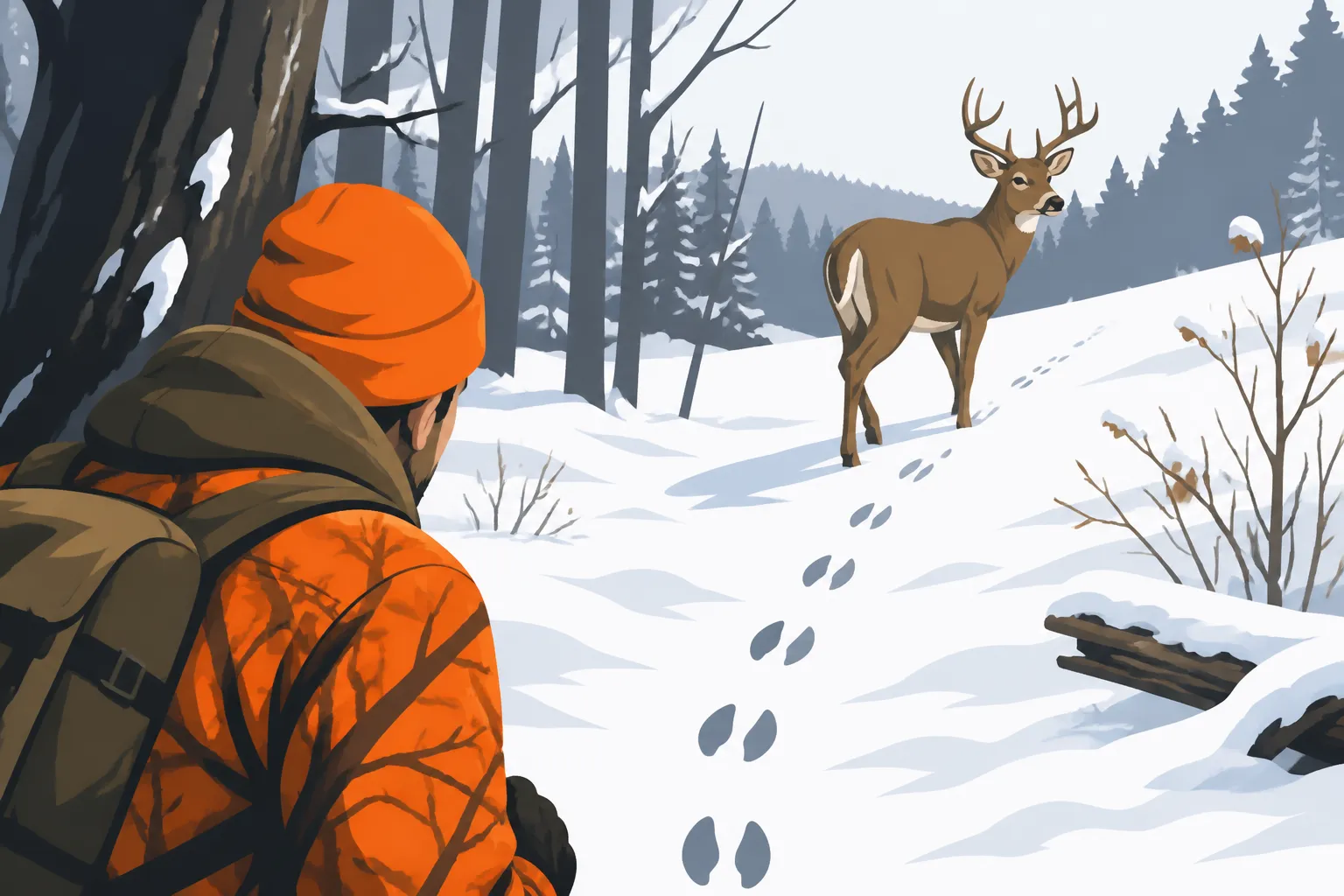
When a deer is hit and takes off, the initial panic can be overwhelming. However, a fresh snowfall, while cold, actually provides an incredible advantage to the prepared hunter. It’s like Mother Nature laid down a pristine canvas, just waiting to tell a story. Learning to read that story is key to filling your tag.
The Unbeatable Clarity of Fresh Powder
Imagine trying to find a few drops of blood or a faint hoof print on dry, leaf-covered ground. It's a nightmare, often feeling like searching for a needle in a haystack. Now picture those same drops, or even the subtle impression of a hoof, against a stark white backdrop. The difference is night and day. Fresh, light snow creates unparalleled contrast, making blood, hair, bone fragments, and even the slightest scuffs incredibly easy to spot. This clarity is what makes tracking in snow, despite the cold, often more effective than tracking in dry conditions. Even a slight drizzle of blood, which would be invisible on dirt, can stand out like a beacon on new snow.
The Information Snow Preserves and Provides
Beyond just making things visible, snow acts as a perfect forensic tool, preserving a wealth of information about your deer. You can see the depth of the track, which can tell you if the deer is running at a full sprint or walking calmly, trying to conserve energy. A healthy deer's tracks might be neat and evenly spaced, but a wounded deer will often show an irregular gait, splayed hooves, or even drag marks from a leg or body. Deeper snow might reveal if the deer is "post-holing," indicating fatigue or injury making it struggle more. The color and consistency of blood are also magnified on snow, offering vital clues about shot placement. Is it bright red and frothy? Dark and thick? These details are invaluable for understanding the severity of the wound and dictating your next steps, including how long you should wait before continuing the trail.
Immediate Post-Shot Actions and Initial Tracking Steps
The moments immediately following your shot are some of the most critical in deer hunting. What you do, or don't do, in this short window can make or break your recovery efforts. Your emotions will be running high, but a disciplined approach is paramount.
The Critical Wait Period
After your shot, your natural instinct is to rush right after the deer. Resist this urge with every fiber of your being. This is often the biggest mistake hunters make. A wounded deer, especially one that isn’t fatally hit in the vitals, can often run a surprisingly long distance if pushed immediately. If it perceives a threat, its adrenaline will kick in, and it will put more distance between itself and you, making tracking infinitely harder. The general rule of thumb varies, but a good starting point is to wait at least 30 minutes for a suspected lung or heart shot, and at least 4-6 hours for a gut shot. For a leg or muscle hit, waiting overnight, if conditions allow, is often best to let the deer bed down and stiffen up.
Think of it this way: a deer that beds down quietly has a much better chance of expiring close by than one that is pushed relentlessly across a county line. This patience is often the hardest part, but it pays off. On a cold, snowy day, a deer hit in the vitals will often stiffen up quickly once it beds down, making recovery much simpler than if it runs further.
Marking the Spot and Starting the Trail
While you're waiting, there's crucial work to be done. First, mentally (or physically with flagging tape) mark the exact spot where the deer was standing when you shot it, and then mark the last place you saw the deer disappear. These two points give you a straight line of travel to begin your search.
Once your wait time is up, approach the shot site slowly and methodically. Don't just blindly follow the first set of tracks you see. Take your time. Look for initial blood. Is there a lot or a little? Is there hair, and if so, what color and length? Are there bone fragments? These initial clues confirm your hit and help you predict the severity of the wound. When you do start tracking, move slowly. Take one step at a time, keeping your head down, scanning the snow ahead and to the sides. Use more flagging tape to mark the trail every 20-30 yards or whenever blood sign becomes faint. This way, if you lose the trail, you can easily go back to the last known sign. Remember, in fresh snow, it's very easy to accidentally step on and obliterate a crucial blood drop or subtle track.
Reading the Snow: Interpreting Blood, Tracks, and Sign
The snow doesn't just show you where the deer went; it tells you how it's doing. Learning to interpret the various signs left behind is like reading a medical chart for your deer.
Decoding Blood Sign on Snow
The color and consistency of blood on the snow are some of the most important clues you have.
- Bright Red, Frothy/Bubbly Blood: This is usually excellent news! It indicates a lung hit. The bubbles mean air is mixing with the blood, suggesting a perforated lung. Deer with this type of hit often don't go far, usually within 100-200 yards, especially on a cold day. You'll likely see decent quantities of blood.
- Dark Red, Thick Blood: This often points to a liver hit. It’s still a fatal shot, but liver-shot deer can travel a considerable distance, sometimes up to several hundred yards, before succumbing. The blood volume might be substantial, but it won't be frothy.
- Pinkish, Watery Blood: This can indicate a muscle hit or a paunch (gut) shot where the bullet just grazed. The lighter color and watery appearance suggest less severe internal damage or a mix with gut fluids.
- Brownish, Greenish, or Foul-Smelling Material: This is the tell-tale sign of a gut shot. If you see this mixed with blood, it means you've hit the stomach or intestines. This is when patience is most critical. A gut-shot deer needs at least 6-8 hours, or even overnight, to expire. Pushing it prematurely will almost guarantee a lost deer.
- Sparse, Dark Red Dots/Drops: This often indicates a non-lethal muscle hit, a superficial wound, or a hit in the lower leg. If the blood trail quickly diminishes to tiny, infrequent drops, especially if the deer is still moving quickly, you might be looking at a tough, long track with a low probability of recovery, or a wound that isn't immediately fatal.
Interpreting Tracks and Drag Marks
Beyond blood, the tracks themselves are a wealth of information. With fresh snow, you can often clearly see the definition of the hooves, even distinguishing the deer you're tracking from others. Look for changes in the track pattern:
- Even, Deep Prints: A healthy deer running hard will leave deep, evenly spaced tracks.
- Irregular Gait: A wounded deer might take uneven steps, show a shorter stride on one side, or leave prints that are splayed out as it struggles for balance.
- Dragging: The most obvious sign of injury is a leg or body part dragging in the snow. This could be a broken leg, a shoulder dragging, or even the belly if the deer is severely weakened.
- Post-Holing: In deeper snow, a deer might struggle to lift its feet, creating deeper, more pronounced holes, indicating exhaustion or injury making movement difficult.
This ability to read the tracks is similar to Reading Indiana Mud for Fresh Deer Movement, just with a different medium. Pay close attention to how the deer is putting weight down. Are all four hooves impacting the snow equally? Is one hoof dragging or splaying out more than the others? These subtle cues can tell you if the injury is in a leg, shoulder, or deeper.
Other Key Indicators in the Snow
Don't just look for blood and tracks. The snow can reveal other vital clues:
- Hair: Finding hair at the shot site or along the trail indicates where the bullet or arrow entered. White hair from the belly, long dark hair from the back, or reddish-brown hair from the flanks can help pinpoint the impact zone.
- Bone Fragments: Small chips of bone indicate a hit to the skeletal structure. This can be devastating, or it could mean a non-lethal hit to a leg bone.
- Stomach Contents: As mentioned with gut shots, finding partially digested vegetation is a clear indicator of a paunch hit.
- Urine and Scat: While deer frequently urinate and defecate, if you notice an unusually high amount of urine (sometimes mixed with blood) or loose, bloody scat, it can be another sign of distress or internal injury.
- Disturbed Ground: Even if blood is minimal, look for areas where the deer has stumbled, slid, or pawed at the ground in distress. These disturbed patches in the snow can guide you when the main trail becomes difficult to follow.
Advanced Tracking Techniques for Tough Trails
Sometimes, despite the clear canvas of snow, a deer trail can just vanish. This is where you need to switch gears and employ some more advanced strategies to keep the search alive.
The "Grid Search" and "Circle Method"
It happens to the best of us: you're following a clear trail, and suddenly, the blood stops, or the tracks become indistinguishable. When the trail disappears, don't keep pushing forward blindly. Go back to the last confirmed sign. From that point, employ the "circle method." Have one person stay at the last sign while another (or a small group, if available) walks in an ever-widening circle around that point, looking for new signs. Start with a small circle, maybe 20-30 yards in radius, then expand it. The key is to be methodical and cover every square foot.
If the circle method isn't yielding results, or if you suspect the deer changed direction dramatically, a "grid search" might be necessary. This involves lining up several people (if you have a team) and systematically walking parallel lines through an area where you believe the deer might have gone or bedded. This is especially effective in thick cover or areas where the deer might have circled back. For instance, in areas like Hunting a Clear-Cut Regrowth Edge, deer often seek dense cover when wounded, and a grid search might be the only way to find them.
Utilizing Terrain and Deer Behavior
Wounded deer often behave predictably. They typically seek out the path of least resistance or the densest cover available.
- Downhill Travel: Deer often travel downhill after being shot. It's easier for them to move downhill, and it provides a quick escape route.
- Water Sources: Wounded deer will sometimes head to water to cool down or hide. Check creeks, ponds, or even drainage ditches. Be cautious when retrieving a deer from a place like a Recovering a Deer From a River Bottom, as it can be dangerous.
- Thick Cover: Look for the thickest briar patches, downed trees, pine plantations, or brushy fencerows. A wounded deer wants to hide and feel secure. This could be a dense stand of cedars on a southern Indiana ridge or a tangled fencerow on Hunting Northern Indiana Farmland Deer. Pay close attention to potential bedding areas.
- Funnels and Crossings: If you've lost the trail in open woods, think about natural travel corridors like saddles, creek crossings, or timbered fence lines. The deer might have used these to get to thicker cover. Understanding how deer use the landscape, especially in diverse areas like the Southern Indiana Hill Country, can give you an edge.
When trying to follow a faint trail, consider using a good pair of binoculars. Sometimes, you can spot the deer bedded, or even just another blood spot, far ahead that you wouldn't see with the naked eye. Also, a quality mapping app like GoHunt or even the Scouting With the Indiana DNR App can be invaluable for marking your last sign, seeing topography, and planning your search grid.
Calling in Reinforcements (Carefully)
When the trail is truly difficult, or if you’ve exhausted your own efforts, don't be afraid to call for help. A fresh set of eyes can often pick up a sign you’ve overlooked. If you bring in friends, make sure they understand tracking etiquette: walk slowly, scan wide, and do not contaminate the existing trail by walking all over it. Designate one person as the primary tracker, and others can flank them, looking for parallel signs.
Some states, including Indiana, allow the use of trained tracking dogs (often called "bloodhounds" or "scent dogs") for deer recovery, with the Indiana condition that a dog may track or trail a wounded deer only while on a leash. If you know of a certified tracking dog handler in your area, reaching out to them can dramatically increase your chances of finding a deer, even a cold trail, keeping in mind the Indiana condition that a dog may track or trail a wounded deer only while on a leash. These dogs are incredible at what they do and can often follow a scent that's hours, or even a day, old.
When to Call It Quits (Temporarily) and Come Back
One of the hardest decisions in tracking is knowing when to pause the search. It goes against every fiber of a hunter's being to leave a wounded animal, but sometimes, it's the smartest, most ethical thing you can do.
Knowing When to Pause
If the blood trail becomes extremely sparse, if the deer is still moving quickly, or if the conditions dramatically worsen (like a heavy snowfall starting that will cover the existing trail), it might be time to back out. Pushing a marginally wounded deer is a surefire way to lose it. If you suspect a gut shot, leaving the deer alone for several hours or overnight is almost always the best strategy. The deer will bed down, stiffen up, and often expire without being pushed further.
The ethics of the hunt demand that you make every reasonable effort to recover game. This includes knowing when to give the deer time and when to resume with a clear plan. If you've been tracking for hours and are physically and mentally exhausted, take a break. Your eyes will be fresh when you return, and you'll be able to see things you missed before.
Strategies for Resuming the Search
If you decide to pause, especially overnight, make sure you mark your last known sign very well with plenty of flagging tape. This ensures you can pick up exactly where you left off. When you return the next morning, bring fresh eyes and maybe a friend or two. The cold overnight temperatures can preserve the trail, making blood and tracks just as visible as they were the day before, sometimes even more so if a thin layer of new snow settles without obscuring the old tracks completely.
When resuming, start from the last marked spot and re-evaluate. The deer may have only moved a short distance and expired. Consider the terrain again. Did it head towards a thick draw? A river bottom? A distant woodlot? Use all the clues from the previous day to formulate a new plan for your search. Remember, a deer that has been left to expire will not be actively trying to evade you, making the final recovery much simpler.
Essential Gear for Snow Tracking in Indiana
Being prepared for tracking in cold, snowy conditions is just as important as your shooting skills. The right gear can make the difference between a successful recovery and a heartbreaking loss.
Lighting, Marking, and Navigation
- Headlamp: A powerful headlamp with a fresh set of batteries is non-negotiable, especially when tracking extends into dusk or darkness. A bright beam helps blood sign glow, and it keeps your hands free. Always carry a spare set of batteries, or even a secondary light.
- Flagging Tape/Markers: Bright orange or pink flagging tape is essential for marking your trail, especially when blood becomes sparse. Tie it high enough to be seen easily, but consider removing it after the recovery to leave the woods clean. Small, bright clip-on lights can also be useful for marking a particularly difficult section of trail at night.
- GPS Device/Phone App: A dedicated GPS unit or a reliable hunting app like GoHunt on your smartphone is crucial for marking your shot location, last known blood, and the final recovery spot. These tools allow you to backtrack easily if you get turned around or need to re-evaluate. Always ensure your phone is fully charged and consider carrying a portable power bank, as cold weather can drain batteries quickly. Knowing how to use these for Scouting With the Indiana DNR App is also a huge advantage.
Warmth and Protection
- Layered Clothing: Tracking in snow means you'll be active, but also stopping frequently. Layering is key to managing your body temperature. Start with a moisture-wicking base layer, add insulating mid-layers, and top it off with a waterproof and windproof outer shell. This will keep you warm and dry, even if you’re out for hours. This is an extension of what you'd use for a Cold-Weather Sitting Strategy in Indiana, but with more emphasis on mobility.
- Waterproof Boots: Insulated, waterproof boots are critical. Your feet will get wet and cold quickly, leading to discomfort and even hypothermia. Make sure your boots are broken in and comfortable for long walks through varied terrain. Rubber boots are excellent for their waterproofing properties in slush and shallow water.
- Gloves/Mittens: Keep your hands warm and dry. You’ll be touching snow, blood, and potentially cold game. Having a warm pair of gloves or mittens, and perhaps a thinner pair for delicate tasks, is wise.
- Blaze Orange: Don't forget your blaze orange, even if you're out of hunting hours. When tracking, you're often moving slowly through thick cover, and it's vital for safety, especially if other hunters are in the area. Review Indiana Blaze Orange Requirements to ensure you're compliant.
Specialized Tools
- Binoculars: As mentioned before, a good pair of binoculars can help you scan ahead, spotting a bedded deer or further sign from a distance without disturbing the area.
- Sturdy Knife: For field dressing your recovered deer. A sharp, durable knife is essential for this task.
- Game Bags: If temperatures are mild or if you anticipate a long pack out, game bags can help protect the meat from dirt, insects, and scavengers.
- Deer Sled/Cart: If you recover a deer in deep snow or a challenging area, a deer sled or game cart can make the extraction much easier, especially if you're on public land or far from a road. This is particularly useful in wide-open farmland areas or even in the slightly more accessible parts of the Hoosier National Forest.
Blood Trailing After Dark in Indiana
Sometimes, despite your best efforts, you might find yourself with a deer trail that extends into the nighttime hours. While challenging, tracking after dark is often necessary to ensure a successful recovery and prevent spoilage, especially if the weather is not extremely cold.
The primary tool for night tracking is a powerful headlamp or spotlight. A good quality light can make blood stand out against the snow, often appearing almost black or highly reflective. However, the darkness also plays tricks on your eyes, making it harder to judge distances and identify subtle changes in the terrain or tracks. It’s crucial to slow down even more, perhaps using two people—one to focus on the immediate trail and blood, and another to scan ahead and wider for the deer itself or additional signs.
If you are tracking after dark, always be acutely aware of your surroundings and other potential hunters. Clearly display blaze orange and consider using reflective tape on your person or gear. Safety is paramount. It's often best to save night tracking for situations where the trail is consistent and fresh, and you have a good chance of a quick recovery. If the trail is sparse, or you suspect a marginal hit, an overnight wait with a return at first light is usually the safer and more ethical option.
| Blood Color/Consistency | Potential Shot Placement | Expected Blood Volume | Recommended Wait Time |
|---|---|---|---|
| Bright Red, Frothy | Lungs, Heart | Moderate to Heavy | 30 minutes – 1 hour |
| Dark Red, Thick | Liver | Moderate to Heavy | 4-6 hours |
| Pinkish, Watery | Muscle, Grazing | Light | 2-4 hours |
| Brownish/Greenish | Gut/Paunch | Varies, often with contents | 6-8 hours or overnight |
| Sparse, Dark Red Dots | Extremities, Superficial | Very Light | 2-4 hours, often non-fatal |
Disclaimer
Hunting is an inherently dangerous activity. This guide provides general information and recommendations for tracking deer in snowy conditions. Always prioritize safety, adhere to all Indiana hunting regulations and local laws, and use common sense. The information provided is not a substitute for proper training, experience, or professional guidance. The author and publisher are not responsible for any incidents or accidents that may occur as a result of applying the information presented here.