Recovering a Deer From a River Bottom
There’s nothing quite like the rush of a successful shot on an Indiana whitetail, but that triumph can quickly turn to dread when you realize your deer has bolted towards, or even into, a river bottom. The thick cover, treacherous mud, and potential for deep water can make what should be a straightforward recovery an absolute nightmare. This guide is here to walk you through the real-world challenges and practical strategies for getting your hard-earned harvest out of those infamous Hoosier river bottoms.
The Unique Challenge of River Bottom Deer Recovery
Hunting river bottoms in Indiana offers incredible opportunities for encountering mature bucks, especially during the rut when they cruise these natural travel corridors. However, this prime habitat comes with a significant downside: recovering a deer from such an environment is often far more difficult than from an open field or a gentle hardwood ridge. The dense vegetation, ever-present mud, and unpredictable water features present a gauntlet of obstacles that can test even the most experienced hunter.
Understanding the River Bottom Terrain
Indiana's river bottoms, whether along the Wabash, White, or any number of smaller creeks, are characterized by their dynamic and often unforgiving landscape. You'll find everything from standing water and deep, sucking mud to tangled masses of briars, downed trees, and thick willow or honeysuckle patches. This isn't your typical walk in the woods; it's a battle against nature's toughest obstacles. Even in areas you thought you knew well from Scouting Indiana Public Land Before Season, water levels can change drastically overnight, turning a dry creek bed into a formidable barrier. The constantly shifting silt and clay banks mean that what was solid ground yesterday might be a knee-deep muck trap today.
Immediate Actions After the Shot
The first few minutes after the shot are crucial for any deer recovery, but especially so in a river bottom. Resist the urge to immediately charge after the deer, no matter how good you think the shot was. Give the animal time. A deer that’s hit but not immediately dead will often bed down nearby if not pressured. In a river bottom, this could mean it goes just a short distance into thick cover or finds a hidden island of high ground. Pressuring it too soon could push it further into deep water or impenetrable tangles, making recovery exponentially harder. For those hunting during peak rut, remember that Hunting the Rut in Early November often means deer are on the move and might cover more ground, even when mortally wounded. If you suspect a less-than-perfect hit, waiting at least 4-6 hours, or even longer if conditions allow, is usually best.
Prioritizing Safety in Treacherous Conditions
Before you even think about putting boots on the ground for a recovery in a river bottom, you need to consider your safety. These areas are inherently dangerous. Slippery banks, hidden holes, venomous snakes in warmer months, and rapidly changing water levels all pose serious risks. Always hunt and recover with a buddy if possible. Let someone know exactly where you are and when you expect to be back. Wear appropriate gear, including sturdy boots and waders if water is involved, which we'll discuss more later. Don’t take unnecessary risks just to retrieve an animal; no deer is worth your life or limb. Be especially cautious when attempting Blood Trailing After Dark in Indiana, as these hazards become even harder to see.
Essential Gear for River Bottom Retrieval
Successfully recovering a deer from a challenging river bottom isn't just about grit; it's about having the right tools for the job. You wouldn't tackle Hunting Indiana's Long Archery Season without your bow, and you shouldn't go into a river bottom recovery unprepared either. Having the proper equipment can literally mean the difference between getting your deer out and having to leave it behind.
Personal Equipment for Navigating Wet Terrain
Your personal gear choice is paramount when heading into a river bottom. First and foremost, a good pair of waterproof boots or, even better, chest waders are essential. Indiana river bottoms are synonymous with mud and standing water. Choosing robust Boots for Indiana Mud and Snow will protect your feet and provide crucial traction on slippery surfaces. If you anticipate crossing any significant water, quality Waders for Marsh Hunting will keep you dry and much more comfortable, allowing you to focus on the task at hand rather than fighting the cold and wet. Dress in layers, as exertion can lead to overheating, but cold, wet conditions can quickly set in. A good rain jacket and pants are also non-negotiable, as you're bound to encounter dampness, even without direct rain.
Tools for Moving the Deer Through Water and Mud
Once you find your deer, getting it out can be the real chore. A sturdy deer drag, preferably one with a comfortable shoulder strap or harness, is a must. Standard rope drags can cut into your hands during a long, arduous pull. For heavier deer or particularly nasty terrain, consider a deer cart or sled. While a deer cart might struggle with deep mud and thick brush, a heavy-duty plastic sled, like those used for ice fishing or hauling firewood, can often glide over mud and brush much more effectively. Sometimes, it’s not about pulling the deer, but sliding it. If you're dealing with deeper water, a small, inflatable boat or even a canoe can be invaluable, especially if you have multiple people and can float the deer across a wide, slow-moving section of water. Don't forget a sharp field dressing knife and game bags, especially if it's an early season hunt and temperatures are still warm, making Game Bags for Warm September Days critical to meat preservation.
| Recovery Tool | Best Use Case | Pros | Cons |
|---|---|---|---|
| Deer Drag | Short distances, moderate cover, firm ground | Lightweight, portable, inexpensive | Difficult in deep mud/water, hard on hands/back |
| Plastic Sled | Muddy, brushy areas, light snow, varied terrain | Glides over obstacles, protects carcass | Can be bulky to carry in, requires effort to pull |
| Deer Cart | Open fields, logging roads, flatter trails | Easier on back for long distances, handles weight | Poor in deep mud, brush, or steep terrain |
| Inflatable Boat | Deep, wide water crossings | Effortless water transport, can carry gear | Requires setup, punctures possible, bulky to carry |
| Rope & Pulley | Hauling up steep banks, across small gaps | Leverages strength, compact | Requires anchor points, can tangle |
Communication and Navigation Aids
River bottoms are notorious for patchy cell service. Relying solely on your smartphone for navigation could leave you stranded. A dedicated GPS unit or a downloaded offline map on an app like GoHunt is incredibly valuable for navigating the twists and turns of a river bottom. The GoHunt app, for example, allows you to download detailed topo and satellite maps for areas with no service, which is a lifesaver when you're deep in a tangle of thickets and trying to find your way back to your vehicle. Mark your stand location, the shot location, and any last known blood trail. Also, carry a fully charged power bank for your phone and a small, bright headlamp, even if you don't plan on Blood Trailing After Dark in Indiana. A compass and physical map are excellent backups. Two-way radios are great for communicating with hunting partners when cell service is unreliable, allowing you to coordinate a deer drive on Indiana public land or simply keep track of each other during a long recovery.
Strategic Approaches to the Retrieval
Once you've taken all the safety precautions and gathered your gear, it's time to execute the actual recovery. This stage requires patience, keen observation, and often, a bit of creative problem-solving to overcome the natural obstacles presented by Indiana's river bottoms.
Tracking in Difficult Mud and Water
Blood trailing in a river bottom is often far from a clear-cut affair. The moist, dark soil can make blood sign appear dull or quickly get washed away by standing water or rain. Focus not just on blood, but on disturbed vegetation, broken twigs, and scuff marks in the mud. Reading Indiana Mud for Fresh Deer Movement becomes an essential skill here. Look for tracks that show a deer limping or stumbling, or areas where it may have paused. If the trail leads into water, mark the last spot you saw sign and start searching the opposite bank a short distance downwind, as a wounded deer will often try to cross and get to safety. Sometimes, a grid search of the immediate area around the last sign is more effective than trying to follow an invisible trail through water. Give the area a thorough sweep before pushing further.
Techniques for Crossing Water Obstacles
Deep water crossings are perhaps the most daunting aspect of river bottom recovery. If the water is shallow enough for waders, proceed cautiously, testing the depth with a stick before each step. Be aware of swift currents, especially after heavy rains; a deer isn't worth being swept away. If the water is too deep or fast to wade, and you have access to a small boat, this is where it truly shines. You can either float the deer directly across or use the boat to ferry gear and personnel. If no boat is available and the water is impassable, you might need to backtrack and find a different route, even if it means a significantly longer haul. Sometimes, a fallen tree creates a natural bridge, but always test its stability before crossing yourself or attempting to drag a deer over it. Remember, these bottoms are often natural funnels, and sometimes you can use features like a Hunting a Funnel Between Two Woodlots that crosses the water to your advantage.
Hauling the Deer Out of the Bottom
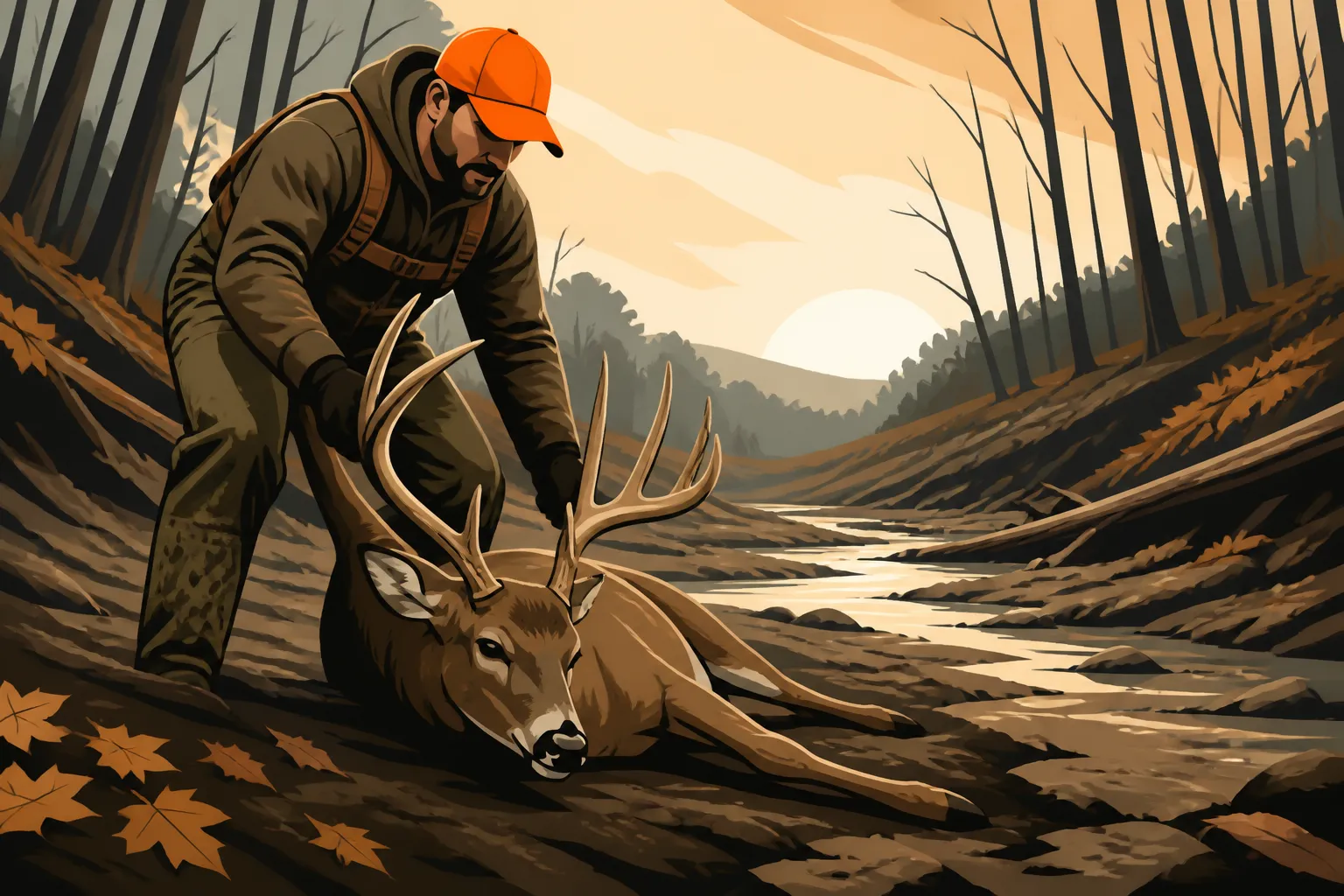
Once you've located the deer and are ready to haul, the real work begins. If the ground is incredibly soft or mucky, a plastic sled is invaluable. Two people can often pull a deer much easier than one, with one person pulling from the front and another pushing or guiding from the rear. If you have a steep bank to climb, ropes can be your best friend. Secure one end to a sturdy tree up top and the other to the deer, using it as a winch or a safety line as you pull. If the deer is particularly heavy or the bank is too steep, consider quartering the animal right there. This will make it much lighter and easier to move in manageable pieces. While not ideal, especially for trophy bucks, meat preservation is paramount, and it's better to get the meat out in quarters than to leave a whole deer behind. Keep an eye on your GoHunt app or GPS for the easiest route out, which might not be the way you came in. Look for old logging trails or slight rises in elevation that offer firmer ground.
Post-Recovery Care and Legal Responsibilities
Congratulations, you've battled the elements and emerged victorious with your deer from the challenging Indiana river bottom! But the job isn't quite done. There are still crucial steps to ensure the meat is properly cared for and that you comply with all Indiana hunting regulations.
Field Dressing in Challenging Environments
Field dressing is messy enough in a clear-cut area, but doing it in a muddy, wet river bottom adds another layer of complexity. Try to find the driest, cleanest spot available, even if it's just a small patch of elevated ground. You might need to clear away some brush or lay down a tarp if you brought one to keep the carcass as clean as possible. Field Dressing a Deer in Cold Weather presents its own set of challenges, but even in warmer temperatures, rapid cooling is critical. If you quartered the deer, get the meat into game bags immediately. If you're removing the entire deer, try to get it out of the bottom as quickly as possible to a more open, cleaner area for processing. Having clean water (bottled or from a filter) and paper towels or wipes can be a huge help for cleanup, both for the deer and yourself.
Transporting Your Harvest Safely
Once field dressed, the deer still needs to be transported from the river bottom to your vehicle, and then home. Even with a sled or cart, the final stretch can be exhausting. If you're on public land, be mindful of rules regarding vehicle access; often, you'll have to walk quite a distance. On private land, you might be able to get a vehicle closer. Always ensure the deer is secured properly in or on your vehicle for transport. It’s not just about avoiding losing it; it's also about showing respect for the animal and other motorists. Make sure your tag is properly filled out and securely attached as required by Indiana law.
Indiana Reporting and CWD Considerations
After all that hard work, don't forget the final and very important step: reporting your harvest. In Indiana, you are required to Registering an Indiana Deer Online or by phone through the Indiana DNR's online check-in system or the Go Outdoors Indiana mobile app. This must be done within 48 hours of the kill, or before the deer leaves your possession (e.g., if you take it to a processor). Be aware of Indiana's Chronic Wasting Disease (CWD) positive area, which currently includes counties like Noble, LaGrange, Steuben, and others. If you harvested a deer in or near these areas, there might be mandatory CWD testing requirements or carcass movement restrictions. Check the latest DNR regulations for details. Even outside the CWD positive area, voluntarily testing your deer is a responsible practice and contributes to wildlife management efforts.
Disclaimer
The information provided in this guide is for general informational purposes only and is not a substitute for official Indiana Department of Natural Resources (DNR) regulations. Hunting laws and regulations can change, and it is the hunter's responsibility to review and comply with all current Indiana hunting laws. Always prioritize safety and ethical hunting practices.