Bowfishing Indiana Rivers in the Off-Season
That aching feeling you get when the regular hunting seasons close down, leaving you counting the days until fall, is a struggle every Hoosier hunter knows well. But what if I told you there's an exciting, active way to keep a bow in your hand, get out on Indiana's beautiful waterways, and even bring home some unique table fare, all during what most folks call the "off-season"? That's exactly what bowfishing Indiana rivers offers, turning those long, quiet months into opportunities for thrilling action.
Why Bowfishing is a Great Off-Season Pursuit in Indiana
For many of us, the end of deer or turkey season feels like hitting a brick wall. The adrenaline fades, the routines vanish, and you're left staring at the calendar, wishing away the months. But bowfishing fills that void with a unique blend of hunting and fishing that's both challenging and incredibly rewarding.
Beating the Off-Season Blues
Let's be honest, the anticipation of Bowhunting Indiana's Long Archery Season is part of the fun, but the wait itself can be grueling. Bowfishing provides an immediate antidote to that seasonal lull. Unlike game animals with strict seasons, many of the fish you'll target with a bow are considered "rough fish" or invasive species, meaning their seasons are open year-round or for extended periods. This means you can scratch that outdoor itch whenever the weather cooperates, from the first warm days of spring well into the dog days of summer and even into the cooler months.
More than just filling time, bowfishing keeps your archery skills incredibly sharp. You're drawing, aiming, and shooting, often quickly and instinctively, which is fantastic practice for maintaining muscle memory and honing your shot execution for when deer season finally rolls around. It's an active way to stay connected to your passion for archery, far more engaging than just plinking targets in the backyard. Imagine the satisfaction of consistently hitting moving targets under pressure, a skill that translates directly to those critical moments in the deer woods.
A Unique Challenge and Thrill
Bowfishing isn't simply shooting fish in a barrel; it's a dynamic, demanding sport that requires a keen eye, quick reflexes, and a good understanding of fish behavior. It truly combines the best elements of hunting, fishing, and even boating. You're not just casting a line and waiting; you're actively scouting, stalking, and making precision shots.
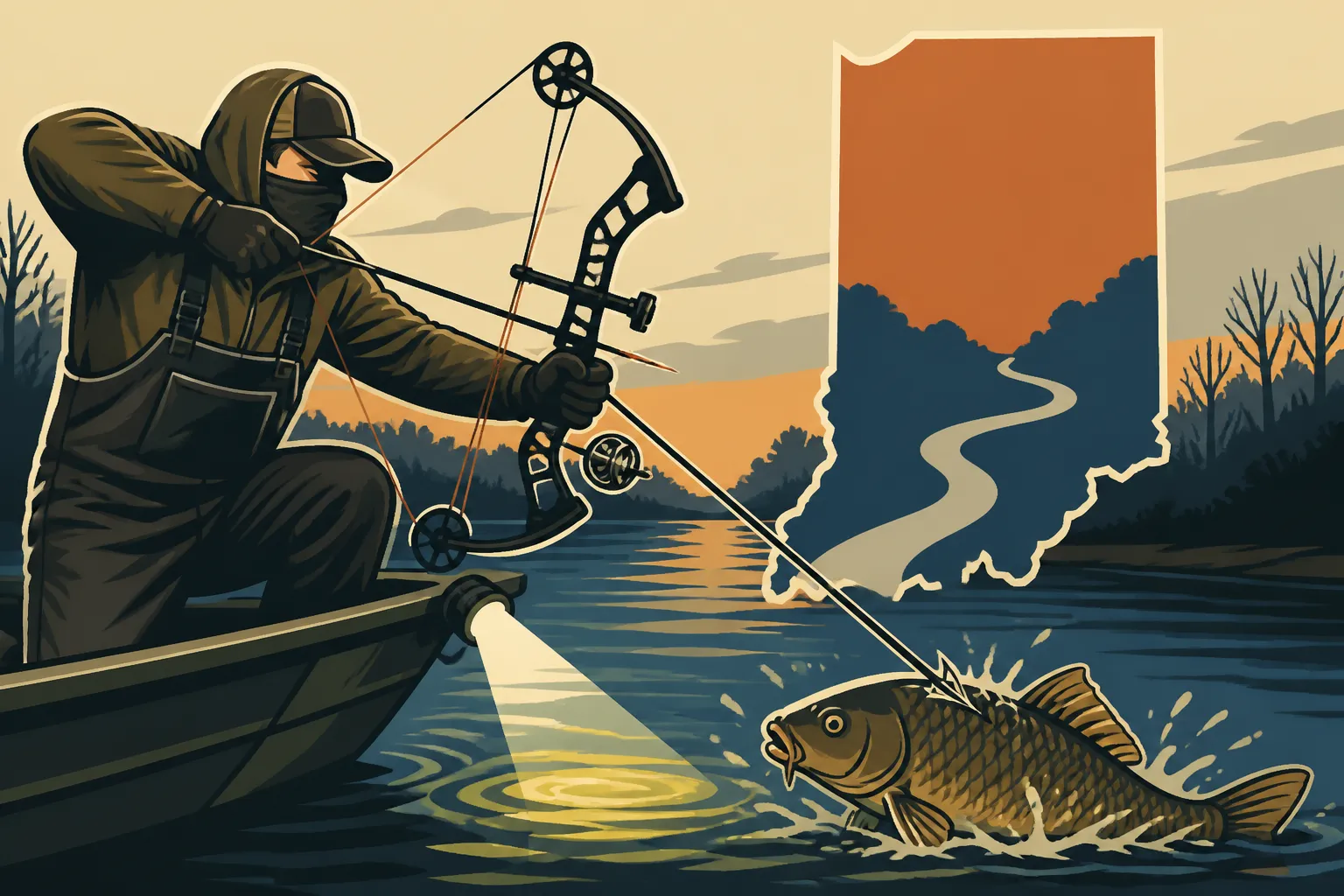
The thrill of spotting a dark shape cruising in the shallows, making a quick calculation for refraction, drawing your bow, and watching that arrow fly is intense. When it connects, the fight is on! These rough fish are often powerful, providing a serious tug that will test your gear and your grit. Whether you're standing on the deck of a boat under the glow of powerful lights at night, or quietly slipping along a riverbank during the day, the visual aspect of the hunt – spotting the fish, anticipating its movement – is what makes it so captivating. There’s a primal satisfaction in drawing back on a big carp or a prehistoric gar, a feeling distinct from traditional rod and reel fishing.
Essential Gear and Setup for Indiana River Bowfishing
Getting into bowfishing doesn't require an entirely new arsenal of expensive equipment, but there are some specialized items you'll need to set yourself up for success and safety on Indiana's waterways.
The Right Bow for the Job
While you can convert a regular hunting bow, many serious bowfishers opt for dedicated setups. When considering Bow and Crossbow Setups for Indiana specifically for bowfishing, you'll find both recurve and compound bows are popular. Recurves are often favored for their simplicity, lightweight nature, and quick, instinctive shooting, especially when you might be taking many shots in rapid succession. Compounds offer more power, which can be beneficial for deeper shots or larger, tougher fish, but their added complexity might be a trade-off for speed.
The most critical difference from a hunting setup is the reel system. You'll typically use one of two types:
- Bottle Reels (Hand Reels): These are simple, robust reels where the line is stored in a bottle-like container. After shooting, you simply pull the line in by hand. They are incredibly reliable and require little maintenance.
- Spincast Reels: These are adapted from traditional fishing reels, mounted on the bow. They allow for quicker line retrieval with a crank, which can be advantageous when you’re fighting a strong fish or need to quickly reload. Look for heavy-duty models designed for the stresses of bowfishing.
Unlike deer hunting, precision sights are generally not used in bowfishing. The unique optical phenomenon of light refracting through water means fish aren't where they appear to be. You learn to aim low, instinctively adjusting for depth and distance. This form of "instinctive shooting" is a valuable skill that carries over to other archery pursuits. Finally, a safety slide system is crucial on your arrows. This device ensures the line remains in front of the bow, preventing dangerous snapbacks if the line snags or tangles during the shot.
Arrows, Lights, and Boats
Your arrows for bowfishing will be vastly different from your hunting arrows. Bowfishing arrows are typically solid fiberglass, much heavier and more durable, designed to penetrate water and fish flesh without bending or breaking. They feature specialized barbed points that hold the fish securely once penetrated, but can be reversed or removed easily for fish retrieval.
If you're serious about bowfishing, especially for carp, night fishing with lights is incredibly effective. Fish, particularly carp, often move into shallow feeding areas at night, and the bright lights illuminate them perfectly. This requires a setup of powerful lights (often LED or halogen) mounted on your boat, powered by a generator. The glow of a properly lit bowfishing rig gliding across a dark river is a sight to behold and makes for some of the most exciting action.
Speaking of boats, while you can certainly wade or shoot from shore in some areas, a boat opens up far more opportunities. Jon boats are very popular due to their stability, shallow draft, and ease of modification for lights and platforms. Airboats are the ultimate tool for extremely shallow, vegetated areas but come with a hefty price tag. For a more minimalist, stealthy approach, kayaks or canoes can also be effective in smaller rivers and backwaters, allowing you to sneak up on unsuspecting fish. Before heading out, always ensure your boat is properly registered and equipped with all necessary safety gear, including personal flotation devices (PFDs).
Target Species and Where to Find Them in Indiana Rivers
Indiana's rivers, lakes, and reservoirs hold a variety of fish species that are fair game for bowfishing, offering diverse challenges and opportunities for harvest.
Common Bowfishing Targets
The beauty of bowfishing is that it often targets species that are either abundant, considered invasive, or simply not highly prized by traditional anglers, making your harvest often beneficial to the ecosystem.
- Common Carp: These are perhaps the most popular bowfishing target in Indiana. They are ubiquitous, found in nearly every river, lake, and pond. Common carp are powerful fighters and can grow quite large, making them an exciting catch. They prefer shallow, muddy bottoms and slow-moving water, often found rooting around for food near weed beds or submerged timber. They are a great species for beginners due to their sheer numbers.
- Grass Carp: Often larger and more elusive than common carp, grass carp are primarily vegetarians and can be found in areas with heavy aquatic vegetation. They are strong fighters and can put up a spectacular fight.
- Silver Carp and Bighead Carp: These are invasive species, notorious for their acrobatic jumps when startled by boat engines, which can be dangerous to boaters. They are often found in the main channels of large rivers like the Wabash and White. Targeting these fish helps to reduce their populations, which can have detrimental effects on native species. The sheer spectacle of these fish jumping can lead to some truly wild shooting opportunities, but caution is paramount.
- Gar: Indiana is home to longnose, shortnose, and spotted gar. These prehistoric-looking fish are a fantastic challenge. Their long, slender bodies and incredibly tough, bony hides make them difficult to penetrate with an arrow. They often bask near the surface in clear, calm water, providing excellent sight-fishing opportunities. While some consider them less palatable, many find them quite tasty when prepared correctly.
- Buffalo: Bigmouth and smallmouth buffalo are deep-bodied, powerful fish often mistaken for carp. They prefer slower currents and deeper pools with muddy bottoms. They are strong fighters and excellent table fare.
The Indiana Department of Natural Resources (DNR) website is your best friend for understanding exactly which "rough fish" species are legal for bowfishing. Remember, game fish like bass, walleye, catfish, and crappie are not legal targets for bowfishing in Indiana.
Best Indiana Rivers and Locations
Indiana is blessed with a vast network of rivers and their associated backwaters that hold excellent bowfishing potential. The Wabash River is arguably the king of Indiana bowfishing, offering miles of diverse habitat, from wide-open stretches to secluded oxbows and feeder creeks. Hunting the Wabash River Bottoms for deer often means scouting excellent bowfishing spots too. The White River, particularly its East and West Forks, also offers fantastic opportunities, especially for carp and gar.
Further north, the Kankakee River system, known for its marshes and rich aquatic life, can also produce some great bowfishing, though its unique hydrology might require different tactics. Smaller rivers and creeks that feed into these larger systems, particularly during higher water, can concentrate fish in accessible areas.
When scouting for locations, think shallow. Fish often move into shallow flats, sandbars, log jams, and backwater sloughs to feed, spawn, or escape strong currents. These are the prime locations for bowfishing, as they make the fish visible and within range. Using mapping tools like Using the Indiana OnX and DNR Map Tools can be invaluable for identifying potential access points, shallow water areas, and river features that might hold fish. Even observing areas where Reading a Slough for Deer Movement After Rain can give you clues about how water levels impact aquatic life and where fish might congregate.
| Species | Appearance | Typical Habitat | Notes |
|---|---|---|---|
| Common Carp | Golden-brown, large scales, two barbels on upper lip | Shallow, muddy bottoms, slow moving water, weed beds | Strong fighters, abundant, good for beginners. Often found in numbers. |
| Grass Carp | Silvery, torpedo-shaped, no barbels | Heavily vegetated areas, ponds, slow rivers | Can be very large (up to 50 lbs), challenging to spot. |
| Silver/Bighead Carp | Silvery, no scales on head, large mouth, eyes below mouth | Open water, surface feeders, main river channels | Jumps when startled (Silver Carp), can be dangerous to boaters. Invasive. |
| Longnose Gar | Long, slender body, elongated snout, sharp teeth | Clearer water, surface, near structure, calm backwaters | Tough hide, challenging shot. Prehistoric look. |
| Buffalo (Bigmouth/Smallmouth) | Deep body, small head, often dark gray to bronze | Slower currents, deeper pools, muddy bottoms | Strong, good eating. Often mistaken for carp. |
Navigating Regulations and Safety on Indiana's Waterways
Like any outdoor pursuit, bowfishing comes with its own set of rules and safety considerations. Understanding them is crucial for a legal and enjoyable experience.
Understanding Indiana Bowfishing Rules
One of the greatest appeals of bowfishing in Indiana is the minimal regulatory burden for most target species. For common rough fish like carp, gar, and buffalo, there is generally no closed season, no size limits, and no bag limits. This freedom means you can hit the water almost any time you feel the urge to break out of Hunting the Late-Season January Lull.
However, there's one absolutely non-negotiable requirement: you must possess a valid Indiana fishing license. This is paramount. Even though you're using a bow, the activity is classified as fishing. Make sure you understand Indiana Hunting Licenses and What They Cost and specifically get your fishing license before you head out. It's easy to purchase one online through the Go Outdoors Indiana portal or at authorized retailers. You should always carry proof of your license while on the water.
It's critical to reiterate that bowfishing is strictly prohibited for game fish. This includes popular species like bass, bluegill, crappie, catfish, and walleye. If you mistakenly shoot a game fish, you must immediately report it to the Indiana DNR. Know your target species well to avoid any legal issues. While blaze orange isn't required for bowfishing, it’s always a good idea to consider wearing highly visible clothing, especially if you're on busy waterways or accessing public land where Indiana Public Land Hunting Hours might bring other users out.
Water Safety and Ethical Practices
Safety on the water is paramount. Always wear a personal flotation device (PFD), especially when bowfishing at night or in moving river currents. Rivers can be deceptive, and hazards like submerged logs, shallow sandbars, or sudden drops can be present. Know your local river conditions and be aware of any potential dangers. The health of Indiana's waterways, home to species like the recovering Indiana River Otter Recovery population, depends on our responsible behavior.
When operating a boat at night, ensure all proper navigation lights are functioning. Bring extra lights, a horn or whistle, and a first-aid kit. Consider carrying a marine radio or having fully charged cell phones (though coverage can be spotty in remote areas). It's also wise to inform someone of your float plan – where you're going and when you expect to return.
Ethical practice is just as important as safety. Always strive to retrieve every fish you shoot. Leaving shot fish to rot on the bank is not only wasteful but also creates a negative image for bowfishing. If you don't plan to eat the fish (many bowfishing targets are excellent table fare, especially buffalo and carp when properly prepared), consider donating them or disposing of them responsibly by burying them or taking them to a designated disposal site. Never simply dump carcasses back into the water or along the shoreline. Finally, always be aware of private property boundaries, especially when launching or landing. Understanding Indiana Trespass and Permission Law is crucial to ensure you're accessing public waterways legally and not infringing on private land. Using resources like GoHunt's mapping features can help identify property lines and public access points.
Disclaimer
The information provided in this article is for general guidance and informational purposes only and does not constitute legal advice. Hunting and fishing regulations in Indiana can change, and it is the responsibility of each individual hunter and angler to verify and comply with all current Indiana Department of Natural Resources (DNR) laws, rules, and regulations before participating in any hunting or fishing activities. Always consult the most recent official Indiana DNR hunting and fishing guides or visit their website for the most up-to-date and accurate information.