Why Fall Firearms Turkey Is County-Restricted
It can be incredibly frustrating to gear up for a fall turkey hunt with your trusty shotgun, only to discover that your go-to hunting grounds aren't open for firearms season. Many Hoosier hunters find themselves scratching their heads, wondering why Indiana's approach to fall turkey hunting with a firearm is so different, and why it's restricted to specific counties. This guide is here to unravel the mystery behind these regulations, explain their impact on your hunting plans, and equip you with the knowledge to pursue fall turkeys effectively in the counties where firearms are permitted.
Understanding Indiana's Fall Turkey Management Philosophy
Indiana's wild turkey populations are a true conservation success story, but that success didn't come easily. The meticulous management strategies employed by the Indiana Department of Natural Resources (DNR) are precisely why we enjoy such robust turkey hunting opportunities today, and understanding this history helps clarify current regulations.
The Historical Context of Turkey Restoration in Indiana
It’s easy to forget, but for a long stretch, wild turkeys were completely absent from the Indiana landscape. Overhunting and habitat destruction in the late 19th and early 20th centuries led to their complete extirpation from the state. We literally didn't have a single wild turkey. The thought of a booming gobble echoing through a Hoosier spring woodlot would have seemed like a dream.
The monumental effort to bring them back began in the 1950s, initially with pen-raised birds which, as we now know, weren't truly "wild" enough to establish self-sustaining populations. The real turning point came with trap-and-transfer programs using truly wild turkeys from other states, particularly Missouri. These birds were tough, adaptable, and knew how to survive in the wild. This initiative, detailed further in discussions about How Turkeys Were Restored to Indiana, slowly but surely repopulated suitable habitats across the state. The success was incredible, leading to the establishment of our beloved spring gobbler season, which, for many, is the highlight of their hunting year. However, this hard-won success means the DNR approaches fall hunting, especially with firearms, with a more cautious and conservative hand, ensuring we don't undo decades of hard work.
Balancing Harvest Pressure and Population Health
The key difference between spring and fall turkey hunting, from a biological standpoint, is often the impact on hens. In spring, the focus is almost exclusively on harvesting adult gobblers, which generally has little impact on the overall breeding potential of the flock. In fact, removing some dominant gobblers can sometimes even improve breeding dynamics among younger males.
Fall hunting, however, allows for the harvest of birds of either sex. This means hens are fair game, and consistently high hen harvests can directly reduce the number of future breeders, potentially slowing population growth or even leading to declines. The DNR's primary goal is always sustainable populations. They want us to enjoy hunting for generations, not just for a few years. Therefore, they carefully monitor Indiana Turkey Population Trends and set regulations that balance hunter opportunity with the long-term health of the turkey population. Restricting fall firearms season to specific counties is a critical tool in this balancing act, allowing harvest where populations are strong enough to withstand it, while protecting more vulnerable flocks.
Factors Influencing County-Specific Regulations
The decision to open or close a county to fall firearms turkey hunting isn't arbitrary. It's the result of ongoing data collection, biological assessments, and a keen understanding of local conditions. The DNR carefully considers several factors before making these crucial decisions each year.
Local Turkey Population Densities and Trends
One of the most significant factors is, quite simply, how many turkeys live in a given area. Some counties across Indiana boast incredibly robust and well-established turkey populations that can readily absorb additional harvest pressure without long-term negative impacts. These are often areas with excellent habitat and a history of strong poult production.
DNR biologists are constantly in the field, collecting data through various methods, including spring gobbler harvest reports, landowner surveys, and crucial brood surveys in late summer. These surveys help them estimate the number of hens and the success of their nesting efforts, providing insights into next year's potential flock size. If a county consistently shows high turkey numbers and positive population trends, it's a strong candidate for fall firearms season. Conversely, if a county exhibits lower densities or declining trends, it's more likely to remain closed to firearms during the fall. Knowing Where Indiana Turkeys Are Densest is often a good indicator of where you might find open firearms season.
Habitat Availability and Quality
Even with strong initial populations, turkeys need quality habitat to thrive and sustain themselves year after year. Counties with extensive, contiguous tracts of mature timber, particularly those with a diverse understory of shrubs and young trees, provide excellent roosting sites, nesting cover, and foraging opportunities for insects, acorns, and other food sources. These are the kinds of places where turkeys can truly flourish.
Contrast this with counties that are heavily fragmented by agriculture, urban sprawl, or extensive clear-cutting without proper regeneration. In these areas, turkey populations can be more vulnerable to predation, lack adequate food during lean times, and suffer from reduced nesting success. A county with poorer habitat quality, even if it has some turkeys, might not be able to withstand the increased pressure that a firearms season would bring, as it simply lacks the resilience to bounce back quickly.
Hunter Access and Pressure Considerations
Another often-overlooked aspect is hunter access and the potential for excessive hunting pressure. In some areas, even if turkey numbers are good, an abundance of public land or easily accessible private land could lead to a concentration of hunters. This heavy pressure, especially with firearms, can quickly impact local flocks. Birds might become "educated," making them much harder to hunt, or localized populations could be overharvested in certain pockets.
By restricting fall firearms season to specific counties, the DNR helps to distribute hunter pressure more evenly across the state during the entire fall season (including the more widespread archery option). This thoughtful approach aims to provide quality hunting experiences while minimizing negative impacts on the resource. It's about ensuring that the birds have enough space and refuge to continue their natural behaviors, even during hunting season.
Navigating the Fall Firearms Turkey Season
So, you understand why the restrictions are in place. Now, let's talk about the practical side: how to successfully navigate the fall firearms turkey season in Indiana, particularly when it comes to knowing where you can actually hunt with a gun.
Identifying Open Counties for Firearms Hunting
The first and most critical step is always to verify the current list of open counties for the fall firearms turkey season. This list is not static; it can and does change from year to year based on the DNR's ongoing population assessments. Always, always, always consult the most current Indiana Hunting & Trapping Guide published by the DNR, or check their official website. My go-to is usually the Go Outdoors Indiana app, or the main DNR website, as they're always kept up to date. You don't want to get into a sticky situation by relying on outdated information!
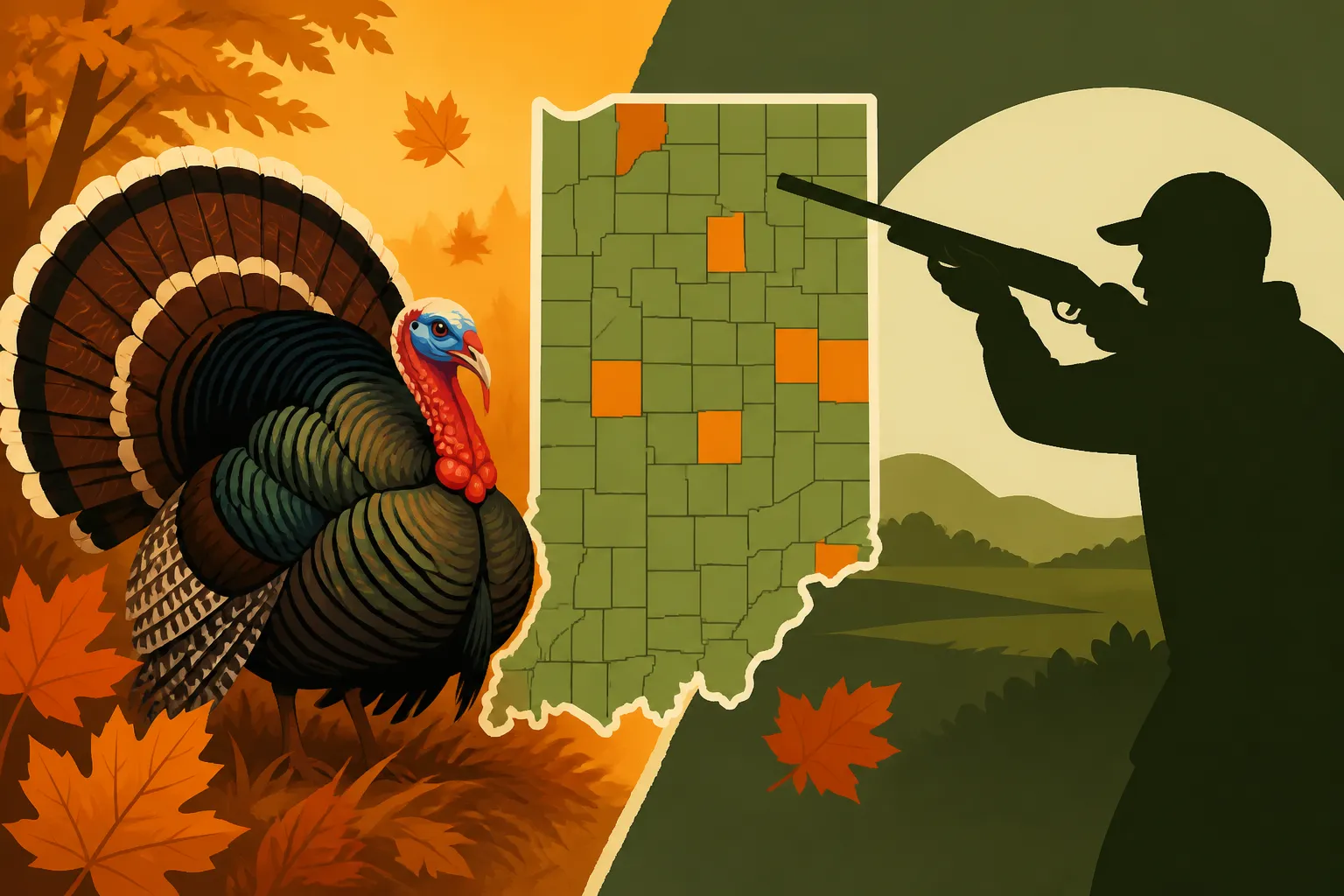
To give you an idea of what to expect, here's a hypothetical table showing what some counties might look like for a fall firearms turkey season. Remember, this is for illustrative purposes only, and you must check the current year's regulations.
| Region of Indiana | Hypothetical Open Counties (Firearms) | Potential Reasoning |
|---|---|---|
| Southern Indiana | Brown, Monroe, Lawrence, Jackson | Extensive public land, strong populations, excellent habitat |
| Central Indiana | Owen, Morgan | Good timber tracts, decent populations in rural areas |
| Northern Indiana | Steuben, Noble | Established populations, specific habitat pockets |
This table showcases how counties might be grouped by region, but the official list provided by the DNR is the only source you should trust. For a precise and current list, always refer to the official Indiana Fall Firearms Turkey County List. Once you have that list, you can start digging into tactics specific to Hunting the Fall Firearms Turkey Counties.
General Fall Turkey Hunting Regulations
While the county restrictions are paramount for firearms hunters, there are several other statewide rules you need to be aware of to ensure a legal and ethical hunt. The bag limit for the fall season (both archery and firearms) is typically one wild turkey of either sex. This differs significantly from the spring season, where hunters are allowed two gobblers. Again, this emphasizes the DNR's conservative approach to hen harvest.
Of course, you'll need the proper licenses. This usually includes an Indiana hunting license and a fall turkey license. Legal shooting hours are generally from one-half hour before sunrise to sunset. After harvesting a bird, mandatory check-in is required, and this can usually be done quickly and easily online or via the Go Outdoors Indiana mobile app. If you're new to hunting, or just need a refresher, make sure you've met all Indiana Hunter Education Requirements before heading afield.
It's also worth noting that while firearms season is restricted, there is often a much broader Indiana Fall Archery Turkey Rules season that covers more counties, offering another avenue for pursuing these wary birds. Understanding the full Indiana Fall Turkey Season Structure will help you plan your season effectively.
Strategic Hunting Approaches in Restricted Counties
If your preferred hunting spot falls outside the open firearms counties, don't despair! The statewide fall archery season offers much more flexibility, covering most of Indiana. You might consider expanding your skillset and trying Fall Turkey Tactics With Archery Gear. It's a challenging but incredibly rewarding way to hunt fall turkeys, forcing you to get closer and rely more on stealth and woodsmanship.
For those lucky enough to hunt in an open firearms county, fall turkey hunting is a completely different ballgame than spring. Forget the booming gobblers and lovesick strutters; fall birds are typically in large family flocks. The classic fall strategy often involves "flock busting," which means deliberately scattering a flock and then setting up quickly to call individual birds back together. Young birds, especially poults, are particularly eager to regroup and will often respond to kee-kee runs and lost calls. Adult hens might come back more cautiously, and old gobblers can be notoriously difficult.
Scouting for food sources is paramount. In early fall, turkeys might be found in agricultural fields, particularly cut corn or soybean stubble, or in areas rich with insects. As autumn progresses, they shift their focus to mast crops like acorns and beechnuts in hardwood forests. Identifying these feeding areas, along with good roosting timber and travel corridors, is key. Patience, keen observation, and the ability to cover ground are your best allies when Breaking Up a Fall Turkey Flock and calling them back in.
Looking Ahead: Potential Changes and How to Stay Informed
Wildlife management is a continuously evolving field, and Indiana's turkey regulations are no exception. What holds true this year might see slight adjustments in the next, all in the name of effective conservation.
The Dynamic Nature of Wildlife Management
It’s crucial to remember that wildlife regulations aren't set in stone. They are the result of ongoing scientific research, population monitoring, and a commitment to maintaining healthy wildlife populations. The Indiana DNR constantly collects data on turkey populations, including harvest numbers, nesting success rates, and disease prevalence. If certain counties show sustained population growth or a rebound, they might be added to the firearms list in future years. Conversely, if a county experiences a significant downturn in turkey numbers, it could be removed from the list.
Hunters themselves play a vital role in this process. Your participation in post-hunt surveys, accurate reporting of your harvest, and even simply reporting observations of turkey broods during the summer, all contribute valuable data to the DNR's understanding of the resource. Staying engaged and providing feedback can help shape future hunting opportunities.
Resources for Current Information and Future Updates
With the dynamic nature of these regulations, knowing where to find the most accurate and up-to-date information is essential. The official Indiana Department of Natural Resources (DNR) website is your primary source for all hunting regulations, season dates, and specific county listings. They publish a new hunting and trapping guide annually, which is indispensable.
Beyond the official DNR channels, many modern hunting apps and resources can be incredibly helpful. Platforms like GoHunt, for example, often integrate up-to-date regulations and mapping features that can show you public land access and even county boundaries, which is invaluable when planning a hunt in restricted areas. Subscribing to DNR newsletters or following their social media accounts can also keep you in the loop regarding any proposed changes or public comment periods. Staying informed ensures you're always hunting legally and ethically, making the most of your time afield.
Disclaimer
Please note: The information provided in this guide is for general informational purposes only and is subject to change. Always consult the official Indiana Department of Natural Resources (DNR) Hunting & Trapping Guide and their website for the most current and accurate regulations before engaging in any hunting activities. It is the hunter's responsibility to know and follow all applicable laws and regulations.