Indiana Sandhill Crane Viewing Sites
Many folks eager to witness the majestic sandhill crane migration in Indiana find themselves struggling to pinpoint the truly prime viewing spots. It's easy to end up at an overcrowded location or, worse, completely miss the spectacle because you don't know where to look. This guide is designed to cut through that frustration, taking you through the best viewing sites across the state, offering insights into their migratory patterns, and providing practical, real-world tips to ensure your next sandhill crane encounter is nothing short of breathtaking.
The Annual Spectacle: Sandhill Crane Migration in Indiana
The sight and sound of thousands of sandhill cranes descending upon Indiana's wetlands and agricultural fields is one of the Midwest's most awe-inspiring natural events. These magnificent birds undertake incredible journeys, and Indiana serves as a critical stopover point on their epic migration routes. Understanding why they come here and when to expect them is the first step to a successful viewing experience.
Understanding the Crane's Seasonal Journey
Sandhill cranes are masters of long-distance travel, following ancient flyways that connect their northern breeding grounds with warmer southern wintering areas. For Indiana, we typically see two major pulses of activity: the fall migration and the spring migration.
During the fall, usually from late September through November, cranes begin their southward trek. They're leaving their breeding territories in places like Wisconsin, Michigan, and even parts of Canada, heading for winter homes in Florida, Georgia, and other southeastern states. Indiana, nestled within the Mississippi Flyway, offers the perfect blend of crucial resources: vast agricultural fields brimming with waste grain provide essential fuel, while undisturbed wetlands offer safe, communal roosting sites for thousands of birds to gather each night. Imagine driving through northern Indiana in October, seeing fields dotted with these tall, graceful birds, their calls echoing across the landscape. It's a truly unforgettable experience, and knowing they rely on our state for this pit stop makes it all the more special. Then, as winter loosens its grip, typically from late February through March, the cranes reverse course, heading back north to nest and raise their young. These spring movements can be just as dramatic, signaling the true arrival of warmer weather.
Key Factors Influencing Crane Movements
While the general windows for migration are consistent, the exact timing and numbers of cranes you'll see are heavily influenced by a few key factors. Weather, perhaps more than anything else, dictates when the cranes move.
Cold fronts sweeping down from Canada are like nature's alarm clock, signaling to cranes that it's time to head south. A strong cold front can push thousands of birds into Indiana over just a few days, leading to massive concentrations at prime viewing locations. Conversely, during spring, persistent warm fronts help usher them back north, sometimes quickly, sometimes in fits and starts depending on the consistency of the warmth. Beyond weather, food availability is paramount. Cranes are opportunistic feeders, and Indiana's vast corn and soybean fields provide an irresistible buffet of waste grain after harvest. Farmers often leave behind enough grain to sustain immense flocks, giving the cranes the energy they need for their long flights. Finally, and crucially, are the roosting habitats. Sandhill cranes prefer shallow water bodies—flooded fields, large marshes, or even slow-moving river backwaters—where they can stand safely through the night, protected from terrestrial predators. These undisturbed sanctuaries are magnets for thousands of cranes and are often the best places to witness their spectacular fly-ins and fly-outs at dawn and dusk. Indiana Waterfowl Migration Timing and Hunting the Wabash River Bottoms might give you an idea of other migratory bird patterns in the state.
Prime Locations for Sandhill Crane Viewing in the Hoosier State
Indiana is blessed with several phenomenal spots to witness sandhill cranes, each offering a slightly different experience. From the legendary concentrations in the northwest to the impressive numbers in the southwest, there's a viewing opportunity waiting for you.
Jasper-Pulaski Fish and Wildlife Area FWA: The Mecca of Cranes
If you've heard anything about sandhill cranes in Indiana, it's likely been about Jasper-Pulaski Fish and Wildlife Area (FWA). Located in Medaryville, in the northwest corner of the state, J-P (as it's affectionately known) is the premier destination for crane viewing, drawing thousands of visitors annually. It's not uncommon for counts here to reach 20,000, 30,000, or even more birds during the peak of migration.
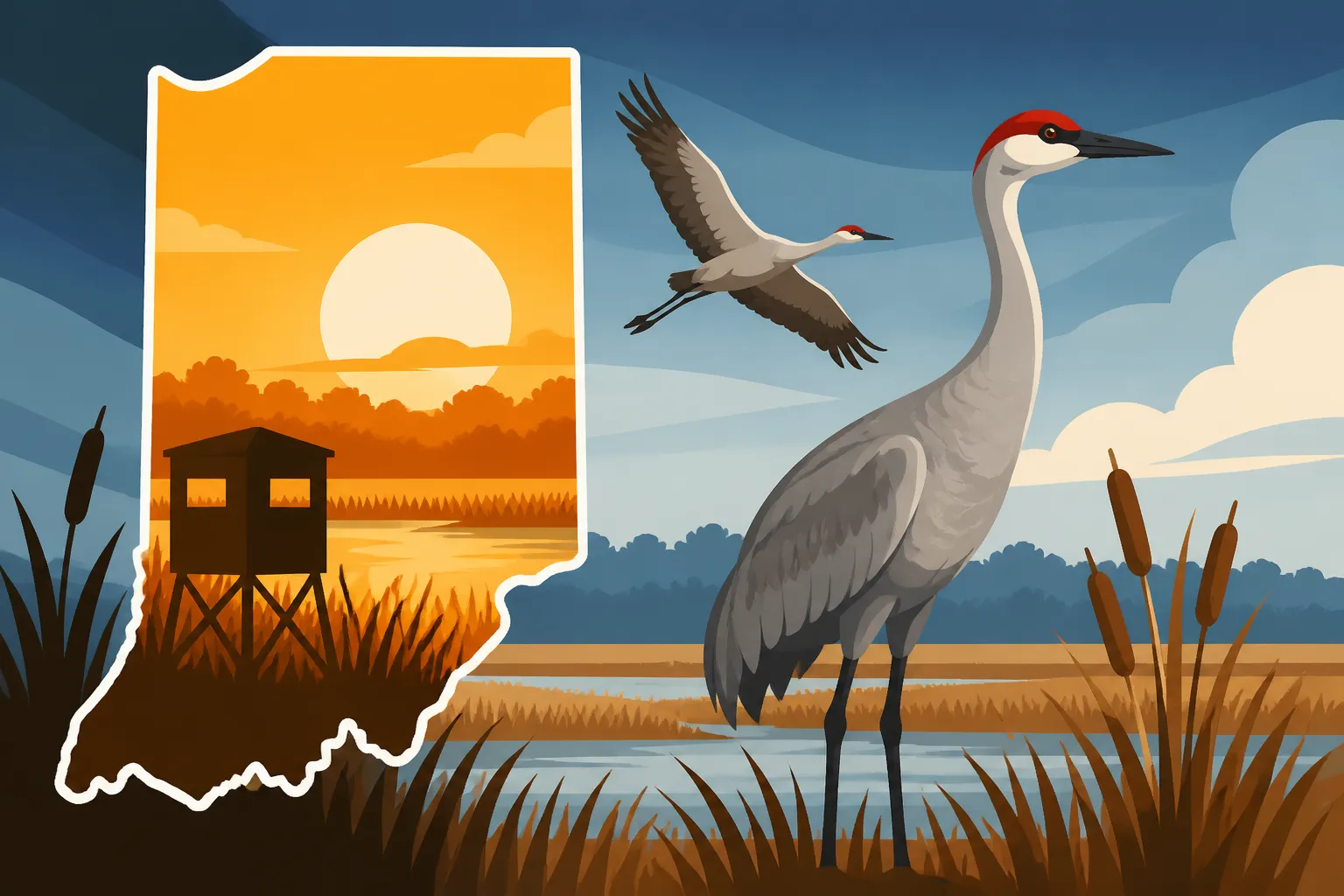
The magic of J-P centers around its massive, shallow marshlands where the cranes gather to roost each night. The Indiana Department of Natural Resources (DNR) has thoughtfully provided an accessible observation deck that gives visitors a panoramic view of these roosting areas. The real show happens at sunrise and sunset. At dawn, lines of cranes stretch for miles as they launch themselves into the sky, heading out to feed in surrounding agricultural fields. In the evening, the reverse occurs: wave after wave of cranes return, their distinct, rattling calls filling the air, creating a symphony that is both ancient and wild. It can be a very spiritual experience to stand there, shivering slightly in the crisp autumn air, watching this natural wonder unfold. Expect crowds, especially on weekends during peak season, but the sheer numbers of birds make it worth sharing the space. Using a mapping tool like GoHunt could help you explore the periphery of the area for quieter spots, understanding that public access is key to ethical viewing.
Goose Pond Fish and Wildlife Area FWA: A Southern Gem
While Jasper-Pulaski often steals the spotlight, Goose Pond Fish and Wildlife Area (FWA) in Linton, southwest Indiana, has rapidly grown into another spectacular crane viewing destination. This area represents one of the largest wetland restoration projects in the country, and its success is evident in the burgeoning numbers of sandhill cranes it now attracts.
Goose Pond offers a different viewing dynamic than J-P. Here, you'll find extensive wetlands, agricultural fields, and grasslands, providing a more dispersed viewing experience. The FWA features an auto tour route that allows you to drive through various sections, stopping at designated observation mounds and pull-offs. While you might not see the same concentrated numbers as at J-P's roost, the experience of watching thousands of cranes in smaller, more intimate groups spread across the vast landscape is equally rewarding. I've often seen them feeding in fields right alongside the road, offering fantastic photographic opportunities. The sheer diversity of other waterfowl, shorebirds, and raptors at Goose Pond also makes it a fantastic destination for general birdwatching. It's typically less crowded than J-P, making for a more serene experience, especially during the week. Check out Indiana Fish and Wildlife Areas for more information on how these vital areas are managed.
Other Notable Indiana Hotspots
Beyond the two major hubs, Indiana boasts several other locations where you can catch glimpses of sandhill cranes, often with fewer crowds. These spots might not host tens of thousands, but they provide critical habitat and offer rewarding viewing opportunities for the observant naturalist.
The Kankakee Fish and Wildlife Area in northwest Indiana, part of the larger Kankakee River marshes, is a historic waterfowl haven and also sees significant crane activity. While primarily known for ducks and geese, its vast wetlands and surrounding agricultural lands are attractive to migrating cranes. You might see smaller flocks spread out across the marsh, especially in less-pressured areas. Similarly, Muscatatuck National Wildlife Refuge Hunting near Seymour in southeastern Indiana, despite its hunting designation, is a crucial stopover for various migratory birds, including cranes. Its diverse habitats, from bottomland hardwoods to open fields, offer varied feeding and roosting opportunities. It’s a good place to combine crane viewing with other wildlife observation. Don't discount smaller private agricultural fields throughout northern and western Indiana. While you must always respect private property, many secondary roads offer views of cranes feeding in cut corn or soybean fields. Using a mapping app like GoHunt can be invaluable for identifying public road access points adjacent to large farm fields, allowing you to scout for feeding cranes from a respectful distance without trespassing. Just remember to use common sense and always prioritize the birds' well-being and landowner rights. Hunting Northern Indiana Farmland Deer might offer insights into the types of landscapes where cranes could be found.
Maximizing Your Sandhill Crane Viewing Experience
Seeing sandhill cranes in large numbers is an incredible experience, but a little planning and preparation can elevate your visit from good to truly spectacular. Knowing when to go, what to bring, and how to behave will make all the difference.
Best Times and Conditions for Viewing
Timing is everything when it comes to observing sandhill cranes. Their daily routines are quite predictable, centering around feeding and roosting.
The absolute best times to witness large concentrations of cranes are during the "fly-in" at sunset and the "fly-out" at sunrise. As the sun dips below the horizon, thousands of cranes return from their feeding grounds to the safety of communal roosts in shallow wetlands. The sky fills with their silhouettes and their distinctive calls. Similarly, at first light, they launch themselves back into the air, heading out to feed. These moments offer the most dramatic and photogenic opportunities. Mid-day, cranes are typically spread out in agricultural fields, often quite a distance from public viewing areas, making them harder to approach without disturbing them. So, plan your visit for those golden hours. As for weather, clear, calm days are wonderful for comfortable viewing and photography. However, don't shy away from days with a light, steady wind; it can actually encourage more activity and less static behavior from the birds. Just be prepared for colder temperatures. Remember, patience is a virtue when observing wildlife; sometimes you wait, sometimes they show up in droves.
Essential Gear for Crane Watchers
Being prepared with the right gear ensures you stay comfortable and get the most out of your crane viewing trip. You don't need to be an expert birder, but a few key items will make a world of difference.
First and foremost, bring optics. A good pair of binoculars is essential for bringing distant birds into focus, allowing you to appreciate their details and observe their behaviors without disturbing them. I often carry my 10×42 binoculars, which provide a great balance of magnification and field of view. If you're serious about identifying individual birds or capturing close-up views from a considerable distance, a spotting scope mounted on a tripod is an invaluable addition. Binocular Choice for Indiana Whitetails is a helpful resource for understanding optics. For photographers, a camera with a long telephoto lens is a must to capture those stunning images of cranes in flight or feeding in fields. Beyond optics, dress for the weather. Fall and spring mornings and evenings in Indiana can be surprisingly cold, so layer up with warm clothing, hats, and gloves. Sturdy, waterproof boots are also a good idea, even if you plan to stick to observation decks, as surrounding areas can be muddy or wet. Don't forget a thermos of hot coffee or tea, a comfortable camp chair if you plan to sit for extended periods, and perhaps a small notebook for jotting down observations. Additionally, using mapping tools like GoHunt or the Using the Indiana OnX and DNR Map Tools can help you navigate to and around viewing areas, ensuring you're on public land and can find the best vantage points without hassle.
Respectful Viewing Etiquette
We are guests in the cranes' habitat, and adhering to proper viewing etiquette is crucial for both their well-being and the enjoyment of all visitors. A little respect goes a long way.
Always stay on designated paths, trails, and viewing areas. Venturing off-trail can disturb sensitive habitats and disrupt nesting or roosting birds. Most importantly, maintain a respectful distance from the cranes. While it's tempting to get closer for a better photo, flushing birds causes them unnecessary stress and expends valuable energy they need for migration. If the cranes show any signs of disturbance (e.g., stopping feeding, standing alert, or starting to walk away), you're too close. Pull back. Keep noise levels down, especially in observation areas. Avoid loud conversations, slamming car doors, or sudden movements that could startle the birds. Drones are a definite no-go near roosting sites; they are highly disruptive to wildlife. And, as with any outdoor activity, practice "Leave No Trace" principles: pack out everything you pack in, and leave the area cleaner than you found it. By following these simple guidelines, we ensure that sandhill cranes continue to find Indiana a welcoming and safe stopover for generations to come. Hunting Pressure on Indiana Public Land can provide context on how human presence affects wildlife.
The Future of Sandhill Cranes in Indiana
The story of sandhill cranes in Indiana is largely one of successful conservation, but like all wildlife, they face ongoing challenges that require our continued vigilance and support.
Conservation Success Stories
The thriving population of sandhill cranes we witness today is a testament to dedicated conservation efforts, particularly in wetland restoration. For decades, wetlands across Indiana were drained for agriculture and development, leading to significant declines in many wetland-dependent species, including cranes.
However, the tide began to turn with focused efforts by the Indiana DNR, federal agencies, and private conservation groups. Projects like Goose Pond FWA, where thousands of acres of agricultural land were converted back into vital wetlands, illustrate the profound impact of habitat restoration. These restored areas, combined with responsible agricultural practices that sometimes leave waste grain in fields, have created a network of critical stopover and feeding sites for cranes along the Mississippi Flyway. Indiana plays an integral role in this larger continental conservation picture, providing essential resources that allow these magnificent birds to complete their annual migrations. The increase in crane numbers is a true success story, demonstrating that with concentrated effort, we can reverse environmental damage and help wildlife thrive. How Turkeys Were Restored to Indiana offers another example of successful wildlife restoration in the state.
Challenges and Ongoing Efforts
Despite the successes, sandhill cranes in Indiana, and across their range, still face challenges. As their numbers have grown, so too has the need for continued habitat protection and thoughtful management.
Habitat loss due to ongoing development and conversion of natural areas remains a persistent threat. While some areas are protected, others are not, and fragmentation of critical stopover points can impact migration success. Climate change also presents an evolving challenge, potentially altering migration timings, food availability, and the health of wetland ecosystems. Organizations like the Indiana DNR and Ducks Unlimited continue to monitor crane populations, conduct research, and implement habitat management strategies to ensure these birds have the resources they need. This includes careful water management at FWAs, prescribed burns to maintain healthy marsh vegetation, and working with private landowners to protect important habitat corridors. Indiana Wildlife Disease Monitoring is also important to ensure their health, even though CWD is deer-specific, monitoring wildlife health in general helps all species. Your support, through purchasing conservation licenses or donating to wildlife organizations, directly contributes to these vital efforts, ensuring that the spectacle of sandhill cranes in Indiana remains a cherished part of our natural heritage.
Indiana Sandhill Crane Viewing Sites Comparison
To help you plan your next outing, here's a quick comparison of the two primary viewing destinations in Indiana:
| Feature | Jasper-Pulaski FWA | Goose Pond FWA |
|---|---|---|
| Location | Northwest Indiana (Medaryville) | Southwest Indiana (Linton) |
| Peak Viewing Time | Late October – Early December (Fall), Late Feb – Early March (Spring) | Late October – Early December (Fall), Late Feb – Early March (Spring) |
| Typical Numbers | Tens of thousands (often 20k-30k+) | Thousands (growing, often 5k-10k+) |
| Primary Viewing | Observation deck, designated viewing areas | Observation mounds, auto tour route, dispersed viewing |
| Crowds | Can be very crowded, especially on weekends | Generally less crowded, but popularity is increasing |
| Additional Wildlife | Waterfowl, raptors, other migratory birds | Diverse waterfowl, shorebirds, raptors, other marsh birds |
| Best Approach | Early morning/late evening for fly-ins/fly-outs | Auto tour for mid-day, morning/evening for flights |
Disclaimer
This article is for general informational purposes only and does not constitute professional advice. Laws, prices and regulations vary by location and change over time. Consult a qualified professional for guidance on your specific situation.