Indiana Waterfowl Banding Programs
For many Indiana waterfowlers, the early morning chill in a layout blind or the splash of waders in a frigid marsh is all part of the experience. But there's a certain thrill, a unique connection to the larger flyway, that comes from finding a small metal band on the leg of a harvested duck or goose. It's more than just a souvenir; it's a tiny piece of data that contributes to the grand puzzle of waterfowl management and can tell you an incredible story if you know how to read it. This guide will walk you through what these bands mean, why they're so important, and how you, as a hunter, play a crucial role in the ongoing success of waterfowl conservation.
What Are Waterfowl Banding Programs All About?
Waterfowl banding programs are a cornerstone of migratory bird management across North America, and Indiana plays a small but vital role in this massive undertaking. Imagine trying to manage a population of animals that spends part of its life nesting in the Canadian prairies, another part migrating through Indiana, and then winters down in the Gulf States. Without knowing where these birds go, how long they live, and how many are being harvested, managing their populations would be an impossible guessing game. That's exactly why banding started over a century ago.
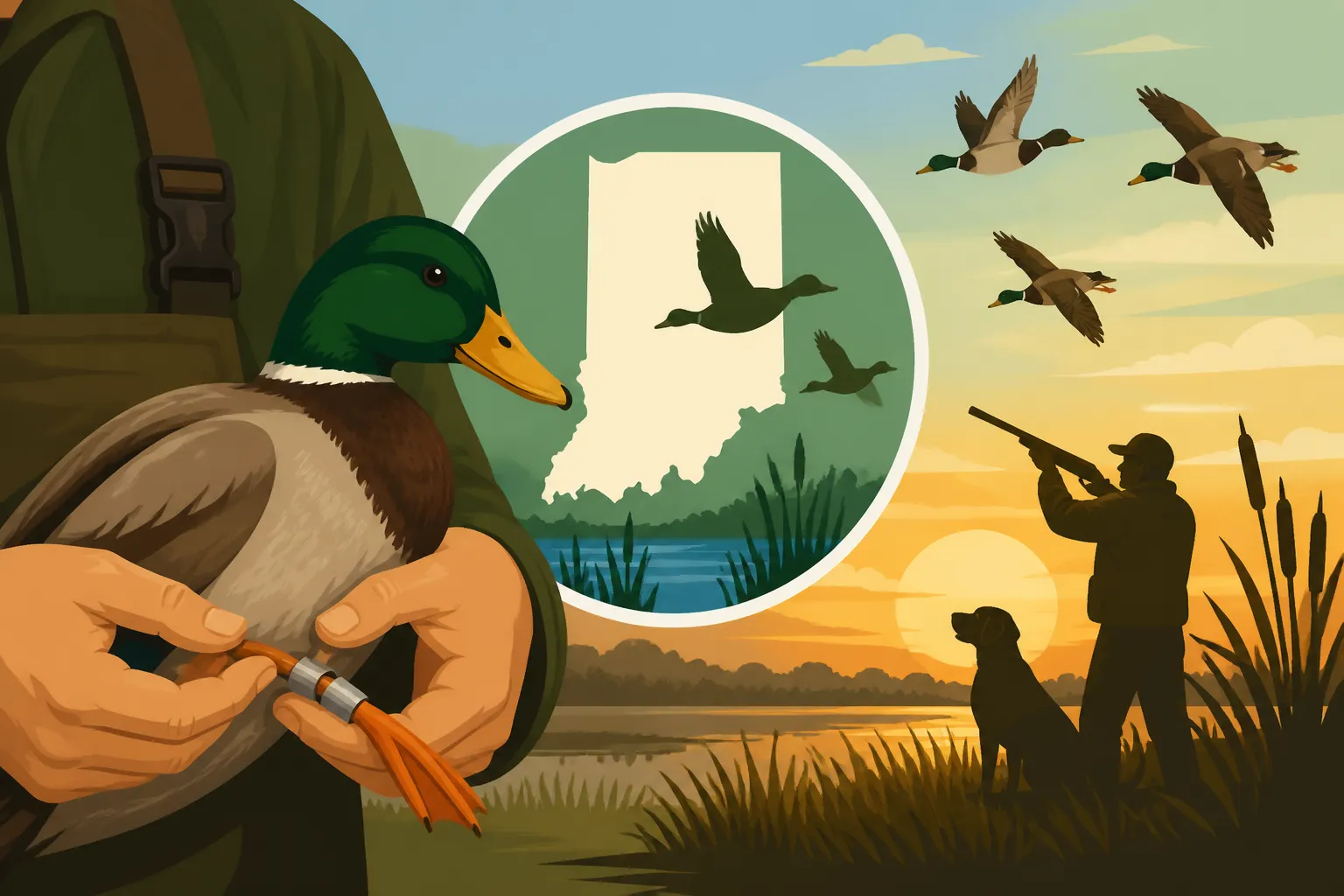
These programs involve capturing waterfowl, typically ducks and geese, using specialized traps like rocket nets or cannon nets in open fields, or bait traps in marshes. Once safely caught, trained biologists and technicians carefully place a small, individually numbered metal band around one of the bird's legs. Each band has a unique alphanumeric code, almost like a bird's social security number, and instructions to report it if found. Before release, the bird's species, age, and sex are recorded, along with the location and date of banding. This seemingly simple act is the first step in collecting invaluable data that paints a picture of waterfowl life cycles and movements.
The primary goal of banding is to gather scientific data that informs hunting regulations and conservation efforts. By tracking banded birds, biologists can estimate survival rates, harvest rates, and the routes and timing of migration. For instance, if a duck banded in Saskatchewan is harvested in the Kankakee Marshes, it confirms that particular bird used the Mississippi Flyway. If many such birds are harvested year after year, it helps establish clear migratory patterns. This information directly influences decisions made by wildlife agencies like the U.S. Fish and Wildlife Service and our own Indiana Department of Natural Resources (DNR) regarding season lengths, bag limits, and habitat preservation priorities.
Why Reporting a Banded Bird Matters to Hunters
As hunters, we're deeply invested in healthy waterfowl populations. We want to see those skies filled with ducks and geese year after year, and robust banding programs are a critical tool in ensuring that future. When you harvest a banded bird, you're not just taking home dinner; you're holding a piece of scientific data that needs to be returned to the system. Think of it as your civic duty to the flyway!
Every single band reported provides a data point that contributes to a larger understanding of the waterfowl resource. Without hunters taking the time to report bands, the entire system breaks down. Biologists wouldn't be able to calculate crucial metrics like survival rates or how many birds are successfully making it through the hunting season. This direct feedback from the field helps managers gauge the impact of hunting pressure and adjust regulations accordingly. For example, if harvest rates on a certain species are too high, the data from banded birds might indicate a need for reduced bag limits or shorter seasons to protect the population. Conversely, if populations are thriving, the data could support more liberal seasons.
Beyond the big-picture conservation benefits, reporting a band also offers some personal gratification and fascinating insights for the individual hunter. Once you report a band, you'll receive a certificate of appreciation or an email with information about where and when the bird was banded, its species, and sometimes even its age and sex. Imagine harvesting a mallard in a familiar river bottom, only to find out it was banded three years ago in northern Canada! It connects you directly to the incredible journey that bird made and the vastness of the migratory flyway. This personal connection often deepens a hunter's appreciation for the resource and reinforces the importance of ethical hunting and conservation. You might even discover that the bird you harvested was banded relatively close to home, shedding light on local populations and movements.
The Straightforward Process of Reporting Your Waterfowl Band
Finding a band is an exciting moment, but the real magic happens when you report it. The process is designed to be simple and accessible, ensuring that as many bands as possible make it back into the data system. You don't need to be a tech wizard or a biologist to do it.
The primary way to report a band is online through the U.S. Geological Survey (USGS) Bird Banding Lab website. It's a user-friendly platform that guides you through each step. First, you'll need the unique band number itself. This is usually a series of digits, sometimes preceded by letters. Be careful to transcribe it accurately, as one wrong number can send the system searching for a non-existent band. You'll also need the date you harvested or found the bird and the precise location where it was recovered. This might involve marking a spot on a map or providing latitude and longitude coordinates. Knowing the county and nearest town is always helpful.
| Information Needed for Reporting | Why It's Important | How to Obtain It |
|---|---|---|
| Band Number | Unique identifier for the bird | Carefully read from the band |
| Species | Identifies the type of bird | From your harvest |
| Date of Recovery | Timing of harvest/finding | Record immediately |
| Location of Recovery | Where the bird was at the time of discovery | GPS coordinates, county, nearest town/body of water (e.g., Hunting the Kankakee River Marshes or Hunting the Wabash River Bottoms) |
| Method of Recovery | How you acquired the bird (e.g., hunted, found dead) | Self-explanatory |
| Your Contact Information | So they can send you the banding details | Full name, address, email |
Once you've entered all the necessary information, you'll submit the report. In return, the USGS Bird Banding Lab will typically send you a certificate with the full banding history of your bird – where and when it was banded, by whom, and its age and sex at the time of banding. It's a fascinating look into the individual bird's life story. Even if you're out in the field and don't have immediate internet access, jot down the band number, species, and as precise a location as possible. Many hunters keep a small notebook or use a hunting app like GoHunt to mark coordinates for later reporting. This ensures you don't lose that critical information. Remember, every reported band contributes to better management decisions that ultimately benefit future hunting seasons and robust Indiana Duck and Goose Bag Limits.
Delving Into the Data: What Banding Reports Tell Us
Once you report that band, your single data point joins thousands of others, creating a rich tapestry of information that scientists analyze to understand waterfowl populations on a continental scale. It's not just about one bird; it's about the trends and patterns that emerge from collective data. This information is crucial for setting sustainable hunting seasons and ensuring the longevity of our waterfowl heritage.
One of the most important insights derived from banding data is the estimation of annual survival rates. By tracking how many banded birds from a certain cohort are recovered each year, biologists can model how many birds survive from one year to the next. This helps them understand natural mortality factors, disease impacts, and the overall health of a species. For instance, if a species shows consistently low survival rates, it flags a potential problem that might require further investigation or changes in habitat management. Similarly, harvest rates, which measure the proportion of a banded population taken by hunters, are directly calculated from these reports. This data helps state and federal agencies understand the impact of hunting pressure and ensure that it remains within sustainable limits for species like the mallards and geese found on Mallards and Geese on Kankakee Marshes.
Banding data also provides incredible detail on migration patterns and fidelity. We learn not only the general routes birds take, but also the specific stopover points and wintering grounds. When a duck banded in Manitoba shows up year after year in the same corner of an Indiana wetland, it highlights the importance of that specific habitat. This informs land acquisition and habitat improvement projects designed to protect these vital migratory corridors and wintering areas. Understanding Indiana Waterfowl Migration Timing is profoundly influenced by this data, allowing agencies to tailor season dates to when the birds are actually present. The individual certificates you receive after reporting are a small window into this larger scientific endeavor, providing you with a unique connection to the science behind conservation. So, the next time you head out, remember that the simple act of hunting responsibly and reporting your banded birds is a direct contribution to preserving this incredible resource for generations of waterfowlers to come.
The Long-Term Impact of Hunter Participation
The success of waterfowl banding programs hinges on active hunter participation. It’s a partnership where scientists provide the bands and the framework, and hunters provide the crucial recovery data from the field. This collaboration is a testament to the fact that hunters are, and always have been, the leading conservationists. Without the dedication of hunters reporting these bands, the wealth of information that guides waterfowl management simply wouldn't exist.
Every reported band helps refine our understanding of waterfowl populations. This nuanced understanding allows the Indiana DNR and federal partners to make informed decisions about hunting regulations, ensuring that we have vibrant populations of ducks and geese flying through our state for years to come. From setting appropriate Indiana Duck Daily Bag Limit to understanding the effects of habitat changes on specific flyway populations, the data is indispensable. It's a long-term investment, with each reported band building on decades of research. Whether you're hunting public land or a private farm pond, carrying your Indiana Federal Duck Stamp Requirement and your Indiana HIP Certification for Bird Hunters signifies your financial commitment to conservation, and reporting a band is your direct scientific contribution.
Furthermore, banding programs aren't static; they evolve as new challenges arise or as populations shift. The data collected from bands helps identify emerging issues, such as changes in Duck Migration Timing Through Indiana due to environmental factors or shifts in population distribution. For instance, if fewer bands from a particular nesting area are recovered, it might signal an issue in that region, prompting further investigation. This continuous feedback loop ensures that management strategies remain relevant and effective. So, next time you’re checking your decoys or choosing your Waterfowl Loads for Kankakee Divers, remember that finding and reporting a band is one of the most direct and meaningful ways you can contribute to the future of waterfowl hunting.
Disclaimer
This article is for general informational purposes only and does not constitute professional advice. Laws, prices and regulations vary by location and change over time. Consult a qualified professional for guidance on your specific situation.