DeKalb County CWD Zone Public Ground
Navigating public hunting opportunities can be a real challenge, and it only gets more complicated when you're dealing with specific regulations like those in a Chronic Wasting Disease (CWD) management zone. For hunters looking to hit the woods and fields in DeKalb County, the concerns about CWD are very real, and knowing where you can go and what rules apply is paramount. This guide is here to walk you through the ins and outs of public ground hunting in DeKalb County, with a special focus on the CWD zone requirements, so you can hunt confidently and responsibly.
Understanding DeKalb County's CWD Status and Regulations
It's a tough pill to swallow, but CWD is a serious concern for deer herds, and unfortunately, northeast Indiana, including DeKalb County, has been identified as a CWD positive area. This isn't just a distant problem; it directly impacts how and where you can hunt, and what you need to do once you've harvested an animal. The whole point of these regulations is to try and contain the spread, protecting our deer for future generations, even if it adds a layer of complexity to our hunting plans.
The Reality of CWD in Northeast Indiana
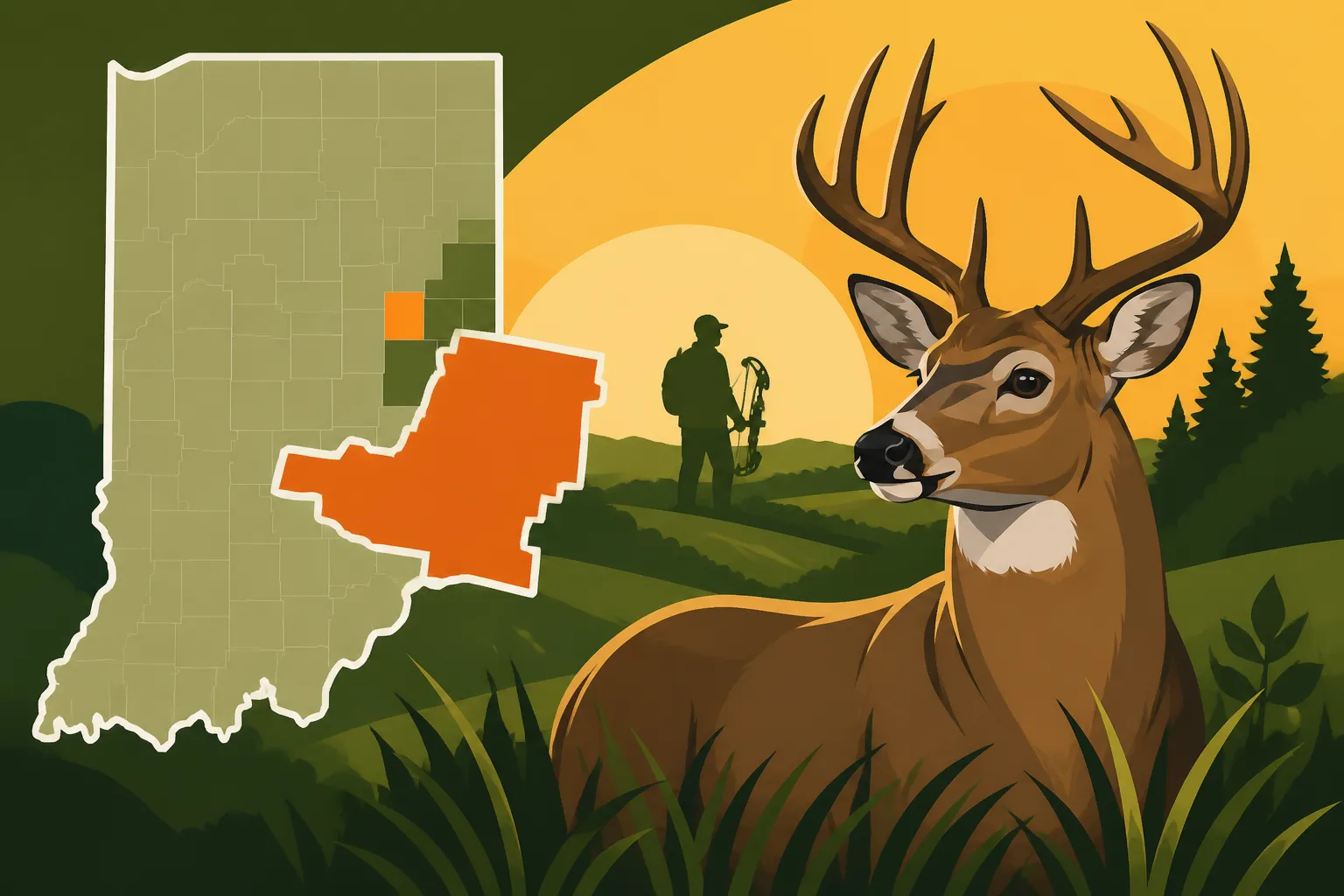
When CWD was first detected in Indiana, it sent ripples through the hunting community. It's a fatal neurological disease affecting deer, elk, and moose, and it's always fatal. There's no cure, and it can linger in the environment for years, making prevention and management crucial. DeKalb County, along with other neighboring counties like Noble, LaGrange, Steuben, Allen, and Whitley, sits right in the middle of this designated positive area. This means that deer harvested here are subject to enhanced surveillance and specific rules designed to minimize the risk of the disease spreading further. It's not about making hunting harder, but about trying to safeguard the future of our deer herd. The first detection in the state was a wake-up call, and now, as hunters, we play a vital role in monitoring and managing it. Why Noble County Expanded the CWD Positive Area touches on the geographical spread of this issue.
For hunters, this translates to a heightened sense of responsibility. Every deer you harvest in DeKalb County, especially if you plan to transport it, becomes part of the larger surveillance effort. It means you need to be aware, not just of your hunting ethics, but also of your civic duty to help monitor this disease. It changes how you might plan your hunt, particularly if you're traveling from outside the zone, or if you intend to take your harvest elsewhere for processing or taxidermy.
Specific Regulations for Hunters in DeKalb County
The Indiana Department of Natural Resources (DNR) has implemented specific rules for hunters operating within the CWD positive area, which includes all of DeKalb County. These aren't suggestions; they're mandatory regulations that everyone needs to follow. The primary goal is to prevent the movement of potentially infected carcasses or parts that could introduce CWD to new areas.
One of the most critical rules concerns carcass movement. If you harvest a deer in DeKalb County, you generally cannot transport the whole carcass outside the CWD management zone. There are exceptions, of course, like deboned meat, antlers attached to a clean skull plate, capes (without skull), and finished taxidermy products. But for the average hunter, this means if you shoot a deer, you're likely processing it within or very close to the county line. This can be a significant logistical challenge, especially for those who typically take their deer to a processor far from their hunting grounds or those who like to do their butchering at home outside the zone. Indiana CWD Carcass Movement Restrictions provides more detail on what you can and cannot move.
Another key component is CWD testing. While not always mandatory for every harvested deer, there are periods of enhanced surveillance where the DNR might require or strongly encourage submitting samples for testing, especially within the CWD positive area. They often set up sampling stations during opening weekends or throughout certain seasons. It's crucial to check the current year's hunting regulations booklet or the DNR website for the most up-to-date requirements. Participating in testing is a simple yet powerful way to contribute to the health of the herd and our understanding of the disease's prevalence. This information is critical for guiding future management decisions.
Here's a quick overview of common CWD zone regulations:
| Regulation Area | What it Means for DeKalb County Hunters |
|---|---|
| Carcass Movement | Whole carcasses generally cannot leave the CWD zone. Deboned meat, skull plates, capes are exceptions. |
| Mandatory Testing | May be required or strongly encouraged during specific periods or at certain check stations. |
| Reporting Requirements | Standard deer reporting (online or via app) still applies, sometimes with additional CWD questions. |
| Feeding Bans | Deer feeding is typically prohibited within CWD zones to prevent congregation and disease transmission. |
| Baiting Regulations | Similar to feeding, baiting is often restricted or banned to avoid concentrating deer. |
Always double-check the latest Indiana hunting regulations, as these rules can be updated. The DNR's website and their official Go Outdoors Indiana app are your best friends for current information.
Identifying Public Hunting Opportunities in DeKalb County
DeKalb County, being largely agricultural with a mix of smaller woodlots and wetlands, doesn't boast sprawling national forests like southern Indiana. However, that doesn't mean public hunting opportunities are nonexistent. They just require a bit more legwork and a keen eye to find those often overlooked gems. You're not going to find massive tracts that you can get lost in for days, but rather smaller, strategic parcels that, with the right approach, can be incredibly productive.
State-Managed Areas and Their Challenges
While DeKalb County itself might not be home to a massive Fish and Wildlife Area (FWA) or State Forest, it is part of a region with several important state-managed properties. Hunters in DeKalb often look to nearby Pigeon River FWA in Steuben and LaGrange counties, or Tri-County FWA in Noble and Kosciusko counties, as primary destinations. While these larger FWAs are not strictly within DeKalb County, they are often the closest significant public lands for DeKalb residents, and importantly, they too fall within or adjacent to the CWD positive area. This means the CWD regulations discussed above are still highly relevant if you choose to hunt these areas.
However, for public ground within DeKalb County, you might be looking at smaller, more fragmented parcels. These could include smaller State-owned properties, sometimes referred to as "State Lands" or even leased lands managed by the DNR. These often consist of riparian corridors along rivers and creeks, small wetland mitigation sites, or woodlots acquired for specific conservation purposes. They rarely show up as large, prominent hunting areas on a map, which means they often receive less pressure than larger FWAs. The challenge is finding them, understanding their specific rules (which can sometimes differ from larger FWAs), and recognizing that they may be surrounded by private land, requiring careful attention to property boundaries. Finding an Indiana Fish and Wildlife Area Near You can help broaden your search.
These smaller public parcels, due to their size and often limited access points, can be real honey holes for deer. They often serve as travel corridors or bedding areas between larger private land agriculture fields. The downside is that they can also experience high pressure if their location is well-known. You'll need to be adaptable and ready to change your tactics based on what you encounter.
Navigating Public Access Tools
This is where modern technology really shines and becomes an absolute necessity for hunting in areas like DeKalb County. Gone are the days of relying solely on paper maps, though a good topo map is still an invaluable tool. Digital mapping apps are your best friend for uncovering and navigating these smaller, fragmented public lands.
onX Hunt is practically a requirement for hunting any public land, but especially in regions where public access is sparse or broken up. Its detailed layers clearly show public and private property boundaries, which is essential when you're hunting small parcels surrounded by private ground. You can literally see land ownership lines in real-time on your phone, preventing accidental trespass and helping you identify hidden access points or overlooked pockets of public timber. You can mark waypoints for potential stand sites, track your routes, and measure distances, all invaluable for scouting and hunting. For a hunter trying to find a secluded patch of woods along a creek in DeKalb County, onX Hunt can reveal those slivers of state-owned land that might otherwise go unnoticed. Using the Indiana OnX and DNR Map Tools offers further guidance on leveraging these resources.
Similarly, the GoHunt app and the Indiana DNR's online mapping tools are crucial. The DNR's official resources will have the most up-to-date information on state-managed properties, including any specific regulations or temporary closures. Using these tools in conjunction with onX Hunt allows you to cross-reference information and ensure you have the most accurate picture of where you can legally hunt. You can download maps for offline use, which is critical since cell service can be spotty in some of these more remote public pockets. Always scout these smaller parcels thoroughly before opening day, both digitally and on foot, to confirm access, boundaries, and deer sign.
Practical Hunting Considerations for the CWD Zone
Hunting in any CWD zone requires an extra layer of thought and preparation. It's not just about finding a good spot; it's about being a responsible hunter and contributing to the health of the entire deer population. For DeKalb County, this means understanding the landscape, adapting your approach, and being ready for post-harvest steps that are different from other areas of the state.
Ethical Hunting and Carcass Management
First and foremost, ethical hunting practices remain paramount. This includes clean kills, responsible shot placement, and thorough tracking. In a CWD zone, minimizing stress on the animal and ensuring a quick recovery is even more important. However, the post-harvest care takes on added significance.
As mentioned earlier, the carcass movement restrictions mean you need a plan for your deer immediately after harvest. If you typically take your deer to a commercial processor, you'll need to find one within the CWD zone or be prepared to debone the animal yourself before leaving the zone. This might mean investing in good field dressing tools, sturdy game bags, and a reliable cooler, especially during warmer early archery days. Practicing the gutless method can be incredibly efficient for larger deer and helps in reducing weight for extraction while also allowing you to debone the meat right where the animal fell. Field Dressing a Deer in Cold Weather or Butchering a Deer at Camp can offer practical advice if you decide to handle the processing yourself.
Beyond meat, consider your taxidermy plans. If you want a shoulder mount, the cape and skull plate must be free of brain matter and spinal cord tissue before leaving the CWD zone. Many taxidermists in the CWD area are well-versed in these regulations and can help ensure compliance. It's always best to communicate your plans with them beforehand. Being prepared for these steps will make your hunting experience much smoother and help prevent any issues with DNR officials.
Scouting and Strategy in Smaller Public Parcels
Hunting smaller, often pressured public parcels in DeKalb County requires a different strategy than sprawling wilderness areas. Deer in these environments are often more nocturnal and sensitive to pressure. Your scouting needs to be meticulous and frequent, focusing on subtle signs and understanding how deer use these limited spaces.
Look for areas that offer natural cover and security, especially near edges of agricultural fields that provide food. Creek bottoms, thickets, abandoned farmsteads, or dense brush pockets within a woodlot can be prime bedding and travel routes. Don't overlook linear features like fencerows, drainages, or small ditches that deer use for concealment while moving between food and cover. onX Hunt can help you identify these features and pinpoint overlooked corners that other hunters might ignore. Scouting Indiana Public Land Before Season is an excellent resource for general scouting tactics.
Pressure is a major factor on smaller public lands. Try to identify access points that require a longer walk or offer less obvious parking. Often, the best hunting is just beyond where most hunters are willing to go. Consider hunting mid-week when pressure is lower, or during inclement weather when fair-weather hunters stay home. Using a lightweight, mobile treestand or saddle can be advantageous, allowing you to adapt quickly to changing deer patterns or pressure. Patience and persistence are key, as deer might not move until late in the day or early in the morning in these tighter, more visible areas. Remember that deer in CWD zones are still wild deer; they react to pressure, food, and cover just like any other deer, with an added layer of scrutiny from hunters aware of the disease.
Maximizing Your Hunt in DeKalb County
Even with the CWD regulations and smaller public land tracts, DeKalb County offers rewarding hunting experiences. It's about adjusting your expectations and honing your tactics to fit the unique landscape and challenges of northeast Indiana.
Best Practices for Success on Pressured Ground
Hunting small, pressured public ground means you often need to outsmart not just the deer, but also other hunters. This means thinking outside the box and being willing to put in the effort others won't.
- Go Deeper: While the parcels might be small, look for the parts of those parcels that are furthest from easy access. If there's a deep corner, a small swampy patch, or a dense thicket that looks difficult to reach, that's often where the deer feel safest. Finding Ground Others Walk Past offers more insights into this strategy.
- Time Your Hunts Strategically: Early mornings and late evenings are always prime, but on pressured ground, the hour after legal shooting light and the hour before legal shooting light are crucial for observing deer movement without disturbance. Be in your stand well before dawn and stay until dark. Mid-day hunts can also be surprisingly productive if you're targeting bedding areas or transition routes when most other hunters have gone back to camp.
- Use the Wind and Thermals: This is non-negotiable. Deer in pressured areas are highly sensitive to human scent. Always play the wind, and understand how thermals work in relation to topography, even subtle changes in elevation found in agricultural areas. In creek bottoms or low-lying areas, thermals will typically pull scent downhill in the morning and push it uphill in the evening.
- Stealth is Key: Minimize noise, wear quiet clothing, and plan your entry and exit routes carefully to avoid spooking deer. If you're hunting near private land, respect boundaries and don't push deer onto properties where you don't have permission.
- Scout During Off-Season: Use the post-season to walk these areas, find shed antlers, and identify natural funnels, pinch points, and bedding cover without disturbing actively hunted deer. You can also use trail cameras, but be sure to understand Trail Camera Rules on Indiana Public Land.
Species Beyond Deer
While deer hunting is often the main draw, don't overlook other opportunities in DeKalb County's public areas. The mix of agriculture, woodlots, and wetlands can support a variety of small game and waterfowl.
- Small Game: Squirrels and rabbits are often abundant in the woodlots and fencerows. Squirrel Hunting Indiana Bottomland Hardwoods or Rabbit Hunting Indiana Fencerows can give you an idea of tactics for these species. These hunts can be a great way to introduce new hunters to the woods, extend your time afield after deer season, or simply enjoy a different challenge.
- Waterfowl: Depending on the presence of ponds, marshes, or river corridors, you might find opportunities for ducks and geese. While DeKalb isn't Kankakee, local water sources can attract migratory birds. Scout carefully for these opportunities, and be sure to check specific regulations for waterfowling in the area, including any requirements for non-toxic shot.
- Predators: Coyotes are prevalent across Indiana's landscape, and hunting them can be an exciting challenge and a good way to stay sharp year-round. They often follow deer trails and frequent the same areas as deer, making them a possible bonus encounter while deer hunting, or a dedicated pursuit. Coyote Calling in Indiana Farm Country can help you get started.
Expanding your target species can add variety to your hunting seasons and help you become more familiar with the public lands in DeKalb County. Always consult the current Indiana hunting regulations for specific season dates, bag limits, and licensing requirements for all species.
Disclaimer
This article is for general informational purposes only and does not constitute professional advice. Laws, prices and regulations vary by location and change over time. Consult a qualified professional for guidance on your specific situation.