Hoosier Forest’s Tell City Region
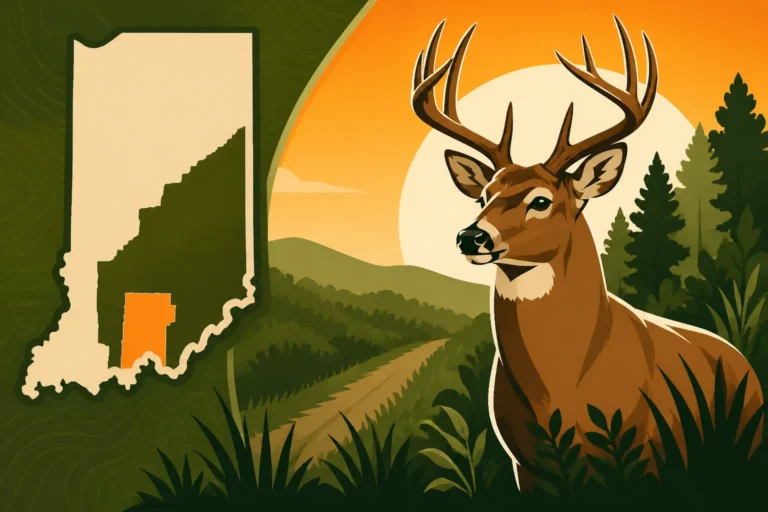
For many Indiana hunters, the sprawling, relatively flat farmland and scattered woodlots of the central and northern parts of the state can feel a bit… predictable. If you're yearning for a true big-woods experience, where steep ridges challenge your lungs and deep hollows hide mature whitetails, then the Hoosier National Forest's Tell City region is calling your name. This guide will walk you through everything you need to know to successfully hunt this rugged, rewarding chunk of public land, from understanding its unique terrain to mastering the tactics that put game in your freezer.
Understanding the Tell City Ranger District Landscape
The Tell City Ranger District, nestled in the unglaciated hills of southern Indiana, is a world away from the corn and soybean fields most Hoosiers picture. This isn't flat ground; it's a topographical roller coaster of steep ridges, deep ravines, and winding creek bottoms that can test even the most seasoned hunter's endurance. If you approach this area expecting an easy stroll, you'll be quickly humbled.
Topography and Habitat
The dominant feature of the Tell City region is its dramatic, rolling topography. You're looking at hardwood forest, primarily oak and hickory, blanketing steep slopes that drop into narrow, rocky hollows. These hollows often run for miles, creating natural funnels and travel corridors for deer. Ridge tops, while still sloped, offer some of the most consistent travel routes for mature bucks seeking to conserve energy or scent-check for does during the rut. The sheer scale of the timber can be daunting, leading many hunters to stick to easier-to-access areas, but the deeper you're willing to go, the more untouched ground you'll find. Understanding these natural contours is paramount, as deer movement is heavily dictated by the path of least resistance through the challenging terrain.
The habitat diversity, despite being predominantly forest, is critical. You'll encounter areas of mature timber, but also younger clear-cuts or storm-damaged areas that have regenerated into thick, almost impenetrable cover. These dense pockets, often overlooked by hunters due to their difficulty, serve as prime bedding areas, especially during periods of hunting pressure. Scouting these transition zones, where dense cover meets more open timber, can reveal key ambush points. Additionally, the mast crop, particularly acorns from the abundant oaks, forms the backbone of the local deer's diet, and finding hot feeding areas can be a game-changer, especially in early archery season.
Water Sources and Creek Bottoms
Water is life, and in a region as rugged as Tell City, understanding its presence and flow is crucial for both deer and hunters. Numerous creeks and small drainages crisscross the landscape, often forming the deepest parts of the hollows. These creek bottoms, while sometimes boggy or full of briars, serve as vital travel corridors, especially during dry spells when other surface water might be scarce. Deer will often follow these low-lying paths, moving between bedding areas on the slopes and feeding areas on the ridge tops or in more accessible valleys.
However, hunting directly in these creek bottoms can be tricky. Swirling winds are common, making it hard to predict scent dispersal, and the dense undergrowth can limit visibility. Instead, focus on the benches and subtle terrain features that parallel these water sources, or look for pinch points where deer are forced to cross or climb out of the hollows. During hot weather, deer will actively seek out these cooler, moister environments, and tracks along muddy banks can tell you a lot about recent activity. Don't underestimate the power of these arteries in the forest; they are highways for game, and understanding their flow is key to unlocking the area. Remember to factor in recent rainfall, as what might be a trickle in August could be a significant obstacle in November.
Key Game Species and Their Habits
While the Hoosier National Forest offers a variety of small game and predators, the main draws to the Tell City region are undoubtedly whitetail deer and wild turkey. These species thrive in the expansive, unbroken timber, presenting unique challenges and rewards for hunters willing to learn their habits in this particular environment.
Whitetail Deer in the Rugged Terrain
Deer in the Tell City district are, in many ways, different animals than their counterparts in agricultural areas. They are often leaner, tougher, and incredibly adept at navigating the steep terrain. These deer are built for climbing and will use the elevation to their advantage, especially when pressured. Mature bucks, in particular, will spend their daylight hours in the steepest, thickest hollows, often bedding high on a ridge or on a bench overlooking a major drainage. Their movement patterns are heavily influenced by the constant need to conserve energy while traveling between bedding and feeding areas. You might find them traversing a series of benches rather than dropping all the way into a hollow and climbing back out, especially during the middle of the day.
Scouting for rubs and scrapes high on ridges or along benches can be incredibly revealing, indicating primary travel routes. These are the "highways" bucks use during the rut to scent-check for does. During the late season, after leaf-fall, identifying persistent food sources like oak flats with a good acorn crop or regenerating clear-cuts becomes critical, as deer will congregate where food is readily available. Understanding Reading a Ridge for Hoosier Forest Deer is essential here; look for subtle saddles, natural benches, and small points that offer advantageous views or cover. These deer are smart, relying on their senses and the terrain for survival, so quiet movement and an understanding of wind currents are paramount.
Turkey and Small Game Opportunities
Beyond deer, the Tell City region offers excellent opportunities for wild turkey and various small game. Wild turkeys, much like the deer, thrive in this vast, timbered landscape. The abundant oak trees provide crucial mast, and the rolling terrain offers plenty of roosting sites and strutting zones. Spring turkey hunting can be exceptionally rewarding, but also incredibly challenging. Gobblers will often roost high on the ridges and pitch down into hollows or onto benches at first light. Locating birds requires covering significant ground and learning how their calls echo and carry through the hills. Calling tactics need to be adaptable, as a bird on a steep slope above you will react differently than one on flat ground.
For small game hunters, the extensive hardwood forest is a haven for squirrels, primarily fox and gray squirrels. Hickory groves and oak flats are prime locations to find them, especially in the early fall when they are actively cutting nuts. Rabbit hunting can also be productive in areas of thicker underbrush, especially around the edges of regenerating clear-cuts or along the briar-choked edges of creek bottoms. While not as prevalent as deer or turkey, opportunities for ruffed grouse might still exist in some of the deeper, less disturbed sections of the forest, though their populations are generally low. The beauty of this area for small game is the sheer amount of public access, allowing you to walk for miles without encountering another hunter.
Essential Scouting and Navigation Strategies
Hunting the Hoosier National Forest, especially a challenging district like Tell City, demands meticulous scouting and reliable navigation. This isn't a place where you can just wander in and expect to stumble upon game. The vastness and ruggedness require a strategic approach, both from your couch and on the ground.
Utilizing Digital Mapping Tools
Before you ever set foot in the woods, your best friend will be a robust digital mapping application. Tools like onX Hunt and GoHunt are absolutely invaluable for dissecting the Tell City landscape. These apps allow you to identify public land boundaries (crucial in areas where private parcels intersperse with public), mark potential bedding areas, feeding zones, and travel corridors based on topography. You can pinpoint saddles, benches, creek crossings, and subtle terrain features that might concentrate deer movement. I spend hours pouring over satellite imagery and topo maps on my laptop and phone, marking waypoints for everything from potential stand sites to difficult-to-navigate thickets.
One of the greatest benefits of these apps is the ability to download maps for offline use. Cell service can be spotty to non-existent in the deep hollows of Tell City, so having your maps and waypoints accessible without a signal is critical for safe and effective navigation. You can also track your own movements, allowing you to retrace your steps or analyze how you moved through a given area. When you're facing miles of indistinguishable timber, knowing your exact position and heading is not just a convenience, it's a safety measure. Use these tools to identify access points, parking areas, and to plan your entry and exit routes, minimizing disturbance to prime hunting spots. Scouting Indiana Public Land Before Season becomes much more efficient with these tools.
Boots-on-the-Ground Reconnaissance
While digital maps are excellent for planning, there's no substitute for boots-on-the-ground scouting. The Tell City region is simply too complex to understand fully from a screen. You need to walk the ground, feel the steepness of the slopes, and see the cover firsthand. Start by focusing on the areas you've identified on your map: walk those ridge lines, investigate those creek bottoms, and explore the benches. Look for actual deer sign: rubs, scrapes, tracks, and droppings. Pay attention to how deer are using the terrain – are they consistently crossing a particular saddle? Is there a subtle bench that provides easier travel around a steep point?
Scouting during the off-season, particularly in late winter or early spring before the foliage fully returns, can be incredibly productive. With no leaves on the trees, visibility is at its best, allowing you to see further into the woods and identify bedding thickets, subtle trails, and advantageous overlook spots. It also gives you a chance to learn the lay of the land without impacting your hunting season. Remember to take photos, drop waypoints on your onX Hunt app for every piece of sign you find, and even measure distances to potential shooting lanes. The more time you spend in the woods learning the nuances of the terrain, the more confident and successful you'll be when hunting season arrives. Pay close attention to Where Hoosier National Forest Bucks Bed, as these areas often hold the keys to intercepting mature animals.
Hunting Tactics Tailored for Tell City
Hunting the Tell City region requires a blend of traditional woodsman skills and modern tactics. The terrain dictates much of the strategy, favoring those who are patient, observant, and willing to work hard. Adapting your approach to the specific challenges of these southern Indiana hills is crucial for success.
Still-Hunting the Ridges and Hollows
Still-hunting is perhaps the most effective tactic in the vast, timbered landscape of the Tell City district. This involves moving slowly, deliberately, and quietly through the woods, pausing frequently to observe, listen, and glass. Instead of sitting stationary for hours, you become an active participant, slowly covering ground and looking for game on the move or bedded down. The key is to move at a snail's pace, often taking several minutes to cover just a few yards. Use binoculars constantly to pick apart distant cover, looking for the tell-tale horizontal line of a deer's back or the flick of an ear.
When still-hunting, focus on the thermals and wind. In the morning, thermals typically rise, pulling your scent uphill. In the afternoon, they fall, carrying your scent down into the hollows. Position yourself to use these air currents to your advantage, moving either across a slope or very slowly uphill in the morning, and carefully downhill in the afternoon. Pay close attention to ridge-top saddles, benches, and the subtle terrain features that funnel deer movement. This method requires immense patience and a keen eye, but it allows you to cover vast amounts of ground effectively and silently. Still-Hunting Southern Indiana Ridges is not just a technique here; it's a way of life for many successful hunters in this area.
Treestand and Ground Blind Considerations
While still-hunting is effective, treestands and ground blinds certainly have their place, especially once you've identified consistent travel routes or feeding areas. However, setting up a stand in Tell City comes with its own set of challenges. The steep, often rocky terrain can make hauling in heavy stands and climbing sticks a monumental task. Lightweight, portable treestands or saddle hunting setups are often preferred for their mobility and ease of packing deep into remote areas. For detailed advice, check out Treestand Setups in Hoosier National Forest.
When choosing a stand location, prioritize areas that offer a commanding view of a funnel or pinch point, but also consider your entry and exit routes. You want to be able to get to and from your stand without spooking deer. Ridge-top saddles, benches that deer use to traverse a slope, and the edges of dense bedding thickets are all prime candidates. Ground blinds can also be highly effective, especially in areas with thick cover or around natural funnels where you can brush in effectively. Just remember that scent control and understanding the swirling winds in the hollows are even more critical when you're at ground level. Consider using a ground blind near late-season food sources like persistent acorn flats or even a stand of honeysuckle if other forage is scarce.
Here's a quick look at how different hunting methods might fare in Tell City's unique environment:
| Hunting Method | Pros in Tell City | Cons in Tell City | Best Application |
|---|---|---|---|
| Still-Hunting | Covers vast ground, adapts to changing deer patterns | Demands extreme patience, excellent woodsman skills, high physical endurance | Actively searching for deer, covering ground during the rut, post-rut cruising |
| Treestand | Elevates scent, provides good visibility over funnels | Heavy to pack in, limited mobility once set, can be exposed on open slopes | Overlooking established trails, saddles, benches, or food sources |
| Ground Blind | Excellent concealment, less physical strain to set up | Vulnerable to swirling winds, limited visibility, requires good brushing in | Near dense bedding cover, specific funnels in thickets, late-season food plots |
| Deer Drives | Effective for moving deer out of thick cover | Requires multiple hunters, proper planning, potential for lost game in ruggedness | Driving small, isolated woodlots or pushing deer off specific ridges on public land |
Regulations, Access, and Responsible Hunting
Hunting the Hoosier National Forest, specifically the Tell City Ranger District, is a fantastic opportunity, but it comes with responsibilities. Understanding the specific regulations, knowing how to access the land, and practicing ethical hunting are paramount to preserving this resource for future generations.
Specific Hoosier National Forest Rules
While general Indiana hunting regulations apply, the Hoosier National Forest has its own set of rules you must abide by. Unlike state fish and wildlife areas, which often require signing in at kiosks, the National Forest typically does not have this requirement for general hunting. However, there are specific guidelines regarding things like baiting, which is generally prohibited on federal land, and the use of motorized vehicles, which are restricted to designated roads. Always check the current Hoosier National Forest rules and Indiana DNR regulations before you go, as specifics can change.
One critical aspect is the placement of treestands and ground blinds. On National Forest land, you generally cannot permanently attach stands to trees, meaning screws or nails that penetrate the bark are forbidden. Portable stands that use straps or chains are allowed, but they typically must be removed at the end of the hunting season. Leaving personal property unattended for extended periods can also be an issue. These rules are in place to minimize impact on the environment and ensure fair access for all users. Be mindful of others using the forest too – hikers, campers, and mountain bikers all share this public space. Hoosier National Forest Hunting provides a broader overview of the general rules for the entire forest.
Public Access Points and Trail Systems
Accessing the vastness of the Tell City Ranger District can be a challenge in itself. While there are numerous county and forest roads that crisscross the area, many of the best hunting spots are deep within the timber, requiring significant foot travel. Start by identifying designated parking areas or road pull-offs on your onX Hunt or GoHunt app. From there, you'll often find a network of old logging roads, hiking trails, or faint game trails that can get you started. However, don't expect maintained trails to lead you directly to prime hunting spots; you'll often need to cut through thick timber.
One major advantage of the Tell City area is that it's largely composed of consolidated public land, meaning fewer private inholdings to navigate compared to some other parts of the state. This allows for extensive, uninterrupted hikes into remote areas, but it also means you need to be proficient with your navigation tools. Always carry a compass and a printed map as a backup, especially if you venture deep. Remember that the farther you walk from a road, the less hunting pressure you are likely to encounter. This often means embracing the challenge of a long, steep hike to find truly undisturbed areas where mature deer feel safe. Be prepared with a good Packs for a Hoosier Forest Day Hunt to carry all your essentials.
Disclaimer
This article is for general informational purposes only and does not constitute professional advice. Laws, prices and regulations vary by location and change over time. Consult a qualified professional for guidance on your specific situation.