Indiana Squirrel Nest Counts and Mast Crops
Every squirrel hunter in Indiana knows the frustration: one year, the woods seem alive with bushy-tails, and the next, it feels like they’ve vanished into thin air. It’s hard to plan a successful hunt when you’re not sure what the population or food situation looks like. This guide will walk you through understanding Indiana squirrel nest counts and how they relate to the annual mast crop, giving you the tools to predict squirrel abundance and find them more consistently, year after year.
Understanding Squirrel Nest Counts in Indiana
When you're walking the woods, especially before the leaves come out or after they've fallen, you've probably noticed those big, messy clumps of leaves and twigs high up in the trees. These aren't bird nests; they're almost certainly squirrel nests, often called dreys. For a seasoned hunter, these aren't just random piles of debris; they're valuable indicators of squirrel activity and population density in a given area. Learning to read these signs can be a game-changer for your hunting strategy.
What Are Squirrel Nests (Dreys) and Why They Matter
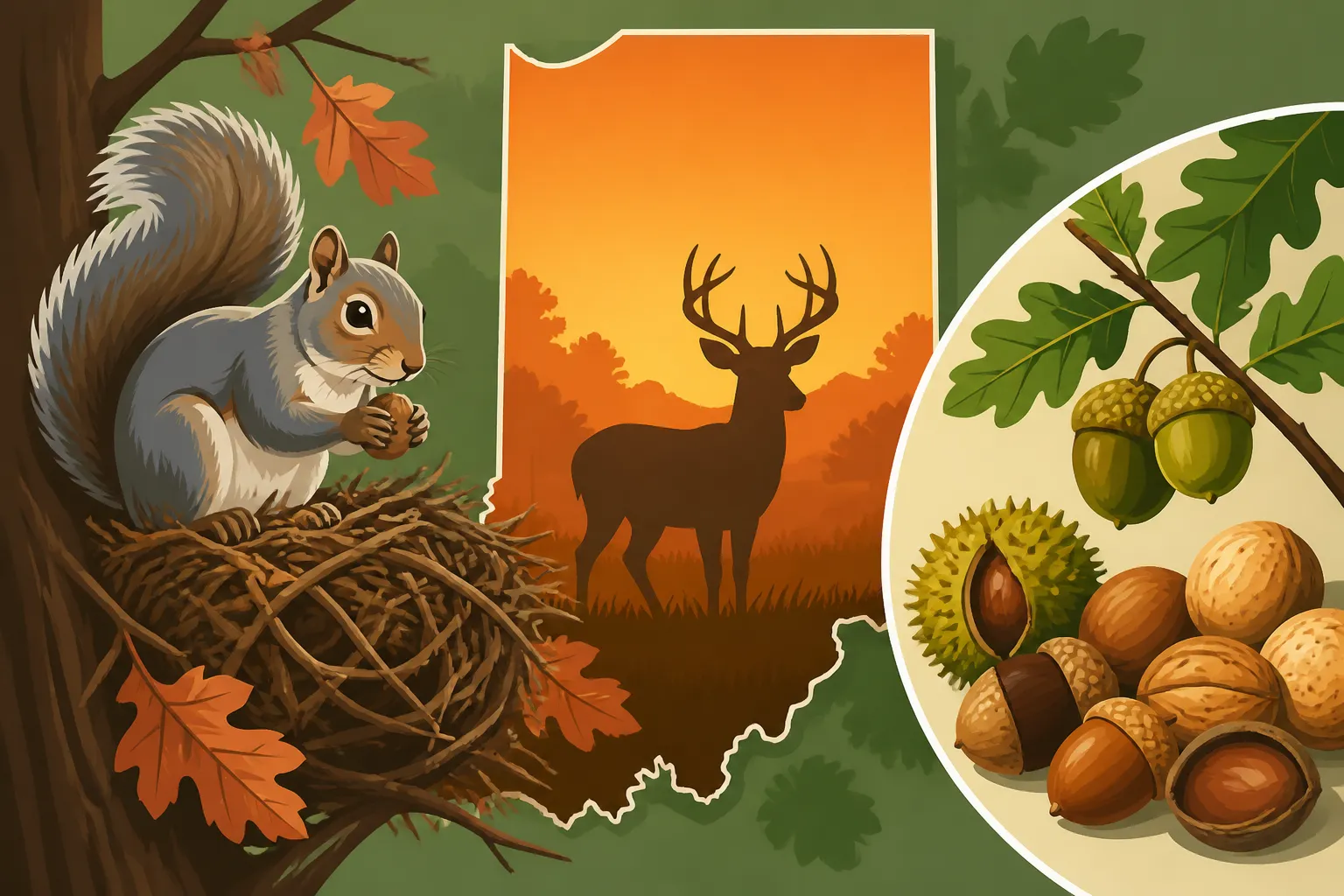
Squirrel dreys are essentially leaf and twig nests built by squirrels, usually gray squirrels or fox squirrels, in the crooks of tree branches or within hollows. They’re distinct from tree cavities, which are also used, but dreys are much more visible and tell a story about the current and recent past population. Squirrels will build multiple dreys within their home range, using them for shelter from weather, as nurseries for their young, and sometimes just as a quick escape from a predator. Think of them as tiny, arboreal apartments.
The sheer number of dreys you spot in an area can give you a rough estimate of how many squirrels are calling that particular patch of woods home. A high concentration of fresh-looking dreys – meaning they're still well-formed and haven't started to disintegrate from months of exposure – suggests a healthy, thriving squirrel population. Conversely, an area with very few dreys, or only old, dilapidated ones, might indicate a low squirrel density, perhaps due to past heavy hunting pressure, habitat changes, or a poor breeding year. It’s not an exact science, but it's a fantastic directional indicator. It's especially useful when you're scouting new public land, like areas within the Hoosier National Forest Hunting boundaries, where you don't have historical knowledge of squirrel numbers.
Interpreting Nest Density in Different Habitats
Not all dreys are created equal, and their density can mean different things depending on the habitat you're in. In a dense stand of mature hardwoods, like those found in Squirrel Hunting Indiana Bottomland Hardwoods, you might expect to see a lot of dreys. These environments offer abundant nesting material, protective canopy, and typically a good food supply. Here, a high density of dreys confirms what you already suspect: it's good squirrel habitat.
However, in more fragmented woodlots or areas with younger timber, a high drey count can be even more significant. It might indicate that a smaller patch of woods is acting as a crucial refuge or a localized population boom due. If you're walking through an oak ridge that usually holds deer but you're seeing an unusual number of dreys, it might be worth shifting your focus for a morning hunt. The key is to pay attention to both the total number of dreys and their condition. Are they old and tattered, blending into the branches, or are they robust and well-maintained? Older dreys tell you that squirrels have been there, but fresh ones tell you they are there now. Some hunters even use apps like GoHunt to mark drey locations on their maps, building a spatial understanding of squirrel hotspots over time. This kind of diligent scouting can really inform where you spend your time come opening day.
The Importance of Indiana's Mast Crops for Squirrels
Beyond just shelter, squirrels, like most wildlife, are driven by food. And in Indiana’s hardwood forests, the annual mast crop is the undisputed king of food sources. Mast refers to the fruit of forest trees and shrubs, including nuts, acorns, and berries. It's what fuels the squirrels through the winter, powers their breeding cycles, and ultimately dictates their health and population numbers. A good mast year means well-fed squirrels, more successful breeding, and often, higher squirrel densities the following year. A poor mast year, however, can be devastating, leading to lower reproduction, increased mortality, and squirrels scattering widely in search of sustenance.
Key Mast-Producing Trees in Indiana
When you're scouting for squirrels, you need to know your trees. In Indiana, several species are critical mast producers that dictate where squirrels will be.
- Oaks (White Oak, Red Oak, Pin Oak, etc.): Acorns are probably the most recognized squirrel food. White oaks drop their acorns earlier and are generally preferred because they're less bitter (lower in tannins) than red oak acorns. However, red oak acorns store better through the winter, providing a crucial late-season food source. Squirrels will hit white oaks hard in early fall and then transition to red oaks as the season progresses. Knowing which type of oak is producing can tell you not only if squirrels are in an area but when they're likely to be there.
- Hickories (Shagbark, Shellbark, Pignut, etc.): Hickory nuts are high in fat and protein, making them another top-tier food source. They often drop a bit later than white oak acorns but before red oaks. Squirrels love to cut these nuts, and you'll often find piles of chewed-up shells under hickory trees. If you find a grove of shagbark hickories that are absolutely loaded, you've likely found a squirrel goldmine. Squirrel Hunting Indiana Hickory Groves are always a prime target for hunters who know their nuts.
- Beech: Beech nuts are small but highly nutritious. While less common in certain parts of Indiana, where they are present, they are a strong attractant for squirrels. Beech trees typically produce good crops less frequently than oaks or hickories, but when they do, it's a feast.
- Walnut and Pecan: These are less widespread as dominant forest trees but are incredibly important locally, especially near old homesteads or river bottoms. Their large, rich nuts are a squirrel favorite, and the trees are often magnets for activity.
Understanding the cycle of these mast crops is vital. Some trees, like white oaks, tend to have "boom or bust" years, while others might be more consistent. Scouting these food sources is just as important as looking for dreys; they go hand-in-hand.
The Impact of Mast Failures on Squirrel Behavior
Imagine a year where your favorite oak ridge, usually buzzing with squirrel activity, is completely barren. No acorns. This is a mast failure, and it forces squirrels to make tough decisions. Instead of concentrating in their usual haunts, they will scatter, often traveling significant distances in search of alternative food sources. This can include:
- Smaller, less preferred mast: They might switch to dogwood berries, wild cherries, or even tree buds if truly desperate. These aren't as calorically dense, but they're better than nothing.
- Agricultural crops: If nearby, cornfields or soybean fields can become emergency food sources, pulling squirrels out of the woods and into agricultural edges. This is something deer hunters see too, as deer also adapt to mast failures.
- Bird feeders and suburban areas: In extreme cases, squirrels will move closer to human habitation if natural food is scarce.
For hunters, a mast failure year means you can't rely on your usual spots. You'll need to scout much more extensively, covering ground that might not typically hold many squirrels. This is where tools like GoHunt, with its mapping features, can be invaluable for pinpointing smaller, overlooked pockets of mast production or identifying potential travel corridors between scarce food sources. You'll also likely notice a decrease in overall squirrel numbers, as reproductive rates drop and some squirrels simply don't survive the lean winter. It can be a disheartening experience, but knowing why it's happening helps you adjust your expectations and strategies.
How to Combine Nest Counts and Mast Crop Scouting for Better Hunts
The real magic happens when you don't just look at dreys or mast crops in isolation, but combine these observations. They offer complementary information that, when put together, paints a much clearer picture of squirrel populations and where they'll be. It’s like having two pieces of a puzzle that, once assembled, reveal the full image of your upcoming hunting season.
Pre-Season Scouting for Both Indicators
Effective squirrel hunting starts long before opening day. Ideally, you’ll begin your scouting in late summer or early fall, as mast crops are developing and squirrels are beginning their seasonal activities.
- Identify Potential Areas: Start by looking at aerial maps, maybe using GoHunt or your state DNR app, to pinpoint areas with mature hardwoods, especially stands of oak and hickory. Look for varied terrain – ridge tops, draws, and bottomlands – as different trees thrive in different conditions. These initial observations are your starting points.
- Ground Reconnaissance for Mast: Walk these identified areas. This isn’t a quick stroll; you need to be observant. Look up into the canopy: Are the oak branches heavy with acorns? Are the hickory trees showing signs of nut production? Don't just look for ripe nuts on the ground; often, you can spot the developing mast high in the branches. Note which specific trees are producing and whether it’s a heavy, moderate, or light crop. Pay attention to specific species, as white oaks will drop earlier than red oaks, influencing early-season hunting spots versus later-season ones. Don't forget to check the ground for "cut" nuts – shells chewed by squirrels – which indicates current feeding activity.
- Drey Counts: As you scout for mast, also conduct drey counts. This is best done when leaves are off the trees for maximum visibility, but even in full foliage, you can spot many if you're looking. Walk slowly through your chosen areas, scanning the treetops for those tell-tale bundles of leaves and twigs. Tally them as you go, and note their condition. A good strategy is to use transect lines, walking a consistent path and counting all visible dreys within a certain distance of your path. Mark these high-density drey areas on your map, especially if they coincide with good mast production. This is where a robust mapping application really shines, allowing you to plot observed dreys and mast quantities.
| Mast Crop Type | Primary Season of Use | Squirrel Preference | Impact of Failure | Scouting Tips |
|---|---|---|---|---|
| White Oak | Early Fall | High | Immediate, localized exodus | Look for large, rounded acorns; check for fresh cuts under trees. |
| Red Oak Group | Mid-Late Fall/Winter | Medium-High | Later season scarcity | Acorns are more pointed; persistent food source, check for cuts and ground scatters. |
| Hickory | Mid-Late Fall | High | Moderate, consistent impact | Distinctive hard shells; look for concentrated piles of shell fragments. |
| Beech | Early-Mid Fall | High | Significant, widespread if present | Small, triangular nuts; often sporadic production years, check canopy. |
| Walnut/Pecan | Early Fall | High (local) | Localized, intense pressure | Large, prominent nuts; strong draw, check for heavy feeding signs. |
By combining these observations, you might find a patch of woods with a high drey count and a heavy white oak crop – that’s your prime early-season spot. Or perhaps an area with fewer dreys but an exceptional red oak crop might be worth hunting later in the season. Scouting Indiana Public Land Before Season is crucial for all game, but for squirrels, these specific indicators are invaluable.
Adjusting Your Hunting Strategy Based on Findings
Once you've done your homework, it's time to translate that knowledge into a hunting plan.
- Focus on High-Yield Areas: Prioritize areas where you found both high drey counts and abundant mast. These are your best bets for consistent action. If one particular grove of hickories is dropping heavily, that’s where you set up first. You might even find yourself focusing on specific trees within a larger woodlot because that one oak or hickory is just dumping nuts.
- Adapt to Mast Failures: In years with poor mast, you’ll need to work harder. Instead of sitting and waiting, you might employ How Early Season Squirrels Give Themselves Away by movement. Still-hunting, where you move slowly and deliberately through the woods, stopping often to listen and scan, becomes more effective. Look for smaller, overlooked food sources, like stands of wild cherry or dogwood, that squirrels might be hitting out of necessity. Also, consider the edges of agricultural fields if they border good cover, as squirrels will venture out for corn or soybeans if natural mast is scarce.
- Time Your Hunts with Food Drops: Different mast crops ripen and drop at different times. If white oaks are falling in early October, focus on those. As November progresses, transition to red oaks and hickories that provide food later into the season. This temporal understanding of food availability can drastically improve your success.
- Consider Pressure: High drey counts and heavy mast might attract other hunters, especially on public land. Be prepared to walk a bit farther to find undisturbed squirrels. Sometimes, the less obvious areas, perhaps a smaller stand of hickories a little deeper in, might hold more unpressured game. Using your GoHunt maps to identify remote access points and potential travel routes can help you get away from the crowds.
- Year-to-Year Variation: Remember that mast crops vary wildly from year to year. A spot that was hot last season might be cold this season if the mast failed there. That’s why consistent pre-season scouting is so important – don't rely solely on past success.
By diligently scouting for both squirrel dreys and mast crops, you gain a significant advantage. You're no longer just wandering the woods hoping to stumble upon squirrels; you're actively seeking them in their preferred habitats and feeding areas, adjusting your strategy based on the real-time conditions of the Indiana landscape. This proactive approach will undoubtedly lead to more filled game vests and more enjoyable days afield chasing Indiana's abundant small game.
Disclaimer
This article is for general informational purposes only and does not constitute professional advice. Laws, prices and regulations vary by location and change over time. Consult a qualified professional for guidance on your specific situation.