Layout Blinds and Marsh Boats
For any Indiana waterfowler, the challenge of truly disappearing into the landscape can feel like a constant battle against the sharp eyes of ducks and geese. Whether you're tucked into a cut cornfield or trying to blend into the sparse cattails of a flooded marsh, effective concealment is paramount. This guide is all about mastering the art of invisibility on Indiana's diverse waterfowl grounds, focusing specifically on how layout blinds and specialized marsh boats can elevate your hunting success and comfort.
The Unique Concealment Challenge of Indiana Waterfowling
Indiana presents a fascinating blend of waterfowl hunting opportunities, from vast agricultural fields that draw migrating geese and mallards to the expansive marshes and river systems that funnel birds along the flyway. However, this diversity also means a diversity of challenges when it comes to staying hidden. You can't just throw on some camo and expect to fool wary birds, especially as the season progresses and they get smarter.
Battling Against Wary Birds in Open Fields
Imagine sitting in a freshly cut soybean field on a crisp November morning, the sky just starting to lighten. You've got a dozen full-body goose decoys out, and you hear the distant chatter of Canadas. As they get closer, circling higher and higher, every tiny deviation in the field becomes a potential red flag. That dark lump that doesn't quite blend with the stubble, the glint of a face, or the silhouette of a hunter trying to peek out – these are all signals to an educated goose that something isn't right. Traditional field blinds or makeshift brush piles often fall short, leaving hunters exposed and frustrated as birds flare just out of range. This is where specialized gear truly shines, giving you that critical edge.
Blending into the Subtle Nuances of Wetland Environments
Hunting Indiana's numerous wetlands, from the grand Waterfowl Hunting the Kankakee Marshes to smaller private ponds and flooded timber, offers different but equally demanding concealment problems. The natural vegetation can be sparse, especially late in the season, or so dense that it's difficult to move through without making a ruckus. Traditional duck blinds, while effective in some permanent spots, often lack the mobility needed to chase the flight or adapt to changing water levels. Waterfowl are experts at spotting anything unnatural floating or standing in their feeding and loafing areas. They've seen it all, and any structure that doesn't melt into the natural surroundings might as well have a flashing neon sign saying "danger."
Understanding Layout Blinds for Indiana Waterfowl
Layout blinds are the unsung heroes of field hunting for ducks and geese, and increasingly popular in low-profile marsh situations where traditional blinds are impossible or impractical. They are designed to allow a hunter to lie flat on their back, virtually invisible, until the moment of truth.
Types of Layout Blinds for Indiana Conditions
When you're hunting those big Indiana corn or bean fields, a full-frame layout blind is often your best friend. These blinds typically have a sturdy aluminum or steel frame, offering a rigid structure that keeps you off the cold, wet ground. They usually feature a full door that opens for shooting, and most importantly, stubble straps or pockets where you can weave in natural vegetation from the field you're hunting. This "brushing in" is absolutely critical for disappearing into a barren field. Without local stubble, you're just a dark blob.
Then there are low-profile or "coffin" blinds, which are even flatter and can be a fantastic option for extremely wary birds or situations where you need maximum concealment. Some designs are even more minimalist, resembling a flat mat with a headrest and small doors, often called "panel blinds." These are particularly useful if you're hunting a shallow, muddy edge of a pond or a subtle rise in a field where even a full-frame blind might stick out too much. You often sacrifice some comfort with these lower profiles, but the trade-off is often worth it for the improved concealment, especially when combined with a good concealment strategy.
Key Features to Look For in a Layout Blind
When you're sifting through options, think about what really matters out there. First, comfort is huge. You're going to be lying in this thing for hours, sometimes in bitter cold. Look for blinds with a padded headrest, decent back support, and enough interior room to move around slightly without disturbing your brushing. Nobody wants to be cramped, especially when layers of cold-weather clothing are involved. Second, portability and ease of setup are non-negotiable. Some blinds are notoriously difficult to fold or assemble in the dark before legal shooting hours. Find one that clips together intuitively and can be carried reasonably, especially if you're walking into a remote field on public land.
Finally, and perhaps most crucially, evaluate the concealment features. Do the stubble straps offer enough coverage? Is the fabric dull and non-reflective? Does the blind have a low profile when fully brushed in? Some blinds have mesh viewing windows that allow you to see the birds without exposing yourself, which is invaluable for timing your shots. You might even consider a blind with a waterproof bottom if you anticipate hunting in damp conditions or shallow standing water, saving you from a miserable, wet hunt.
Setting Up Your Layout Blind for Maximum Invisibility
Setting up a layout blind isn't just about unfolding it; it's about making it disappear. Start by finding a natural depression or a slight rise in the field that offers a bit of natural cover. Avoid placing it on a perfectly flat, exposed spot. The number one rule is to brush it in with local vegetation. If you're in a cornfield, cut cornstalks and weave them into the stubble straps. If it's a soybean field, use soybean stubble. Never bring cedar branches to a cornfield; the birds will spot the anomaly immediately. The goal is to break up the blind's outline completely.
Consider the angle of the sun and the direction of the wind. Try to place the blind so you're shooting into the sun, if possible, making it harder for birds to see you. Always face your blind so you can effectively shoot incoming birds, typically with the wind at your back, pushing the birds into your decoys. Remember to clear out a shooting lane for yourself as well, ensuring your gun barrel won't get tangled in stray stubble when you sit up. A little extra time spent on brushing in will pay dividends in decoying birds closer and getting more shot opportunities. For advice on specific setups, check out Layout Blind Hunting Indiana Farm Fields.
The Role of Marsh Boats in Indiana Hunting
Marsh boats, often overlooked by those who stick to dry land, are indispensable for accessing and hunting Indiana's flooded timber, cattail sloughs, and shallow lake margins. They're not just transport; they're an integral part of the hunting setup.
Different Kinds of Marsh Boats
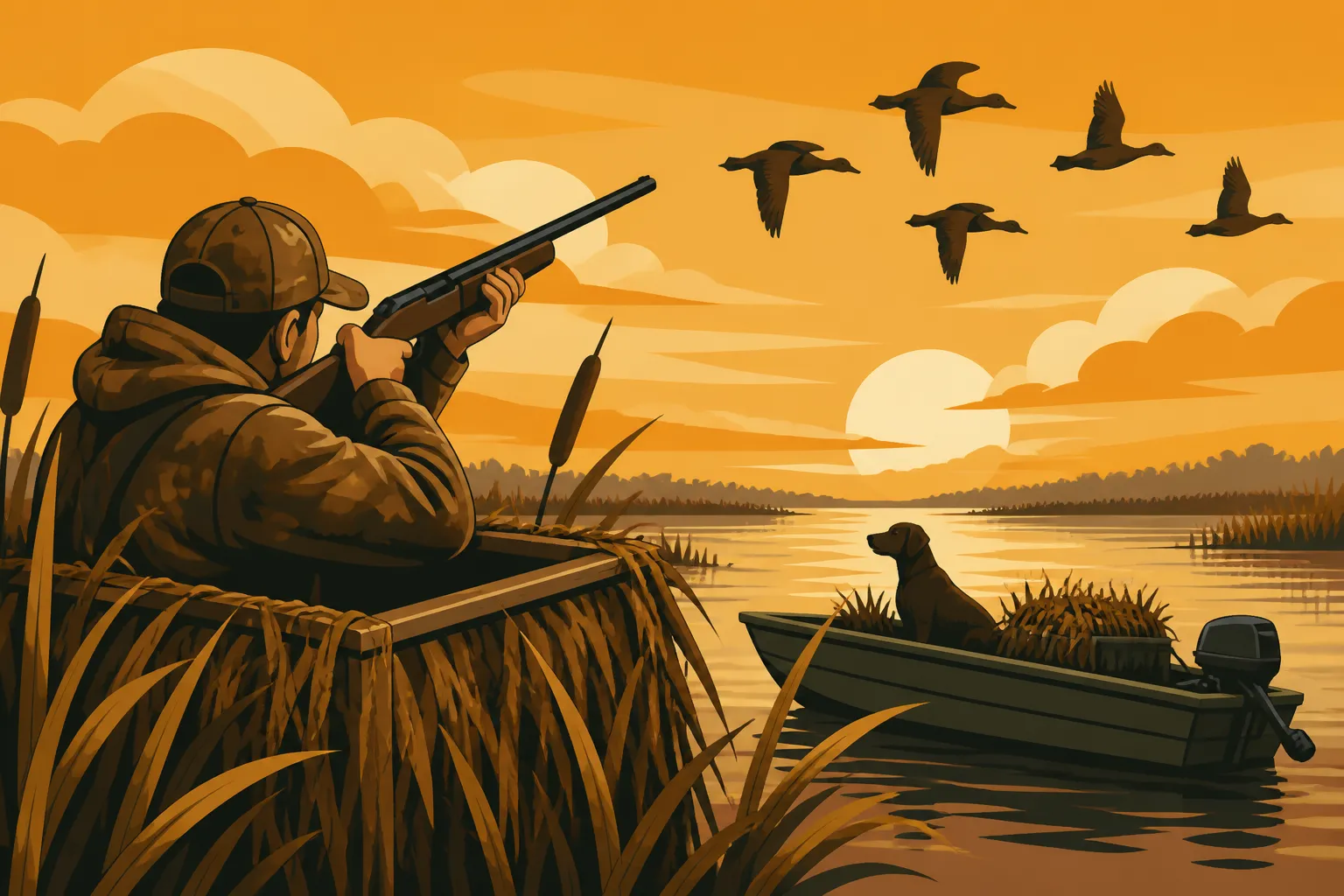
The world of marsh boats is more diverse than many realize. At one end, you have the highly specialized "sneak boats" or "layout boats" specifically designed for waterfowl. These are typically very low-profile, often resembling a large kayak or a floating coffin, and are intended for a single hunter to lie inside, completely concealed, on the open water. They are incredibly stable for their size and have integrated grassing rails for brushing in. Imagine lying completely hidden in the middle of a shallow lake or a wide-open marsh, waiting for divers or geese to commit. These are purpose-built for invisibility on the water.
Then you have a range of more utilitarian marsh boats, from small, square-sterned jon boats to larger skiffs, often made of aluminum or fiberglass. These prioritize shallow draft, stability, and enough capacity for a hunter, dog, decoys, and gear. They might not offer inherent concealment like a sneak boat, but they provide the platform for building makeshift blinds or simply accessing areas unreachable by foot. A good marsh boat is rugged enough to withstand stumps, mud, and ice, yet light enough to be pushed or pulled over shallow spots.
Essential Features for Indiana Waterfowling
When choosing a marsh boat for Indiana, several features are paramount. A shallow draft is critical. Many prime hunting areas in Indiana's river bottoms or shallow lakes have fluctuating water levels or expansive mud flats. A boat that can float in just a few inches of water and be easily pushed or pulled through muck is invaluable. Look for a flat or modified-V hull design. Stability is another non-negotiable, especially if you're retrieving birds, setting decoys, or carrying a dog. You don't want a tippy boat when the water is cold.
Finally, consider motor options. Many marsh boats are designed for small outboard motors, typically in the 5-25 horsepower range, or increasingly, electric trolling motors. An electric motor is excellent for quiet approach to a hunting spot or for navigating sensitive areas where gas motors might be restricted. If you're hunting larger bodies of water or current, a reliable gas outboard is a must. Don't forget features like built-in blind attachments, non-skid floors, and ample storage for all your gear, from shotgun shells to extra layers.
Navigating Indiana's Waterways with a Marsh Boat
Indiana offers a surprising amount of navigable water for the dedicated duck hunter. The Kankakee River, with its vast marshlands, is a classic example where a marsh boat is practically a necessity. Imagine pushing silently through winding channels, setting up in a cattail pocket where birds are pitching in. The Wabash River bottoms, especially after a good rain, become a maze of flooded timber and sloughs, perfect for a shallow-draft boat. Hunting the Wabash River Bottoms often requires intimate knowledge of these areas and the ability to access them via water.
Beyond the major rivers, countless smaller creeks, flooded agricultural fields, and private ponds become prime duck habitat. A marsh boat allows you to explore these often-overlooked spots, setting up exactly where the birds want to be, rather than being limited to bank access. It extends your reach, opens up new possibilities, and often allows you to hunt less-pressured birds. Always be mindful of water levels, hidden obstacles like submerged logs or fences, and always wear your life jacket, especially in cold water.
Combining Blinds and Boats for Ultimate Success
The real magic happens when you don't think of layout blinds and marsh boats as separate entities, but as complementary tools in your waterfowling arsenal.
Synergies for Field and Water
Imagine a scenario where a large flock of Canada geese are consistently using a particular cut field for feeding, but their roost is a nearby shallow lake. You might start your morning hidden in a layout blind in the field, waiting for the first flight of geese. After bagging a limit or two, you notice divers are pouring into the lake. You could then pack up your field setup, launch your marsh boat, and quickly transition to a low-profile sneak boat setup on the water to target the divers. This versatility is what truly makes a successful waterfowler.
Marsh boats are also invaluable for deploying and retrieving layout blinds in flooded fields or accessing dry islands within large marshes. You might use your boat to transport your layout blinds, decoys, and dog across a stretch of water to reach a secluded field edge that's inaccessible by vehicle. The boat becomes your mobile base camp, allowing you to move silently and efficiently between different hunting spots or to pick up downed birds in tricky terrain. This adaptability allows you to react to changing bird movements, weather patterns, and hunting pressure.
Logistics of Transport and Deployment
The logistics of getting all this gear from your garage to your hunting spot can seem daunting, but with a bit of planning, it becomes second nature. Most layout blinds are designed to fold flat, making them relatively easy to transport in the bed of a truck or on a small trailer. Marsh boats, especially the smaller sneak boats, can often be trailered behind a regular vehicle or even loaded into a larger pickup. The key is to have a system. Pack your decoys, blind, shotgun, and other essentials in a logical order so you're not fumbling in the dark.
When deploying, teamwork can make a big difference. One person can focus on getting the boat into the water and securing it, while another starts brushing in the layout blinds. Always scout your access points beforehand, ensuring the boat ramp or launch area is suitable for your specific boat and trailer. Consider how you'll get the boat out if conditions change (e.g., water levels drop). Having a sturdy push pole or even a small winch can be a lifesaver in muddy situations.
Optimal Strategies for Different Scenarios
For Hunting Northern Indiana Farmland Deer that also see a lot of waterfowl, a well-brushed layout blind in a cut cornfield is a classic setup. You can place your decoys upwind, creating a landing zone right in front of your blind. In a flooded timber scenario along the White River, a small, quiet marsh boat is essential to navigate the trees and set up a spread in a natural opening. You might then use the boat itself as your blind, camouflaged with natural branches and netting, or step out onto a submerged hummock and use a small, portable panel blind.
For open water like some of the larger northern Indiana lakes, a dedicated layout boat or a heavily grassed marsh boat could be your best bet, especially for pursuing diving ducks. Think about where the birds are roosting, where they're feeding, and how they travel between these areas. Your combination of blind and boat should be chosen to intercept them along these natural flight paths, offering maximum concealment for the specific habitat you're targeting. Always adjust your strategy based on current conditions and bird behavior; what worked last week might not work today.
Maintenance and Safety Considerations for Your Gear
Investing in quality layout blinds and marsh boats is just the first step. Proper care and safety protocols ensure your gear lasts for many seasons and, more importantly, that you come home safely every time.
Cleaning and Storage Best Practices
After a long season of mud, rain, and grime, your layout blind and marsh boat are going to need some serious TLC. For layout blinds, start by removing all the natural vegetation you used for brushing in. Give the fabric a good shake or vacuum to get rid of dirt, mud, and stray corn kernels. If it's particularly dirty, a gentle scrub with mild soap and water can work wonders, but always follow the manufacturer's recommendations for cleaning. Make sure it's completely dry before folding and storing to prevent mold and mildew, which can quickly ruin fabric and leave a nasty smell. Store it in a cool, dry place, ideally out of direct sunlight, to prolong the life of the fabric and frame.
Marsh boats, especially if they've been in muddy or silty water, need a thorough rinse-down. Check the hull for any scratches or dings that might need attention. Clean out any debris, leaves, or mud from the interior. If you have an outboard motor, flush it properly according to the manufacturer's instructions to prevent corrosion, especially if you've been in brackish or silty water. For off-season storage, it's best to keep the boat covered and ideally elevated off the ground to prevent tire rot on trailers and to deter critters.
Repairing Damage in the Field and Off-Season
Things break, rip, or get bent in the field – it's just a fact of hunting. For layout blinds, carrying a small repair kit with heavy-duty thread, a needle, and some patching material (like tear-aid or similar waterproof patches) can save a hunt. Frame components can sometimes be bent back into shape with a little leverage, but more serious damage might require replacement parts. Regularly inspect the stitching and zippers; these are common points of failure. Addressing small tears or loose stitching immediately prevents them from becoming major problems later.
For marsh boats, minor dings and scratches in aluminum hulls can often be left alone, but deeper gouges in fiberglass might need a gel coat repair to prevent water intrusion. Carry a marine repair kit with epoxy or sealant for emergency hull repairs if you hit something unexpectedly. Always check your drain plug, fuel lines, and electrical connections (for lights or trolling motors) before each outing. Proactive maintenance and quick field repairs mean you spend more time hunting and less time troubleshooting.
Ensuring Safety on Indiana's Waters
Safety is paramount when hunting from a marsh boat, especially in cold Indiana weather. Always wear a U.S. Coast Guard-approved life jacket, even if you're an experienced swimmer. Cold water can quickly incapacitate you, making it impossible to swim or even stay afloat. Let someone know where you are going and when you expect to return. This "float plan" is critical. Carry essential safety gear: a first-aid kit, whistle, flashlight, bailing device, and a fully charged cell phone (in a waterproof bag).
Be aware of changing weather conditions. Indiana weather can be unpredictable, and a calm morning can quickly turn into a windy, choppy afternoon. Know the limits of your boat and your own capabilities. Avoid overloading your boat with too much gear or too many people. If you're hunting in low light or fog, navigation lights are essential. And remember, alcohol and boating don't mix. Stay sober and stay safe. Your hunting success means nothing if you don't make it home.
Choosing the Right Gear for Your Indiana Hunt
Making the right choices for your layout blinds and marsh boats can feel like a big decision, especially with all the options out there. It really comes down to understanding your specific needs.
Assessing Your Hunting Style and Location
The first step in choosing your gear is to honestly assess where and how you typically hunt. Are you primarily a field hunter, targeting geese and ducks over corn stubble in northern Indiana? Then a robust, easy-to-brush-in layout blind with a comfortable frame is likely your priority. Do you spend more time chasing divers on larger lakes or navigating the flooded timber of the southern river bottoms? A versatile marsh boat, possibly even a specialized sneak boat, coupled with a minimal ground blind for dry spots, would be more appropriate. Hunting the Kankakee River Marshes might demand a different setup than Hunting Northern Indiana Farmland Deer.
Consider the terrain you frequent. If you're walking into remote public land spots, lighter, more portable gear is key. If you have vehicle access right up to your hunting spot, you can afford a heavier, more feature-rich setup. Think about the type of waterfowl you pursue most often. Geese often require a more robust, larger layout blind, while ducks might allow for more minimalist setups, especially if you're trying to hide among reeds or in flooded timber. Your personal comfort level with certain types of gear also plays a role – if you hate lying flat for hours, a low-profile blind might not be for you.
Budgeting for Quality Waterfowling Equipment
Like any specialized hunting gear, layout blinds and marsh boats represent an investment. It's tempting to go for the cheapest option, but often, quality pays dividends in durability, comfort, and ultimately, hunting success. A well-built layout blind will withstand years of abuse, keep you drier and warmer, and offer superior concealment compared to a flimsy, entry-level model. Similarly, a reliable marsh boat can be a lifelong hunting partner, safely getting you into and out of remote areas.
When budgeting, consider the long-term value. Instead of buying a cheap blind every two years, save up for a top-tier model that will last five to ten seasons with proper care. Look for sales, end-of-season clearances, or even quality used gear. Remember to factor in accessories too: blind bags, decoy spreaders, push poles, life jackets, and boat covers all add to the total cost. Think about what will genuinely enhance your experience and safety, and prioritize those items within your budget.
Researching and Buying Your Next Setup
Before you make any big purchases, do your homework. Read reviews from other hunters who use the gear in conditions similar to Indiana's. Watch videos of blinds being set up or boats being navigated. Talk to experienced waterfowlers at your local sporting goods store or hunting club. They often have invaluable insights into what works and what doesn't. When you're ready to compare options and delve into product specifications, online resources like GoHunt can be incredibly helpful. Their detailed product descriptions and user reviews can give you a better sense of real-world performance. You can compare different brands like Avery, Final Approach, or Tanglefree for layout blinds, or various manufacturers for jon boats and specialized sneak boats.
Visiting a physical store allows you to actually see and feel the blind or boat, check its weight, and even try lying in a layout blind to test for comfort. Don't be afraid to ask questions. A knowledgeable salesperson can guide you through the features and benefits of different models. When it comes to marsh boats, consider factors like warranty, parts availability, and local service options. A thorough approach to research will ensure you choose the layout blind and marsh boat combination that sets you up for years of successful Indiana waterfowling.
| Type of Blind/Boat | Primary Use Case | Pros | Cons |
|---|---|---|---|
| Full-Frame Layout Blind | Open field goose/duck hunting | Excellent concealment, comfortable, keeps hunter dry | Bulkier to transport, requires good brushing-in |
| Low-Profile/Panel Blind | Extremely wary birds, shallow water edges | Max concealment, often very light/portable | Less comfortable, minimal protection from elements |
| Specialized Sneak Boat | Open water diver/sea duck, large marshes | Supreme concealment on water, stable | Limited capacity, specialized use, can be expensive |
| Aluminum Jon Boat (Small) | Access to shallow rivers/marshes, decoy hauling | Durable, shallow draft, versatile | Minimal inherent concealment, requires separate blind |
Disclaimer
This article is for general informational purposes only and does not constitute professional advice. Laws, prices and regulations vary by location and change over time. Consult a qualified professional for guidance on your specific situation.