E-Collar Use on Public Ground
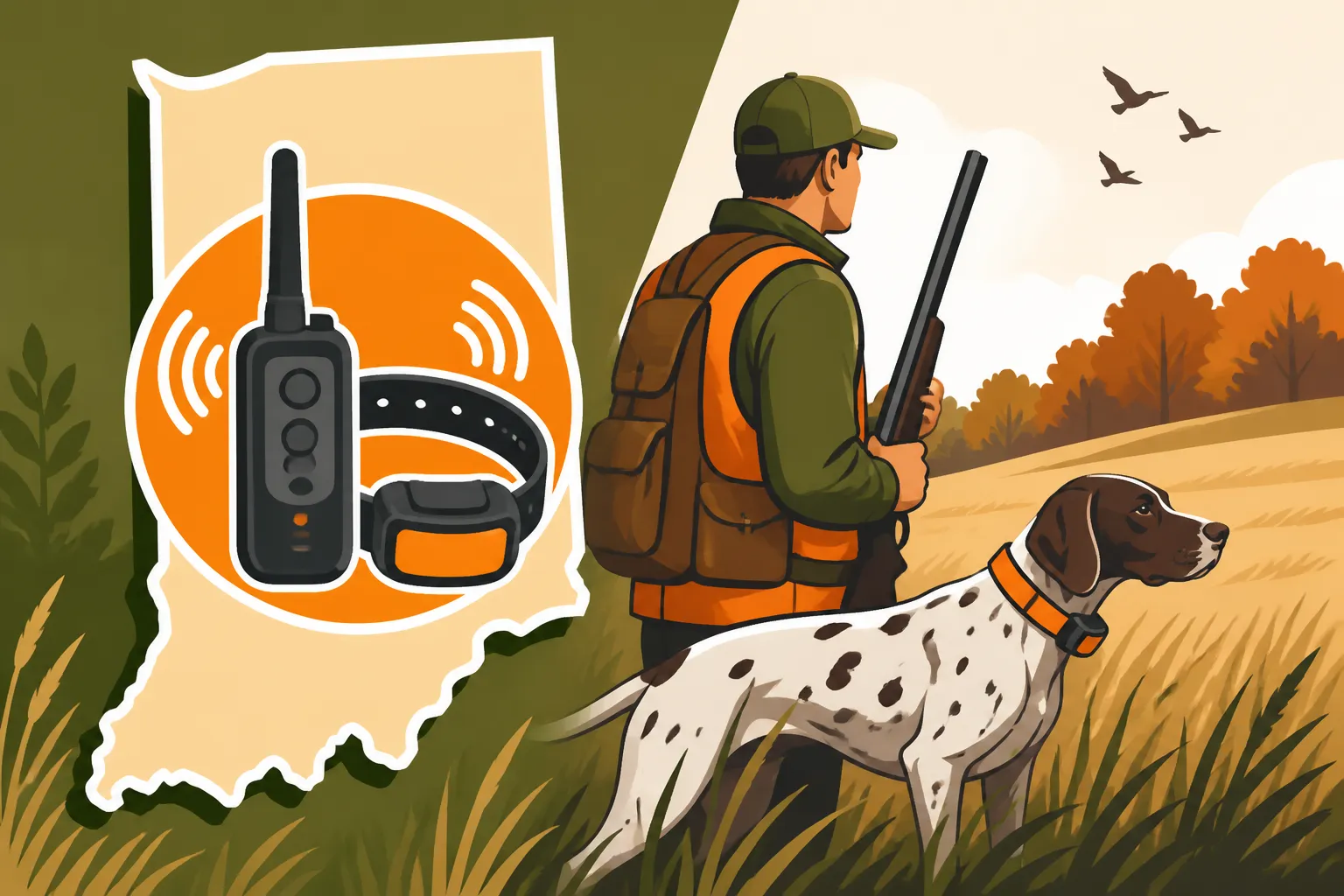
It’s a common frustration for many of us who hunt with dogs: you want to ensure your canine companion is well-behaved, responsive, and safe in the field, but figuring out the rules and social etiquette for using tools like e-collars on Indiana’s public hunting grounds can feel like navigating a maze. This guide aims to clear up the confusion, delve into the legality and ethics, and offer practical advice for responsible e-collar use while training your hunting dog across the Hoosier State.
Understanding Indiana's E-Collar Regulations on Public Land
Indiana has a robust tradition of hunting with dogs, whether it's for flushing pheasants, tracking rabbits, or retrieving ducks. With that tradition comes a responsibility to understand the tools we use for training. E-collars, sometimes called remote trainers, are valuable devices when used correctly, but their use, especially on public land, often raises questions.
Official DNR Stance on E-Collars
First and foremost, let's address the core question: Are e-collars legal for dog training on Indiana public lands? The short answer is generally yes, with some important nuances. The Indiana Department of Natural Resources (DNR) does not explicitly prohibit the use of e-collars for dog training on public hunting properties, state forests, or Fish and Wildlife Areas (FWAs). This isn't a free pass, however. Your use of an e-collar must still adhere to all other hunting and training regulations, and it must be done in a humane and responsible manner.
Think of it this way: the e-collar itself isn't the problem; it's how it's wielded. The DNR's primary concern is the welfare of wildlife and the experience of all public land users. If your training methods, even with an e-collar, are disruptive, harmful, or violate other rules, you could still face issues. This means understanding general rules for Dog Training on Indiana Public Land, such as designated areas or times where dog training is permitted, leash laws in certain zones, and avoiding interference with other hunters or wildlife. It’s always a good idea to check the specific regulations for the individual property you plan to visit, as rules can vary slightly from one FWA to another, or between state forests and other public access points.
Distinction Between Training and Hunting
It's crucial to understand that there can be a subtle but significant distinction between using an e-collar for training purposes and using it during an actual hunt. While most e-collar use falls under general dog training, some regulations pertain more specifically to hunting methods. For instance, you can't use an e-collar to harass or intentionally injure game animals. The collar is a training aid for your dog's behavior, not a tool to manipulate wildlife directly.
When you're actively hunting, say for pheasants at Willow Slough FWA or chasing rabbits at Tri-County FWA, your dog's e-collar is generally viewed as an extension of your control over the animal. This is perfectly acceptable, as long as it's within the bounds of legal hunting methods. Where things can get tricky is if the collar is perceived as giving your dog an unfair advantage in a way that goes against fair chase principles, though this is rarely an issue with standard e-collars. For example, using a tracking collar with GPS functionality is common and accepted, providing you with valuable information, especially if your dog ranges wide. Many hunters use mapping applications that integrate public land boundaries, and resources like GoHunt can be invaluable for understanding the specific nuances of an area before you even set foot in the field, helping you identify appropriate training spots and avoid unintended trespass.
Ethical Considerations and Public Perception
Beyond the letter of the law, there's the spirit of the law and the broader ethical responsibility we carry as hunters and dog owners. Public lands are shared spaces, and how we conduct ourselves, and how our dogs behave, leaves an impression on everyone else.
Minimizing Disturbance to Wildlife and Other Users
One of the biggest ethical considerations when using an e-collar, or training a dog in general, on public land is minimizing disturbance. This applies to both wildlife and other human users. Imagine you're out trying to scout for deer, or maybe a family is enjoying a quiet hike, and suddenly a dog is running wild, barking incessantly, or worse, chasing a deer, only to be "corrected" with an e-collar. This creates a negative experience for everyone involved and can give e-collars, and dog training in general, a bad name.
Responsible e-collar use means ensuring your dog is under control before situations escalate. The e-collar should be a tool for reinforcement and refinement, not a last resort for an out-of-control animal. This means starting your training in controlled environments, gradually introducing distractions, and ensuring your dog understands commands before taking them to busy public areas. Choosing less-trafficked areas, especially during peak hiking or Hunting Pressure on Indiana Public Land times, is also a smart move. When you're trying to find those quieter spots, detailed digital maps available through services like GoHunt can be immensely helpful in identifying remote corners of state forests or less-used sections of a larger FWA.
Ensuring Humane Application
The perception of e-collars often suffers from misconceptions that they are inherently cruel or inflict pain. The reality is that modern e-collars are highly sophisticated tools with multiple levels of static stimulation (often called "levels"), as well as vibration and tone options. When used correctly, the static stimulation is more akin to a muscle twitch or a "tap" than a painful shock. The goal is to get your dog's attention and communicate a command, not to punish them severely.
Key to humane application is starting with the lowest effective stimulation level. Each dog is different, and what's a noticeable "tap" for one might be ignored by another. You want to find the level that barely gets their attention, causing a head turn or an ear twitch, but no yelp or adverse reaction. Always test the collar on yourself first to understand what your dog will feel. Consistent and fair application, where the dog clearly understands why they are being corrected, builds trust and reinforces training, rather than creating fear. This requires patience and a good understanding of canine behavior, and perhaps even some Indiana Hunter Education Requirements for dog owners!
Practical Tips for Responsible E-Collar Training Afield
So, you've decided an e-collar is the right tool for your hunting dog's training. Great! Now, let's talk about how to use it effectively and responsibly on Indiana's public lands.
Starting with the Basics
Before you ever take your dog to a public hunting area with an e-collar, master its use in a controlled environment. Your backyard, a quiet park, or a friend's large, fenced property are ideal. Your dog needs to understand basic commands like "here," "heel," "sit," and "stay" without the e-collar first. The e-collar is then introduced as a way to reinforce these known commands, not to teach new ones.
Begin with conditioning: pair a low-level stimulation with a command they already know, like "here" while gently pulling on a long line. As they comply, release the stimulation and praise them. The dog quickly learns that turning off the stimulation is as simple as performing the command. This builds a positive association, helping your dog understand the collar as a communication tool rather than a punitive device. Remember, consistency is king. Short, frequent training sessions are far more effective than long, infrequent ones. Building this foundation will pay dividends when you're later attempting something like Hunting River Bottom Funnels with your dog, needing them to stay close or retrieve on command in challenging terrain.
Choosing the Right Collar and Settings
Not all e-collars are created equal. Just like other hunting gear, there's a wide range of quality, features, and price points. For hunting dogs, you'll generally want a waterproof collar with a decent range and multiple stimulation levels. Brands like Garmin, Dogtra, and SportDOG are popular among serious bird dog and retriever trainers. They offer reliability and durability for demanding field conditions.
Here’s a quick overview of common e-collar features:
| Feature/Setting | Description | Ideal Use for Hunting Dogs |
|---|---|---|
| Tone/Beep | Audible alert, often programmable. | Pre-warning for static stimulation, recall cue, "attention getter." |
| Vibration | A physical buzz or shake. | Mild reminder, for sensitive dogs, pre-warning, silent recall. |
| Momentary Static | A single, short burst of static stimulation. | Quick, precise correction for known commands, reinforcing a "no." |
| Continuous Static | Stimulation continues as long as the button is pressed (usually with a safety cut-off). | For strong distractions, breaking bad habits, emergency stop, conditioning. |
| Booster/Jump | A pre-set higher static level, often a quick jump from your normal working level. | For high-distraction environments or emergency situations where immediate response is critical. |
When setting up your collar, always start with the lowest static level on your dog's neck that they can perceive. This is often called the "working level." You're looking for a slight head turn, an ear twitch, or a momentary pause—just enough to get their attention without causing distress. The goal isn't to make them yelp or run away, but to communicate. Carrying extra batteries for your remote and collar, especially during cold weather, is a smart move, just like you would for your GPS unit or flashlight.
Training Scenarios on Public Ground
Once your dog understands the e-collar in controlled settings, you can gradually introduce them to public hunting lands. Start with less busy areas or during off-peak hours. For example, hitting a public area like a state forest during a weekday morning will likely expose you to fewer people than a sunny Saturday afternoon. Utilizing detailed maps, perhaps through GoHunt or another mapping service, can help you find those quieter corners where you can train without much interruption.
Here are some scenarios where e-collars shine on public land:
- Recall in Distraction: Your dog gets a whiff of a pheasant or a deer and starts to bolt. A quick tone, followed by a low-level static if they don't respond to the tone, coupled with your "here" command, reinforces that coming to you is paramount, even with tempting distractions. This is vital when Hunting Northern Indiana Farmland Deer where other game might be present.
- Proofing "Stay" or "Whoa": You want your bird dog to hold a point or your retriever to "blind retrieve" a downed bird. In a real hunting scenario, a long "stay" is crucial. If your dog breaks early, a quick, low-level static reminds them of the command.
- Boundary Training: While not always applicable on public land for physical boundaries, it can be used for invisible boundaries, like keeping your dog from ranging too far into thick cover where they might spook game or get lost. A gentle "recall" or correction can bring them back into your desired working range.
- Avoiding Unwanted Interactions: If another dog or person approaches and your dog gets overly excited or aggressive, a low-level static can break their focus and redirect their attention back to you, allowing you to manage the situation calmly.
Always be aware of your surroundings. If you see other hunters or dog walkers approaching, consider leashing your dog or giving them a "heel" command to keep them close and ensure a positive interaction. Being respectful of others is key to ensuring that public lands remain accessible for all forms of recreation, including dog training and hunting. Think about bringing a good Upland Vests With Water Capacity for both you and your dog, especially on longer training days afield.
Maintaining Public Access and Positive Perceptions
The future of hunting with dogs, and the use of training tools like e-collars, on Indiana's public lands hinges largely on responsible usage. Each time we step afield with our dogs, we are ambassadors for the sport.
Adhering to Rules and Being Considerate
This can't be stressed enough: always know the specific rules for the public property you're on. Some Fish and Wildlife Areas might have specific dog training areas or require leashing in certain zones. State forests generally offer more freedom, but still require common sense and respect for others. Maps and apps, including features often found in GoHunt, are excellent for familiarizing yourself with these boundaries and rules. Look up Scouting Indiana Public Land Before Season information to understand seasonal nuances.
If you encounter another person, be proactive. Call your dog to heel, put them on a leash if necessary, and engage in polite conversation. A well-behaved dog reflects positively on you and the hunting community. A dog that is under voice and e-collar control is less likely to cause issues or leave a negative impression. This simple act of consideration can go a long way in preventing future restrictions on dog training on public grounds.
The Role of Advocacy and Education
Part of being a responsible e-collar user is also being willing to educate others. If someone asks about your e-collar, calmly explain how it works, why you use it, and how it helps you keep your dog safe and under control. Demystifying the tool can help counter negative stereotypes. When you showcase a well-behaved, happy hunting dog working efficiently and safely, you are the best advocate for your training methods.
Supporting organizations that promote ethical dog training and preserve hunting opportunities is also vital. These groups often work with state agencies to ensure that reasonable access for dog training and hunting remains available on public lands. By using e-collars responsibly, being considerate of others, and engaging in positive advocacy, we can ensure that Indiana’s public lands remain great places to train and hunt with our beloved canine companions for generations to come.
Disclaimer
This article is for general informational purposes only and does not constitute professional advice. Laws, prices and regulations vary by location and change over time. Consult a qualified professional for guidance on your specific situation.