Roost Hunting Indiana Gobblers
There's nothing quite like the sound of an Indiana gobbler hammering on the roost just before dawn, signaling the start of another exciting day in the spring woods. Yet, for many hunters, getting those birds to fly down within range, or even just confirming their location, can feel like trying to catch smoke. This guide aims to demystify the art and science of roost hunting Indiana gobblers, offering practical strategies to turn those distant morning gobbles into close encounters.
Understanding Roosting Behavior in Indiana
Before you can even think about calling a gobbler off the limb, you've got to understand why and where they choose to spend the night. Turkeys aren't just randomly picking trees; there's a method to their madness, driven by survival and instinct. If you can anticipate their choices, you're already a step ahead.
Why Gobblers Roost Where They Do
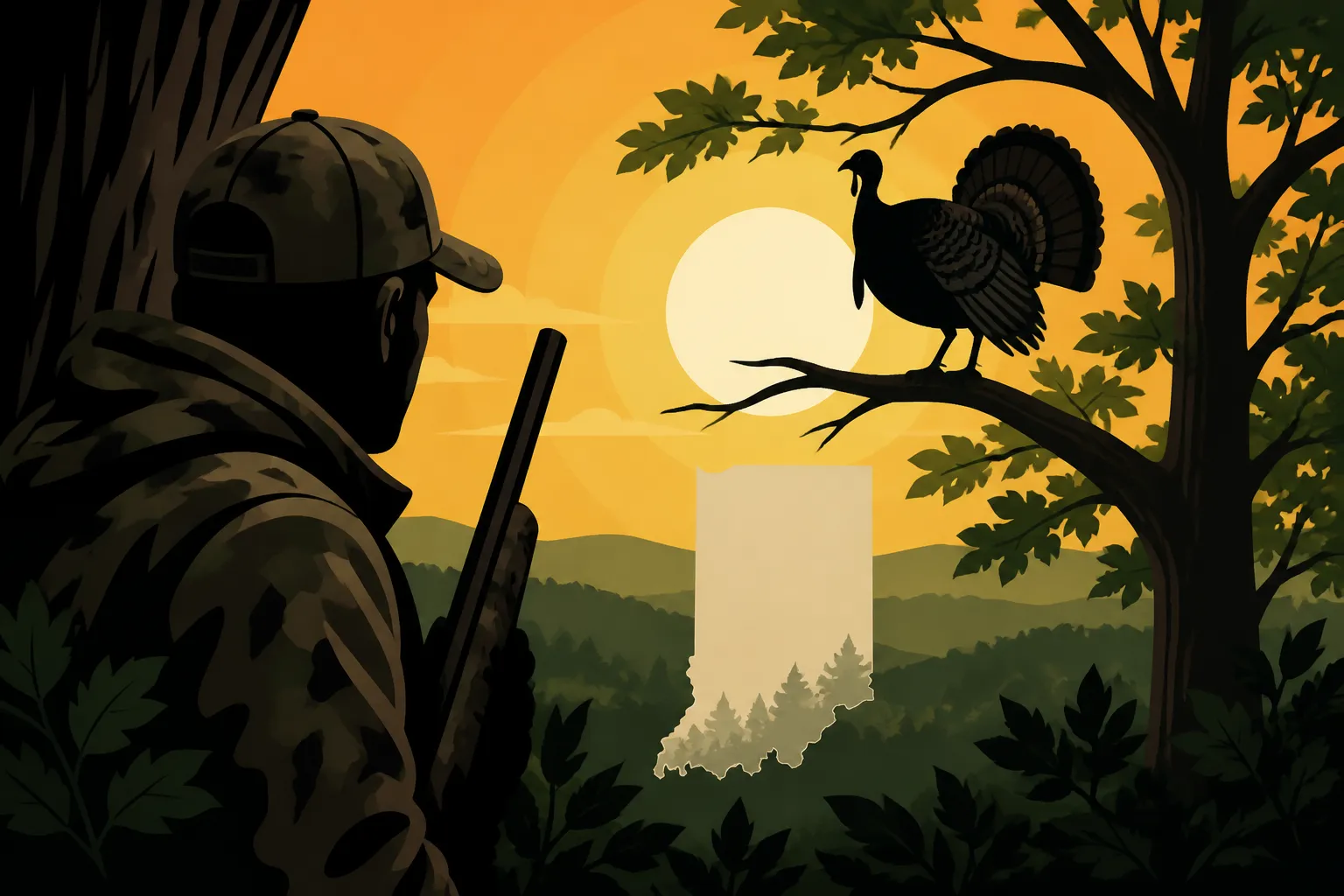
Gobblers, like all wild turkeys, are vulnerable at night. Their roosting behavior is primarily about safety. They seek out tall, sturdy trees that offer a good vantage point and protection from ground predators like coyotes, foxes, and bobcats. In the diverse Indiana landscape, this can mean different things. In the rugged southern hills, you'll often find them in towering oaks or poplars on a ridge line, where they can see for miles. These elevated positions give them an early warning system.
Conversely, in the flatter, more agricultural northern parts of the state, roost trees might be limited to mature timber stands within fencerows, small woodlots, or creek bottoms. These trees, while not offering the same elevation, still provide a sense of security due to their height and cover. They're looking for the biggest, strongest trees that can support their weight, often with horizontal limbs that make for a comfortable perch. The proximity to food and water sources also plays a role, as they want to be close to where they'll spend their day feeding and strutting, minimizing the time they're vulnerable on the ground.
The Importance of Scouting for Roosts
Imagine waking up at 3 AM, driving an hour to your spot, hiking a mile in the dark, and then… silence. No gobbles, no birds. It's a frustrating scenario many of us have faced, and it’s often due to insufficient pre-season scouting. You simply can't expect to consistently kill birds if you haven't put in the legwork to locate their roosting areas.
Scouting isn't just about finding droppings or feathers, though those are certainly key indicators. It's about understanding the entire turkey ecosystem in your hunting area. Start weeks, even months, before the season. Listen at dusk and dawn. Use locator calls – an owl hooter or crow call can often elicit a shock gobble, giving away a bird's location without needing to call directly to it. Pay attention to topography, looking for those natural travel corridors and preferred roosting sites. Tools like OnX Hunt, or even just a good paper map, combined with time in the woods, are invaluable. For a deeper dive into effective pre-season preparation, check out our guide on Scouting Indiana Public Land Before Season. The more you know about where a bird is likely to spend the night, the better your chances of being in the right place at the right time.
Seasonal and Weather Impacts on Roosting
Just like us, turkeys react to changes in their environment. The early spring season might see gobblers roosting closer to hens, or in more secluded spots as they establish their pecking order. As the season progresses and breeding activity heats up, they might be more vocal on the roost and fly down more predictably. But weather, oh the weather in Indiana, can throw a wrench into everything.
A cold front, for instance, might make birds roost tighter in thicker timber for warmth, or delay their fly-down slightly. Heavy winds can make them reluctant to gobble on the limb, and they might choose more sheltered areas out of the direct blast. Rain can dampen their enthusiasm for gobbling and even impact their hearing, potentially making them less responsive to calls. Conversely, a clear, still morning after a storm can be electric, with birds gobbling their heads off. Understanding these nuances and how they might affect a turkey's roosting choice and behavior is crucial for adapting your strategy on the fly. Don't be afraid to adjust your plans based on what the Indiana weather is doing.
Techniques for Locating Roosted Birds
Finding a roosted gobbler is often a game of stealth and patience, especially when you're dealing with pressured birds on public land. It's not always about hearing that booming gobble right over your head; sometimes it's about piecing together subtle clues.
The Power of Listening at Dusk and Dawn
There's nothing quite like that first pre-dawn gobble that echoes through the quiet woods. Many hunters get frustrated because they miss the brief window when birds are most vocal on the roost. To effectively locate a roosted bird, you need to be in position well before first light, or stay until well after dark during scouting trips. The last few minutes of daylight and the first hour of legal shooting light are prime times to listen. Move slowly and quietly through your chosen area, pausing frequently to listen.
Use locator calls sparingly. An owl hoot or a crow call can often get a shock gobble without putting undue pressure on the bird with turkey-specific sounds. If you're out scouting, a coyote howl can be incredibly effective just after dark. The key is to be subtle and not overdo it. You're trying to pinpoint their location, not call them in. Once you hear a gobble, use a compass or your phone's GPS to mark the direction and try to triangulate their position from multiple points. This helps you get a precise fix, especially in vast areas like Morgan-Monroe State Forest, where sounds can bounce and deceive.
Using Terrain and Topography to Your Advantage
Knowing where a bird is roosted is one thing, but understanding how it will use the terrain upon flying down is another. A common frustration is having a bird gobble its head off, only to fly down over a ridge or into a dense thicket, completely out of your reach. Turkeys are creatures of habit and will often fly down into open areas or along established travel corridors where they feel safe and can begin their daily routine.
If a bird is roosted on a ridge, it's highly likely it will fly down into the nearest open bottom, flat, or bench. Your job is to predict that path and set up accordingly. Look for areas with sparse undergrowth, logging roads, or field edges. Understanding how to interpret topographical maps to identify these features – saddles, draws, benches, and creek bottoms – is critical. Our article on Reading a Ridge for Hoosier Forest Deer provides excellent insights into deciphering terrain that directly applies to turkey movement patterns as well. Similarly, river bottom funnels, as explored in Hunting Indiana River Bottom Funnels, can be prime fly-down zones because they offer natural travel routes and often contain mature roost trees. Anticipate their movements, don't just react to them.
Modern Tools for Roost Scouting
While nothing beats boots on the ground, modern technology has certainly made roost scouting more efficient. Mapping applications like OnX Hunt, BaseMap, or GoHunt have become indispensable tools for the serious turkey hunter. These apps allow you to view aerial imagery and topographical maps, helping you identify potential roosting areas from the comfort of your home. Look for the tallest timber on ridge lines, along major creek drainages, or isolated woodlots surrounded by fields.
For example, with GoHunt, you can zoom in and identify specific large oaks or sycamores that stand out, especially if they are located near open fields or established strut zones. You can mark these potential roost trees or clusters of trees as waypoints. While trail cameras aren't typically used for capturing birds actually on the roost, they can be valuable in identifying travel corridors and feeding areas that lead to and from suspected roost sites. Placing cameras along logging roads or field edges leading into timber blocks can reveal patterns of turkey movement, giving you clues as to their daily routine and, by extension, where they might be roosting. This digital reconnaissance can save you countless hours of aimless wandering in the woods.
Setting Up for the Fly-Down
Once you've located a roosted gobbler, the next crucial step is executing a flawless setup. This is where many hunts are won or lost; a subtle mistake can send a wary gobbler flying the wrong direction.
Approaching the Roost Quietly and Safely
The moments leading up to legal shooting light are tense, exciting, and absolutely critical. The most common frustration here is spooking the bird you've worked so hard to find. A silent approach in the dark is paramount. Know your route in advance, use your mapping app to navigate precisely, and move slowly. Avoid crunching leaves or snapping twigs at all costs. Sometimes this means a longer, more circuitous route that avoids thick undergrowth or noisy terrain.
Consider the wind direction, if possible, although it's often negligible in the pre-dawn stillness. Your goal is to get as close as possible without being detected, ideally within 100-150 yards, depending on the terrain and cover. If you hear a bird rustle its wings on the limb or cluck softly, freeze. Wait for it to settle down. Safety is also a major concern, especially on public land during overlapping seasons. While turkey season has its own rules, wearing a bit of blaze orange or blaze pink on your walk-in, then removing it or covering it once you're set up, is a smart practice to make yourself visible to other hunters during low light conditions. Always confirm your target and what's beyond it.
Strategic Decoy Placement
Decoys can be a game-changer or a detriment, depending on how you use them. A major frustration is having birds hang up just out of range, eyeing your decoys with suspicion. The key is strategic placement. For a roosted bird, you want your decoy to be visible from the roost tree, but not so close that the gobbler feels exposed upon flying down. A general rule of thumb is to place your decoy(s) 15-20 yards from your setup, facing the direction you expect the gobbler to approach.
The type of decoy matters too. A single hen decoy is often sufficient, signaling a receptive mate. If you want to evoke aggression, a jake or even a full strut gobbler decoy can work, but be mindful of hunting pressure. On heavily hunted public land, aggressive decoys can sometimes scare off wary birds who've learned to associate them with danger. Position them so the gobbler sees them as a challenge or an opportunity, drawing him into your shooting lane. For more nuanced tips on drawing in educated birds, delve into Decoy Placement for Pressured Indiana Birds.
Positioning Yourself for the Shot
Once you're in the general vicinity of the roost, it’s time to pick your exact ambush spot. The biggest frustration here is not getting a clear shot, or having the bird hang up where you can't see it. You need to position yourself with a solid, immovable object behind you – a large tree trunk is ideal. This breaks up your outline and prevents the sharp eyesight of a turkey from spotting your movements. Make sure you have clear shooting lanes in the direction you anticipate the bird will fly down and approach.
Consider the sun's position. Turkeys have excellent eyesight, and having the sun in their eyes (and at your back) can give you a crucial advantage. Think about the natural fly-down path. If a gobbler is on a ridge, it'll likely fly to the nearest open flat or bench. If it's over water, it might fly to the closest dry ground. A good reference for choosing such spots is our guide on Setting Up Against a Big Oak, which emphasizes the importance of cover and clear lines of sight. Ensure you can comfortably raise your shotgun or bow for a shot without excessive movement. Minimal movement is paramount, as a turkey's eye can pick up the slightest shift.
Calling Tactics for Roosted Gobblers
The call is your voice in the woods, and knowing how to speak the turkey language at the right time is crucial for luring a gobbler off the limb and into range. It's a delicate balance of enticing and not overdoing it.
The Art of the Soft Tree Yelps
As the first light begins to paint the eastern sky, a roosted gobbler is often trying to locate hens before flying down. This is where soft, realistic tree yelps come into play. Many hunters make the mistake of hammering loud, aggressive calls right off the bat, which can be unnatural and pushy to a waking bird. Instead, start with very soft, contented clucks and purrs, mimicking a hen just waking up on the limb.
If the gobbler responds, don't immediately call back. Let him gobble a few times, building his anticipation. Then, offer a few soft, lazy tree yelps. You're trying to sound like a hen that's still on the roost but interested. The goal is to make him believe there's a hen waiting directly beneath him, so he flies down to you. Resist the urge to call too loudly or too frequently. Let him do most of the talking, and only respond enough to keep him engaged. This subtle approach can be incredibly effective in coaxing a bird off the limb.
Aggressive Calling Post-Fly Down
Once the gobbler hits the ground, the dynamic shifts. If he's landed and isn't immediately heading your way, it might be time to increase the intensity of your calling. He's now looking for that hen he heard. This is when more aggressive yelps, cutts, and even cackles can be effective. You're trying to create a sense of urgency and competition, making him think another gobbler might steal his hen.
Sometimes, after a gobbler flies down, he'll "hang up," meaning he stops just out of range and gobbles, expecting the hen to come to him. This is a common frustration. In this scenario, you might try a series of loud, excited yelps and cutts, perhaps even incorporating some excited clucking. Don't be afraid to put some emotion into it. The idea is to convince him that the hen is either hot and bothered or she's moving away from him. While the specifics differ for species, the general principle of varying vocalizations and intensity applies, similar to how one might consider Grunt Calls in Mature Indiana Timber for deer—it’s about matching the mood of the animal. If he starts coming, scale back the calling and let him finish the distance.
Adaptability and Reading the Bird
Perhaps the most crucial aspect of calling to roosted gobblers is adaptability. No two birds are the same, and what works one day might not work the next. It’s incredibly frustrating when you stick to a "perfect" calling sequence only to have the bird ignore you. You need to be able to read the bird's responses and adjust your tactics accordingly. If he's gobbling aggressively, he might respond well to more intense calling. If he's quieter, a more subtle approach might be better.
Listen to the tone and frequency of his gobbling. Is it fading, indicating he might be moving away? Is it getting louder, meaning he's closing the distance? Be ready to switch calls – from a slate to a mouth call, for instance – to offer a different sound profile. Sometimes, silence is the best call. If a bird is coming hard, stop calling and let him come the rest of the way. Over-calling can easily spook a wary gobbler. Using tools like GoHunt to review previous hunt areas or observe patterns of other hunters can sometimes provide insights into how local birds react to different calling styles. Patience and confidence in your calling, even when a bird isn't cooperating, are key. Our guide on Calling an Indiana Gobbler Off the Roost offers more specialized tips for these tricky situations.
Common Mistakes and How to Avoid Them
Even seasoned turkey hunters make mistakes, especially when the adrenaline is pumping. Identifying these common pitfalls and learning to avoid them can significantly increase your success rate.
The Lure of the "Hot Gobble"
That intense, booming gobble coming from just over the next ridge can be an irresistible siren song. It’s a classic frustration: you hear a "hot gobble," drop everything, and sprint towards it, only to either spook the bird, or find it's already flown down and walked away by the time you arrive. Chasing a hot gobble blindly is a common mistake.
Instead of rushing in, take a breath. Evaluate the situation. Is the bird moving? Is it on the ground or still on the roost? Often, that hot gobble is coming from a bird already on the ground, potentially with hens, and he's not going to come running to you. Stick to your initial plan, or make a calculated move if necessary. If you must move, do it slowly, using terrain features for concealment, and reassess frequently. Sometimes, letting that "hot gobble" fade and waiting for a more opportunistic setup, or a quieter bird, is the better play. Remember, a bird gobbling a lot isn't necessarily easier to kill; sometimes it means he's surrounded by hens or has already committed to another area. For situations where a run-and-gun approach is effective, consider tactics discussed in Run-and-Gun Turkey Tactics on Public Land, but know when to apply them versus when to stick to a static roost setup.
Overcalling and Under-Calling
The balance between too much and too little calling is a constant struggle for turkey hunters. Overcalling is a rampant issue, especially with excited new hunters. It sounds unnatural, spooks wary birds, and can make a gobbler hang up because he knows exactly where you are and expects you to come to him. Conversely, under-calling can leave a gobbler believing there's no hen interested, and he'll move on. This can be particularly frustrating when you know a bird is close but just won't commit.
The solution lies in listening and adapting. Let the bird dictate the pace. If he's gobbling aggressively, you can be a bit more assertive with your calls. If he's quiet or hesitant, back off and use softer, more infrequent calls. Sometimes, waiting 10-15 minutes between calls, especially after he's flown down, can create just enough intrigue to draw him in. It takes practice and experience to get a feel for a specific bird's mood. Experiment with different calls and volumes, and pay close attention to how the gobbler responds. Our guide on Turkey Calls Worth Carrying in Indiana can help you choose the right tools for this delicate dance.
Dealing with Hunting Pressure
Public land in Indiana sees its fair share of turkey hunters, and dealing with pressure is an unfortunate reality. It's frustrating to have another hunter walk in on your setup, or hear calls from multiple directions, potentially spooking birds you've been working. When birds are pressured, they become educated. They learn to associate certain calls or situations with danger.
To combat this, try to hunt areas that are harder to access. Walk further, explore deeper into public land like the Hoosier National Forest, or scout those overlooked, smaller parcels. These less-pressured areas are where you'll find more consistent turkey behavior. Avoid obvious spots and easy access points. Consider scouting during the week when pressure is lighter. If you encounter another hunter, be polite and respect their space. Sometimes, having GoHunt maps to identify remote corners or difficult terrain can give you an edge, allowing you to get into spots others overlook. Understanding the dynamics of Hunting Pressure on Indiana Public Land is essential for developing effective strategies.
Optimal Roost Hunting Conditions and Tactics
Here's a quick reference to help you plan your roost hunt, considering various scenarios you might encounter in the Indiana woods.
| Condition | Gobbler Roosting Behavior | Ideal Calling Strategy (Dusk) | Ideal Calling Strategy (Dawn) | Recommended Setup Strategy |
|---|---|---|---|---|
| Clear, Calm Morning | Highly vocal, often flies down predictably. | Locator calls (owl, crow) to confirm. | Soft tree yelps, contented clucks. | Within 100-150 yards, decoys visible. |
| Windy Morning | Less vocal, might roost in sheltered areas. | Listen intently, minimal locators. | Soft, slightly louder yelps. | Set up tight, anticipate limited range. |
| Rainy/Damp Morning | Quieter, might fly down late, or not at all. | Avoid calling if raining. | Very soft clucks/purrs post-rain. | Patience, focus on travel corridors. |
| Heavy Hunting Pressure | Wary, might gobble less or fly down silently. | Very discreet scouting. | Minimal, realistic calls, lots of silence. | Deep in cover, avoid open areas, no aggressive decoys. |
| Near Active Hens | Gobbles towards hens, might ignore your calls. | Subtle calls, mimic curious hen. | Focus on sounding like a receptive hen near his roost. | Close to the roost, within his sightline to compete. |
| Post-Fly Down Hang-Up | Gobbles but won't commit. | N/A (already on ground) | Aggressive yelps/cutts, subtle movements. | Patience, try to move slightly to change angle if safe. |
Disclaimer
Hunting is an inherently dangerous activity. Always prioritize safety, follow all Indiana Department of Natural Resources regulations, and obtain proper licenses and permits before heading afield. Be respectful of private property and other hunters. The information provided in this guide is for educational purposes and general guidance only; individual hunting situations will vary.