Deer Carts on Forest Roads
There's nothing quite like the rush of a successful hunt in Indiana, whether you're deep in the Hoosier National Forest or tucked away in a northern Indiana woodlot. But let's be real, that triumphant feeling can quickly turn into dread when you consider the monumental task of dragging a several-hundred-pound whitetail out of the woods, especially when your truck is still a long hike away, down a rutted-out forest road. This guide is here to tackle that very problem, offering insights into how deer carts can be your best friend when it comes to game recovery on Indiana's varied forest roads and how to choose and use one effectively.
The Indispensable Role of a Deer Cart on Indiana Forest Roads
Dragging a deer by hand, particularly a mature Indiana buck or a heavy doe, is one of the most physically demanding parts of hunting. It's often where injuries happen, and frankly, it can turn an otherwise perfect day into an exhausting ordeal. This is especially true when you're far from your vehicle, navigating challenging terrain, and feeling the clock tick on game spoilage. A good deer cart transforms this arduous task into a manageable one, allowing you to focus on the joy of the harvest rather than the pain in your back.
Easing the Physical Burden and Preserving Your Harvest
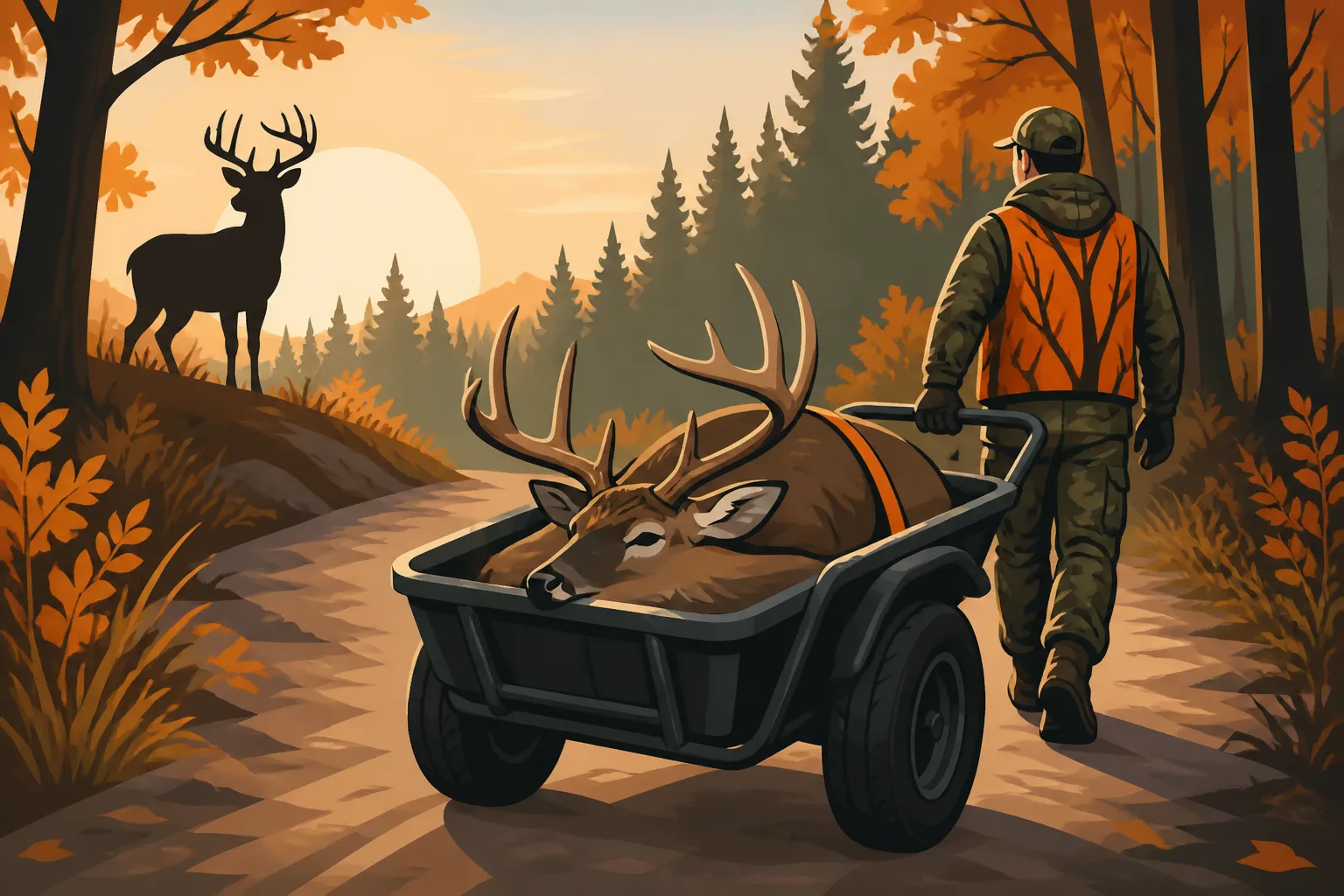
Imagine you've just dropped a beautiful buck a mile and a half deep into the Hoosier National Forest. The adrenaline is still pumping, but the reality of getting that animal back to the truck starts to set in. You're solo, and the thought of dragging that weight over logs, through thick underbrush, and across uneven ground is daunting. This is precisely where a deer cart shines. Instead of literally dragging the deer, which forces you into awkward postures and strains your back, shoulders, and knees, a cart allows you to lift and secure the animal, then push or pull it with much greater leverage. This simple mechanical advantage can prevent injury and significantly reduce fatigue, leaving you with more energy for the important tasks of field dressing and processing your game.
Beyond the physical toll, consider the clock. In early archery season, when temperatures can still soar into the 70s or even 80s, getting your deer out quickly is paramount to preserving the meat. Every minute that deer lies on the ground, especially in direct sunlight, hastens bacterial growth and can lead to spoilage. A deer cart allows for a much faster, more efficient extraction than dragging, especially over longer distances. This speed is crucial for maintaining the quality of your venison, ensuring that all your hard work in the woods pays off with delicious, wholesome meat for the table. It's a small investment that pays dividends in both your physical well-being and the quality of your hard-earned harvest.
Navigating Different Forest Road Conditions
Indiana's public lands offer a diverse range of forest roads, and each presents its own set of challenges for game recovery. You might encounter anything from well-maintained gravel roads to barely discernible old logging trails that are little more than twin ruts overgrown with grass. A deer cart's effectiveness can vary greatly depending on the type of road you're on, and understanding these nuances will help you choose the right cart and deploy it strategically.
On wider, smoother gravel roads, a cart can glide along with relative ease. These are the dream scenarios where you can truly leverage the cart's efficiency. However, many of Indiana's forest roads, particularly those less traveled, are far from smooth. They can be riddled with deep ruts from utility vehicles, soft muddy sections after a rain, or covered in loose, uneven gravel. Some old logging trails might even have small, steep inclines or declines that test your strength and the cart's stability. While dragging a deer over these obstacles is possible, it often means getting bogged down, tearing up the hide, and expending far more energy. A good deer cart, especially one with appropriate tires and a sturdy frame, can navigate these conditions much more effectively. The larger wheels can roll over small obstacles that would snag a dragged deer, and the frame keeps the animal elevated, preventing it from plowing into mud or gravel. Knowing your planned extraction route and the likely condition of the forest roads is a vital part of Scouting Indiana Public Land Before Season and will help you decide if a cart is indeed your best option.
Choosing the Right Deer Cart for Your Indiana Hunt
Just like you wouldn't use the same rifle for elk as you would for squirrels, not all deer carts are created equal. The "best" cart for you depends heavily on the kind of hunting you do, the terrain you typically navigate, and your personal preferences. Making an informed choice now can save you a lot of headache and backache later.
Single-Wheel vs. Two-Wheel Carts: Pros and Cons
When you start looking at deer carts, you'll quickly notice a fundamental design difference: single-wheel versus two-wheel models. Each has its own set of advantages and disadvantages, and understanding these will help you pick the right tool for your specific hunting style and the Indiana landscape.
Single-wheel carts, often resembling a large wheelbarrow, are renowned for their maneuverability. If you find yourself in extremely tight timber, navigating narrow game trails, or working through dense brush, a single-wheel design can be a godsend. They excel at "picking a line" through obstacles, much like a mountain bike, making them suitable for some of the more rugged areas you might encounter while Hunting Southern Indiana Hill Country. The downside, however, is stability. A single-wheel cart requires constant balance, especially with a heavy, awkwardly shaped load like a deer. You'll be using more core strength to keep it upright, and uneven terrain can easily tip it if you're not careful. This can be particularly challenging if you're alone with a large animal.
Two-wheel carts, on the other hand, offer superior stability and weight distribution. With two wheels, they stand on their own, making loading significantly easier, especially for a solo hunter. Once loaded, they track straight and are much less prone to tipping, which is a huge advantage when you're exhausted and trying to pull a heavy load over long distances on a relatively wider forest road or even an old two-track. They can generally handle heavier deer with less effort from the operator. Their main drawback is their width. They can be cumbersome in very dense woods or on extremely narrow trails, as the wheels might catch on trees or brush. If your typical route back to the truck involves wider forest roads, old ATV trails, or fairly open timber, a two-wheel cart will likely be your preferred choice.
Here's a quick comparison to help you visualize the trade-offs:
| Feature | Single-Wheel Deer Cart | Two-Wheel Deer Cart |
|---|---|---|
| Maneuverability | Excellent in tight spaces, narrow trails | Good on wider paths, can be cumbersome in thick brush |
| Stability | Requires constant balance, prone to tipping on uneven ground | Very stable, stands alone, less prone to tipping |
| Loading Ease | Can be tricky to balance while loading heavy game | Much easier, cart stays upright during loading |
| Load Capacity | Generally handles moderate to heavy loads, but balance is key | Excellent for heavy loads, more forgiving of imbalance |
| Ideal Terrain | Very dense woods, single-track trails | Wider forest roads, old logging paths, open timber |
| Physical Effort | More core strength for balancing | Less balancing effort, more brute force for pulling |
Material, Tire Type, and Weight Capacity Considerations
Beyond the number of wheels, the construction materials and tire type of a deer cart significantly impact its performance, durability, and ease of use. These are not minor details; they can be the difference between a smooth recovery and a frustrating struggle.
First, let's talk frame materials. Most deer carts are made from either aluminum or steel. Aluminum frames are typically lighter, which is a huge advantage if you have to pack your cart a long distance before you even get to your deer. Lighter weight also means less overall effort when pushing or pulling. However, aluminum can be less durable than steel and may be more prone to bending or breaking under extreme stress, especially if overloaded or roughly handled. Steel frames, while heavier, are often more robust and can withstand greater punishment. If you're consistently recovering very large deer or expect to traverse truly brutal terrain, a steel frame might offer the peace of mind you need. The trade-off, of course, is that added weight you'll have to manage. You might find some excellent choices on GoHunt that specify these material differences, allowing you to compare durability and weight side-by-side.
Next, consider the tires. This is often an overlooked but critical component. You'll typically find two main types: pneumatic (air-filled) tires and solid (puncture-proof) tires. Pneumatic tires offer excellent shock absorption, making for a smoother ride over rough terrain and reducing the jarring impact on both you and the cart. They also have better traction, which is vital when navigating muddy patches or small inclines on a forest road. The downside is the risk of punctures, which can leave you stranded with a heavy deer. Carrying a small tire repair kit or extra tube can mitigate this risk. Solid tires, as their name suggests, are impervious to punctures. This provides incredible reliability and peace of mind. However, they offer less cushioning, leading to a bumpier ride, and typically have less grip on slick surfaces. For the often-rugged and unpredictable nature of Indiana's public lands, many hunters prefer pneumatic tires for their superior performance, accepting the small risk of a flat.
Finally, think about weight capacity. This is crucial for avoiding structural failure and ensuring your cart can actually handle the animals you pursue. Indiana whitetails can be substantial, with mature bucks easily tipping the scales over 200 pounds, and some even approaching 300 pounds live weight. A cart rated for only 150 pounds might be fine for a smaller doe or younger buck, but it will quickly be overstressed by a big-bodied animal. Always choose a cart with a weight capacity that comfortably exceeds the largest deer you realistically expect to recover. This buffer ensures the cart won't fail when you need it most and can even accommodate extra gear or multiple small game animals if you're out for Squirrel and Small Game Hunting in Indiana. Checking specifications on sites like GoHunt will clearly list the weight capacity for each model, allowing you to choose wisely.
Practical Strategies for Using Your Deer Cart Effectively
Having the right deer cart is only half the battle; knowing how to use it properly is equally important. From loading a heavy animal to navigating tricky terrain and understanding trail etiquette, a few practical strategies can make your game recovery much smoother and safer.
Loading, Securing, and Maneuvering Your Deer
Getting a large, limp deer onto a cart can feel like wrestling a greased pig, especially when you're tired and working alone. Proper technique here is key. First, position the cart as close to the deer as possible, ideally on slightly lower ground if an incline is available. This reduces the height you need to lift. Many hunters find it easiest to grab the deer by the front legs, lift the upper body, and swing it onto the cart first. Then, pivot the lower body to follow. Try to center the heaviest part of the deer (usually the midsection) over the cart's axle or wheels. This balance is crucial for stability, whether it's a single-wheel or two-wheel cart, and makes pushing or pulling much less strenuous.
Once the deer is on, securing it firmly is paramount. A loose deer can shift, causing the cart to tip or creating friction that damages the hide. Heavy-duty ratchet straps are your best friend here. Wrap them securely over the deer's body and through the cart's frame, tightening them down until the deer is practically one with the cart. Some hunters also use extra rope or bungee cords to secure legs or antlers to prevent snagging. Always double-check your straps before moving. When it comes to maneuvering, anticipate obstacles. Instead of trying to power through a large log or a deep rut, plan your route. Lift the front of the cart over obstacles, rather than ramming into them. On steep inclines, pulling from the front (if possible) or having a buddy push from behind is ideal. On descents, go slowly, maintaining control of the cart to prevent it from running away from you. This mindful approach not only protects your deer and your equipment but, most importantly, protects you from injury.
The Buddy System and Trail Etiquette
While a deer cart greatly assists solo hunters, bringing a buddy along for a deer drive or even just for the recovery makes an immeasurable difference. The buddy system isn't just about company; it's about shared effort and increased safety. When recovering a deer, two people can easily load even the heaviest buck onto a cart, one lifting the front, the other the rear. This coordinated effort prevents strain and ensures the deer is safely secured. On particularly challenging terrain, one person can pull the cart while the other pushes from behind or guides it around obstacles. Having a second set of eyes also means better spotting of hazards on the trail and a quicker response if an issue arises. Planning your hunts with a partner, especially on public land where you might have to walk a good distance, makes good sense. Tools like GoHunt can even help you coordinate routes and meeting points with your hunting partners.
Beyond the physical benefits, it's important to consider trail etiquette, especially on Indiana's multi-use public lands. Forest roads and trails are often shared with hikers, mountain bikers, and other outdoor enthusiasts. When moving a deer on a cart, be courteous. Yield to others, and if possible, move off to the side of the trail to allow them to pass. A large, bloody deer on a cart can be a surprising sight for non-hunters, so a friendly greeting and a brief explanation of what you're doing can go a long way in fostering positive relations between hunters and other outdoor recreationists. Always ensure your cart is not blocking the path if you take a break, and be mindful of any signage regarding cart use on specific trails. While generally permitted on forest roads, some narrow footpaths might be off-limits or simply impractical for cart use. Plan your extraction routes with this in mind, ideally scouting them beforehand as part of your overall Scouting Indiana Public Land Before Season strategy.
Maintenance, Storage, and Longevity of Your Deer Cart
A deer cart is an investment in your hunting comfort and success. Like any piece of gear, proper care and maintenance will ensure it lasts for many seasons, ready to perform when Hunting the Indiana Rut in Early November or the late-season chill of December calls. Neglecting it after a tough recovery can lead to premature wear, rust, and potentially a failed recovery effort down the line.
Post-Hunt Cleaning and Inspection
After a successful deer recovery, it's easy to just toss your cart in the corner of the garage and forget about it. Resist that urge! Your cart has likely been exposed to blood, mud, dirt, and possibly even corrosive elements from the deer itself. A thorough cleaning is your first step in ensuring its longevity. Start by hosing off all the mud and debris. Then, scrub down any areas that came into contact with blood using a stiff brush and some mild soap. Blood can be sticky and corrosive, so getting it off completely is crucial. Pay special attention to the tires, axle, and any moving parts.
Once clean, take the time to inspect the entire cart. Check all bolts and fasteners to ensure they are tight. Vibrate and rough terrain can loosen things up, and a loose bolt can lead to a wobbly frame or, worse, a component failure. Inspect the tires for any cuts, punctures, or excessive wear. If you have pneumatic tires, check the air pressure and ensure the valve stems are in good condition. Look over the frame for any signs of bending, cracks, or stress fractures. If your cart has any collapsible or folding mechanisms, ensure they are still operating smoothly and that all pins or latches engage securely. Addressing small issues now, like a slightly bent cotter pin or a loose wheel nut, can prevent bigger problems during your next recovery.
Seasonal Storage and Pre-Season Checks
Once your cart is clean and inspected, proper storage is the next step. Store your deer cart in a dry place, away from direct sunlight and extreme temperatures. A garage, shed, or even a covered porch is ideal. If storing outdoors, cover it with a tarp to protect it from rain and UV exposure, which can degrade tires and paint. For pneumatic tires, it's a good idea to keep them inflated to their recommended pressure, or at least check them periodically. Storing them flat can cause the sidewalls to crack or lead to permanent deformation, rendering them useless.
As the next hunting season approaches, perform a full pre-season check. This is your opportunity to ensure the cart is in peak condition before you head out into the woods for Bowhunting Indiana's Long Archery Season or Indiana's Firearms Deer Season. Re-inflate the tires, re-tighten all bolts, and lubricate any moving parts, such as axle bearings or folding hinges. If any parts appear significantly worn or damaged from the previous season, now is the time to replace them. Many manufacturers offer replacement parts like tires, tubes, or even axle components. Investing a little time in maintenance will ensure your deer cart is a reliable partner in your Indiana hunting adventures for years to come, sparing your back and helping you get that hard-earned venison back to camp efficiently.
Disclaimer
This article is for general informational purposes only and does not constitute professional advice. Laws, prices and regulations vary by location and change over time. Consult a qualified professional for guidance on your specific situation.