Field Dressing Knives Worth Carrying
There’s nothing quite like the exhilaration of a successful hunt, whether it’s a big Hoosier National Forest buck or a plump pheasant in a fencerow. But that excitement can quickly turn into frustration if you’re fumbling with a dull, flimsy, or ill-suited knife when it comes time for field dressing. This guide is all about helping you understand what makes a truly great field dressing knife, so you can make quick, clean work of the task and ensure your hard-earned game is processed efficiently and hygienically, no matter the conditions in the Indiana woods.
Why Your Field Dressing Knife Matters More Than You Think
Many hunters treat a field dressing knife as an afterthought, just another tool tossed into the pack. But think about it: this is the tool that directly impacts the quality of the meat you'll bring home. A good knife isn't just a convenience; it's a crucial part of ethical and effective game recovery.
The Frustration of a Dull or Improper Blade
We've all been there, haven't we? You've got a deer down, maybe it's chilly, and your hands are already a bit numb. You pull out your knife, and as soon as you start trying to make those first critical cuts, it's dragging, tearing, and just refusing to cooperate. It's a truly deflating moment. A dull blade doesn't just make the job harder; it makes it dangerous. You end up applying too much pressure, increasing the risk of a slip that could cut you, or worse, rupture something inside the animal that contaminates the meat.
Beyond safety, consider the physical toll. Sawing back and forth with a dull knife leads to hand fatigue faster than anything. If you're out in the Hunting Southern Indiana Hill Country or deep in the Hoosier National Forest, you might have a long walk back, and tired, cramped hands are the last thing you need. An improper blade shape can also cause problems, like a blade that's too thick for delicate work around the stomach cavity or one with a point that's too aggressive and punctures intestines accidentally. It’s a messy problem that’s easily avoidable with the right tool.
Beyond Just "Getting the Job Done" – Efficiency and Cleanliness
A truly effective field dressing knife goes beyond just "getting the job done." It allows you to work quickly and cleanly, which are two incredibly important factors, especially when dealing with warmer Indiana early season temperatures. The faster you can get those entrails out and the body cavity cooling, the better the meat quality will be. A sharp, well-designed knife makes those precise cuts through hide, muscle, and membrane without unnecessary tearing. This means less mess, less chance of contaminating the meat with stomach contents, and a much more pleasant experience overall.
Cleanliness isn't just about avoiding a mess during the process; it's about the hygiene of your harvest. A blade that can be easily wiped clean and doesn't have intricate nooks and crannies is essential. You want to minimize blood and other fluids clinging to the blade that can transfer bacteria. When you're done, you need a knife that's simple to sterilize back at camp or home. This attention to detail contributes directly to the flavor and longevity of your venison, making all the difference between a good meal and a great one.
Key Features of a Great Field Dressing Knife
So, what should you really be looking for when you're choosing a field dressing knife? It’s not just about the name on the blade; it’s about the thoughtful design and materials that make it truly functional in challenging conditions.
Blade Design and Steel Type
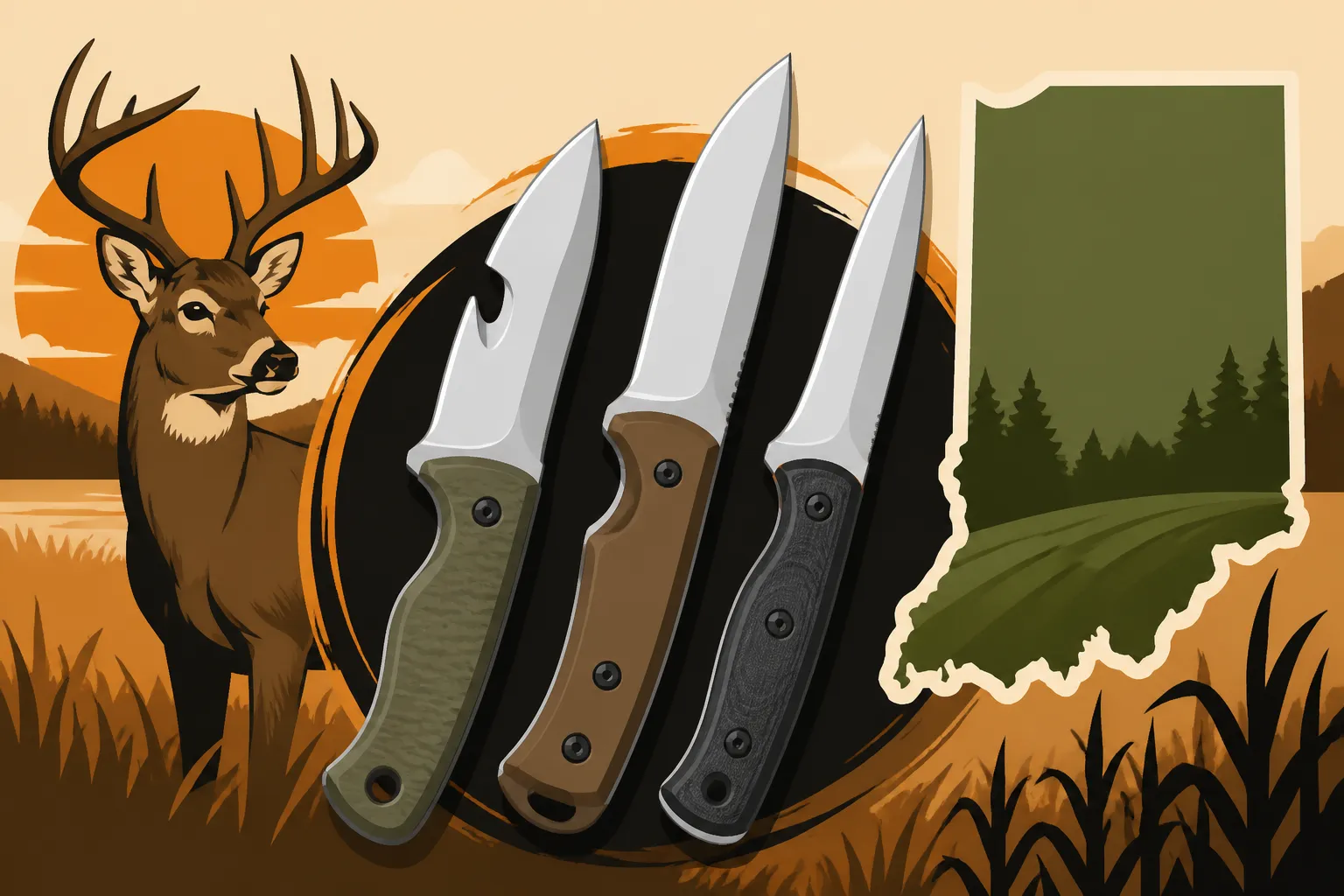
The blade is, of course, the heart of any knife. For field dressing, certain designs truly shine. A drop point is incredibly popular and for good reason. It offers a strong, versatile tip that's not overly aggressive, making it safer for opening body cavities without puncturing organs. The belly of the blade provides excellent skinning capability. A gut hook is a specialized feature, a small hook on the spine of the blade designed to open the abdominal cavity with minimal risk of cutting into intestines. While some hunters swear by them, others find them less necessary, especially if they prefer a cleaner blade for all tasks. A clip point can also work, but its finer tip requires a bit more care to avoid accidental punctures during initial cuts.
When it comes to steel, you're looking for a balance of edge retention, corrosion resistance, and ease of sharpening. Stainless steels are generally favored for field dressing because they resist rust and corrosion, which is a huge plus when dealing with blood and moisture. Steels like 440C, AUS-8, and some of the more advanced powdered steels offer good performance. For hunters who prioritize extreme edge retention and don't mind a bit more effort in sharpening, steels like S30V or CPM-S30V are fantastic, holding an edge through multiple animals before needing a touch-up. However, for most Indiana hunters, a good quality stainless steel that you can quickly put an edge back on in the field is often the best compromise.
Handle Ergonomics and Grip Security
Imagine trying to field dress a deer in the chilling November rain during Indiana's Firearms Deer Season, hands slick with blood. A poor handle design quickly becomes a liability. Ergonomics are paramount. A handle should feel comfortable and secure in your hand, offering good traction even when wet or bloody. Materials like textured rubber, G-10, or certain synthetic polymers provide excellent grip. Avoid overly smooth or polished handles, as they can become dangerously slippery.
The shape of the handle is just as important. Finger grooves, a slight belly, or a subtle guard can prevent your hand from sliding forward onto the blade or backward off the pommel. These features contribute significantly to both safety and reducing hand fatigue during what can be an intensive task. A proper handle allows you to maintain control and apply precise pressure without constantly adjusting your grip, which is essential for working quickly and cleanly.
Fixed Blade vs. Folding Knives for Field Dressing
This is a classic debate among hunters. Fixed blade knives are often considered the gold standard for field dressing. They are inherently stronger, with the blade extending through the handle (full tang), eliminating any moving parts that could fail or collect debris. This makes them incredibly durable and much easier to clean thoroughly. There are no crevices for blood or tissue to hide, which is a major hygiene advantage. Fixed blades typically come with a robust sheath, making them safe and accessible on your belt or pack. For sheer reliability and ease of sanitization, a fixed blade is hard to beat.
Folding knives offer convenience and compactness. They're easy to slip into a pocket or a smaller pack. However, for primary field dressing, they present a few challenges. The pivot point and handle mechanism can be difficult to clean completely, raising hygiene concerns. More importantly, the locking mechanism, while strong, isn't as inherently robust as a fixed blade, and there's always a slight risk of failure under extreme pressure. If you opt for a folder, choose one with a strong, reliable lock (like a lock-back or frame lock) and a design that minimizes nooks and crannies for cleaning. For processing a full-sized whitetail, many hunters still prefer the brute strength and cleanability of a fixed blade.
Integrated Features and Specialized Tools
Some knives come with features designed to simplify specific field dressing tasks. The gut hook we mentioned earlier is the most common. It's fantastic for unzipping the hide and abdominal wall quickly and safely, minimizing the risk of cutting intestines. However, it does add a specialized curve to the blade that might get in the way for other cuts, and it can be a bit trickier to sharpen than a straight edge.
Bone saws are another integrated feature, sometimes found on the back of a fixed blade or as part of a multi-tool. While useful for cutting through a sternum or pelvis, many hunters find a dedicated saw to be more effective if they plan on breaking down a deer in the field beyond basic evisceration. Alternatively, for those who prefer to minimize tools, learning the Bone Saws Versus the Gutless Method can render a separate saw unnecessary for field dressing.
More recently, replaceable blade systems have gained significant traction. These knives, often featuring extremely sharp surgical-grade blades, allow you to swap out a dull blade for a fresh, razor-sharp one in seconds. This eliminates the need for field sharpening entirely, ensuring you always have a pristine edge. Brands like GoHunt offer these types of systems, providing a consistent, superior cutting performance without the hassle of a stone or sharpener when you're out in the woods. They're a fantastic option for hunters who prioritize a consistently keen edge and cleanliness. Just remember to carry spare blades!
Top Field Dressing Knife Styles for Indiana Hunters
With so many options out there, how do you narrow down your choice for hunting Indiana's varied landscapes, from the farmlands of the north to the rugged southern hills? Let's break down some popular and effective styles.
The Classic Fixed Blade Workhorse
For generations, the fixed blade knife has been the go-to choice for hunters. Its reliability, strength, and ease of cleaning make it a perennial favorite, and it’s especially well-suited for the demanding conditions you might encounter during Bowhunting Indiana's Long Archery Season or the firearms season. Look for a blade length between 3.5 and 5 inches – long enough for most cuts, but not so long that it's unwieldy for finer work. A full-tang construction means the blade steel extends all the way through the handle, providing maximum strength and durability.
A good example might be a sturdy drop-point hunter with a synthetic or rubberized handle. This kind of knife is a true multi-tasker, excelling at opening the cavity, skinning, and even quartering the animal if you choose to break it down further in the field. It’s also straightforward to maintain. A quick wash with soap and water, a good wipe down, and a light coat of oil will keep it ready for years of service. A durable kydex or leather sheath will protect the blade and keep it securely on your belt or attached to your pack, ensuring it’s always accessible when you need it.
Modern Replaceable Blade Systems
If you're a hunter who values an absolutely hair-popping sharp edge for every single cut and dreads the thought of field sharpening, then a replaceable blade system is definitely worth considering. These knives typically feature a robust handle with a mechanism that allows you to quickly and safely swap out disposable surgical-grade blades. Imagine making that first cut on a deer's hide with a brand new, razor-sharp edge every time, effortlessly slicing through tissue.
Brands like GoHunt have really popularized these systems, offering handles that are ergonomic and durable, paired with blades that are incredibly effective. The beauty here is consistency. You're never working with a dull blade, which drastically reduces effort, improves cleanliness, and enhances safety. While you do need to carry spare blades, they're lightweight and compact, easily stowed in a Packs for a Hoosier Forest Day Hunt. This system is particularly beneficial for those who might be processing multiple animals or simply want the peace of mind of a guaranteed sharp edge. They truly simplify the field dressing process, making it less of a chore and more about the precision of the task.
The Versatile Folder (with caveats)
A folding knife, while generally not recommended as your primary dedicated field dressing tool, can certainly serve a purpose as a secondary or backup knife, or for very specific scenarios. Its compactness is its main advantage – it easily slips into a pocket or a small compartment in your pack, ready for general utility tasks. For instance, if you're primarily focused on Hunting Northern Indiana Farmland Deer where you might have quicker access to a vehicle or processing facility, a folder could handle the initial cuts.
However, the caveats for field dressing are significant. The hinge and internal mechanisms of a folding knife are magnets for blood and tissue, making thorough cleaning a real challenge. This isn't just about aesthetics; it's a hygiene concern. If you choose to use a folder for field dressing, pick one with a simple, robust design that's easier to clean, and prioritize a strong locking mechanism. A frame lock or robust liner lock is generally preferred over simpler back locks for their strength. Ultimately, for the heavy-duty, messy work of field dressing, most veteran hunters still lean towards a fixed blade or a replaceable blade system for primary duties due to their superior cleanability and structural integrity.
Maintenance and Carrying Your Field Dressing Knife in the Field
Having the right knife is only half the battle. Knowing how to maintain it and carry it safely and accessibly in the field is just as crucial for a successful and trouble-free hunt.
Keeping Your Edge and Staying Sharp
A sharp knife is a safe knife, and this couldn't be truer for field dressing. Before you even head out for Hunting the Indiana Rut in Early November, take the time to sharpen your fixed blade to a razor edge. There are countless sharpening systems out there, from whetstones to guided sharpeners. Find one that works for you and master it. A sharp knife glides through tissue, minimizing effort and the risk of slips.
Even the best edge will dull with use. For traditional fixed blades, carrying a small, lightweight field sharpener – like a ceramic rod or a small diamond plate – is a wise move. A quick touch-up can revitalize a working edge and make a huge difference in performance. For replaceable blade systems, the maintenance is simpler: just have a supply of fresh blades on hand. Once a blade starts to feel dull, snap it off and pop a new one on. It’s quick, clean, and ensures peak performance at all times. After any use, especially field dressing, clean your knife thoroughly with hot, soapy water, dry it completely, and if it's not a stainless steel blade, apply a light coat of oil to prevent rust. This will protect your investment and keep it ready for your next outing.
Safe and Accessible Carry Options
How you carry your field dressing knife is paramount for both safety and convenience. A knife isn't much good if you can't get to it when you need it, or worse, if it falls out and gets lost or causes an injury. For fixed blades, a well-fitting, sturdy sheath is non-negotiable. Many hunters prefer to carry their knife on their belt, easily reachable with either hand. Kydex sheaths offer excellent retention and weather resistance, while quality leather sheaths can be more traditional and equally effective.
Some hunters opt for chest rigs or shoulder harnesses, especially when navigating dense brush or crawling on all fours, as this keeps the knife out of the way of snags and mud while remaining instantly accessible. For replaceable blade systems, the lightweight nature of the spare blades means they can often be stored safely in a small pocket or a dedicated compartment within the knife's carrying system. Always ensure that the knife, whether fixed or folding, is securely stowed when not in use, especially if you're hiking into your stand or dragging a deer out of a river bottom after the Indiana Deer Reporting Deadline. Losing a knife in the deep woods is a real headache, and an injury from a carelessly carried blade is a serious hunting hazard.
Legal Considerations for Carrying Knives
While this article focuses on the practical aspects of selecting and using field dressing knives, it's always wise to be aware of the general legal landscape regarding knife carry. In Indiana, as in most places, there are regulations about knife length and whether certain types of knives (like switchblades or balisongs) can be carried openly or concealed. Generally, a typical hunting knife with a reasonable blade length, carried openly in a sheath, is not an issue when you're engaged in lawful hunting activities.
However, always err on the side of caution and common sense. A field dressing knife is a tool for a specific purpose, not a defensive weapon. Ensure it's used and carried only for its intended purpose during hunting season. When transporting your knife, especially in a vehicle, it’s best practice to keep it cased or out of immediate reach, similar to how you would transport a firearm. Familiarize yourself with local ordinances if you plan to hunt in or near urban areas, as rules can sometimes differ. Staying informed keeps you out of trouble and focused on the hunt.
Field Dressing Knife Features Comparison
To help you decide, here’s a quick comparison of the three main types of knives we’ve discussed for field dressing.
| Feature | Fixed Blade Workhorse | Replaceable Blade System | Versatile Folder |
|---|---|---|---|
| Strength | Excellent (full tang) | Good (handle is strong, blade is disposable) | Moderate (dependent on lock and design) |
| Edge Sharpness | As sharp as you make it (requires maintenance) | Consistently razor-sharp (new blade every time) | As sharp as you make it (requires maintenance) |
| Ease of Cleaning | Excellent (no moving parts) | Excellent (handle is easy to clean, blades disposed) | Difficult (nooks and crannies in pivot/handle) |
| Maintenance | Sharpening, cleaning, oiling | Carry spare blades, clean handle | Sharpening, thorough cleaning, oiling |
| Cost (Blades) | One-time purchase of knife | Initial knife purchase + ongoing blade cost | One-time purchase of knife |
| Safety | Very high (no moving parts) | High (safe blade changes) | Moderate (risk of lock failure or folding) |
| Best Use | Primary field dressing, heavy skinning, quartering | Primary field dressing (precision, hygiene) | Secondary/utility knife, light tasks |
Choosing the right field dressing knife is truly an investment in your hunting experience and the quality of your harvest. Whether you prefer the classic reliability of a fixed blade, the modern convenience of a replaceable system that GoHunt offers, or a well-chosen folder for specific tasks, understanding the features and how they impact performance will ensure you’re always prepared. Don’t let a poor knife choice detract from the success of your hunt; make an informed decision and carry a blade that’s truly worth its weight in the woods.
Disclaimer
This article is for general informational purposes only and does not constitute professional advice. Laws, prices and regulations vary by location and change over time. Consult a qualified professional for guidance on your specific situation.