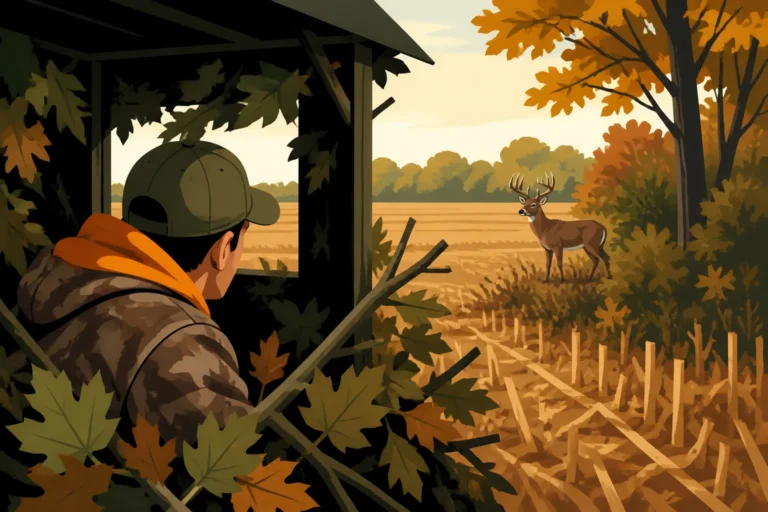
Hunting a Standing Soybean Field
There's nothing quite like pulling up to an Indiana farm field in late summer or early fall, seeing those vast acres of standing soybeans, and knowing that deer are absolutely gorging themselves within. But let's be honest, figuring out how to hunt those standing beans can feel like trying to solve a Rubik's Cube blindfolded. Deer seem to vanish into thin air, only to reappear across the road, leaving you wondering if you're even in the right zip code. This guide will walk you through the nuances of scouting, setting up, and effectively hunting standing soybean fields, turning that frustration into fruitful hunting opportunities right here in the Hoosier State.
Understanding Deer Behavior in Standing Soybeans
Deer, like most creatures, are driven by their basic needs: food, water, and shelter. Standing soybean fields often provide a perfect trifecta, which is precisely why they can be such a magnet for whitetails, making them incredibly attractive, yet equally challenging, to hunt.
Why Deer Love Standing Beans
Imagine a deer's perfect world. It involves a buffet of nutritious food available practically on demand, combined with dense, concealing cover that makes them feel safe from predators, human or otherwise. That's exactly what a standing soybean field offers, especially during the early and mid-archery seasons in Indiana.
Soybeans are incredibly rich in protein and other essential nutrients that deer need for antler growth, fawn development, and overall health. When those bean plants are still green and lush, deer will browse on the leaves, pods, and even the stems, making it a primary food source. It's not just a quick snack; it's a sustained meal. But beyond the nutritional value, the sheer density of a standing soybean field offers unparalleled security. A mature deer can simply walk a few yards into the field and disappear from sight, making them feel incredibly secure. This dense cover provides a sense of invisibility, allowing them to bed down, move around, and feed without the constant threat of being spotted. It's a place where they can truly relax, which means they'll spend a lot of time there, making them predictable in their presence, if not always in their exact location.
The Seasonal Appeal of Soybeans
The allure of standing soybean fields changes dramatically throughout Indiana's diverse hunting seasons. Understanding these shifts is absolutely key to hunting them effectively.
In the early archery season, typically from late August through September, soybeans are usually still green and actively growing. During this period, deer are primarily drawn to the tender, protein-rich leaves and the developing pods. They'll spend a lot of time in the field, browsing during daylight hours, especially in cooler weather or on overcast days. This is when you might catch them moving from a bedding area in an adjacent woodlot directly into the beans in the late afternoon. As the season progresses into October and the plants begin to dry down and turn yellow, the nutritional value of the leaves decreases. Deer might still frequent the fields for cover, but their primary focus for food might start shifting to other sources, like early falling acorns.
However, the appeal of soybeans experiences a resurgence in the late season, particularly after a hard frost or the first significant defoliation, and especially if some fields remain unharvested. Once the leaves drop, the dry pods become much more accessible. These pods still contain valuable calories and protein, offering a crucial late-season food source, especially when other natural browse is depleted or covered by snow. Furthermore, the stalks of standing beans, even after defoliation, can provide excellent thermal cover against harsh winter winds. While it might not seem like much, those dense, dry stalks can break the wind and help deer conserve energy, making an unharvested soybean field a prime bedding and feeding location during the coldest parts of our Indiana winter. If you're out Hunting the Late-Season January Lull, a standing bean field can be a goldmine if deer are still using it for the remaining pods.
Scouting and Locating Key Areas
You can't just set up a stand looking at a massive soybean field and expect success. You need to put in the legwork to understand how deer are using that particular field. Effective scouting is paramount, moving beyond just observing from a distance.
Reading the Field Edge and Entry Points
The edge of a soybean field is a busy highway for deer, but not all highways are created equal. Your mission is to find the busiest on-ramps and off-ramps. Start by walking the perimeter of the field, looking for well-worn trails that lead directly into the standing beans from adjacent timber, thickets, or draws. These trails will be your primary focus. Pay close attention to corners of the field where two woodlots meet the beans, or where a fencerow or overgrown ditch creates a natural funnel. These are classic pinch points where deer traffic is often concentrated.
Look for fresh tracks, especially in muddy areas or where the ground is softer. Don't just look for general hoof prints; look for distinct, heavy trails that indicate consistent, heavy usage. If you find rub lines or scrape lines along the treeline bordering the beans, it's a huge clue that mature bucks are using that specific entry or exit point. Using an app like GoHunt can be incredibly helpful here. You can use its satellite imagery to identify potential funnels, fingers of timber, or ditch lines that extend into the field, creating natural corridors for deer movement. Remember, deer are creatures of habit, and they'll often use the path of least resistance or the one that offers the most cover. Understanding Hunting a Funnel Between Two Woodlots can translate directly to finding where deer enter and exit a bean field, even if it's just a narrow strip of cover along the edge.
Internal Hot Spots and Bedding Zones
While deer often feed along the edges of vast soybean fields, during specific times, especially in the early season, they might venture deeper or even bed down within the standing beans themselves. Identifying these internal hot spots without disturbing the deer is tricky, but not impossible.
Look for variations within the field itself. Are there any slight rises in topography that might offer a deer a vantage point, even if it's just a few feet higher than the surrounding beans? Are there any unharvested patches from previous years or islands of thicker, taller weeds within the field? These can provide excellent bedding cover. The best way to identify these potential internal hot spots is by observing deer entering the field from a distance, particularly at dawn and dusk. If you see deer consistently entering a certain part of the field and disappearing, it's a good bet they're either bedding or moving to a preferred feeding area deep within.
Another indicator can be observing where deer might exit the field during daylight hours. If they're coming out of the middle of the field in the morning, it strongly suggests they were bedded there. This requires patience and often a good set of binoculars or a spotting scope from a distant vantage point. Avoid walking into the standing beans unnecessarily, especially during daylight, as you'll surely spook any deer bedded there. Instead, use your observations from afar to narrow down potential internal "safe zones" that deer are utilizing for bedding or midday loafing.
Effective Hunting Strategies for Standing Soybeans
Once you've done your scouting homework, it's time to put a plan into action. Hunting standing soybeans requires a blend of patience, proper setup, and an understanding of deer movement patterns specific to this habitat.
Stand and Blind Placement
Your setup location is absolutely critical when hunting standing soybeans. Deer are incredibly wary, and any mistake in placement will often result in a blown hunt. The cardinal rule, as always, is playing the wind. You must position yourself downwind of where you expect deer to enter, exit, or move along the field edge. This often means having multiple stand or blind locations for different wind directions.
For treestands, focus on the treeline adjacent to the bean field, especially near those heavy entry/exit trails or funnels you identified during scouting. Look for trees that offer good concealment and allow you to shoot into the field and along the edge. Sometimes, setting up 20-30 yards inside the timber, overlooking a small opening or a secondary trail that parallels the field edge, can be more effective than being right on the edge, especially if deer are skittish about entering the wide-open expanse. If you're Setting Up on a Northern Indiana Field Edge, ensure your setup offers a good angle on the expected deer path.
Ground blinds can be incredibly effective, particularly if you need more concealment or if suitable trees are scarce. Brush your blind in meticulously along a fencerow, in a patch of tall weeds, or even a few yards into the standing beans if you can manage it without creating a disturbance. The key is to make it look like a natural part of the landscape. Remember that on Indiana public land, you'll need to adhere to specific rules about leaving blinds overnight, but for a single-day sit, they offer fantastic flexibility. Learning how to properly Brushing In a Blind on a Field Edge is a skill that will pay dividends. The natural concealment of standing beans also helps hide the blind from distant deer.
Hunting the Edges and Transition Zones
It's a common misconception that you need to be deep in the beans to kill a deer. In reality, most daylight deer activity in larger standing soybean fields occurs along the edges and in the transition zones between the field and adjacent cover. Deer are generally reluctant to venture far into wide-open spaces during hunting hours, especially mature animals.
Your best bet is to focus on the first 20 to 50 yards into the field from the treeline or thicket. This is where deer often feel safe enough to browse while still being close to the security of dense cover. Look for trails that parallel the field edge, just inside the beans. Deer will often skirt the perimeter, scent-checking the wind and feeling out the situation before committing to full-on feeding. Setting your stand or blind to cover these parallel trails and the immediate edge zone will maximize your opportunities.
Transition zones – where the beans meet a woodlot, a CRP field, a creek bottom, or even a small food plot – are also high-traffic areas. These are the corridors deer use to move from bedding to feeding. Your aim should be to intercept them before they fully commit to the wide-open field, or as they exit it heading back to bed. This might mean setting up in a draw that enters the field, or along a brushy fencerow that deer use as a travel route.
Late Season Tactics After Harvest
The moment those combines roll through and the beans are cut, your hunting strategy needs a complete overhaul. A standing soybean field transforms into a cut field, and deer behavior will shift dramatically. However, the field isn't necessarily dead for hunting.
Once harvested, deer will still return to the cut fields, but now their primary interest is the waste grain left behind. Combines aren't perfectly efficient, and there will always be dropped pods and beans on the ground. This waste grain becomes a crucial, high-energy food source, especially in the late season when other forage is scarce. The challenge is that deer feel much more exposed in a cut field, so they'll typically visit these fields primarily under the cover of darkness.
To successfully hunt a cut bean field in the late season, you'll need to focus on trails leading into and out of the field from adjacent bedding cover. Your best bet is to catch deer during low light, right at dawn or dusk, as they are making their first or last trips of the day. Setting up a ground blind well-brushed into the remaining stubble or along a fencerow can work, but again, wind is key. Also, be mindful of what other food sources are available. If there's a standing cornfield nearby, or a patch of winter wheat, deer might prioritize those. Scouting for Late-Season Food Sources for Indiana Whitetails after the bean harvest will give you a clearer picture of their altered patterns. If you notice a particular corner or low spot in a cut field where a lot of waste grain seems to have collected, that might be your hot spot.
Wind, Thermals, and Scent Control
In any hunting scenario, but especially when deer have the advantage of dense cover like standing soybeans, wind and scent control are not just important—they are non-negotiable. Forget them, and you'll likely be watching deer run away before you even know they were there.
Playing the Wind to Your Advantage
Deer navigate their world primarily through their nose, and a standing soybean field, with its limited visibility, amplifies this reliance. They will use their sense of smell to detect danger long before they see or hear it. Therefore, always, always hunt with the wind in your favor. This means understanding which way the wind is blowing relative to your setup and where you expect deer to approach from. If the wind is blowing your scent directly into the field or across a key travel corridor, your hunt is over before it begins.
This often means having multiple stand or blind locations around a soybean field, allowing you to choose the best option based on the prevailing wind direction for that specific day. Don't be afraid to change your plans last minute if the wind shifts unexpectedly. Using a wind indicator, like a small bottle of powder or a milkweed pod, is crucial for monitoring subtle changes. In areas with slight elevation changes, even along a flat field edge, thermals can play a significant role. In the mornings, air often sinks down into lower areas, and in the evenings, it rises. This can pull your scent in unexpected directions, even if the general wind direction seems favorable. Consider the nuances, much like when dealing with Wind and Thermals on a Southern Indiana Ridge, though on a smaller scale.
Scent Control Practices
While playing the wind is your first line of defense, effective scent control practices are your essential backup. The goal isn't to eliminate your scent entirely, which is virtually impossible, but to reduce it to the absolute minimum. Start with your personal hygiene: showering with scent-free soap and shampoo before heading to the woods. Your hunting clothes should be washed in scent-free detergent and stored in airtight containers or bags until you're ready to wear them.
Avoid filling up your gas tank or eating pungent foods in your hunting clothes. Wear rubber boots to and from your stand to avoid leaving human scent on the ground that deer might cross. Many hunters also use scent-eliminating sprays on their outer layers and gear. While the efficacy of these sprays is debated, every little bit helps. When you walk to your stand, try to take a path that avoids disturbing the main deer trails you intend to hunt. Utilize existing fencerows, ditch lines, or even walk through the standing beans only if absolutely necessary and with the wind in your face. Minimizing the amount of human odor you leave in and around the field will drastically increase your chances of getting close to a wary Indiana whitetail.
Comparing Early vs. Late Season Soybean Tactics
To give you a quick overview of how strategies might shift, here's a table summarizing key differences:
| Feature/Tactic | Early Season (August-October) | Late Season (November-December/Post-Harvest) |
|---|---|---|
| Deer Use | Primary food source (green leaves, developing pods), bedding, security. | Secondary food source (waste grain, dry pods), thermal cover. |
| Primary Attraction | High protein browse, dense cover. | Calories from waste grain, thermal protection. |
| Ideal Setup | Edges where deer enter/exit for feeding & bedding. Deeper edges for bedding. | Entry/exit points to cut fields, focus on remaining food. |
| Movement Timing | More daylight movement possible in the field if cooler/overcast. | Primarily low light (dawn/dusk) in cut fields. |
| Focus Area | First 20-50 yards into standing beans from cover. | Trails leading to waste grain, other food sources (acorns, winter wheat). |
| Cover Type | Dense, green standing beans. | Cut stubble (offers less concealment), adjacent thickets. |
| Scouting Emphasis | Fresh tracks, browse sign, observation from afar. | Waste grain, tracks in snow/mud, observation of field usage. |
| Gear Consideration | Lighter clothing, scent control. | Warm, layered clothing for Cold-Weather Sitting Strategy in Indiana, scent control. |
Disclaimer
Hunting is an activity that carries inherent risks. Always prioritize safety, understand and follow all Indiana hunting regulations, and obtain appropriate licenses and permits. The information provided in this guide is for informational purposes only and should not replace professional guidance or personal judgment. Be aware of your surroundings, respect private property, and practice ethical hunting at all times.