Working a Cedar Thicket for Late-Season Deer
As the late season winds down in Indiana, many hunters find themselves staring at barren fields and seemingly empty woodlots, wondering where all the deer have gone. The frustration is real – those big bucks that were cruising during the rut seem to have vanished into thin air. But often, they haven't disappeared; they've simply retreated to the dense, protective embrace of cedar thickets. This comprehensive guide will walk you through why these overlooked havens are late-season goldmines and how you can effectively hunt them.
Why Cedar Thickets Become Late-Season Deer Sanctuaries in Indiana
When the leaves drop, and the temperatures plummet, a deer's priorities shift dramatically. Survival becomes paramount, and that means finding thermal cover, security, and any remaining food sources. Cedar thickets, with their unique structure and evergreen foliage, offer a perfect combination of all three, drawing deer in like a magnet, especially when other cover has withered away.
Thermal Cover and Protection from the Elements
Picture a harsh Indiana winter day – biting winds, sleet, or even heavy snow. Now imagine being a deer, trying to conserve every ounce of energy. A stand of mature deciduous timber offers little protection once its leaves are gone. Cedar thickets, however, are a different story entirely. Their dense, interlocking branches and year-round needles act like a natural insulation blanket. They break the wind, trap what little warmth the sun provides, and offer a dry respite from precipitation.
Deer will often bed down deep within these thickets, sometimes just a few yards inside the densest growth, where they can escape the worst of the elements. This thermal advantage is critical for their survival, helping them maintain body temperature and burn fewer calories. It’s not just about staying warm; it’s about energy conservation, which is vital during periods of scarce food. After a brutal cold front sweeps through Indiana, you can almost guarantee deer will be piled into the thickest cedars they can find, seeking refuge.
Security Cover in a Barren Landscape
Once the colorful tapestry of fall fades, the woods become much more open. Deer, naturally wary creatures, feel exposed. With less foliage to conceal their movements, they seek out places where they can melt away into the shadows, even if they're only a few yards from a trail or field edge. Cedar thickets provide that crucial visual barrier. Their dense, year-round cover offers an impenetrable shield against prying eyes, both from predators and, more importantly for us, from hunters.
This security cover isn't just about concealment; it's about peace of mind for the deer. They know they can bed down and move within these thickets with a much lower risk of being spotted. Bucks, especially those older, wiser ones that have survived multiple hunting seasons, will gravitate towards these sanctuaries. They’ve learned that thick cedars are their safest bet when the pressure is on and the landscape is open. Often, these thickets are adjacent to open feeding areas, allowing deer to quickly transition from security to food under the cloak of darkness or low light.
Persistent Food Sources Within the Thicket
While cedars themselves aren't typically a primary food source for deer, the conditions within and around a cedar thicket often are. The shaded, sheltered environment can protect certain browse plants from early frosts, extending their palatability. Furthermore, the very presence of thick cedars often indicates specific soil conditions or habitat types that might harbor other persistent food sources. Young cedar growth can occasionally be browsed, and often, other resilient plants like honeysuckle, greenbrier, or various forbs thrive in the understory where they are protected from heavy snow or frost by the cedar canopy.
Deer will also eat the cones of cedar trees, especially if other food is scarce. More importantly, the thicket serves as a staging area for deer moving to and from nearby agricultural fields (like standing corn or unharvested soybeans) or remaining mast crops (like white oak acorns) that might be just outside the dense cover. They'll spend daylight hours bedded deep in the security of the cedars, then emerge at dusk to feed. Understanding this relationship between cover and nearby food is critical for successful hunting, especially when you're considering a "Cold-Weather Sitting Strategy in Indiana".
Scouting Strategies for Identifying Productive Cedar Thickets
You can't just pick any cedar thicket and expect to find deer. Some are far better than others. Successful hunting in these areas starts long before the season with thorough scouting. This involves a mix of digital reconnaissance and boots-on-the-ground investigation to understand how deer are using these sanctuaries.
Aerial Photo Analysis and On-the-Ground Reconnaissance
Your scouting mission begins with a good map, preferably one with aerial imagery. Tools like the Indiana DNR app or platforms like GoHunt are invaluable here. Look for dark green patches on aerial photos – these usually indicate evergreen cover like cedars. Pay close attention to the shape, size, and location of these thickets. Are they isolated islands in a sea of hardwoods or agriculture? Are they long, linear strips along fencerows or creek bottoms? Are they part of a larger timber block? Deer use these different types of thickets in varied ways.
Once you’ve identified potential hot spots on the map, it's time to hit the field. This "on-the-ground" recon is best done outside of hunting season, especially when the leaves are off other trees. This allows you to see the lay of the land clearly without disturbing deer during the season. Walk the edges of the thickets, looking for trails leading in and out, and then carefully, quietly, try to penetrate the thicket’s perimeter. You’re trying to connect the dots you saw on the map with the reality on the ground. This kind of detailed map study and in-person verification is essential for "Reading Aerial Photos for Southern Indiana Deer" or any other region.
Reading Deer Sign Within the Thicket
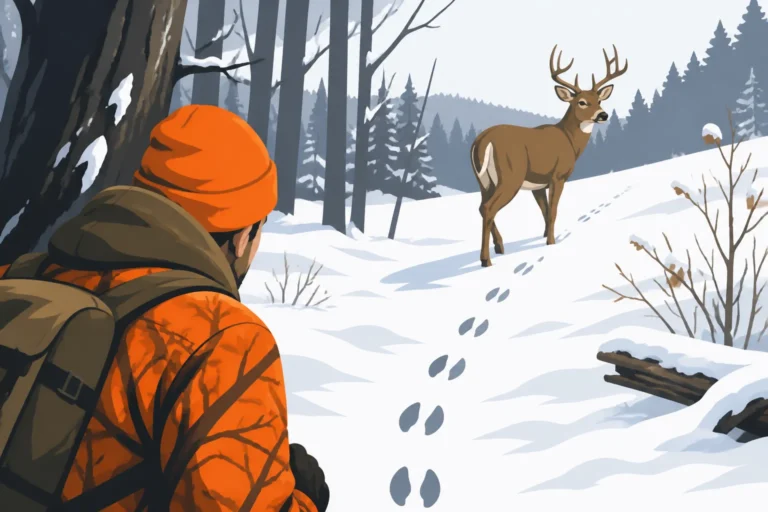
Once you're actually in or around a cedar thicket, you need to know what to look for. Deer sign in these dense areas can be subtle but is often concentrated. Focus on finding fresh tracks leading into the thickest parts. Look for rub lines and scrape lines, though late-season scrapes might be less active. The most important sign in a cedar thicket, especially in winter, is beds. Deer will often create small depressions in the needles or leaf litter, sometimes surrounded by broken cedar branches where they’ve cleared a spot. These beds will often be oriented to give the deer a view downwind or provide maximum sun exposure.
Also, look for browse. Are the cedar branches nibbled on? Are there other low-growing plants that have been browsed? This tells you deer are actively feeding inside or near the thicket. If you find multiple fresh beds, concentrated droppings, and significant browse, you've likely found a primary bedding and staging area. Remember, the fresher the sign, the more active the deer are in that specific spot. When you're "Finding Sign in Big Hoosier Forest Timber", apply the same principles to the cedar pockets you encounter.
Using Trail Cameras for Intelligence Gathering
Trail cameras are your best friends when trying to understand how deer use a cedar thicket. Set them up on the most well-used trails leading into and out of the thicket. If you can identify internal travel corridors, even better. Place cameras pointing down trails or at subtle pinch points within the thicket's interior if possible. The goal is to capture deer movement patterns: when they enter, when they leave, and which deer are using the thicket.
Pay close attention to daylight activity. If you're consistently getting photos of mature bucks during legal shooting hours, you've found a truly special spot. Cellular trail cameras can be especially useful here, as they allow you to monitor activity remotely without disturbing the area by repeatedly checking cards. This minimizes human pressure, which is critical when hunting these sensitive areas. Using a good mapping tool combined with insights from GoHunt can help you plot optimal camera locations and interpret the data you collect.
Effective Hunting Tactics for Pressured Cedar Thickets
Hunting cedar thickets in the late season requires patience, stealth, and often, a departure from typical open-woods strategies. These areas are dense, and deer here are highly attuned to pressure. Your approach needs to be calculated and adaptable.
Stand Placement for Entry and Exit Routes
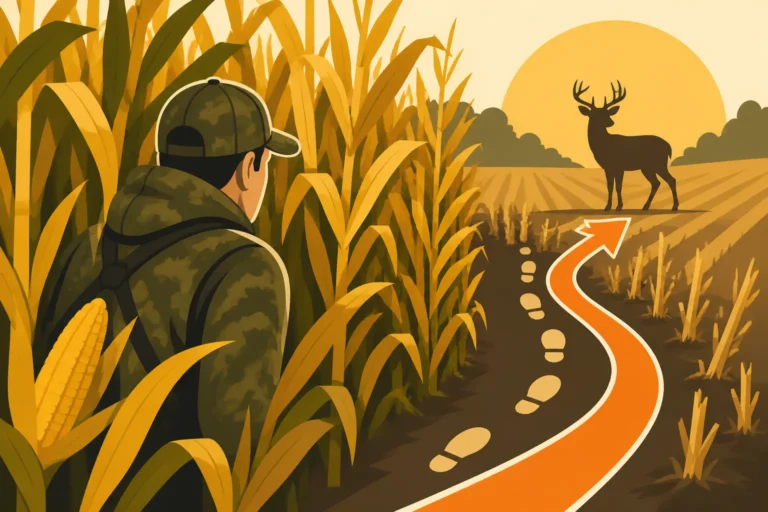
When setting up a stand near a cedar thicket, your primary concern must be your entry and exit routes. Deer in these sanctuaries are on high alert, especially on public land where "Hunting Pressure on Indiana Public Land" can be significant. You need to be able to get to and from your stand without alerting any deer, particularly at dawn and dusk. This means choosing a route that uses terrain features, ditches, or even other thick cover to hide your approach.
Position your stand on the downwind or crosswind side of the thicket, ideally overlooking trails leading in or out, or a staging area just inside the cover. Sometimes, the best strategy is to set up 50-75 yards outside the thicket, covering trails deer use as they emerge to feed. In other cases, if you can identify a clear, quiet lane inside the thicket, a carefully placed stand or even a ground blind can work. For a really tight setup, a mobile treestand or saddle system offers maximum flexibility, letting you quickly adjust to deer movement. Remember, your scent is your biggest enemy, so a well-chosen wind direction is paramount.
Still-Hunting the Edges and Interior
For the brave and exceptionally patient hunter, still-hunting can be a highly effective tactic in cedar thickets, particularly if you have an idea of where deer are bedded. This isn't about covering ground; it's about moving at a snail's pace, often taking minutes to move just a few yards. Every step must be deliberate, every movement slow and controlled. Use the dense cover to your advantage, peeking around clumps of cedars, always expecting to see a deer.
Focus on moving into the wind or with a crosswind, constantly checking for deer sign like fresh tracks or subtle movements. This tactic is extremely challenging due to the noise of crunchy leaves or snapping twigs, but it can pay off by catching deer unawares in their daytime hideouts. This method is particularly effective when you're targeting deer that are reluctant to leave the cover during daylight hours, as it allows you to bring the hunt to them. When "Still-Hunting Southern Indiana Ridges", you might encounter similar thick pockets that warrant this slow approach.
Strategic Deer Drives in Dense Cedars
Sometimes, the only way to get a late-season buck out of a seemingly impenetrable cedar thicket is with a well-planned deer drive. This strategy requires multiple hunters – typically three or four, though it can vary based on the thicket's size. Designate one or two hunters as "drivers" who slowly and deliberately push through the thicket, making just enough noise to encourage deer to move. The other hunters are "standers" who position themselves quietly and strategically on the downwind side of the thicket or along known escape routes.
Communication is key here. Know where everyone is, and ensure safety is the top priority. The goal isn't to blast through the thicket but to gently nudge deer out towards the waiting standers. Mature bucks often try to circle back through the drivers or sneak out the sides, so standers need to be ready for anything. This can be an incredibly exciting and effective way to hunt these dense coverts, especially for putting venison in the freezer or fulfilling late-season tags. Consider the nuances of "Deer Drives With Three or Four Hunters" for safety and effectiveness.
Navigating the Challenges of Hunting Cedar Thickets
Cedar thickets are productive, but they're not without their difficulties. The very characteristics that make them attractive to deer also make them challenging for hunters. Being prepared for these obstacles is key to success.
Managing Wind and Scent in Tight Spaces
In any hunting scenario, wind and scent control are crucial, but in a cedar thicket, they become paramount. The dense foliage can sometimes create swirling winds or micro-thermals that make predicting scent dispersion tricky. Before you even head out, check multiple wind forecasts and have a good understanding of how thermals work in your specific area. As the sun rises, thermals typically rise, and as it sets, they fall.
When entering or exiting, choose routes that keep the wind in your favor. If you're still-hunting, make sure you're always moving into the wind. Use scent-eliminating sprays on your clothes, and always wash your hunting gear in scent-free detergent. Consider wearing a carbon-lined suit or using a portable ozone generator if you're serious about minimizing your scent signature. Even with all these precautions, deer are highly sensitive; a slight shift in wind can blow your cover. Being meticulously clean and aware of the wind at all times is your best defense.
The Importance of Quiet Movement
The acoustics in a cedar thicket are unique. The dense foliage can muffle some sounds but also amplify the crunch of a twig or the rustle of a jacket. Any unnatural noise will immediately put deer on high alert. This is why quiet movement is non-negotiable, whether you're still-hunting or trying to slip into a stand. Wear soft, quiet clothing, preferably wool or silent fleece, and choose boots with soft soles.
Walk slowly, picking up your feet rather than shuffling, and actively look for soft spots to step. If you're carrying a pack, ensure everything inside is secured and won't rattle or clang. Even the simple act of pulling an arrow from your quiver needs to be practiced quietly. The deer in these thickets are often bedded close, listening intently, and the slightest unnatural sound will send them spiraling out of the area. This attention to detail is essential for a productive "Hunting the Late-Season January Lull".
Tracking and Recovery in Thick Cover
One of the biggest challenges after a successful shot in a cedar thicket is tracking and recovering your deer. The same dense cover that provides security for the deer makes trailing a blood trail incredibly difficult. The dark needles and shaded ground can obscure even a good blood trail, and the thick branches can easily wipe blood from a deer's coat.
Mark your shot location precisely, and note the deer's direction of travel. Give the deer plenty of time – often longer than you think you need – especially if it’s a marginal hit or you're unsure. When you begin tracking, move slowly and methodically. Look for disturbed leaves, broken branches, and bent-over saplings in addition to blood. If the blood trail peters out, grid search the area in the direction of travel. Having a reliable flashlight or headlamp is crucial, as tracking often extends into low light or darkness. For longer, colder waits, make sure you're wearing "Insulated Boots for All-Day Sits" to stay comfortable and focused on the task at hand. Once found, be prepared for "Field Dressing a Deer in Cold Weather", as swift processing is always best.
| Late-Season Cedar Thicket Tactics | Pros | Cons | Ideal Conditions |
|---|---|---|---|
| Stand Hunting (Edge) | Safer, less intrusive entry/exit; targets deer moving to/from feed | Deer might hold deep in thicket during daylight; limited shot angles | Moderate pressure; predictable deer movement to feed |
| Stand Hunting (Internal) | Closer to bedding; higher chance of daylight encounter | Very difficult entry/exit without detection; highly wind-dependent | Low pressure; specific internal travel corridors identified |
| Still-Hunting | Highly engaging; active pursuit; can find bedded deer | Extremely difficult to remain quiet; very slow pace; high risk of bumping deer | Very low pressure; light, quiet snow cover; good wind |
| Deer Drives | Effective for moving reluctant deer; good for filling multiple tags | Requires multiple hunters; complex coordination; safety concerns | Moderate to high pressure; large, well-defined thickets |
Disclaimer
The information provided in this guide is for educational purposes only. Hunting regulations and laws are subject to change. Always consult the latest Indiana Department of Natural Resources (DNR) regulations and local ordinances before engaging in any hunting activity. Safety should always be your top priority.