How CWD Reached Northeast Indiana
The news hit like a gut punch for many Hoosier hunters: Chronic Wasting Disease (CWD) had finally reached Indiana, specifically impacting our beloved deer herds in the northeastern part of the state. It's a scary prospect, facing a disease that can devastate deer populations, and it leaves many of us wondering, "How did it get here?" This guide is here to unravel the mystery of CWD's arrival in Northeast Indiana, explain what it means for hunters, and detail the steps being taken to manage its spread.
The First Alarm: Discovering CWD in Indiana
When word came down that CWD had been detected in Indiana, a collective sigh of dread went through the hunting community. For years, we’d watched as neighboring states grappled with this devastating disease, always hoping it would bypass our borders. Unfortunately, that wasn't to be. The initial discovery was a stark reminder of the challenges facing wildlife management and the deep connection we all have to the health of our deer herd. It wasn't just a biological finding; it was a jolt to our traditions and our passion for Indiana hunting.
The Initial Detection and First Cases
Indiana's first confirmed case of CWD was detected in a wild deer harvested in LaGrange County in late 2023. This wasn't just any deer; it was a symbol of a new era for wildlife management in our state. The Indiana Department of Natural Resources (DNR) had been diligently testing deer for CWD for years, proactively monitoring the herd, and it was through this robust surveillance program that the disease was finally identified. The news quickly spread, bringing with it a mix of concern and a thirst for accurate information. Hunters, landowners, and conservationists alike suddenly found themselves asking serious questions about the future of deer hunting in the region. You can learn more about which county first found Indiana's CWD case by checking out our guide.
When that first positive result came back, it triggered an immediate, intensified response. The DNR ramped up its efforts, focusing on the area around the initial detection to determine the scope of the infection. This meant increased sampling of deer harvested by hunters, as well as testing deer found deceased due to illness or vehicle collisions. The goal was to understand if this was an isolated incident or if the disease had already established a foothold within the local deer population. This kind of rapid, focused response is critical in the early stages of CWD management, aiming to contain and understand the spread before it becomes more widespread.
Expanding the Positive Area
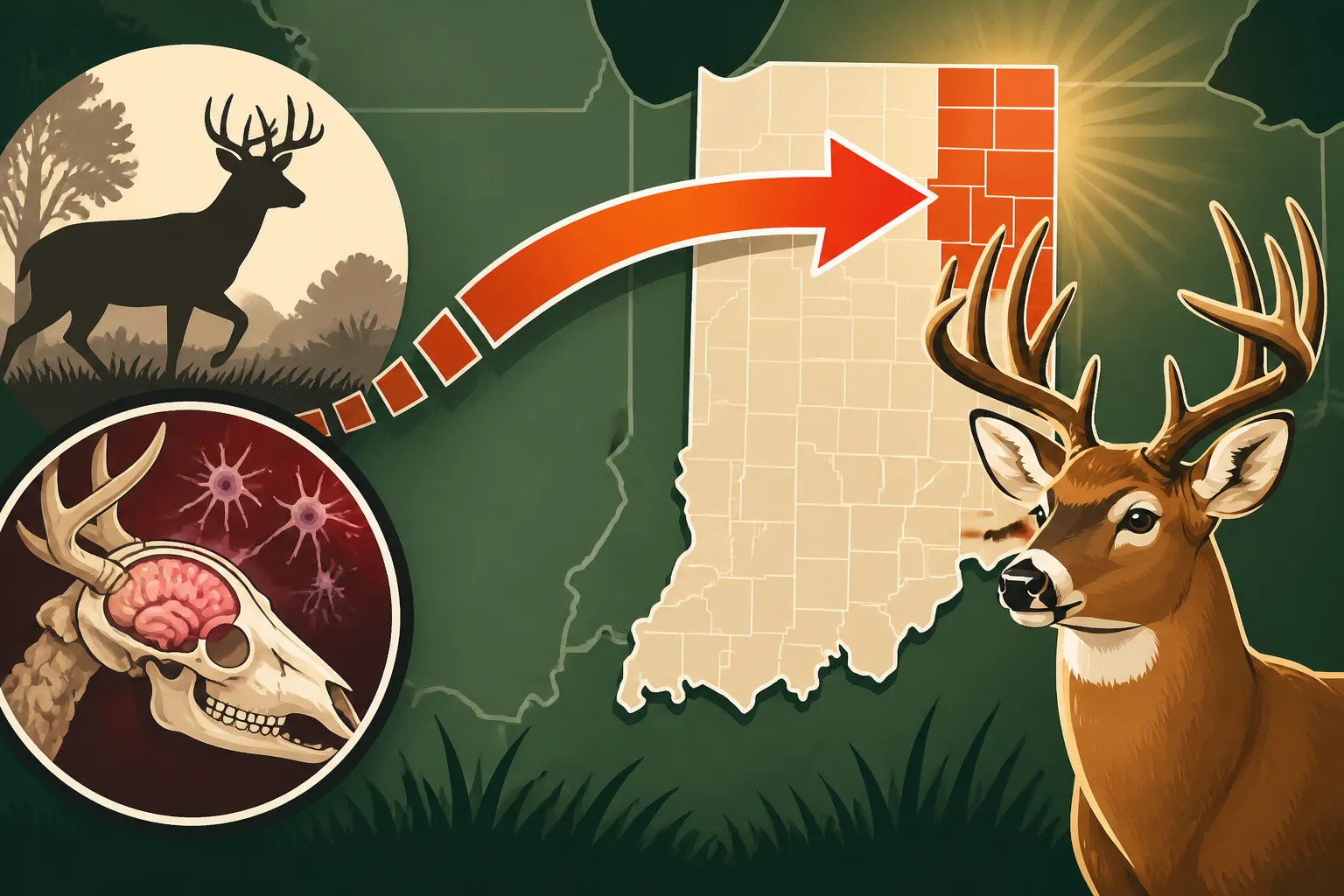
The initial detection in LaGrange County was just the beginning. Subsequent testing revealed additional positive cases in the surrounding region, leading the DNR to officially designate a CWD Positive Area. This area currently includes LaGrange, Steuben, Noble, DeKalb, Whitley, and Allen counties. The unfortunate reality is that CWD doesn't respect county lines, and as more samples are analyzed, the picture of its prevalence becomes clearer. This expansion into multiple counties, notably highlighted by cases like the one that led to Noble County expanding the CWD positive area, underscores the complex and often unpredictable nature of the disease's spread. It's not just about one hotspot, but about interconnected populations.
This designation of a positive area meant new regulations and guidelines for hunters within those specific counties. Suddenly, what was once a routine hunting experience became one tinged with new responsibilities, from mandatory CWD testing for certain deer to restrictions on carcass movement. It’s a lot to take in, and it certainly changes the dynamic of hunting in those areas. The DNR's approach is designed to gather more data while also implementing measures to slow the disease's advance, protecting the health of the broader Indiana deer herd as much as possible.
Understanding CWD: What It Is and How It Spreads
Chronic Wasting Disease is one of those topics that can quickly become overwhelming, filled with scientific jargon and grim statistics. But at its core, understanding CWD is crucial for every hunter and outdoor enthusiast in Indiana. It’s a neurological disease that affects deer, elk, moose, and caribou, belonging to a family of diseases known as transmissible spongiform encephalopathies (TSEs), similar to "mad cow disease" in cattle. The term "wasting" accurately describes its devastating effects, as infected animals gradually deteriorate.
The Nature of CWD and Its Impact
CWD is caused by abnormal proteins called prions, which accumulate in the brain and other tissues of infected animals. These prions are incredibly resilient; they aren't easily destroyed by conventional disinfection methods or even by cooking. Over time, these prions cause progressive damage to the brain, leading to a range of symptoms. Infected deer will often show noticeable behavioral changes, like listlessness, drooling, drastic weight loss (hence "wasting"), stumbling, and a lack of fear of humans. The disease is always fatal, and there is no known cure or vaccine. It's a slow, agonizing process for the animal, typically taking months, or even years, from initial infection to visible symptoms and eventual death.
The long incubation period of CWD is one of its most insidious characteristics. A deer can be infected for a significant amount of time before showing any outward signs of illness. This means seemingly healthy deer can be shedding infectious prions into the environment without anyone realizing it. This prolonged asymptomatic phase is a major factor in the silent spread of the disease, making early detection and containment incredibly challenging. While the disease is fatal to deer, there is currently no evidence that CWD can be transmitted to humans, though health agencies advise against consuming meat from infected animals as a precautionary measure.
How CWD Propagates Through Deer Populations
CWD primarily spreads through direct animal-to-animal contact, but it also spreads indirectly through environmental contamination. Infected deer shed prions through their saliva, urine, and feces. These prions can then contaminate the soil, plants, and water, remaining infectious in the environment for years, even decades. This persistence in the environment means that even if all infected deer were removed, the land itself could still pose a risk to new deer moving into the area. This environmental aspect makes CWD particularly difficult to eradicate once it's established in a wild population.
Another significant pathway for spread is through high deer densities. When deer gather in large numbers, such as at baiting sites or supplemental feeding locations, the chances of direct contact and environmental contamination increase dramatically. This is why many states, including Indiana, have regulations against baiting and feeding deer, especially in CWD-positive areas. The movement of deer, whether natural migration or human-assisted relocation of carcasses, also plays a crucial role. For example, a hunter unknowingly transporting an infected carcass from a CWD-positive area to an unaffected region could introduce the prions to a new landscape. Understanding these complex transmission routes is key to developing effective management strategies and for hunters to make informed decisions to help prevent further spread.
Tracing the Path: How CWD Likely Reached Northeast Indiana
The million-dollar question for many Hoosiers is, "How did CWD get here?" There's no single, simple answer, but wildlife biologists have a pretty good understanding of the most probable routes. It's a combination of natural deer movement, potential human-assisted spread, and the unfortunate reality of living in a region surrounded by states where CWD has been present for a while.
Proximity to Affected Regions
Indiana's location puts it right in the path of potential CWD spread. We're nestled between states that have had CWD for years, sometimes even decades. To our north, Michigan has CWD, and to our east, Ohio has had cases. Illinois and Wisconsin to our west also have significant CWD issues. It's like living in a neighborhood where several of your neighbors have a persistent problem; eventually, it might just find its way over the fence. The maps showing CWD distribution across the Midwest clearly illustrate that Indiana was an island in a sea of CWD, and it was perhaps only a matter of time before it arrived.
Consider the natural movement of deer. Bucks, especially during the rut, can travel significant distances, sometimes migrating many miles in search of does or new territory. It's entirely plausible that an infected buck from southern Michigan or western Ohio, perhaps in the early stages of the disease and showing no symptoms, wandered across the state line into Indiana. This natural dispersal is a primary way CWD expands its geographic footprint, gradually creeping from one county or state to the next. The borders we draw on maps mean nothing to a wild deer. This is a common and natural way that diseases like CWD can expand their reach, especially with healthy, symptom-free deer acting as carriers.
Human-Assisted Spread: A Persistent Concern
While natural migration is a significant factor, human activities can inadvertently accelerate the spread of CWD. One of the most common concerns is the movement of deer carcasses by hunters. If a hunter harvests an infected deer in a CWD-positive area, whether within Indiana or in a neighboring state, and then transports that entire carcass (bones, brain, spinal cord, etc.) to a new, unaffected area for processing, they could be moving infectious prions. If those parts are then disposed of improperly, those prions can enter the local environment, potentially infecting local deer. This is precisely why regulations around carcass movement, which you can read more about in our guide on Indiana carcass movement restrictions, are so critical.
Another potential, though less common, route involves the illegal movement of live deer. While highly regulated, the past has seen instances of deer being transported for various reasons, sometimes across state lines. If an infected deer were moved into Indiana from an affected region, it could establish a new focal point for the disease. While the DNR has strict regulations to prevent this, the possibility, however remote, always exists. It's a stark reminder that every action, from how we handle our harvested game to how we respect wildlife regulations, plays a part in protecting our broader deer population. Using tools like the GoHunt app can help hunters stay informed about specific regulations and CWD zones, ensuring they're always in compliance.
The Aftermath: Managing CWD in the Positive Area
The discovery of CWD in Northeast Indiana has set in motion a comprehensive management plan designed to monitor, contain, and mitigate the spread of the disease. It's a long-term battle, requiring collaboration between the DNR, hunters, and local communities. This isn't just about reacting to a problem; it's about building a resilient strategy for the future of our deer herd.
Enhanced Surveillance and Testing Requirements
One of the immediate and ongoing responses to CWD detection is enhanced surveillance. This means more intensive efforts to collect and test deer samples, particularly within and around the designated CWD Positive Area. For hunters, this translates to new requirements during deer season. In the CWD-positive counties, hunters may be required to submit deer for CWD testing, especially those harvested during certain seasons or in specific locations. This data is vital for understanding the prevalence of the disease, how it's spreading, and where new hotspots might be emerging. Learning about Indiana CWD testing for hunters is now a crucial part of hunting in these areas.
| County | Initial Detection Year | CWD Positive Area Status | Key Hunting Considerations |
|---|---|---|---|
| LaGrange | 2023 | Designated | Origin of first wild case; high surveillance |
| Steuben | 2023 | Designated | Adjacent to LaGrange; increased testing |
| Noble | 2023 | Designated | Additional cases confirmed; expanded area |
| DeKalb | 2023 | Designated | Adjacent to CWD-affected areas; monitoring |
| Whitley | 2023 | Designated | Part of the expanded positive zone |
| Allen | 2023 | Designated | Easternmost county in positive zone |
This table shows the current counties in the CWD Positive Area. These counties are subject to the most stringent monitoring and management protocols. Hunters in these areas should pay particular attention to DNR announcements regarding mandatory testing and carcass movement rules. For instance, public lands like Noble County CWD Zone Public Ground will have specific check-in procedures. The DNR uses this intense data collection to map the disease's distribution and adjust management strategies accordingly.
Carcass Movement and Disposal Restrictions
To prevent the human-assisted spread of CWD, strict carcass movement restrictions are in place for deer harvested within the CWD Positive Area. These regulations generally prohibit hunters from moving certain high-risk parts of a deer carcass (such as the brain, spinal cord, lymph nodes, and spleen) out of the positive zone. The goal is to ensure that any potentially infected prions remain within the area where the disease is already present, rather than being transported to unaffected parts of the state. These rules apply to both residents and non-resident hunters.
Hunters are typically allowed to move deboned meat, antlers (with no brain tissue attached), hides, and cleaned skull plates out of the positive area. The most recommended practice for hunters within the CWD zone is to process their deer locally and properly dispose of any high-risk parts in approved landfills or designated collection sites. This might mean extra steps for hunters, but it’s a critical measure to protect the wider deer population. We recommend reviewing the full guidelines on Indiana carcass movement restrictions to ensure you’re always in compliance, whether you're hunting in LaGrange County CWD Zone Public Ground or elsewhere within the designated zone. Being informed and diligent is our best defense against further spread.
What Hunters Can Do: Prevention and Participation
As hunters, we are often the first line of defense and the most critical partners in wildlife conservation. Dealing with CWD is no different. Our active participation, adherence to regulations, and willingness to adapt are crucial for the long-term health of Indiana's deer herd. This isn't just about following rules; it's about being responsible stewards of the resource we cherish.
Adhering to Regulations and Best Practices
The most immediate thing any hunter can do is stay informed and strictly adhere to all CWD-related regulations. This means checking the DNR website annually for updates on Indiana's Chronic Wasting Disease Positive Area and specific rules for your hunting county, especially if you're hunting in any of the counties within the designated CWD zone. These regulations include mandatory testing requirements for harvested deer in certain areas and restrictions on how deer carcasses and specific parts can be moved. Being proactive about these rules is fundamental to preventing further spread.
Beyond formal regulations, adopting best practices can make a significant difference. If you're hunting in or near a CWD-positive area, consider deboning your deer in the field and leaving the carcass remains at the harvest site, rather than transporting them long distances. Properly disposing of high-risk parts in a landfill is another important step. Additionally, avoid baiting or providing supplemental feed to deer, as these activities concentrate deer and can increase the likelihood of CWD transmission. Even if you're hunting in areas further south, such as by Scouting Indiana Public Land Before Season, it's always wise to remember these practices, as CWD knows no boundaries.
Participating in Surveillance and Management Efforts
The DNR's CWD surveillance efforts rely heavily on hunters. When you participate in voluntary or mandatory CWD testing programs, you're providing invaluable data that helps biologists understand the disease's distribution and prevalence. This data directly informs management decisions, from adjusting hunting regulations to targeting specific areas for increased monitoring. Keep an eye out for Indiana CWD Testing for Hunters opportunities, especially during firearms season.
Beyond testing, simply being aware of the signs of CWD in deer can be helpful. If you observe a deer exhibiting symptoms such as extreme emaciation, abnormal behavior, or neurological signs, report it to the DNR immediately. Do not harvest the animal if it appears sick. Your observations from the field are critical to early detection. Tools like the GoHunt app or the Indiana DNR app can be used to quickly report observations or check regulations while out in the field. Every piece of information, every tested deer, contributes to the collective effort to manage this disease and protect Indiana's hunting heritage for generations to come. It’s a challenge, yes, but one we face together as a community of dedicated conservationists.
Regional Differences in CWD Zones
While the initial CWD detection occurred in Northeast Indiana, it's important to understand that the challenges and management strategies can vary even within the broader state. Different regions of Indiana present unique landscapes, deer densities, and hunting cultures, all of which play a role in how CWD might behave and how it needs to be addressed. Understanding these nuances helps us appreciate the complexity of the DNR's work and how our individual actions fit into the larger picture.
Northeast Indiana's Unique Landscape for Disease Spread
Northeast Indiana, with its mix of rolling farmland, woodlots, and numerous lakes and wetlands, presents a distinct landscape that can influence CWD transmission. The region is characterized by intensive agriculture, which often leads to deer concentrating in smaller, scattered timber blocks, fencerows, and creek bottoms for cover and food. These localized concentrations can increase deer-to-deer contact, potentially facilitating the spread of CWD once it's introduced. The landscape of Hunting Northern Indiana Farmland Deer often means deer are moving between these isolated pockets of cover.
Furthermore, the prevalence of private land in Northeast Indiana means that cooperation with landowners is paramount. While there are public access points like those found through DeKalb County CWD Zone Public Ground, much of the hunting occurs on private property. Engaging these landowners in surveillance efforts and ensuring they understand and adhere to CWD regulations is critical. The high deer densities often found in these agricultural areas also mean that if CWD gains a strong foothold, it could impact a large number of animals relatively quickly, making swift, coordinated action even more important.
Comparative Management with Other Indiana Deer Issues
CWD isn't the only deer health issue Indiana has faced, though it is certainly one of the most serious due to its chronic and fatal nature. For instance, we've dealt with Epizootic Hemorrhagic Disease (EHD) outbreaks in the past. EHD, while deadly, is typically seasonal, caused by a virus transmitted by biting midges, and does not persist in the environment in the same way CWD prions do. Deer herds often rebound from EHD outbreaks within a few years. CWD, on the other hand, is a permanent fixture once it enters a population.
This fundamental difference means CWD management requires a much more sustained and aggressive approach. While EHD might prompt short-term warnings about sick deer, CWD necessitates long-term surveillance, carcass management, and potentially even population reduction strategies in affected areas to slow its spread. The fact that CWD affects the nervous system and prions are environmentally persistent makes it a far more challenging and concerning threat to the long-term health and stability of Indiana's deer herd, demanding a proactive and informed response from everyone who cares about wildlife.
Disclaimer
The information provided in this guide is for general informational purposes only and is not intended as professional advice. Hunting regulations and wildlife disease information can change rapidly. Always consult the official Indiana Department of Natural Resources (DNR) website and regulations for the most current and accurate information before engaging in any hunting activities or making decisions related to wildlife management.