Where Wild Pheasants Persist in Indiana
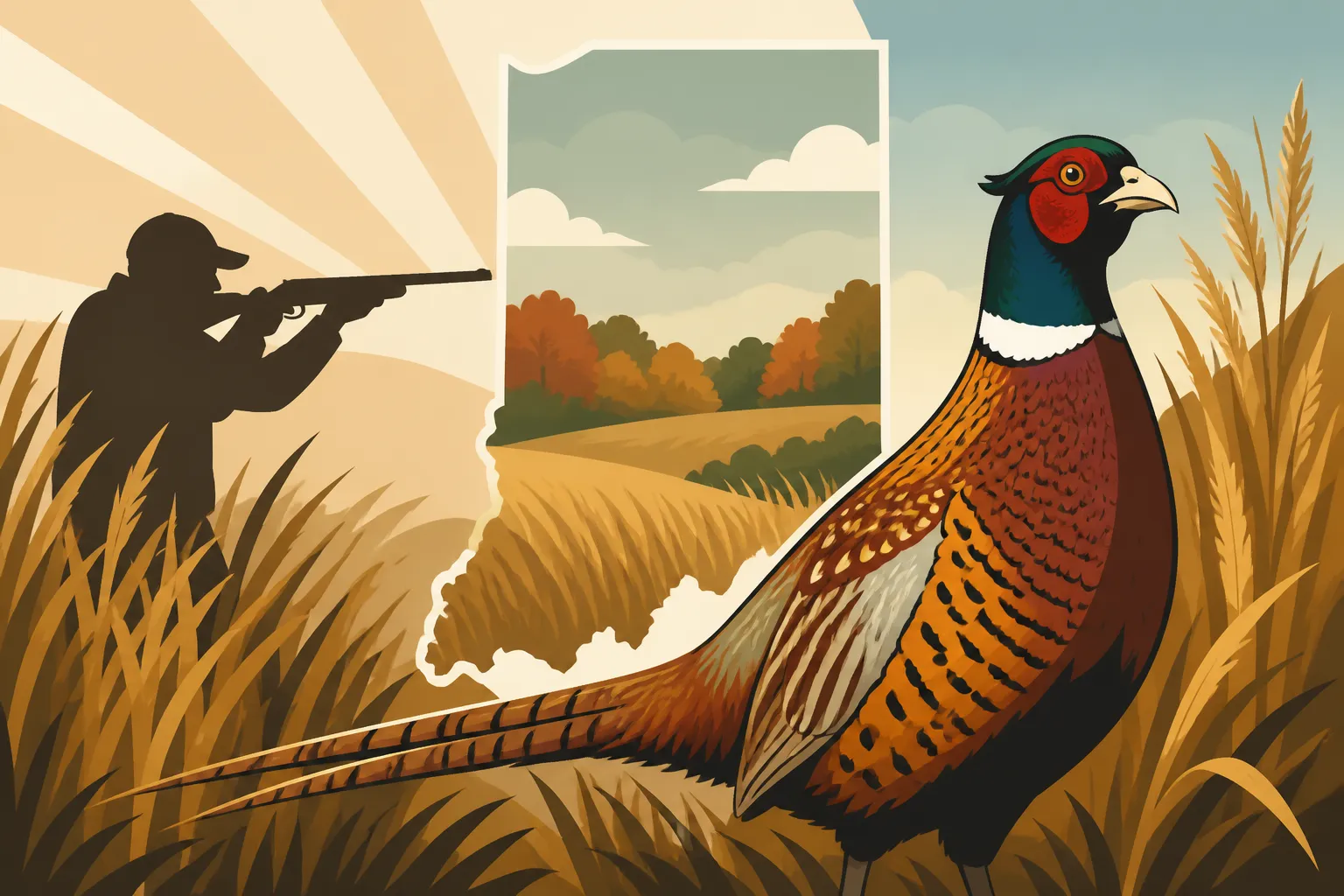
The thought of chasing wild pheasants across the Indiana landscape evokes a strong sense of nostalgia for many hunters. We hear the stories from our grandparents about fields full of cackling birds, the kind of hunting experience that seems almost mythical now. The reality, though, is that those days are largely gone. Finding true wild pheasants in Indiana is an incredibly tough challenge, fraught with frustration for those who don't know where to look or what to look for. This guide is here to cut through the romanticized notions and give you a realistic, in-depth look at where these elusive birds still manage to persist in the Hoosier State and how you might, with a lot of effort, find them.
The Fading Glory: Understanding Indiana's Pheasant Decline
It's hard to talk about wild pheasants in Indiana without first acknowledging the significant decline they've experienced. For many, the very idea of a "wild pheasant" here feels almost like a relic of a bygone era. We've all seen the DNR's pheasant stocking efforts, which are fantastic for providing opportunities, but they're a far cry from a self-sustaining wild population. To understand where the wild birds might still hold on, we first need to understand why they disappeared in the first place.
The Rise and Fall of the Ringneck in the Hoosier State
The ring-necked pheasant isn't native to Indiana; it was introduced from Asia starting in the late 1800s and early 1900s. For a while, they absolutely thrived. Indiana's agricultural landscape in the mid-20th century was a pheasant paradise. Think about it: small, diversified farms growing corn, wheat, oats, and clover. There were pastures for livestock, woodlots, extensive fencerows, and weedy ditch banks everywhere. This mosaic of habitats provided everything a pheasant needed: undisturbed nesting cover in the spring, abundant insects for chicks in the summer, waste grain for food in the fall and winter, and dense, protective cover from predators and harsh weather.
Hunters fondly recall those days when a walk through a corn stubble field adjacent to a patch of overgrown fence row or an ungrazed pasture could yield multiple flushes. The cackle of a rooster rising from cover was a common sound. However, this golden era was relatively short-lived. As farming practices modernized in the latter half of the century, the landscape underwent a drastic transformation, pulling the rug out from under the pheasant population.
The Habitat Pinch: Why Modern Farmland Struggles
The primary culprit in the pheasant's decline, not just in Indiana but across much of the Midwest, is the profound change in agricultural practices. The shift to large-scale, industrial agriculture has created what's often referred to as "clean farming." This means bigger fields, fewer fencerows, and more intensive use of herbicides and pesticides. Every available acre is put into production, often with monocultures of corn and soybeans.
What does this mean for a pheasant? It means the loss of critical nesting cover – those dense patches of grass and weeds where hens could lay their eggs safely. It means a severe reduction in winter cover, leaving birds exposed to bitter cold and increased predation pressure from coyotes, foxes, and hawks. Imagine a vast, open field in winter with no brushy draws, no thickets, no uncut hayfields. A pheasant simply has nowhere to go. Herbicides also reduce the insect populations that pheasant chicks depend on for protein in their early weeks. Furthermore, the push for earlier and more efficient harvesting often means hayfields are cut during peak nesting season, destroying nests and killing hens. The subtle, varied landscape that once supported robust pheasant numbers has been replaced by an efficient, but biologically sterile, environment for these specific birds.
Where the Wild Things Are: Identifying Pheasant Strongholds
Given the widespread habitat loss, finding truly wild, self-sustaining pheasant populations in Indiana feels a bit like searching for a needle in a haystack. But needles do exist, albeit in very specific, often localized, haystacks. It's not a matter of widespread abundance anymore, but rather isolated pockets where a unique combination of factors has allowed these birds to persist.
Northwest Indiana: A Glimmer of Hope
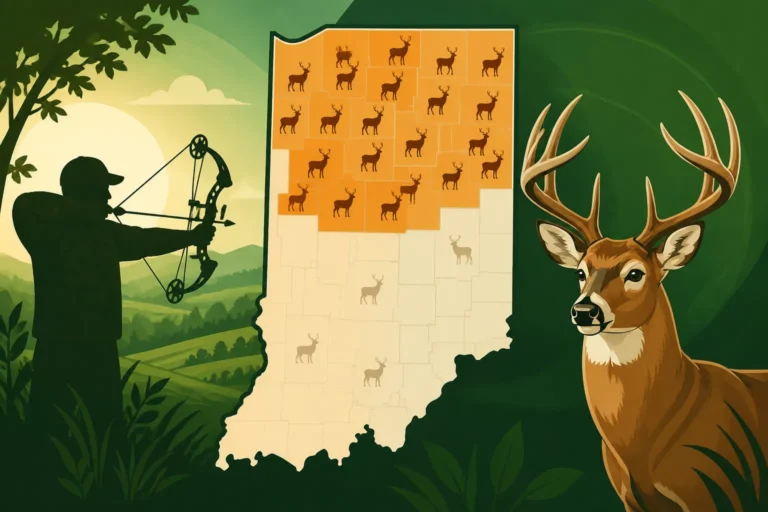
If there's one region in Indiana where you still have a decent, albeit still challenging, chance of finding wild pheasants, it's the northwest corner of the state. Specifically, counties like Jasper, Newton, Benton, and parts of White and Pulaski counties still hold the most promise. Why here? This area retains a slightly more diverse agricultural landscape in certain pockets, often due to specific soil types or historical land use patterns. More importantly, it's where you'll find significant tracts of land enrolled in conservation programs like the Conservation Reserve Program (CRP) and Wetlands Reserve Program (WRP), creating much-needed grasslands and wetlands amidst the row crops.
These regions often feature a mosaic of different habitats: larger sections of undisturbed native warm-season grasses, wetland margins, and sometimes a higher density of fencerows or tree lines that haven't been completely removed. Public lands, such as portions of Willow Slough Fish and Wildlife Area in Newton County, while managed, often exist within this broader landscape, and adjacent private lands might benefit from the habitat they provide. For example, while Jasper-Pulaski Fish and Wildlife Area is famed for sandhill cranes, its larger landscape context in that part of the state points to the kind of habitat diversity that pheasants need. When you’re trying to pinpoint these areas, online mapping tools like GoHunt, or even the Indiana DNR's own mapping applications, become invaluable for identifying these crucial habitat features. You're looking for those distinctive green blocks of CRP land or the blue smudges of wetlands nestled among the yellow and green squares of corn and soybeans.
Pockets of Persistence: Other Isolated Areas
Beyond the relative "strongholds" of Northwest Indiana, truly wild pheasants become exceedingly rare. However, it's not impossible to find isolated, smaller localized populations in other northern and central Indiana counties. These are almost always tied to specific private land management practices. We're talking about landowners who have consciously decided to leave areas uncultivated, planted food plots specifically for wildlife, or enrolled large tracts in long-term conservation programs.
These isolated pockets are often incredibly difficult to find without local knowledge or extensive, boots-on-the-ground scouting. You won't typically find them by just driving around. Instead, it often involves networking with farmers, asking around at local co-ops or feed stores, or meticulously studying aerial maps for those subtle signs of unkempt or managed habitat that stands out from the surrounding intensive agriculture. A small patch of undisturbed hay, an overgrown creek bottom, or a patch of dense brush in an otherwise clean farming landscape can be enough to hold a small covey of wild pheasants. These are the places where building relationships with landowners is absolutely crucial, as these birds are almost exclusively found on private ground. Understanding Indiana Small Game Season Rules will be important here, as these opportunities often come with specific permission requirements.
Decoding Pheasant Habitat: What to Look For
So, you've identified a general region, maybe even a specific county, where wild pheasants might exist. Now comes the critical part: understanding precisely what kind of habitat they need to survive and, more importantly, thrive. Pheasants aren't just random wanderers; they are creatures of specific cover types, and if those elements aren't present in the right combination, you simply won't find them.
The Ideal Landscape: A Mosaic of Cover and Food
Picture the perfect wild pheasant habitat in your mind's eye. It’s not one single type of cover but a beautiful, intricate mosaic. At its heart, pheasants absolutely require tall, dense grass for nesting and roosting. Think native warm-season grasses like switchgrass, big bluestem, and indiangrass, or even thick stands of cool-season grasses left undisturbed. This dense cover, standing a foot or two tall, provides concealment from aerial predators like hawks and protection from ground predators. Hens will scratch out shallow nests at the base of these clumps, well hidden from prying eyes. In addition to nesting, this dense cover is used for roosting at night, providing warmth and security.
But grass isn't enough. These birds also need diverse food sources. They are omnivores, readily consuming waste grain from corn, soybeans, and small grains like wheat or oats. Crucially, they also rely heavily on weed seeds – ragweed, smartweed, foxtail – which often grow in uncultivated field edges or disturbed areas. For young chicks, insects are paramount. Grassy fields with a healthy insect population are critical for chick survival, providing the protein needed for rapid growth. Finally, escape cover is essential. This could be a brushy draw, a thick fencerow of multi-flora rose or cedar, or even dense cattails in a wetland. When a hawk swoops in or a coyote comes sniffing, the pheasant needs immediate, impenetrable cover to dive into. Without this complex interweaving of different cover types, a pheasant population simply cannot persist through all four seasons.
The critical period for undisturbed nesting cover is spring and early summer, typically April through July. If hayfields are mowed or ditches are cut during this window, it can decimate a year's hatch. Pheasants will use different cover types throughout the day. They might feed in stubble fields in the morning, move to dense grass or brush for loafing in the midday heat, and then return to open areas to feed again before roosting in dense cover at night. Understanding this daily and seasonal movement is key to successful scouting.
Edge Habitat and Corridors: Highways for Pheasants
In today's fragmented agricultural landscape, edge habitat and linear corridors have become absolute lifelines for wild pheasants. Think of them as the highways and hidden paths these birds use to move, feed, and find safety. Fencerows, especially those that are allowed to grow thick with brush, weeds, and small trees, are incredibly valuable. They provide thermal cover, protection from predators, and a continuous food source of weed seeds. Ditch banks, particularly those bordering wetlands or larger fields, offer similar benefits, often with additional moisture and diverse vegetation. Riparian corridors – the strips of vegetation along streams and rivers – also serve as vital travel lanes, escape cover, and foraging grounds.
These linear habitats are crucial because they connect larger blocks of otherwise isolated cover. A pheasant might nest in a large CRP field, but if it needs to move to a cornfield for waste grain or a brush pile for winter cover, a fencerow or ditch bank provides a safe travel route. This "edge effect" also generally leads to higher biodiversity, meaning more insects and varied plant life, which benefits pheasants throughout their life cycle. The presence of these corridors can significantly increase the productivity of a pheasant population by allowing birds to exploit multiple habitat types without exposing themselves to undue risk.
The tragic removal of fencerows and the channelization of ditches in the name of "efficiency" has been devastating for pheasants. Every time a linear habitat is removed, it shrinks the available pheasant territory and increases the isolation of the remaining pockets. If you're on a mission to find wild pheasants, prioritize areas on your maps that show these remaining sinews of cover connecting different fields and woodlots.
Strategies for Finding and Hunting Wild Pheasants
So, you've done your homework, identified a promising region, and now you're ready to hit the ground. But finding and hunting wild pheasants isn't like hunting stocked birds. These pheasants are cunning, wary, and will test your patience and skill like few other game birds. It takes a strategic approach, a lot of perseverance, and often, some trusted four-legged companions.
The Art of Scouting: Beyond Just Driving Around
Effective scouting for wild pheasants goes far beyond just driving country roads. You need to become a detective. Start by utilizing modern mapping tools like GoHunt, or the Indiana DNR's various mapping applications. These allow you to pore over aerial imagery, identifying those critical habitat features from above: blocks of CRP fields (often denoted by specific colors or textures), wetlands, uncultivated areas adjacent to row crops, and those vital fencerows and brushy creek bottoms. Look for irregularities in the agricultural pattern – a field that wasn't tilled, a patch of dense weeds, or an unharvested corner.
Once you have some promising spots on your map, the next crucial step is permission. As mentioned, most wild pheasants persist on private land. This means knocking on doors, introducing yourself to landowners, and respectfully asking for permission to hunt. Be polite, offer to share game, and always respect their property and rules. Building these relationships is paramount. For general public land knowledge, you might find valuable insights in guides like Scouting Indiana Public Land Before Season, though wild pheasant opportunities are rarer there.
Beyond maps and permission, look for actual pheasant sign. In snowy conditions, tracks are obvious indicators. Look for droppings, especially near roosting cover. Sometimes you can find feather molts, particularly after a strong wind or a predator encounter. The most exciting sign, however, is auditory: listen for the distinctive "cackle" of a rooster at dawn or dusk, especially during spring and fall. Even out-of-season scouting can yield valuable information on bird presence.
| Region/County | Primary Habitat Features | Key Considerations for Wild Pheasants |
|---|---|---|
| Jasper/Newton | Extensive CRP fields, managed wetlands, diverse crop rotations, good fencerow networks | Your best bet for wild birds. Permission is paramount. Focus on mixed cover types, especially near water. |
| Benton | Large agricultural fields, but some remaining ditch banks, smaller CRP parcels, and creek bottomlands | Very challenging; wild birds are highly localized. Concentrate on field edges, drainage ways, and any untouched linear cover. |
| Pulaski | Mix of agriculture, scattered sand prairie remnants, wetlands, and state-managed wildlife areas | Similar to Jasper/Newton in potential, but on a smaller scale. Look for habitat edges and conservation program enrollments. |
| Other Northern | Highly localized to private land. Often tied to specific landowner wildlife management practices, odd corners, or small neglected parcels. | Requires extensive networking and ground scouting. Success depends heavily on finding landowners who actively foster pheasant habitat. |
Hunting Tactics for Elusive Birds
Hunting wild pheasants is a whole different ballgame compared to hunting released birds. Wild birds are infinitely warier, run like deer, and will often flush far out of range or circle back around you. This is where a good bird dog becomes almost indispensable. Whether you prefer a pointing dog that locks up on scent, allowing you to walk in for the flush, or a flushing dog that systematically works cover and puts birds in the air, a well-trained canine companion dramatically increases your chances.
When hunting, don't rush. Work cover slowly and thoroughly. Pheasants will often hold incredibly tight, especially in dense cattails or thick brush. Systematic grid patterns, especially in a group, can be highly effective. If you're working a long strip of cover, having blockers positioned at the end can prevent birds from simply running out the far side. Always try to work into the wind; this allows your dog to scent better and typically makes the birds flush into the wind, presenting a slightly slower target. For more insights on specific upland hunting, consider reading Pheasant Hunting Indiana Grassland or Running Pointing Dogs on Indiana Pheasants.
Remember, these birds are smart. They will use every bit of cover to their advantage, often running far ahead before flushing when they feel cornered. They'll also hold incredibly tight in thick stuff, sometimes letting you walk right by. A second pass through promising cover can sometimes be productive.
Gear and Safety Considerations
When targeting wild pheasants, your gear choices are important, but safety should always be top of mind. For shotguns, a 12-gauge or 20-gauge with a modified or improved cylinder choke is typically suitable. Shot sizes ranging from 4 to 6 are common, with 5 being a popular all-around choice for pheasants. Given the often dense cover and the need for quick shots, a semi-automatic or pump shotgun is favored by many.
Blaze orange (or blaze pink, which is also legal in Indiana) is not just a suggestion; it's a critical safety measure, especially when hunting with multiple people or dogs. Indiana law has specific requirements for wearing blaze orange/pink, and it's essential to comply. You can learn more about Indiana Blaze Orange Requirements to ensure you're geared up correctly.
Layered clothing is crucial for active upland hunting. You'll be walking, sometimes briskly, through varying terrain, so having layers you can shed or add is important. Briar-resistant pants or chaps are highly recommended to protect against thorns and thick brush. Waterproof, comfortable boots are a must for navigating potentially wet or muddy fields and fencerows. For navigating unfamiliar territory, especially private land, a handheld GPS unit or a reliable phone app with offline mapping capabilities is incredibly useful for marking points, tracking your route, and staying aware of property lines. A guide on Clothing for an Indiana Late Season might offer additional insights into appropriate attire for variable Indiana weather.
Conservation and Future Outlook for Indiana Pheasants
The story of wild pheasants in Indiana is largely a conservation story, a testament to what we've lost and a beacon for what we might still be able to preserve. While the outlook for widespread, naturally abundant populations is bleak, hope persists through dedicated conservation efforts and the efforts of passionate landowners and organizations.
The Role of Conservation Programs
The most significant factor in the persistence of wild pheasants in Indiana today is the existence of federal and state conservation programs. The Conservation Reserve Program (CRP), administered by the USDA, pays landowners to take environmentally sensitive land out of agricultural production and plant it with species that improve environmental health and quality. This often means establishing grasslands that provide exceptional nesting and brood-rearing cover for pheasants. Similarly, the Wetlands Reserve Program (WRP), now part of the Agricultural Conservation Easement Program (ACEP), helps restore and protect wetlands, which often include critical upland buffer habitats that pheasants utilize. These programs are literal lifelines.
Private land initiatives are also incredibly important. Landowners who recognize the value of wildlife habitat can implement practices such as planting native warm-season grasses, establishing diverse food plots, leaving crop residue, and maintaining brushy fencerows. Organizations like Pheasants Forever play a crucial role, working with private landowners and public agencies to create and restore habitat. Their local chapters in Indiana often provide technical assistance and funding for habitat projects, truly making a difference on the ground. It's important to distinguish these efforts for wild birds from the Indiana Pheasant Season and Stocking programs, which focus on providing put-and-take opportunities rather than fostering self-sustaining populations.
Challenges and the Road Ahead
Despite these efforts, the challenges facing wild pheasants in Indiana are immense and ongoing. The relentless pressure of habitat loss due to agricultural expansion and urban sprawl continues to chip away at existing cover. The economic realities of farming often make it difficult for landowners to justify taking land out of production for conservation, even with incentives. Furthermore, once a wild pheasant population has dwindled to critical levels, re-establishing a robust, self-sustaining population is incredibly difficult. It requires significant, long-term habitat commitment over large, contiguous areas, which is a monumental task in a densely populated agricultural state like Indiana.
However, there is hope. The continued support of conservation programs, advocacy from hunters and conservationists, and the dedication of private landowners can help maintain and even, in some small areas, expand the existing pockets of wild pheasants. Hunter participation in advocating for these programs and contributing to organizations like Pheasants Forever is crucial. Every hunter who cherishes the idea of a wild bird flushing from an Indiana field needs to be a voice for habitat conservation. The future of wild pheasants in Indiana, while uncertain, rests on the collective will to prioritize and invest in the habitat they so desperately need. Consider other upland birds with similar habitat needs, such as understanding the Indiana Quail Season Status, as efforts for one species often benefit others.
Disclaimer
Please be aware that hunting regulations, seasons, and licensing requirements can change. Always consult the most current Indiana Department of Natural Resources (DNR) regulations before planning any hunting trip. This guide provides general information and should not be considered a substitute for official DNR publications.