Best Indiana Counties for Turkeys
There's nothing quite like the sound of a spring gobble cutting through the crisp morning air, but let's be honest, finding consistent turkey action across Indiana can feel like a guessing game. It's frustrating to drive for hours only to find silent woods or areas overrun with other hunters. This guide is here to cut through the confusion and help you pinpoint the best Indiana counties for turkeys, giving you a solid head start on your next successful hunt, whether it's spring or fall.
Understanding Indiana's Turkey Population Landscape
If you've hunted turkeys in Indiana for any length of time, you know that some areas just seem to hold more birds. It's not magic; it's a combination of history, habitat, and how these birds thrive (or struggle) in different parts of our beautiful state. Understanding this landscape is key to choosing your hunting grounds wisely.
The Historical Comeback of Indiana Turkeys
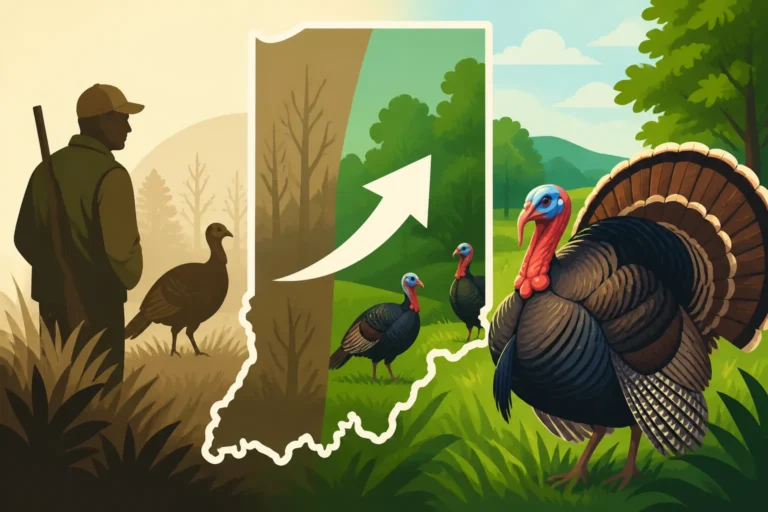
It might be hard to believe now, given the healthy populations we enjoy, but wild turkeys were once virtually gone from Indiana. By the early 1900s, habitat destruction and unregulated hunting had pushed them to the brink of extirpation. Generations before us probably thought a gobbler was just a sound in an old storybook. But thanks to dedicated conservation efforts, primarily trap-and-transfer programs that started in the 1950s and really picked up steam in the 1980s, these magnificent birds made an incredible comeback.
This historical restocking means that turkeys didn't just magically appear everywhere at once. Populations were re-established in suitable habitats, often starting in the larger, more contiguous blocks of timber, particularly in southern Indiana. Over time, as numbers grew, they expanded into adjacent areas, even adapting to more fragmented landscapes. This slow, deliberate process of reintroduction directly influences where you'll find the highest densities today. It’s why some counties have a long history of excellent turkey hunting, while others are still playing catch-up, or only support smaller, localized flocks.
Factors Influencing Turkey Densities
So, what makes a particular county a turkey hotspot while another remains stubbornly sparse? It boils down to a few critical ingredients that turkeys need to survive and flourish: habitat, food, and pressure. When these elements align, you've got yourself a winner.
First and foremost is habitat. Turkeys thrive in areas with a diverse mix of mature timber, especially hardwoods like oaks and hickories for roosting and mast production, interspersed with open fields, pastures, or clearings for strutting, feeding, and brooding. Areas with diverse terrain, like the rolling hills of southern Indiana, naturally offer this mosaic. Access to reliable water sources, whether it's a creek bottom or a series of farm ponds, is also crucial. When you're scouting, look for these transitions – the edges where timber meets field, or where a ridge drops into a creek bottom.
Next up, food sources. While turkeys are generalists, eating everything from insects to berries, acorns and other hard mast are absolute kings in their diet, especially heading into fall and winter. Counties with abundant mast-producing trees will naturally support more turkeys. Beyond that, agricultural fields, particularly cut corn and soybean fields, provide crucial forage during lean times, especially in the central and northern parts of the state. When you're Scouting With the Indiana DNR App, pay close attention to timber composition and agricultural patterns.
Finally, we can't ignore hunting pressure. Even in areas with phenomenal habitat and food, if the pressure is relentless, turkeys can become incredibly wary, scatter, or even abandon their usual routines. Public land, while offering fantastic access, often sees more pressure, requiring hunters to work harder and walk further to find unmolested birds. Private land, conversely, can hold untouched pockets of birds simply because access is limited. It's a balance, and understanding the local pressure in a county can be just as important as knowing its habitat quality.
Top Counties for Indiana Turkey Hunting Opportunities
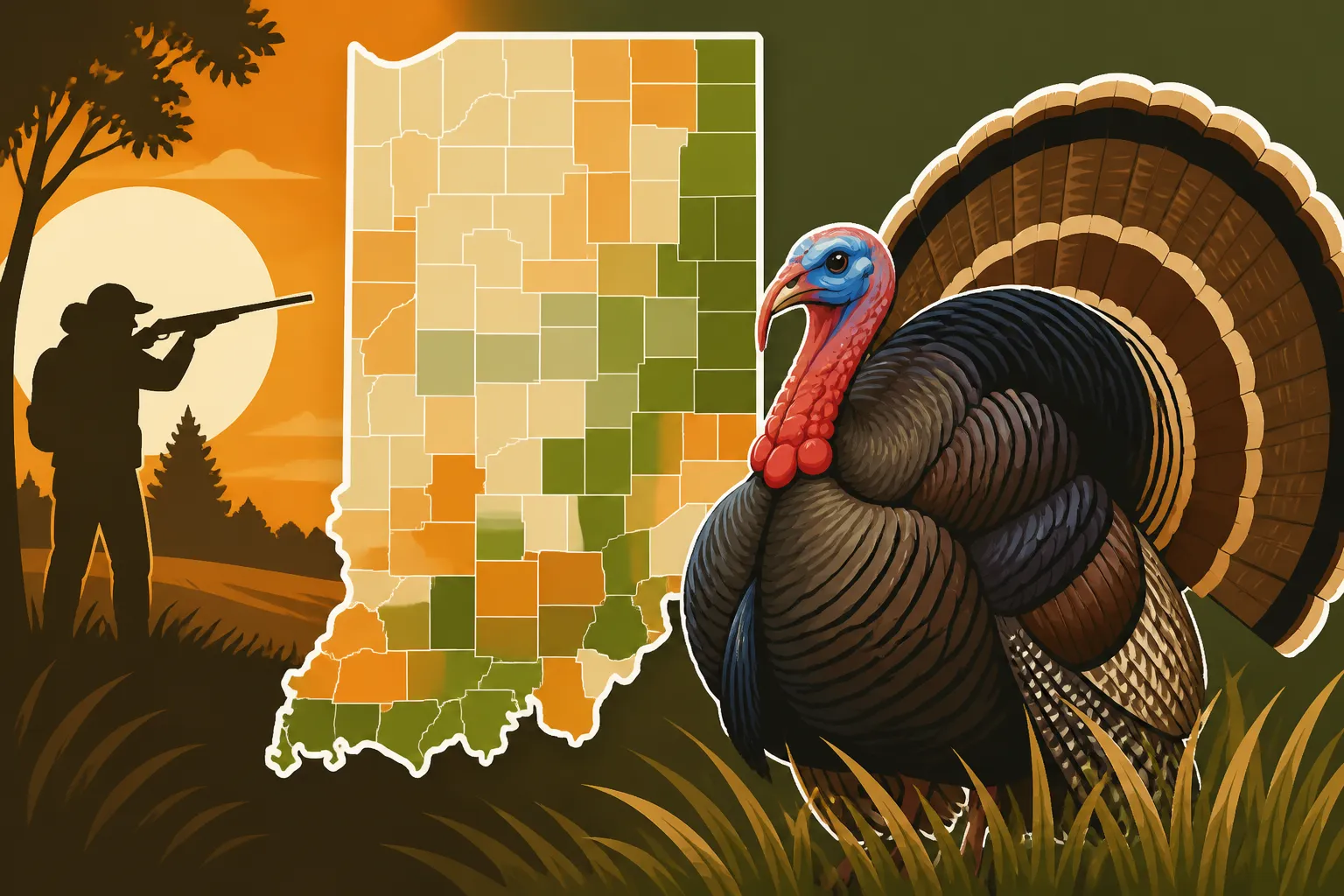
Alright, let's get down to the brass tacks: where are the birds? While turkeys are spread throughout Indiana, some counties consistently stand out year after year due to their prime habitat and established populations. These are the places that often reward diligent hunters.
Southern Indiana's Hill Country Powerhouses
When most Hoosier hunters think "turkeys," their minds immediately drift south, and for good reason. The unglaciated, rugged terrain of southern Indiana provides arguably the state's best, most contiguous turkey habitat. This region is a mosaic of dense, mature hardwood forests, deep hollows, steep ridges, and scattered clearings—perfect for both roosting and feeding.
Counties like Brown, Monroe, Lawrence, Jackson, Martin, Perry, Crawford, and Harrison are often cited as prime spots. These areas boast vast tracts of public land, including significant portions of the Hoosier National Forest Hunting and several large state forests such as Yellowwood, Morgan-Monroe, and Jackson-Washington. The sheer acreage allows birds to spread out and provides hunters with plenty of room to roam, especially if you're willing to put some miles on your boots.
The steep hills and valleys create excellent thermal hubs and natural funnels, which turkeys use for travel and feeding. When Reading a Ridge for Hoosier Forest Deer, you're often reading it for turkeys too. These birds are master navigators of this terrain, and learning to read the landscape for roosting areas along ridge tops and feeding spots in the creek bottoms is crucial. While hunting here can be physically demanding, the rewards of calling in a gobbler in this wild, beautiful country are immense.
Central Indiana's Mixed Habitat Gems
Moving north from the deep south, central Indiana presents a different, yet often productive, turkey hunting scenario. Here, the landscape transitions from rolling hills to flatter, more agriculturally dominant areas, but with significant river bottoms and large woodlots interspersed. These mixed habitats can hold surprisingly robust turkey populations, especially where private land access is available.
Counties bordering major river systems, like those along the Hunting the Wabash River Valley or the Hunting White River Bottomland, can be absolute gems. These river corridors often retain mature timber, providing vital roosting and bedding cover, while adjacent agricultural fields offer abundant food sources. Turkeys here become adept at utilizing these linear strips of timber, often moving between feeding in crop fields and retreating to the safety of the river bottoms.
While public land tracts might be smaller and more fragmented in central Indiana compared to the south, there are still Fish and Wildlife Areas and State Forests that offer opportunities. However, hunters in this region will often find their greatest success by Getting Private Land Permission in Indiana from landowners. A good knock on a farmer's door can open up access to phenomenal hunting where birds see less pressure and have consistent food sources. Don't overlook these areas; a well-placed blind on a field edge or a strategic setup in a timber block can be incredibly effective.
Northern Indiana's Hidden Pockets
For many, northern Indiana isn't the first place that comes to mind for turkey hunting, but dismissing it entirely would be a mistake. While overall densities are generally lower than in the south and central regions, and the landscape is heavily influenced by agriculture, there are definitely "hidden pockets" where turkeys thrive. It often takes a bit more legwork and local knowledge to find them, but the payoff can be birds that are less pressured.
These pockets are typically found around larger, often isolated, blocks of timber, state fish and wildlife areas, and along the remaining river systems or significant creek drainages that cut through farmland. Counties with larger contiguous wetland complexes or state parks (where hunting may be allowed via special draw) can also hold birds. For instance, some of the areas referenced in Hunting Northern Indiana Farmland might apply to turkeys as well, as deer and turkeys often share similar habitat preferences for cover.
Success in northern Indiana often hinges on identifying these specific habitat islands and securing access. Private land becomes even more critical here, as those larger, quality woodlots are often privately owned. Using mapping tools like GoHunt or the DNR's resources to identify timbered tracts and then diligently Knocking on Doors in Indiana Farm Country can be your best strategy. The birds you find here might be harder won, but the satisfaction of putting together a successful hunt in less traditional territory is unbeatable.
Strategies for Locating Prime Turkey Ground
Finding the "best" county is only half the battle; once you're there, you need a plan to locate the birds themselves. Whether you're a seasoned turkey hunter or just starting out, employing smart scouting strategies will dramatically increase your odds of success.
Leveraging Technology for Scouting
In today's world, technology is your best friend when it comes to pre-season scouting, especially for turkeys. You can literally cover thousands of acres from your living room before ever stepping foot in the woods. This is where tools like aerial imagery and topographic maps really shine.
Start by looking for patterns that indicate prime turkey habitat. Look for large blocks of mature hardwoods, particularly on ridge lines and along drainages, which are ideal Where Indiana Gobblers Roost. Identify open fields, food plots, or clearings adjacent to timber – these are natural strutting zones and feeding areas. Pay attention to how different habitat types connect and create travel corridors. Creeks, logging roads, and fence lines can all funnel turkeys.
Apps like GoHunt, or the official Indiana DNR app, are invaluable for this. They allow you to layer aerial photos with topo maps, property boundaries, and even public/private land distinctions. You can drop pins on potential roost sites, strut zones, and pinch points. By studying these maps, you can develop an entry and exit strategy, plan your approach, and minimize the chances of spooking birds before you even set up. Remember, the more you can learn about a piece of ground before you arrive, the more efficient your time in the field will be.
Boots on the Ground and Listening
While technology gets you started, nothing replaces good old-fashioned "boots on the ground" scouting. Pre-season walks are essential for confirming what you saw on the map and finding fresh sign. This is where you connect the digital dots to the real world.
Walk the edges of timber blocks, especially those near agricultural fields. Look for turkey tracks in soft soil or dust. Search for droppings, which are often cylindrical for gobblers and more spiral-shaped for hens. Feathers can indicate roosting or dusting areas. Dusting bowls – shallow depressions where turkeys have fluffed their feathers to rid themselves of parasites – are a surefire sign that birds are using the area.
Crucially, listen. The magic of spring turkey hunting often starts with the sound of a gobble on the roost. During scouting trips, especially at dawn or dusk, drive or walk quietly, stopping frequently to listen for distant gobblers. Sometimes, a well-placed crow call or owl hoot can provoke a shock gobble, revealing a bird's location. This is also how you start figuring out where Calling an Indiana Gobbler Off the Roost might be most effective come opening day. If you find an area with good sign and consistent gobbling activity, you've hit the jackpot.
Understanding Habitat Preference
Turkeys aren't just randomly distributed; they select habitat based on their fundamental needs: food, water, and cover. Understanding these preferences helps you narrow down potential hot spots, even in less obvious counties.
During the spring, turkeys are focused on breeding. Gobblers are strutting, trying to attract hens, and hens are thinking about nesting. You'll find them frequenting open areas like field edges, logging roads, and even open timber stands where a gobbler can be seen and heard. Roosting occurs in tall, sturdy trees, often on high ground like ridge tops or along river bottoms, providing a good vantage point and security.
As seasons progress, especially into the fall, their focus shifts more heavily to food. Mast crops (acorns, hickory nuts) become incredibly important. If it's been a poor acorn year, turkeys will shift their diets and locations to other available food, whether that's wild grapes, insects, or agricultural fields. Creek bottoms provide water and often thicker cover for midday loafing, as well as a variety of plant life. By learning to identify these key components, you can anticipate where birds will be. This knowledge is key to executing Run-and-Gun Turkey Tactics on Public Land or setting up for a long sit on private land.
Navigating Public vs. Private Land for Turkeys
Once you've identified potential turkey country, the next hurdle is gaining access. Indiana offers a mix of public and private hunting opportunities, each with its own set of advantages and challenges, especially when it comes to chasing turkeys.
Hunting Indiana's Public Land for Turkeys
Indiana boasts a respectable amount of Public Hunting Land in Indiana, primarily through its State Forests, Fish and Wildlife Areas (FWAs), and portions of the Hoosier National Forest. These areas are invaluable resources for turkey hunters, offering diverse habitats and, crucially, open access for those with the proper licenses.
However, public land often comes with the caveat of increased hunting pressure. Especially during the opening days of spring season, popular spots can feel crowded. To succeed, you'll need to be willing to walk further than most, exploring deeper into the timber or accessing more remote sections of these properties. Studying maps to identify terrain features that deter other hunters – steep ravines, dense brush, or areas far from parking lots – can lead you to less pressured birds.
Many FWAs require sign-in/sign-out procedures, and some even have specific draw hunts, so always check the regulations for the particular property you plan to visit. While some public lands might have designated spots for Treestand Setups in Hoosier National Forest or Ground Blind Rules on Indiana Wildlife Areas, turkey hunting often lends itself to mobile tactics. Be prepared to adapt to changing conditions and the presence of other hunters, always prioritizing safety and ethical hunting practices.
Gaining Private Land Access
While public land offers a valuable resource, private land can often provide some of the best turkey hunting opportunities, particularly in central and northern Indiana where large public tracts are fewer and farther between. The main advantage of private land is usually less hunting pressure and potentially more consistent turkey patterns, as birds aren't constantly being pushed around.
The key, of course, is gaining permission. This requires patience, respect, and good old-fashioned communication. Start by identifying landowners in your target areas, perhaps using a mapping app like GoHunt to see property lines and owner information. Then, approach them politely, ideally in person and well before hunting season. Introduce yourself, explain your intentions clearly, and always offer to share any game harvested. Emphasize that you will be respectful of their property, close gates, avoid driving on wet fields, and leave no trash.
A little bit of common courtesy goes a long way. Offering to help with chores around the farm, even if it's just once or twice a year, can cement a good relationship. Remember, you're building a relationship, not just asking for a one-time favor. Once you have permission, abide by every rule the landowner sets, and always thank them profusely. Maintaining a good relationship can lead to years of enjoyable hunting and is often the secret to consistent success in highly agricultural areas.
Here's a quick overview of what you might expect from different regions:
| Region | Key Characteristics | Habitat Type | General Pressure Level | Potential for Success |
|---|---|---|---|---|
| Southern Indiana | Rugged, unglaciated, heavily timbered | Extensive hardwood forests, deep hollows, ridge tops | Moderate to High | High, especially for hunters willing to hike and scout |
| Central Indiana | Mixed agriculture, river bottoms, woodlots | Interspersed timber, crop fields, riparian zones | Moderate | Good, often dependent on private land access |
| Northern Indiana | Primarily agriculture, fragmented timber | Smaller woodlots, creek drainages, public FWAs | Low to Moderate | Good for persistent hunters finding hidden pockets |
Disclaimer
This article is for general informational purposes only and does not constitute professional advice. Laws, prices and regulations vary by location and change over time. Consult a qualified professional for guidance on your specific situation.