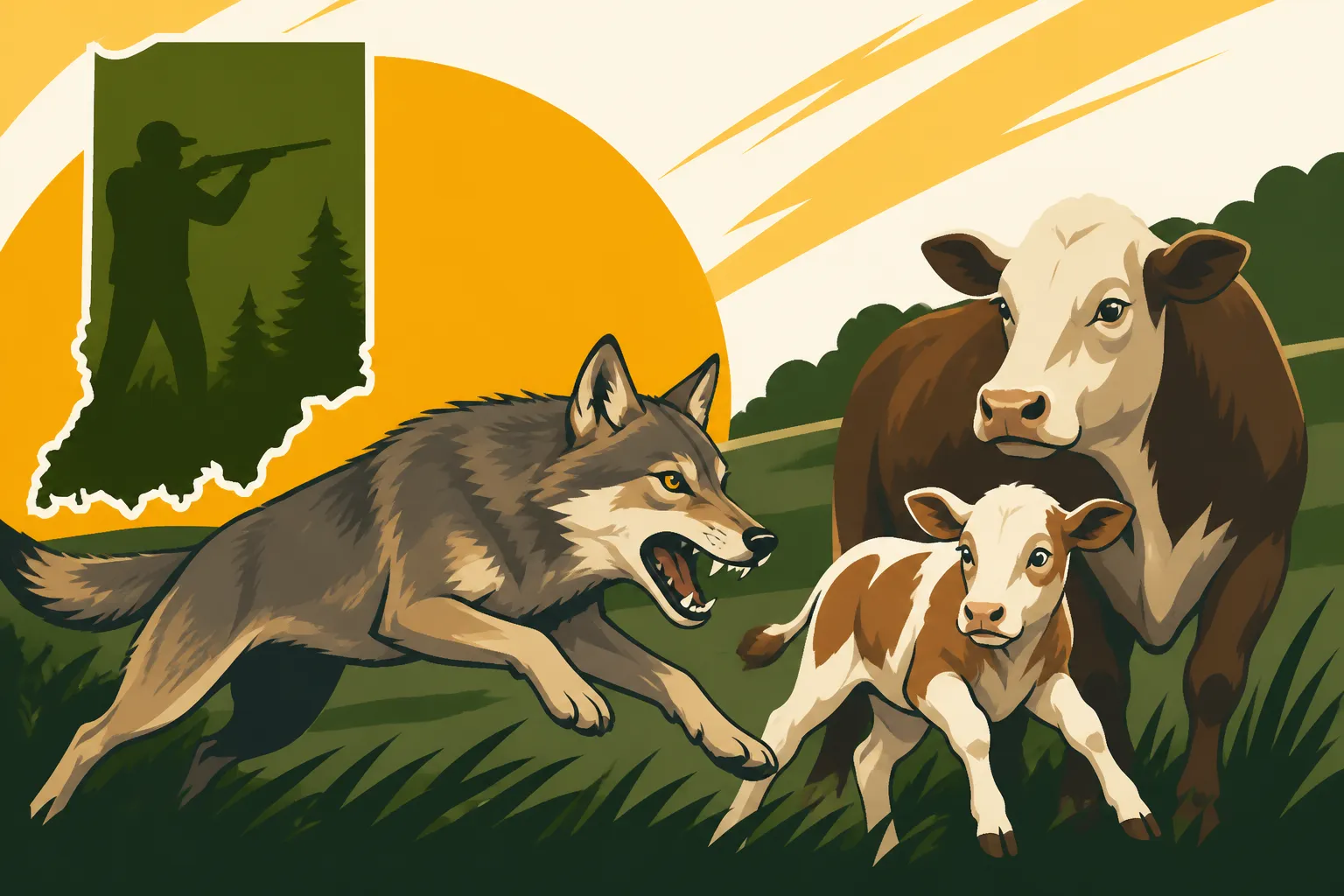
Indiana Coyote Attacks on Livestock
The sight of a dead lamb in the pasture, or a missing calf that was there just yesterday, is a gut punch no Indiana farmer or homesteader ever wants to experience. Coyote attacks on livestock are a harsh reality in our state, a constant challenge for anyone raising animals, and it’s a problem that can feel overwhelming when you’re standing there looking at the aftermath. This isn't just about financial loss; it's about the emotional toll, the feeling of vulnerability, and the frustration of trying to protect your livelihood against a clever and adaptable predator. This guide is here to walk you through understanding why these attacks happen, what you can do to prevent them, and how to manage the situation when they do occur.
Understanding Coyote Behavior and Predation Patterns
Coyotes are incredibly intelligent and opportunistic animals, and they've adapted remarkably well to living alongside humans, even in densely populated areas of Indiana. Their presence is just a fact of life, and unfortunately, that means livestock owners need to understand their patterns to better protect their animals. It’s not about malice on the coyote’s part; it’s about survival, and for them, your livestock can represent an easy meal.
Why Coyotes Target Livestock
Coyotes primarily target livestock for one simple reason: food. They are opportunistic omnivores, meaning they'll eat whatever is most readily available, and that often includes small mammals, birds, insects, fruits, and carrion. However, when easy prey like deer fawns, rabbits, or rodents are scarce, or when a coyote pack is supporting pups, a domestic animal can become a very tempting target. It's often about the path of least resistance. A domestic lamb or goat, especially when penned or less wary than wild prey, can present a much easier hunt than a swift deer or a cunning rabbit.
We often see an uptick in predation during specific times of the year. Spring, for instance, is when coyote pups are born and growing, demanding more food from the parents. A lactating female or a pair with hungry pups will take greater risks and exploit any available food source, including young calves, lambs, or piglets. This isn't to say attacks don't happen at other times, but understanding the seasonal pressures on coyotes can help you anticipate when your livestock might be most vulnerable. They're simply trying to feed their families, much like we are.
Common Attack Scenarios and Times
Coyotes are most active during dawn, dusk, and throughout the night, which aligns perfectly with when many livestock operations are least supervised. However, don’t assume daytime is entirely safe; a hungry or bold coyote, especially one that has learned there’s no threat, will absolutely hunt in broad daylight. I’ve known farmers in southern Indiana who’ve seen coyotes stalking calves in open pastures in the middle of a sunny afternoon.
Typically, young, sick, or isolated animals are the most vulnerable. A newborn lamb or goat kid, often left alone by its mother for short periods, is an easy target. Calves can be at risk, especially if they wander too far from the main herd or if the cows aren't particularly aggressive in defending their young. Sheep and goats, by their very nature, tend to be less aggressive and more susceptible to predation than cattle. Attacks often occur at the edges of pastures, near dense cover where a coyote can quickly ambush and disappear, or in pens that aren't adequately secured. It's a sad reality, but coyotes excel at finding weaknesses in our defenses.
Identifying Coyote Kills vs. Other Predators
When you find a deceased animal, it’s crucial to try and determine the cause of death. Not every kill is a coyote, and understanding the signs can help you tailor your prevention strategies. Other predators like domestic dogs (which can be a huge problem themselves), bobcats, or even stray hogs can also kill livestock. The scene of a coyote kill often has distinct indicators.
Look for bite marks on the throat or neck, usually with puncture wounds that match canine teeth. Coyotes often try to incapacitate their prey by attacking the throat. You might also see signs of struggle, like disturbed ground or broken vegetation, but coyotes are efficient and sometimes a clean kill leaves little evidence. They typically consume smaller prey where they killed it, often starting with the entrails or hindquarters. For larger animals like calves, they might feed more haphazardly. Missing patches of hair or hide are also common. In contrast, domestic dogs often attack indiscriminately, leaving multiple bite marks all over the body, and they sometimes kill for sport rather than food, leaving the carcass untouched. Foxes or bobcats tend to target smaller prey, and their bite marks would be smaller. Reading Indiana Mud for Fresh Deer Movement might give you some insight into how to identify tracks, even though it's deer-focused.
Here’s a quick comparison of common predator signs:
| Characteristic | Coyote Kill | Domestic Dog Attack | Bobcat Kill (Small Prey) | Fox Kill (Small Prey) |
|---|---|---|---|---|
| Primary Target Area | Throat, neck, flanks | Multiple areas, often indiscriminate | Back of neck, head, throat | Back of neck, head |
| Bite Marks | Clean punctures, canine-width, bruising | Ragged tearing, multiple bites, less precise | Small, precise punctures, often near skull base | Small punctures, sometimes bruising |
| Feeding Pattern | Often starts with entrails, hindquarters | Often kills but doesn't feed, or eats haphazardly | Feeds on hindquarters, chest cavity | Often carries off small prey; eats head/neck |
| Signs of Struggle | Moderate, efficient kill | Extensive, chase marks, more chaos | Minimal, stealthy kill | Minimal, quick kill |
| Tracks | Elongated, symmetrical paw prints | Rounder, splayed paw prints, less symmetrical | Round, no claw marks in track, retractable claws | Small, diamond-shaped paw prints |
| Scat | Often contains hair, bone fragments | Varies widely, can contain human food | Segmented, contains hair, bone | Thin, twisted, contains fur, feathers |
Proactive Measures to Deter Coyote Attacks
Prevention is always better than reaction when it comes to livestock predation. While you can't completely eliminate the risk, you can certainly make your farm a much less appealing target for coyotes. It requires a combination of common-sense practices, strategic investments, and a commitment to active management.
Fencing Solutions for Different Livestock
A good fence is your first line of defense, but not all fences are created equal when it comes to deterring coyotes. A standard woven wire or barbed wire fence might keep your animals in, but it often won't keep a determined coyote out. Coyotes can dig under, jump over, or squeeze through surprisingly small openings.
For effective coyote deterrence, consider electric fencing. A properly installed multi-strand electric fence, especially with a hot wire set close to the ground (6-8 inches off the ground) to prevent digging, can be incredibly effective. Combine this with traditional woven wire, and you have a robust barrier. The key is consistent voltage and regular maintenance to ensure there are no shorts or dead spots. A coyote only needs one bad experience with a hot fence to learn to avoid it. For smaller livestock like sheep and goats, taller fences (at least 5 feet) are advisable, and even higher for some, especially if coyotes are jumping. When using resources like GoHunt to scout nearby property or understand terrain, you can identify potential travel corridors for coyotes and plan your fence lines strategically to block them. This proactive approach can make a huge difference in the effectiveness of your containment.
Livestock Guardian Animals LGAs
This is one of the oldest and most reliable methods of deterring predators, and for good reason. Livestock guardian animals (LGAs) live with your herd or flock and actively protect them. Dogs are the most common and widely recognized LGAs, with breeds like Great Pyrenees, Anatolian Shepherds, and Akbash dogs being popular choices. These dogs are specifically bred for their protective instincts, size, and temperament to bond with livestock rather than humans.
A good LGA will patrol the perimeter, bark to deter predators, and if necessary, physically confront a threat. It’s important to introduce LGAs to livestock at a young age so they develop that crucial bond. They need to be socialized to the animals they're protecting, not just to people. Donkeys and llamas can also serve as LGAs, particularly against coyotes, as they have a natural aversion to canids and will often chase or kick them away. While they may not be as effective against a determined pack as a well-trained dog, for single coyote encounters, they can be excellent deterrents.
Habitat Modification and Management
Making your property less attractive to coyotes is another powerful tool. Coyotes thrive on cover, especially dense brush, tall grass, and cluttered areas where they can hide, stalk, and den. By clearing these areas around your pastures and livestock pens, you reduce the ambush opportunities and make coyotes feel more exposed. This isn't about clear-cutting entire sections but focusing on a buffer zone around where your animals spend their time.
Proper waste management is also critical. Dead livestock, birthing afterbirth, or even discarded food scraps can attract coyotes. Promptly disposing of carcasses (either by burial, rendering, or other approved methods) ensures you're not inadvertently laying out a dinner invitation. Keeping feed secure and stored in predator-proof containers can also reduce attraction. Think like a coyote: if there's no easy meal or safe hiding spot, they're more likely to move on to easier pickings elsewhere. Hunting After a Poor Acorn Year and similar articles about natural food sources can help you understand how coyote prey might be affected, leading to more pressure on your livestock.
Responding to Coyote Predation and Mitigation Strategies
Despite your best efforts, coyote attacks can still happen. When they do, knowing how to respond, what your legal rights are, and what additional mitigation steps you can take is crucial. It's a tough situation, but you're not without options.
Legalities of Coyote Control in Indiana
In Indiana, coyotes are considered an unprotected species, which means there is no closed season and no bag limit for hunting or trapping them. This gives landowners a significant amount of flexibility in protecting their livestock. If a coyote is actively threatening, harassing, or depredating your livestock, you generally have the right to remove that animal. However, it’s always wise to be aware of local ordinances, especially if you’re near populated areas, regarding firearm discharge or trapping regulations.
While general hunting is year-round, specific methods might have nuances. For instance, Night Hunting Rules for Indiana Coyotes permits the use of artificial lights, which can be effective, but those rules are important to understand. Trapping also requires a license, even on your own property, if you intend to remove the animal permanently or for commercial purposes. Always check the current Indiana DNR regulations for the most up-to-date and specific guidance. When you are on your own land and actively protecting your animals, you have significant leeway, but understanding the legal framework keeps you safe and within your rights.
Trapping and Hunting as Control Methods
When proactive measures aren’t enough, active removal of problem coyotes often becomes necessary. Both trapping and hunting are effective tools, but they require skill and an understanding of coyote behavior.
Trapping: Trapping, particularly with foothold traps or snares, can be highly effective for targeting specific coyotes that are causing problems. Trapping requires knowledge of coyote travel paths, scent posts, and an understanding of how to set traps to avoid non-target animals. A professional trapper can be invaluable here, as they often have the expertise to quickly remove problem animals. If you choose to trap yourself, ensure you have the proper licenses and adhere to all regulations, including checking traps frequently. Trapping Indiana Furbearers and Running a Trapline in Rural Indiana offer more insight into this skill set. This isn't just about setting a trap; it’s an art form that takes practice and experience.
Hunting: Hunting coyotes, particularly around the affected areas, can also reduce predation pressure. Methods range from calling (using distress calls or challenge howls) to stand hunting. Coyote Calling in Indiana Farm Country is a popular tactic, especially during cooler months when coyotes are more active and less wary. For landowners experiencing livestock depredation, shooting coyotes on sight is often the most direct response. Remember to always prioritize safety, know your backdrop, and be aware of any nearby residences. Using mapping tools like GoHunt to understand your property and surrounding areas can help you identify safe shooting lanes and potential travel corridors for coyotes, making your hunting efforts more targeted and effective.
Reporting Incidents and Seeking Assistance
Don’t feel like you have to tackle this problem entirely on your own. If you’re experiencing significant livestock losses due to coyotes, or if you suspect you have a particularly bold or habituated coyote causing issues, there are resources available.
The Indiana Department of Natural Resources (DNR) wildlife biologists or conservation officers can offer advice and sometimes assistance, especially if there's an ongoing issue that poses a broader threat. While they may not come out to remove every problem animal, they can provide guidance on best practices, legal methods, and connect you with local trappers or hunters who might be willing to help. Documenting your losses and the signs of predation can be helpful when communicating with these agencies. Keeping good records not only helps you track the problem but also provides valuable data if you're seeking assistance or trying to prove a pattern of depredation. Remember, you're part of a larger community of landowners and hunters facing similar challenges, and help is often closer than you think.
Disclaimer
This article is for general informational purposes only and does not constitute professional advice. Laws, prices and regulations vary by location and change over time. Consult a qualified professional for guidance on your specific situation.