Indiana Copperhead Encounters Afield
The Indiana woods are a truly special place, offering incredible opportunities for hunters and outdoors enthusiasts. But let's be honest, stepping into that beautiful, wild environment also comes with a unique set of concerns. One of those nagging worries, especially when you're slipping quietly through the timber or settling into a deer stand, is the thought of an unexpected encounter with a copperhead. These venomous snakes are a real part of our Hoosier landscape, and while they're often more scared of us than we are of them, a surprise meeting can be startling, if not dangerous. This guide is here to walk you through everything you need to know about Indiana copperheads, from identifying them correctly to knowing where they like to hang out, and most importantly, how to stay safe and what to do if the worst happens.
Identifying Indiana Copperheads in the Field
Knowing your local wildlife is paramount for safety and responsible outdoor recreation. When it comes to snakes, quick and accurate identification can mean the difference between a harmless observation and a serious medical emergency. Copperheads have a reputation, and for good reason, but understanding their distinct features will help you differentiate them from harmless lookalikes.
Distinctive Markings and Coloration
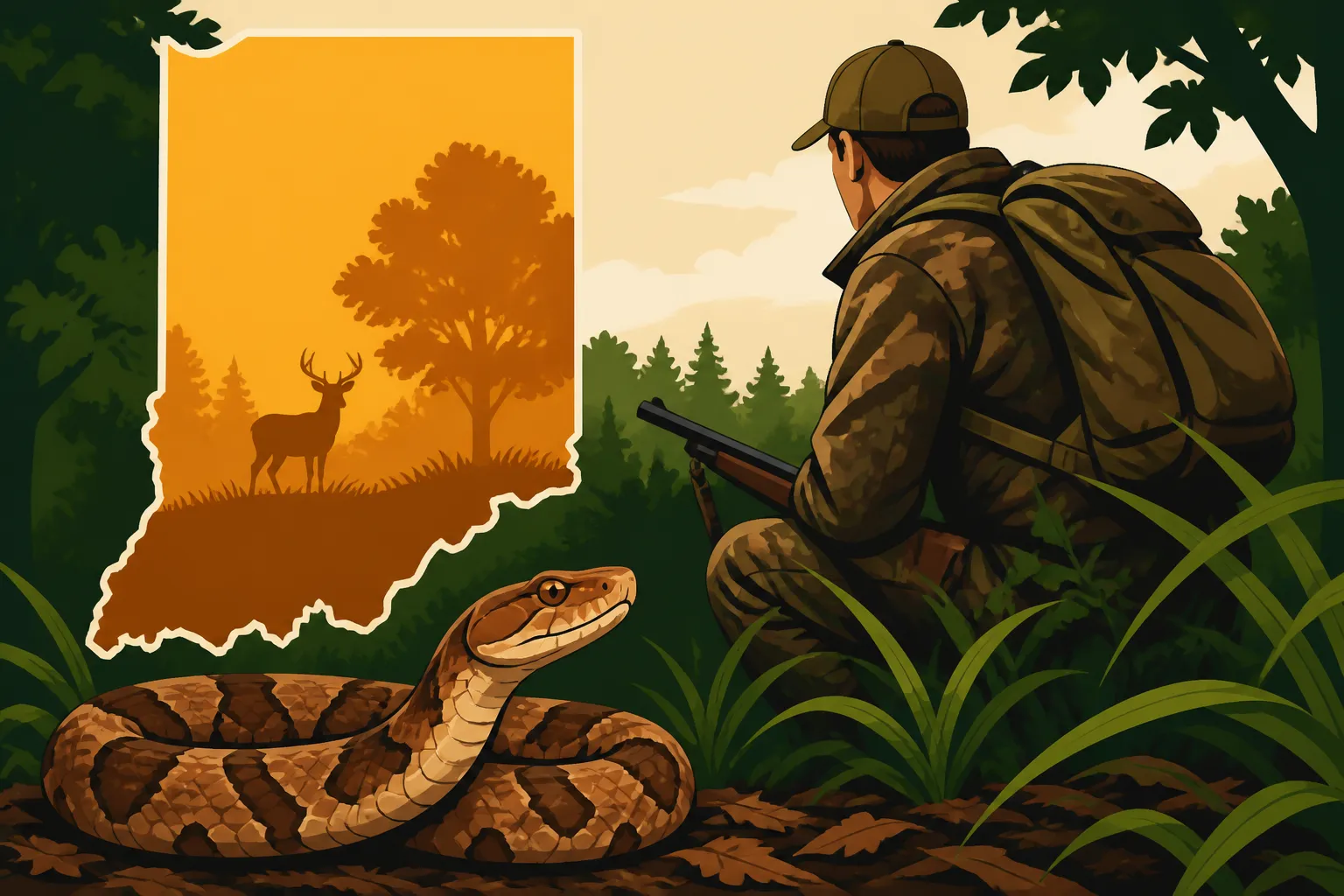
The most recognizable feature of an Indiana copperhead is its unique color pattern, which often gives it excellent camouflage among fallen leaves and forest debris. Their base color typically ranges from a pale to dark tan or pinkish-tan. Overlaying this background are dark, often reddish-brown or chestnut-colored crossbands. These bands are distinctively hourglass-shaped, meaning they are wider on the sides of the body and narrower across the top of the back, creating a series of "bow ties" or "hourglasses" running down their length. It's this pattern that is the primary identifier. Younger copperheads, or juveniles, will exhibit the same hourglass pattern, but often have a vibrant yellow or yellowish-green tail tip, which is used to lure prey and fades as they mature. This detail is crucial because that bright tail can really stand out against the forest floor.
Beyond the body, take a close look at the head if you can safely observe one. Their head is noticeably broader than their neck, giving it that classic triangular or spade shape often associated with venomous snakes. They also possess vertical pupils, like a cat's eye, though these are often difficult to discern from a safe distance. The top of their head is usually unmarked or has very subtle markings, typically the same copper or reddish-brown color that gives them their name.
Size and Body Shape
Adult copperheads in Indiana typically reach lengths of 24 to 36 inches, though some individuals can occasionally exceed this. They are a medium-sized, relatively stout-bodied snake, not particularly slender like garter snakes, but also not as thick as some larger non-venomous species like the gray ratsnake. Their overall body is muscular and well-proportioned for their length.
When coiled, their shape can be quite compact, making them blend seamlessly into their surroundings. When stretched out, you'll notice the gradual tapering from the mid-body to the tail. The combination of their moderate length and robust build, along with those characteristic markings, forms a solid mental picture for field identification. Remember, while a large snake can be intimidating, size alone isn't an indicator of venomousness. A small copperhead is still a copperhead.
Distinguishing from Lookalikes
This is where many hunters get nervous, and understandably so. Indiana is home to several non-venomous snakes that are frequently mistaken for copperheads, leading to unnecessary fear or, worse, harm to a harmless creature. The most common copperhead mimics are the northern water snake, the eastern hognose snake, and sometimes even young ratsnakes or milk snakes.
The northern water snake is perhaps the most common culprit. They are often dark-colored, sometimes with crossbands, and can be quite aggressive when cornered, flattening their heads to appear more menacing. However, their bands are typically darker on a lighter background, not the hourglass shape, and their head is not as distinctly triangular. Their pupils are round, and they lack the heat-sensing pits found on venomous pit vipers.
The eastern hognose snake is another charmer that puts on a great show. When threatened, they'll flatten their head and neck, hiss loudly, and even strike (though usually with a closed mouth). If that doesn't work, they'll play dead, flipping onto their back. While they can have mottled patterns, their coloration is highly variable, and they lack the copperhead's hourglass bands. Their most distinguishing feature is their upturned, pig-like snout.
Here's a quick comparison table to help you keep things straight:
| Feature | Copperhead | Northern Water Snake | Eastern Hognose Snake |
|---|---|---|---|
| Color/Pattern | Tan/pinkish with dark, hourglass crossbands | Brown/gray with dark bands/blotches | Highly variable; mottled, no hourglasses |
| Head Shape | Distinctly triangular, broad | More oval, not significantly broader than neck | Broadens when threatened; upturned snout |
| Pupils | Vertical (slit-like) | Round | Round |
| Tail Tip | Often yellow/green in juveniles, fades in adults | Uniform with body | Uniform with body |
| Behavior | Generally docile, may freeze/strike if startled | Often aggressive, bites freely if cornered | Hisses, plays dead, "bluff" strikes |
| Heat Pits | Present (between eye and nostril) | Absent | Absent |
Remember, when in doubt, give all snakes a wide berth. There's no shame in letting a snake go its way rather than risking an encounter. Hunting the Wabash River Bottoms or any other area where water sources are prevalent means you're more likely to see water snakes, so it's good to know the difference.
Where and When You're Most Likely to Encounter Copperheads
Understanding the habits of copperheads is key to avoiding them. These creatures aren't just randomly distributed; they prefer specific environments and are most active during certain times. Knowing their patterns allows you to be more vigilant in high-risk areas.
Preferred Habitats in Indiana
Copperheads are true creatures of their environment, and in Indiana, that means they thrive in areas that offer a combination of cover, sunning spots, and prey. You'll primarily find them in:
- Woodlands with rocky outcrops: This is classic copperhead country. The rocky areas provide excellent cover, crevices for denning, and sunny spots to bask. Think of those rocky ledges and shale banks in places like the Hoosier National Forest or any southern Indiana hill country. Hunting Southern Indiana Hill Country definitely puts you in prime copperhead habitat.
- Forest edges and ecotones: Where woodlands meet fields, clearings, or water sources, you'll often find a higher concentration of snakes. These transitional zones offer diverse prey like rodents, amphibians, and insects.
- Near water sources: While not truly aquatic like water snakes, copperheads will often be found near streams, ponds, and river bottoms, especially if there's rocky or woody debris. They'll hunt near these areas for prey. Hunting Indiana River Bottom Funnels is another scenario where you'd want to be extra aware.
- Downed timber and leaf litter: They are masters of camouflage, disappearing into piles of leaves, log piles, and brush piles. If you're walking through an area with a lot of fallen trees or dense undergrowth, proceed with caution.
- Abandoned buildings or old structures: These can provide excellent denning sites and cover. Old foundations, dilapidated barns, or crumbling stone walls are magnets for snakes.
It's crucial to understand that their presence isn't limited to the deep wilderness. They can be found in suburban areas that border woodlands, sometimes even making their way into yards if the habitat is suitable. Don't assume you're safe just because you're not miles deep in a state forest.
Seasonal Activity Patterns
Just like deer, turkeys, and other game, copperheads have seasonal behaviors driven by temperature and biological needs.
- Spring (April – June): As temperatures rise, copperheads emerge from hibernation. This is a time when they might be found basking in sunny spots near their den sites to warm up. Mating season typically occurs in late spring to early summer. They can be somewhat sluggish early in the spring, but don't let that fool you into thinking they're not dangerous. If you're Spring Turkey Hunting in Indiana, you'll be out there during prime emergence time.
- Summer (July – August): This is generally their most active period, especially during the cooler hours of the morning and evening. During peak summer heat, they often become more nocturnal, hunting at night when temperatures are more favorable. Females will give birth to live young in late summer, usually August or September. These juveniles are born venomous and ready to go.
- Fall (September – October): As temperatures begin to drop, copperheads will start to move towards their overwintering den sites, often communal. You might find them basking on rocks or pavement during sunny fall days, trying to absorb as much warmth as possible before the cold sets in. This period overlaps with early deer seasons like Bowhunting Indiana's Long Archery Season, meaning you need to be observant.
- Winter (November – March): Copperheads are dormant during the colder months, hibernating in dens, often underground or in rock crevices, sometimes with other snake species. Encounters are highly unlikely during this time unless disturbed.
Time of Day and Weather Considerations
Copperheads are largely ambush predators, relying on their camouflage to catch unsuspecting prey. Their activity is heavily influenced by external factors like temperature and light.
- Temperatures: They are most active when ambient temperatures are between 70-85 degrees Fahrenheit. Below 60, they become sluggish; above 90, they seek shade and become more nocturnal.
- Sunny, warm days: These are ideal for basking, especially in spring and fall. Look for them on south-facing slopes, sun-drenched rocks, or logging roads.
- Overcast or humid days: They might still be active, especially if temperatures are in their preferred range.
- After a rain: Often, copperheads will emerge after a rain shower, especially if it was hot beforehand, as prey might be more active.
- Nighttime in summer: As mentioned, during hot summer nights, they often become nocturnal hunters. This is a crucial consideration if you're out after dark, perhaps checking a trail camera or making a late exit from a stand.
Being mindful of these patterns means you can adjust your vigilance. When it's warm and sunny in spring or fall, or a humid summer evening, extra caution is warranted, especially in areas with good snake habitat.
Avoiding Unpleasant Encounters Afield
No one wants to stumble upon a copperhead, and fortunately, there are many practical steps you can take to significantly reduce your risk of an encounter. It's all about awareness and preparation.
Foot Placement and Situational Awareness
This is probably the single most important defense against snake bites. Copperheads are ambush predators, and they often hold perfectly still, relying on their camouflage. You are far more likely to step on one than to be aggressively pursued.
- Look where you step: This might sound obvious, but when you're focused on tracking a deer, scanning for turkeys, or just trying to navigate rough terrain, it's easy to forget to look directly at your feet. Make it a conscious habit to scan the ground a few feet in front of you with every step, especially when crossing logs, stepping over rocks, or moving through thick leaf litter.
- Avoid reaching blindly: Never put your hands or feet where you can't see them. This means no blindly reaching under logs, into brush piles, or into rock crevices. If you're collecting firewood, clearing a shooting lane, or just need to brace yourself, always look first.
- Use a walking stick: A sturdy walking stick or trekking pole isn't just great for stability on uneven ground; it's also an excellent tool for probing ahead of you into dense cover or rustling leaf litter before you step. It can also be a barrier if you do spot a snake.
- Be extra careful near den sites: If you encounter one copperhead, assume there might be others nearby, especially in rocky areas during spring or fall when they are congregating.
- Stay on established trails: While sometimes unavoidable in hunting, trails often have better visibility than bushwhacking through dense undergrowth.
Using mapping apps like GoHunt can really help here. Before you even set foot in the woods, you can analyze aerial photos for southern Indiana deer, looking for those rocky outcrops, south-facing slopes, or dense river bottom funnels that scream "snake habitat." You can plan your approach to avoid the densest areas or at least know where to be extra vigilant. Marking potential risky areas on your map can be a literal lifesaver.
Appropriate Gear Choices
The right gear can provide a crucial layer of protection, particularly for your lower legs.
- High-top boots: Investing in a good pair of sturdy, high-top leather or synthetic hunting boots is a must. These offer some protection for your ankles and lower shins. Consider boots for Indiana mud and snow that are also robust enough for varied terrain.
- Snake gaiters or snake-proof boots: For those who frequently venture into known snake country or simply want maximum peace of mind, snake gaiters or full snake-proof boots are an excellent investment. They are made from puncture-resistant materials and extend from your ankle up to just below your knee, providing a critical barrier against bites. While a copperhead's fangs are relatively short, they can still penetrate typical hunting pants and even some softer boot materials.
- Thick pants: While not snake-proof, heavy-duty denim or canvas pants offer more protection than thin nylon or cotton, giving you another minor layer of defense.
Think of it like this: your hunting gear isn't just about comfort and concealment; it's also about safety. A little extra protection can go a long way in preventing a bad day afield.
Safe Practices in Camp and Blind
It's not just when you're moving that you need to be aware. Snakes can find their way into static locations too.
- Check your surroundings: Before sitting down against a tree, in a ground blind, or setting up camp, always scan the immediate area thoroughly. Look under logs, around rocks, and in dense vegetation.
- Elevate gear in camp: If camping, keep your pack, sleeping bag, and other gear off the ground as much as possible. A snake might be looking for a warm, dark place to hide. Shaking out your boots before putting them on is also a good habit.
- Clear ground blind areas: When setting up a ground blind, clear a wide perimeter of leaf litter and low brush around it. Not only does this reduce noise, but it removes potential hiding spots. If you're Brushing In a Blind on a Field Edge, be sure to look before grabbing brush.
- Be mindful of food and water: Food attracts rodents, and rodents attract snakes. Keep your camp clean and free of food scraps. Water sources can also draw snakes in hot weather.
- Firewood vigilance: If gathering firewood, wear gloves and carefully inspect each piece of wood before picking it up. Snakes love to hide under and within log piles.
A bit of proactive scanning can prevent a jump scare or worse. Remember, whether you're heading out to check Trail Camera Rules on Indiana Public Land or settling in for a long sit, maintaining awareness of your surroundings is your best defense.
What to Do If You're Bitten or See One
Despite all precautions, encounters can still happen. Knowing how to react calmly and correctly is paramount, whether it's a near miss or an actual bite. Panic can often make a bad situation worse.
Immediate First Aid for a Bite
If, unfortunately, you or a hunting partner sustains a copperhead bite, remember these critical steps. Speed in getting proper medical attention is far more important than any field remedy.
- Stay Calm: Panicking will increase your heart rate, which can spread the venom more quickly throughout the body. Try to remain as still and calm as possible. Deep breaths.
- Remove Constricting Items: Immediately remove any rings, watches, tight clothing, or bracelets from the affected limb before swelling begins. This is extremely important to prevent further tissue damage.
- Keep the Affected Area Below Heart Level: If possible, try to keep the bitten limb in a neutral position, below the level of your heart.
- Immobilize the Limb: Treat the bitten limb as if it were broken. Try to keep it as still as possible to slow the spread of venom. A splint might be helpful if you can apply one without delaying transport.
- Clean the Wound: Gently wash the bite area with soap and water if available.
- Seek Medical Attention IMMEDIATELY: This is the most crucial step. Get to the nearest emergency room or medical facility as quickly and safely as possible. Call 911 if necessary, especially if you are in a remote area, and be prepared to describe your location using GPS coordinates if possible. This is where detailed maps on GoHunt can literally be life-saving.
- Try to Remember the Snake's Appearance (Safely): If you can, remember details about the snake's color, size, and pattern without trying to capture or kill it. This information can help medical professionals confirm it was a copperhead bite and guide treatment, but do NOT risk further bites or injury to identify it. A photo from a safe distance can be helpful if possible, but again, safety first.
What NOT to Do (These are common myths and dangerous practices):
- Do NOT cut the wound: This will only cause further tissue damage and infection.
- Do NOT try to suck out the venom: It is ineffective and can introduce bacteria.
- Do NOT apply a tourniquet: This can restrict blood flow and lead to severe tissue damage or loss of the limb.
- Do NOT apply ice: This can actually worsen tissue damage.
- Do NOT try to catch or kill the snake: This greatly increases the risk of another bite.
- Do NOT consume alcohol or caffeine: These can accelerate the spread of venom.
Your priority is getting to medical help. If you're deep in the Hoosier National Forest Hunting alone, this can be a serious challenge, which is why preparation and prevention are so vital. Always tell someone where you're going and when you expect to return. Packing a First Aid Kits for Remote Forest Ground with essentials is a smart move.
When to Seek Medical Attention
For any suspected venomous snake bite, you should seek immediate medical attention. Copperhead venom is not typically lethal to healthy adults, but it can cause severe pain, swelling, tissue damage, and secondary infections. Children, the elderly, or individuals with compromised immune systems are at higher risk of complications.
Symptoms of a copperhead bite typically include:
- Immediate, intense pain at the bite site.
- Rapid swelling and bruising around the wound.
- Nausea, vomiting, and general weakness.
- A metallic taste in the mouth.
Antivenom is available for copperhead bites, and medical professionals will assess the severity of the bite and determine if it's necessary. Even if symptoms seem mild initially, they can worsen over time, so professional evaluation is always required.
Dealing with an Encounter No Bite
Okay, let's talk about the much more likely scenario: you see a copperhead, but it doesn't bite you. What's the protocol?
- Freeze: Your first instinct might be to jump or scream, but try to freeze in place. Sudden movements can startle the snake.
- Assess the Situation: Where is the snake? Is it coiled, moving, or holding still? Is it between you and your path?
- Back Away Slowly: Once you've assessed, calmly and slowly back away from the snake. Give it a wide berth, a good 6-10 feet or more if possible. Do not turn your back and run; just slowly increase the distance.
- Wait for it to Leave (or go around): Copperheads are not aggressive hunters of humans. If given space, they will almost always try to escape rather than confront you. If it's in your path, wait for it to move on its own. If it doesn't move and you have a safe route to go around it, do so.
- Never Harass or Provoke: This should go without saying, but never poke, prod, throw things at, or try to handle a snake, even if you think it's harmless. This is when most bites occur.
- Mark the Location (Mentally or with GPS): If you're in an area you frequent, make a mental note or drop a pin on your GoHunt app. This allows you to exercise extra caution next time you're in that spot. Perhaps you found it near a specific Ridge-Top Saddle for Rutting Bucks, so you'll know to be extra careful there in the future.
Encountering wildlife, especially venomous wildlife, is part of being in the outdoors. By understanding copperheads, respecting their space, and being prepared, you can minimize risks and continue to enjoy everything Indiana's incredible wild places have to offer.
Disclaimer
This article is for general informational purposes only and does not constitute professional advice. Laws, prices and regulations vary by location and change over time. Consult a qualified professional for guidance on your specific situation.