Predator Hunting in Indiana
There’s a unique thrill to predator hunting in Indiana, isn't there? Whether you’re trying to protect your livestock, manage deer populations, or simply enjoy the challenge of outsmarting a wily coyote, it often feels like you’re up against a truly intelligent opponent. Many hunters get frustrated by calling in coyotes only to have them hang up just out of range, or by foxes that seem to materialize out of thin air and disappear just as quickly. This guide will walk you through everything you need to know, from understanding the animals themselves to navigating regulations, choosing the right gear, and mastering the tactics that will put you face-to-face with Indiana's most cunning predators.
Getting to Know Indiana's Huntable Predators
Indiana is home to a variety of predators, each offering its own set of challenges and rewards for the dedicated hunter. It’s not just about pulling a trigger; it’s about understanding their habits, their preferred habitats, and what makes them tick. When you're out there, you're engaging in a chess match with an animal whose survival instincts are finely tuned.
The Wily Coyote: Indiana's Top Predator Challenge
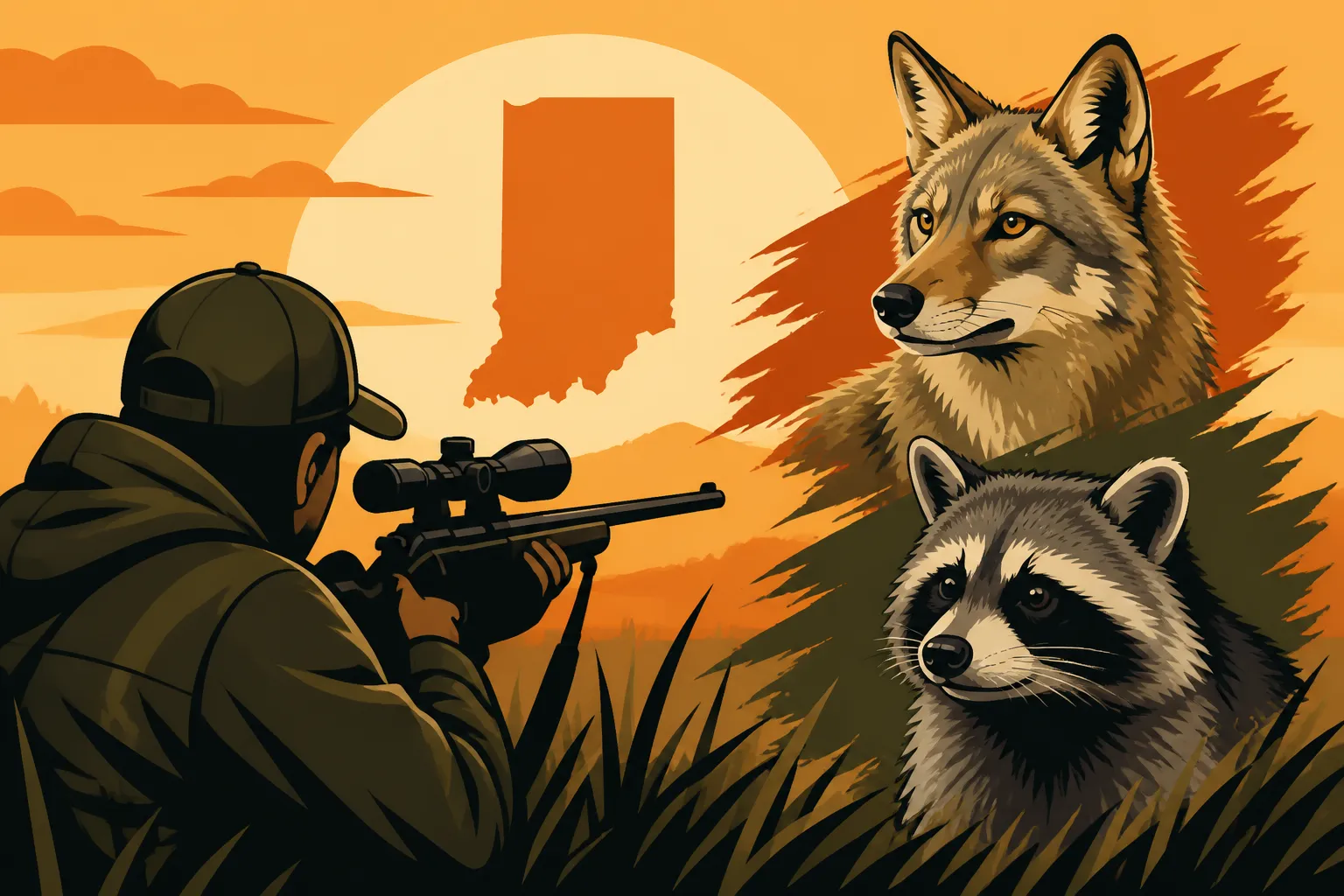
If there’s one predator that defines hunting in Indiana, it's the coyote. These adaptable canines are truly everywhere, from the deepest woods of the Hoosier National Forest to the fringes of suburban Indianapolis and vast stretches of farmland. Their populations have absolutely exploded over the last few decades, and they’ve proven incredibly resilient to hunting pressure. They're a major reason why many deer and turkey hunters also become predator hunters, looking to ease the pressure on fawn and poult populations.
Coyotes are opportunistic omnivores, meaning they'll eat just about anything they can get their paws on. While their diet often consists of rodents, rabbits, and carrion, they are more than capable of taking down deer, especially fawns, and they are infamous for preying on domestic livestock like chickens, lambs, and even small calves. This makes them a legitimate concern for many rural landowners. When you’re hunting coyotes, you’re not just chasing a trophy; you're often engaging in a form of wildlife management that benefits other species and local farms. They have an incredible sense of smell, keen eyesight, and hearing that can pick up the slightest rustle, making them notoriously difficult to fool. Understanding their territorial nature and how they communicate through howls and yips is crucial for successful calling. To dive deeper into their presence across the state, check out this guide on Indiana Coyote Range and Density.
Red and Gray Foxes: Smaller but Just as Crafty
While coyotes might dominate the conversation, Indiana is also home to both red and gray foxes. These smaller canids offer a different, equally challenging hunting experience. Red foxes, with their distinctive reddish-orange coats and bushy white-tipped tails, are often found in more open habitats, like farmland edges, meadows, and brushy areas. They're incredibly quick and rely heavily on their sense of hearing to pinpoint small prey like mice and voles, often pouncing on them with surprising agility. Hunting red foxes often means dealing with their wariness, as they've learned to avoid human activity. They're masters of using sparse cover to their advantage, making a clean shot quite tricky.
Gray foxes, on the other hand, prefer denser, more timbered habitats. They’re unique among canids for their ability to climb trees, an impressive adaptation that helps them escape predators and find den sites. Their salt-and-pepper coat provides excellent camouflage in the woods. Both fox species are primarily nocturnal or crepuscular, meaning they're most active at dawn and dusk, which can influence your hunting strategy. While not as large or as destructive to livestock as coyotes, their fur is prized by trappers and hunters alike, and they certainly add another layer of excitement to predator hunting in Indiana. Getting one to commit to a call requires patience and a subtle touch.
Other Furbearers and Nuisance Animals
Beyond coyotes and foxes, Indiana has other furbearers that can be targeted, sometimes in conjunction with predator hunts or as a response to nuisance issues. Raccoons are abundant across the state, known for their masked faces and dexterous paws. While often hunted for their fur, they can also be a nuisance, raiding trash cans and cornfields. Opossums, North America's only marsupial, are also common and can be targeted. These animals, while perhaps not as "glamorous" as coyotes, contribute to the overall challenge and opportunity in Indiana's furbearer hunting scene.
It's important to remember that regulations vary for each species. While coyotes can be hunted year-round with no bag limit, other furbearers like raccoons and opossums often have specific seasons. Bobcat populations are recovering in Indiana, but they are still a protected species and cannot be hunted or trapped. It’s always critical to consult the latest Indiana DNR hunting and trapping regulations before heading afield for any of these animals to ensure you’re legal and ethical. Knowing what you can and can't pursue is the first step in being a responsible hunter in the Hoosier State.
Navigating Indiana's Predator Hunting Regulations
Hunting predators in Indiana comes with specific rules and regulations that can be a bit confusing if you’re not familiar with them. It’s not a free-for-all, even for nuisance animals like coyotes. Understanding these rules is crucial to staying legal and safe, and honestly, to avoid a hefty fine or losing your hunting privileges. Don't assume anything; always double-check the latest DNR guide.
Seasons, Licenses, and Open Land
First and foremost, let's talk about licenses. To hunt any furbearer or predator in Indiana, you’ll need a valid hunting license. For residents, this typically means a Resident Hunting License, and for non-residents, a Nonresident Annual Hunting License or a 5-Day Nonresident Hunting License. These licenses can be purchased online through the Go Outdoors Indiana system, at various retail agents, or by phone. Make sure your license is current before you even step foot in the field.
Coyotes, being Indiana's most frequently targeted predator, have a continuous open season, meaning you can hunt them year-round with no bag limit. This flexibility is a huge advantage for hunters who want to put in time when deer or turkey seasons are closed. Foxes (red and gray) and other furbearers like raccoons and opossums, however, have specific hunting seasons, usually running from late fall through early spring. It's vital to know these dates to ensure you're hunting legally. When it comes to land, you can hunt predators on private land with permission, and on most public hunting lands managed by the Indiana Department of Natural Resources (DNR), such as Fish and Wildlife Areas (FWAs), State Forests, and portions of the Hoosier National Forest. Always confirm specific rules for public properties, as some may have restrictions on night hunting or certain weapon types. If you’re planning a trip to a public area, it’s always wise to call ahead or check their specific regulations online. For more insights on securing access, you might find this post helpful: Getting Private Land Permission in Indiana.
Legal Weaponry and Night Hunting Rules
Indiana is quite flexible when it comes to legal weaponry for predator hunting, particularly for coyotes. You can use most firearms that are legal for deer hunting, which now includes high-powered centerfire rifles statewide since the passage of Senate Bill 280. This was a game-changer for many predator hunters, as it allows for longer-range shots common in open farm country. Shotguns, muzzleloaders, and archery equipment are also legal. For night hunting, which is a popular and often highly effective method for coyotes, there are specific rules. You can use a spotlight or other artificial light while hunting coyotes at night on private property with landowner permission. On public land, however, the use of artificial lights to take coyotes is generally prohibited. This is a critical distinction, so always confirm your location and ensure you have the necessary permissions if you plan to hunt at night.
Thermal and night vision devices are also legal for hunting coyotes in Indiana. This technology has revolutionized night hunting, allowing hunters to detect animals at great distances without the need for visible light. While these devices represent a significant investment, they can dramatically increase your success rate, especially when coyotes are most active. Again, verify the legality of these devices for specific public lands, but generally, for coyotes on private land, they are permissible. Remember, safety is paramount, especially when hunting at night. Always be absolutely certain of your target and what lies beyond it before taking a shot. Details on this can be found in our guide on Night Hunting Rules for Indiana Coyotes.
Carcass Handling and Reporting Concerns
Unlike deer, there are generally no mandatory reporting requirements for coyotes or other furbearers taken in Indiana. However, ethical carcass management is still important. If you harvest a predator, especially near populated areas or public access points, be considerate of others. Leaving carcasses in plain sight can be unsightly and attract unwanted attention. Many hunters choose to either bury the animal, take it to a remote location for disposal, or, for those interested in trapping and fur, skin and process the hide.
A significant concern, particularly with animals that might interact with deer, is Chronic Wasting Disease (CWD). While CWD directly affects deer, other scavengers like coyotes and opossums could potentially consume infected carcasses. While there's no evidence of CWD transmission to coyotes, it's a good practice to handle any carcass with care and avoid contact with brain or spinal tissue. If you are in one of Indiana's CWD-positive counties, it's an even better idea to take extra precautions. Always be mindful of the potential for disease spread and practice good hygiene in the field. This extends beyond CWD, as many wild animals can carry other diseases or parasites.
Essential Gear for Successful Indiana Predator Hunting
Just like any other type of hunting, having the right gear can make or break your predator hunting experience in Indiana. From the moment you step out of the truck to the shot, every piece of equipment plays a role. Don't fall into the trap of thinking you need to buy everything at once, but investing in quality gear that fits your style of hunting will pay dividends.
Firearms and Ammunition Choices
The type of firearm you choose for predator hunting in Indiana will largely depend on where you’re hunting and what species you’re after. For coyotes, especially in open agricultural areas of northern or central Indiana, a flat-shooting centerfire rifle is often preferred. Calibers like .223 Remington, .22-250 Remington, or even the newer 6mm ARC are excellent choices for their velocity and flat trajectory, allowing for precision shots at extended ranges often encountered in large fields. Many hunters appreciate the minimal recoil and widespread availability of .223 ammunition. With Indiana's new statewide rifle rules, you're no longer limited to straight-wall cartridges, which means you can really reach out there if needed. A good quality rifle, paired with a reliable scope, is essential.
If you’re hunting in thicker timber, say in southern Indiana hill country, or on smaller tracts of land where shots are closer, a shotgun loaded with buckshot or even heavy turkey loads can be incredibly effective. A 12-gauge or 20-gauge shotgun provides plenty of stopping power at closer ranges, and the spread of shot can be advantageous when a coyote comes in fast and close through dense brush. For those who prefer the challenge, a rimfire rifle like a .17 HMR or .22 Magnum can be deadly for foxes and close-range coyotes, but shot placement is absolutely critical due to their smaller bullet energy. Always ensure your ammunition matches your firearm and is appropriate for the target species and likely engagement distance. Remember, a clean kill is always the goal.
Optics: Daytime, Low-Light, and Night Vision Solutions
Optics are absolutely critical for predator hunting, especially given the typically elusive nature of these animals and their tendency to be most active during low light. For daytime hunting, a good pair of binoculars (8×42 or 10×42 are common choices) is invaluable for scanning fields, checking distant cover, and spotting subtle movements. A high-quality riflescope with good light-gathering capabilities is also a must. Many predator hunters prefer scopes with a lower minimum magnification (e.g., 2-10x or 3-12x) for quicker target acquisition on close-range, fast-moving animals, but with enough power to zoom in on a distant coyote.
When hunting at dawn, dusk, or at night, your optic choices become even more specialized. For low-light conditions, consider scopes with larger objective lenses and illuminated reticles, which can make a huge difference in picking out a coyote against a dark background. For legal night hunting on private land, thermal imaging and night vision optics have become game-changers. Thermal devices detect heat signatures, making it easy to spot a coyote in complete darkness or thick brush that would be invisible to the naked eye. Night vision amplifies ambient light, giving you a clear green or white image of your surroundings. While a significant investment, devices like those from Pulsar or ATN can provide an undeniable advantage. Choosing the right optics for your budget and hunting style can dramatically increase your success rate, especially when trying to spot an animal on a dark field edge. You can find out more about the nuances of Thermal and Night Vision Rules in Indiana.
Calls, Scent Control, and Camouflage
Beyond firearms and optics, a few other pieces of gear are non-negotiable for serious predator hunters. First, calls. A wide variety of calls are available, from traditional mouth calls (distress calls, howls, barks) to sophisticated electronic call systems. Electronic calls, like those offered by FoxPro or ICOtec, come pre-programmed with dozens of realistic animal sounds – rabbit in distress, fawn bawl, coyote howls, bird distress, etc. They allow for hands-free operation and the ability to project sound away from your position, pulling the predator’s attention away from you. Mouth calls require more practice but are lighter, more affordable, and can be incredibly effective when mastered.
Scent control is often overlooked in predator hunting but is just as crucial as it is for deer. Coyotes, in particular, have an incredible sense of smell. Using scent-eliminating sprays on your clothing and boots, showering with scent-free soaps, and storing hunting clothes in carbon-lined bags can help minimize your human odor. Playing the wind correctly, which we'll discuss later, is equally important.
Finally, camouflage. While predators aren’t as color-blind as deer, breaking up your outline is still essential. A good set of camouflage clothing that matches the local terrain – whether it’s Realtree for timber or Mossy Oak for brushy fields – will help you blend in. A facemask or face paint and gloves are also vital to conceal exposed skin. For night hunting, dark, non-reflective clothing is preferred. Combining effective camo with proper concealment and attention to scent can make you virtually invisible to wary predators.
Mastering Calling Techniques for Indiana Predators
Calling is truly the art form of predator hunting. It’s not just blowing on a whistle; it’s about mimicking the sounds that trigger a predator’s instinctual responses, whether that’s hunger, curiosity, or territorial aggression. Getting a coyote or fox to commit to a call and come into range is one of the most rewarding parts of the hunt.
Understanding Predator Vocalizations and Prey Distress
To effectively call predators, you first need to understand what motivates them. The most common and effective calling strategy revolves around imitating prey in distress. Think about it: a rabbit screaming for its life, a fawn bleating for its mother, or a bird squawking after being hit. These sounds tap directly into a predator’s predatory instinct – they hear an easy meal. Coyotes, foxes, and other furbearers are constantly listening for these cues. Different sounds work better at different times of the year or in various scenarios. For instance, a rabbit distress call is generally effective year-round, as rabbits are a staple food source. A fawn distress call can be particularly potent during late spring and summer when fawns are vulnerable, and coyotes are actively seeking them out.
Beyond prey distress, understanding predator vocalizations themselves can be incredibly effective. Howling can be used to locate coyotes, challenge a dominant male, or mimic a lost pup. Group howls can even simulate a pack, drawing in curious or territorial coyotes. Locator calls, like an owl hoot or crow caw, can sometimes trick coyotes into responding with a howl, revealing their position without alerting them to a hunter's presence. Learning to differentiate between a coyote’s lone howl, a challenge howl, or a celebration howl can give you critical insight into their behavior and what call might work best next. This knowledge is key to success, and there are many resources online, or even DVDs, that help you distinguish these calls. If you're looking for specific advice on calling coyotes in various Indiana landscapes, check out our article on Coyote Calling in Indiana Farm Country.
Electronic Calls Versus Mouth Calls
When it comes to calls, hunters generally choose between electronic calls and mouth calls, each with its own advantages.
Electronic Calls: These are incredibly popular for good reason. They offer a huge library of realistic sounds, from various prey animals to coyote vocalizations. You can adjust volume, switch sounds instantly, and often program sequences. Most importantly, you can place the speaker away from your position, drawing the predator's attention away from you and towards the sound source. This can be a huge advantage, as a coyote focusing on the speaker might give you a better shot opportunity. Top brands like FoxPro, ICOtec, and Lucky Duck offer robust electronic calls with remote controls, making them very user-friendly. The downside? They can be expensive, require batteries, and need to be protected from the elements. They also demand careful attention to placement, as a smart coyote might circle downwind and bust your setup if the sound isn't drawing its focus.
Mouth Calls: These include open-reed calls, closed-reed calls, and diaphragm calls. They require more skill and practice to master, but they are lightweight, inexpensive, and don’t require batteries. The ability to vary pitch, tone, and intensity with your breath gives you incredible control and realism, which can sometimes be more convincing to wary predators than a digital sound. Open-reed calls are versatile for a range of distress sounds, while closed-reed calls are often easier for beginners to produce consistent sounds. Diaphragm calls can offer hands-free operation, allowing you to keep your rifle shouldered and ready. Many experienced predator hunters carry a mix of both electronic and mouth calls to adapt to different situations. For those hunting in the dense timber of southern Indiana, mouth calls might even be preferred for their ability to project sound effectively without being overly loud, as detailed in Predator Calling Southern Indiana Ridgelines.
Effective Calling Sequences and Volume Control
Just having the right calls isn't enough; you need to know how to use them effectively. A calling sequence typically starts with a short, loud series of distress sounds to grab attention, especially if you're hunting open areas or trying to cover a lot of ground with your sound. This initial burst should be loud enough to be heard from a distance. After this initial series, reduce the volume and continue with softer, more subtle sounds for a few minutes. If nothing responds, you might try another loud burst, followed by quieter calls. The key is to vary the intensity and duration of your calls, making it sound realistic, like an animal truly struggling.
Volume control is paramount. In thick cover, you don’t need to blast your calls; subtle, realistic sounds might be more effective. In wide-open fields, you'll need more volume to reach distant predators. Always start a stand by scanning for animals before you call, as you might already have one in sight. A common mistake is calling too much or too loudly, which can alert wary animals to your position or make them suspicious. A good rule of thumb is to call for about 30 seconds to a minute, then be silent and scan for several minutes, looking for any movement. Repeat this cycle for 15-30 minutes per stand, depending on the location and conditions. Sometimes, a long period of silence after an initial call can be just as effective, convincing a cautious predator that the struggling animal might have stopped struggling, making it safer to investigate. Using the GoHunt app or other mapping tools can help you plan out these calling stands and approach routes effectively.
Scouting and Setting Up for Success in Indiana's Diverse Terrain
Predator hunting, much like deer hunting, is often won or lost before you ever make a call or take a shot. The preparation, the scouting, and the strategic setup are what put you in a position to succeed. Indiana's landscape is incredibly diverse, from the flat farmlands of the north to the rolling hills of the south, each presenting its own challenges and opportunities.
Reading the Landscape: Farmland, Forests, and River Bottoms
Indiana's varied topography means you need to adjust your scouting approach based on where you are.
Northern and Central Indiana Farmland: This landscape is characterized by vast crop fields (corn, soybeans, wheat), interspersed with woodlots, fencerows, and drainages. Coyotes thrive here, using the cover of standing crops and brushy fencerows for travel and bedding, and preying on rodents and rabbits that also call these areas home. When scouting farmland, look for pinch points where woodlots funnel down to fencerows, creek bottoms that offer natural travel corridors, and field edges with dense cover. Fresh tracks in mud or snow along field edges are a dead giveaway. Also, pay attention to deer trails, as coyotes will often use these same pathways. A good strategy is to find areas where two woodlots are connected by a narrow strip of cover or a ditch, creating a natural funnel for movement.
Southern Indiana Hill Country: The southern part of the state offers a completely different challenge, with steep, timbered ridges, deep hollows, and dense forest. Coyotes and foxes here often utilize deer trails along ridge lines, logging roads, and creek bottoms. Look for areas with a mix of mature timber and younger clear-cuts or thickets, which provide both cover and abundant small game. Water sources like creeks and ponds are also key attractants. Reading the terrain for saddles, funnels, and natural travel routes between bedding and feeding areas is critical here. Scouting with aerial maps, like those available on the GoHunt app or Indiana DNR's online maps, can reveal these topographical features, helping you pinpoint high-probability areas for a setup. Our guide on Scouting Indiana Public Land Before Season offers general tips that apply well to predator hunting too.
River Bottoms and Wetlands: The floodplains of rivers like the Wabash, Kankakee, and White River offer unique habitat. These areas often have a mix of dense woods, thick brush, and sometimes even marshy sections. They're rich in small game and provide excellent cover, making them prime real estate for predators. Look for signs along the banks, on sandbars, and near oxbow lakes. These areas can be tough to navigate but are often less pressured and hold plenty of animals. Pay close attention to sloughs and backwater areas, as these can concentrate prey animals.
Wind, Thermals, and Approach Routes
Just like deer, predators have an incredible sense of smell, making wind direction the single most critical factor in your setup. Always approach your calling stand from downwind, or at least crosswind, ensuring your scent is blowing away from where you expect the animal to approach. Coyotes and foxes will almost always try to circle downwind of a call to get a whiff of the source before committing. If they catch your scent, the hunt is over. Using a wind checker (a small squeeze bottle with powder) is a cheap and effective way to confirm wind direction just before you set up.
Thermals play a significant role, especially in hilly southern Indiana. In the morning, as the sun heats the ground, thermals rise, carrying scent uphill. In the evening, as the air cools, thermals fall, carrying scent downhill. Understanding and using these thermal currents to your advantage, especially when setting up on a ridge or in a hollow, can mean the difference between success and a bust. Plan your approach route carefully to avoid silhouetting yourself on a ridge line or making too much noise. Move slowly, quietly, and use available cover to conceal your movement.
Stand Placement and Concealment Strategies
Once you've identified a promising area, your stand placement is crucial. You want to have a clear view of the area where you expect the predator to appear, usually downwind of your calling position, and sufficient cover to break up your outline.
Elevated Stands: Using a treestand can be highly effective, especially in timbered areas. It gets your scent up and out of the primary travel lanes and gives you a better vantage point over thick cover. Make sure your stand is secure, and you have a clear shot lane. While less common than for deer, a portable treestand can offer a great advantage for predator hunting.
Ground Blinds: Ground blinds offer excellent concealment and are often preferred for night hunting. They effectively break up your outline and can contain some of your scent. When setting up a ground blind, brush it in naturally with local vegetation to make it blend in even better. Position the blind so you have shooting lanes in the direction you anticipate the predator will approach, paying close attention to the downwind side. Remember, predators will often circle wide before coming in.
Natural Cover: Even without a blind or treestand, you can use natural cover to your advantage. A thick briar patch, a downed log, the base of a large tree, or the edge of a standing cornfield can provide enough concealment if you remain still and quiet. Always position yourself with a good backdrop to break up your silhouette. For example, sitting at the base of a tree, not in front of a wide-open sky. Consider the sun's position as well, trying to keep it at your back or to the side so it doesn't glare off your optics and make you harder to see. Don't forget your blaze orange for safety, especially if you're hunting during an overlap with deer season; usually, this means wearing it while traveling to and from your stand, and sometimes while actively hunting, depending on the specific regulations and time of year. For instance, during firearms deer season, the Indiana Blaze Orange Requirements mandate it for all hunters.
Proven Hunting Tactics for Indiana's Predators
Once you've done your scouting and set up in a prime location, it's time to put your tactics to the test. Predator hunting is a game of patience, quick reflexes, and adapting to what the animals are telling you. There are distinct approaches for day and night hunting, each with its own nuances and thrill.
Daytime Still-Hunting and Calling Stands
Daytime predator hunting in Indiana, particularly for coyotes and foxes, usually involves a combination of still-hunting and setting up calling stands. Still-hunting is a method of moving very slowly and deliberately through an area, pausing frequently to scan for movement. This can be effective in dense cover or along fencerows where visibility is limited, as you might jump an animal or spot it before it spots you. When still-hunting, move into the wind, use binoculars constantly, and pay attention to every sound. The goal is to surprise the predator, not alert it.
For calling stands, the strategy typically involves finding a good vantage point with a clear shooting lane downwind, as discussed earlier. Once you're settled in and concealed, begin your calling sequence. The biggest challenge during the day is the predator's natural wariness. Coyotes, especially, have likely been called to before, making them incredibly cautious. They'll often "hang up" just outside of effective shooting range, trying to pinpoint the source of the sound and scent-check the area. When this happens, a common mistake is to call more aggressively, which can spook them. Instead, try a softer, more subtle call, or even go silent for a few minutes. Sometimes, a change of sound, like switching from a rabbit distress to a bird distress, can convince a hung-up coyote to take a few more steps. Patience is a virtue here. Sit on your stands for at least 15-20 minutes, sometimes longer, as a coyote might be circling downwind, taking its time to commit.
The Thrill of Night Hunting with Lights or Thermal
Night hunting for coyotes is an entirely different beast, offering a unique blend of quiet stealth and adrenaline. Under the cloak of darkness, coyotes often feel bolder and more confident, making them more responsive to calls. Remember, night hunting with artificial lights is generally only permitted on private land with landowner permission, while thermal and night vision are legal for coyotes statewide.
Hunting with Lights: If you're using a spotlight, the typical setup involves a caller/spotter and a shooter. The caller operates the electronic call and also scans with the spotlight. As soon as eyes are spotted (coyote eyes reflect a bright, distinctive green-yellow glow), the light is brought to bear, often with a dimmer red or green filter initially to prevent spooking the animal. Once the coyote is focused on the light and call, the shooter prepares for the shot. This method requires excellent communication and teamwork. The challenge is that coyotes can become "light-shy" in heavily hunted areas, quickly bolting once they realize they're illuminated. This is where subtle lighting and quick action come into play.
Hunting with Thermal or Night Vision: This method is rapidly gaining popularity due to its effectiveness. Thermal imagers allow you to see the heat signature of an animal in absolute darkness, through fog, and even light cover. This means you can spot coyotes approaching from hundreds of yards away, giving you ample time to prepare. Night vision amplifies available ambient light (moonlight, starlight), providing a green-tinged image. The advantage here is detection and stealth. You can see animals without them seeing your light, giving you a significant edge. With either technology, the calling strategy remains similar to daytime, but the ability to detect approaching animals without alerting them is a huge game-changer. You might sit still, calling intermittently, and scan continuously with your thermal monocular, switching to a thermal scope on your rifle when an animal is detected. The thrill of watching a coyote approach in total darkness, completely unaware of your presence, is truly unmatched.
Post-Shot Tracking and Follow-Up
Just like with any game animal, proper post-shot procedure is crucial for predator hunting. When you take a shot, always watch where the animal runs and mark the last spot you saw it. Coyotes and foxes are surprisingly tough for their size, and even a well-placed shot might not drop them instantly. If the animal runs, give it some time, especially if it's not a clear pass-through or if you suspect a less-than-ideal hit. Waiting 15-30 minutes, or even longer if it's a gut shot, allows the animal to expire or stiffen up, making tracking much easier.
Begin your search at the point of impact, looking for blood, hair, or disturbed earth. Follow any tracks or blood trail slowly and methodically. For night hunting, a good headlamp or powerful flashlight is indispensable for tracking. If the trail is sparse, expand your search in circles around the last known blood or track. In farm country, coyotes often run to the nearest thicket, fencerow, or drainage ditch for cover. In timber, they might try to get into the densest brush or hollow. Don't give up too easily; a persistent search often results in recovery. Retrieving the animal is not only about completing the hunt but also about respecting the animal and ensuring a clean harvest.
Responsible Predator Hunting and Management
As hunters, we hold a unique position in the ecosystem. Predator hunting is not just a recreational pursuit; it’s a form of wildlife management that comes with significant responsibilities. Being a responsible predator hunter means understanding the role these animals play, adhering to ethical standards, and contributing positively to the overall wildlife landscape.
Understanding the Ecological Role of Predators
It’s easy to demonize predators when they’re impacting deer populations or threatening livestock, but it’s important to remember that coyotes, foxes, and other furbearers play a vital ecological role. They are natural population controls, helping to keep rodent and rabbit numbers in check, and they often target weak, sick, or old deer, which can improve the overall health of the herd. They also act as scavengers, cleaning up carrion and preventing the spread of disease. While local populations might need management, especially in areas with high coyote densities or specific nuisance issues, a healthy ecosystem often includes a balance of predator and prey.
As hunters, we contribute to this balance. When we hunt predators responsibly, we’re not just removing an individual animal; we’re influencing populations in a way that can benefit other wildlife species and agricultural interests. For example, reducing coyote numbers in areas with high fawn predation can lead to increased deer fawn survival. It’s a complex dynamic, and our actions as hunters are part of that larger picture. Educating ourselves and others about the ecological roles of these animals can help foster a more nuanced understanding of predator management.
Ethical Harvest and Respect for the Resource
Ethical hunting practices extend to predators just as they do to deer or turkeys. This means striving for clean, humane kills with appropriate weaponry and shot placement. Avoid "sky-busting" shots at extreme ranges that have a low probability of a clean kill. Only take shots you are confident in making. Following up on every animal shot, even if the blood trail is minimal, is part of this commitment. Leaving a wounded animal in the field is simply unacceptable.
Respect for the resource also means adhering strictly to all hunting regulations. This includes having the proper licenses, respecting season dates for species other than coyotes, understanding legal hunting hours, and knowing permissible weapon types and methods (like night hunting rules). It also means respecting property boundaries and obtaining explicit permission from landowners if hunting on private land. Using mapping tools like GoHunt can help you accurately identify property lines and ensure you’re hunting legally.
Lastly, being a good ambassador for hunting is always important. Share your knowledge and passion for predator hunting responsibly. Help dispel myths about these animals and promote responsible management practices. By acting ethically and showing respect for both the animals and the land, we ensure that predator hunting remains a viable and valued part of Indiana’s rich hunting heritage for generations to come.
Disclaimer
The information provided in this guide is for informational purposes only. Hunting regulations, season dates, and weapon restrictions can change. It is the hunter's responsibility to consult the most current Indiana Department of Natural Resources (DNR) hunting and trapping regulations before participating in any hunting activity. Always prioritize safety and ethical hunting practices.