Best Rifle Calibers for Indiana Whitetails
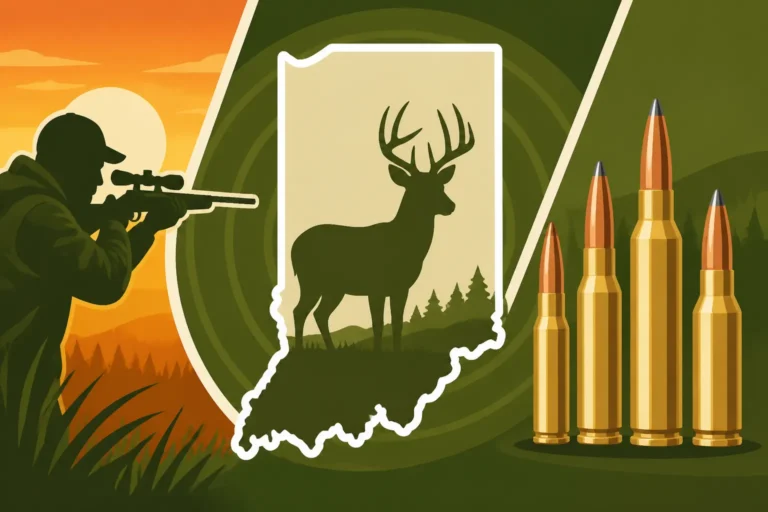
Hunting deer in Indiana has seen some pretty big changes recently, leaving a lot of us scratching our heads about what "the best" rifle caliber actually is anymore. Gone are the days when we were strictly limited to straight-wall cartridges, and with that freedom comes a whole new set of considerations. This guide is here to walk you through the top rifle calibers for Indiana whitetails, helping you choose the perfect match for your hunting style and the diverse Hoosier landscape.
The New Landscape of Indiana Rifle Hunting
For years, Indiana deer hunters operated under specific restrictions when it came to rifle calibers. We navigated rules that confined us to certain cartridges, often leading to debates about terminal performance and effective range. Now, with the updated laws, the playing field has changed dramatically, offering a wealth of options we didn't have before. This shift means revisiting what we thought we knew about deer rifles in the state.
Understanding Senate Bill 280's Impact
The passing of Senate Bill 280 was a monumental moment for Indiana hunters. It essentially opened the door for true centerfire rifles, moving beyond the previous limitations on cartridge case length and type. Before this, you might have found yourself buying a specialized "Indiana legal" rifle or opting for a muzzleloader or shotgun slug gun if you wanted to hunt with something other than a bow. Now, the common rifle calibers used by hunters across the country are available to us, which is both exciting and a little overwhelming. Suddenly, that hunting rifle you might have used out west or in another state is perfectly legal right here at home. This change has meant many hunters are now looking at their existing firearm collection or considering new purchases with a fresh perspective. It's truly reshaped Indiana's New Statewide Rifle Rules for the better, giving us more flexibility than ever before.
What "Centerfire Rifles" Truly Means Now
Essentially, with the new legislation, most common centerfire rifle cartridges are now legal for deer hunting in Indiana. This means calibers like the .30-06 Springfield, .270 Winchester, .308 Winchester, and 6.5 Creedmoor, which were previously restricted, are now fair game. The old requirement for straight-wall cartridges, designed to limit effective range, is no longer the primary factor. What remains important are general safety regulations and the ethical use of any firearm. This expanded definition significantly broadens our choices, allowing us to select a cartridge based on factors like recoil, projectile energy, and ballistic performance at various ranges, rather than just legal compliance. When you're using resources like the GoHunt app to plan your next outing, you can now consider a wider array of rifle options than before. It’s all about finding a caliber that you can shoot accurately and confidently, ensuring a clean, ethical harvest.
Tried and True: Classic Calibers That Still Shine
Even with all the shiny new options, there's a reason some rifle calibers have stood the test of time. These classics have been proving their worth in deer woods for generations, offering reliable performance and readily available ammunition. They might not be the latest and greatest, but they absolutely get the job done, and often do it with less fuss.
The Enduring Appeal of the .30-30 Winchester
Ah, the good old .30-30 Winchester. For decades, this has been the quintessential deer cartridge, especially for timber and brush hunting. It's often associated with lever-action rifles, making it a compact, quick-handling setup perfect for thick Indiana cover. While it might not be a long-range powerhouse, its effectiveness within 150-200 yards is undeniable. The .30-30 delivers a respectable punch, making it more than capable of taking down whitetails cleanly. It's a fantastic choice if you hunt dense woods, creek bottoms, or smaller woodlots where shots are typically close and fast. The mild recoil is also a big plus, making it a comfortable rifle for many hunters, including newer ones or those sensitive to heavy recoil. Many hunters still swear by their trusted .30-30, and there's no reason to change now that Why Straight-Wall Rifles Are No Longer Required and other calibers are legal, it's still a superb choice.
Even in today's world of high-velocity, flat-shooting cartridges, the .30-30 maintains a strong following for its simplicity and reliability. Ammunition is widely available, and its moderate ballistics mean less meat damage compared to some higher-velocity rounds. If your hunting involves still-hunting through thick undergrowth or sitting in a stand overlooking a dense funnel, the .30-30 is still a champion. It’s a caliber that teaches you to hunt smarter, focusing on getting close and making that first shot count, which are valuable skills regardless of what rifle you carry.
The Versatility of the .270 Winchester
The .270 Winchester is a true workhorse, a caliber that has consistently delivered for hunters chasing deer and even larger game across North America for generations. It's renowned for its flat trajectory and excellent downrange energy, making it incredibly versatile for various hunting scenarios. In Indiana, where you might encounter an open field edge shot one day and a tight timber shot the next, the .270 shines. It's got enough power to anchor a big Hoosier buck, even if the shot placement isn't absolutely perfect, and it shoots flat enough for those longer shots often found in farmland regions.
Recoil from a .270 is manageable for most shooters, and its reputation for accuracy is well-deserved. You'll find a wide array of bullet weights and types, allowing you to fine-tune your ammunition choice for specific situations. Whether you're hunting the rolling hills of southern Indiana or the expansive crop fields of the north, the .270 Winchester offers a fantastic balance of speed, power, and precision. It's a caliber that truly can do it all for the Indiana whitetail hunter.
The Hard-Hitting .30-06 Springfield
When it comes to power and versatility, the .30-06 Springfield has few equals. This classic cartridge has been a staple in American hunting for over a century, and for good reason. It delivers serious knockdown power, capable of cleanly taking any game animal in North America, including the largest Indiana whitetails. The .30-06 excels with a wide range of bullet weights, from lighter, faster projectiles for deer to heavier, slower options for larger game. This adaptability makes it an incredibly appealing choice for hunters who might also pursue hogs or even travel out of state for different species.
While the recoil is noticeably heavier than a .270 or .30-30, it's still manageable for most experienced shooters, especially in a well-fitted rifle. The .30-06’s robust performance means you can be confident in its ability to quickly and ethically dispatch deer, even at longer ranges or when shot angles aren't ideal. It’s a caliber that offers a significant margin of error in terms of energy delivery, and its venerable status means ammunition is always abundant and accessible. If you're looking for a powerful, proven performer that can handle anything Indiana throws at it, the .30-06 is a superb option.
Modern Mainstays: Popular Choices for Today's Hunter
With the loosening of Indiana's rifle laws, many hunters are now embracing calibers that have become incredibly popular in other parts of the country. These modern mainstays offer advancements in ballistics, often with less recoil or flatter trajectories, making them highly effective for today's deer hunter.
The Balanced Performance of the .308 Winchester
The .308 Winchester is a fantastic example of modern efficiency and balanced performance. It offers ballistic performance very similar to the .30-06, but in a shorter action, which allows for lighter and more compact rifles. This makes it a great choice for hunters who spend a lot of time still-hunting or walking long distances, like when Scouting Indiana Public Land Before Season. The .308 is incredibly accurate, known for its ability to shoot small groups, and delivers plenty of energy for clean kills on Indiana whitetails. Its moderate recoil also makes it a comfortable cartridge to shoot repeatedly, which is key for developing consistent accuracy.
For hunters concerned about recoil or those who prefer a more nimble rifle, the .308 is a prime contender. It performs exceptionally well in the varied terrain of Indiana, from the wide-open farmland fields to the thick woods of the Hoosier National Forest. Ammunition is also incredibly popular and widely available, often at competitive prices, with a huge selection of bullet types and weights. Using a hunting app like GoHunt can help you scout your area, and the .308 Winchester gives you the versatility to cover different hunting situations you might find.
The Fast and Flat-Shooting 6.5 Creedmoor
The 6.5 Creedmoor has taken the hunting and shooting world by storm, and it's easy to see why. This cartridge is engineered for exceptional accuracy and a very flat trajectory, even at extended ranges, while still producing relatively mild recoil. For Indiana hunters who find themselves overlooking large agricultural fields or lengthy powerline cuts, the 6.5 Creedmoor offers a significant advantage in terms of confidence for those longer shots. Its efficient bullet designs minimize wind drift, which can be a real factor on a blustery autumn day in Indiana.
While few shots in the dense timber of southern Indiana might demand its long-range capabilities, the 6.5 Creedmoor's inherent accuracy and light recoil make it a joy to shoot and extremely effective at typical hunting distances. It delivers plenty of energy to cleanly harvest whitetails, and many hunters report minimal meat damage due to its efficient bullet performance. If you're intrigued by modern ballistic advantages and appreciate a cartridge that's easy to shoot accurately, the 6.5 Creedmoor deserves serious consideration, especially if you anticipate 6.5 Creedmoor for Southern Indiana Ridges or other open-country shots.
The Often Underestimated .243 Winchester
Don't let the smaller caliber fool you; the .243 Winchester is a highly capable deer cartridge, especially for lighter-bodied whitetails or for hunters who are recoil-sensitive. It's a very fast, flat-shooting cartridge that delivers excellent accuracy, making it a favorite for varmint hunters who also want to take deer. For youth hunters or those with a smaller stature, the .243 is an ideal choice, offering very mild recoil that allows for confident shooting and easy practice. The key to the .243's success on deer lies in proper bullet selection. Using well-constructed hunting bullets designed for deer will ensure adequate penetration and energy transfer.
While some debate Is a .243 Enough for Indiana Whitetails?, its track record speaks for itself when paired with appropriate bullets and good shot placement. It's a fantastic option for hunting smaller-bodied does in a deer reduction zone or for bucks in areas where shots are typically inside 200 yards. The .243 is widely available, and its versatility also allows it to double as a coyote rifle, giving you more bang for your buck, so to speak.
Specialized Considerations: Calibers for Unique Situations
Sometimes, the "best" caliber isn't about widespread popularity but about tailoring your choice to very specific needs or preferences. With Indiana's updated rules, we now have the freedom to explore some more specialized cartridges that offer distinct advantages in certain scenarios.
Short-Action Powerhouses: .350 Legend and .450 Bushmaster
Before the recent rule changes, the .350 Legend and .450 Bushmaster were incredibly popular in Indiana because they met the straight-wall cartridge requirement while offering rifle-like performance. While they are no longer the only rifle options, they still remain highly effective and popular choices, especially for hunters who appreciate their hard-hitting performance at moderate ranges. Both offer significant knockdown power, making them ideal for situations where deer might not drop instantly, such as in thick cover or when hunting large-bodied bucks.
The .350 Legend is a particularly interesting option as it offers performance similar to a .30-30 but with even less recoil and often in a more modern, AR-platform friendly package. The .450 Bushmaster, on the other hand, delivers a substantial punch, akin to a large-bore handgun or traditional slug gun, and is often favored for its terminal ballistics in heavy brush. If you already own one of these rifles, there's no need to switch, as they are still excellent choices for Indiana deer. For new hunters or those looking for a dedicated brush gun with serious stopping power, these calibers still offer a compelling argument, especially for Hunting the Indiana Rut in Early November when deer are on the move.
When a Bigger Punch is Needed: .338 Federal
While not as common as the .308 or .30-06, the .338 Federal carves out a niche for hunters who want a heavier bullet and more energy delivered downrange, without stepping up to magnum recoil. It's essentially a .308 Winchester case necked up to accept a .338 caliber bullet. This allows it to push heavier projectiles at respectable velocities from a short-action rifle. For hunting bigger-bodied deer, particularly if you anticipate tough quartering shots or just want maximum stopping power, the .338 Federal delivers.
The heavier bullet mass and larger diameter translate to significant energy transfer upon impact, often resulting in quicker takedowns. While recoil is certainly more pronounced than a .308, it's generally considered less jarring than many magnum cartridges. This caliber is an excellent choice for the discerning hunter who values a stout, heavy-hitting round for reliable performance on even the toughest whitetails, especially in scenarios where quick, decisive results are paramount.
Matching Caliber to Terrain and Hunt Style
Choosing a rifle caliber isn't just about ballistic charts; it's about understanding how that caliber performs in the real world, given the diverse environments we hunt in Indiana. What works perfectly for a long-range shot over a bean field might be overkill, or even a hindrance, in a dense cedar thicket.
Open Fields and Long Shots in Northern Indiana
Northern Indiana is characterized by vast agricultural fields, rolling hills, and smaller woodlots. Here, shots can frequently stretch out past 150-200 yards, and sometimes considerably further. For these types of wide-open spaces, a flat-shooting caliber is a significant advantage. Cartridges like the .270 Winchester, 6.5 Creedmoor, and .30-06 Springfield truly shine here. Their ability to maintain a flatter trajectory means less guesswork on holdover, which can be critical when a big buck steps out at an unknown distance across a corn stubble field.
When you're Hunting Northern Indiana Farmland Deer, you want a rifle that you can confidently place a shot with at range. This means not just the caliber, but also a rifle that's accurate and topped with quality Rifle Scopes for Low-Light Timber if you're hunting dawn or dusk. The added velocity and energy retention of these calibers ensure that even at extended distances, the bullet still has enough punch for an ethical kill. Having a good rangefinder is also crucial in these settings to eliminate any distance guesswork.
Dense Timber and Close Encounters in Southern Indiana
Southern Indiana, with its rugged hills, deep hollers, and dense hardwoods, presents a very different hunting challenge. Here, shots are often much closer, sometimes under 50 yards, and frequently through thick brush and trees. In these conditions, extreme long-range ballistics are less critical. Instead, hunters often prioritize a caliber that delivers good terminal performance and handles well in tight quarters. The .30-30 Winchester, .350 Legend, and .450 Bushmaster are excellent choices for this environment. They offer plenty of knockdown power for the ranges encountered and are often chambered in compact, fast-handling rifles.
When you're Still-Hunting Southern Indiana Ridges or set up deep in a timber stand, maneuverability is key. A shorter barrel or a lever-action rifle can be much easier to handle quietly and quickly compared to a long-barreled magnum. The focus here shifts from ballistic coefficient to energy transfer at closer ranges and the ability to quickly acquire a target. These calibers minimize the risk of over-penetration on close shots and deliver a solid, ethical impact, especially when navigating terrain like the Hoosier National Forest where deer are abundant but often require close-quarters hunting tactics.
Public Land Pressure and Ethical Shot Placement
Regardless of the specific terrain, hunting on public land in Indiana often means dealing with increased pressure. Deer can be warier, and opportunities might be fleeting. This makes ethical shot placement paramount. Your choice of caliber should ultimately be one that you can shoot accurately and confidently under hunting conditions. A powerful magnum means nothing if you can't hit your target consistently. For public land, whether you're climbing up a ridge in Brown County or working a marsh near the Kankakee, confidence in your rifle and caliber is essential.
It’s about understanding the Practical Range in Indiana Timber for your chosen cartridge and knowing your personal limitations. Many hunters will argue that a well-placed shot with a smaller, milder recoiling caliber is far more ethical than a marginal hit with a powerful one. Focus on practice, using your chosen rifle often, and always aiming for the vitals. This foundational principle transcends any specific caliber choice and is critical for responsible hunting, especially on shared public resources where competition for game can be higher.
Beyond the Caliber: Accuracy, Ammo, and Ethics
While the caliber you choose is a significant factor, it's far from the only one. A truly effective deer rifle setup involves a holistic approach that considers bullet construction, consistent practice, and a strong commitment to ethical hunting principles. Ignoring these elements, no matter how powerful your chosen cartridge, can lead to poor outcomes.
The Importance of Bullet Construction
The caliber might grab the headlines, but the bullet itself is what does the work. Not all bullets of the same caliber are created equal, especially when it comes to hunting. For deer, you want a bullet that expands reliably upon impact, creating a larger wound channel, but also retains enough weight to penetrate deeply into the vitals. This means avoiding varmint bullets, which are designed for rapid fragmentation on smaller animals, and instead choosing projectiles specifically engineered for deer or medium game.
There are many excellent deer hunting bullets on the market today, from traditional cup-and-core designs to bonded, partitioned, or monolithic bullets. Each has its strengths. Bonded bullets, for example, often offer better weight retention and deeper penetration, which can be advantageous for tougher angles or larger bucks. Experiment with different loads in your chosen caliber to see what shoots best in your rifle and provides the terminal performance you desire. Checking online resources or even GoHunt's forums can often provide insights into what bullets other Indiana hunters are successfully using with their preferred calibers.
Practice Makes Perfect: Shot Placement Above All
I cannot stress this enough: accuracy and shot placement are far more important than a few hundred feet per second of velocity or a couple hundred foot-pounds of energy. A well-placed shot with a .243 Winchester through a deer's vitals will be far more effective than a poorly placed shot with a .30-06 Springfield. This is why consistent practice at the shooting range is non-negotiable. Get to know your rifle, understand its capabilities, and practice shooting from various positions you might encounter in the field, not just from a bench.
Knowing where your bullet will impact at different ranges is crucial. Don't just zero at 100 yards and call it good; practice at 50, 150, and 200 yards if those are typical ranges for your hunting area. Understanding your rifle's trajectory and holdover (or hold-under) is fundamental. This diligent practice not only improves your skills but also builds confidence, which is invaluable when that big buck steps out. After all, a clean, ethical kill is the ultimate goal, and that starts with a precise shot. Make sure you practice Sighting In a Centerfire Rifle for Indiana Woods at a variety of distances.
Understanding Your Rifle's Limitations
Every rifle, and every caliber, has its limitations. Some excel at long range, others in dense cover. Some are great for beginners, others require more experience to handle proficiently. Be honest with yourself about your own shooting abilities and the maximum effective range for your rifle and your chosen ammunition. Just because a caliber can shoot 300 yards doesn't mean you can shoot it accurately and ethically at that distance under hunting pressure. Wind, terrain, and adrenaline all play a role in real-world scenarios.
Understanding these limitations helps you make better decisions in the field, such as waiting for a closer shot, changing your approach, or passing on a shot that feels too risky. This ethical self-assessment is a hallmark of a responsible hunter. The new rifle rules in Indiana give us incredible freedom, but with that freedom comes a greater responsibility to use our tools wisely and ethically. Choosing the right caliber is just the first step in ensuring a successful and respectful hunt.
| Caliber | Pros for Indiana Whitetails | Cons for Indiana Whitetails | Ideal Use Case |
|---|---|---|---|
| .30-30 Winchester | Excellent in thick cover, moderate recoil, readily available | Limited long-range performance, rainbow trajectory | Dense timber, brush, short-range encounters |
| .270 Winchester | Flat trajectory, versatile, manageable recoil, good energy | Can be louder than smaller calibers | Mixed terrain, open fields, longer shots |
| .30-06 Springfield | Powerful, versatile bullet choices, proven performance | Heavier recoil, can be overkill for smaller deer | All-around, heavier deer, potential for other game |
| .308 Winchester | Excellent accuracy, compact rifles, sufficient power, mild recoil | Slightly less velocity than .30-06, but negligible for deer | Versatile, accurate, all-around, maneuverable |
| 6.5 Creedmoor | Very accurate, flat trajectory, mild recoil, efficient | Less common historically in Indiana, some question "knockdown" | Open fields, longer shots, accuracy enthusiasts |
| .243 Winchester | Very mild recoil, flat shooting, accurate, good for youth | Requires careful bullet selection, less energy for large deer | Smaller deer, recoil-sensitive shooters, youth, varmints |
| .350 Legend | Low recoil, good energy at moderate range, straight-wall legacy | Limited bullet weights, specialized ammo (but widely available) | Brush hunting, areas with potential remaining limits |
| .450 Bushmaster | Significant knockdown power, very effective at close range | Heavy recoil, limited effective range, expensive ammo | Heavy brush, close-range stopping power, bear defense |
Disclaimer
This article is for general informational purposes only and does not constitute professional advice. Laws, prices and regulations vary by location and change over time. Consult a qualified professional for guidance on your specific situation.