Locator Calls for Indiana Gobblers
Ever spent hours tramping through the spring woods, convinced there's a gobbler nearby, only to be met with frustrating silence? It's a common struggle for Indiana turkey hunters, especially when those big Tom's seem tight-lipped, not wanting to give away their position with a hearty morning gobble. This guide will dive deep into the world of locator calls, helping you understand how to use them effectively to pinpoint those elusive Indiana gobblers, break their silence, and ultimately increase your chances of a successful spring hunt. We'll cover everything from the types of calls to use, when and where to deploy them, and even how to interpret those subtle responses you might get.
Understanding the Purpose of Locator Calls
Many new turkey hunters, and even some seasoned folks, mistakenly think that a turkey call is only for imitating a hen to draw a gobbler in. While that's a huge part of the game, locator calls serve a different, yet equally vital, purpose: they're designed to make a gobbler shock gobble. What's a shock gobble? It's an involuntary response, almost like a reflex, a gobbler lets out when it hears a sudden, loud, or unusual noise that isn't a direct threat. They're not talking to a hen; they're reacting, and that reaction tells you exactly where they are. This is incredibly valuable information in the vast timber and thick cover we often navigate in Indiana.
Why Silence Isn't Always Silence
It's easy to get discouraged when the woods are quiet. You've walked for an hour, listened intently, and heard nothing. Does that mean there are no turkeys around? Not necessarily. Gobblers can be incredibly tight-lipped, especially once they've flown down from the roost or if they've been pressured. They might be quietly strutting, feeding with hens, or simply not feeling chatty. That's where a good locator call becomes your best friend. A sharp crow caw or a deep owl hoot can pierce that silence and illicit a gobble from a bird you never knew was there, turning a frustrating morning into an exciting one. It's about getting them to break character, just for a second, to reveal their location.
Disturbing the Peace: How Non-Turkey Sounds Trigger Shock Gobblers
The beauty of locator calls is that they often mimic sounds other than turkeys. Think about it: an owl hooting or a crow cawing isn't something a gobbler perceives as a threat, nor is it a hen trying to entice him. It's just a loud, distinct sound that jars him into a response. This means you're not putting pressure on him with a direct turkey call, which can sometimes make wary birds clam up even more. Instead, you're just making noise, and he can't help but respond. It's a psychological trick, really, leveraging their territorial nature and their innate tendency to vocalize when startled or challenged by a loud, foreign sound. This is particularly effective in areas where turkeys have been heavily hunted and are more cautious of traditional hen calls.
Beyond Just Locating: Patterning and Tracking
Locator calls aren't just for that initial "where are you?" moment. They can be incredibly useful for patterning a bird throughout the day. If you get a gobble at dawn with an owl call, you can use a crow call an hour later to see if he's moved, and in what direction. If you're working a ridge in southern Indiana, a locator call can help you determine if a gobbler is still on the top, has dropped into a hollow, or is moving towards a field edge. Many hunters, especially those relying on detailed mapping tools, mark the locations of gobbler responses they get throughout the day. This helps build a picture of a specific bird's travel routes, feeding areas, and strutting zones. Being able to track a bird's movement without having to move yourself or risk spooking him with overt hen calls is a massive advantage.
Choosing and Mastering Different Locator Calls
The world of locator calls is vast, but a few types stand out as consistent performers for Indiana gobblers. Each has its own best use case, volume, and nuance, and carrying a few different options can significantly increase your success. It's not just about having the call, though; it's about mastering the technique to make it sound natural and authoritative.
Owl Hooters: Early Morning and Roost Breaking
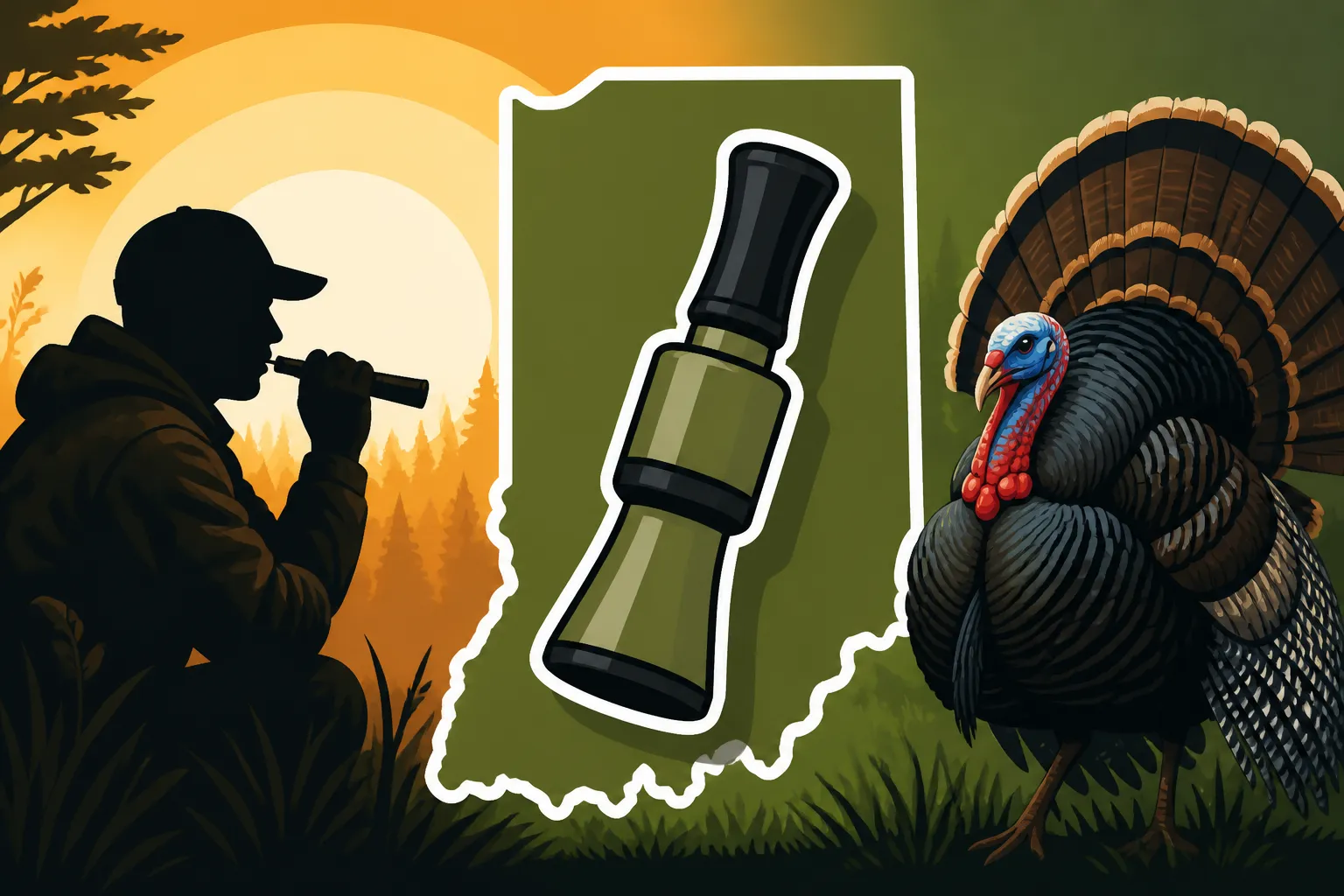
The owl hooter is arguably the most classic and effective locator call, especially during the pre-dawn hours and right after fly-down. The deep, resonant "hoo-hoo-hoo-hoo-hooo" of a barred owl is a natural sound that often triggers a shock gobble from a bird still on the roost. I remember one crisp April morning near Brown County, barely light enough to see, when a series of hoots from my owl call instantly brought an explosive gobble from a ridge across the hollow. It sent shivers down my spine every time. Roost Hunting Indiana Gobblers is all about getting into position before light, and an owl hooter is your primary tool then.
When using an owl hooter:
- Technique: Mimic a barred owl's distinct 8-note hoot: "Who cooks for you? Who cooks for you all?" Practice getting the rhythm and inflection right.
- Volume: Start soft, then increase. You don't want to blow out a close bird, but you need enough volume to carry through the timber.
- Timing: Best used in the dark, before legal shooting light, or right at first light to locate birds still on the limb. It can also work later in the morning if birds have gone quiet.
Crow Calls: Mid-Morning and Breaking Silent Birds
A good crow call is a staple in any turkey hunter's vest. Crows are noisy, everywhere, and their caws are high-pitched and piercing, often cutting through wind and dense foliage where an owl hoot might get swallowed up. They're fantastic for eliciting responses from gobblers that have flown down, are on the move, or have become quiet after some initial morning excitement. Run-and-Gun Turkey Tactics on Public Land often involves covering ground and breaking the silence with a crow call.
When using a crow call:
- Technique: Produce sharp, realistic caws. Vary your sequence: single caws, a series of quick caws, or even a drawn-out "cawwwww." Some hunters even mimic a crow fight.
- Volume: Crows are loud, so don't be shy. A strong, sharp "CAW!" can really shock a gobbler into responding.
- Timing: Excellent for mid-morning to late afternoon when gobblers might be strutting silently or with hens. It's a great choice for breaking silence in a new area you've walked into.
Coyote Howlers: Aggressive Birds, Late Morning
Coyote howlers are a bit more aggressive and less common among casual turkey hunters, but they can be incredibly effective, particularly on those really dominant or stubborn gobblers that won't respond to anything else. The sound of a coyote can stir a territorial response, making a gobbler announce his presence, sometimes with an almost angry gobble.
When using a coyote howler:
- Technique: Emulate a realistic coyote howl—long, drawn-out howls, followed by some yips and barks if you're feeling adventurous.
- Volume: These are very loud calls. Use them sparingly and with purpose.
- Timing: Best used from late morning through mid-day. If you've tried owl and crow calls without success, a coyote howl can be a game-changer for those older, more aggressive birds. However, be mindful that it can also spook other wildlife, and occasionally, other hunters who mistake you for a real coyote!
Woodpecker/Pileated Calls: Less Common, But Effective
While not as widely used as owl or crow calls, a pileated woodpecker call can be a subtle yet effective locator. The loud, distinctive drumming and squawk of a pileated woodpecker is a natural sound in many Indiana woodlands, particularly in the deep timber of the Hoosier National Forest or any mature hardwood stands. This can be a great alternative if you've been working a bird that's gone quiet to more conventional locator calls, or if you're hunting in an area with high pressure.
When using a pileated call:
- Technique: Replicate the rapid, powerful drumming and the sharp, high-pitched "kya-kya-kya" call of the pileated woodpecker.
- Volume: These calls typically have a moderate volume, making them good for closer ranges or when you want to avoid being too intrusive.
- Timing: Can be effective throughout the day, especially in heavily wooded areas where these birds are common. It's a less common sound for hunters to use, which can sometimes be an advantage for pressured birds.
Shock Gobblers Versus Responsive Gobblers
It’s important to understand the difference in how turkeys react. A shock gobble is that immediate, involuntary response to a sudden sound. The bird isn't necessarily interested in what made the sound; he's just reacting. This is what locator calls aim for. A responsive gobbler, on the other hand, is one that's actively engaged in communication. He's answering a hen call because he's interested, or he's gobbling on his own from the roost.
When a gobbler shock-gobbles to your locator call, you've got his location. Your next step isn't to blast out more locator calls. Instead, you immediately need to transition into subtle turkey vocalizations, like soft tree yelps if he's on the roost, or clucks and purrs if he's on the ground, to try and entice him. The locator call is just the initial contact. For those looking to invest in high-quality calls, checking reviews on sites like GoHunt can be beneficial for finding durable and realistic options that mimic these natural sounds well.
Strategic Application in Indiana's Diverse Terrain
Knowing which call to use is one thing; knowing when and where to use it effectively in Indiana's varied landscapes is another. From the dense hardwoods of the south to the rolling farmland of the north, your approach needs to adapt.
Roost Locating at Dawn: Ideal Times and Setups
This is prime time for locator calls. Before the sun peeks over the horizon, when the woods are still dark and silent, is when gobblers are most likely to sound off from their roost. They're often eager to gobble, asserting their dominance and letting hens know where they are. This is when your owl hooter truly shines.
- Timing: Start calling 30-45 minutes before legal shooting light. Make a series of hoots, then wait 5-10 minutes. Listen intently. If no response, move a couple hundred yards and try again.
- Setup: Position yourself where sound carries well, often on a ridge top, overlooking a valley, or near a large timber block. Don't set up directly under where you expect a bird to be, as you'll risk spooking him on fly-down. You want to be close enough to hear, but far enough to let him pitch down naturally. For advice on positioning, check out Setting Up Against a Big Oak.
- Post-Gobble: Once you get a response, stop the locator call. Now you know where he is. Your focus shifts to Calling an Indiana Gobbler Off the Roost using soft turkey sounds.
Mid-Morning Silence Breakers: Farmland Edges, Timber, and Creek Bottoms
After the initial morning frenzy, birds often go quiet. They've flown down, potentially bred with hens, and might be feeding or strutting in open areas or thick cover. This is when you switch to more aggressive locator calls like the crow call or even a coyote howl. You're moving, looking for birds that are no longer on the roost but haven't been located yet. This is where Turkey Tactics for Farmland Field Edges often comes into play, as birds might be strutting along those transition zones.
- Technique: Move quietly through areas with good visibility or natural travel corridors, like logging roads, field edges, or creek bottoms. Stop every 100-200 yards and let out a series of crow caws or a coyote howl.
- Listening: Wait longer after these calls, sometimes up to 15-20 minutes. Gobblers might take their time responding if they're not on the roost. They could also be responding with quieter "spit-and-drum" instead of full gobblers, so listen for subtle sounds.
- Areas: Concentrate on areas with diverse habitat – where timber meets fields, along river bottoms, or in dense stands of timber. These are all places birds like to hang out and move through.
Locating in Southern Indiana Hill Country: Ridge Lines and Valleys
Southern Indiana's topography, with its steep ridges and deep hollows, presents unique challenges and opportunities for locator calls. Sound travels differently here. A gobble on one ridge might sound like it's in the next county if you're in a valley. Understanding Reading a Ridge for Hoosier Forest Deer gives you insight into how terrain influences animal movement and sound travel, which is equally applicable to turkeys.
- Elevated Positions: Using locator calls from ridge tops or benches allows your sound to carry further and helps you pinpoint a gobble's origin more accurately. The higher you are, the better your sound projection.
- Wind and Thermals: Be mindful of wind direction. Try to call into the wind so your sound carries farther, and listen downwind for responses that might be harder to hear. In the morning, thermals rise, carrying sound up ridges; in the evening, they fall, carrying sound into valleys. Adjust your calling and listening positions accordingly.
- Patient Listening: In hilly terrain, a gobble can echo or sound distorted. Don't immediately assume the bird is where the gobble sounds like it's coming from. Pinpoint the true origin by listening for the "hardest" part of the sound.
Hunting Pressured Birds: When Less is More
Indiana's public lands, especially on the Indiana Spring Turkey Opener, can see a good amount of hunting pressure. Pressured birds often become quieter and more wary of calls, including locator calls. In these situations, subtlety and patience are key.
- Softer Locator Calls: Instead of blasting a full-volume crow call, try a softer, more inquisitive series of caws, or even a low-volume pileated woodpecker call.
- Longer Waits: Give the bird more time to respond. He might be hanging back, trying to determine if the sound is a threat or just another animal.
- Strategic Movement: Rather than constantly calling, focus more on silent movement, using calls sparingly to confirm a bird's general area before transitioning to stealth mode. Sometimes, the best locator call is simply hiking a mile or two back into an area others have walked past, then sitting quietly and listening for natural gobbles.
Troubleshooting and Advanced Locator Call Tactics
Sometimes, even with the right calls and good technique, those Indiana gobblers just won't talk. It happens. But there are ways to troubleshoot, adjust, and add a few advanced tactics to your arsenal to increase your chances.
Reading the Gobbler's Response: What Different Gobble Types Mean
Not all gobbles are created equal. A sharp, clear, close gobble is different from a faint, muffled, distant one. Learning to interpret these can help you gauge the bird's mood, distance, and even his direction of travel.
| Gobble Type | Interpretation | Action Plan |
|---|---|---|
| Loud, Sharp | Close range, likely receptive. Possibly on roost. | Get into position quickly but quietly. Prepare to call softly with turkey vocalizations. |
| Faint, Distant | Farther away, could be moving. | Note location. Consider moving closer or waiting for him to move. Use stronger locator calls initially, then switch to soft turkey calls once closer. |
| Cut-off Gobble | Very close, he's responding quickly and strongly. | Be extremely still and quiet. He may be heading your way fast. Get your gun up, minimize movement. |
| Multiple Gobs | Often indicates multiple birds or a dominant Tom. | Excellent sign! Try to pinpoint the most dominant bird. Proceed with caution, as multiple birds can complicate calling. |
| "Weak" Gobble | Often a jake or less dominant Tom, or a bird moving away. | Still a gobble! You have a location. If you're after a specific type of bird, you might decide to pass, but it confirms turkeys are in the area. |
| Echoing Gobble | Common in hilly terrain. | Don't be fooled by the echo. Listen for the primary, strongest sound to identify the actual location of the bird. |
Adjusting Volume and Intensity: When to Be Subtle, When to Blast
Your calling volume and intensity should vary based on the situation. Blasting a crow call at full volume when a gobbler is 100 yards away is a sure way to spook him. Conversely, a soft owl hoot won't carry far enough to reach a bird a quarter-mile out.
- Subtle Approach: When you're in an area you suspect holds birds, or if you've already gotten a faint response, use softer locator calls. A soft owl hoot, a quiet crow caw, or even a subtle pileated tap can be enough. The goal is to get a response without overdoing it.
- Aggressive Approach: When covering large areas, trying to reach birds across hollows, or breaking the silence on heavily pressured public land, don't be afraid to use a louder, more aggressive call. A series of sharp, loud crow caws, or a full-throated coyote howl can cover a lot of ground. The key is to listen intently immediately after.
Combining Calls: A Sequence for Different Situations
Don't be afraid to use a sequence of different locator calls. If an owl hooter doesn't work at dawn, wait 10-15 minutes, then try a crow call. Sometimes one sound will trigger a gobble when another won't. I've often started with an owl hooter from the truck, then moved a bit and hit a crow call, and finally tried a coyote howl if things were really quiet.
- Dawn Sequence: Owl hoot (wait), then soft tree yelps (wait), then if nothing, a crow call a few minutes later.
- Mid-day Sequence: Start with a crow call (wait), if nothing, try a coyote howl (wait), and if still quiet, move to a new spot.
- Pressured Area Sequence: Begin with a subtle woodpecker or soft owl call (wait), then try a very soft series of clucks and purrs. If you absolutely need a loud locator, use it sparingly.
The Follow-Up: What to Do After a Gobble
Getting a gobble from a locator call is exhilarating, but it's only the first step. What you do next is critical.
- Stop Calling: Once you get a gobble, put away your locator call. You've achieved your goal.
- Pinpoint Location: Try to get an exact bearing on the gobble. If you have a partner, they can triangulate. Use landmarks, or mark it on your Scouting Indiana Public Land Before Season map or a navigation app like those offered by GoHunt.
- Assess the Situation: Is he on the roost? On the ground? Sounds close or far? What's the terrain like between you and him?
- Make a Move:
- If on roost: Get into a good setup (against a wide tree, in a ground blind, etc.) quietly and prepare to call him off the roost with soft turkey vocalizations. Don't call aggressively until he's on the ground.
- If on the ground: Depending on distance and cover, you might try to close the distance, using terrain features to stay hidden, then set up and begin with soft hen calls. Or, if he's close and you have a good setup, immediately try to engage him with soft turkey sounds. Remember, the locator call got him to talk, but now you need to convince him to come in. This is where your actual turkey calling skills for Turkey Calls Worth Carrying in Indiana come into play.
Mastering locator calls takes practice, patience, and a willingness to adapt. But once you get the hang of it, you'll find yourself pinpointing more Indiana gobblers and experiencing more thrilling spring mornings in the turkey woods.
Disclaimer
This article is for general informational purposes only and does not constitute professional advice. Laws, prices and regulations vary by location and change over time. Consult a qualified professional for guidance on your specific situation.