Bone Saws Versus the Gutless Method
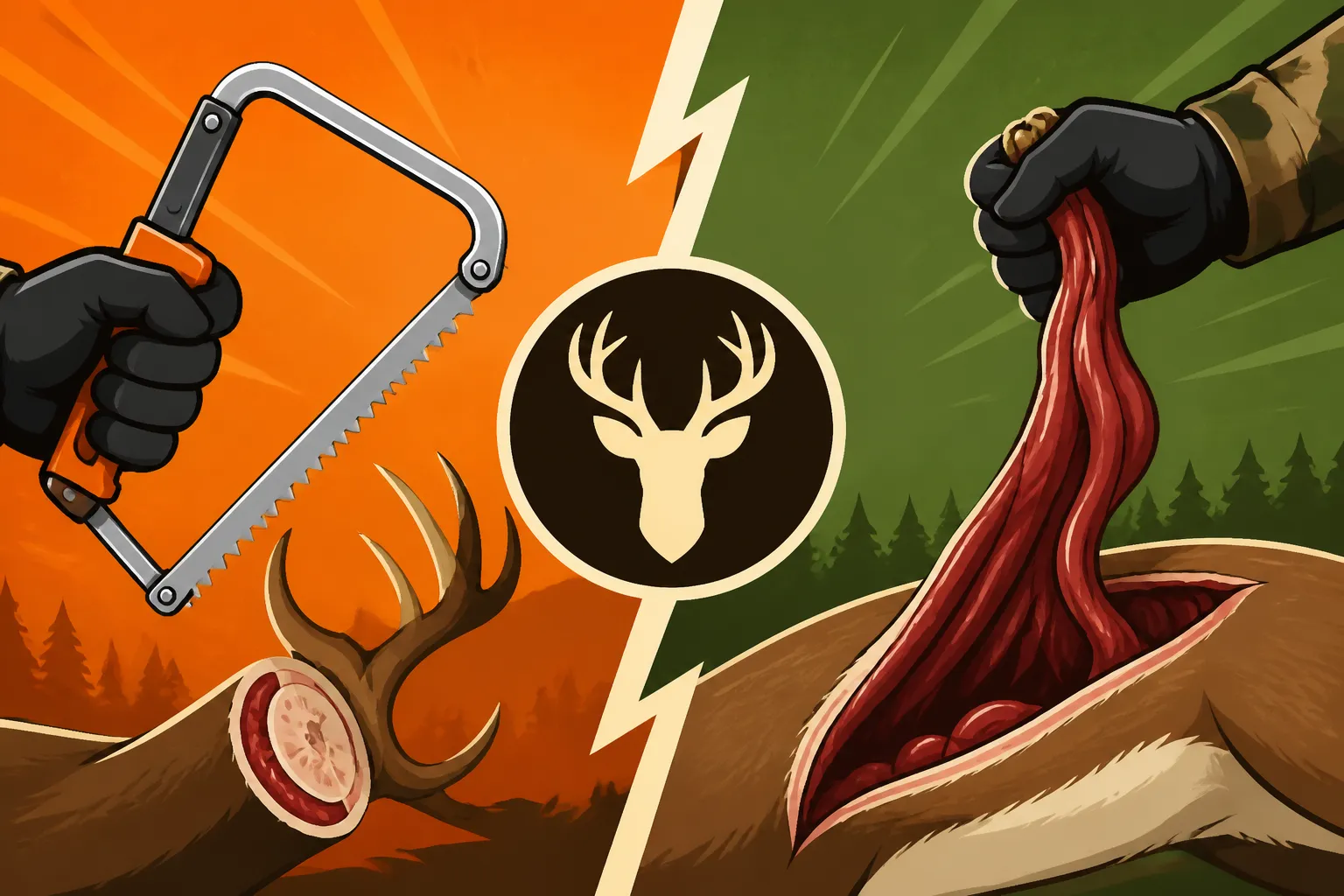
Field dressing a deer can feel like a monumental task, especially when you're deep in the timber, far from the truck, or facing challenging terrain. The traditional method of opening up the cavity, removing the guts, and then dragging the whole animal can be incredibly exhausting and messy. But what if there were other ways to get your hard-earned venison from the woods to your freezer with less struggle and more efficiency? This guide dives deep into two primary field processing techniques – the familiar bone saw method and the increasingly popular gutless method – helping Indiana hunters decide which approach is best for their unique hunting situations and how to execute each flawlessly.
The Traditional Bone Saw Method for Field Dressing
For generations, hunters have relied on a fairly standard process for field dressing their deer. It usually involves making a careful incision, removing the internal organs, and then dealing with the carcass. A bone saw often plays a key role in making certain parts of this process much easier, especially when you're dealing with a large animal or trying to facilitate a cleaner gutting job.
What a Bone Saw Entails
A bone saw, in the context of field dressing, isn't your average carpentry tool. These are specialized, compact saws designed for cutting through bone and cartilage with relative ease. You'll find them in various forms: some are folding, like a large pocket knife, making them easy to carry in a pack; others might have a fixed blade with a comfortable handle. Their teeth are typically aggressive enough to bite into bone without getting bogged down, yet fine enough to make a relatively clean cut.
When you're field dressing traditionally, a bone saw primarily comes into play for a few key tasks. The most common is splitting the pelvis. Many hunters find that removing the deer's intestines and bladder is much simpler if the pelvic bone is split, creating a wider opening. This allows for a more thorough cleaning of the pelvic canal. Another use is splitting the sternum to fully open the chest cavity, which can be crucial for ensuring good air circulation and rapid cooling, especially if the weather isn't exactly freezing. Beyond these, a saw might be used to remove the lower legs at the joint, or even to separate the rib cage from the spine if you're looking to quarter the animal after a full gutting, a sort of hybrid approach. The goal is always to make the process smoother, cleaner, and ultimately, to preserve the meat better.
Imagine you've just taken a nice buck in a familiar woodlot, not too far from the gravel road. The temperature is hovering around 40 degrees, perfect for not rushing the job. You're comfortable with the traditional gutting method, having done it countless times. Pulling out your trusty folding bone saw after the initial abdominal incision allows you to quickly split that pelvis. This small step can transform a tight, awkward space into an accessible cavity, making it easier to reach in and free up the organs without rupture. This precision, enabled by the saw, helps keep things tidy and minimizes potential contamination of the valuable meat.
Pros and Cons of Using a Bone Saw
Like any tool or technique, using a bone saw in your field dressing routine comes with its own set of advantages and drawbacks. Understanding these can help you decide if it's the right choice for your next hunt.
On the positive side, familiarity is a big one for many hunters. The traditional gut-and-drag method, often aided by a bone saw, is what many of us grew up learning. There’s a comfort in following a tried-and-true process. The saw itself facilitates a quicker initial opening of the carcass, especially the sternum and pelvis, which can speed up the overall gutting time. This complete gut removal is also seen as a benefit, as it leaves no internal organs behind, potentially reducing spoilage risks if the carcass needs to hang for a bit before processing. Another advantage is that you're not doing extensive skinning in the field; you mostly remove the hide back at camp or your processing station, which means less time spent on delicate cuts in a less-than-ideal environment. This method also means you’re often dealing with the whole animal, which for some, is simply how it’s done.
However, there are definite downsides. A bone saw, while compact, is still an additional piece of gear to carry, adding a bit of weight and bulk to your pack. If you're using a smaller saw, it can get dull quickly if you hit too much bone, and sharpening it in the field isn't always practical. Sanitation can be a challenge; bone dust and marrow can make a mess, and cleaning the saw effectively in the field is crucial to prevent contamination, especially if you plan to use it again soon. Perhaps the biggest drawback, especially if you're not quartering the animal, is the physical exertion required to drag a whole deer out of the woods. Plus, let's be honest, traditional gutting can be a very messy business, leaving a gut pile that needs to be considered, and sometimes a lot of blood to clean up from yourself and your gear.
Consider a scenario where you've punched your tag on a cold November morning during Indiana's Firearms Deer Season. The deer dropped just inside a thick woodlot, about a quarter mile from your truck. The ground is fairly flat, maybe a light dusting of snow. In this situation, the traditional bone saw method shines. You can get the deer gutted quickly, ensuring the cavity is clean, and then you have a relatively short, easy drag back to the vehicle. The cold temperatures act as a natural refrigerator, and the easy access means you don't have to worry about packing out heavy quarters. The mess is contained to one spot, and you can clean up thoroughly once the deer is loaded.
When the Bone Saw Method Shines in Indiana
Indiana's diverse hunting landscape means that no single method works perfectly for every situation. While the gutless method has its place, there are definite times and places in the Hoosier State where the traditional bone saw method remains king.
The primary factor often dictating the bone saw method is proximity to your vehicle. If you’re hunting close to a farm access road, a gravel lane, or even a public land trail where you can bring a cart, dragging a whole deer after a traditional gut-out is far more manageable. Think about hunting scenarios in Northern Indiana Farmland Deer where woodlots are often adjacent to open fields. A deer might drop fifty yards into the woods, a very doable drag once field dressed. The flat ground makes the task less strenuous, and you can focus on getting the deer cooled down and to your truck without needing to break it down into smaller, packable pieces.
Another significant consideration is the weather. When those crisp, cold fronts roll through Indiana in late November or December, the ambient temperature acts as your best friend. A properly field-dressed deer, even if dragged whole, cools down effectively in colder weather. This reduces the urgency of getting the hide off or quartering the animal immediately. You might be able to get the deer back to camp or home and hang it for a short period before final processing. This is particularly appealing if you’re hunting public land but have managed to get fairly close to a parking area, or if you’re driving deer with a group and have a designated "retrieval team." For many hunters, the ease of a quick gut-and-drag, especially when utilizing a bone saw to make the initial cuts, often outweighs the benefits of a more involved field quartering if the conditions allow.
Consider a scenario where you've tagged a deer while hunting a deer drive on public land. Your buddies are waiting on the edge of the timber. You've located the deer, and it's less than 100 yards from a well-traveled path. Here, using your bone saw to efficiently open the deer, remove the vitals, and then getting a few hands on it to drag it out is often the most practical and efficient option. The group effort minimizes the struggle, and the quick gutting prevents any potential meat spoilage.
Here’s a quick glance at when a bone saw might be your best bet:
| Factor | Ideal for Bone Saw Method | Less Ideal for Bone Saw Method |
|---|---|---|
| Distance | Short drag, close to vehicle/road | Long pack-out, deep in public land |
| Terrain | Flat, gently rolling hills, open woods | Steep, rugged, dense brush, river bottoms |
| Weather | Cold (below 40°F), winter hunting | Warm (above 50°F), early archery season |
| Manpower | Multiple hunters for dragging, solo if short distance | Solo hunter, limited ability to drag |
| Experience | Familiar with traditional gutting | Proficient with knife skills for detailed cuts |
| Equipment | Need sturdy drag rope/cart if heavy | Need game bags, pack frame, sharp knives |
Embracing the Gutless Method for Field Processing
In contrast to the traditional approach, the gutless method offers a completely different philosophy for breaking down a deer in the field. It’s a technique that has gained immense popularity among backcountry hunters, solo adventurers, and anyone who's ever grunted and groaned trying to drag a whole deer up a steep Indiana ridge.
Understanding the Gutless Approach
The gutless method is exactly what it sounds like: processing an animal in the field without opening the body cavity or removing the internal organs. Instead of gutting, you focus on meticulously skinning and quartering the animal, taking only the prime meat cuts, leaving the entrails undisturbed. This means the stomach, intestines, heart, lungs, and liver all remain inside the deer, creating no gut pile mess and significantly reducing the animal's weight for packing out.
The process typically begins with rolling the deer onto its back or side. You start by making an incision along the spine, from the base of the neck down to the tail. Then, you carefully skin one side of the animal. Once the hide is peeled back, you can systematically remove the prime meat cuts: first, the large muscles of the hindquarter, separating them at the hip joint without breaking into the body cavity. Next, the front shoulder is removed by simply severing the muscle and connective tissue—no bone joint to contend with here, as deer shoulders aren't attached by bone to the spine. After the four quarters are off, you expose the backstraps, which run along both sides of the spine, and carefully cut them free. Some hunters also take the tenderloins, which are inside the body cavity, by reaching in through the opening where the hindquarters were removed, taking care not to puncture the stomach or intestines. Once one side is completely deboned, the deer is flipped, and the process is repeated on the other side. Each piece of meat is then placed into a clean game bag.
This method demands a sharp knife and a good understanding of deer anatomy, but it minimizes strenuous dragging and mess. Imagine you've shot a deer deep in the hills of the Hoosier National Forest, a good two miles from the nearest trail. The terrain is steep, covered in thick timber, and the thought of dragging a 150-pound buck out whole is enough to make your knees ache. With the gutless method, you can transform that heavy deer into manageable, packable quarters in about an hour, distributing the weight into your backpack and making multiple, lighter trips if necessary. This approach truly shines when the alternative is an impossible drag.
Advantages and Disadvantages of Going Gutless
The gutless method has revolutionized how many hunters approach retrieval, but it’s not a one-size-fits-all solution. Weighing its pros and cons against your hunting style and conditions is essential.
The advantages of the gutless method are compelling, particularly for those venturing into challenging terrain. The most significant benefit is the drastically reduced weight for pack-out. By leaving the bones and guts behind, you're essentially carrying only the meat, which can cut the total weight by more than half. This is a game-changer for solo hunters or anyone hunting deep in remote public lands. It also means less mess; there's no gut pile to deal with, no internal contents to spill, and overall, a cleaner process for both you and your gear. The gut pile, left intact, quickly becomes part of the ecosystem, which is often preferable to scattering it around. In warmer weather, this method can also be an advantage because you can quickly get the hide off and the quarters separated, allowing them to cool much faster than a whole carcass would. There's no heavy lifting or awkward maneuvering of a full deer, just methodical butchering.
However, the gutless method does come with its own set of challenges. It absolutely requires good knife skills and a solid understanding of deer anatomy. If you're not confident with a knife, you might struggle to make the clean, precise cuts needed to separate the muscle groups without damaging them or contaminating the meat. It also typically involves more time spent working on the animal in the field compared to a quick traditional gutting, especially when you're first learning. This can feel intimidating initially, and if not done carefully, you could risk puncturing the stomach or intestines, which would contaminate your meat and negate some of the method's benefits. Furthermore, if you plan to get a full shoulder or head mount for taxidermy, the gutless method as typically performed might not preserve the cape in the ideal way, as it often involves skinning high on the neck and around the shoulders.
Imagine a situation where you've successfully harvested a deer while Still-Hunting Southern Indiana Ridges. You're miles from the nearest access point, surrounded by steep hills and thick undergrowth. The thought of dragging that deer is simply a non-starter. This is where the gutless method becomes indispensable. You carefully skin one side, separate the hindquarter, front shoulder, and backstrap, place them into game bags, then roll the deer and repeat. The absence of a gut pile and the manageable weight of individual quarters allow you to pack out your deer over the rugged terrain, making a challenging recovery possible. If you use a tool like GoHunt to mark your kill site and map out your pack-out route, you can be even more efficient.
Ideal Indiana Scenarios for the Gutless Method
Given Indiana’s diverse landscape, the gutless method proves to be an invaluable skill, especially when hunting specific types of terrain or under certain conditions. It's not just for the mountains anymore; it's a practical solution for many Hoosier hunters.
This method truly shines when you're venturing deep into remote public land, far from any vehicle access. Think about those extensive tracts within the Hoosier National Forest Hunting or other state forests like Yellowwood or Morgan-Monroe. When you're Reading a Ridge for Hoosier Forest Deer and finally connect on a buck in a deep hollow, the sheer distance and elevation changes can make a traditional drag virtually impossible, especially if you're hunting solo. The gutless method allows you to break the deer down into manageable quarters, which can then be loaded into a quality pack frame and carried out. This preserves your energy, protects your back, and ensures you actually get your meat out efficiently.
The gutless method is also ideal for solo hunts, regardless of terrain, because it eliminates the need for a second person to help with heavy dragging. If you're out there by yourself, taking a deer and then realizing you have to move 150+ pounds through thick brush or across fields can be a nightmare. By deboning the animal in place, you transform one impossible load into several lighter, more manageable loads. Furthermore, this technique is a lifesaver during warm early-season archery hunts in Indiana. During Bowhunting Indiana's Long Archery Season, especially in September and early October, daytime temperatures can still be quite high. Getting the hide off and breaking the animal down into quarters quickly allows the meat to cool much faster than if the carcass were left whole. This rapid cooling is paramount for meat preservation in warm weather, preventing spoilage and ensuring the best quality venison for your table. Planning ahead with the GoHunt app can help identify those remote spots where the gutless method will be essential for success.
For example, imagine you've been patiently sitting your stand, Hunting a Ridge-Top Saddle for Rutting Bucks in late October. You finally connect, and the buck drops 300 yards down a steep incline into a thick cedar thicket. There's no way you're dragging that deer up and out whole, not by yourself. This is the perfect scenario for the gutless method. You hike down, carefully process the deer, pack the quarters into your frame pack, and make your way back up, knowing that you’re doing it the smartest, most efficient way possible for that situation.
Practical Considerations and Hybrid Approaches
Deciding between a bone saw and the gutless method isn't always black and white. Often, the reality of an Indiana hunt calls for a practical blend of techniques or at least a thorough consideration of all the variables at play.
Essential Gear for Both Methods
No matter which method you lean towards, having the right tools makes all the difference between a frustrating ordeal and an efficient field processing job.
For either approach, sharp knives are absolutely non-negotiable. You'll want a sturdy fixed-blade knife for heavier cuts, and perhaps a smaller, more nimble folding knife for delicate work. Many hunters also swear by replaceable-blade knives, which offer razor sharpness without the need for field sharpening. Always carry a small sharpener, even with replaceable blades, as you never know when you'll need to touch up an edge. Pair your knives with several pairs of nitrile gloves. These are crucial for hygiene, protecting your hands from blood and pathogens, and keeping your meat as clean as possible. Nothing ruins a successful hunt faster than contaminated meat or an infection.
For the gutless method, game bags are truly essential. These breathable, lightweight cloth bags protect your quarters from dirt, leaves, and insects while allowing the meat to cool. Without them, your meat will inevitably pick up debris during transport. A sturdy pack frame or a large hunting backpack designed to carry heavy loads is also paramount. You'll be carrying substantial weight, potentially over rugged terrain, so comfort and durability in your pack system are key. For either method, having a headlamp is critical, as daylight can fade quickly, and field processing often takes longer than anticipated. A small first-aid kit, a drag rope (even for quartered animals, a rope can help with smaller pieces or in rough spots), and plenty of water are also smart additions to your pack. Don't forget that modern mapping tools, like the GoHunt app, can be invaluable for marking the exact location of your downed animal, planning the most efficient route out, and even identifying potential water sources or rest spots along the way.
Hygiene and Meat Care in the Field
Beyond the cutting and packing, how you handle your meat in the field is paramount to its quality and safety. A successful harvest deserves proper care from the moment the animal hits the ground.
The golden rule for any wild game meat is to cool it down as quickly as possible. This is especially critical in Indiana, where early archery season temperatures can still be quite warm. With the bone saw method, getting the guts out swiftly and propping the cavity open (perhaps with a stick or two) allows air to circulate, aiding in rapid cooling. If you’re able to hang the animal whole, even better. For the gutless method, once the quarters are separated, getting them into game bags and off the ground (hanging them from a tree branch is ideal) provides maximum air exposure. Remember to avoid stacking meat directly on top of itself without adequate airflow between the pieces.
Contamination is another major concern. Always strive to keep dirt, leaves, hair, and gut contents away from the meat. This is where those nitrile gloves come in handy, along with a clean surface (like a tarp or a clear patch of grass) to work on if possible. If you accidentally puncture an intestine or stomach, immediately clean any affected meat with fresh water or carefully trim away contaminated areas. Protecting your meat from insects and scavengers is also critical, particularly if you have to leave quarters to make multiple trips. Game bags offer some protection, but for longer waits, you might need to improvise with branches and natural coverings, or even a small game camera nearby to monitor. These considerations are even more pronounced when dealing with Field Dressing a Deer in Cold Weather, where moisture can be an issue, versus the challenges of warmth.
Making the Choice for Your Indiana Hunt
Ultimately, the choice between the bone saw method and the gutless method, or a combination of both, boils down to a few key decision factors. There's no single "right" way, only the best way for your specific situation.
Consider the distance to your vehicle and the terrain. If you're hunting within a stone's throw of your truck on flat ground, a quick traditional gutting with a bone saw to split the pelvis might be all you need. If you're miles deep in the rugged hills of southern Indiana, traversing steep ravines and thick timber, the gutless method is almost certainly going to save your back and your sanity. Weather conditions are also critical. Warm temperatures demand speed and efficiency in cooling the meat, which often favors the rapid quartering of the gutless method. Freezing temperatures, conversely, allow more leeway for a traditional gut-and-drag. Your physical condition and that of any hunting partners also play a role. A solo hunter with a bad back will lean heavily on the gutless approach, while a group of strong individuals might opt for a collaborative drag.
Don't forget about your hunter experience and proficiency with knives. If you're new to processing, the traditional method might feel more approachable initially. The gutless method requires more precision and confidence. Finally, if you're planning for a taxidermy mount, especially a shoulder mount, consult with your taxidermist beforehand. They can advise on how much cape to leave and specific cutting lines if you're using the gutless method, as it sometimes needs slight modifications to preserve the cape properly. Sometimes, a hybrid approach makes the most sense. You might gut the deer traditionally to remove the heavy entrails and facilitate cooling, but then quarter it into smaller pieces to pack out a long distance. Always review current Indiana Deer Reporting Requirements to ensure you're tagging and handling your harvest legally, regardless of the method you choose. Using mapping tools like GoHunt to scout and plan your hunt can help you anticipate these variables and make an informed decision on your field processing strategy before you even step foot in the woods.
After the Field: Getting Your Meat Home
Once you've done the hard work of field dressing, the next challenge is getting your deer home and ready for the freezer. The method you chose for field processing will often dictate the next steps in this crucial phase.
Transporting Quarters Versus a Whole Carcass
The biggest difference after field processing lies in how you'll transport your deer. If you've opted for the traditional bone saw method and plan to haul the whole carcass, you'll need a robust plan for getting it from the field to your vehicle, and then from your vehicle to your processing station or cooler. A heavy-duty deer cart can be a lifesaver for longer drags over relatively flat ground, reducing strain. However, in thick brush or very steep terrain, even a cart can be unmanageable. If you're simply dragging, a good drag rope or harness is essential. Once at the vehicle, you'll need a way to lift the entire deer into the bed of a truck, onto a hitch carrier, or into a trailer, which often requires multiple people or a creative use of ramps and winches. Protecting your vehicle from blood and fluids is paramount; heavy-duty tarps or large plastic sheeting can save you hours of scrubbing.
If you've gone with the gutless method, your transport strategy is entirely different. You'll be carrying individual quarters and backstraps, each neatly tucked into game bags, typically in a frame pack. This usually means multiple trips back and forth, but each trip is significantly lighter and more manageable than dragging a whole deer. The focus shifts from brute strength to endurance and smart packing. When you get the quarters to your vehicle, they're already relatively clean and can be immediately placed into coolers filled with ice. This allows for excellent cooling and easy transfer, especially if you have a long drive home. Just ensure your coolers have drainage plugs to release melted ice, and keep the meat elevated off the bottom if possible to avoid soaking.
Processing Your Harvest at Home
The work isn’t over once the deer is out of the woods. How you process your deer at home, whether you debone everything or keep some cuts bone-in, greatly impacts the final product.
For those who bring home a whole or gutted carcass, you'll typically hang the deer for a period to allow it to cool thoroughly and begin the aging process. This often involves a garage, barn, or even a walk-in cooler if you have access. Once cooled, you can then begin the butchering process. This might involve using a meat saw to cut through major bones like the spine or femurs, allowing you to create larger, bone-in roasts or easier sections for deboning. You can then separate the muscle groups, trimming away fat, fascia, and any damaged areas. Many hunters enjoy this process, turning it into an annual tradition of crafting their own cuts. For smaller cuts or grinding, a meat grinder can be an invaluable tool. Learning to Butchering a Deer at Camp or at home is a skill that saves money and gives you complete control over your venison.
If you packed out boneless quarters using the gutless method, your home processing is often simpler. The bulk of the bone and hide has already been removed, so you’re primarily focusing on trimming, separating muscle groups, and preparing cuts. This typically involves less heavy sawing and more precise knife work. You’ll be removing any remaining fascia, silver skin, and excess fat. For both methods, quality vacuum sealers are highly recommended for long-term freezer storage. They prevent freezer burn and keep your venison tasting fresh for months. Ultimately, the meticulous care you give your deer in the field, whether with a bone saw or the gutless method, directly translates to the quality of the venison on your plate, making the effort entirely worthwhile.
Disclaimer
This article is for general informational purposes only and does not constitute professional advice. Laws, prices and regulations vary by location and change over time. Consult a qualified professional for guidance on your specific situation.