Shed Hunting on Indiana Public Land
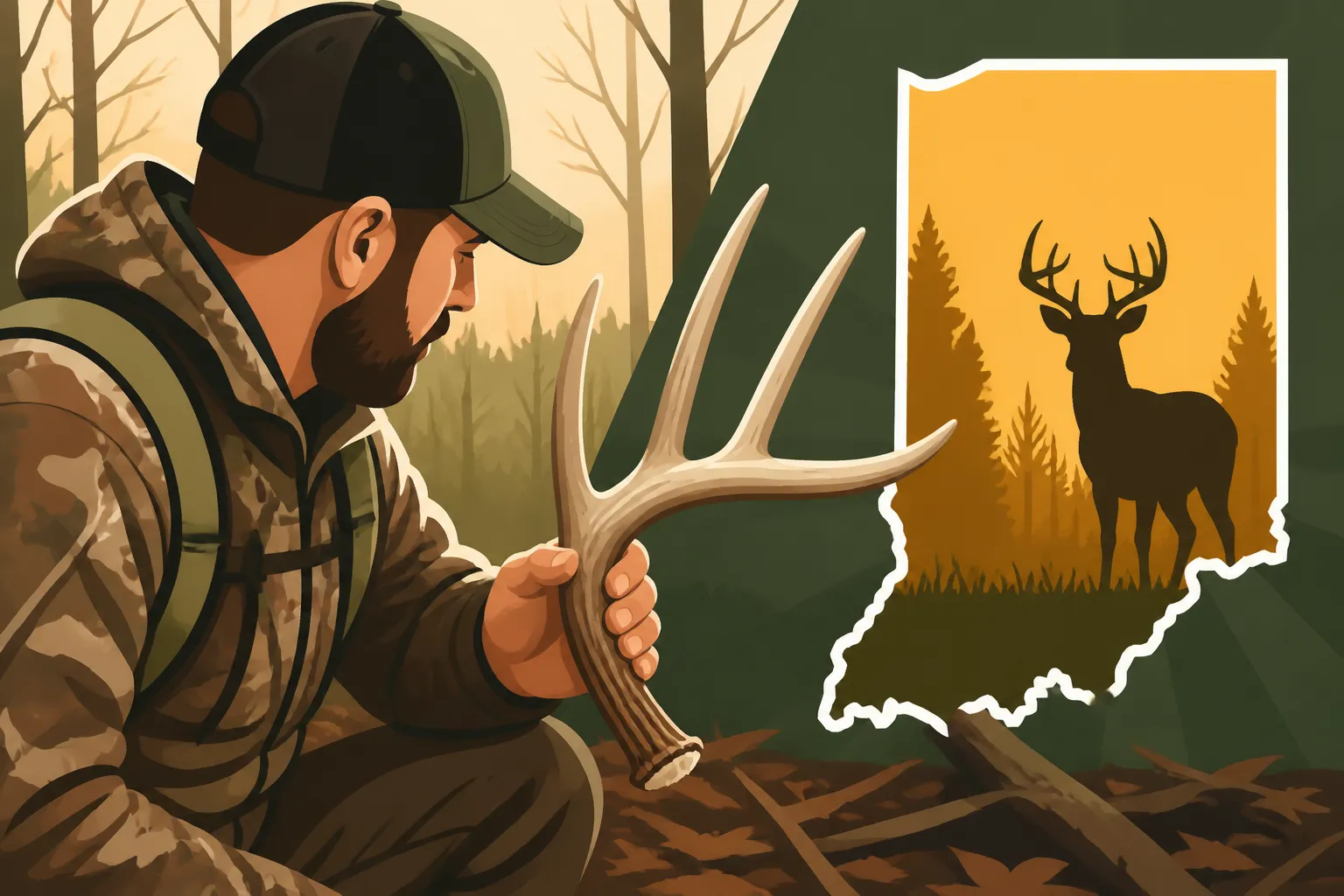
The crisp winter air, the bare branches silhouetted against a low sun, and the promise of a hidden treasure – shed hunting on Indiana public land is a cherished annual ritual for many of us. But let's be honest, it can be frustrating. You walk for miles, your neck craning, eyes glued to the ground, only to come up empty-handed while seeing photos of others’ success. It's tough knowing where to start, what to look for, and even what the rules are on public ground. This comprehensive guide is here to cut through the confusion, offering practical advice and strategies to increase your odds of finding those prized antlers across Indiana's diverse public landscapes.
Navigating Indiana's Shed Hunting Regulations and Ethics
Before you even lace up your boots and head out, it’s absolutely vital to understand the rules of the game when it comes to searching for shed antlers on Indiana’s public lands. While it might seem like a simple walk in the woods, the Indiana Department of Natural Resources (DNR) has specific guidelines, and different public properties can have unique regulations you need to be aware of. Ignoring these could land you in hot water or, at the very least, disrupt the very wildlife you appreciate.
Permissible Areas and Restrictions
Generally speaking, if it's public land where deer hunting is allowed, shed hunting is also permitted. This includes the vast stretches of the Hoosier National Forest, most Indiana State Forests, and many of the State Fish and Wildlife Areas (FWAs). These are your prime targets for putting in the miles and searching for dropped antlers. However, it’s never a bad idea to double-check with the specific property manager or consult the DNR's website for any local rules, as things can sometimes vary. For instance, while most State Forests are open, some specific nature preserves or designated non-hunting areas might have restrictions.
The major exception to keep in mind are Indiana State Parks. These properties are primarily managed for recreation and conservation, and as a rule, shed hunting is typically prohibited unless it falls under a special managed deer hunt where specific collection permits might be issued. You wouldn't want to spend a day trekking through Brown County State Park only to find out you can't actually pick up any antlers you stumble upon. Always respect posted signs and know the boundaries of the property you're on. Even if a shed rolled off public land onto a private parcel, you need permission to retrieve it. This diligence is part of being a responsible outdoors enthusiast. You can use tools like the Scouting With the Indiana DNR App to help understand property boundaries.
Timing Your Search for Optimal Results
The timing of your shed hunt is perhaps one of the most critical factors in determining your success. In Indiana, white-tailed deer bucks typically begin dropping their antlers from late December through March, with the peak usually occurring in late January and February. This is the sweet spot when most bucks have shed, but before the elements or other critters have claimed the antlers. If you're out too early, you'll be walking through territory still holding antlers firmly attached to bucks. Too late, and squirrels, mice, and other rodents will have had their fill, gnawing away at the calcium and phosphorus, often leaving behind only tiny, chewed nubs or nothing at all.
Consider the harshness of the winter as well. A severe cold snap or heavy snow can stress deer, causing them to group up more tightly in sheltered areas and potentially drop their antlers earlier. Conversely, a mild winter might see some bucks holding onto their headgear a bit longer. The ideal time to hit the woods is usually right after the majority of the antlers have dropped, giving you the best chance to find them relatively intact. This window also offers a fantastic opportunity for Scouting Indiana Public Land Before Season for the upcoming fall, as you're seeing the deer's winter patterns play out.
Ethical Considerations and Avoiding Disturbances
Beyond the regulations, there's an ethical component to shed hunting that every responsible outdoors person should respect. The late winter months can be tough on deer. Their fat reserves are dwindling, and unnecessary exertion can be detrimental to their health, especially for young or older animals. The last thing we want to do is cause undue stress to the very animals we appreciate.
This means avoiding aggressively pushing deer while you're out looking for sheds. If you jump a deer, let it go. Don't chase it in hopes of jarring an antler loose. Such behavior is not only unethical but also counterproductive, potentially moving deer out of prime wintering grounds and making them harder to find later. If you happen upon a deceased deer, it's generally best to leave it undisturbed and report it to the DNR if you suspect anything unusual. Taking antlers from a deer carcass, unless part of a specific managed program or found through legal means, can be a grey area and is often best avoided. Remember, the goal is to enjoy the outdoor experience and find a natural treasure, not to exploit stressed wildlife.
Identifying Key Public Land Hotspots for Antlers
Knowing where to look on vast tracts of public land is half the battle won. Deer aren't just randomly dropping antlers anywhere; they're dropping them in specific areas where they've been spending their time. Understanding deer behavior in the late season and identifying those preferred areas will drastically improve your chances of success. It's about thinking like a deer and focusing your efforts on the most likely spots.
Food Sources and Wintering Areas
In late winter, deer are primarily driven by two things: food and thermal cover. Their bodies are working overtime to stay warm, and finding easily accessible calories is paramount. This means focusing your search around remaining food sources. On Northern Indiana farmland, this might mean the edges of cut cornfields or standing soybean fields that border woodlots. Deer will browse these fields, and as they chew and move, antlers can fall. Even though the primary harvest is done, residual grains and beans can be a crucial food source.
In the southern part of the state, particularly within the Hoosier National Forest or State Forests like Morgan-Monroe or Yellowwood, look for areas with late-season browse. This could include honeysuckle patches, green briar thickets, or even areas where timber has been recently harvested, providing new growth. South-facing slopes are also key, as they catch more sunlight, melt snow faster, and often promote earlier green-up, making them attractive for feeding. A good strategy is to find these food sources and then work your way outward, knowing that deer will bed nearby. Remember, finding Late-Season Food Sources for Indiana Whitetails is critical to finding the deer themselves.
Bedding Areas and Thermal Cover
Deer spend a significant portion of their day bedding, especially in colder weather. Thick bedding areas provide protection from the wind, harsh temperatures, and predators. These are gold mines for shed hunters. Look for dense cedar thickets, pine plantations, thick multiflora rose patches, or even regenerating clear-cuts with young, dense saplings. Again, south-facing slopes are often preferred bedding areas in winter because they absorb more solar radiation, making them warmer and more comfortable.
Picture a deer lying down, chewing its cud, perhaps rubbing its head on a sapling or brushing past thick cover. These are perfect scenarios for an antler to pop off. Search the thickest parts of these areas, moving slowly and systematically. Bucks, especially older ones, often seek out the densest cover for security, so don't be afraid to get into the briars and thorns – that's often where the sheds are hiding. In places like the Hoosier National Forest Hunting, bucks will often utilize thick coves and benches for bedding, so these transition areas between bedding and feeding are prime for shed finds.
Travel Corridors and Funnels
Deer don't just magically appear in bedding or feeding areas; they use specific routes to get there. These travel corridors and funnels are excellent places to concentrate your shed hunting efforts. Look for well-worn deer trails, especially those leading from bedding areas to food sources. Creek bottoms, old logging roads, fence lines, and saddles along ridge tops can all act as natural funnels that concentrate deer movement.
An antler is often jarred loose when a deer jumps over a log, crosses a creek, or navigates a fence line. Pay close attention to these natural obstacles. The impact of a jump, or the snagging of an antler on a branch, can be just enough to dislodge it. For instance, if you’re scouting a known travel corridor that connects two woodlots, chances are high that deer using that path have dropped antlers there. This is especially true for Hunting a Funnel Between Two Woodlots where deer are forced to move through a constricted area. By understanding these movement patterns, you're not just randomly walking, you're strategically hunting.
Implementing Effective Shed Hunting Strategies
Once you know where deer are likely to be, the next step is to employ effective strategies for actually locating those elusive antlers. It's not about speed; it's about methodical searching and paying attention to detail. Every shed hunter develops their own techniques, but some universal truths apply to maximize your chances.
Grid Searching and Systematic Coverage
The most effective way to cover ground and ensure you don't miss anything is to employ a systematic search pattern, often referred to as a "grid search." This involves walking in straight lines, spaced a reasonable distance apart (say, 10-20 yards, depending on cover density), and then walking parallel lines back and forth across a target area. It's tedious, but it ensures thorough coverage. This is where modern technology really shines.
Using a GPS unit or a mapping app like GoHunt or OnX Hunt is invaluable here. You can set waypoints for areas you've covered, track your path, and even mark sheds you find. This prevents you from inadvertently re-covering ground you've already searched or missing sections entirely. With GoHunt, for example, you can see property boundaries and topo maps, making it easier to define your search area and navigate difficult terrain. If you're hunting with a partner or a group, you can spread out in a line, maintaining visual contact, and systematically "drive" an area, much like a deer drive, but for sheds. Just remember to walk slowly, keeping your eyes peeled for anything that looks out of place. The more ground you cover systematically, the higher your odds.
Focusing on Terrain Features
While grid searching provides comprehensive coverage, you also need to adapt your strategy to the terrain. Simply walking in straight lines through an area might cause you to miss antlers hidden by small rises, depressions, or thick vegetation. Once you’ve identified potential hot spots like feeding or bedding areas, focus your efforts more intensely on the micro-features within those areas.
Look around the bases of large trees, especially those with low-hanging branches where a buck might rub. Check fallen logs, which deer often jump over. Concentrate on creek banks, ditches, or steep washes where a deer might stumble or shake its head, dislodging an antler. When the sun is low, try to walk into the sun; the reflection off the white antler can sometimes give it away, making it stand out against the drab forest floor. Remember, a shed often looks like a stick or a broken branch at first glance, so you need to train your eyes to recognize the distinct curve or texture of bone. Understanding Reading Aerial Photos for Southern Indiana Deer can help you identify these subtle terrain features from above before you even set foot in the woods.
Reading Sign and Understanding Deer Movement
Good shed hunters are also good deer scouts. The sign left behind by deer can tell you a lot about where they’ve been spending their time, and consequently, where they might have dropped an antler. Look for old rub lines, which indicate where bucks have been actively marking their territory. While fresh rubs mean the buck still has his antlers, old rubs from the previous fall suggest a buck frequented that area. Similarly, old scrapes can point to travel corridors.
More importantly, observe fresh tracks in snow or mud, and recent droppings. These tell you where deer are currently moving and feeding. Focus your shed hunt in these high-traffic areas. Pay attention to bedding sign – flattened grass or leaves where a deer has been lying, especially on those sunny, south-facing slopes. If you understand the general Deer Density by Indiana Region, you can anticipate where the most activity (and therefore the most sheds) might be concentrated. By combining current deer sign with an understanding of late-season patterns, you can pinpoint the most promising areas for your search.
Essential Gear and Tools for Your Shed Hunting Adventures
Just like any other outdoor pursuit, having the right gear can make your shed hunting experience far more comfortable, efficient, and ultimately, successful. You don't need a massive amount of specialized equipment, but a few key items will go a long way.
Navigation and Mapping Aids
As mentioned before, a reliable navigation system is your best friend on public land, especially when you're grid searching or venturing deep into unfamiliar territory. While a traditional GPS unit works wonders, many modern smartphones equipped with robust mapping apps like GoHunt, OnX Hunt, or even the basic Indiana DNR app, can be just as effective. These apps allow you to download offline maps, mark waypoints for sheds found, track your path, and clearly delineate property lines – a huge benefit when navigating varied land ownership.
Always carry a portable power bank for your phone. You'll be surprised how quickly GPS usage drains a battery, and you don't want to be stranded without a map or way to communicate. Having a compass and a physical map as a backup is also a wise choice, especially if you plan to explore remote areas with spotty cell service. Being able to visualize your search area and mark your progress is key to systematic coverage and not getting turned around. Using the Indiana OnX and DNR Map Tools can really help optimize your navigation.
Appropriate Clothing and Footwear
Indiana weather in late winter and early spring is notoriously unpredictable. One day it can be mild and sunny, the next can bring cold rain, sleet, or even snow. Layering your clothing is paramount. Start with a good moisture-wicking base layer, add an insulating mid-layer (fleece or wool works great), and top it off with a waterproof and windproof outer shell. This allows you to adjust to changing conditions and maintain comfort.
Comfortable, waterproof footwear is non-negotiable. You’ll be covering miles, often through mud, slush, or shallow water. Invest in a pair of quality hiking boots or, for wetter conditions, insulated rubber boots. They need to provide good ankle support and traction on slippery surfaces. Good quality socks are also essential to prevent blisters. While blaze orange is legally required during Indiana's firearms deer seasons, it is not required for shed hunting. However, wearing a blaze orange hat or vest is a smart safety precaution, especially if other hunters or outdoor enthusiasts might be in the area. It makes you visible to others and is never a bad idea when exploring public ground. Consider your Boots for Indiana Mud and Snow to keep your feet dry and comfortable.
Carrying and Retrieving Sheds
Once you find a shed, you'll need a way to carry it out, especially if you find multiple or a large set. A comfortable backpack with enough capacity for sheds, water, snacks, and a small first-aid kit is essential. Choose a pack that allows you to secure antlers to the outside if they’re too large to fit inside. Some hunters even bring a small bungee cord or strap for this purpose.
A sturdy walking stick can be helpful for balance on uneven terrain, especially in the hill country of Southern Indiana, and can also be used to poke around in thick brush or leaf litter to dislodge hidden antlers. Don't forget water – even in cold weather, hiking for hours will dehydrate you. Snacks like trail mix or energy bars will keep your energy up. And a small, basic first-aid kit is always a good idea for minor scrapes, cuts, or blisters. Ultimately, a good quality pack like those discussed in Packs for a Hoosier Forest Day Hunt will serve you well on these long treks.
Types of Indiana Public Land for Shed Hunting
| Public Land Type | Typical Terrain / Habitat | Access & Pressure Considerations | Antler Finding Potential |
|---|---|---|---|
| Hoosier National Forest | Rugged hills, dense timber, creek bottoms | Extensive access, moderate to high pressure | Excellent, especially in remote coves, ridges |
| State Forests | Hilly, mixed hardwood forests, managed timber cuts | Good access, variable pressure (higher near roads) | Very good, concentrate on clear-cuts, thickets |
| Fish & Wildlife Areas (FWAs) | Varied: wetlands, fields, woodlands, managed habitats | Often easier access, can have high pressure (managed) | Good, especially around field edges, dense cover |
| State Parks | Varied: scenic, protected | No shed hunting allowed (generally), high recreational use | None (unless part of specific managed hunts) |
Note: Always check specific property regulations with the Indiana DNR before heading out, as rules can vary.
Disclaimer
Please be aware that hunting regulations, seasons, and property access rules are subject to change. Always consult the latest Indiana Department of Natural Resources (DNR) official publications or website for the most current and accurate information before planning any outdoor activity, including shed hunting. This guide is for informational purposes only and should not replace official state resources.