Reading Indiana Mud for Fresh Deer Movement
There’s nothing quite as frustrating as hitting the woods, excited to find some hot deer sign, only to discover tracks that look like they were made last week, or worse, last month. It leaves you guessing, wondering if the deer are still even in the area. This guide is all about cutting through that uncertainty, showing you how to read Indiana's muddy trails, creek beds, and field edges to pinpoint fresh deer movement and put you exactly where you need to be.
The Subtle Language of Indiana's Mud
When you're out hunting in Indiana, especially during the archery season or those late-season firearms hunts when the ground is often damp, mud can be your best friend. It’s like a daily newspaper for deer, recording every step, every interaction, and every subtle shift in their patterns. But you have to know how to read it, how to discern the whispers of recent activity from the shouts of days gone by.
Why Mud is a Goldmine for Deer Hunters
Think about it: a rub on a tree or a scrape under an overhanging branch can tell you a deer was there, but how long ago? Was it yesterday, last week, or even last month? Mud, on the other hand, gives you a much more precise timestamp. When a deer steps into soft, damp earth, it leaves an impression that can hold details for a surprisingly short amount of time before weather and other factors start to erode its clarity. This makes finding fresh tracks in mud an absolute game-changer.
During dry spells, when the forest floor is like concrete, any patch of damp earth, whether it's a seeping spring, a low spot in a logging road, or a creek crossing, becomes a magnetic point for deer to leave sign. They might not leave a track anywhere else, but they'll leave it there. So, instead of wandering aimlessly, you can focus your scouting efforts on these specific muddy areas. It validates that sinking feeling when you see old, crusty sign — it means you're looking in the right general area, but perhaps not at the right time. Mud can confirm the "now."
Differentiating Fresh from Old Tracks
This is the crucial skill. A muddy track is only valuable if it’s fresh. Here’s what to look for:
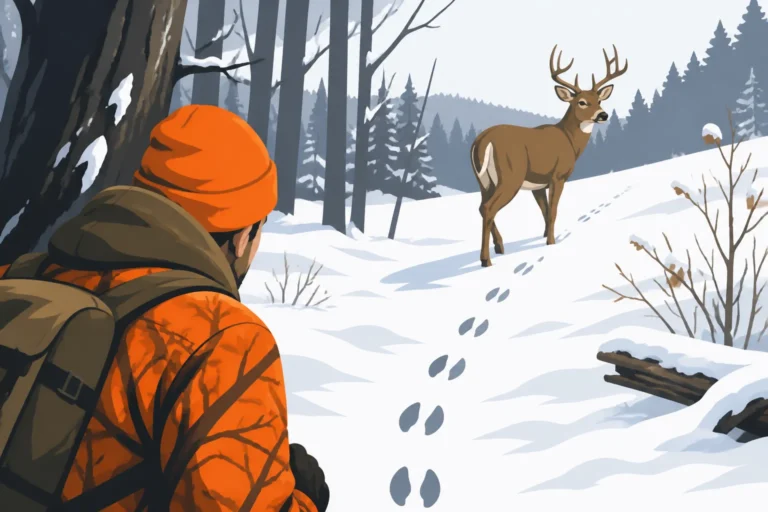
- Sharp Edges: A fresh track will have crisp, well-defined edges where the hoof pressed into the mud. You can almost see the outline of the deer's hoof clearly. As a track ages, the edges begin to soften, round out, and crumble.
- Moisture Content: A truly fresh track will often still have some residual moisture in the impression, especially in the deeper parts. It might even look a shade darker than the surrounding dried mud. Older tracks will be completely dry and often lighter in color, blending more with the surrounding earth.
- Absence of Debris: Look inside the track. Fresh tracks will be relatively clean. Old tracks will accumulate dust, small leaves, pine needles, or even cobwebs if they're particularly old and undisturbed. Sometimes you'll even see a few blades of grass or weeds trying to grow up through an older track.
- Weather Impact: This is key in Indiana. If it rained heavily overnight, and you find a track with sharp edges and moisture, it was likely made after that rain. If it’s dry and crumbly, it was made before the rain. A light rain might soften old tracks, making them appear fresher, so always consider the last major precipitation event. Factors like direct sunlight and strong winds can dry out mud surprisingly quickly, making a track that’s only a few hours old look older than it is, especially on exposed trails.
Understanding these nuances is what turns a casual walk in the woods into a focused scouting mission.
Interpreting Deer Sign in Wet Conditions
Once you've found those fresh tracks, the real detective work begins. Mud doesn't just tell you when a deer was there; it tells you who it was and what it was doing. Every detail etched in the mud tells a part of the story.
Decoding Hoof Prints and Gait
The hoof print itself is a treasure trove of information.
- Size and Shape of Hooves: Generally, larger, wider prints with more splayed toes indicate an older, heavier buck. Does usually leave smaller, daintier, more pointed prints. Fawn tracks are, of course, noticeably smaller. Remember, older bucks often have worn hooves, which can sometimes appear broader. Observing a track from the side can also give you an idea of how deeply the hoof sank, suggesting the deer's weight. If you're really paying attention, you might even notice a dewclaw print, which is more common with heavier deer, like a mature buck, or any deer moving quickly or on soft terrain, where their dewclaws touch the ground.
- Gait: Walking, Trotting, Running: The pattern of the tracks tells you the deer's speed and intent.
- Walking: The most common gait. Tracks will be relatively evenly spaced, and often the hind foot will land either directly in or just slightly behind the print of the front foot. This shows a relaxed, unhurried deer. If the hind foot is consistently landing well in front of the front print, that's often a sign of a large, mature buck with a longer stride.
- Trotting: Tracks will be more spread out, and the hind feet will land significantly ahead of the front feet. The prints might be slightly deeper, indicating more force. A trotting deer is usually alert but not yet panicked.
- Running/Bounding: These tracks will be very spread out, often with deep impressions from powerful pushes, and sometimes all four prints will be grouped together where the deer landed from a bound. This clearly indicates a deer that's spooked or moving with urgency, possibly fleeing danger or chasing.
- Dragging Hooves: Sometimes, especially with heavy-bodied deer like a mature buck, you might see a subtle drag mark between prints, where the hoof scraped the surface of the mud as it lifted and moved forward. This usually points to a relaxed, heavy animal moving slowly through an area, perhaps browsing or heading to a bedding spot. This is especially true on a trail with a slight incline or through dense brush.
Scrapes, Droppings, and Other Muddy Clues
Deer don't just walk through mud; they interact with it, and these interactions leave valuable clues.
- Scrapes in Mud: While scrapes are often on bare earth, sometimes a buck will paw out a scrape in a muddy area, especially near a field edge or a creek crossing. A fresh scrape in mud will have very distinct claw marks from the deer's hooves, and the disturbed earth will still be moist and dark. You might even catch a faint musky scent of urine or glands if it's truly fresh. Older scrapes will have dried, crusted mud, and the distinct paw marks will have softened. Look for an overhead licking branch, which almost always accompanies a primary scrape.
- Droppings: Deer droppings in mud are fantastic indicators of freshness.
- Consistency: Fresh droppings will be moist, soft, and shiny, often clumping together. As they age, they dry out, become harder, duller, and separate into individual pellets.
- Color: The color can also indicate diet and freshness. Darker, shiny pellets indicate very recent activity. If they're light, hard, and dusty, they're old. Pay attention to size too; larger, more abundant droppings usually mean a bigger deer spending more time in the area.
- Bedding Areas in Soft Ground: In areas with soft soil or thick vegetation that turns muddy after rain, deer will leave distinct impressions where they bedded down. These can be shallow depressions in the mud, often accompanied by fresh hair if it's been used recently. These spots are typically found near dense cover, allowing the deer to hide while still having a good vantage point or an easy escape route.
- Rub Lines Near Muddy Trails: If you find fresh tracks leading to or from an area with fresh rubs on trees, you're piecing together a powerful picture. A rub is a longer-term sign, but if it's near a trail with fresh mud, it confirms the deer making those rubs is actively using that muddy corridor. Combine this with the ability to Scouting Indiana Public Land Before Season by identifying these types of areas on an app like GoHunt beforehand.
Strategic Scouting with Mud in Mind
Knowing what to look for is only half the battle; knowing where to look for it is just as important. Certain areas of the Indiana landscape are natural magnets for muddy deer sign.
Identifying Prime Muddy Hotspots
Deer, like all animals, are creatures of habit and efficiency. They'll use the path of least resistance, and often, that path takes them through areas prone to collecting moisture and becoming muddy.
- Creek Crossings and River Bottoms: These are absolute goldmines. Deer must cross creeks and rivers to move between feeding and bedding areas, and these crossings almost always have soft, muddy banks or shallow water bottoms that record every hoof print. Focusing on Hunting Indiana River Bottom Funnels or exploring Hunting the Wabash River Bottoms specifically for these crossing points can pay huge dividends. Look for areas where the bank is cut down and easy for deer to navigate.
- Logging Roads and Trails: Public lands like the Hoosier National Forest are crisscrossed with old logging roads and maintenance trails. These compacted paths often don't drain well and hold water, becoming muddy, especially after rain. Deer frequently use these as travel corridors because they offer easier walking than thick brush. A fresh track on a logging road is a strong indicator of recent movement. These are also prime locations for Scrape Lines Along a Logging Road.
- Field Edges and Entry Points: As deer move from dense cover into agricultural fields (corn, soybeans, alfalfa), they often step onto softer earth at the transition zone. These entry points can reveal a lot. Pay close attention to corners or points where cover extends further into a field. Setting Up on a Northern Indiana Field Edge is all about understanding these transition zones.
- Low-Lying Areas in Timber: Natural depressions, swales, or drainages within wooded areas will collect water and stay muddy longer than higher ground. These often act as subtle funnels for deer movement, channeling them through specific, damp corridors. If you are struggling with finding good ground, consider Hunting a Funnel Between Two Woodlots that has a low muddy spot.
Integrating Mud Reading with Technology
While getting boots on the ground is essential for reading mud, modern technology can drastically improve your efficiency.
Mapping applications like GoHunt are invaluable tools for identifying potential muddy hotspots before you even step foot in the woods. You can use their satellite imagery and topographical overlays to:
- Pinpoint Creek Beds and River Bottoms: Zoom in to identify every small creek, ditch, and major river. Mark potential crossing points where the terrain looks flatter or the banks seem less steep.
- Locate Logging Roads and Trails: Many of these are visible on satellite maps. Mark them as potential travel corridors.
- Identify Low-Lying Areas: Topographical maps show elevation changes. Look for contour lines that dip, indicating depressions or drainages where water will naturally collect and create muddy conditions. This is particularly helpful when you are Reading Aerial Photos for Southern Indiana Deer.
- Mark Fresh Sign in Real-Time: Once you find fresh tracks, use GoHunt to drop a waypoint. Add notes about what you saw (buck, doe, gait, direction of travel, freshness). Over time, this builds a real-time activity map, showing you exactly where and when deer are moving.
- Combine with Trail Camera Intel: Place trail cameras on trails or funnels that are prone to muddy conditions. When you check your cameras, you'll not only get a picture of the deer but also a visual confirmation of the mud and how well it's holding tracks. This synergy is incredibly powerful for confirming patterns.
Timing Your Hunt Based on Mud Movement
Finding fresh sign is fantastic, but translating that into a successful hunt means understanding how deer react to changes in their environment, particularly after a weather event that impacts mud conditions.
Hunting Post-Rain Scenarios
Rain can be both a blessing and a curse for hunters. While it might make for a soggy walk to your stand, it often ushers in prime hunting conditions, especially for those who know how to read the mud.
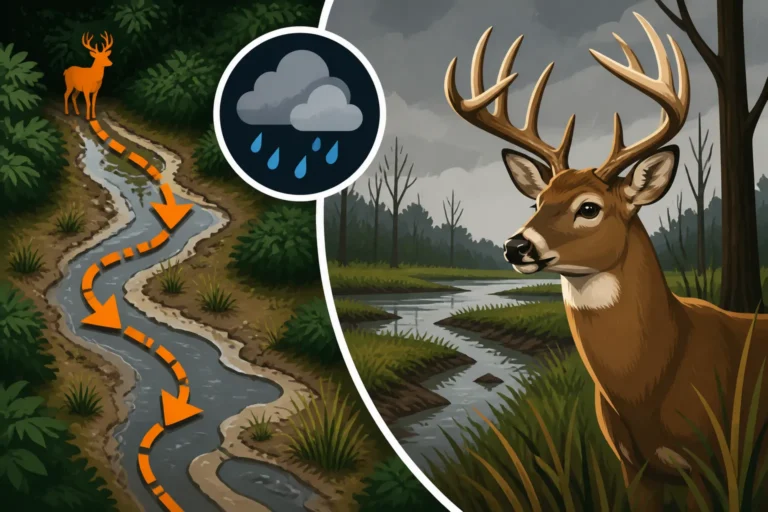
- Deer Movement After Rain: Deer often become more active immediately after a significant rainfall. The rain washes away old scents, refreshes the forest floor, and makes vegetation more palatable. This can lead to increased feeding and movement from bedding areas. If you find fresh, distinct tracks in mud shortly after a rain event, it's a very strong indicator that deer are on the move.
- The "Refresh" of the Forest Floor: A good rain effectively "resets" the muddy slate. This means any tracks you find after the rain are undeniably fresh. This eliminates much of the guesswork about track age. It allows you to confidently focus on trails and crossings that are actively being used.
- Hunting Pressure Considerations: While deer might hunker down during a torrential downpour, they're often quick to get up and move as soon as the rain eases. This window, particularly in the first few hours after the rain stops, can be incredibly productive, as deer shake off the wet and head to food sources. This is especially true for Hunting a Deer Reduction Zone, where deer may feel constant pressure.
- Optimal Checking Time: For maximum benefit, try to check your most promising muddy spots within 12-24 hours after a significant rain. This allows enough time for deer to move through but not so much time that the tracks start to degrade or dry out excessively.
Connecting Mud Tracks to Stand Placement
This is where all your hard work comes together. Fresh mud tracks are not just cool to find; they dictate your next move.
- Analyze Direction of Travel: Once you've found fresh tracks, follow them (discreetly, without disturbing the area) for a short distance to confirm the general direction of travel. Are they heading from a known bedding area towards a food source? Or vice-versa? Are they following a ridge line or cutting across a bottom?
- Confirm Bedding or Feeding: If the tracks lead directly to a specific thicket, a patch of oaks dropping acorns, or a standing crop field, you've just confirmed an active bedding or feeding area. This intelligence is golden. If it's late in the season, you'll want to prioritize those Late-Season Food Sources for Indiana Whitetails that deer are actively hitting.
- Strategic Stand Placement: With fresh intel on deer movement, you can now place your stand with confidence. Look for a natural funnel or pinch point along the deer's confirmed travel route. Consider placing your stand downwind, using terrain features like creek banks or ridge points for cover. For detailed strategies on this, explore topics like Treestand Setups in Hoosier National Forest or even specific tactics like Hanging a Stand on a Southern Indiana Ridge. Always factor in the wind direction and thermals for your chosen setup; ignoring these will negate all your scouting efforts. Understanding Wind and Thermals on a Southern Indiana Ridge is paramount.
- Consider Entry and Exit Routes: When you walk in to set up your stand or to hunt, your entry and exit paths should be carefully planned to avoid contaminating the fresh sign. Walk quietly, avoid direct deer trails, and try to use terrain features or dense cover to conceal your approach and departure. Remember, the less disturbance, the better your chances of encountering those deer whose tracks you've been reading. This is particularly important when you're hunting the intense period of Hunting the Rut in Early November.
Table: Fresh vs. Old Deer Tracks in Mud
| Feature | Fresh Deer Track | Old Deer Track |
|---|---|---|
| Edges | Crisp, sharp, well-defined | Rounded, softened, crumbling |
| Moisture | Noticeably moist, sometimes darker than surrounding mud | Dry, sometimes crusted, lighter in color |
| Internal Debris | Clean, minimal to no leaves, dust, or webs | Accumulation of dust, small leaves, pine needles, or webs |
| Integrity | Clear impression of hoof detail, intact mud structure | Distorted, partially filled in, less distinct hoof detail |
| Scent | Potentially faint earthy/deer scent if very fresh | No discernible scent |
| Growth | No plant growth within print | Small plants/weeds may begin to grow inside |
Disclaimer
Hunting is an inherently dangerous activity. Always prioritize safety, understand and follow all Indiana hunting regulations, and be aware of your surroundings. This information is for educational purposes only and does not supersede official hunting laws or safety guidelines.