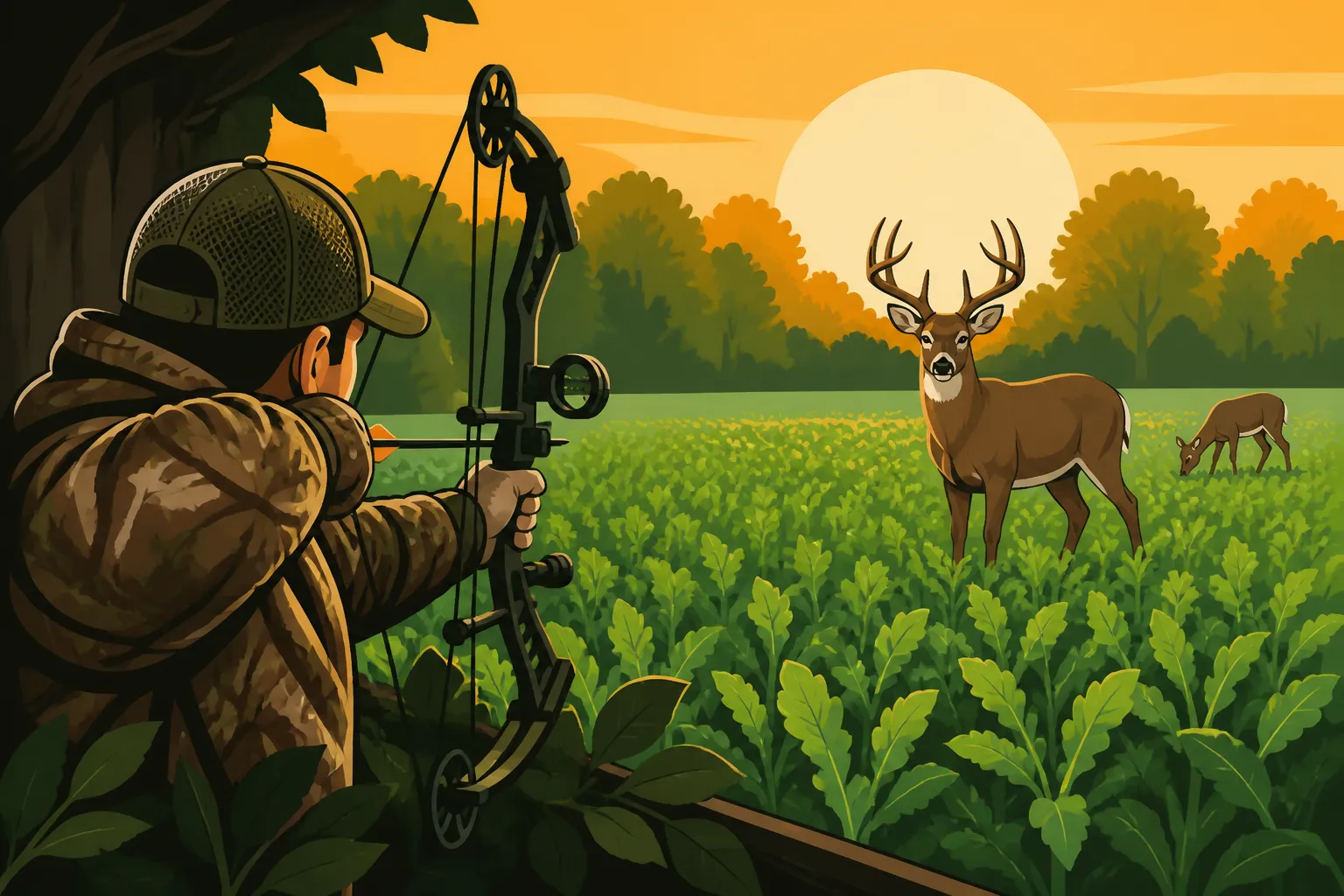
Hunting a Green Field Planted for Deer
Hunting green fields planted specifically for deer in Indiana can be incredibly rewarding, but it’s rarely as simple as just showing up. Deer are wise to these prominent food sources, often using them with extreme caution, and many hunters struggle to get close enough for a shot without spooking every deer in the county. This comprehensive guide is designed to equip you with the knowledge and strategies to effectively hunt green fields, helping you understand deer behavior around them, scout intelligently, and execute a successful hunt.
Understanding Why Deer Gravitate Towards Green Fields
Deer, much like us, are driven by their stomachs. They’re constantly seeking out the most nutritious and palatable food sources available, and well-maintained green fields offer exactly that. These planted plots aren't just a buffet; they're a strategic part of a deer's diet, changing in importance throughout the hunting seasons in Indiana.
The Nutritional Allure of Planted Plots
Imagine a deer's natural forage: browse, acorns, and whatever else the forest floor provides. While these are staples, they can be inconsistent and sometimes lack the concentrated nutrition deer need, especially during periods of stress or antler growth. Green fields fill this gap. Crops like clover, chicory, alfalfa, brassicas (think turnips, radishes, kale), and winter cereals such as wheat and rye are packed with protein, vitamins, and minerals that deer crave.
For instance, clover and alfalfa are high in protein and highly digestible, making them irresistible from early archery season well into the cooler months. These perennial plots often remain green and productive even when surrounding natural forage starts to dwindle or becomes less appealing. You'll notice deer hitting these spots hard in September and October, building up reserves before the rut.
As temperatures drop and frosts hit, the importance shifts. Many brassicas, like turnips and radishes, undergo a "sugar conversion" after a hard freeze, making them incredibly sweet and attractive to deer during the late season. This is why you'll often see deer absolutely hammering a brassica plot in November and December, even ignoring other food sources in favor of these frosted delicacies. Winter wheat and rye also become vital cool-season food, providing palatable forage when snow covers much of the ground. Knowing what's planted and when it peaks in attraction is your first step to success.
Seasonal Importance of Green Fields
The effectiveness of a green field is highly dependent on the time of year and the specific crops planted. Early in the archery season, from late September through October, plots of clover, alfalfa, and even soybeans (if planted for forage) are absolute magnets. Bucks are still building antler mass and does are lactating, so protein is paramount. These fields provide an open, accessible food source that’s easy for deer to find and consume.
As we transition into November and the rut kicks off, green fields might see a slight dip in daylight activity as bucks are more focused on does. However, they still serve as crucial feeding stations for does, and bucks will certainly cruise through them looking for receptive females. In the post-rut and late season, when deer are recovering from the energy demands of breeding and facing colder temperatures, brassicas and winter cereal grains become the primary draw. These high-carb, high-energy foods are essential for survival, making plots of winter wheat, rye, or turnips prime hunting locations when the thermometer dips. Understanding these seasonal shifts helps you plan your hunts for maximum impact. A hunter focusing on Late-Season Food Sources for Indiana Whitetails will inevitably look for these cold-hardy plots.
Scouting and Intelligence Gathering for Green Fields
Before you ever step foot into a green field with your bow or rifle, a significant amount of work needs to happen. Effective scouting is paramount, not just to find where deer are, but to understand how they use the field and, crucially, how you can intercept them without alerting them to your presence. This involves a mix of pre-season and in-season observation, leveraging technology, and interpreting subtle signs.
Pre-Season Trail Camera Reconnaissance
Trail cameras are your eyes in the woods when you can’t be there. Setting up cameras on green fields, or more importantly, on the main trails leading into and out of them, is invaluable. Deploy them well before the season opens, ideally in late summer, to start building a profile of the deer using the field. Pay attention to:
- Time of day: Are deer feeding in daylight, or are they mostly nocturnal? If they're nocturnal, you might need to adjust your setup to catch them closer to their bedding areas before they reach the field, or wait for a strong cold front that might push them out earlier.
- Entrance/Exit points: Deer are creatures of habit. They will often use the same trails to enter and exit a field. Identifying these pathways is critical for stand or blind placement. Look for distinct trails, rubs, and scrapes along the edges of the woods where deer transition.
- Individual deer: Are specific bucks using the field? Are they mature deer, or mostly younger bucks and does? This helps you gauge the quality of the hunting opportunity and plan your target.
- Frequency of use: How often is the field being visited? Daily, every few days, or sporadically? A highly frequented field offers more consistent opportunities.
Remember to place cameras subtly, perhaps using security boxes or camouflaged mounts, and approach them carefully to avoid leaving too much scent. When you pull cards, take note of wind direction and weather conditions for the timestamps; this can provide deeper insights into their habits.
In-Season Observation and Interpreting Deer Sign
Once the season starts, your scouting shifts. You're no longer just looking for deer; you're looking for fresh deer activity and confirming patterns. This is where subtle observation skills come into play.
- Glassing from a distance: If possible, use good quality binoculars or a spotting scope to observe the green field from a significant distance, ideally from an elevated position, before you hunt it. This could be from a distant hilltop, a road, or an adjacent field. Watch how deer enter, where they feed, and when they leave. This is far less intrusive than walking the field edge. GoHunt's mapping features can help you identify these vantage points.
- Fresh sign: If you decide to quietly walk the perimeter (and only if the wind is perfect and conditions are damp to minimize scent), look for fresh tracks in the mud or soft soil, fresh droppings, and newly opened scrapes or rubs. These tell you deer are currently using the area. A hot scrape line along the edge of the woods leading to the field is a prime indicator. Understanding Reading Indiana Mud for Fresh Deer Movement can be incredibly helpful here.
- Bedding areas: Try to identify bedding areas that are relatively close to the green field. Deer won’t travel miles to a food source if they don’t have to, especially during colder weather. Thickets, dense pines, or south-facing slopes offering thermal cover can all be prime bedding locations. Knowing where deer are coming from helps you set up an ambush point. Tools like the Indiana DNR App or onX Hunt can help you visualize topography and potential bedding cover.
By combining detailed camera intel with careful in-season observation, you build a robust picture of how deer utilize the green field, drastically increasing your chances of a successful hunt.
Strategic Approaches to Hunting Green Fields
Hunting a green field is often a game of chess, not checkers. It requires careful planning, understanding of conditions, and disciplined execution to outsmart the deer. Simply plopping down a stand often leads to frustration.
Timing Your Hunt: Daylight and Weather
Timing is everything when hunting green fields. Deer are most vulnerable when they feel secure, and often, that's during the magical hours of dawn and dusk.
- Evening hunts: These are typically more productive for green fields. Deer will emerge from their bedding areas in the late afternoon, often pausing in transition zones before entering the open field as light fades. They feel more comfortable feeding in the low light of evening.
- Morning hunts: Hunting a green field in the morning can be tricky. Deer will often feed through the night and then start making their way back to bedding areas right at dawn. This means you need to be in your stand or blind well before first light, with a silent, scent-free entry, to intercept them before they disappear. However, if you are not careful, you can easily blow deer out of the field as you approach, ruining the hunt.
- Weather influence: Cold fronts are your best friend. A significant drop in temperature after a mild spell will almost always get deer on their feet and moving to food, especially in the late season when brassicas or winter cereals are key. Rain, especially a light, steady rain, can also increase daytime movement, as it dampens sound and washes away scent, making deer feel more secure. High winds, however, can make deer skittish in open fields, pushing them into thicker cover or delaying their movement. Pay attention to how Cold-Weather Sitting Strategy in Indiana might impact deer movement into these plots.
Silent Entry and Exit Routes
This is arguably the most critical component of successfully hunting a green field. A poorly executed entry or exit can ruin not just that hunt, but potentially subsequent hunts on that field for days or even weeks.
- Minimize disturbance: Your goal is to get to and from your stand or blind without any deer knowing you were there. This means planning your route using terrain features like creek bottoms, ditches, standing timber, or fence lines for cover. Avoid walking through open areas or directly across known deer trails.
- Wind direction: Always, always consider the wind. Your entry and exit routes should put the wind in your favor, blowing your scent away from where you expect deer to be. This might mean having multiple stand locations or entry routes for different wind directions. This is where understanding Wind and Thermals on a Southern Indiana Ridge, even on flatter ground, is crucial.
- Light conditions: For morning hunts, enter under the cover of darkness, using a dim red-light headlamp only when absolutely necessary. For evening hunts, stay put until it's completely dark and all deer have left the field before exiting. If deer are still in the field, waiting them out, even if it's uncomfortable, is always better than spooking them. Consider having a designated 'dead zone' around the field that you never enter unless you're tracking a shot animal.
Optimal Stand and Blind Placement
Where you set up makes all the difference. It's not just about seeing the deer; it's about getting a shot opportunity without being detected.
- Treestands: Elevated positions offer several advantages: better visibility, carrying your scent higher (though wind still dictates everything), and a better angle for ethical shots. Look for mature trees on the downwind side of known deer entry points, ideally 20-30 yards inside the timber line. This provides a clear view of the field edge and the trails leading in, while offering a bit of cover. Consider setting up 20-25 feet high. For general guidance on elevated hunting, look into Treestand Setups in Hoosier National Forest for principles that apply even to farmland.
- Ground blinds: Ground blinds are excellent for green fields, especially if cover trees are scarce or if you need to hunt with less movement. A well-brushed-in ground blind can be incredibly effective. Place it strategically, again, on the downwind side, ideally where a natural funnel or pinch point forces deer close to the field edge. Brush it in thoroughly with local vegetation so it breaks up your outline and blends into the surroundings. Give yourself a week or two for deer to get used to its presence before hunting. Learning to use a Ground Blind on Indiana Public Land can drastically improve your odds on a green field.
- Distance from the field: Don't set up too close to the field edge in the timber. Often, 20-40 yards back is ideal. This allows deer to enter the field and feel comfortable, giving you time for a shot, without them being right under your stand. Also, ensure you have shooting lanes to key entry points and across the field itself.
| Green Field Crop | Peak Attractiveness | Optimal Hunting Season | Best Conditions | Key Benefits for Deer |
|---|---|---|---|---|
| Clover | Spring, Summer, Fall | Early Archery, Rut | Mild, Wet | High protein, digestible |
| Alfalfa | Spring, Summer, Fall | Early Archery, Rut | Mild, Wet | High protein, drought-tolerant |
| Brassicas (Turnips, Radishes) | Late Fall, Winter | Late Season | Hard Freeze | High carbohydrates, sweet |
| Winter Wheat/Rye | Fall, Winter, Early Spring | Early Archery, Late Season | Cool, Damp | Palatable, persistent |
| Soybeans (Forage) | Late Summer, Early Fall | Early Archery | Mild | High protein pods, forage |
Tactics for Success in Green Fields
You've done your scouting, you've got your setup – now it's time to execute. Hunting green fields isn't just about sitting still; it's about being prepared to adapt, to be patient, and sometimes, to make a calculated move.
Patience and Understanding Deer Behavior
Green fields, by their nature, are open. This means deer are often on high alert when they enter them. They'll frequently stage up in the timber edge, surveying the field before committing. They might spend 15-30 minutes just inside the woods, sniffing the air and looking for danger. Patience is absolutely crucial.
- Wait for the commitment: Don't draw your bow or raise your rifle the second you see a deer. Wait until the deer has fully entered the field, preferably turned broadside, and seems relaxed. If it's a buck, wait for it to drop its head to feed, which often signals it feels secure.
- Observe patterns: Even within a single hunt, you might notice patterns. Do deer enter from a specific corner? Do they always skirt the edge for a while before moving to the center? Does the wind swirl in certain spots? Continuously refine your understanding of how deer use this specific field. This real-time observation is vital.
- Don't overhunt: This is a big one. Pressuring a green field too much, especially with repeated bad entries or exits, will quickly turn deer nocturnal or push them off the field entirely. If you have multiple stand locations for different winds, use them. If not, give the field a break after a hunt, particularly if deer were spooked. You might consider using a more mobile approach like Still-Hunting Southern Indiana Ridges on days when the green field isn't ideal.
Strategic Use of Calls and Decoys
While green fields are primarily food sources, you can sometimes enhance your chances with well-timed calling or, in specific situations, using a decoy.
- Calling: Soft grunts and bleats can be effective, especially during the rut. If you see a buck cruising the far side of the field or staging in the timber, a soft tending grunt or a doe bleat can pique its interest and draw it closer. Avoid aggressive calling unless you know a buck is already very close and you're trying to stop it for a shot. For a deeper dive, check out tips on Rattling and Grunting in Indiana. Often, less is more around a green field.
- Decoys: Decoys can be a powerful tool, but they come with risks. During the pre-rut and rut, a buck or doe decoy can draw in curious or aggressive bucks. Place it where deer are likely to see it but downwind of your setup, so any buck approaching the decoy is broadside or slightly quartering to you. The key is realism and minimizing scent. Always use a decoy in a safe location where other hunters won't mistake it for a live animal, especially on public land. Decoys are often most effective in larger fields where deer might otherwise stay at a distance.
Adapting to Hunting Pressure
Green fields, especially those on public land or well-known private tracts, can attract a lot of attention from other hunters. This pressure changes deer behavior dramatically.
- Recognize the signs of pressure: If deer are consistently entering the field only after dark, or if you notice new tracks from other hunters, or vehicles parked near popular access points, the pressure is on. Deer will become more wary, more nocturnal, and might even abandon the field for a while.
- Adjust your strategy: When pressure increases, you might need to hunt closer to bedding areas, intercepting deer before they reach the field, or target overlooked funnels. Consider focusing on Hunting a Funnel Between Two Woodlots that leads to the green field, as deer will often stick to cover as long as possible. Also, explore less obvious entry points into the field, or consider hunting directly inside the timber adjacent to the field, rather than on its edge.
- Look for alternative food sources: If a green field is completely shut down due to pressure, you might need to pivot to other food sources. This could be acorns, natural browse, or even standing crops like corn or soybeans if available. Sometimes, the best way to hunt a pressured green field is to hunt something else entirely and give it a long break. Using aerial photos, perhaps with a tool like GoHunt, can help you identify less obvious feeding or travel corridors in pressured areas, even on Northern Indiana Farmland Deer grounds where green fields are common.
By mastering these strategies and continually learning from each hunt, you'll greatly increase your odds of tagging an Indiana whitetail over a planted green field.
Disclaimer
Hunting is an inherently dangerous activity. Always prioritize safety, adhere to all local, state, and federal hunting regulations, and ensure you have the necessary licenses and permits. The information provided here is for educational and informational purposes only and should not replace professional guidance or personal judgment. Be aware of your surroundings and hunt ethically and responsibly.